Have one like this? Check yours freeOr have an appraiser value it
Lot description
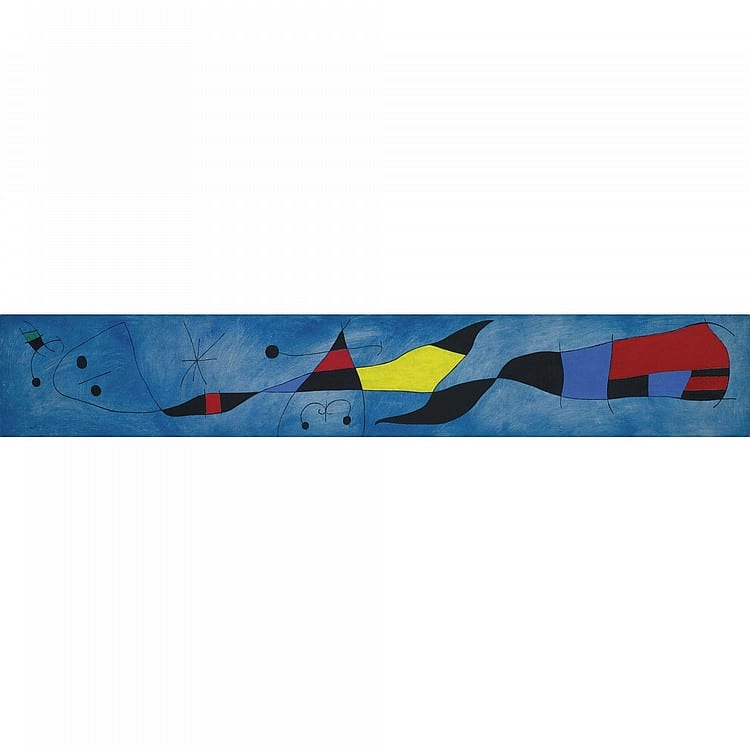
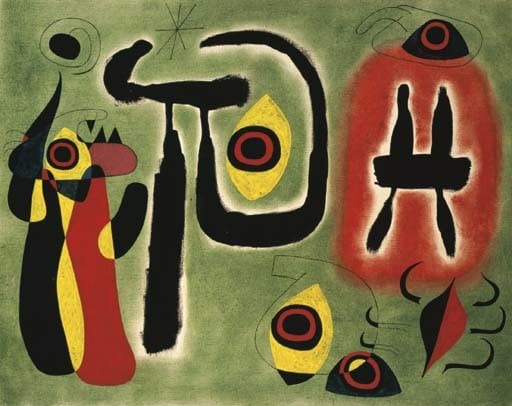
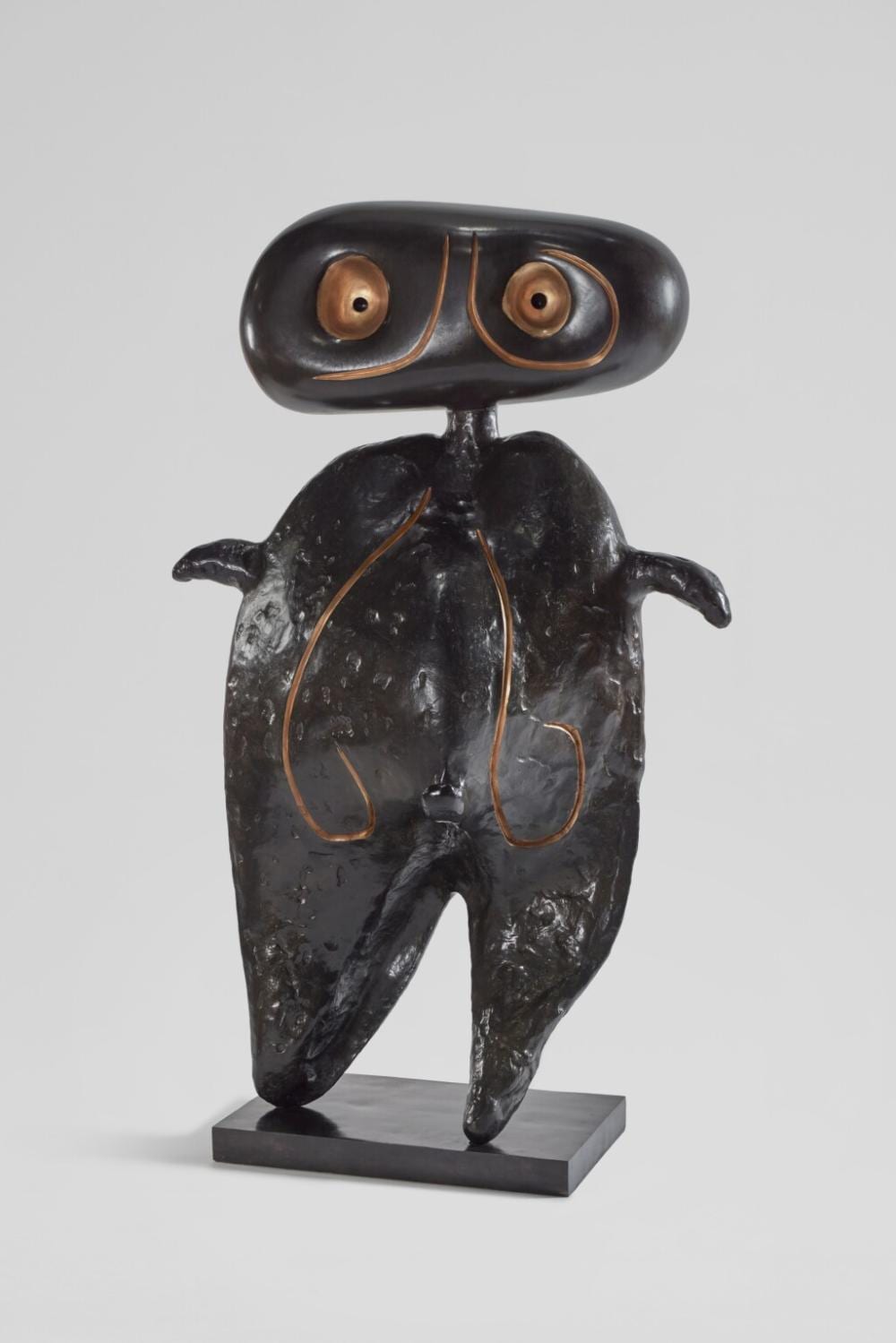
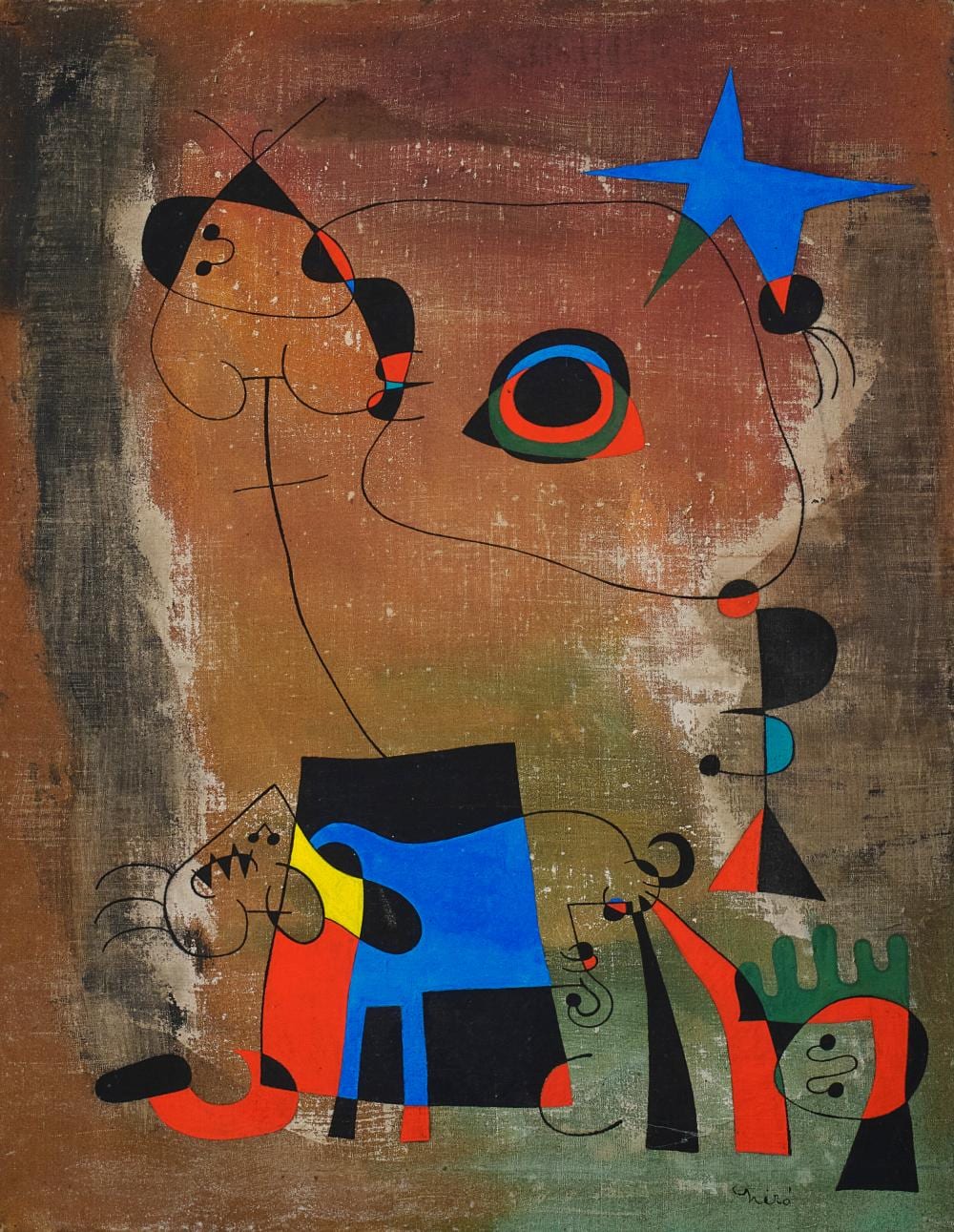
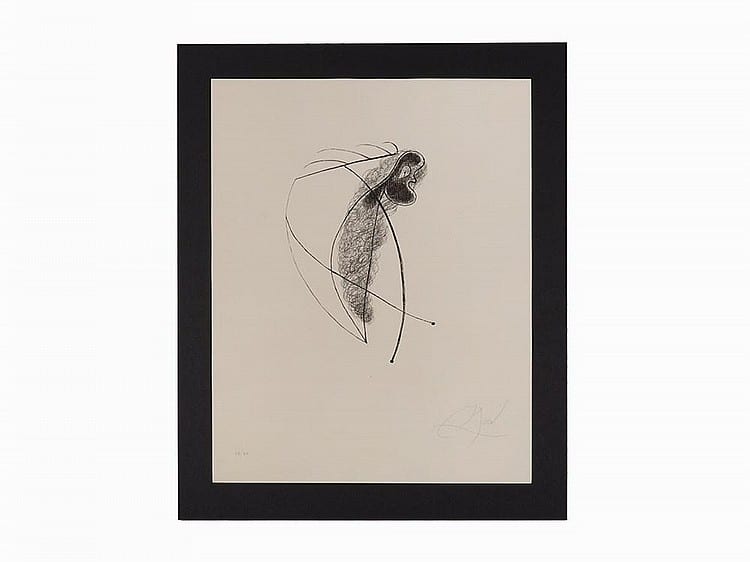
Lithograph on cream wove paper 1930 (published 1973) Joan Miró (1893-1983) - Spanish artist, widely considered a Surrealist and pioneer of Automatism 'Lithograph III' Signed in pencil lower right 'Miró' Numbered in pencil lower left '48/50' Printed by Damià Caus, Barcelona Published by Sala Gaspar, Barcelona Mourlot Ib Another work from this edition is in the permanent collection of the Museum of Modern Art, New York Full margins; matted, hinged to mat Image dimensions (slightly irregular): 12 1/16 x 7 15/16 in. (30.6 x 45.5 cm.) Sheet dimensions: 22 ⅙ x 17 ¾ in. (56 x 45.1 cm.) Overall dimensions: 26 x 21 ¾ in. (66 x 55.2 cm.) Very good condition Simple and imaginative, this lithograph by Joan Miró embodies the artist's skillful use of form to convey the inner workings of the human psyche. Using line and shading in an economical manner, Miró creates an insect with a bean-shaped face. Another work from this edition is the permanent collection of the Museum of Modern Art, New York. Executed in 1930 and published in 1973, this lithograph on cream wove paper is signed and numbered forty-eight from an edition of fifty. Printed by Damià Caus and published by Sala Gaspar, the work has full margins with the image measuring 12 1/16 x 7 15/16 inches. In overall good condition with no evidence of tears or repairs. Joan Miró (Spanish, 1893-1983) Widely considered one of the leading Surrealists, though never officially part of the group, Joan Miró pioneered a wandering linear style of Automatism-a method of "random" drawing that attempted to express the inner workings of the human psyche. Miró used color and form in a symbolic rather than literal manner, his intricate compositions combining abstract elements with recurring motifs like birds, eyes, and the moon. While he prized artistic freedom, Miró revered art history, basing a series of works on the Dutch Baroque interiors of Hendrick Sorgh and Jan Steen. In turn, Miró has inspired many artists-significantly Arshile Gorky, whose bold linear abstractions proved a foundational influence on Abstract Expressionism.