
What Grandma Moses paintings and prints actually sell for
Prints and lithographs of her pictures sell for tens or a few hundred dollars. Tiles she painted bring hundreds to low thousands, and her original paintings sell for thousands to tens of thousands.
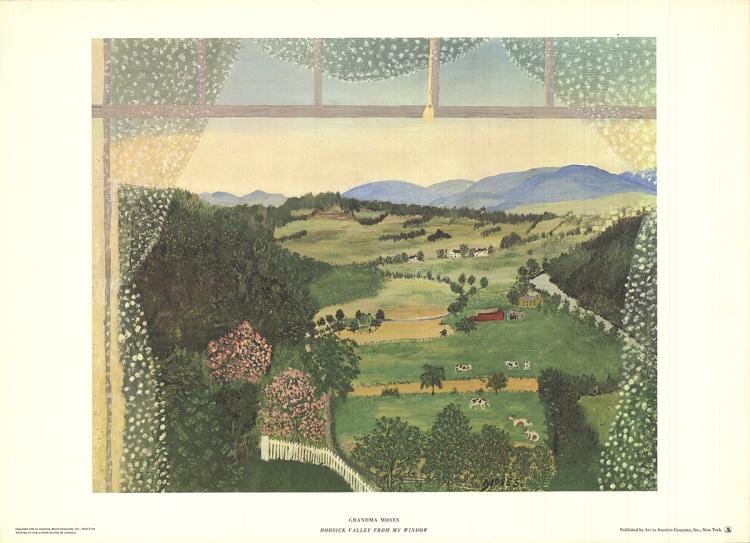
Prints and lithographs. An unsigned offset lithograph of Grandma Moses's "Hoosick Valley From My Window," unframed and in near-mint condition, sold for $50.
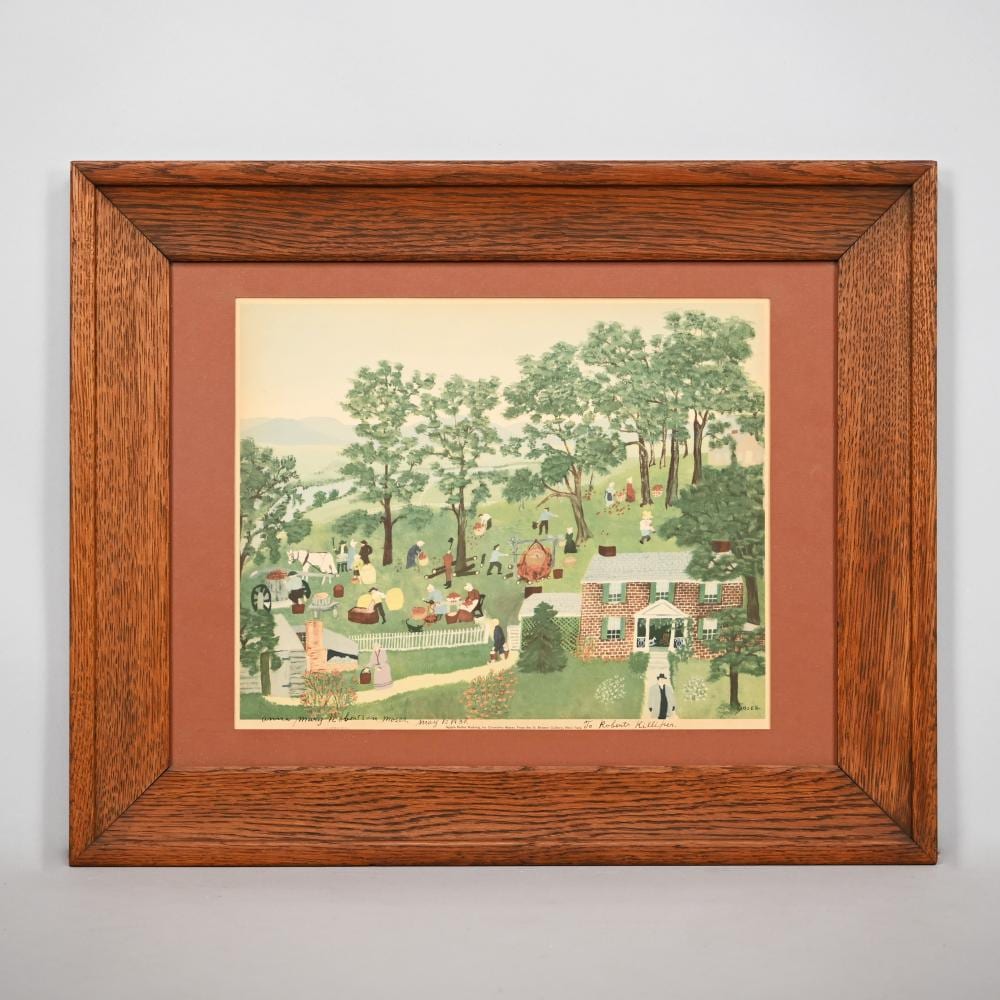
A framed print of "Apple Butter Making" from the St. Etienne Gallery, New York, signed and dated May 12, 1950 in the plate, sold for $450.
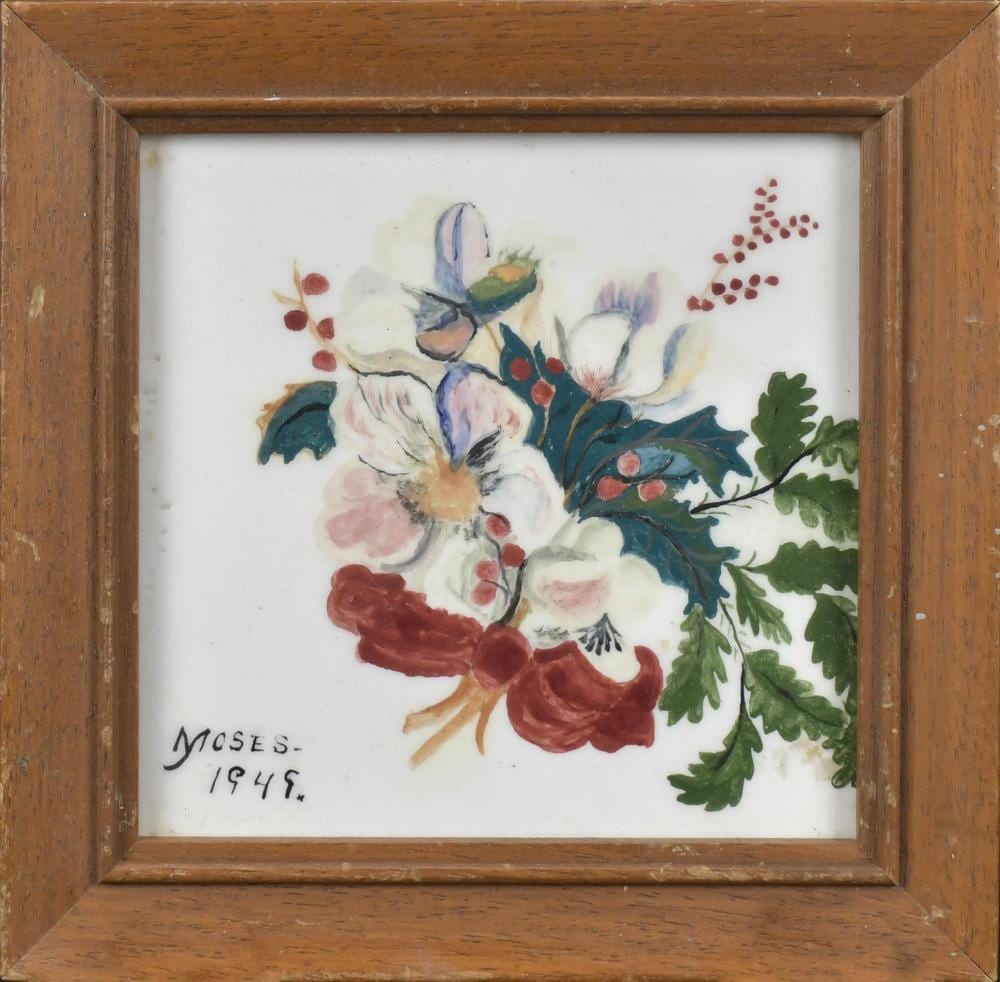
Painted tiles. A 6-inch pottery tile hand painted by Grandma Moses with dogwood blossoms, dated 1949 and fired by Helen Beers of Pinewold Pottery, sold for $600.
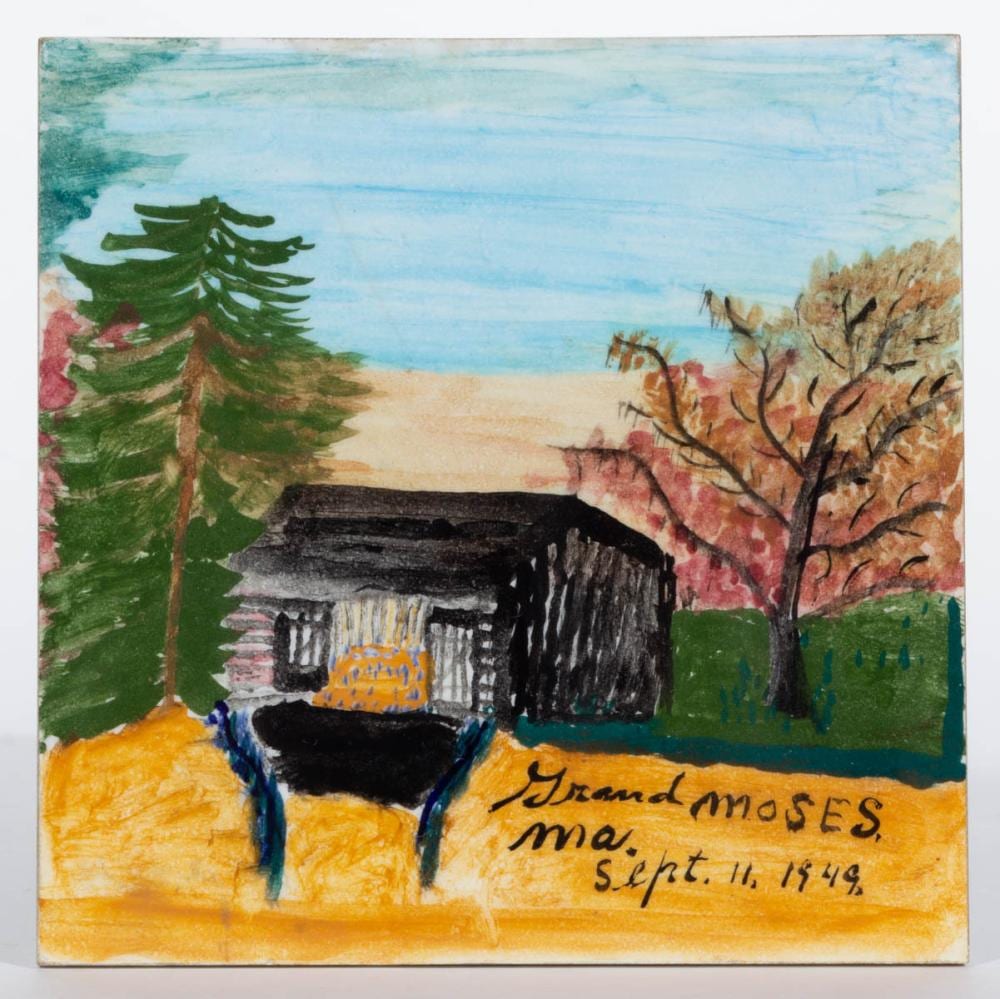
A landscape tile painted by Grandma Moses with a cabin in the woods, signed and dated Sept. 11, 1949, and fired by Helen C. Beers, sold for $1,638.
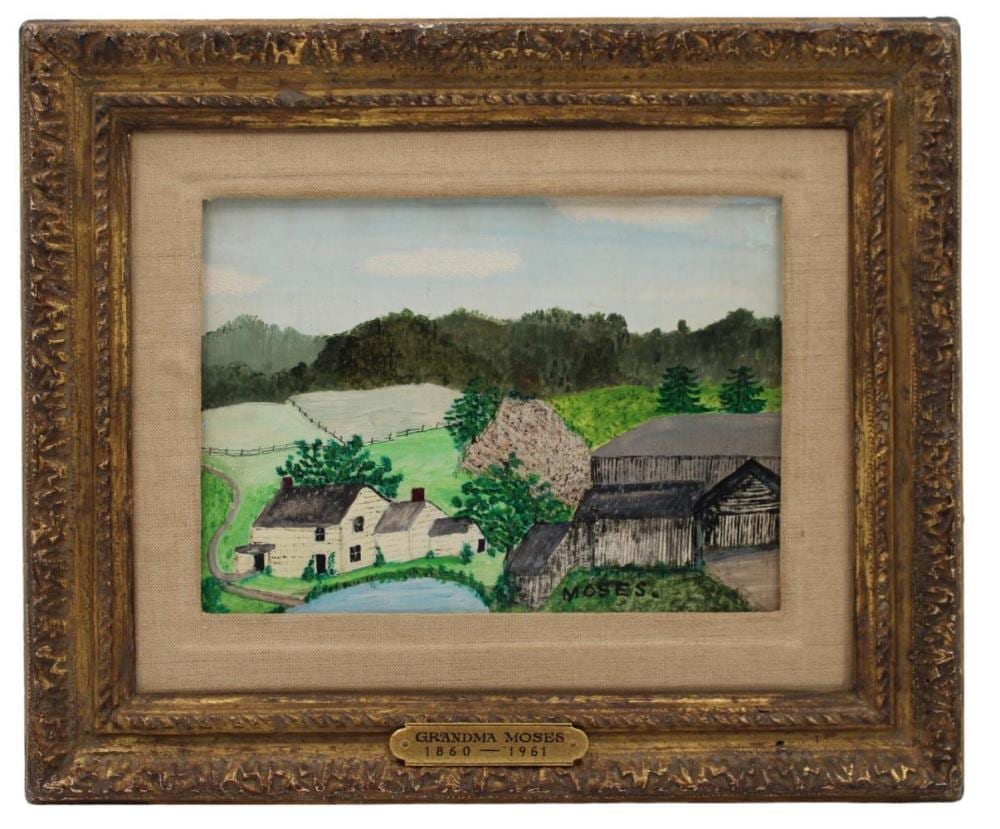
Original paintings. A small signed Grandma Moses painting in oil and glitter on masonite, 8 by 10 inches, sold for $6,000.
A signed oil painting on panel, 11 1/2 by 14 1/4 inches, titled and dated March 22, 1944 on the reverse, sold for $23,500.
Her 1948 oil painting on Masonite "Greenwich, NY," 16 by 20 inches, with provenance through Gallery St. Etienne, New York, sold for $59,375.
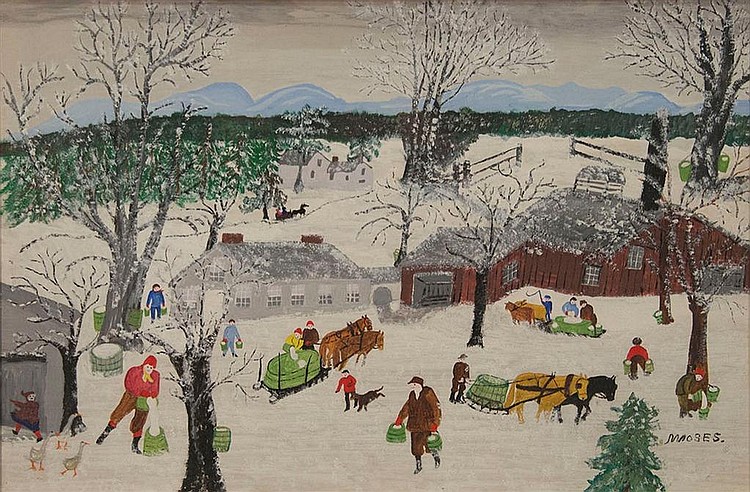
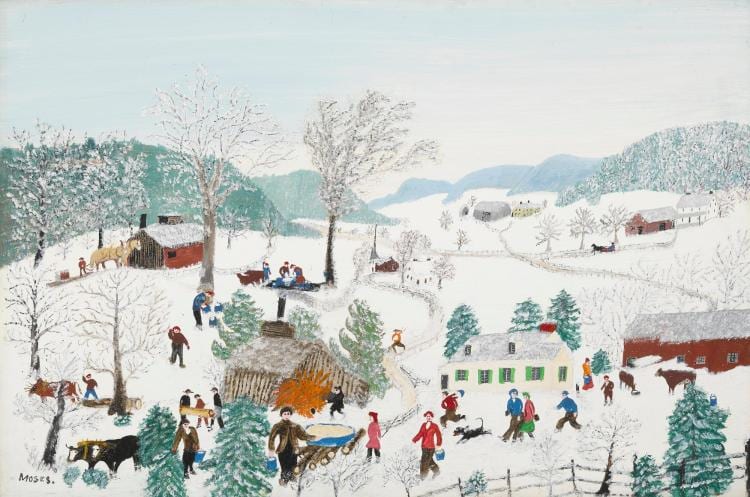
High-value outlier. "Sugaring Off," an oil and tempera painting on Masonite by Grandma Moses, sold for $348,500.
Photograph maker marks, model, condition, and completeness before treating any one sale as yours.
What similar items actually sold for
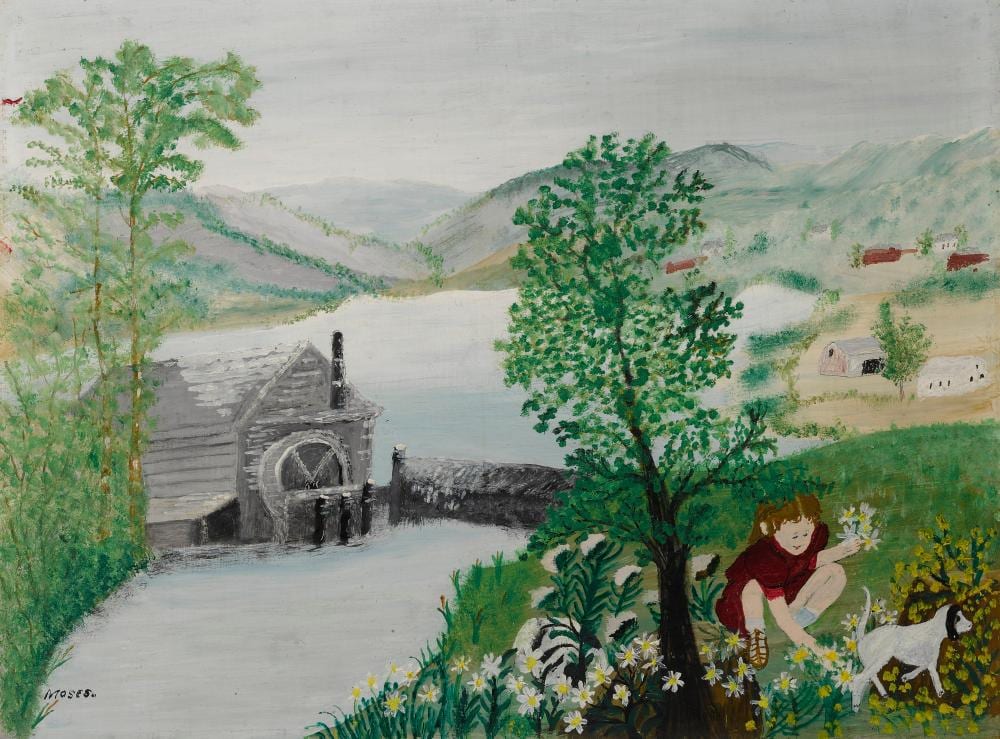
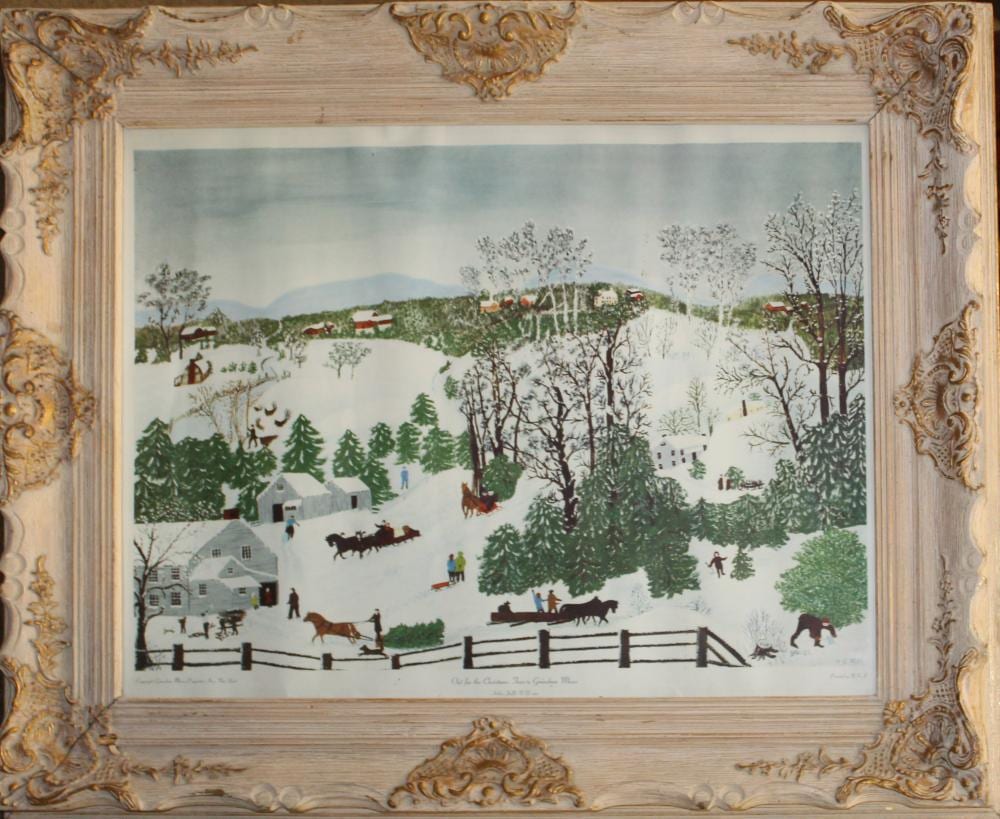
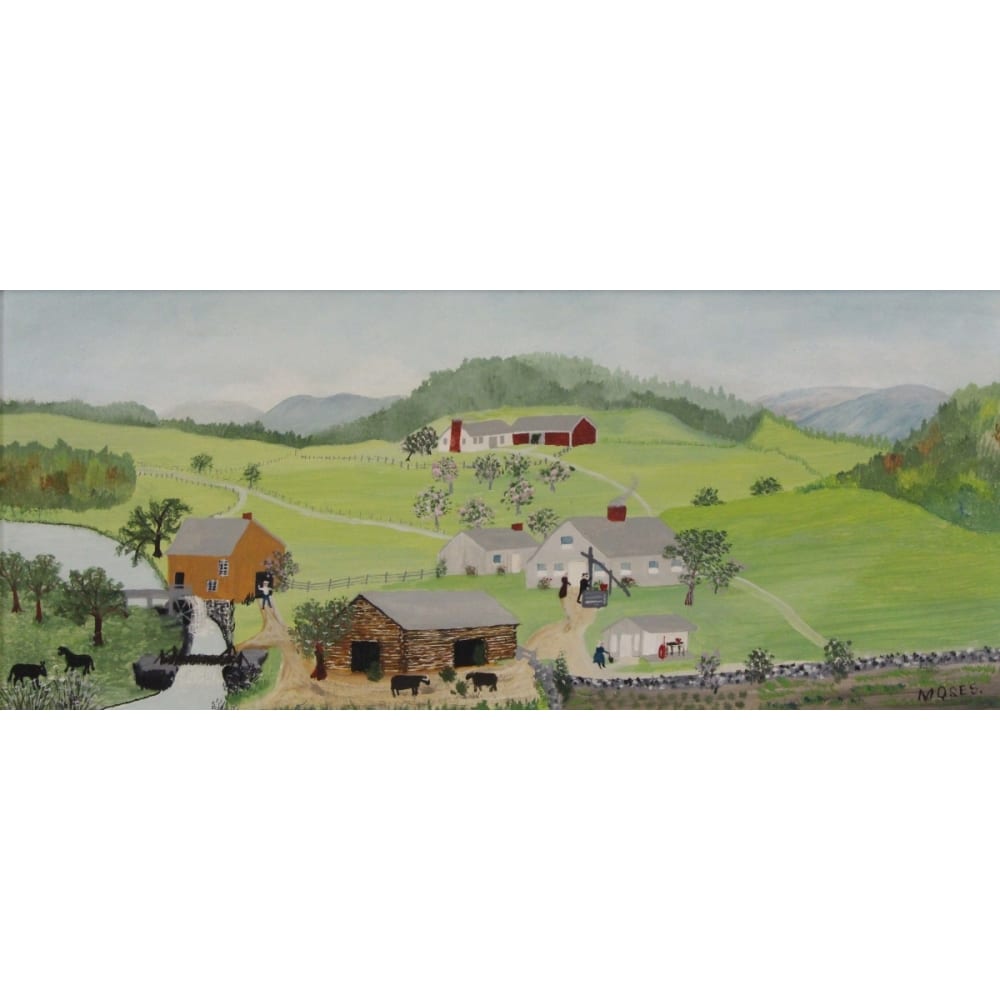
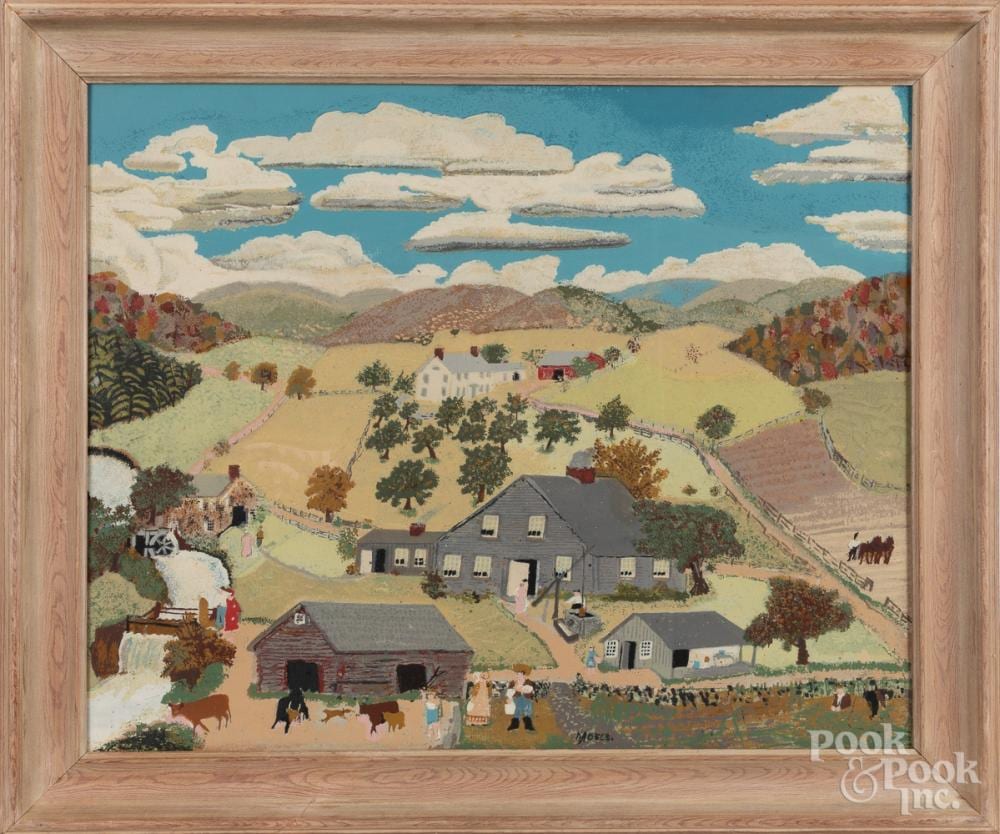
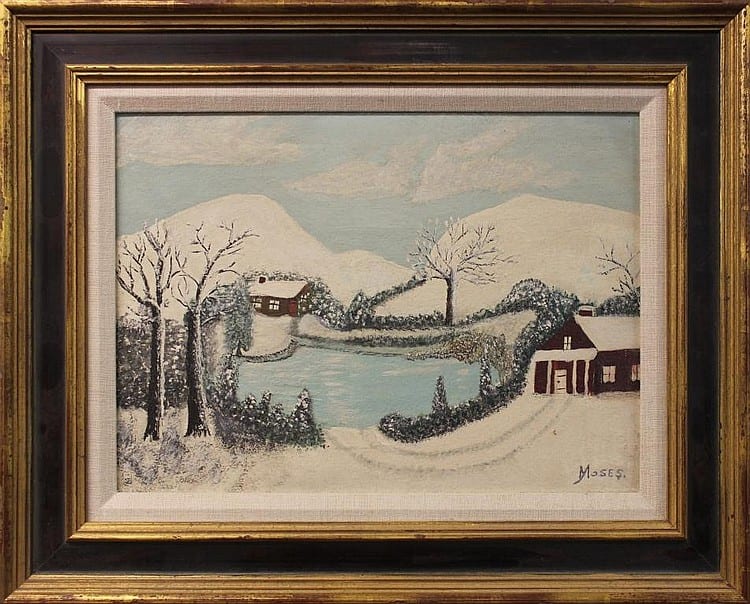
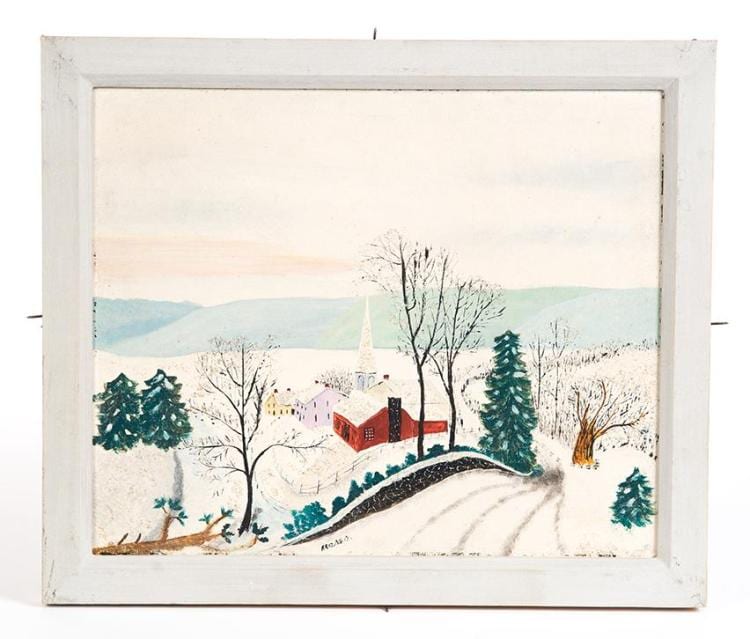
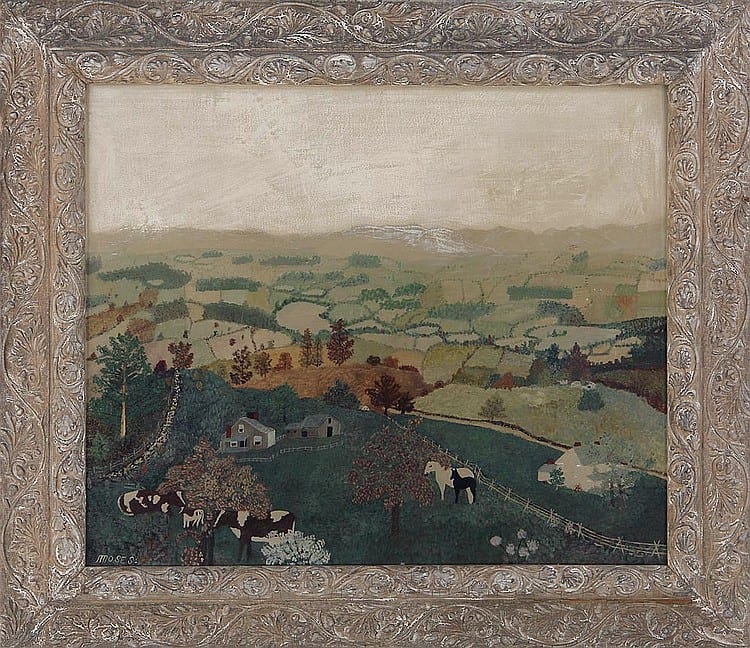
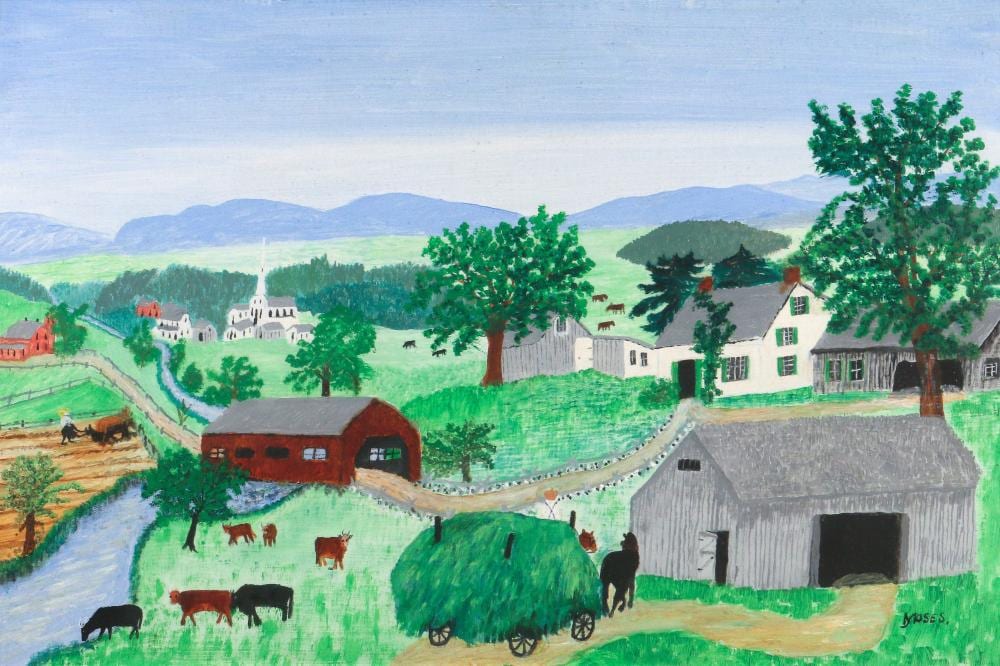
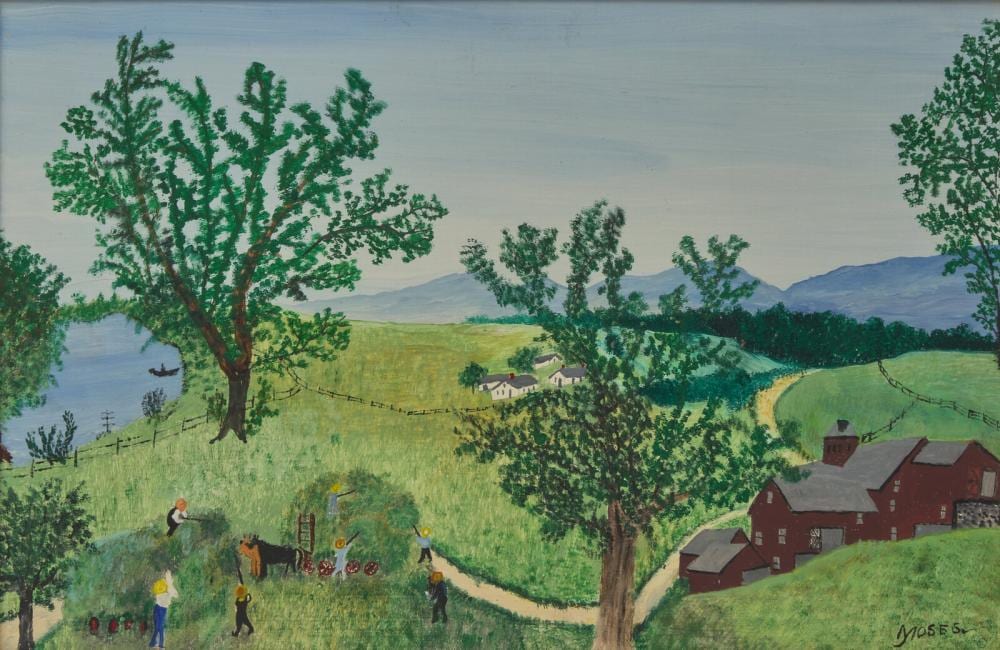
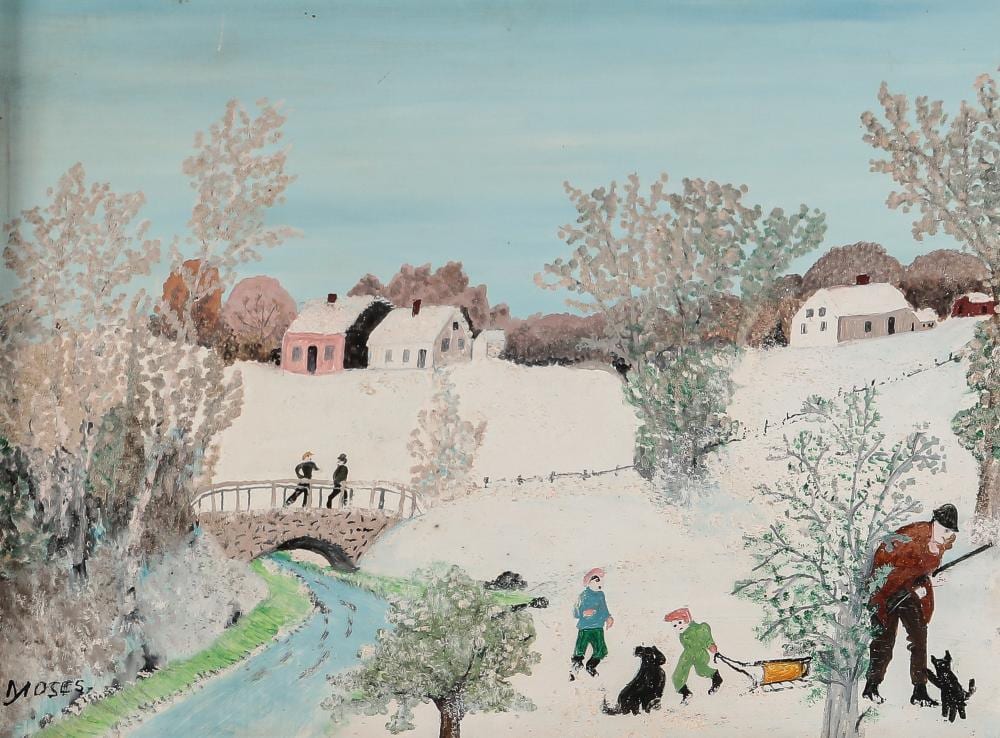
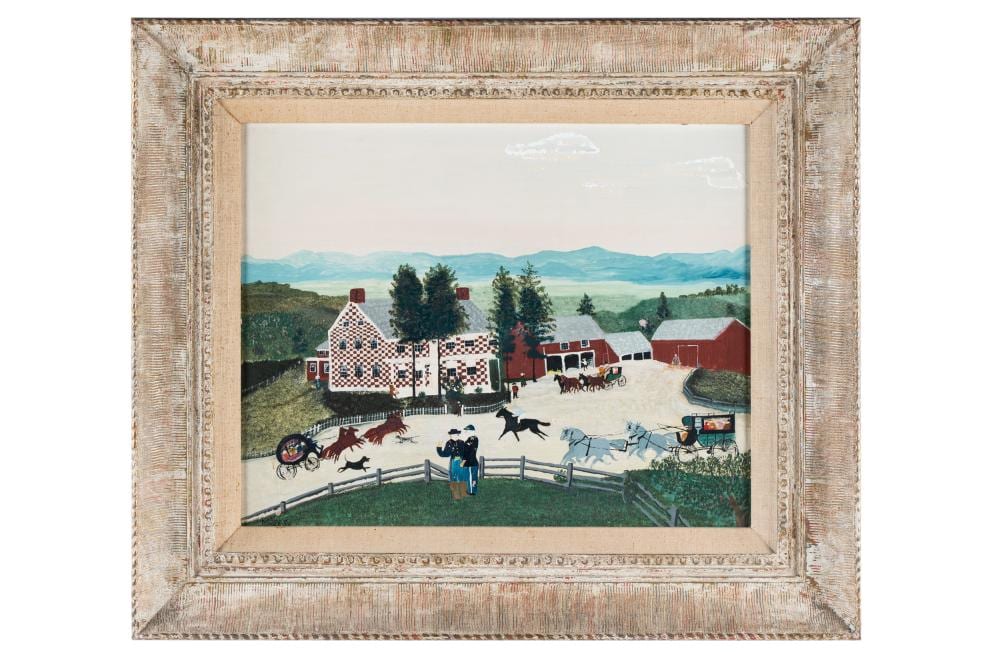
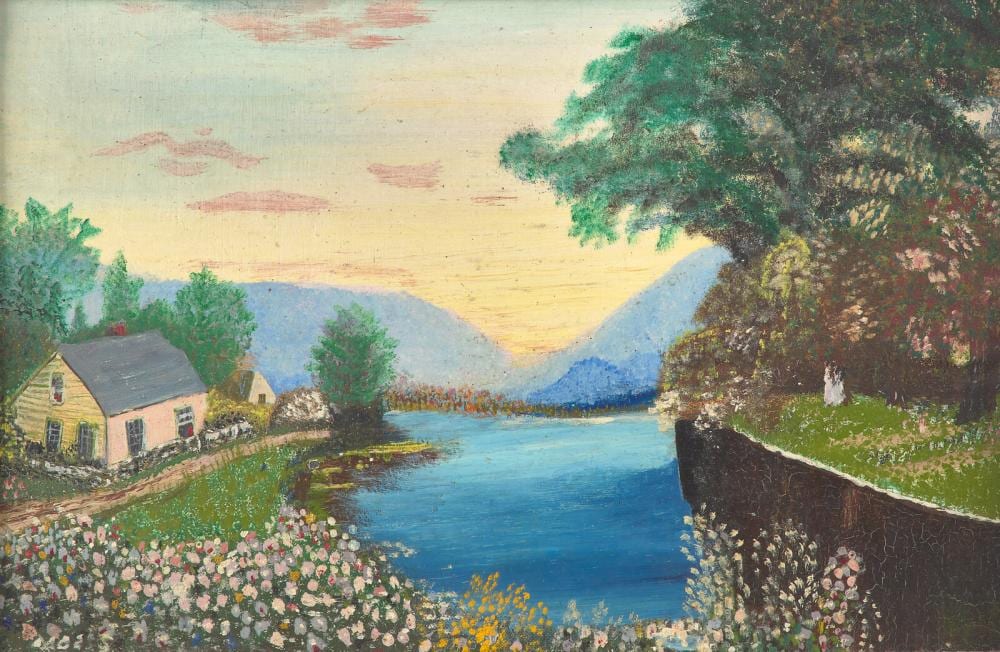
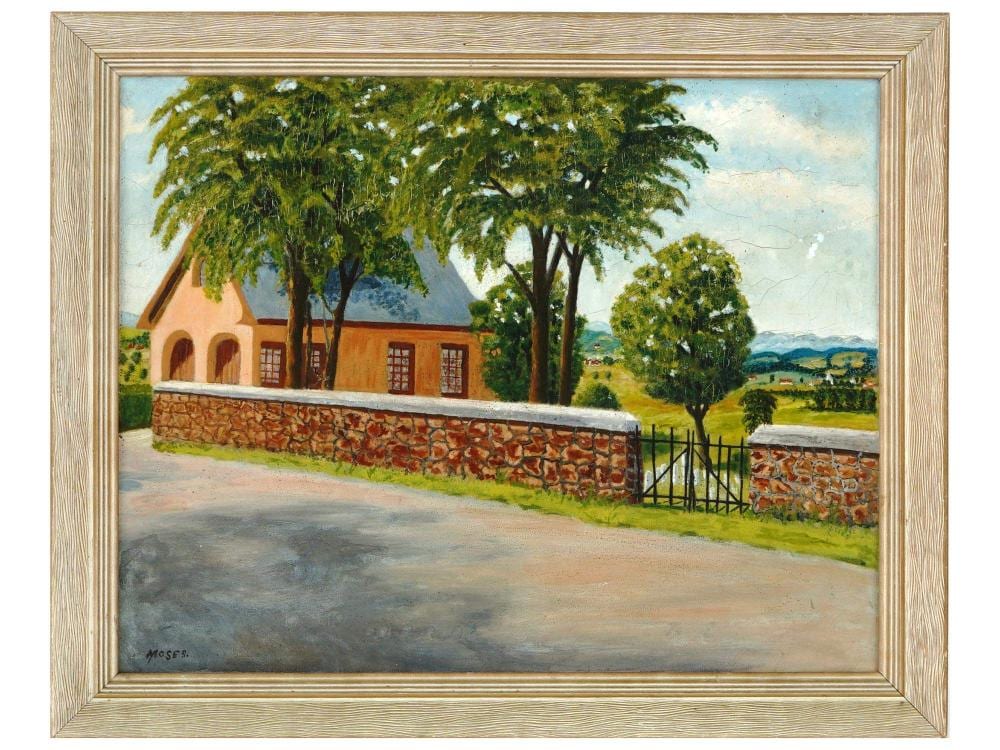
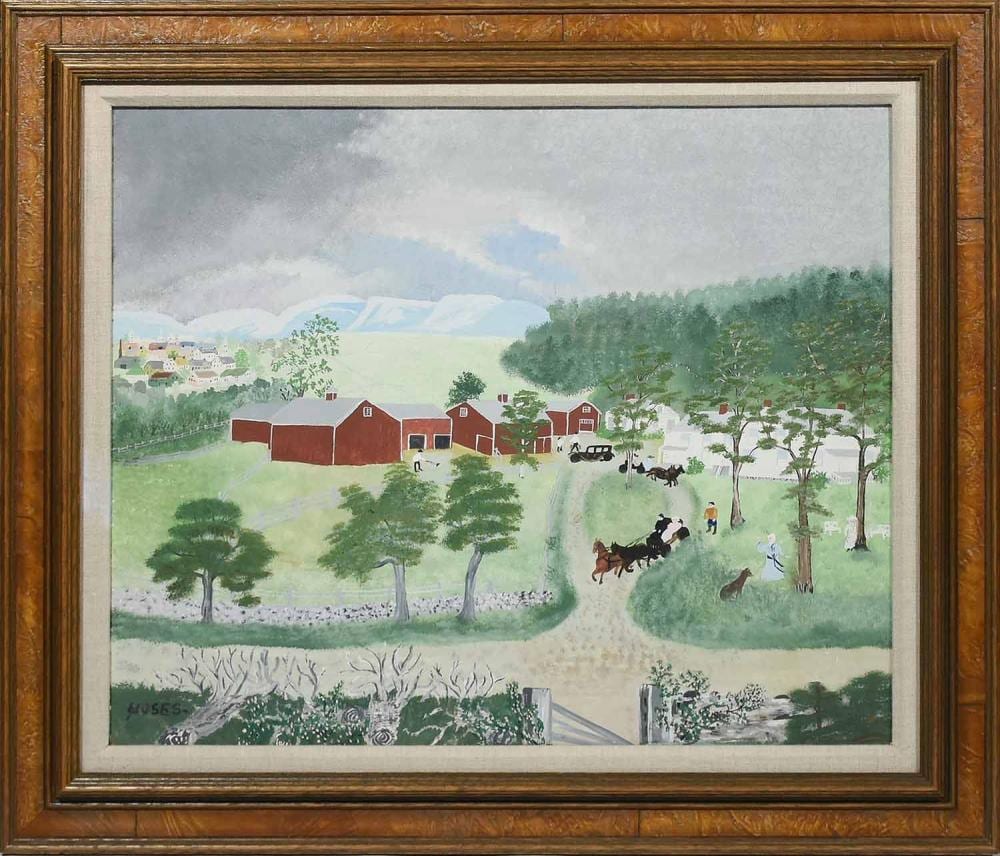
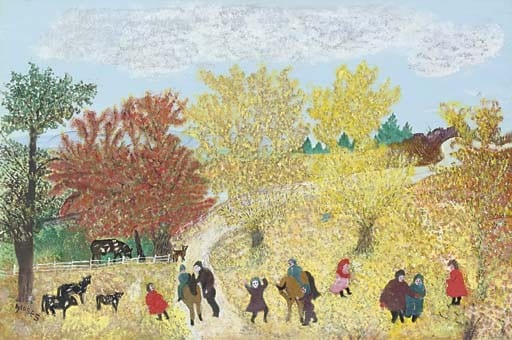
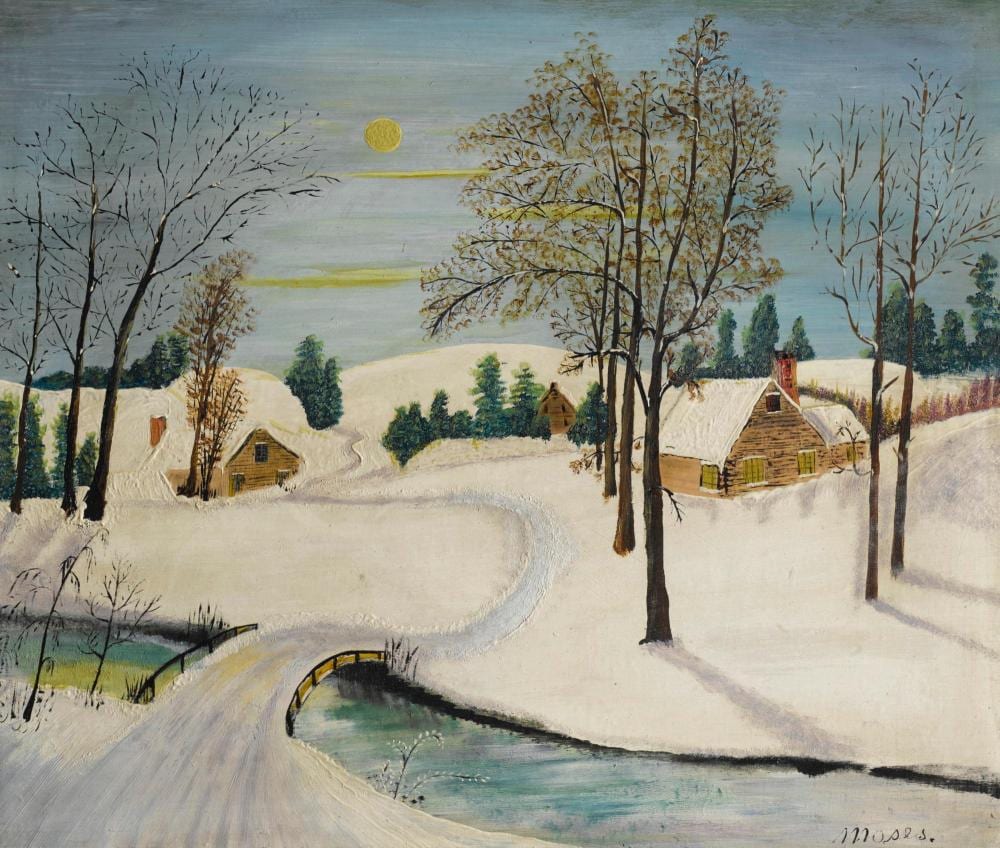
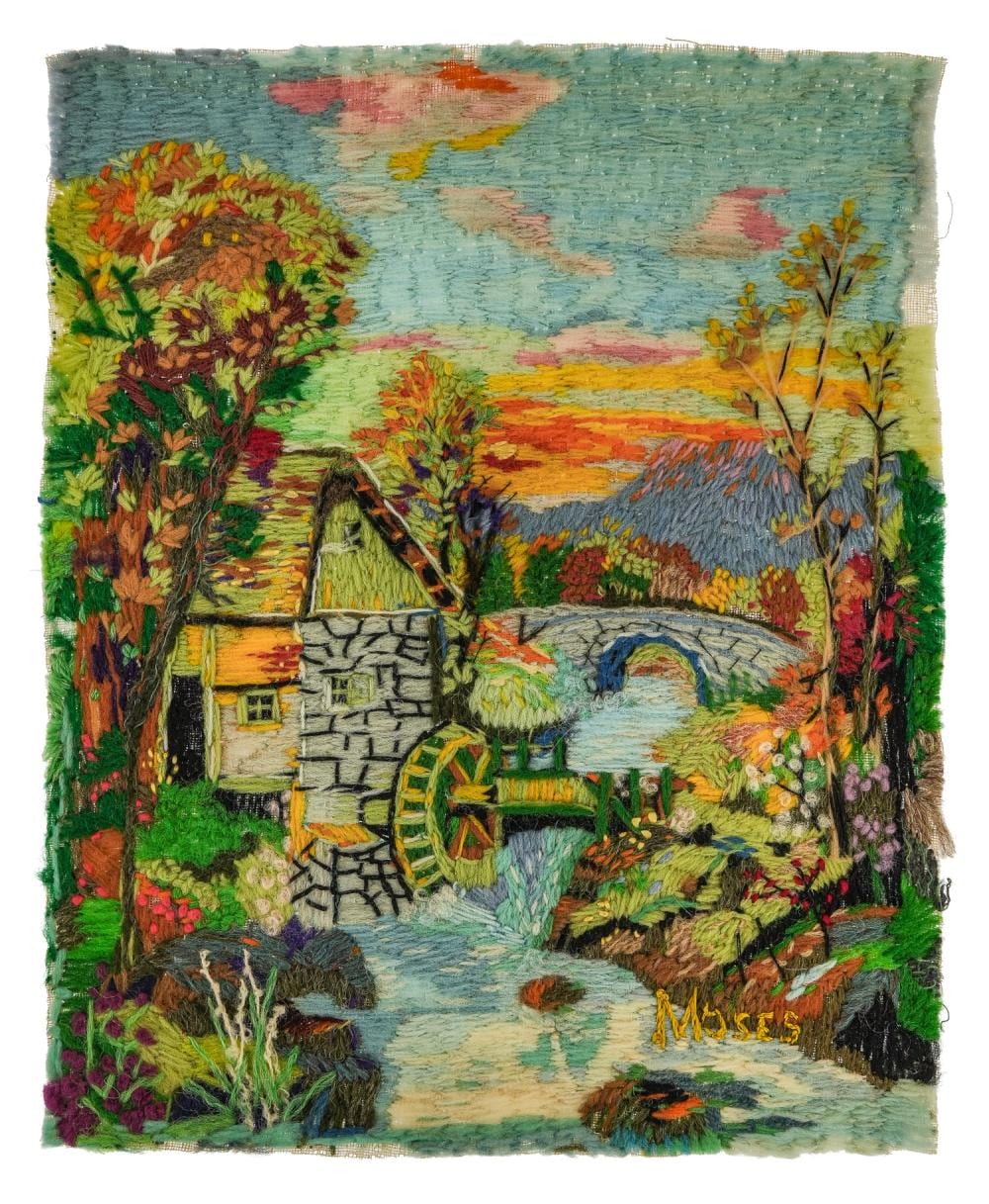
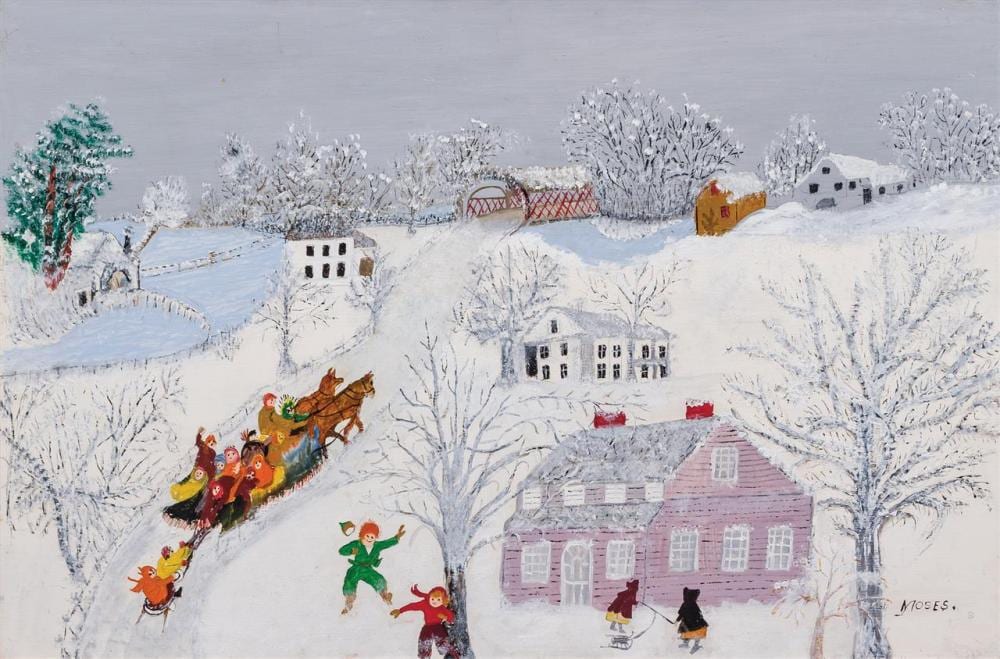
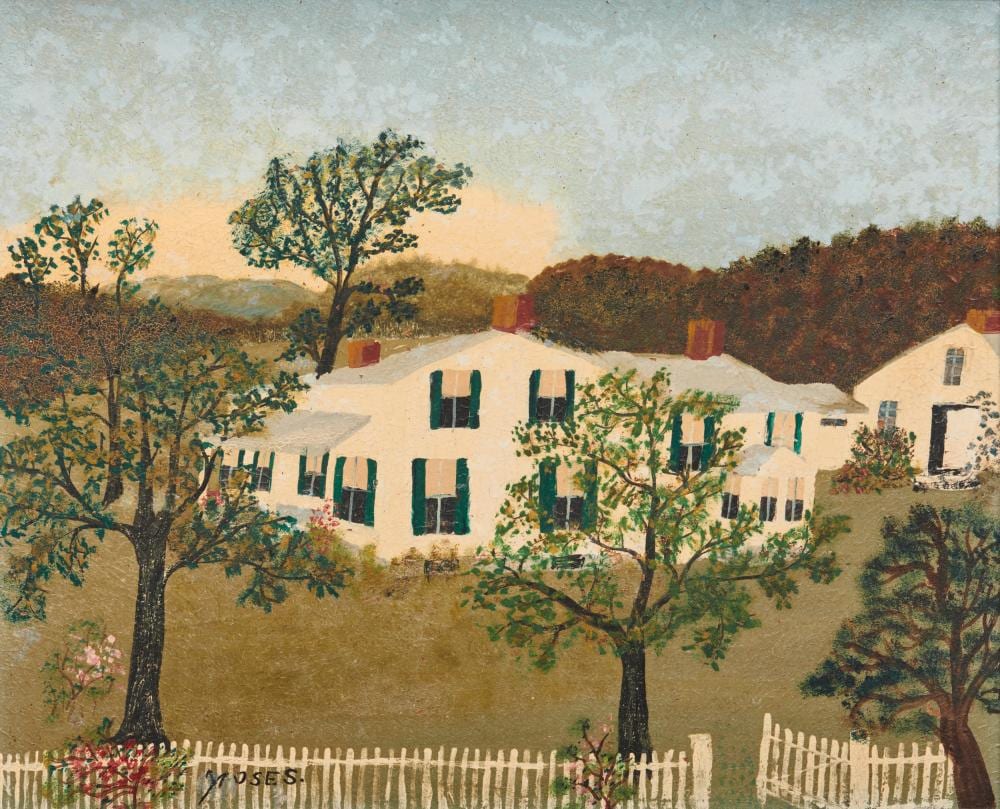
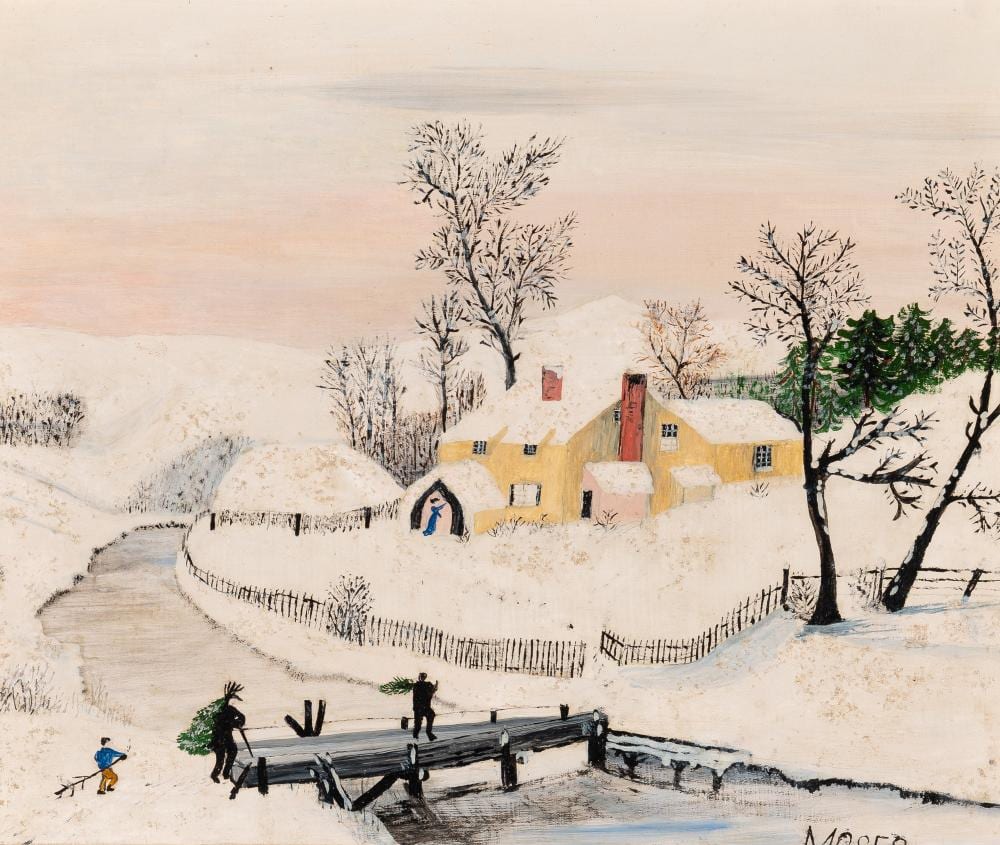
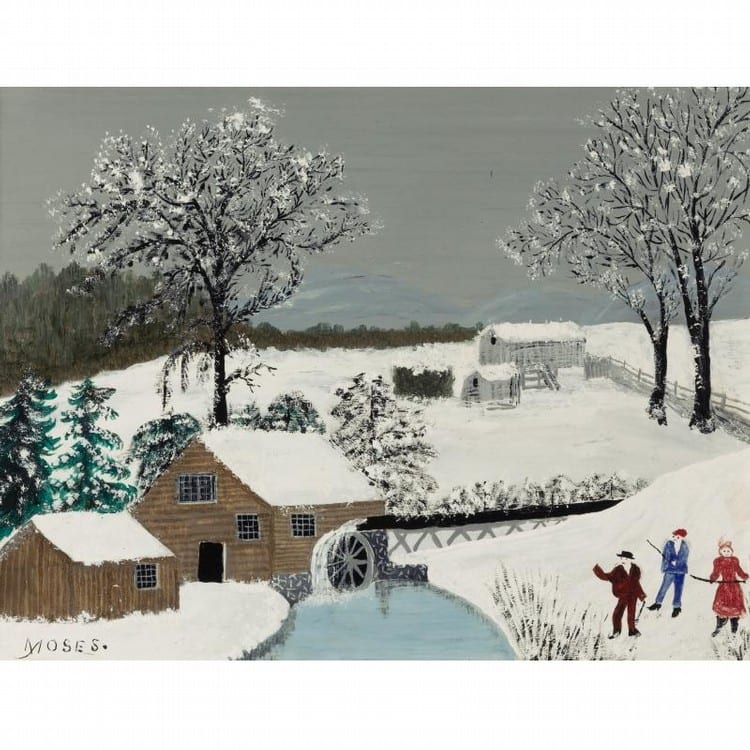
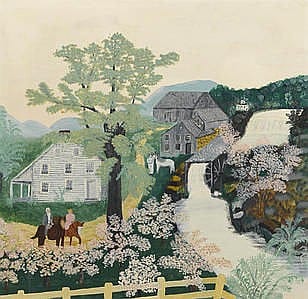
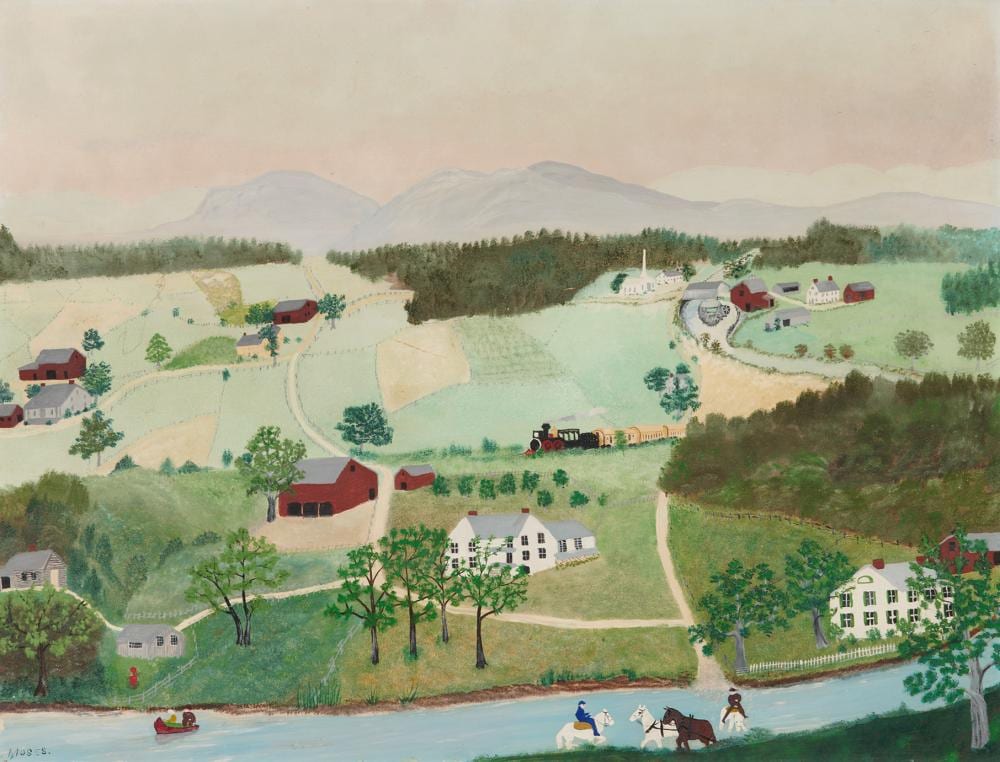
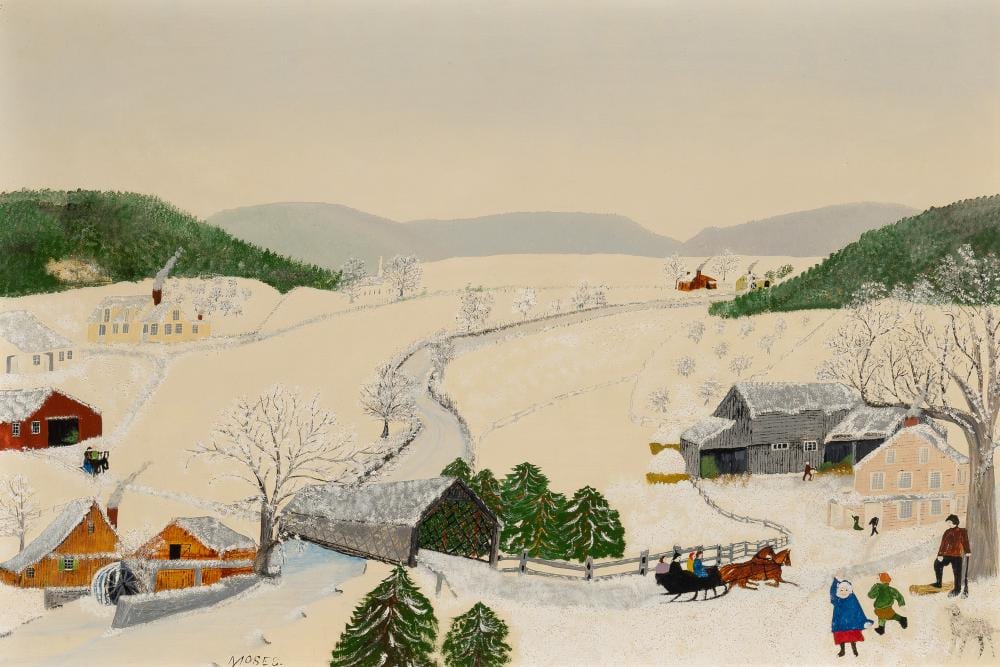
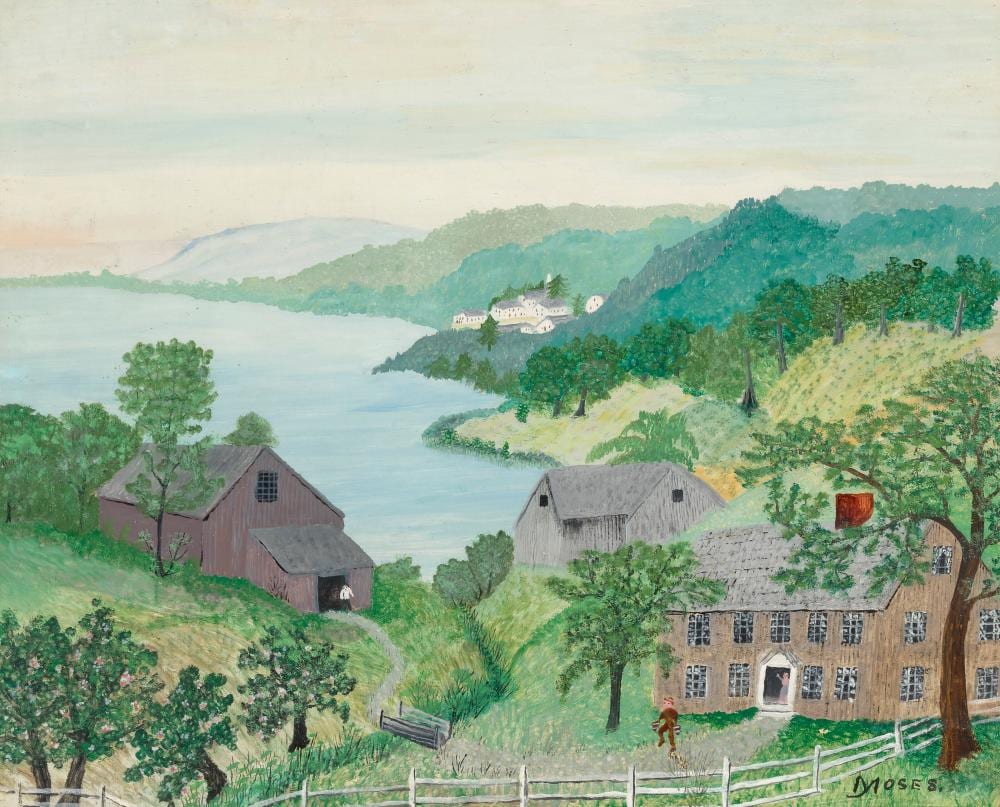
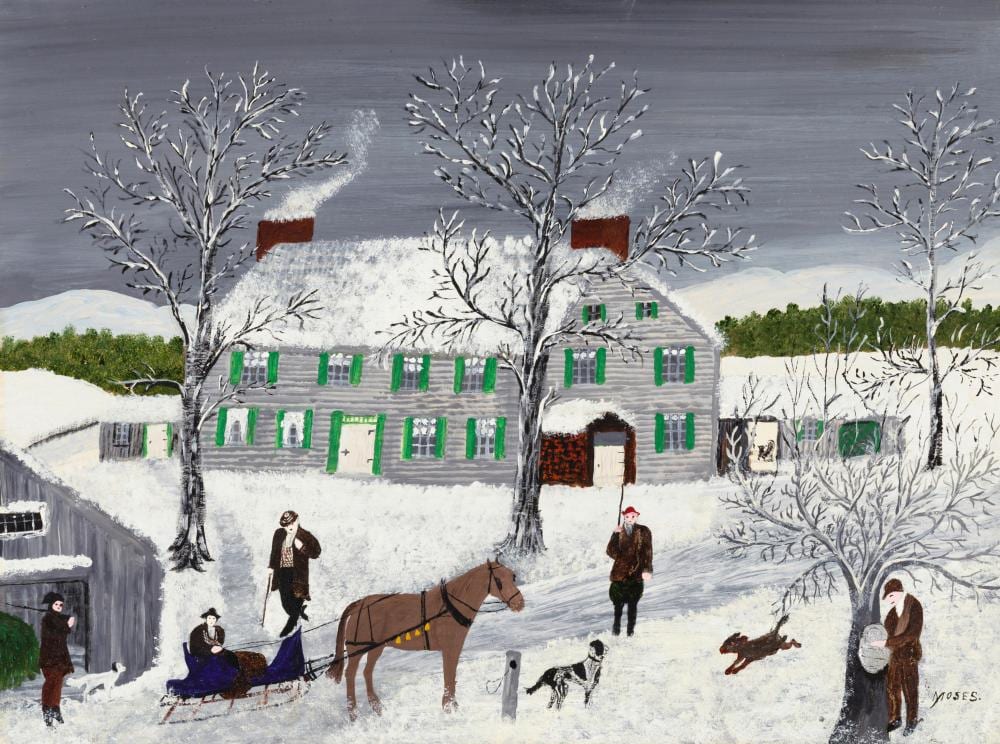
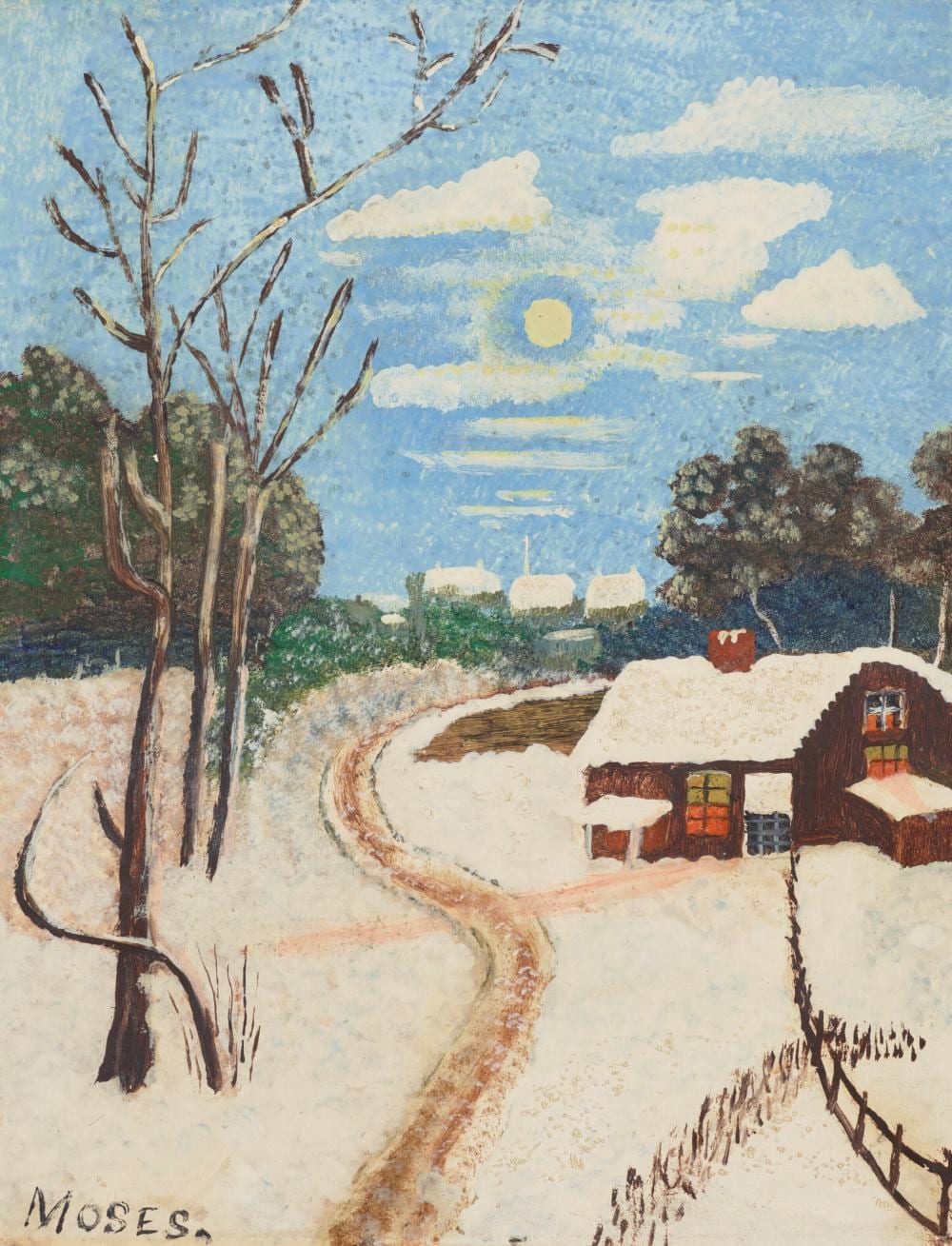
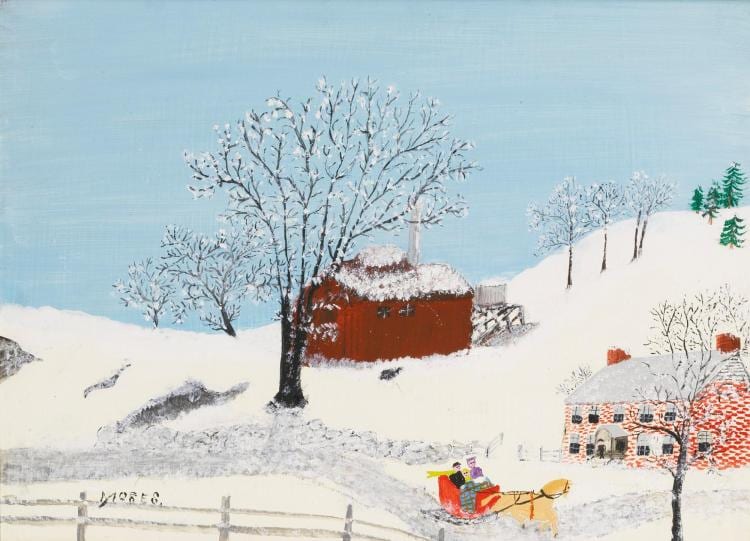
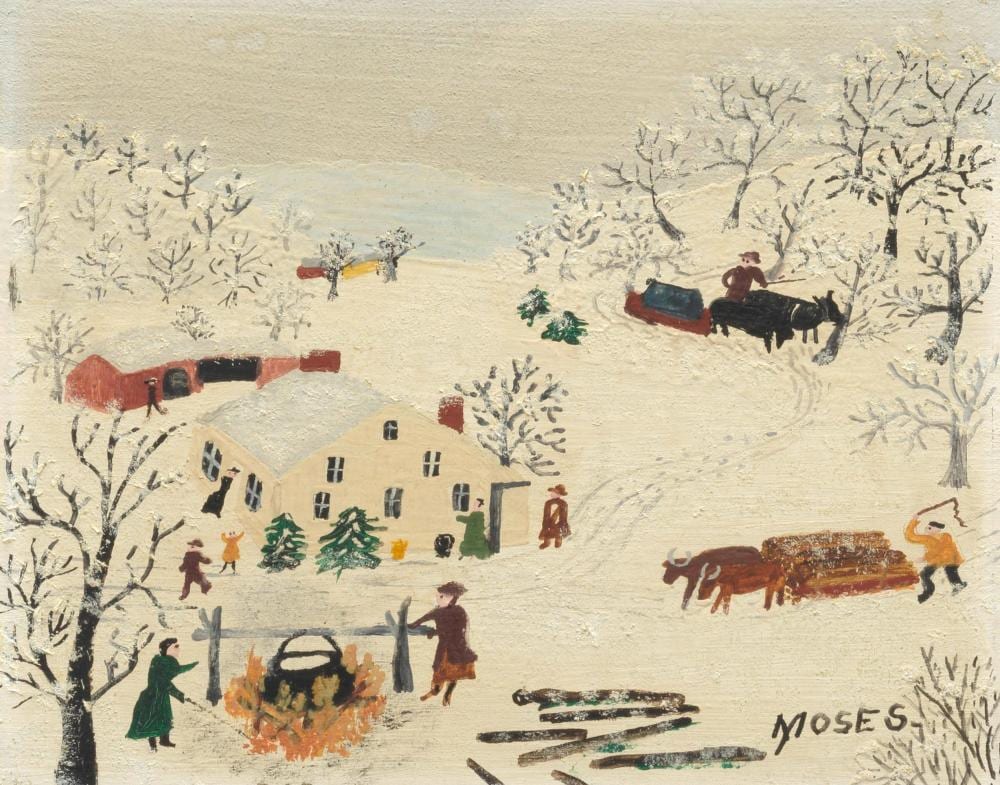
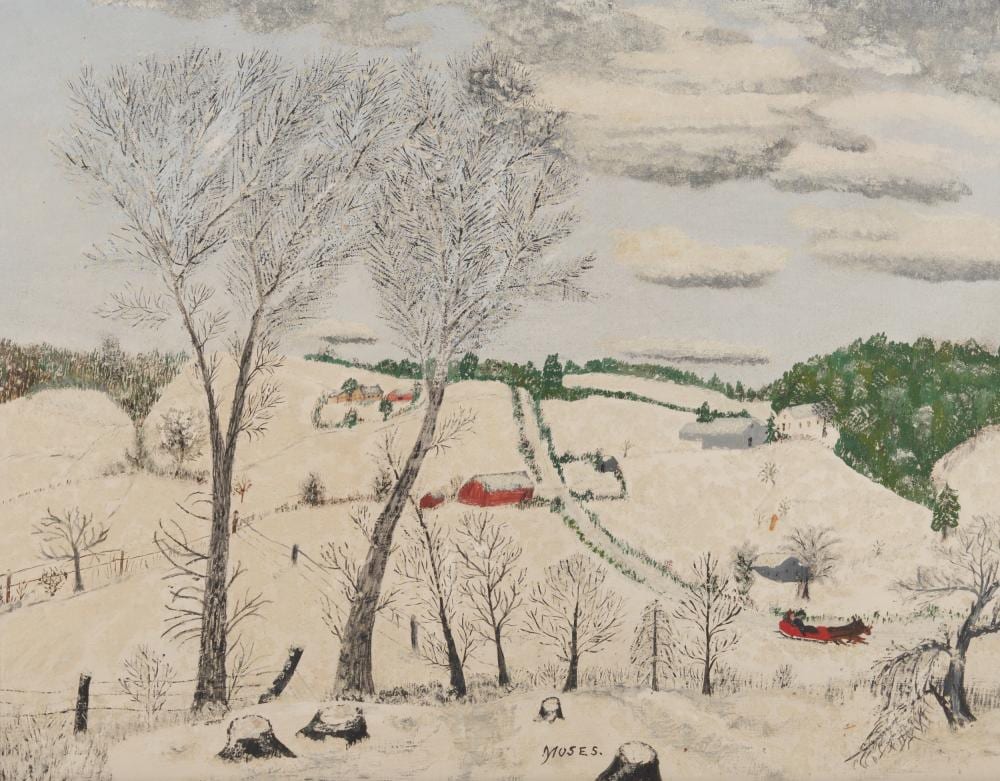
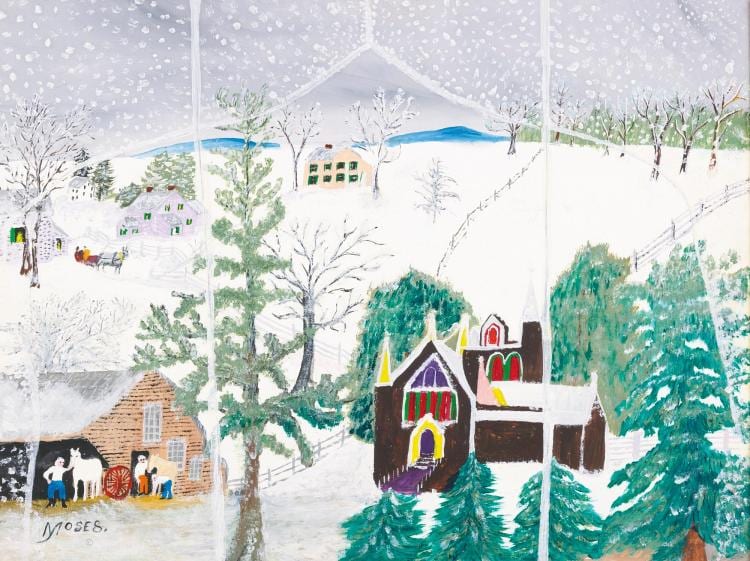
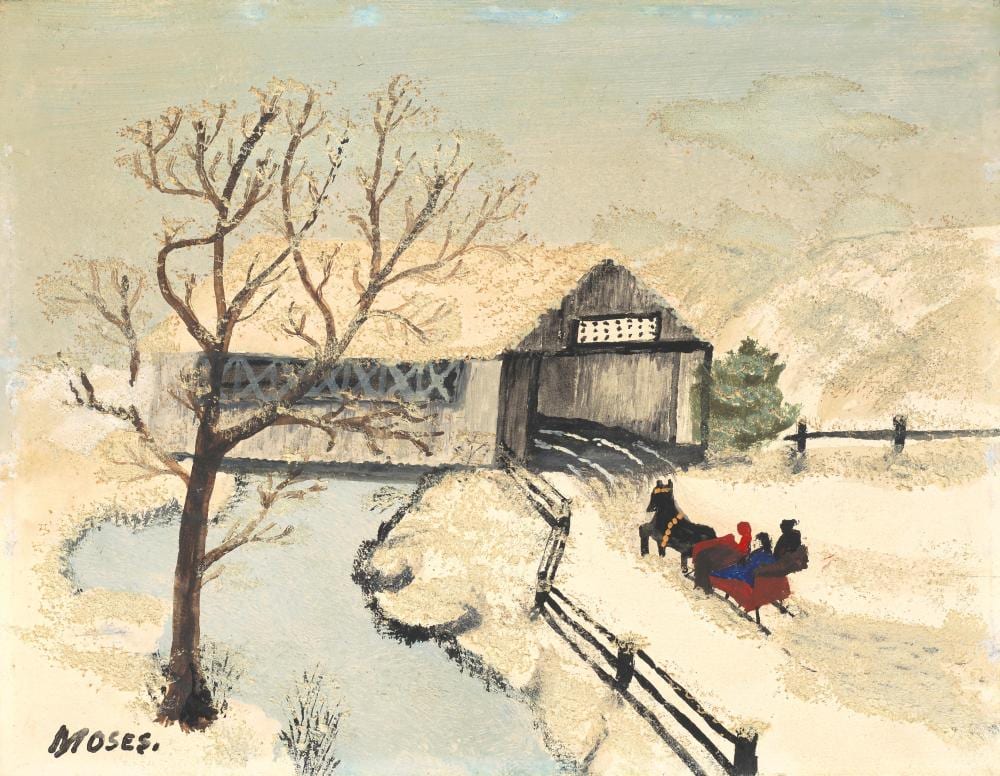
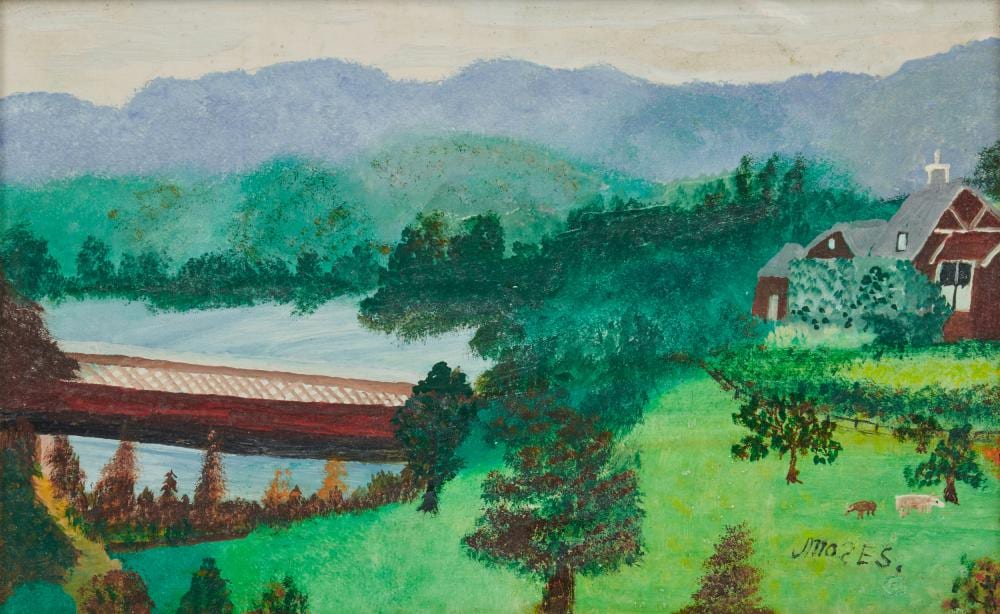
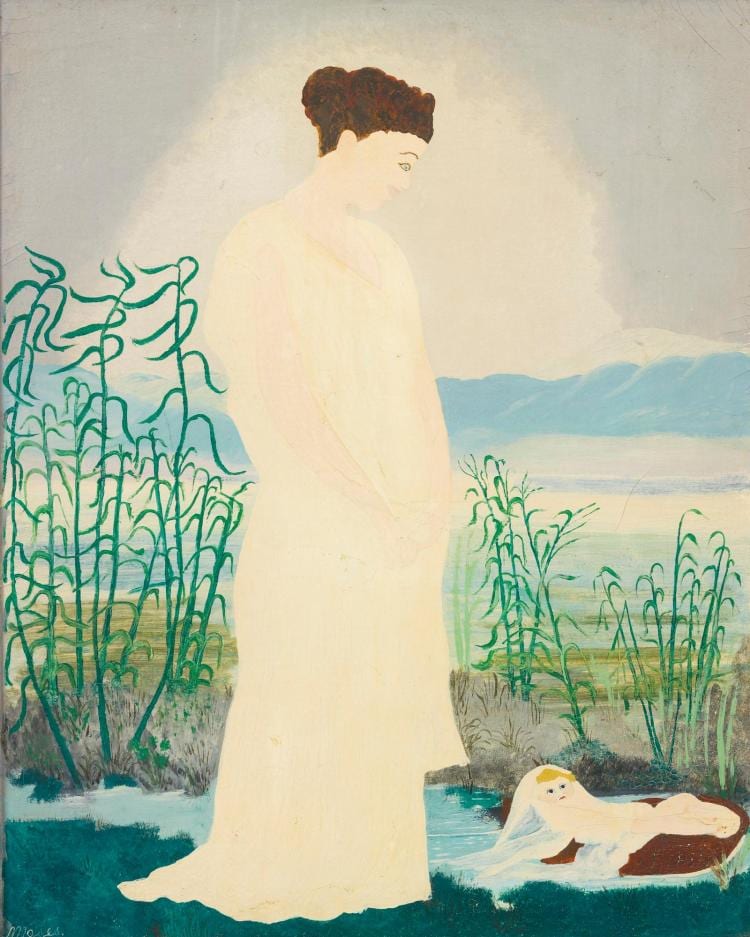
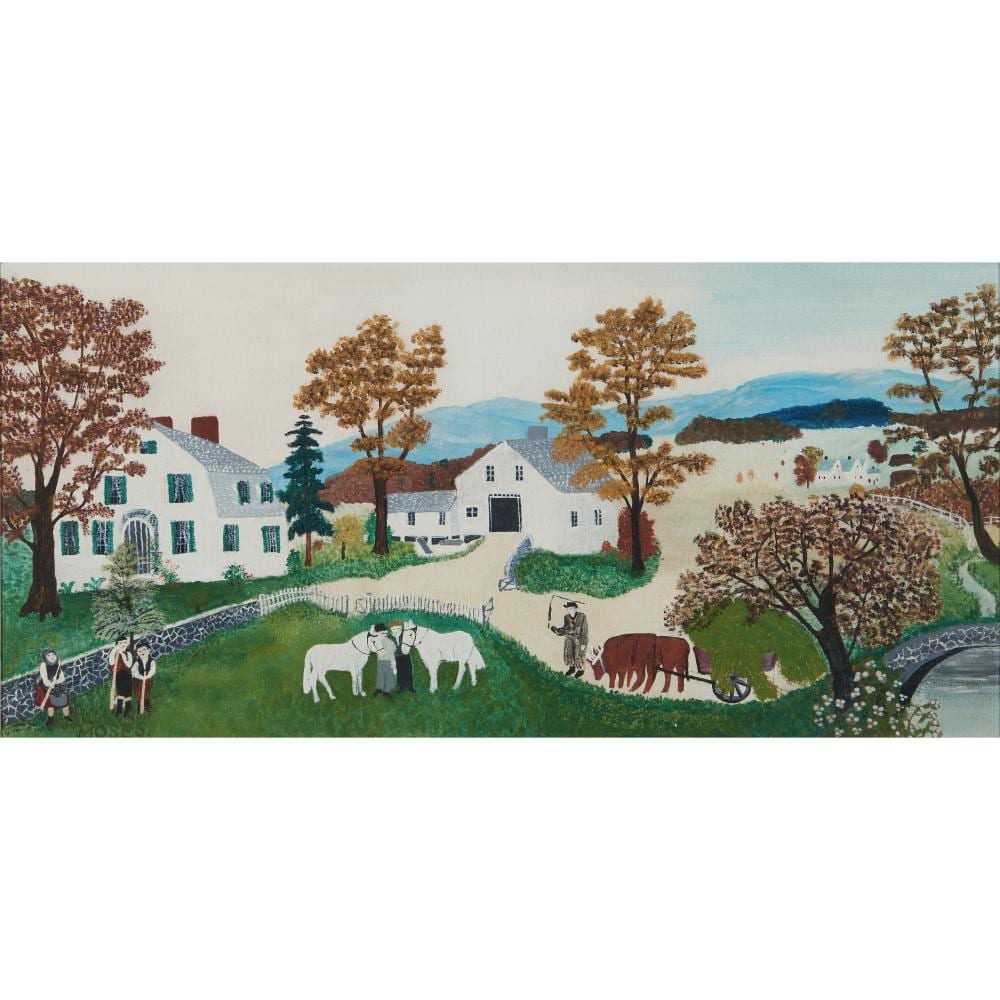
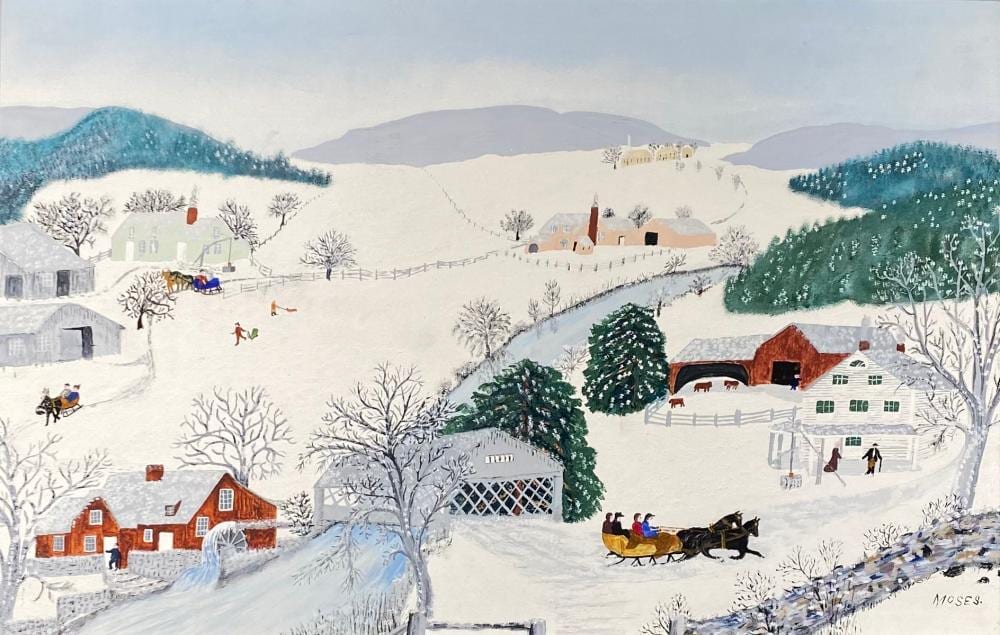
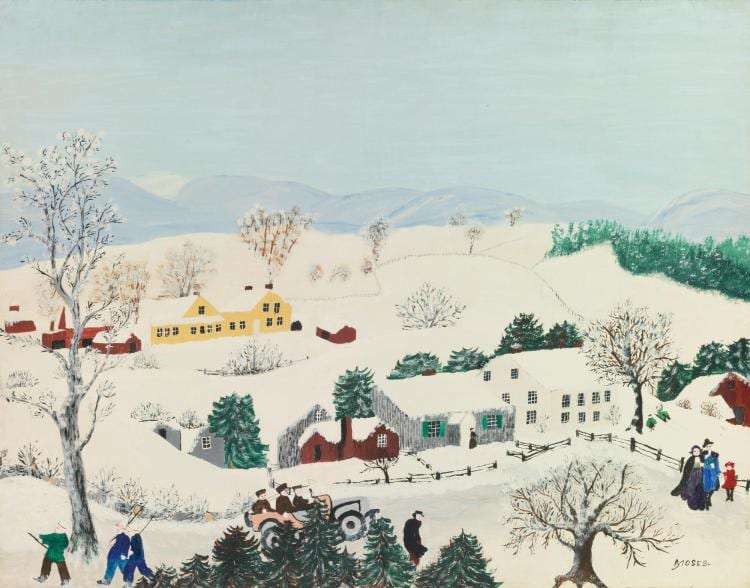
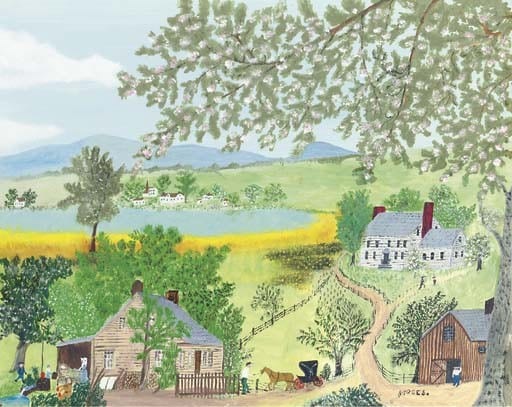
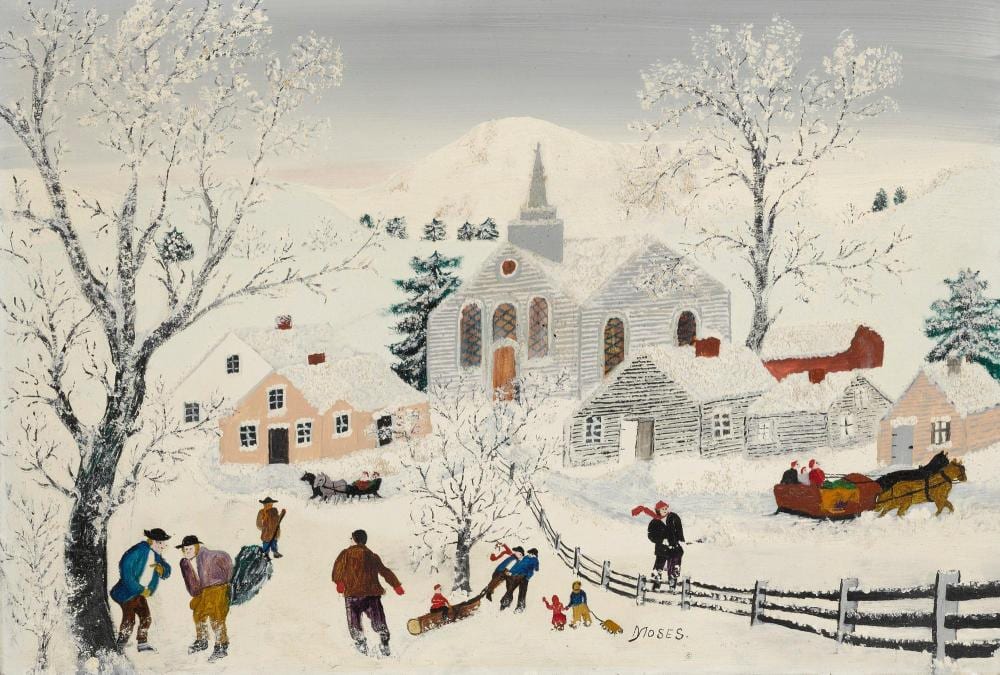
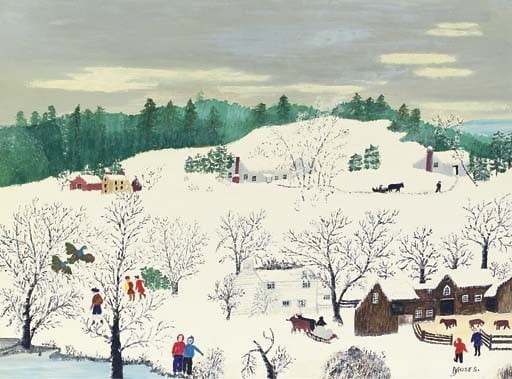
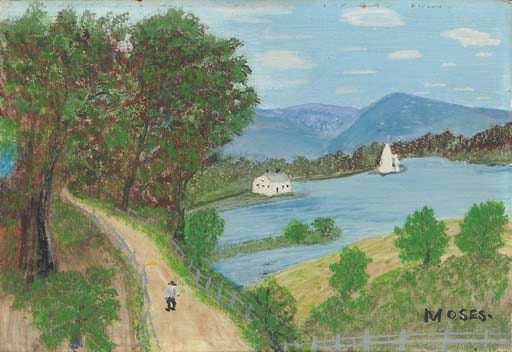
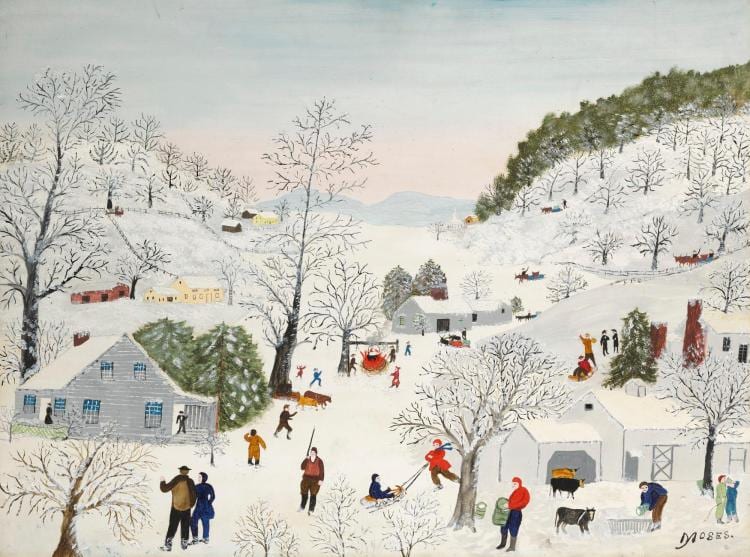
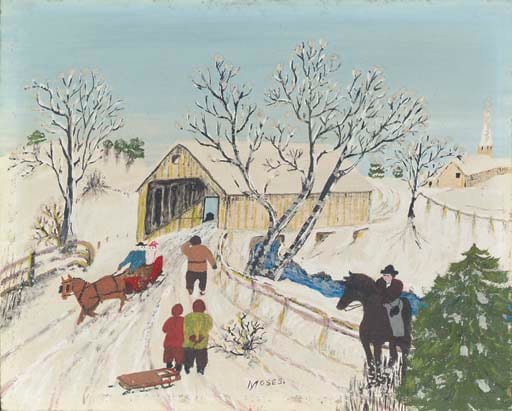
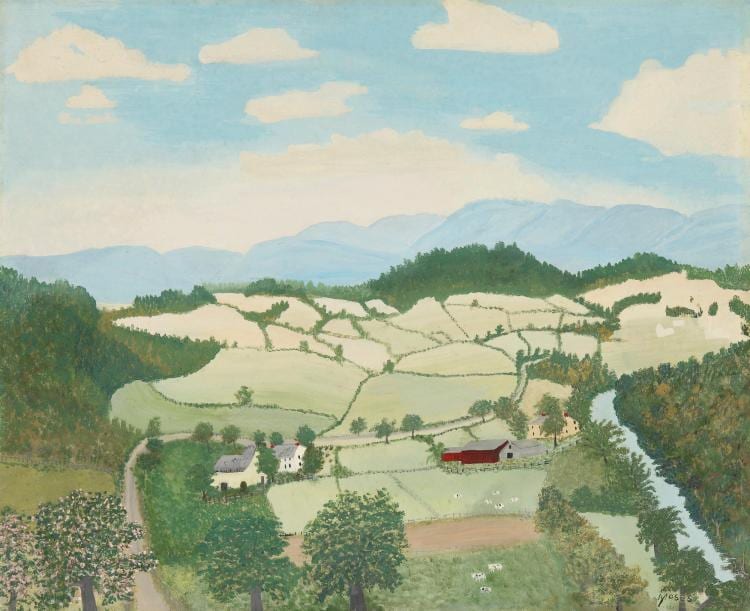
Real auction sales of items like your Grandma Moses painting. Open a sale to see the original listing.
Shown USD range: USD 50-USD 519,000. Median of these 98 USD examples: USD 30,000.
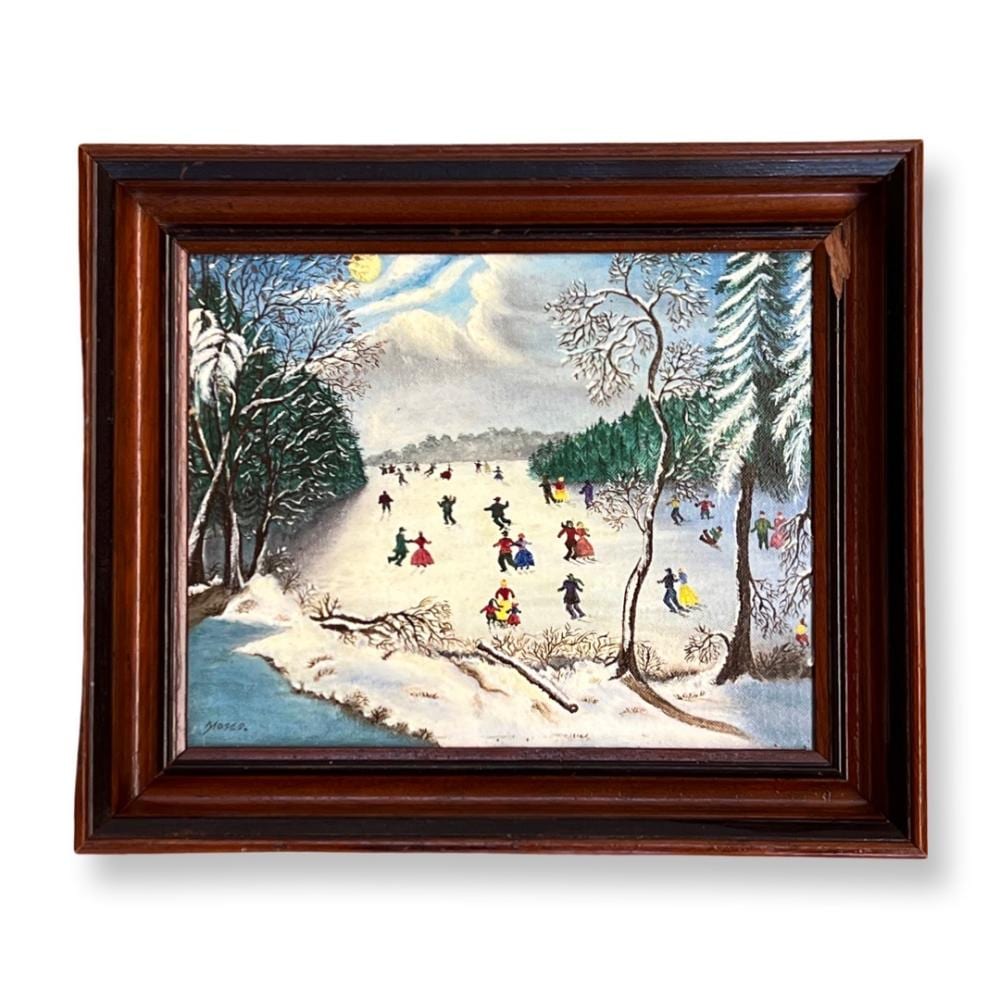
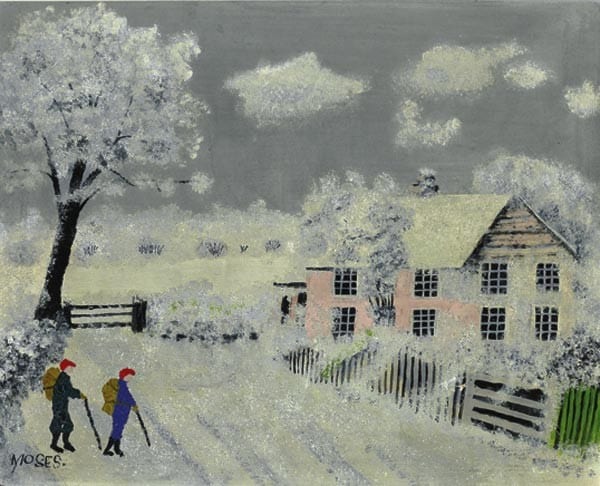
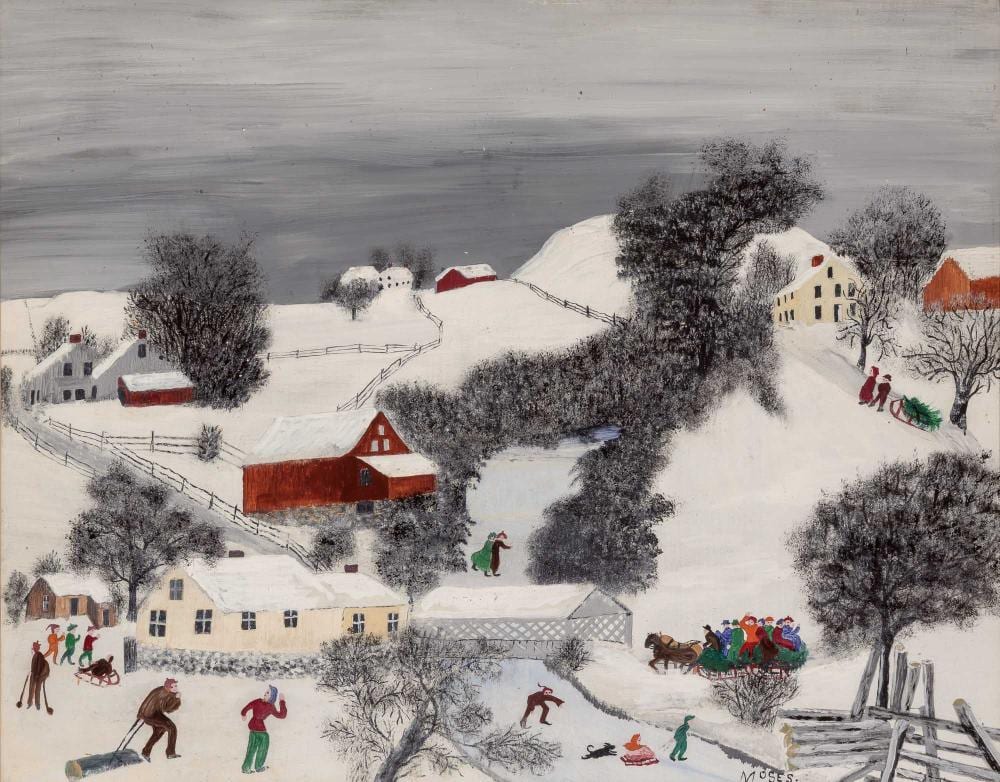
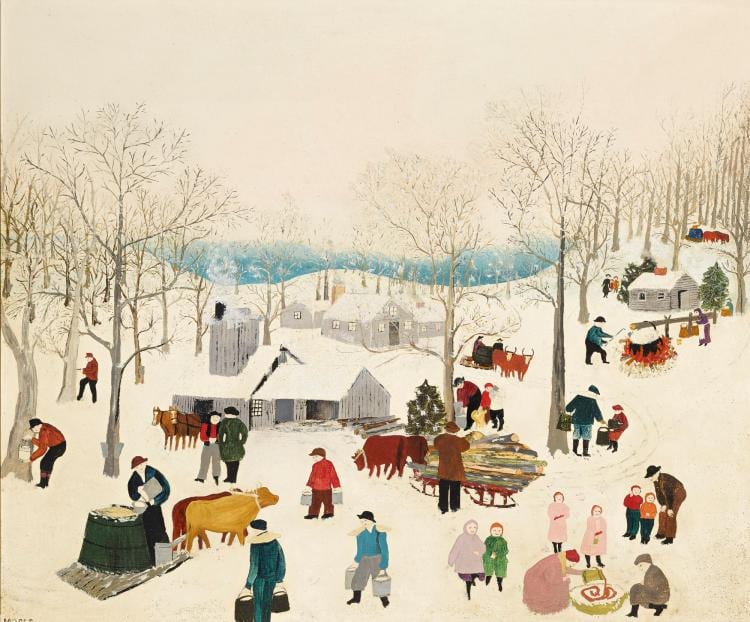
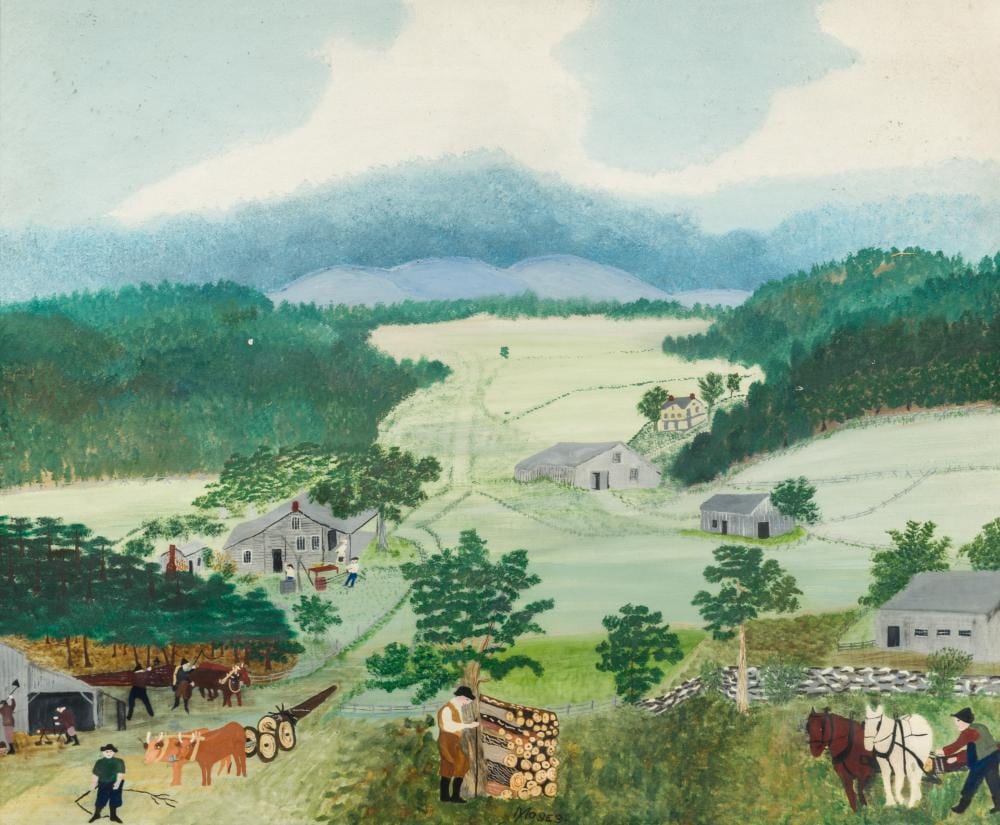
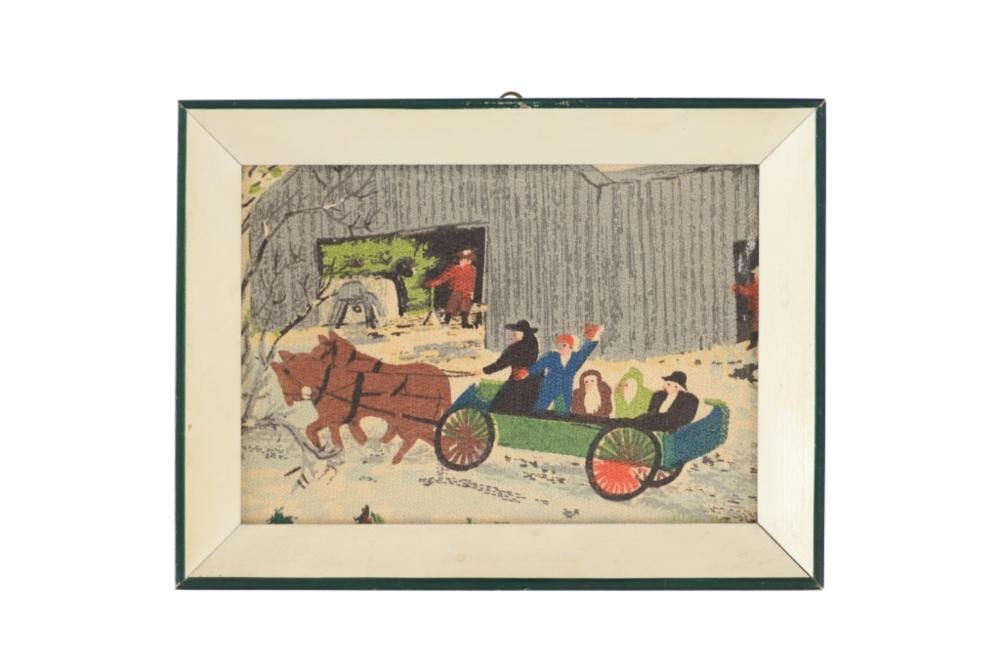
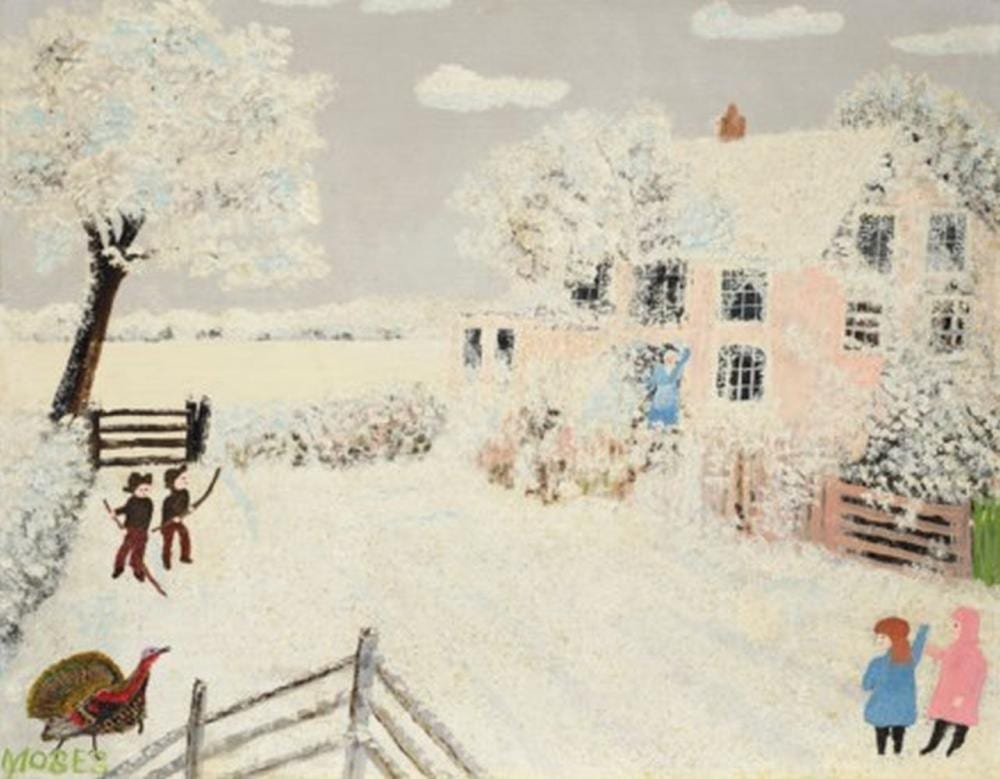
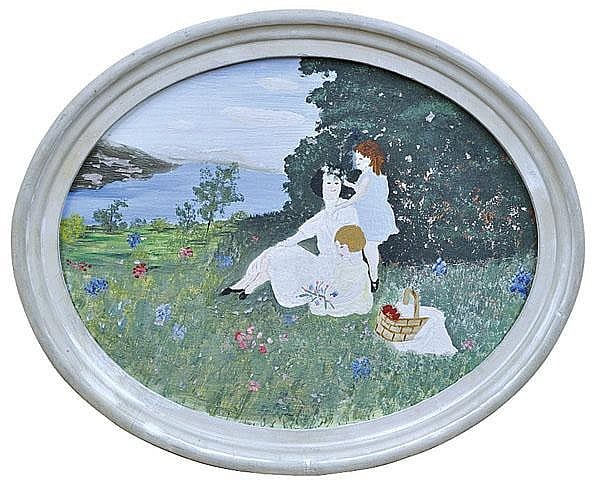
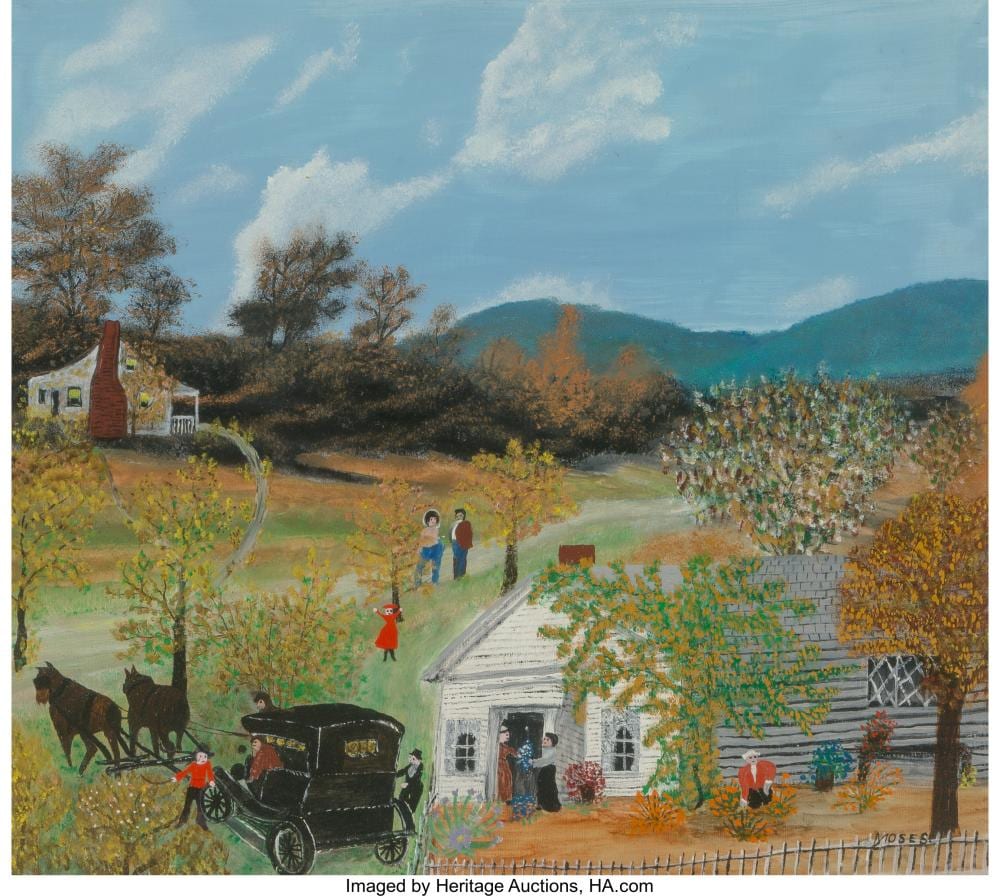
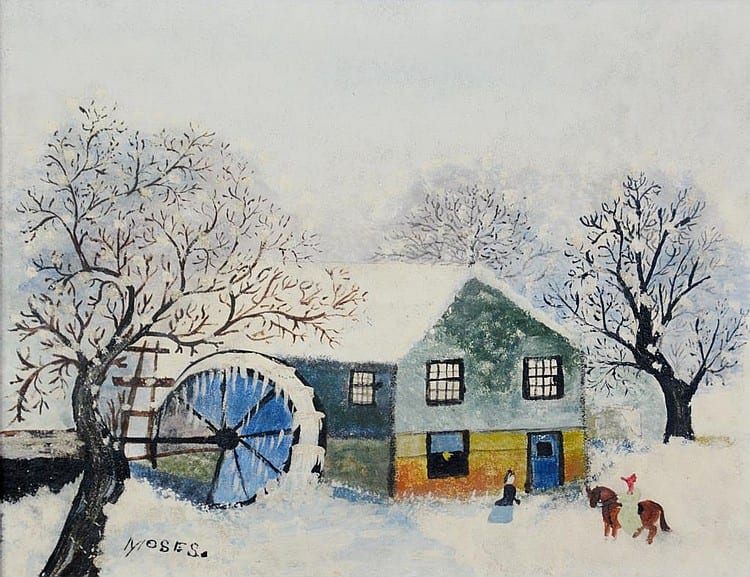
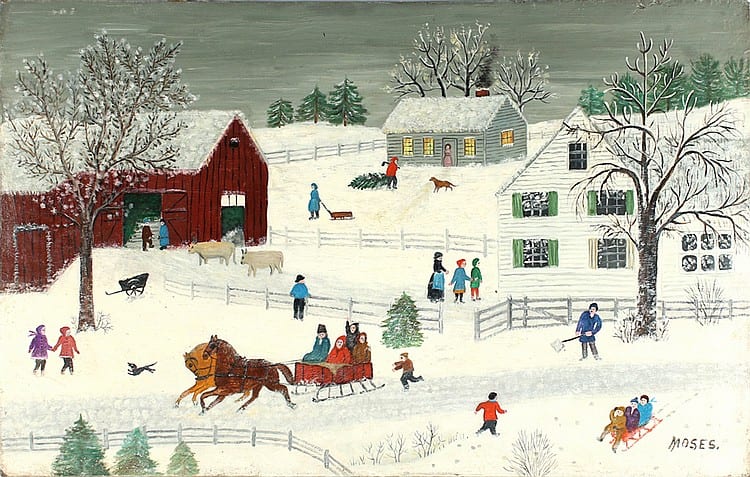
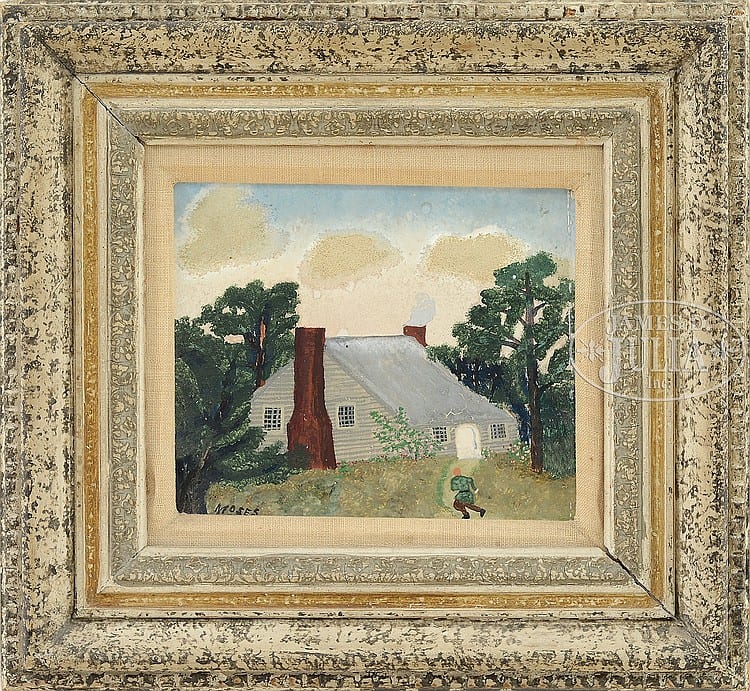


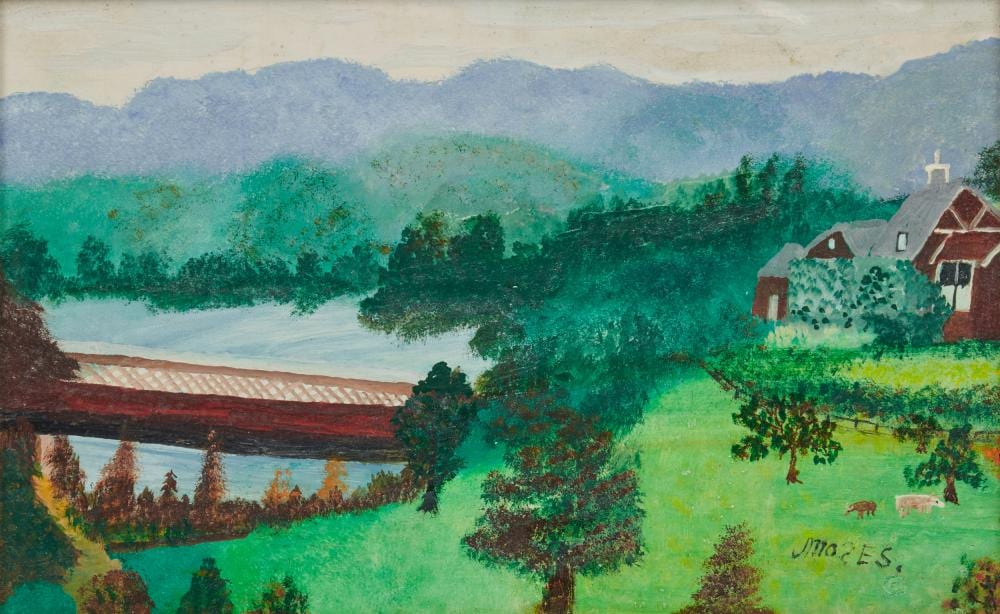
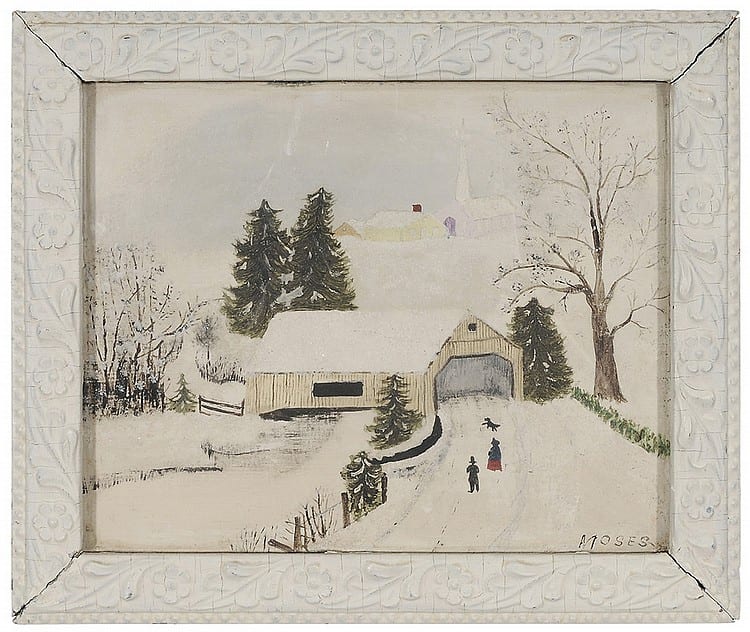
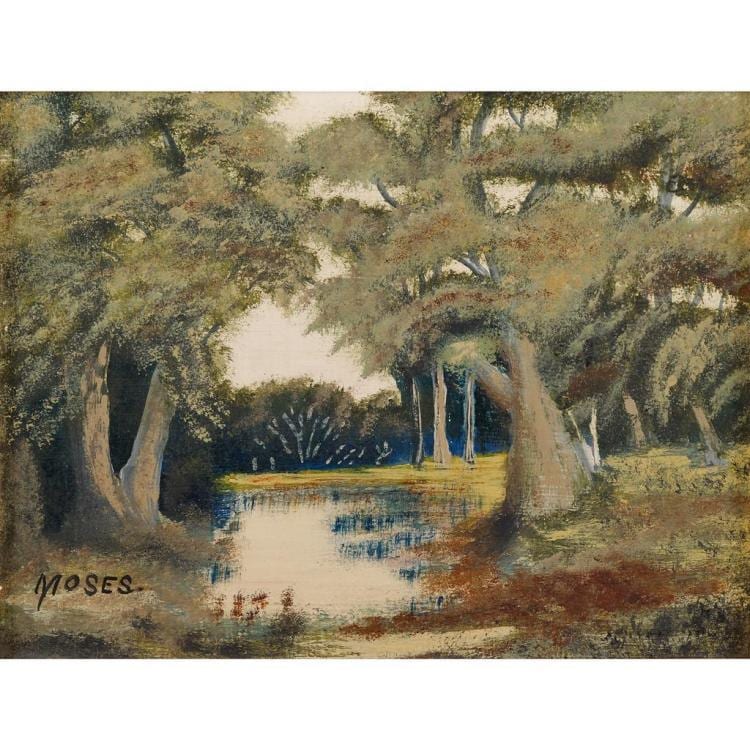
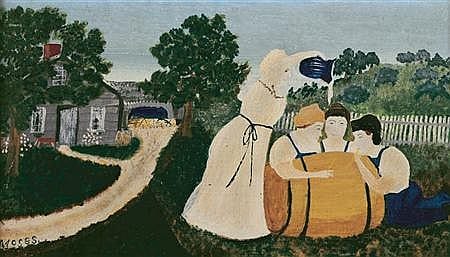
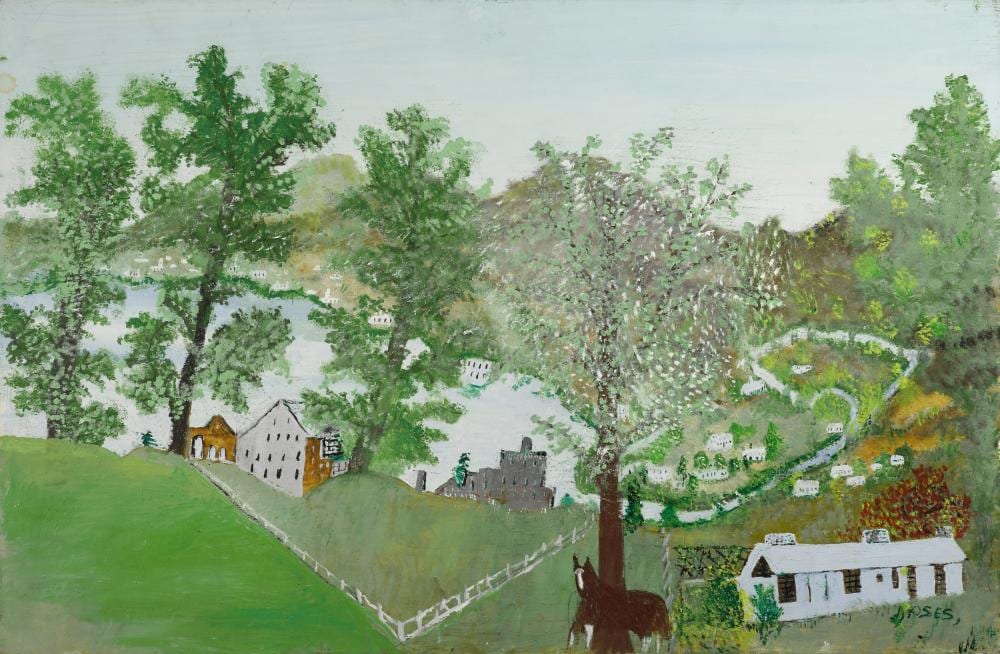
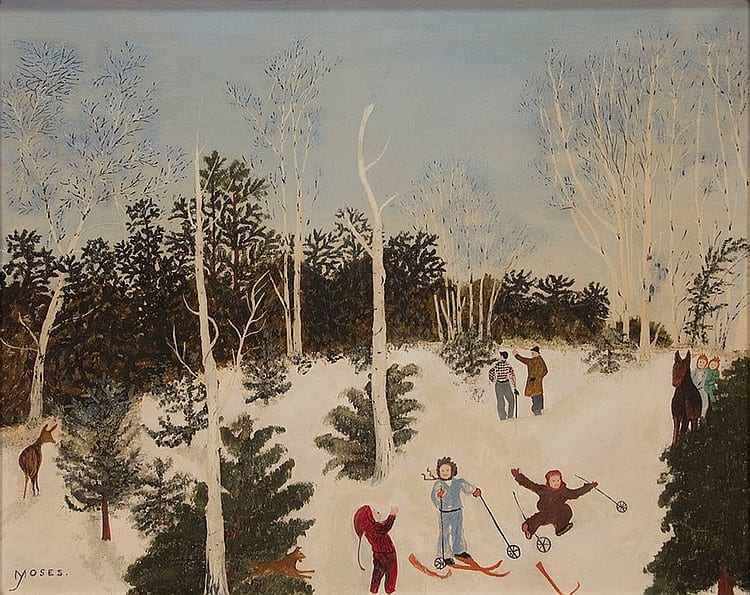
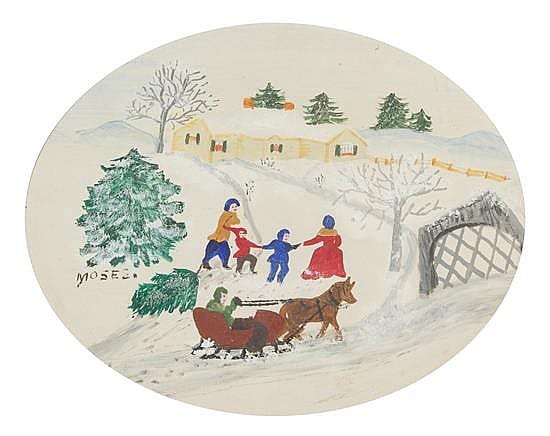
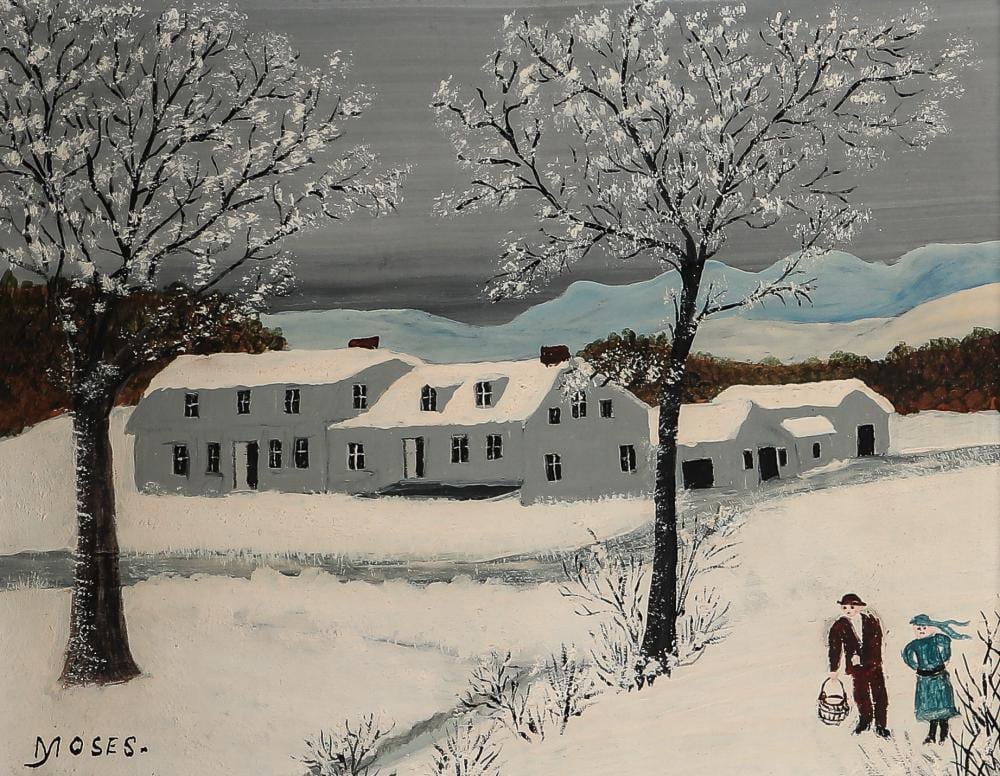

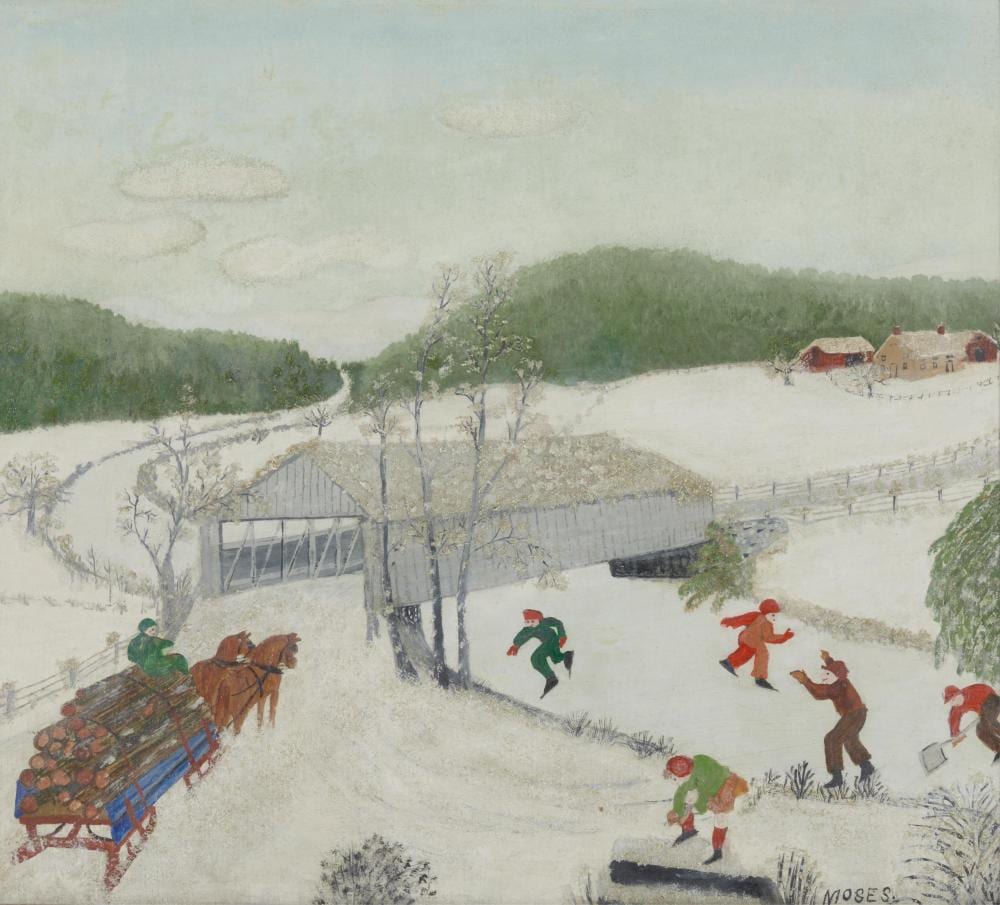
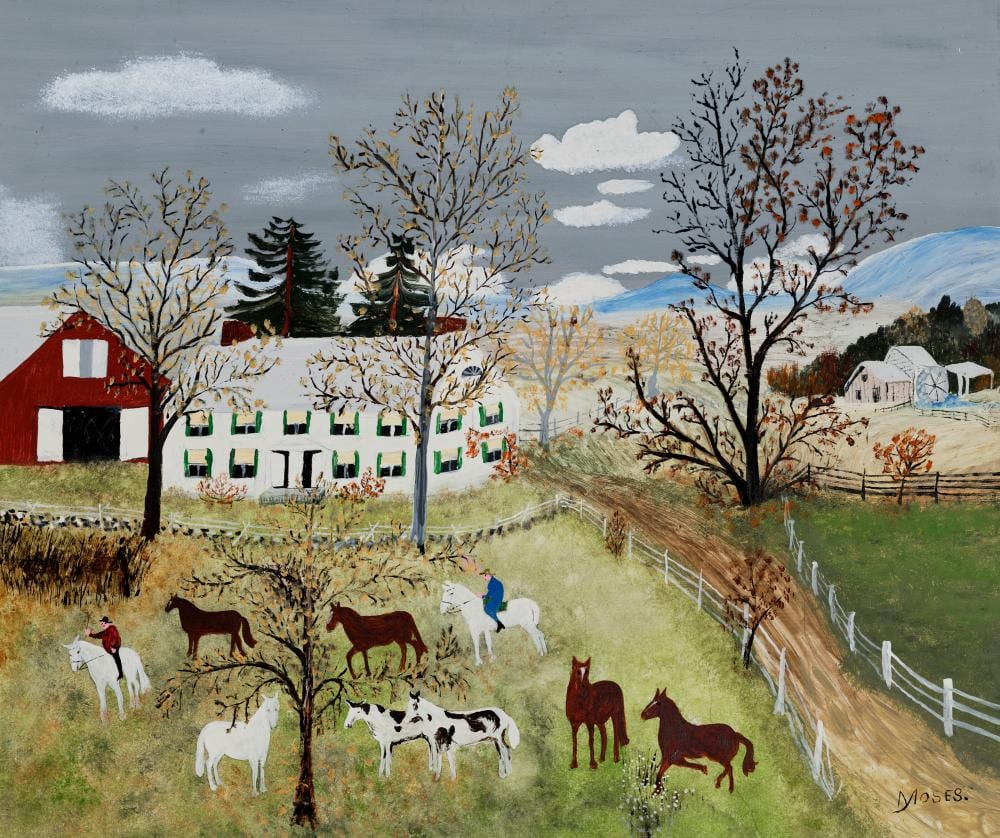
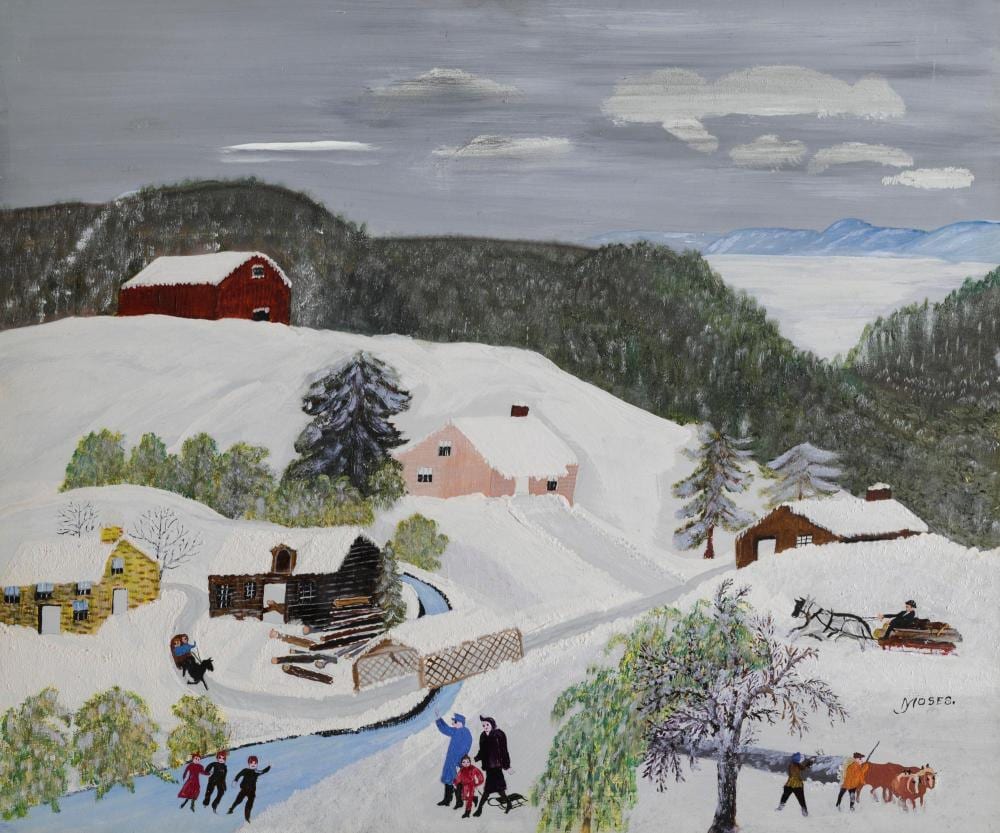
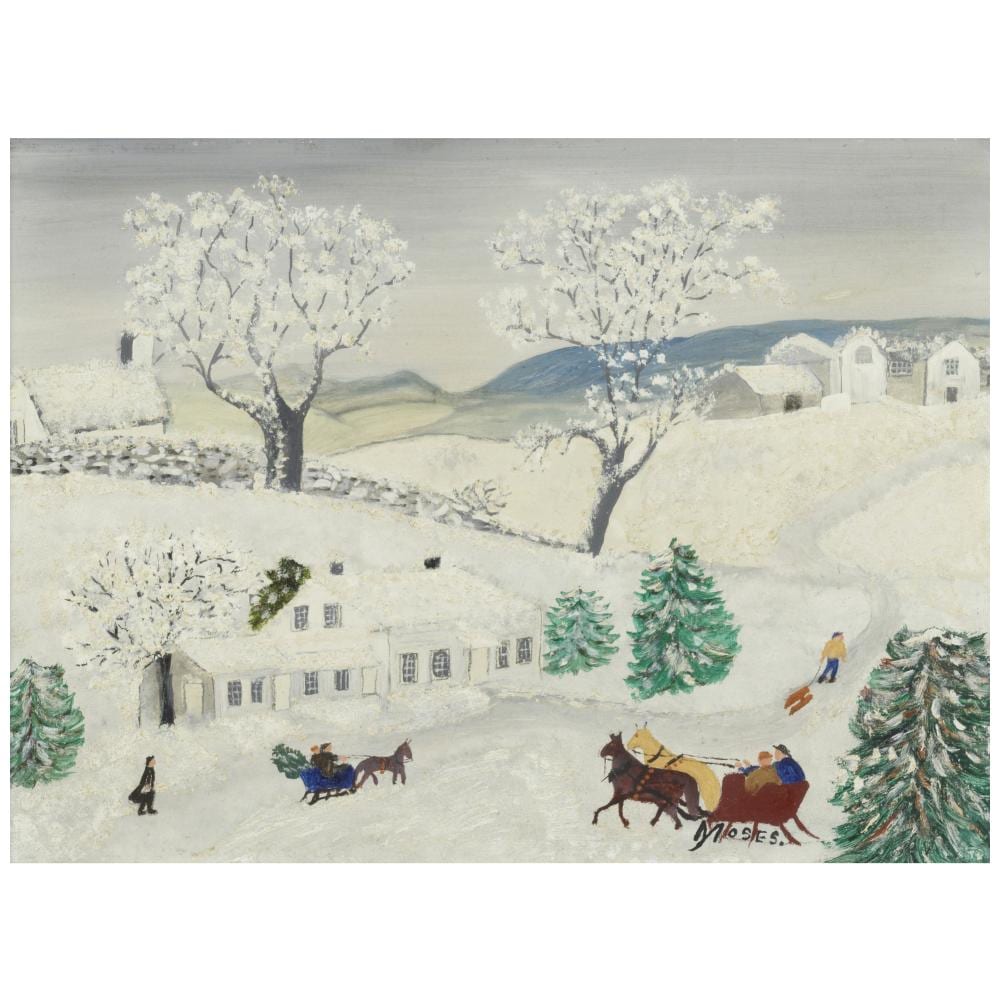
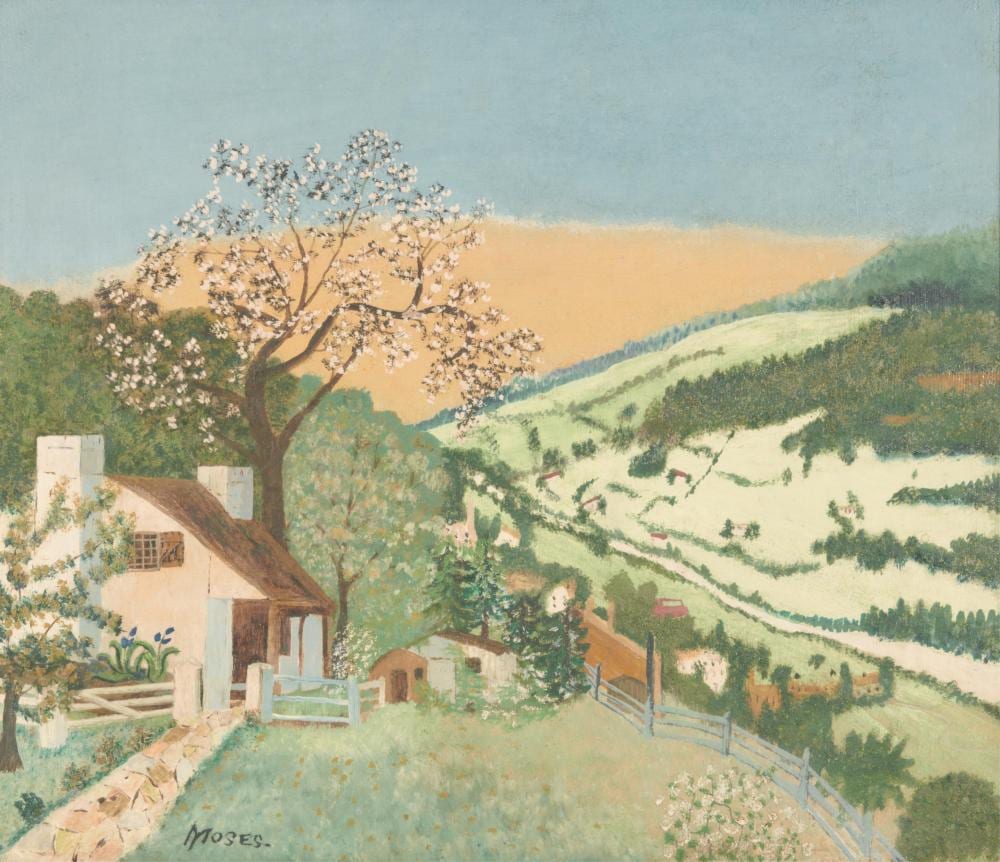

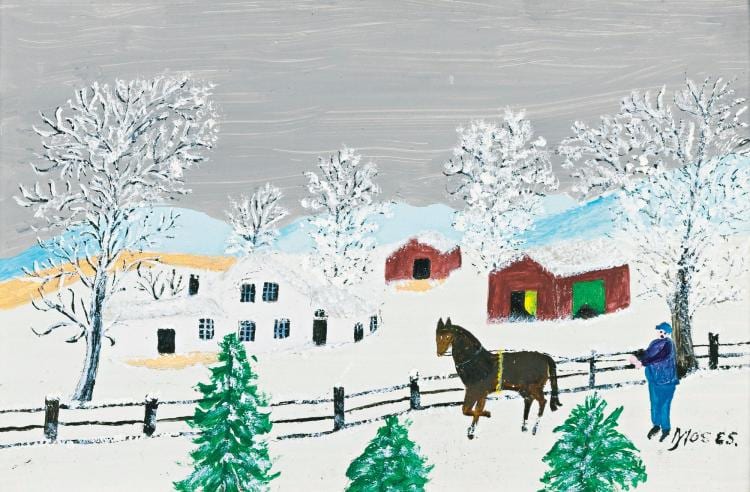
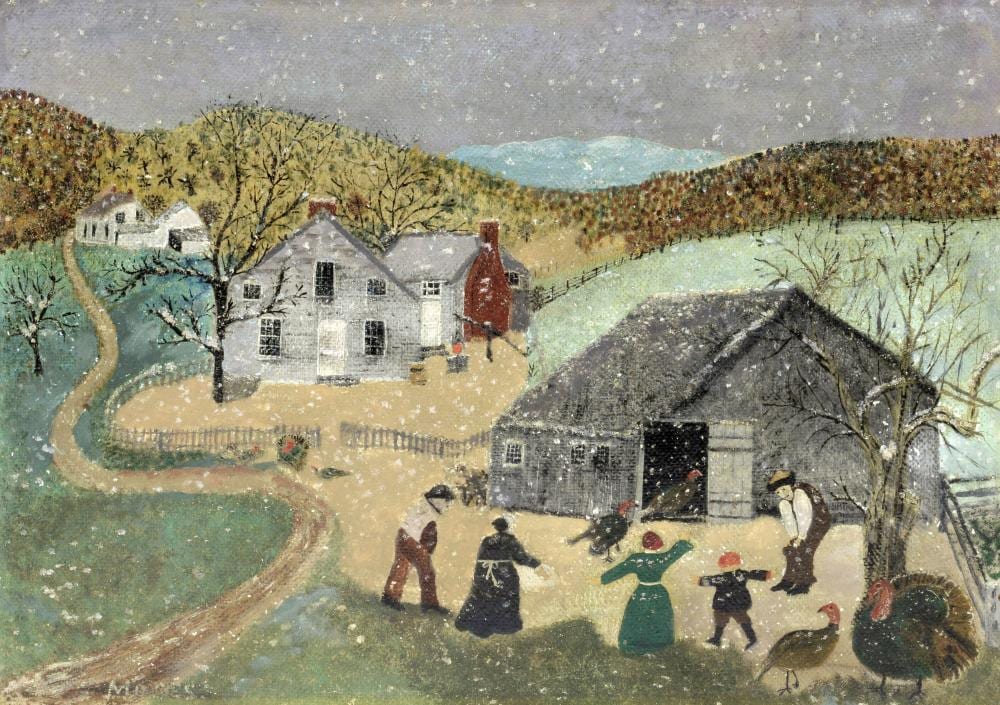
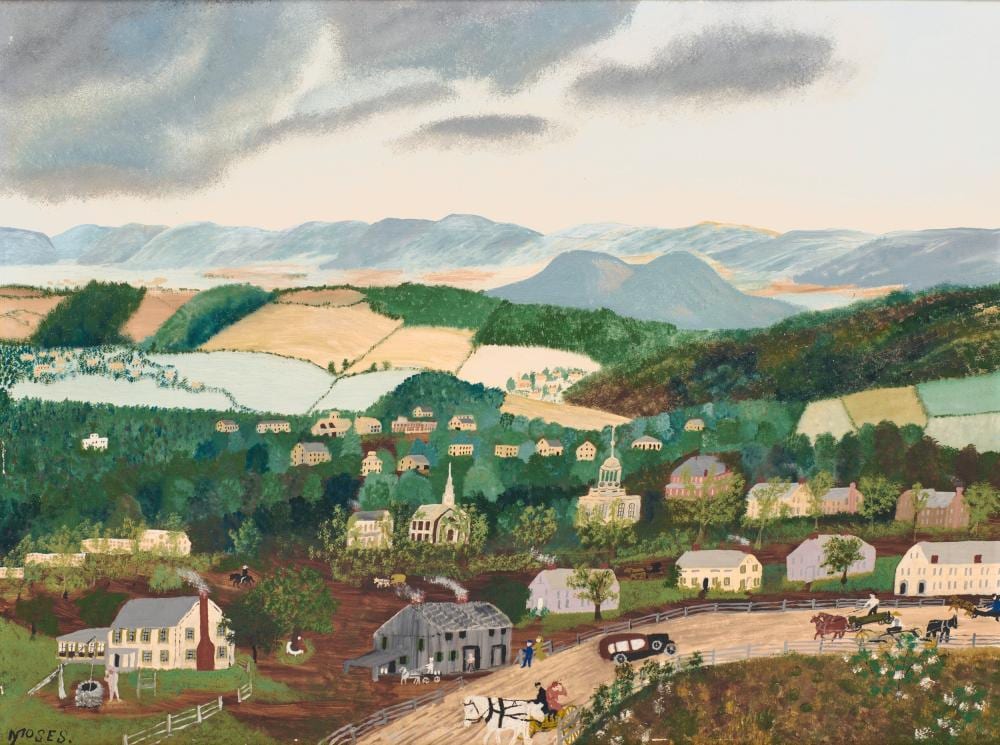


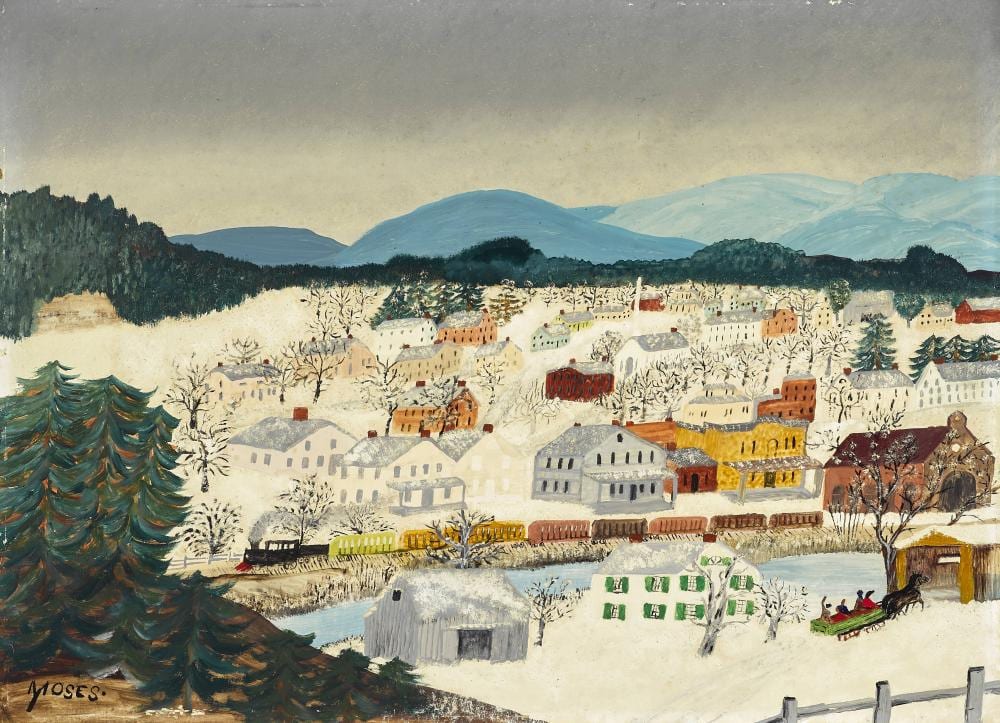
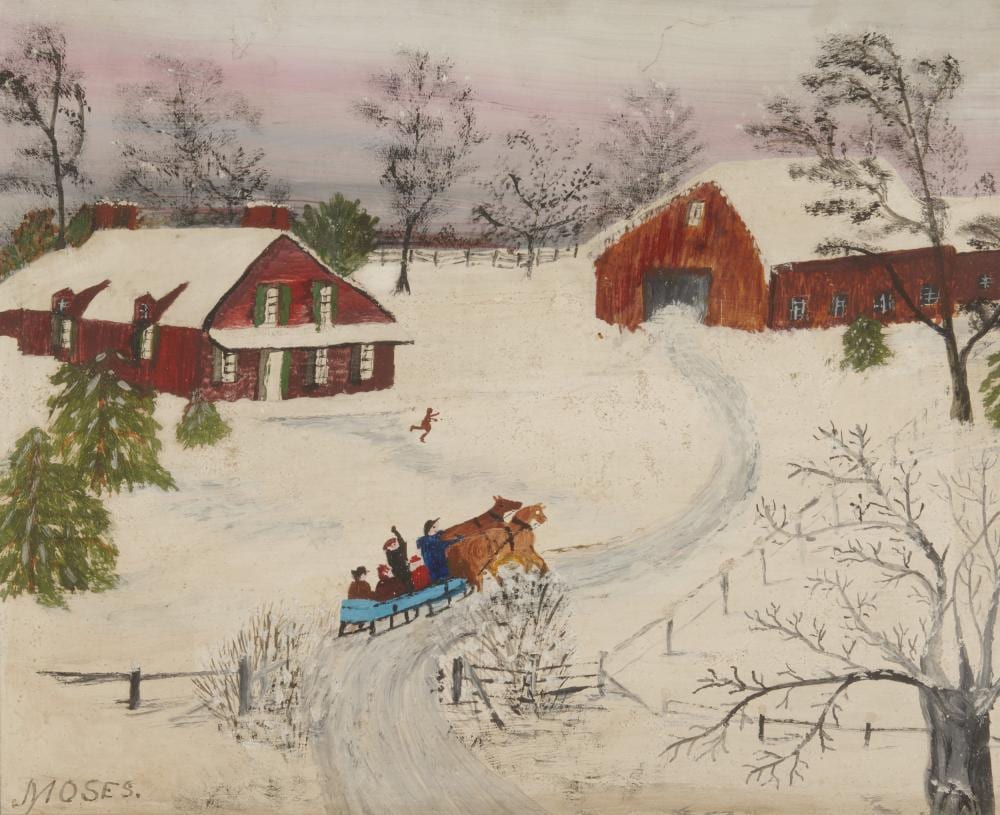
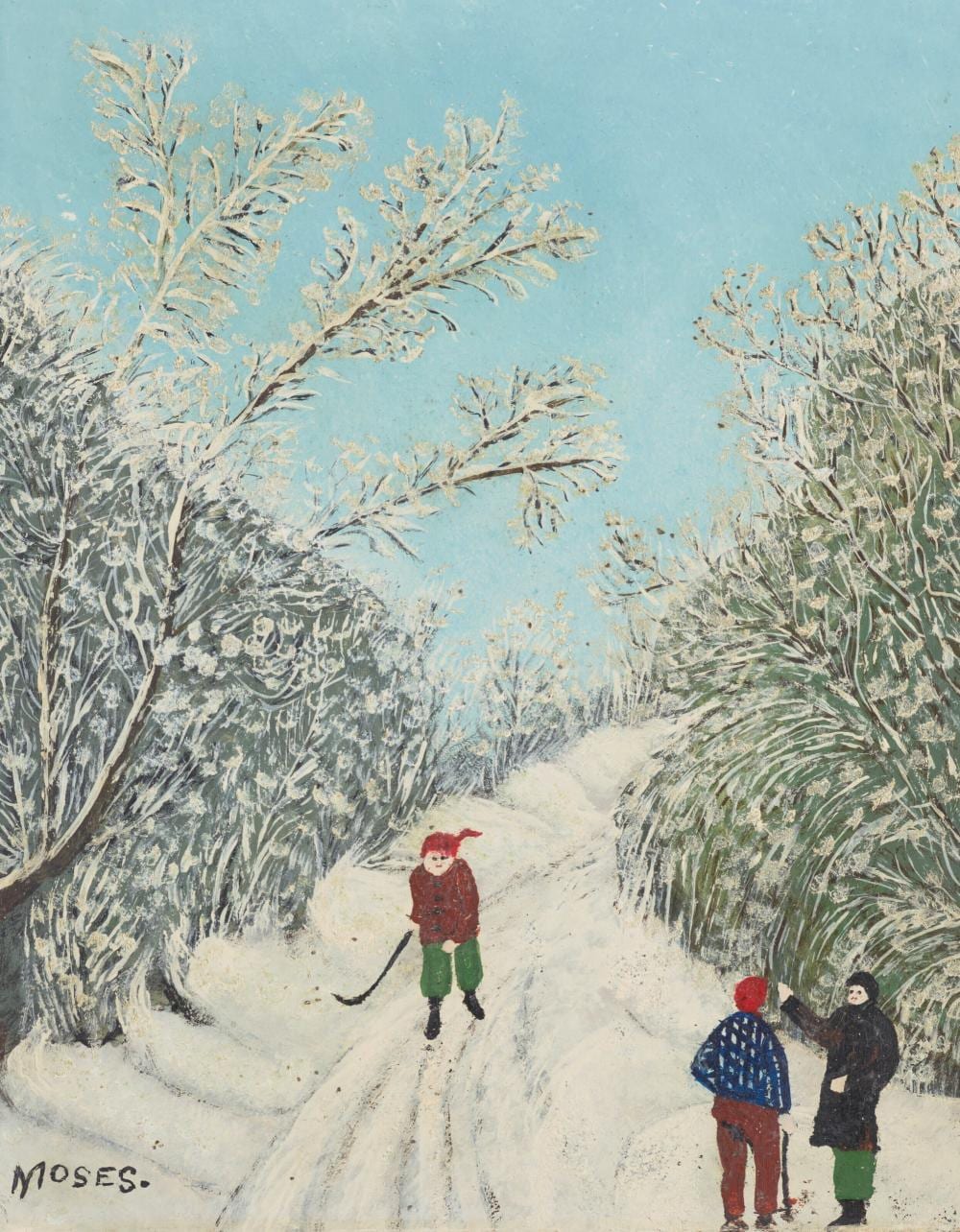
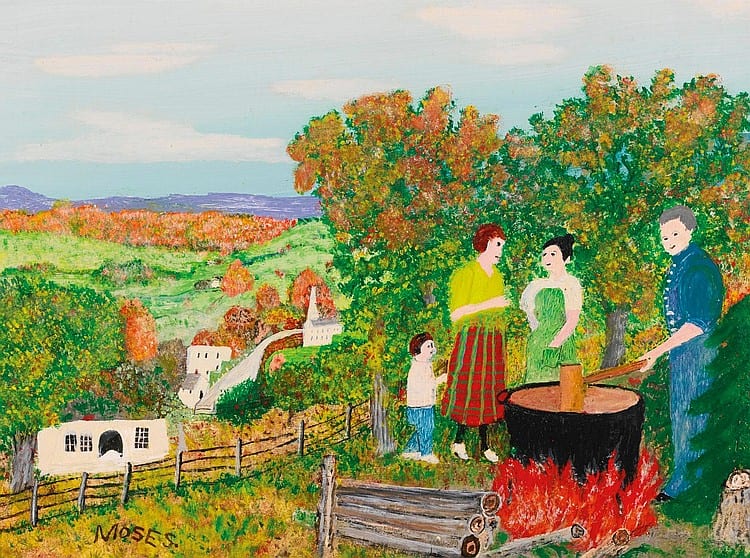


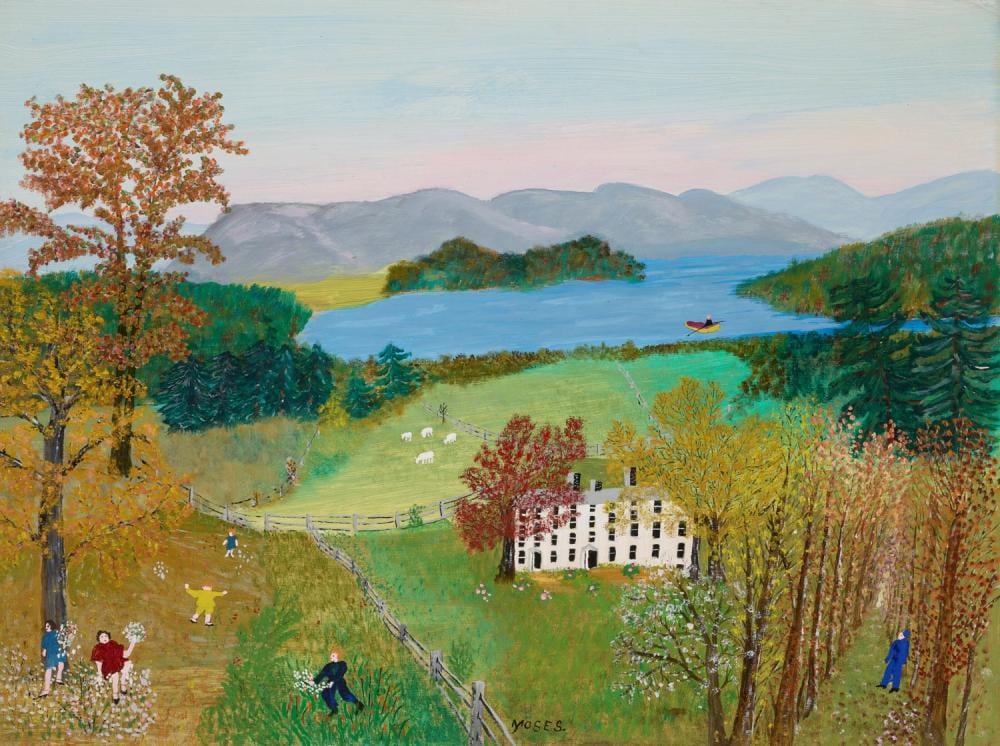
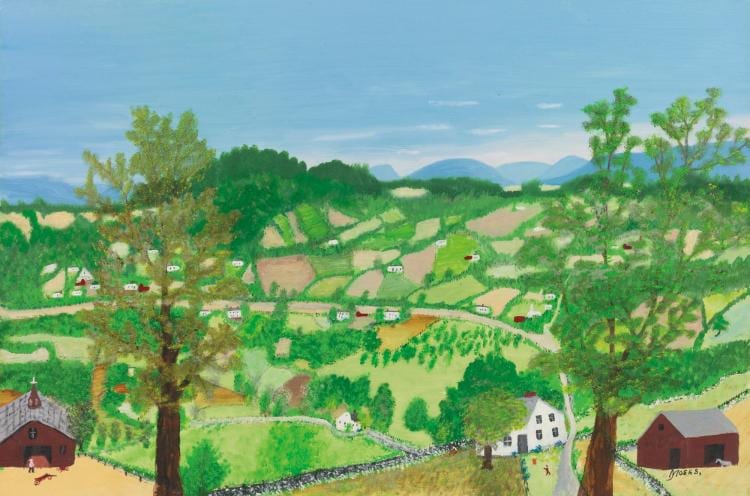
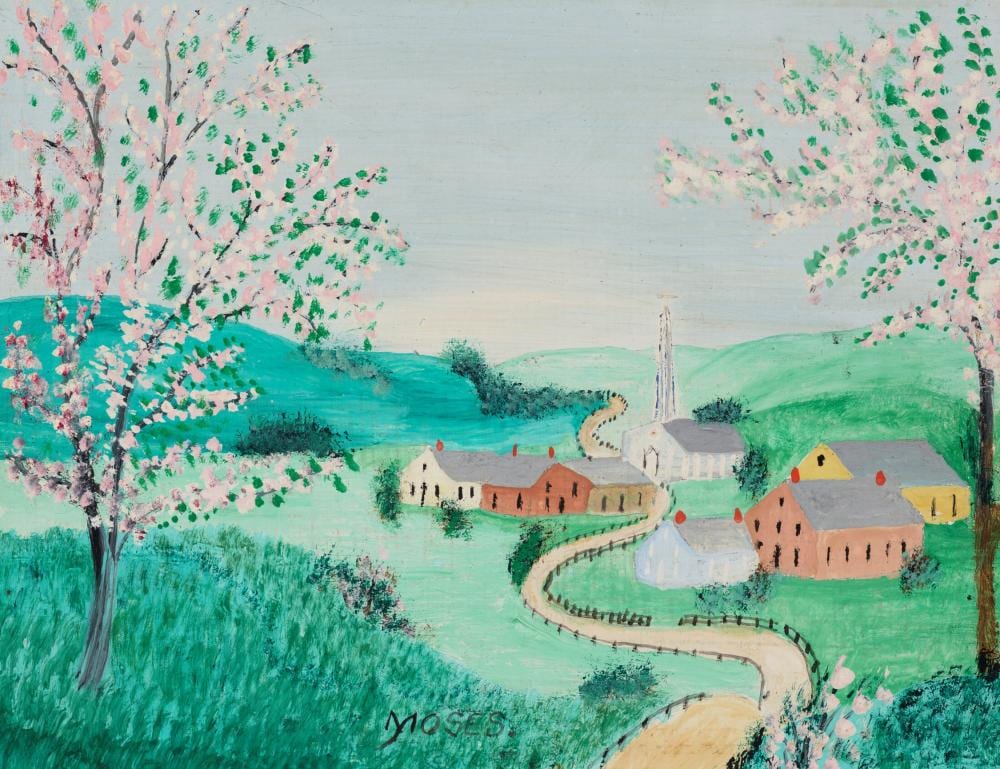
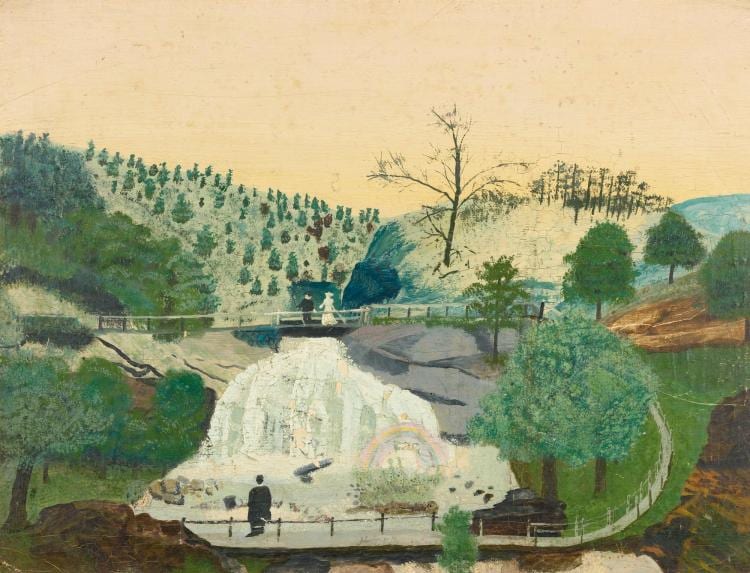


How these auction records were verified
These sales are market context, not an object estimate.
Each row retains its exact source URL, lot identity, retrieval time, access result, and immutable record hash. Live source access was blocked; the exact record matched Appraisily's immutable pipeline provenance. Inspect the public comparable provenance record.
Grandma Moses Paintings Value How to Value Them: appraisal and value basics
Grandma Moses Paintings Value How to Value Them research should start with identification, condition, provenance, and recent comparable sales. Use this guide to compare the signals that matter before paying for a formal appraisal or deciding whether to sell.
Grandma Moses Paintings Value: How to Value Them
Anna Mary Robertson “Grandma” Moses (1860–1961) developed one of America’s most recognizable visual languages: nostalgic, crisply drawn scenes of rural life, especially winter festivities, sugaring-off, barn raisings, and harvests. Because her art sits at the crossroads of American folk art and mainstream collecting, values range widely—from modest sums for prints to six and even seven figures for important oils. This guide explains how to assess value responsibly, from identifying originals and evaluating condition to building a data-driven set of comparables.
The Grandma Moses Market at a Glance
- Broad appeal, steady demand: Moses’s work appeals to folk art specialists, Americana collectors, and major institutions. That breadth has supported a resilient market over decades.
- Price spectrum:
- Original paintings (oil on board, masonite, or canvas): mid–five figures to low–seven figures, depending on size, subject, period, condition, and provenance.
- Top-tier masterpieces: complex, large winter or sugaring scenes have achieved auction prices above $1 million.
- Works on paper and small oils: often low– to mid–five figures.
- Reproductions and prints: typically modest, from tens to a few hundred dollars, with occasional higher prices for scarce early prints or signed ephemera; still far below original paintings.
- Liquidity and venues: The best works sell efficiently through major auction houses and leading folk art dealers. Mid-range works see competitive bidding in regional American art sales. Prints and reproductions are common and slow-moving unless attractively framed and priced.
Market stability is buoyed by strong name recognition and museum exhibitions. While tastes shift, Moses’s core subjects—American rural life rendered with clarity and warmth—remain evergreen.
Key Value Drivers
- Subject matter (major premium factor)
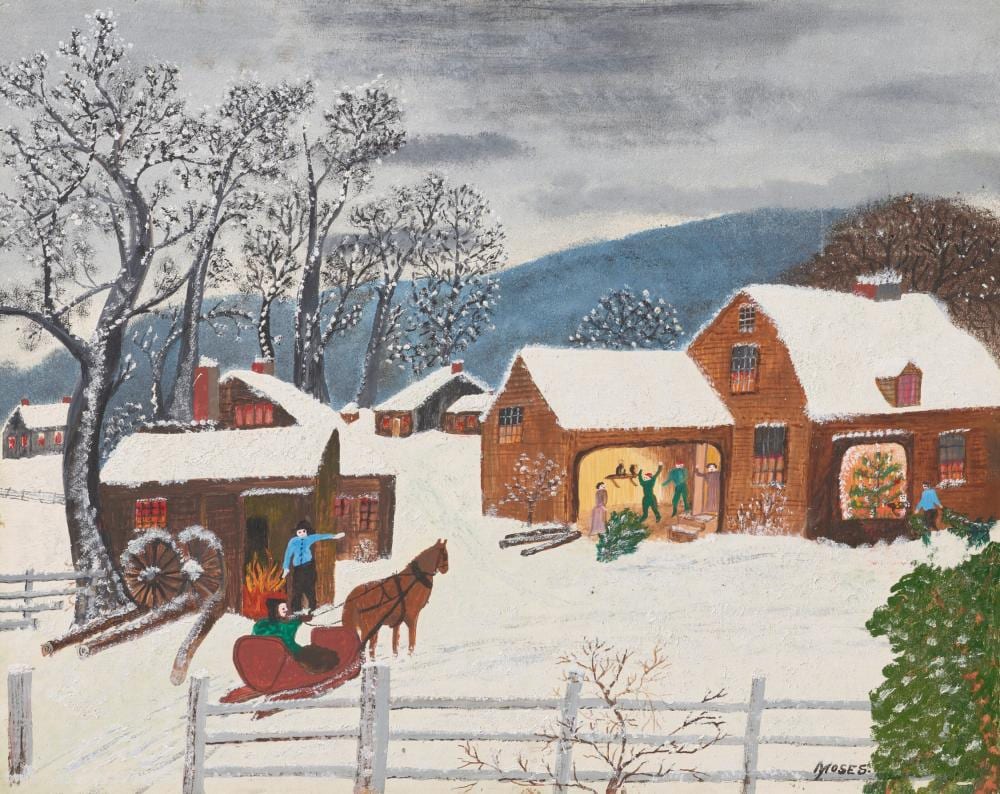
- High demand: Winter scenes with sleighs, skaters, and maple sugaring; bustling townscapes; panoramic harvest scenes with many figures.
- Moderate demand: Quiet farmsteads, spring plowing, village streets with fewer figures.
- Lower demand: Minimalist landscapes without narrative activity.
- Composition complexity and narrative
- Paintings crowded with figures, animals, multiple structures, and clear storylines command higher prices than sparse compositions.
- Size and format
- Larger works (e.g., 24 x 36 inches and up) typically bring substantial premiums over small cabinet pictures. Unusual panoramic formats can attract competition when well composed.
- Date/period
- Prime period generally falls between the early 1940s and mid-1950s, where rhythmic patterning, clean color, and assured draftsmanship are evident.
- Late works (c. 1959–1961) can be more schematic or repetitive; they can still be valuable but often trail prime-period examples.
- Early explorations can be more tentative and may lack the complexity buyers favor.
- Medium and support
- Oils on masonite or pressed wood are classic and usually preferred. Oils on canvas-board and cardboard exist; sturdier supports tend to hold condition better.
- Works on paper and drawings are less in demand than oils.
- Palette and season
- Collectors gravitate to crisp snowscapes, ice blues, and bright reds; autumn foliage scenes also perform well. Duller palettes or muddy color may reduce appeal.
- Provenance, exhibition, and publication
- Works handled by her primary New York dealers, included in notable exhibitions, or illustrated in reputable monographs typically see a premium.
- Museum ownership history enhances desirability.
- Decorative fit and scale
- Because Moses is frequently used in Americana interiors, interior designers and private collectors favor sizes that “read” well across a room, amplifying demand for larger, balanced compositions.
Authenticity, Labels, and Provenance
Distinguishing originals from reproductions is the most important—and most common—valuation hurdle.
Signatures and inscriptions
- Typical signature: “Grandma Moses” at lower right, sometimes with a date. Variations exist, and the signature alone does not guarantee authenticity.
- Titles, dates, and notations may appear on the reverse, occasionally in crayon, pencil, or paint.
Provenance indicators
- Gallery labels: Works with labels from her principal New York gallery or other established mid-20th-century galleries and auction houses (e.g., Parke-Bernet) carry weight.
- Exhibition and publication: A label noting a retrospective, museum show, or literature reference is a strong positive.
- Bills of sale, correspondence, and early ownership records substantially aid attribution and value.
Reproductions and prints vs. originals
- Mass-market reproductions were widely published (e.g., calendars, greeting cards, posters). Many carry a printed copyright or publisher’s credit on the image or margin.
- Under magnification, reproductions reveal halftone dots (offset lithography) or uniform inkjet patterns; painted textures do not rise above the surface as true brushstrokes would.
- Printed signatures are flat and uniform; painted signatures show pressure variation and paint body.
- Paper stock and backing: Poster or thin, glossy paper, foam board, or modern mats suggest a reproduction. Originals on board/masonite have weight and edge texture, and the paint surface is tactile.
Red flags for fakes and misattributions
- Anomalous subject matter inconsistent with Moses’s oeuvre.
- Modern synthetic materials or glossy varnish inconsistent with her typical matte surfaces.
- Incoherent signature style, incorrect letter forms, or signatures applied over craquelure long after drying.
- “Too new” framing claiming vintage pedigree without supporting labels.
When in doubt, compare suspected works with firmly documented examples. For significant pieces, it is prudent to seek confirmation from recognized Moses scholars or archives associated with her primary dealer network.
Condition and Conservation Factors
Paintings by Moses were often executed on masonite, pressed wood, or canvas-board using oil paints, sometimes intermixed with house-paint materials. Common condition issues include:
- Craquelure and lifting: Rigid supports can transmit stress, producing cracking; flaking may require consolidation.
- Edge abrasion: Frame rubs at the perimeter are frequent on board supports.
- Warping/bowing: Thin boards can deform; minor warp is tolerable, but severe bowing affects stability and presentation.
- Discoloration and grime: Nicotine staining and surface dirt are typical; inappropriate overcleaning can burnish or flatten the paint.
- Varnish problems: Many Moses paintings were left unvarnished; later, some received glossy varnish that can discolor and alter the intended matte appearance.
- Overpaint and retouch: Heavy-handed restoration diminishes value. Under UV light, retouch should appear minimal and well-matched.
Condition tiers and value impact (rules of thumb)
- Excellent, original surface, minimal wear: strong demand; full price for the type.
- Good, light grime, minor edge wear: small discount.
- Fair, stabilized flaking, scattered retouch: moderate discount; still collectible if subject and scale are strong.
- Poor, extensive loss, abrasion, or invasive overpaint: steep discount; may be suitable for institutional study or decorators at reduced levels.
Conservation guidance
- Avoid DIY cleaning; Moses surfaces are sensitive. A trained paintings conservator can test-clean and propose minimal intervention.
- Stabilization (flaking consolidation) often takes priority over aesthetic cleaning.
- Framing: Use archival, non-acidic materials, and backboards to protect against dust and handling.
Conservation can improve marketability, but not all treatments raise net value. Obtain proposals and weigh costs against expected uplift before proceeding.
How to Build a Defensible Valuation
- Define the assignment
- Fair Market Value (FMV): Most probable price in an open market between willing buyer and seller; used for estates, donations, and equitable distribution.
- Retail Replacement Value (RRV): Cost to replace with a comparable item in the retail or dealer market; used for insurance; often higher than FMV.
- Orderly liquidation or auction estimate: Expected range in a specified venue and time frame; net proceeds depend on fees.
- Identify and document the work
- Record exact title (front or reverse), medium, support, dimensions (sight and overall), signature/inscription, and any labels or stamps. Photograph front, reverse, edges, and signature.
- Establish authenticity and period
- Cross-check with known signature styles and label types. If warranted by value, consult recognized experts. Place the work stylistically within Moses’s chronology (e.g., prime 1940s–1950s winter scene vs. late schematic work).
- Assess condition
- Obtain a brief condition statement. Note issues that would influence marketability or require conservation spend.
- Build comparables
- Use sales from the past 5–10 years, focusing on:
- Same medium/support (oil on board/masonite vs. paper).
- Similar dimensions (within ±20% of area).
- Closely related subjects (winter village with skaters vs. generic landscape).
- Comparable complexity (number of figures/structures).
- Similar date/period.
- Adjust for provenance (exhibited/published), and condition.
- Apply adjustments
- Size: Derive a price-per-square-inch from closely matched comps; larger, complex works may command a higher coefficient than a simple linear scaling.
- Subject premium: Add 15–50% for iconic winter/sugaring scenes relative to neutral landscapes, based on market evidence.
- Period: Prime-period works can carry a 10–30% premium over late-period analogues.
- Condition: Deduct based on severity; anything requiring significant conservation may warrant a 10–40% reduction.
- Provenance/exhibition/publication: Add measured premiums where directly comparable works with such distinctions trade higher.
Example (simplified and illustrative)
- Your painting: oil on masonite, 24 x 36 in., winter town with skaters and sleighs, c. early 1950s, signed, good condition, dealer label.
- Matched comps (3–5 sales): median price-per-square-inch yields a base of, say, $400/sq in.
- Base value: 864 sq in x $400 ≈ $345,600.
- Subject premium (+20%): ≈ $414,700.
- Prime period (+10%): ≈ $456,200.
- Condition (no deduction), provenance (+5%): ≈ $479,000.
- Round to a market-friendly range: $450,000–$500,000 FMV, subject to current demand and venue.
- Choose the venue and consider fees
- Auction: Buyer’s premiums inflate headline results; sellers pay commissions and fees. Net-to-consignor can be 10–25% below hammer, depending on terms.
- Dealer/private sale: May achieve retail but can take longer; commissions vary.
- Regional vs. international: Top-tier works merit national/international exposure; mid-range pieces can perform well regionally.
- Sanity-check timing and trends
- Moses holds a steady reputation; however, macro market conditions matter. Consider seasonality (American art sales often cluster in spring/fall).
Practical Checklist and FAQ
Practical Checklist
- Confirm it’s an original painting, not a reproduction:
- Inspect with a loupe for halftone dots (prints) vs. real brush texture.
- Check for a printed signature vs. hand-applied paint.
- Review the support: masonite/board vs. poster paper.
- Document everything:
- Photos of front, back, edges, signature, and labels.
- Precise measurements, materials, titles/inscriptions.
- Capture provenance:
- Prior owners, bills of sale, correspondence, gallery/auction labels, exhibition records.
- Assess condition:
- Note cracking, flaking, warp, abrasion, varnish, overpaint.
- Get a conservator’s opinion before any cleaning.
- Place the work in her timeline:
- Compare style and complexity to early/prime/late characteristics.
- Build comparables:
- Same medium, size bracket, subject, period; last 5–10 years of auction/private data where available.
- Adjust and conclude:
- Apply size, subject, period, condition, and provenance adjustments to arrive at a range appropriate to your value definition (FMV vs. RRV).
- Select venue:
- For high-value works, consider major auctions or leading folk art dealers; for lower-value items, regional sales may suffice.
- Plan logistics:
- Factor packing, insurance, shipping, and lead times for cataloguing and marketing.
FAQ
Q: Are all “Grandma Moses” signatures genuine if they look right? A: No. Signatures can be forged or mechanically reproduced. Authentication depends on the whole picture: paint handling, support, period-appropriate materials, provenance, and comparison with documented works. The signature is supporting evidence, not proof.
Q: How can I tell a painting from a print or reproduction? A: Use magnification. Originals show built-up brushwork and irregular paint edges; prints show uniform dot patterns or inkjet droplets and a flat surface. Look for publisher credits, copyright lines, or edition marks; many Moses images were mass-reproduced for calendars and posters.
Q: Do winter scenes really bring more money? A: Generally yes. Winter village scenes, skating ponds, and sugaring-off compositions are among her most coveted subjects, particularly in larger, complex formats. Subject desirability is a major contributor to price.
Q: Should I clean or revarnish before selling? A: Not without professional advice. Many Moses paintings were unvarnished and have matte surfaces that can be damaged by improper cleaning or glossed by varnish. A conservator can test-clean and recommend minimal, reversible treatments that preserve value.
Q: What price range should I expect for a small, simple Moses painting? A: It depends, but small, straightforward oils can fall in the low- to mid–five figures, while larger, narrative-rich compositions can rise into the six figures and beyond. Condition, date, provenance, and venue can move the needle substantially.
By focusing on subject, size, period, condition, and documented history—and grounding your estimate in well-chosen comparables—you can arrive at a credible, defensible valuation of a Grandma Moses painting.