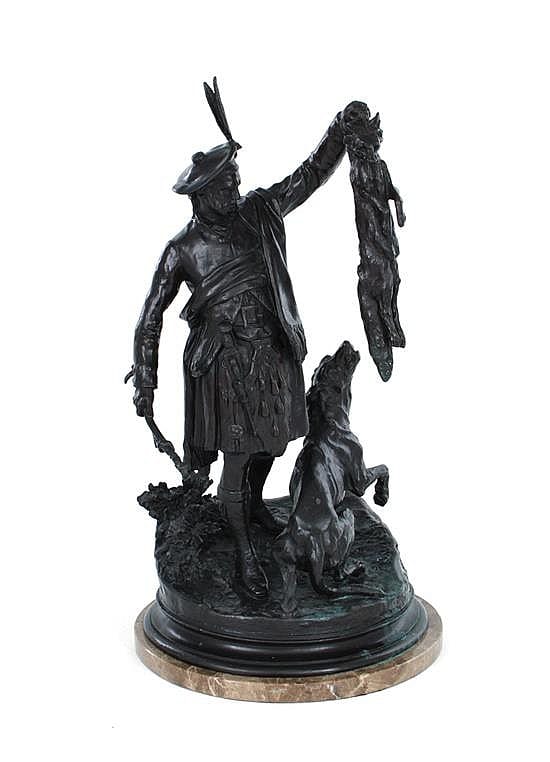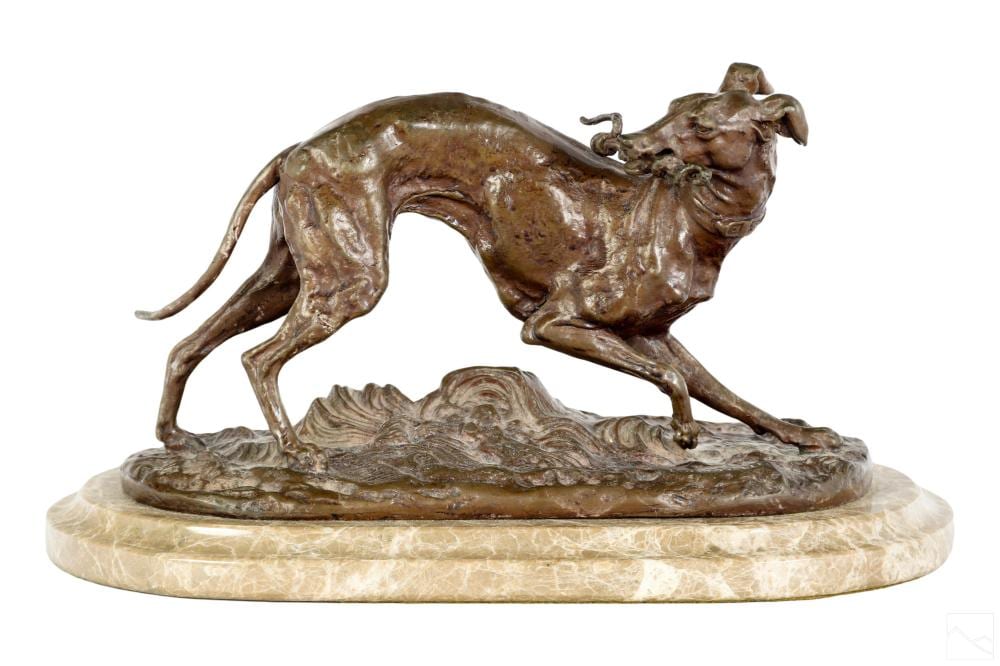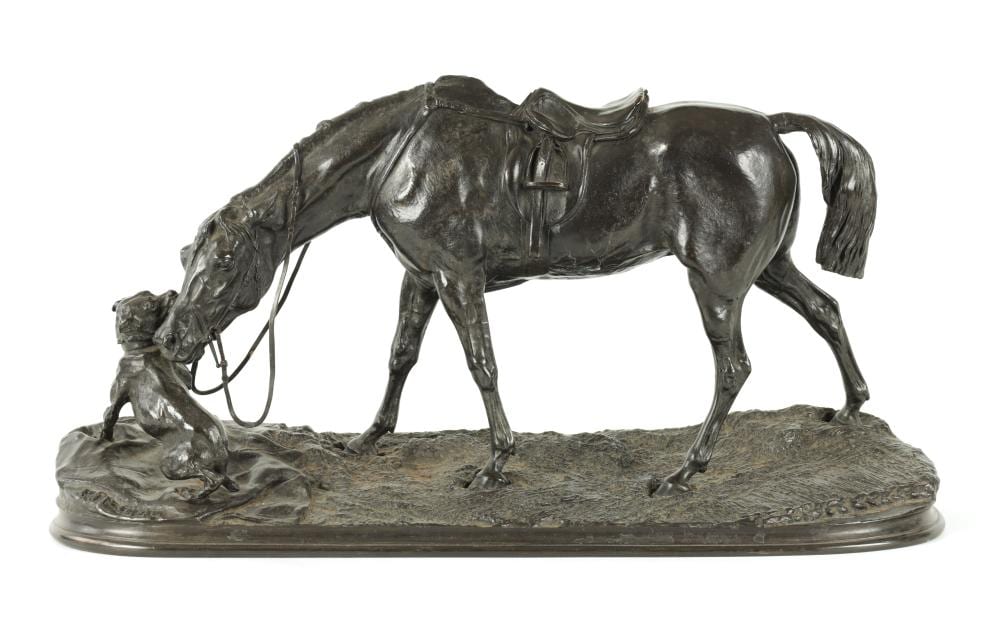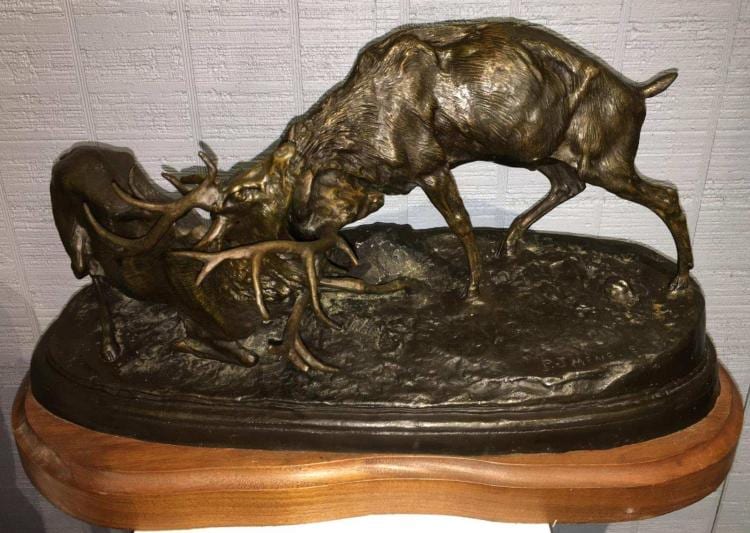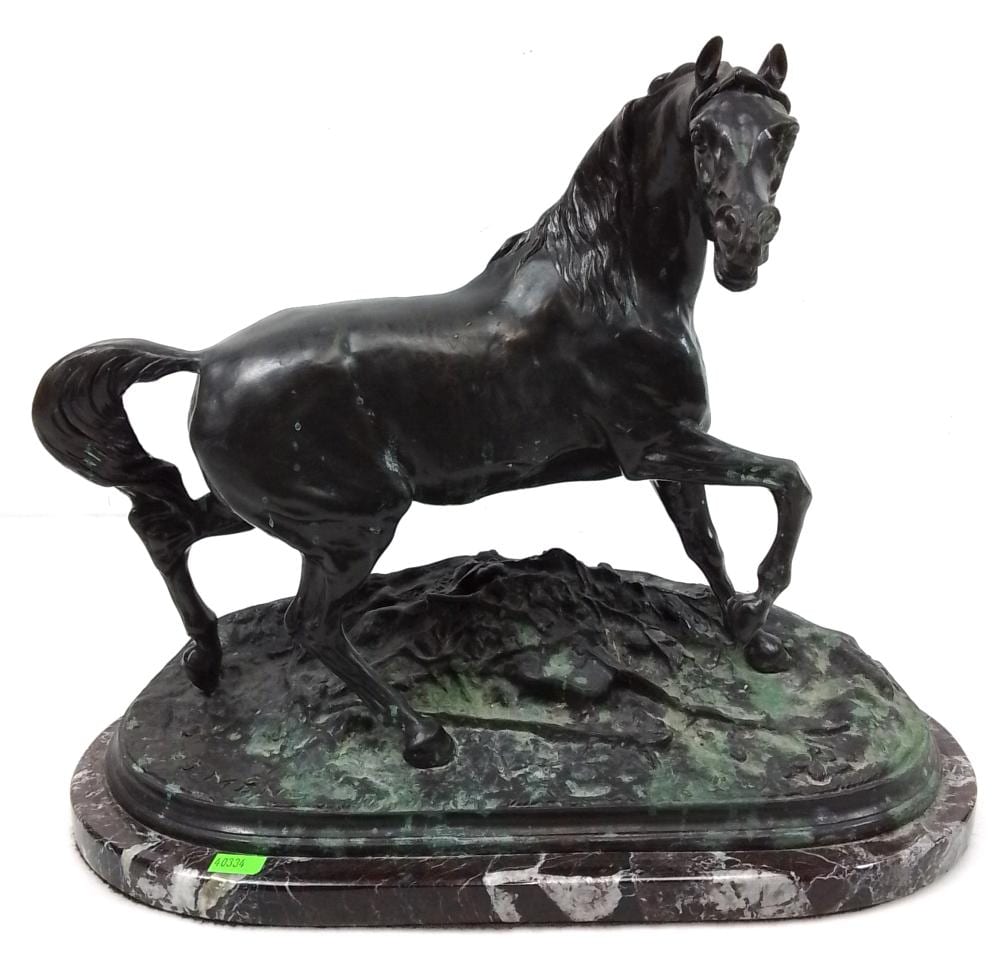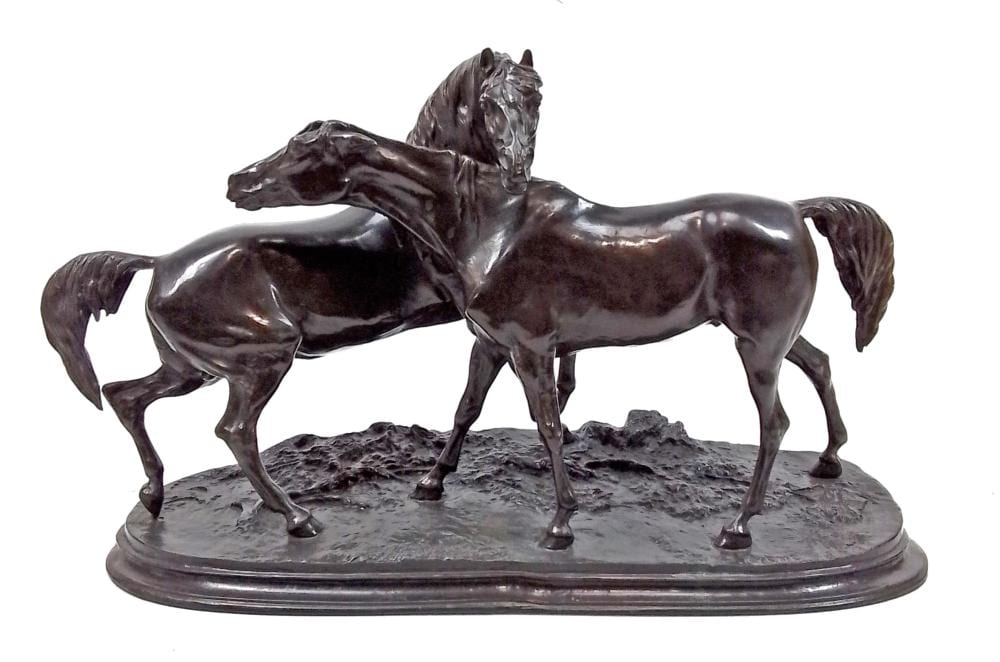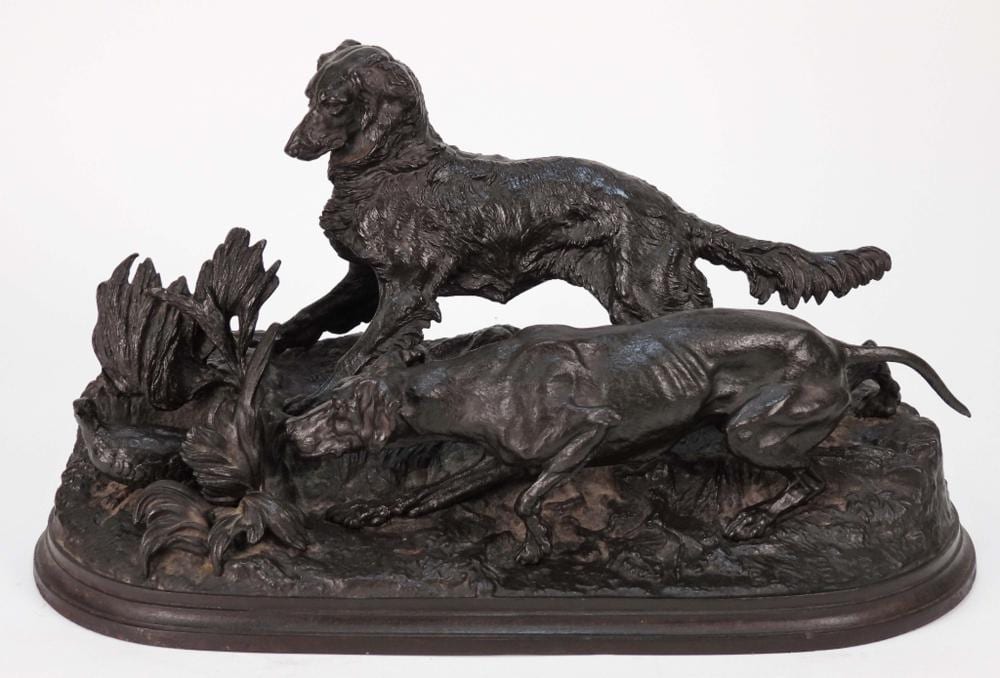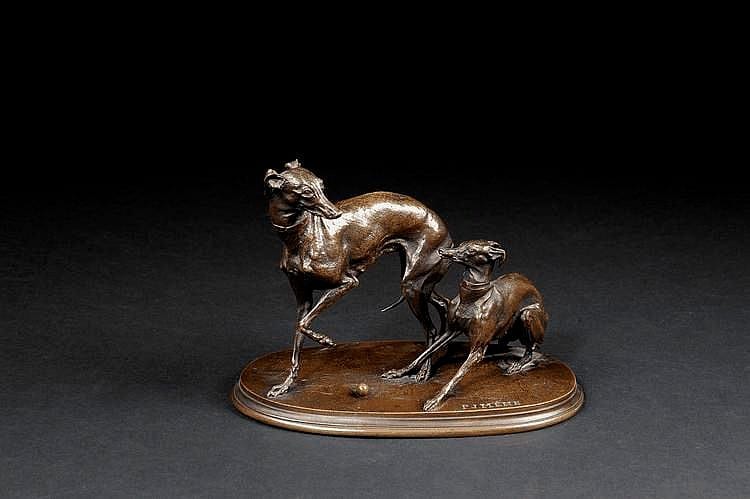
Gilded and Burnished Bronze Horse Sculpture by Pierre Jules Mene 1810 1879 Circa 19th Century: appraisal and value basics
Gilded and Burnished Bronze Horse Sculpture by Pierre Jules Mene 1810 1879 Circa 19th Century research should start with identification, condition, provenance, and recent comparable sales. Use this guide to compare the signals that matter before paying for a formal appraisal or deciding whether to sell.
Gilded And Burnished Bronze Horse Sculpture By Pierre Jules Mene 1810 1879 Circa 19th Century
Pierre‑Jules Mêne and the Animalier Context
Pierre‑Jules Mêne (1810–1879) was among the most accomplished French animaliers of the 19th century. Trained in metalwork and modeling, he established his own foundry in Paris in the late 1830s, allowing him to control the entire production process from model to finished bronze. His works—compact, sharply observed studies of horses, hounds, cattle, and wildlife—set a standard for crisp casting and expert chasing that many contemporaries emulated but rarely surpassed.
Horses were Mêne’s signature subject. He captured conformation, musculature, and gait with a realism appealing to sportsmen, breeders, and the emerging bourgeois collector base of the Second Empire. His horse models range from standing thoroughbreds with tack to grazing or spirited Arabians, sometimes accompanied by grooms or hounds. Editions were typically produced in several sizes to meet demand, with the smallest suited to mantel or desk display and the larger intended for library or salon settings.
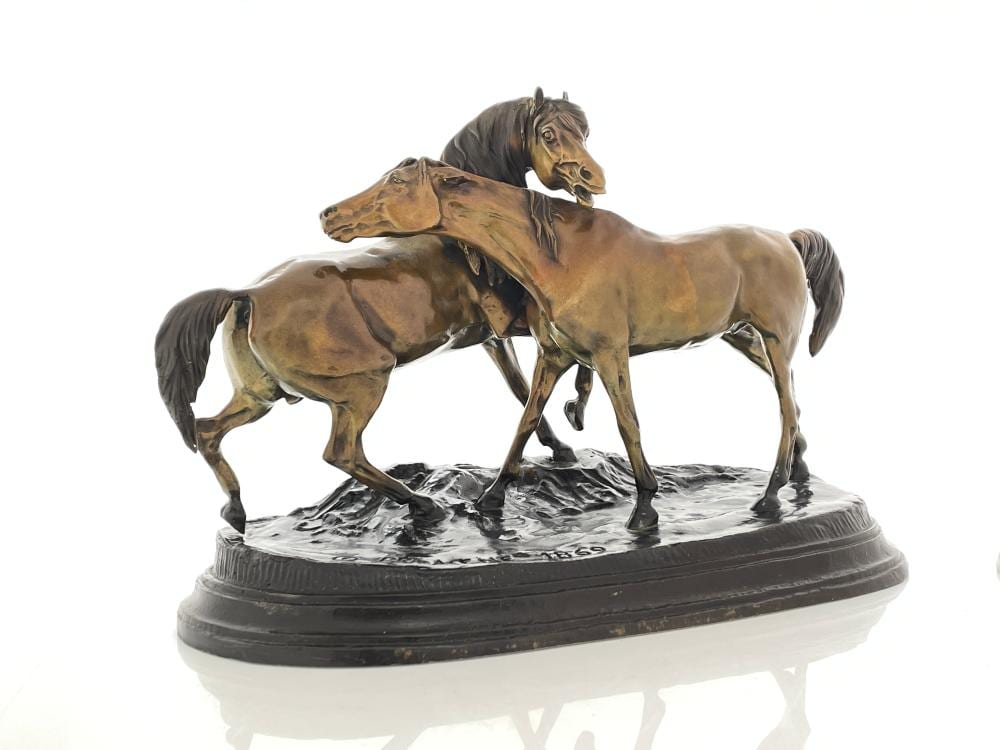
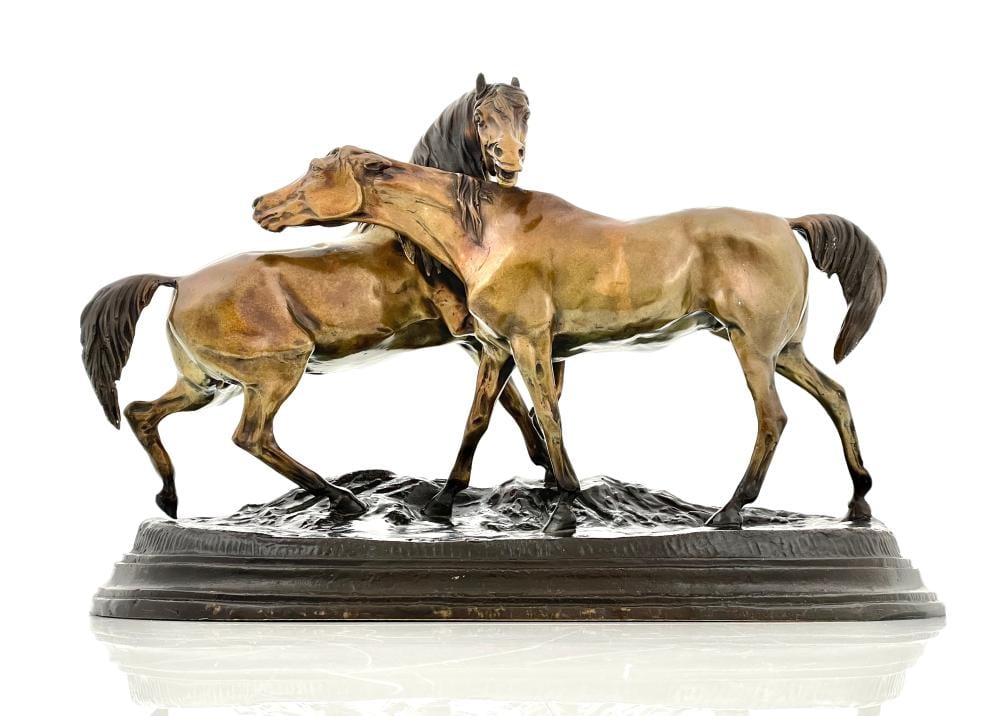
While most Mêne bronzes are patinated (brown to nearly black), period examples with gilded and burnished finishes do exist. These were often commissioned or retailed as luxury decorative works—more “objet d’art” than field study—bridging the animalier tradition with ormolu taste prevalent in Parisian interiors.
Gilded and Burnished Bronze: Materials and Finish
Understanding what “gilded and burnished” means will help you assess age, originality, and quality.
- Bronze alloy: 19th‑century French bronzes are typically copper‑tin alloys with traces of zinc/lead. Mêne’s foundry favored fine-grain sand castings that take detail well.
- Gilding types:
- Fire/mercury gilding (ormolu): Used in the 18th–19th centuries. A gold‑mercury amalgam is applied and then fired to drive off mercury, leaving a robust gold layer. Characteristic two‑tone effect: matte areas where the mercury gilding was left unburnished and bright, mirror‑like highlights where a steel tool burnished the surface.
- Electroplated gilding: Emerged mid‑19th century. Usually thinner, with a more uniform sheen and less pronounced matte‑and‑bright contrast.
- Cold gilding/paint: Later restorations may use gold lacquer or paint; the surface appears flat, lifeless, and often pools in crevices.
- Burnishing: After gilding, selective burnishing on muscles, mane, ears, or tack creates highlights that animate the form. Original burnishing on period ormolu tends to be very smooth and transitions seamlessly into matte zones; later buffing can look smeared or overly glossy.
- Wear pattern: Authentic period gilding shows soft thinning on the highest points (muzzle, withers, hocks, ear tips), with protected recesses retaining stronger gold. Unnaturally perfect, uniform gold may indicate recent re‑gilding or a modern cast.
Gilded and burnished animalier bronzes occupy a niche: rarer than brown‑patinated editions, they can command a premium when the gilding is original and well preserved. However, later re‑gilding often reduces collectability and value, because the process can soften chased details.
Signatures, Foundry Marks, and Casting Diagnostics
Lifetime control of production is central to Mêne’s story. He modeled and cast in his own atelier, which affects how authentic examples are marked and finished.
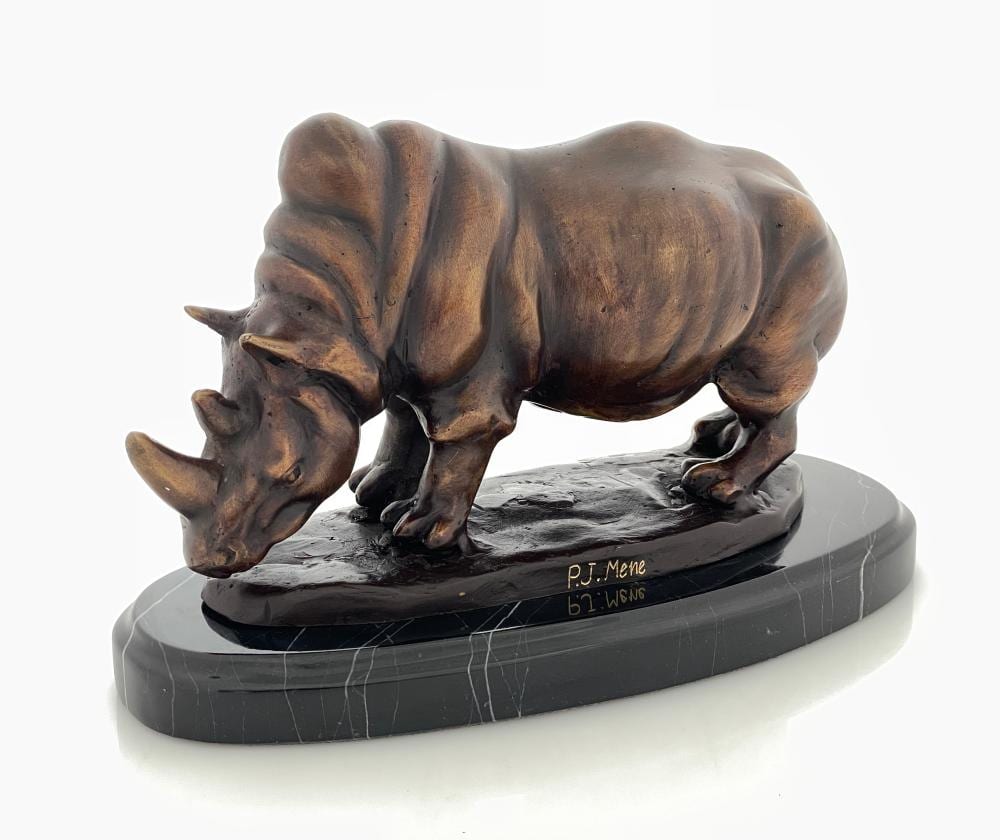
- Signature: The typical inscription is incised on the base edge or ground in script or block: “P.J. MÊNE” (often with the circumflex; sometimes seen as “MENE”). It is integral to the cast, not scratched in after patination. Look for crispness, continuity with the surrounding texture, and patina/gilt continuity inside the grooves.
- Foundry stamps:
- Lifetime casts from Mêne’s own foundry generally do not bear an external foundry stamp.
- Posthumous casts after ca. 1890s by Susse Frères are commonly stamped “SUSSE Frs Edts PARIS” (oval or rectangular), sometimes with “Cire Perdue” if lost‑wax was used. Such marks place the piece post‑1879 and typically post‑1896, when Susse acquired the models.
- Base and underside:
- Naturalistic bases with textured ground are typical. Edges are neatly filed; evidence of quality chasing is visible around hooves, fetlocks, and tail.
- Core plugs: Circular or irregular plugs on the underside are signs of sand casting. They should be well‑fitted; the interior of the base may show file or rasp marks, not the uniform texture of modern recasts.
- Join lines: If the horse is cast in multiple sections (legs, tail), chasing should seamlessly disguise joins. Sloppy seams indicate later, inferior casting.
- Chasing detail: Mêne’s lifetime casts display nerves, veins, skin folds, and hair texture that remain sharp even where gilding is present. Over‑polishing or heavy new gilding rounds these micro‑details.
- Mounts: Some 19th‑century examples sit on marble plinths (e.g., noir or griotte rouge) with threaded rods and nuts visible beneath. Period hardware is square‑edged or hand‑finished; modern replacements are bright and machine‑perfect.
A note on titles and variants: Mêne issued multiple horse models—standing saddle horse, grazing mare, spirited Arabian, horse with groom—often in several sizes. On many, only the artist’s signature appears on the base, not the model title. Cross‑checking the pose, tack, and ground configuration against known catalogues raisonnés helps pin down the exact model and edition size.
Dating, Authenticity, and Comparative Models
Appraisers generally separate Mêne bronzes into three broad categories:
- Lifetime editions (circa 1838–1879)
- Usually unsigned by a commercial foundry but signed “P.J. MÊNE.”
- Crisp sand‑cast detail; sophisticated chasing.
- Patinated surfaces most common; gilt‑bronze examples rarer but plausible, especially for decorative trade retailers.
- Typically command the highest prices.
- Early posthumous editions, Susse Frères (late 19th to early 20th century)
- Proper Susse stamp; sometimes lost‑wax casting.
- Quality remains good to very good, though detailing may be marginally softer than lifetime casts.
- Patinated surfaces predominate; bright gilded versions appear but are less frequently encountered.
- Later 20th‑century and contemporary recasts
- Often lack convincing marks or bear spurious “MENE” signatures with clumsy letterforms.
- Softer modeling, shrinkage, or simplified ground textures.
- Gold paint or lacquer masquerading as gilding is common.
- Price markedly lower than period casts.
Indicators that support a 19th‑century date for a gilded and burnished example include:
- Two‑tone mercury gilding with finely burnished highlights and deep, matte recesses.
- Age‑consistent wear: kissed‑off gold at the extremities, with no abrupt color breaks.
- Naturalistic base with chased foliage and well‑defined hoof imprints; sharp nasal detail and cleanly drilled nostril undercuts.
- Signature cast in with the model, not etched post‑finish.
- Either no foundry stamp (suggesting lifetime) or a correct Susse Frères mark (posthumous but period).
Common misreads:
- Bright, uniform yellow on every surface without variation is more consistent with recent electroplate or gold lacquer.
- A rough, sandy underside is not, by itself, a sign of age—modern sand casting can replicate this look. Assess in concert with chasing and signature quality.
- Inconsistent gilding that sits atop dirt in recesses can indicate a later, superficial application.
Market frame of reference (subject to model, size, and finish):
- Lifetime Mêne horse bronzes: roughly $3,500–$25,000; exceptional large or rare models can exceed $60,000.
- Early Susse posthumous casts: often $1,500–$6,000 for standard sizes; more for scarce compositions.
- Later recasts: typically a few hundred to low thousands.
- Original 19th‑century gilding can add 20–40% to comparable patinated examples; later re‑gilding can reduce value 20–50% due to loss of original surface and chasing life.
Practical Appraisal Checklist
- Confirm the signature:
- Look for “P.J. MÊNE” integral to the casting, with patina/gilt continuity inside the incisions.
- Inspect gilding:
- Two‑tone ormolu (matte and burnished) with natural wear on high points suggests period finish.
- Uniform, paint‑like gold with brush marks or pooling suggests later application.
- Evaluate chasing quality:
- Sharp veins, crisp ear edges, clean mane striations, and distinct hoof frogs indicate higher‑quality, earlier casts.
- Check for foundry marks:
- No stamp plus strong quality can support a lifetime cast; a correct Susse Frères stamp indicates posthumous but period.
- Examine the underside:
- Proper core plugs and hand‑finished tool marks; avoid pieces with suspiciously smooth, machined interiors.
- Assess condition:
- Note dents, bends, losses to ears or tail tips, solder repairs, or heavy polishing. Over‑cleaning dulls value.
- Verify mounts:
- Period marble plinths and hardware strengthen authenticity; incongruent modern bases may be later marriages.
- Compare the model:
- Match pose, base contours, and tack against known Mêne compositions and sizes to confirm the subject and expected dimensions.
- Document provenance:
- Old labels, invoices, or collection records can materially support valuation.
FAQ
Q: Did Mêne himself produce gilded versions, or are they all later? A: Patinated bronzes were his norm, but period gilded examples exist, especially for the decorative market. Lifetime gilded casts are less common; posthumous Susse editions and later re‑gilded surfaces are more frequently encountered. Scrutinize the gilding method and wear to judge period.
Q: How can I tell mercury gilding from modern gold paint? A: Mercury gilding shows a mellow, deep gold with a dual finish: matte backgrounds and selectively burnished highlights. Under magnification, it appears fused to the metal, not lying as a film. Gold paint often looks flat, may show brush strokes, and can chip to reveal a different substrate color.
Q: Is the presence of a Susse Frères stamp a red flag? A: Not at all. It indicates a posthumous edition, typically late 19th to early 20th century. Quality can still be high and collectible. For lifetime casts, you usually won’t see a commercial foundry stamp.
Q: Will cleaning improve value? A: Harsh cleaning, polishing, or re‑gilding usually reduces value by erasing original surface and chasing life. Best practice is gentle dusting and minimal intervention. Conservation treatments should be undertaken by a specialist familiar with ormolu and 19th‑century bronze.
Q: What size is most valuable? A: Larger or more complex compositions often bring more, but rarity, condition, surface originality, and desirability of the specific model matter more than size alone. A pristine, original‑gilt small model can outperform a larger but compromised patinated piece.
By correlating finish, casting, marks, and model against known Mêne practices, you can confidently place a gilded and burnished bronze horse within the right period and quality tier—and appraise it accordingly.