One object
Build one complete object record
Gather the identifying views, marks, dimensions, condition notes, provenance records, and earlier reports you already have. Unknowns can stay unknown.
Open this insurance intakeIndependent US guide for collectors
Use this independent preparation guide to organize collection records and questions before speaking with an insurer, broker, or appraiser. The issued policy and receiving professional—not this page—determine coverage and documentation requirements.
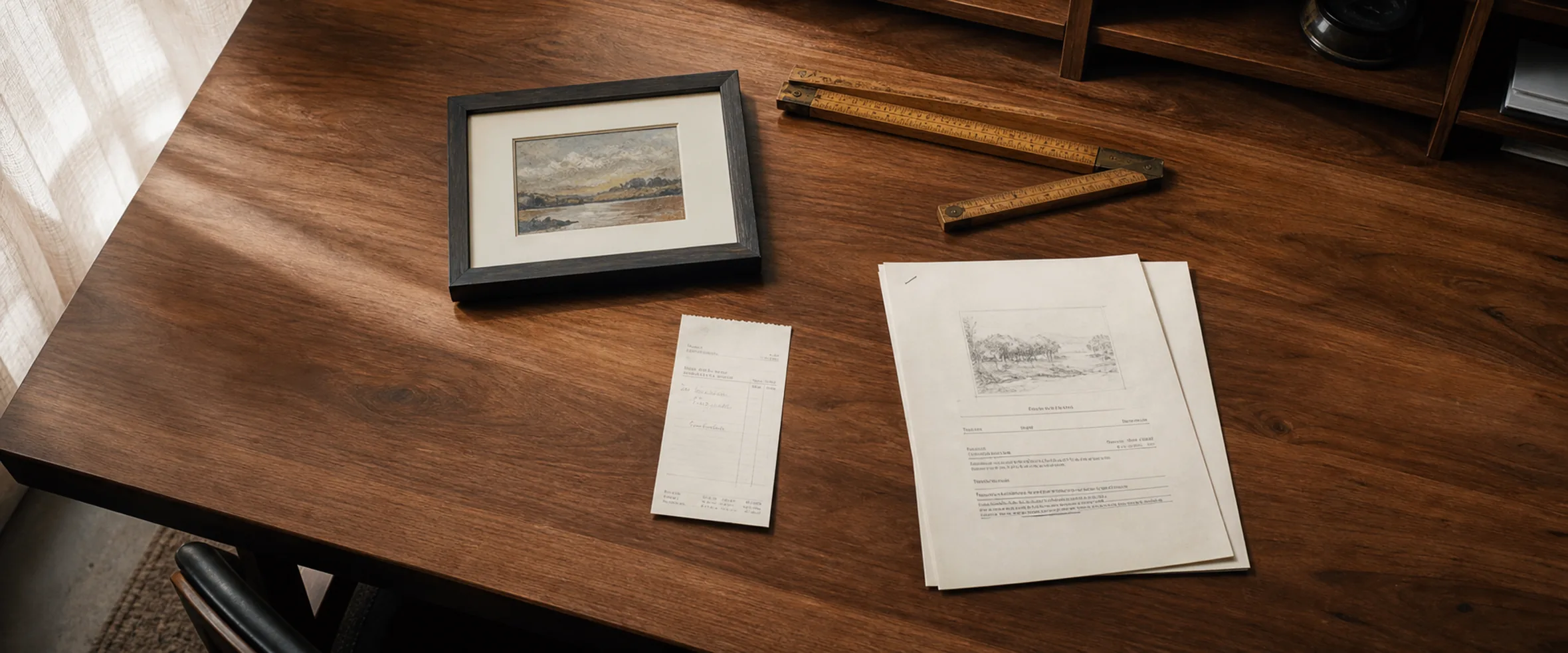
Choose the object path

One object
Gather the identifying views, marks, dimensions, condition notes, provenance records, and earlier reports you already have. Unknowns can stay unknown.
Open this insurance intakeSeveral objects
Use one canonical order with several item records. Do not combine photographs or details in a way that makes the objects difficult to distinguish.
Open this insurance intakeOrganized collection
An inventory organizes records and review dates. The receiving insurer or broker determines which objects, forms, inspection, or appraisal age it requires.
Open this insurance intakePrivate documentation builder
Use these local controls as a preparation list. No answer is saved, scored, placed in the URL, or sent as checklist data. Every possible outcome and question remains visible when JavaScript is unavailable.
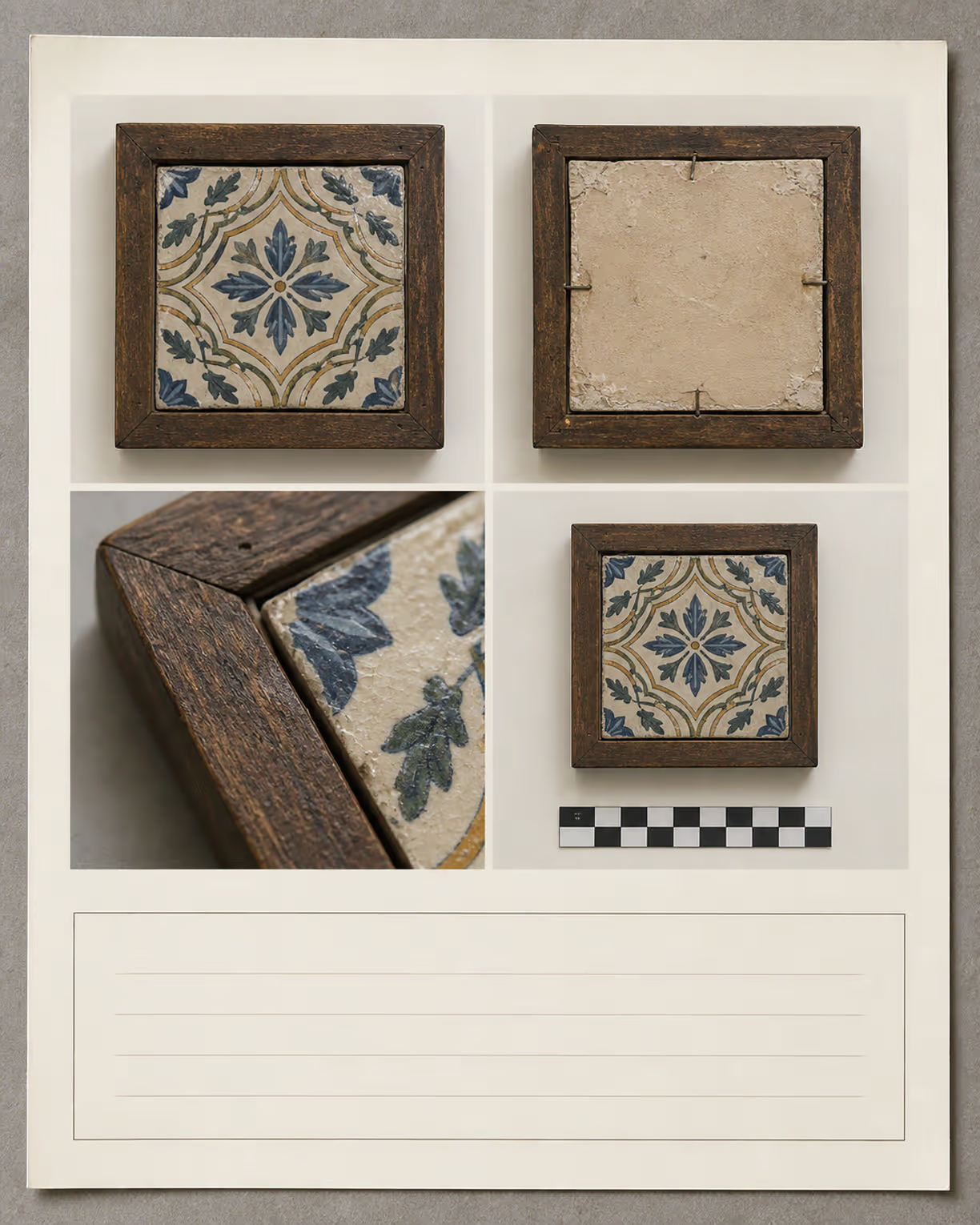
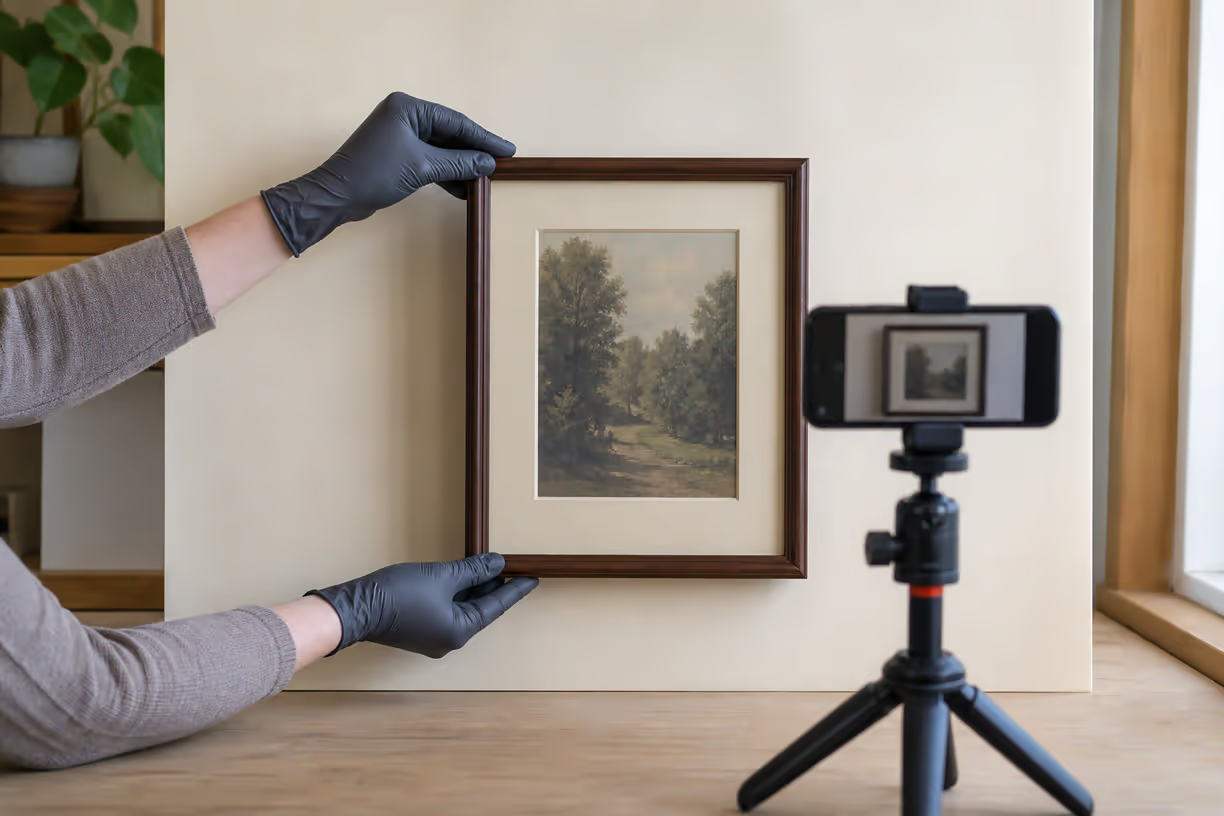
Fictional documentation example
Photo evidence
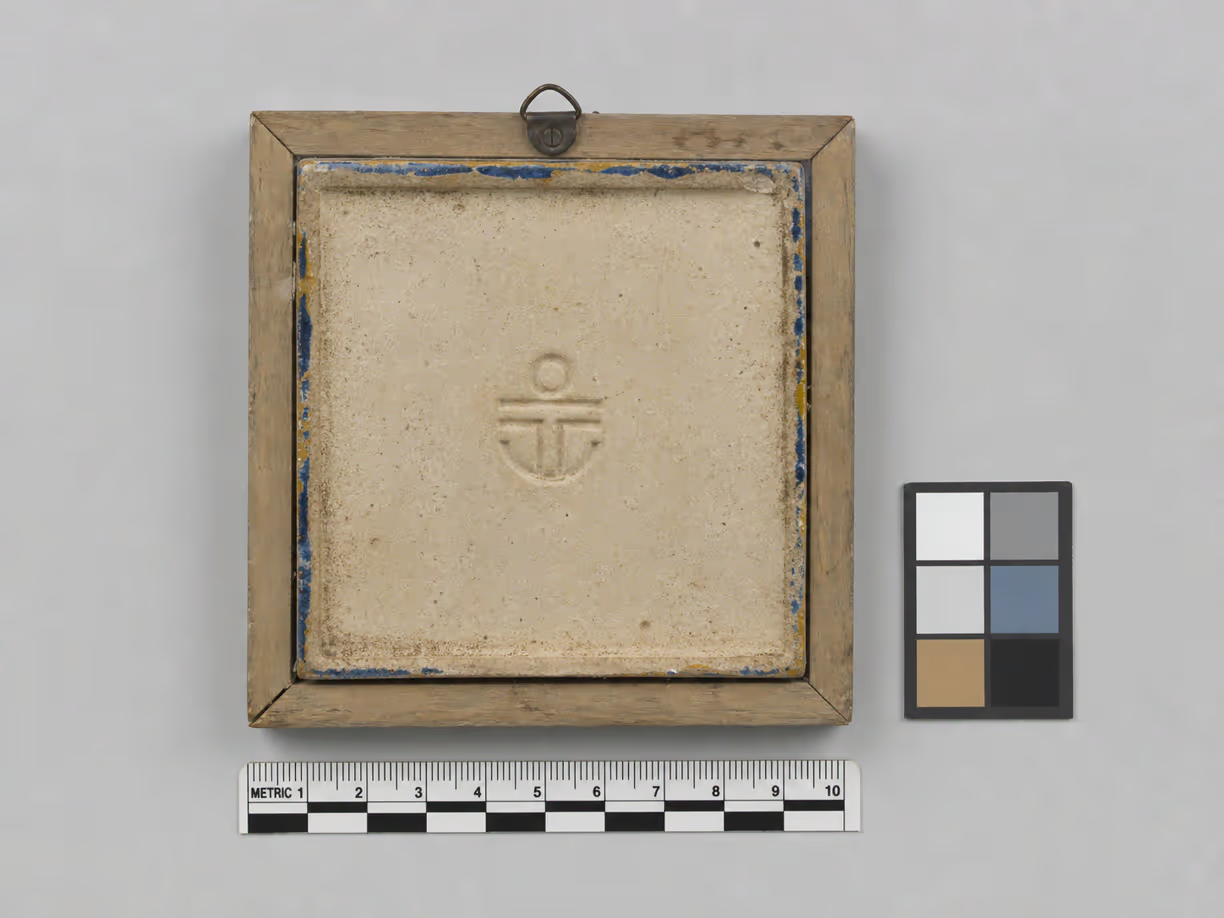
Keep the mark, object edge, color reference, and scale in the same sharp frame.
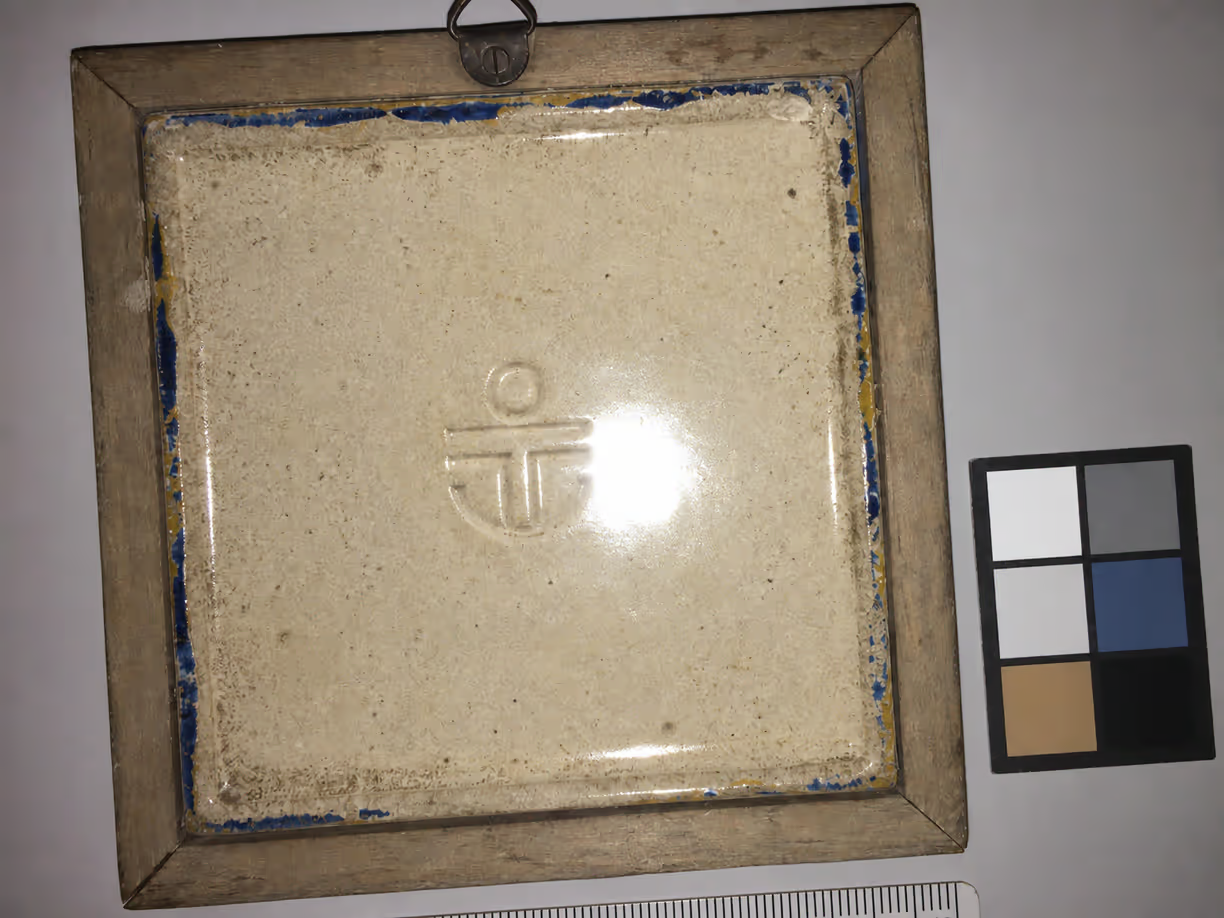
Direct flash, a tilted camera, and a clipped scale make the same detail harder to review.
Stable latest-version URL · CSV · 1.2 KB · version 1 · reviewed 2026-07-30 · includes two fictional example rows
If the download does not start, open the CSV link and use your browser's Save command. Keep your working copy outside a public folder.
Every possible preparation result
No result determines coverage, value, authenticity, acceptance, or a claim outcome.
No appraisal decision is needed yet. Confirm the receiving party, value premise, report age, signer, inspection, and form requirements first.
Review the provider question setUse the visible gaps and inventory template before deciding whether any object needs an assignment-specific appraisal.
Return to the inventory templateA recipient request, documentation refresh, or selected-object need can justify scope confirmation. This is not a promise of acceptance, value, or coverage.
Review the appraisal workflowOne or more objects may need category expertise, physical inspection, testing, grading, or another professional before an appraisal scope is appropriate.
Review category boundariesPolicy, claim, dispute, legal, authentication, grading, conservation, and repair questions are outside this guide and standard appraisal intake.
Review the outside-scope boundaryThe bounded preparation fields are complete. Scope, evidence sufficiency, recipient acceptance, and any inspection need are still confirmed after intake.
Review what happens after intakeCategory field guides
Preparation prompts only. Record known facts, preserve uncertainty, and avoid manipulating an object merely to complete a field.

Record artist or attribution as known, title, medium, support, dimensions, signature, labels, frame, installation, condition, provenance, exhibition history, and clear recto-verso details.
Boundary: Large, fragile, high-complexity, site-specific, or attribution-sensitive works may need an appropriate specialist or physical inspection.
Record form, materials, construction, joinery, hardware, dimensions, marks, surface, alterations, repairs, upholstery, and accessible views of backs, undersides, and interiors.
Boundary: Do not move, dismantle, clean, refinish, or expose a fragile object merely to obtain a photograph.
Record maker and assay marks, materials, dimensions, weight where safely known, construction, pattern, monograms, components, condition, and photographs that connect each mark to the full object.
Boundary: A mark alone does not establish authenticity, exact date, or value.
Record body and glaze, form, decoration, dimensions, factory or artist marks, labels, restorations, cracks, chips, and overall plus base photographs.
Boundary: Restoration or material questions may require specialist examination.
Record denomination, date, mint mark, certification details, holder, grade as stated by the issuer, quantity, sets, provenance, and glare-controlled obverse and reverse views.
Boundary: Do not remove objects from sealed holders or clean them for the appraisal.
Record country, issue, denomination, watermark or perforation details if already known, condition, album or certificate references, multiples, covers, and clear front-and-back views when safely available.
Boundary: Do not hinge, soak, detach, or manipulate material merely to complete the record.
Record athlete or team, event, season, manufacturer, set and card number, edition or serial, signature evidence, certification, condition, provenance, and photographs of fronts, backs, labels, and packaging.
Boundary: Authentication and grading are separate specialist questions unless expressly included in scope.
Record producer, wine or spirit, vintage, region, bottle size, fill level, label and capsule condition, case details, purchase provenance, and general storage history without exposing an exact location.
Boundary: Handling, storage, authenticity, and marketability can require a wine or spirits specialist.
Record author or creator, title, edition or issue, publisher, date, binding, pagination, inscriptions, plates, dust jacket, provenance, repairs, and safe photographs of title, copyright, binding, and notable leaves.
Boundary: Do not flatten bindings, remove mounts, or expose light-sensitive material merely for documentation.
Record maker or publisher, character or title, issue or model, date, edition, completeness, accessories, packaging, certification, condition, and clear photographs of identifying details.
Boundary: Sealed packaging, grading, and restoration questions may require a category specialist.
Record type, metal and hallmarks, maker, model or reference, serial as appropriate, dimensions, stated gemstones, movement or caliber as known, certificates, service records, provenance, and overall plus mark photographs.
Boundary: Gem identification, testing, opening cases, and high-value jewelry or watch assignments may require an onsite or category-specific specialist.
Start with stable object IDs and broad groups, preserve estate and acquisition records, label family accounts as unverified, photograph before dispersal, and identify which groups need category expertise.
Boundary: Use the Inherited Objects guide for triage; do not force a single appraiser or value premise across unrelated categories.
Do I need an appraisal?
No result below means that you are covered, underinsured, eligible, or that a provider will accept the documentation.
When: You do not yet know the receiving party, value premise, accepted report age, appraiser qualification, inspection, form, or scheduling requirement.
Next: Send the bounded question list below before assuming an appraisal is needed.
When: Objects are not separately identified, photographs and receipts are scattered, or basic collection records are missing.
Next: Use the private checklist and downloadable template; do not guess at missing facts.
When: The recipient requests one, the current documentation does not support the required value premise, or selected objects need assignment-specific analysis.
Next: Confirm intended use, intended users, effective date, scope, inspection needs, specialist fit, and deliverable before ordering.
When: The collection is physically complex, attribution-sensitive, unusually large, difficult to photograph safely, or subject to a recipient-specific inspection or credential requirement.
Next: Use a qualified professional whose expertise and inspection method fit the objects and assignment.
When: The need is policy advice, binding, claim adjustment, appraisal-clause dispute, legal advice, damage causation, conservation, authentication-only work, or an unsupported category.
Next: Contact the insurer, broker, adjuster, attorney, conservator, authenticator, or appropriate specialist.
Remote workflow
Check recipient requirements, prepare one evidence set per object, confirm scope and remote-review fit, then receive the assignment-specific report. A physical inspection or another specialist may be required.
Official provider resources
Appraisily has no listed-provider affiliation and receives no referral compensation. Names are sorted alphabetically. Detailed comparison fields are excluded from this edition.
Checked 2026-07-30 · next review due 2026-08-30
Collectibles insurance information and quote path
Detailed comparison fields: Not public — this edition does not publish this comparison field.
Specialist collectibles insurance information and quote path
Detailed comparison fields: Not public — this edition does not publish this comparison field.
Personal collections and valuable-articles information
Detailed comparison fields: Not public — this edition does not publish this comparison field.
Specialist collectibles insurance information and quote path
Detailed comparison fields: Not public — this edition does not publish this comparison field.
Member collectibles insurance information and partner quote path
Detailed comparison fields: Not public — this edition does not publish this comparison field.
This process governs which official resources can appear, which fields stay suppressed, how ordering remains neutral, and how a provider or reader can request a correction. It does not score, compare, recommend, or endorse providers.
Identify the provider, exact public URL, disputed displayed field, and a current official source. Do not submit customer policy, claim, payment, security, or identity data.
This public methodology applies only to the official resource names and direct URLs shown above. It does not authorize or publish provider comparisons.
Before ordering or changing coverage
Professional boundaries
Review, sources, and limits
Content author
Source research and customer-facing guidance for appraisal documentation and collection preparation.
The Appraisily editorial team maintains appraisal-purpose, evidence, sample-report, and collection-documentation resources. This organizational author identity does not claim appraisal, insurance, legal, underwriting, or claims-handling credentials.
Content reviewed 2026-07-30; next review due 2026-10-30.
Expert review gate
No independent qualified-appraiser review is claimed. Appraisal-specific guidance is excluded from this edition.
No licensed insurance-professional review is claimed. Coverage interpretation and comparison guidance are excluded from this edition.
Appraisily is an appraisal and documentation service, not an insurer or broker. The provider directory is alphabetical, unpaid, and not a recommendation.
This edition links to primary references but does not interpret coverage or publish provider comparison fields. The issued policy and receiving professionals control. Content reviewed 2026-07-30; next review due 2026-10-30.
Ready for assignment review