
Victorian wooden horse tricycle appraisal and value basics
Victorian wooden horse tricycle value depends on whether the piece is a true late-19th-century or early-20th-century horse velocipede, a later decorative reproduction, or a heavily restored ride-on toy. Start with carving, frame construction, wheels, metalwork, paint surface, repairs, size, provenance, and recent comparable sales.
A wooden horse tricycle, sometimes called a horse velocipede, hobby horse tricycle, or ride-on horse trike, sits at the intersection of antique toys, folk art, and early child transport. The best examples combine expressive carving with period wheels, axles, treadles or pedals, and honest aged surfaces.
The market is selective. A rough or later decorative example may sell in the hundreds, while a convincing late-19th-century French or English horse velocipede with strong presentation can reach the low thousands. The comp table below gives the safest starting point.
Free first read
Check age, originality, and repairs before paying for a report
Upload the horse head, body, underside, wheels, axles, handlebar, pedals, paint surface, repairs, and any provenance. The free screener can flag whether it looks like a period velocipede, a later reproduction, or a decorative riding toy.
Start with a free screener. Use a signed report only if you need insurance, estate, donation, or sale documentation.
How We Research Valuation Data
Our appraisal guides are based on auction results, dealer pricing data, and professional appraiser insights. We may earn a commission when you use our professional appraisal service. Learn about our editorial standards.
Current value range for Victorian horse tricycles
Recent public comps suggest a practical working range of about $375 to $1,800 USD for horse tricycle and horse velocipede examples, with condition and originality doing most of the work. Decorative, incomplete, or heavily restored examples can sit below that range. Strong period examples with attractive carving, working wheel assemblies, and old surface can price higher in a specialist toy or folk-art venue.
Do not price a wooden horse tricycle from a retail asking price alone. Dealer listings can be useful for language and presentation, but auction results give a better read on what buyers have recently paid.
Fast identification checklist
Before assigning value, photograph and measure these details:
- Overall size: length, height to handlebar, wheel diameter, and seat height.
- Wood and carving: beech, oak, maple, and pine are common; hand tool marks and asymmetry can support age.
- Wheel build: handmade wooden wheels, iron rims, spoke wear, and axle wear are more persuasive than modern bearings.
- Hardware: check for slotted screws, square nuts, hand-forged or early machine bolts, old washers, and period brazing.
- Surface: layered paint, oxidized varnish, grime in recesses, and uneven wear are better signs than uniform artificial antiquing.
- Underside: look for replaced axles, modern plywood inserts, epoxy fills, welded repairs, or threaded rod.
Authenticity and dating clues
Wheels and undersides usually tell the truth. A period ride-on should show long-term wear where the axle turns, where feet contacted pedals or treadles, and where hands gripped the steering. Modern reproductions often have consistent router marks, machine sanding, Phillips screws, new washers, or artificially aged paint that looks too even.
Original surfaces are valuable even when worn. A complete repaint can reduce collector interest, especially if it hides construction details or makes the piece look decorative rather than period.
Auction comps for horse tricycles and velocipedes
Use direct horse tricycle and velocipede rows first. Rocking-horse rows are adjacent toy-market context only and should not anchor a tricycle value unless the subject, scale, and condition are close.
| Photo | Sale | Date | Lot | Realized | Notes | Source |
|---|---|---|---|---|---|---|
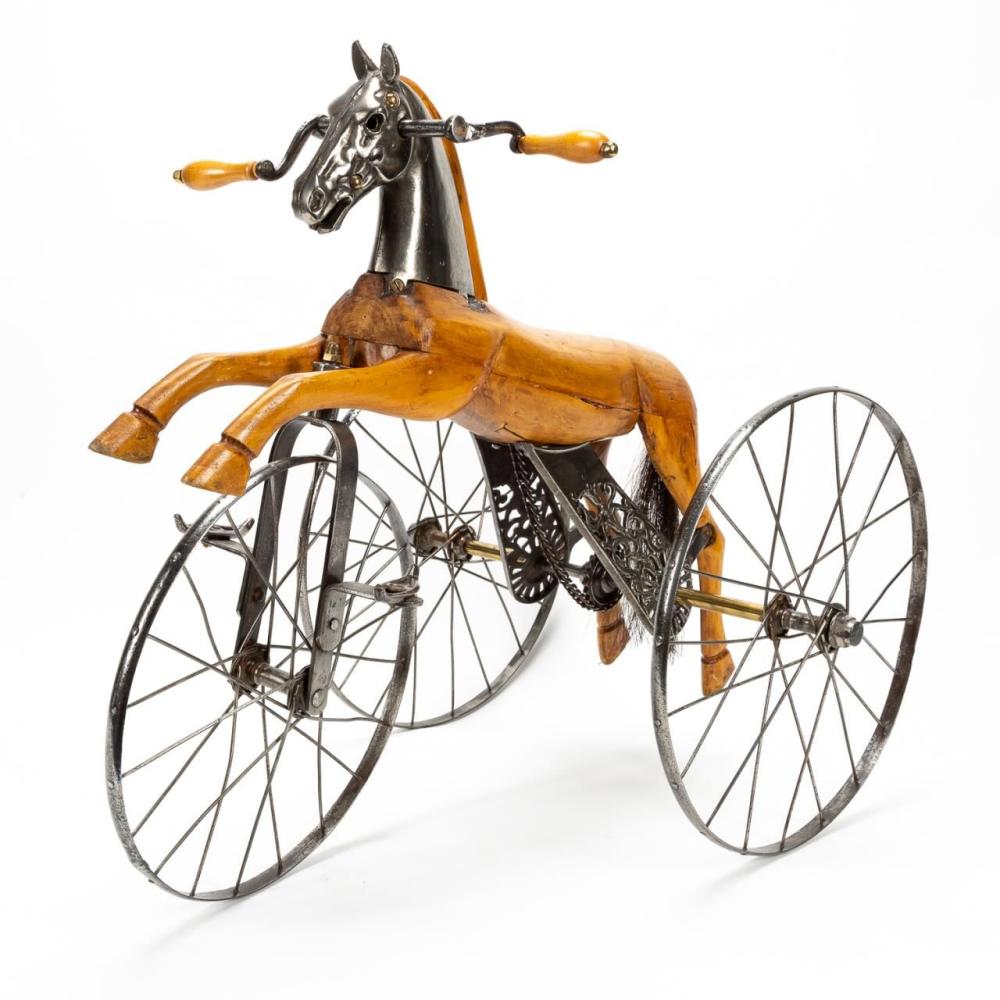 | Ahlers & Ogletree, late 19th century French toy horse velocipede tricycle | January 16, 2022 | 814 | USD $1,800 | Best direct comp in this set; strong period attribution and horse-tricycle format. | Valuer Bridge dataset |
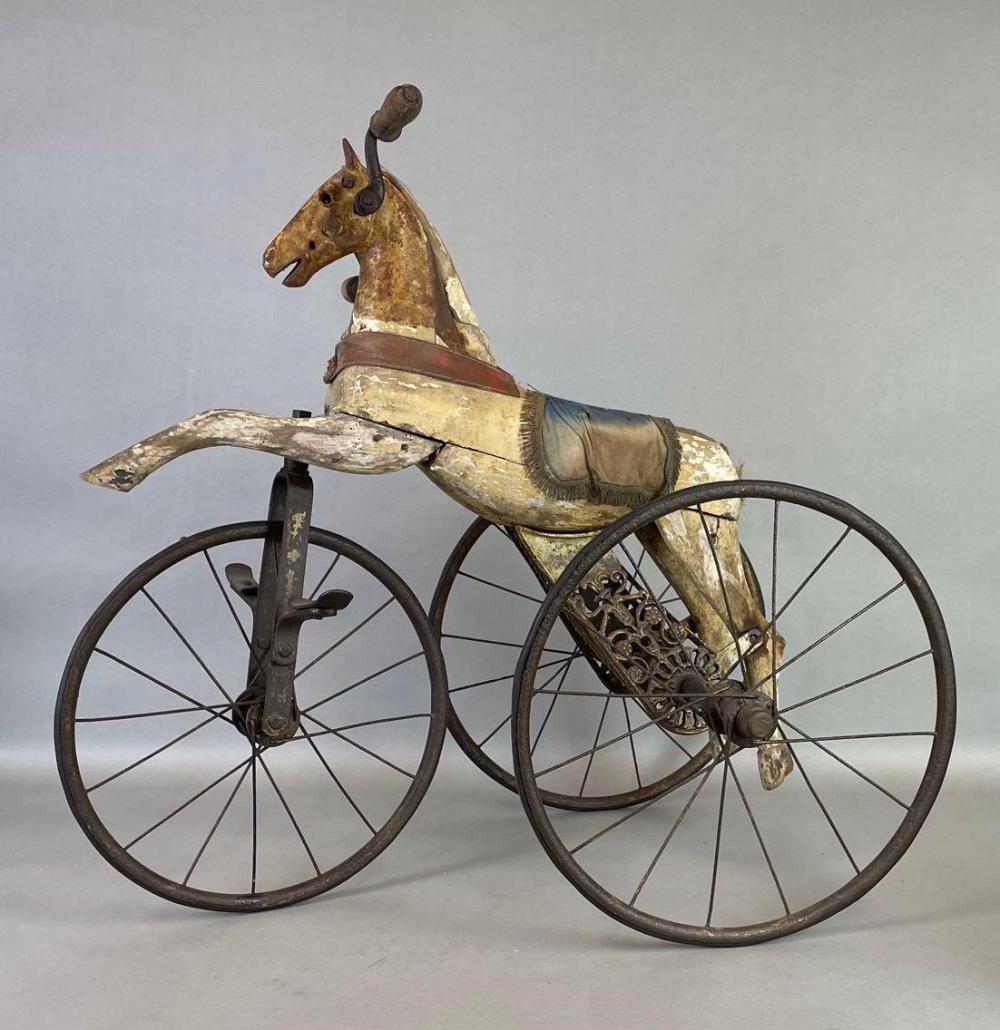 | Matthew Bullock Auctioneers, antique velocipede wood and cast iron horse tricycle | September 7, 2024 | 139 | USD $750 | Direct horse-tricycle comp; useful for examples with mixed wood and cast iron construction. | Valuer Bridge dataset |
| No image | Mebane Antique Auction, antique Victorian French velocipede child's horse tricycle | April 24, 2026 | 45 | USD $375 | Direct but lower result; check condition, completeness, and venue before using as a floor. | Valuer Bridge dataset |
| No image | Vickers & Hoad, antique Victorian period wooden rocking horse | April 14, 2026 | 1602 | AUD $650 | Adjacent antique wooden horse toy context, not a tricycle comp. | Valuer Bridge dataset |
Takeaway: a convincing period horse velocipede can reach the low thousands, but weaker or incomplete examples may trade in the mid hundreds. Use the $1,800 comp only when age, construction, and presentation are similarly strong.
Have a horse tricycle?
Check the wheels, underside, and old surface before pricing it.
Upload both sides, underside, wheels, axles, hardware, paint, repairs, scale, and any provenance. The free screener can flag whether it needs a formal written appraisal.
Upload photos for a free first lookCondition grading and value impact
- Excellent / collector-grade: stable, complete, mostly original surfaces and hardware, minimal repairs.
- Good: honest wear, small historic repairs, minor replacements that do not alter overall presentation.
- Fair: repaint, significant cracks, replaced wheels or axles, mismatched metalwork, or old structural movement.
- Poor / decorative: loose structure, soft wood, rot, major losses, aggressive modern rebuild, or unsafe frame repairs.
If you plan to sell, prioritize stabilization over restoration. Tighten safely, disclose repairs, and avoid refinishing unless a toy or folk-art specialist recommends it.
How to sell a Victorian wooden horse tricycle
The best channel depends on evidence. Specialist toy or folk-art auctions usually present unusual ride-on toys better than mixed estate sales. Dealer consignment may bring a stronger retail price but can take longer. Direct online sale can work if you can photograph the underside clearly and arrange safe freight.
- Show full side views, front, rear, top, underside, wheels, axles, and steering.
- Include close-ups of repairs, cracks, replaced parts, paint losses, and maker or retailer marks.
- Put a tape measure in at least one image for scale.
- For shipping, immobilize wheels, remove detachable parts, double-box or crate, and insure for the full sale value.
Search variations collectors ask
Readers often Google:
- how to tell if a wooden horse tricycle is Victorian or a reproduction
- late 19th century hobby horse tricycle value guide
- what is a horse velocipede tricycle worth
- best way to ship an antique wooden ride-on toy
- does repainting an antique toy reduce value
- where to sell a Victorian wooden horse trike
- hand carved wooden tricycle horse appraisal online
- wooden wheels vs metal wheels on antique tricycles
Each question maps to the identification, condition, comp, and selling guidance above.
References and market notes
- Valuer Bridge auction dataset for horse velocipede, antique horse tricycle, and adjacent wooden horse toy comparable sales, reviewed May 17, 2026.
- 1stDibs Victorian horse tricycle listing for retail-context language, not an auction comp.
- Antique horse tricycle identification guide for frame, wheels, pedals, and maker clues.