Victorian Glass Fruit Plate Value

Value a Victorian glass fruit plate by checking pattern, pressed vs cut glass, mount, rim wear, color, dimensions, condition, and auction comps.

Victorian glass fruit plate reference with pressed-glass pattern, rim wear, mount, dimensions, and condition
Victorian glass fruit plate reference with pressed-glass pattern, rim wear, mount, dimensions, and condition. Reference image; item-specific appraisal depends on submitted photos and documentation.

Not sure if your fruit plate is truly Victorian?

A clear photo set (rim + base + underside + any seams/marks) is usually enough for an appraiser to separate period glass-and-metal mounts from later decorative reproductions.

  • Written valuation with condition notes
  • Market evidence references when available
  • Documentation for resale, insurance, or estates
Start a quick appraisal

Secure upload. No obligation.

Appraisal and value basics for Victorian glass fruit plates

Victorian glass fruit plate value research should start with pattern identification, glass type, mount quality, rim wear, dimensions, condition, provenance, and item-specific auction comparables. Use this guide to compare the signals that matter before paying for a formal appraisal or deciding whether to sell.

A Victorian-era glass fruit plate is usually a glass insert (pressed, cut, or molded) paired with a metal mount (bronze, gilt metal, or silver plate). These mounted glass pieces were meant to look luxurious on a dining table or sideboard—especially when candlelight could sparkle through the glass.

Two details drive most of the value: (1) what kind of glass it is (pressed vs cut vs lead crystal), and (2) whether the mount is quality bronze/silver plate or a lighter decorative alloy. The good news: you can usually narrow it down with a few underside photos.

Free first read

Check glass, mount, and condition before paying for a report

Upload the top, underside, rim, mount, base, marks, and chip photos. The free screener can separate common decorative glass from a piece that needs a written appraisal.

Step 1 of 2

Start with a free screener. Use a signed report only if you need insurance, estate, donation, or sale documentation.

How We Research Valuation Data

Our appraisal guides are based on auction results, dealer pricing data, and professional appraiser insights. We may earn a commission when you use our free professional appraisal service. Learn about our editorial standards.

What is a Victorian-era glass fruit plate?

In antiques listings, “fruit plate” often means a shallow bowl/plate form used as a centerpiece—sometimes called a compote or serving plate depending on shape. In the late Victorian and Edwardian periods, clear patterned glass paired with ornate mounts was a popular decorative look.

Many pieces are described as “Victorian” loosely; it’s common for true late-1800s items and early-1900s items to be grouped together. Your goal is usually not to find a precise year, but to place it into the correct era and quality tier.

Identification checklist (5 minutes on a table)

Start with construction. Most mounted glass pieces are unmarked, so value comes from materials, workmanship, and condition.
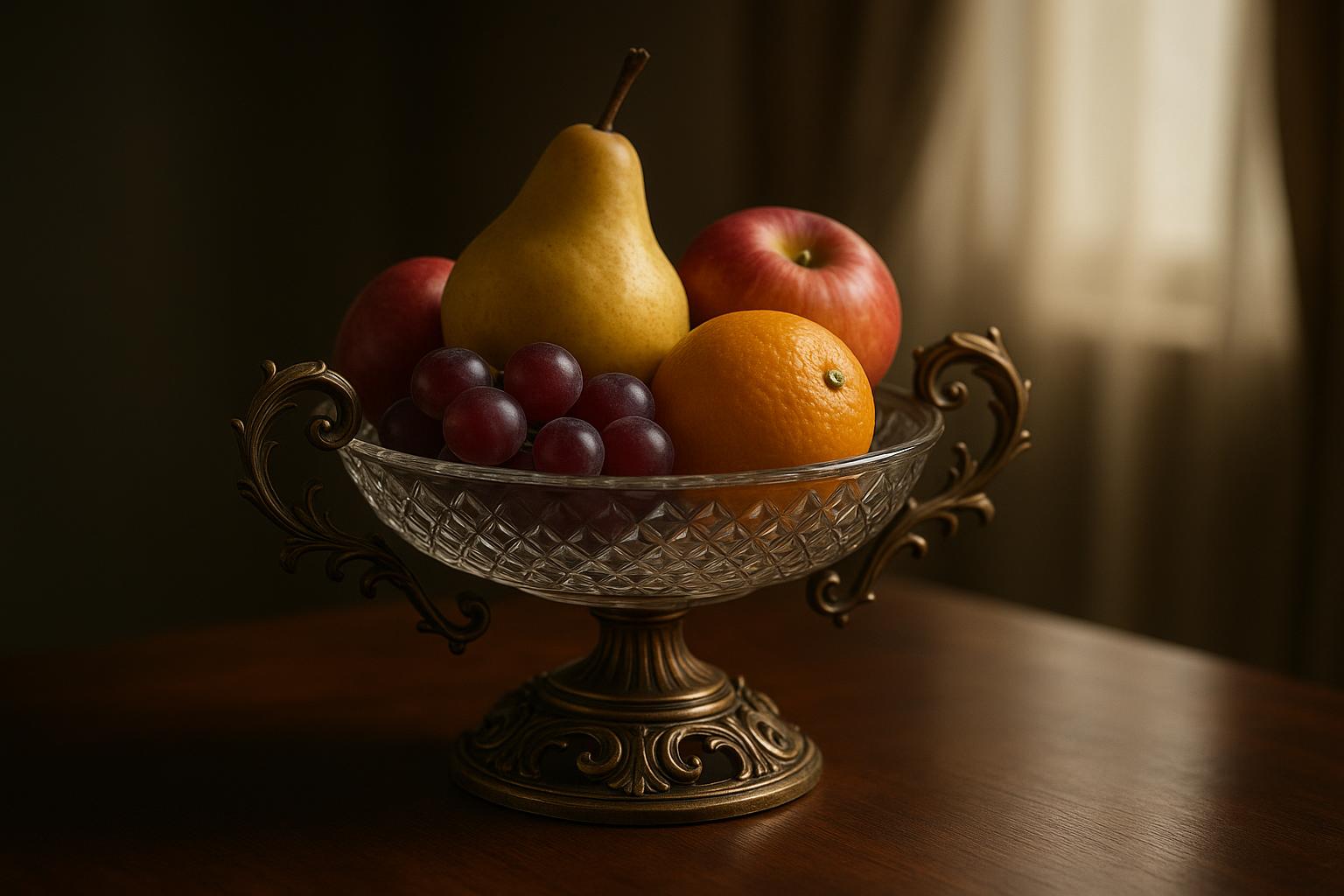
Victorian glass fruit plate reference with pattern, mold lines, rim wear, color, dimensions, and condition
Credit: Appraisily (AI-generated).
  • Measure and weigh it (buyers pay up for size and heft).
  • Flip it over and look for a mold seam or textured base typical of pressed glass.
  • Check the rim for tiny “flea bite” chips (common and value-reducing).
  • Inspect the mount for casting texture, hand finishing, and consistent wear.
  • Look for marks under the mount or on screws/plates (occasionally a plated hallmark or retailer stamp).

1) Glass: pressed vs cut vs lead crystal

Many late 1800s table pieces are pressed glass: molten glass pressed into a mold to create relief patterns. Pressed glass can still be collectible when the pattern is crisp and the surface isn’t worn or cloudy. Cut glass (hand-cut facets) generally commands more, but it’s less common in mounted fruit plates.

Lead crystal is often assumed because it photographs “sparkly.” If you need a definitive answer for insurance or safety decisions, avoid harsh DIY tests that can etch glass—use a conservative identification approach (weight, clarity, and patterning) and consult an appraiser when needed.

2) Metal mount: bronze, gilt metal, silver plate, spelter

The mount is where a lot of the price lives. Better mounts show depth, clean edges, and convincing age. Solid bronze tends to feel heavier and will show natural wear on high points. Silver plate may show brassing-through; spelter (zinc alloy) is lighter and can wear to a dull gray tone.

  • Sand-cast texture on hidden areas can be a period clue (often smoothed on visible faces).
  • Fasteners should look age-consistent (modern bright screws can indicate later assembly).
  • Uniform gold paint is more typical of later decorative reproductions than true gilt bronze.

Dating clues (late 19th to early 20th century)

Victorian mounts often lean into scrolls, vines, and heavy ornament. As you approach 1900, Art Nouveau curves become more fluid and asymmetrical. Early 1900s pieces can still feel “Victorian” in the home décor sense—so it’s normal to see both terms used.

Practical dating tip: focus on whether the object looks like it was assembled and finished by hand (good sign) versus looking overly uniform and “factory perfect” (often later).

Condition: what helps (and what hurts) value

  • Chips at the rim are the #1 issue; even small chips reduce buyer confidence.
  • Cracks in the glass are major value killers.
  • Loose mounts (missing screws, wobbly insert) are fixable but should be disclosed.
  • Over-cleaning removes patina and can flatten decorative detail in the mount.

Appraisal value range (mounted glass fruit plates)

A reasonable market range for an unmarked Victorian or Edwardian glass fruit plate depends on whether the glass is common pressed glass, cut glass, or sterling/silver-mounted tableware. Comparable auction results are more useful than generic price bands.

Auction comps for Victorian and mounted glass fruit pieces

These comps show how mounted fruit bowls, fruit plates, and related centerpiece forms trade before adjustments for maker, glass type, mount quality, chips, cracks, and size.

PhotoSaleDateLotRealizedNotesSource
Victorian fruit design centerpiece comp with glass domeApple Tree Auction Center, large Victorian fruit-design centerpiece with glass domeApril 7, 20223234$650Decorative Victorian fruit-form centerpiece comp; larger and more elaborate than a simple plate.Valuer Bridge dataset
No imageCharles Miller Ltd, Atlantic Transport Line Victorian silver-plate fruit tazza, circa 1890Nov. 12, 2024121£260Useful for Victorian silver-plate fruit-serving form and period dating.Invaluable
Mappin Brothers Victorian Sheffield silver plate epergne with cut glass bowls compNadeau's Auction Gallery, Mappin Brothers Victorian Sheffield silver-plate epergne with cut-glass bowlsOct. 25, 20257$600Higher-complexity mounted glass serving form; maker and multiple bowls matter.Invaluable
No imageBrunk Auctions, Gorham sterling-mounted glass fruit bowl and 12 dessert platesSept. 15, 2023804$250Sterling-mounted set; condition and completeness affect interpretation.Invaluable
No imageBonhams, Edwardian silver-mounted glass fruit bowlNov. 21, 200310£5,258Outlier high comp; use only if silver quality, maker, and condition are comparable.Invaluable
No imageA. H. Wilkens Auctions, pressed glass fruit basket tureenApril 2, 20252003CA$300Pressed-glass fruit-pattern comp for a collector/decorative baseline.Invaluable

Takeaway: common pressed-glass fruit pieces often sit in the low hundreds, while maker-documented silver-mounted or unusually elaborate examples can move higher. Chips, cracks, loose mounts, and over-polishing push values down quickly.

Have a Victorian glass fruit plate?

Check the rim, underside, mount, and pattern before pricing it.

Upload the top, underside, rim, mount, marks, dimensions, and damage photos. The free screener can flag whether it is common pressed glass, a better mounted form, or a piece worth a signed report.

Use the free screener

How to sell it (and avoid damage)

These pieces sell best with photos that prove condition. eBay/Etsy work for decorative examples; a regional auction house can be better if you have multiple decorative arts items.

  • Photograph the underside, rim, and any chips in raking light.
  • List measurements and weight.
  • Pack like glassware: immobilize the piece, protect the rim, and double-box.

Cleaning and care (safe defaults)

  • Glass: mild soap + warm water, no abrasives; avoid sudden temperature changes.
  • Metal mount: dust and gently wipe; avoid aggressive metal polish unless you accept a bright look.
  • Do not soak the whole piece if the mount has seams, screws, or trapped moisture areas.
Search variations collectors ask

Readers often search these while identifying Victorian-era glass fruit plates:

  • how to tell if a glass fruit plate is Victorian
  • late 19th century glass and bronze fruit bowl value
  • is my mounted glass fruit plate lead crystal
  • pressed glass fruit plate with metal mount identification
  • how to date Art Nouveau mounted glass centerpieces
  • what makes antique mounted glass bowls worth more
  • how to clean a bronze-mounted glass centerpiece safely
  • Victorian glass fruit plate no maker mark value

Each question maps to the identification and valuation guidance above.

References

Wrap-up

Most Victorian-era glass fruit plates are valued less by the words “Victorian” or “crystal” and more by what you can show in photos: sharp patterning, a sturdy period mount, and clean condition. With underside details and consistent wear, it becomes much easier to separate a low-hundreds decorative piece from a stronger collector example.

Choose your next step

Use the path that matches the decision you need to make about the item.

Need a signed report?

Use this for insurance, estate, donation, resale, or documented value decisions.

Start a signed report

Not sure it is worth appraising?

Start with a lower-friction screen to understand the likely category, evidence, and next step.

Use the free screener

Need local or specialist help?

Compare directory options when the work needs in-person review or a specialist near you.

Find local specialists

See what the report looks like

Sample reports show how photos, comparable evidence, condition notes, and a value conclusion are documented.

Want a second opinion before you list your fruit plate?

Get a written appraisal that supports resale, insurance, or estate planning.

  • Condition-aware value estimate
  • Guidance on cleaning vs preserving patina
  • Fast turnaround
Start glass appraisal

Secure checkout. No obligation.

Need more valuation help?

Explore trusted specialists and tools used by collectors.

Browse the Antique Appraiser Directory

Find vetted experts by specialty, location, and response time.

Browse directory

Start an online appraisal

Upload photos and details. Specialists respond quickly.

Start now

Ready for pricing guidance?

Start a secure online appraisal

Upload images and details. Certified specialists respond quickly.

Start glass appraisal