Venezuelan Antique Furniture Identification Woods Joinery Hardware Labels: appraisal and value basics
Venezuelan Antique Furniture Identification Woods Joinery Hardware Labels research should start with identification, condition, provenance, and item-specific market evidence. Use this guide to compare the signals that matter before paying for a formal appraisal or deciding whether to sell.
“Venezuelan antique furniture” can mean locally made work, Spanish colonial forms that circulated through regional trade, or later revival pieces. Because attribution is complex (and restorations are common), the safest at-home approach is to document consistent physical evidence: woods (primary vs secondary), joinery, hardware, and any labels/marks.
This guide is a collector-safe checklist that avoids destructive tests and mirrors what appraisers ask to see: end grain, hidden joinery, fasteners, and timeline consistency across the whole piece.
Free instant estimate
Not sure if your item is worth appraising? Let us take a look.
Upload a photo, tell us what you know, and get a free first read. If a full appraisal makes sense, we will say so.
Free. No card needed. Takes about two minutes.
10-minute identification checklist (flashlight + phone camera)
Do this before cleaning or tightening hardware. Undersides and interiors reveal reproductions and repairs.
- Overall photos: front, back, sides, interior, underside.
- Wood evidence: end grain + unfinished interior surfaces.
- Joinery + hardware: dovetails/tenons + hinges/locks + fasteners/old holes.
- Marks: labels, stamps, pencil notes (use angled “raking light”).
Woods: start with primary vs secondary materials
For identification, separate primary wood (case/legs) from secondary wood (drawer sides/backs, interior framing, backboards). Many antiques mix them—this is historically normal.
- Mahogany (“caoba”): common as a primary wood; look for visible pores in end grain.
- Cedar (“cedro”): common as a secondary wood; often lighter, finer grained.
- Mixed woods: not a deal breaker; look for consistency with age and repairs.
A quick red flag: modern plywood/MDF/chipboard in major structural areas often signals later work or major reconstruction. Document what’s been replaced.
Joinery: what handwork looks like (and what “too perfect” means)
Joinery is a reliable age signal because it’s hard to fake consistently. Look in hidden places: drawer undersides, interior corners, and backboard attachment.
- Hand-cut dovetails: slight irregularity is common; machine-cut looks uniform.
- Mortise-and-tenon + pegs: common on frames and doors; look for consistent wear.
- Tool marks: raking light reveals plane/saw textures on unfinished areas.
Hardware: fasteners, hinges, locks, and timeline conflicts
Hardware helps you check whether the story is consistent. A single replaced screw is common, but when the underside is full of modern fasteners, it usually means major repair work or later manufacture.
| What you see | What it often suggests | What to do |
|---|---|---|
| Square/irregular nails, rosehead nails | Earlier construction or older repairs | Photograph heads + shanks and compare across the whole piece |
| Slotted screws with worn slots | Common on older furniture and early repairs | Check if screw heads match each other in finish and wear |
| Phillips screws, staples, modern brackets | Later repair or later build | Document where used; look for replaced backs, hinges, drawer runners |
Pro tip: take one photo that includes both the hardware and the surrounding wood. Appraisers look at the “halo” of wear, old screw holes, and finish buildup around metal parts.
Labels, stamps, and marks: document without damaging
Labels and stamps can be valuable, but they’re also easy to misread. Many are faint, partially torn, or obscured by finish. Your job is not to “restore” the label—it’s to capture it clearly.
- Use raking light: a phone flashlight at a low angle reveals embossed or burned marks.
- Photograph in sections: multiple close-ups beat one blurry wide shot.
- Avoid cleaning: rubbing can remove fragile ink and paper fibers.
Common false positives (reproductions, composites, over-restoration)
For Venezuelan and broader Spanish-colonial style furniture, reproductions are common. The most frequent problems are not always outright fakes—they’re pieces with major replaced parts or composite builds where older components were reused.
- “Spanish colonial style” from the late 20th century: often uses modern screws/staples and very uniform milling marks.
- New backs and bottoms: plywood replacement is common; it can be acceptable, but it affects originality and sometimes value.
- Hardware swaps: old-looking hinges added to a newer case (watch for misaligned wear patterns and fresh screw holes).
- Heavy sanding and dark stain: can erase tool marks and create a “too even” surface that reads modern.
If signals conflict, assume restoration first. A pro appraisal can often separate “honest old with repairs” from “new made to look old.”
Market context: real comparable-sale records for colonial cabinetry
Venezuelan attributions can be hard to isolate in public auction records. Below are Spanish colonial cabinetry market evidence from Appraisily’s internal auction database for pricing context.
Use these market evidence as brackets—materials and attribution drive the spread.
Visible gallery: inspection cues to photograph
If you’re building a photo set for an appraiser, prioritize:
- Overall + interior + underside
- Joinery + hardware close-ups
- Labels, stamps, and shipping marks
FAQ
What if the outside looks old but the inside looks new?
That mismatch often points to restoration (new drawer bottoms, new backs, replaced runners) or a later reproduction with “antiqued” exterior surfaces. Photograph the underside and interior corners—hidden areas usually tell the truth.
Can I identify wood by color alone?
Color is unreliable because finishes and oxidation change over time. The best photo evidence is end grain and unfinished interior wood—especially in drawers and behind backboards.
Are iron strap hinges always a sign of colonial age?
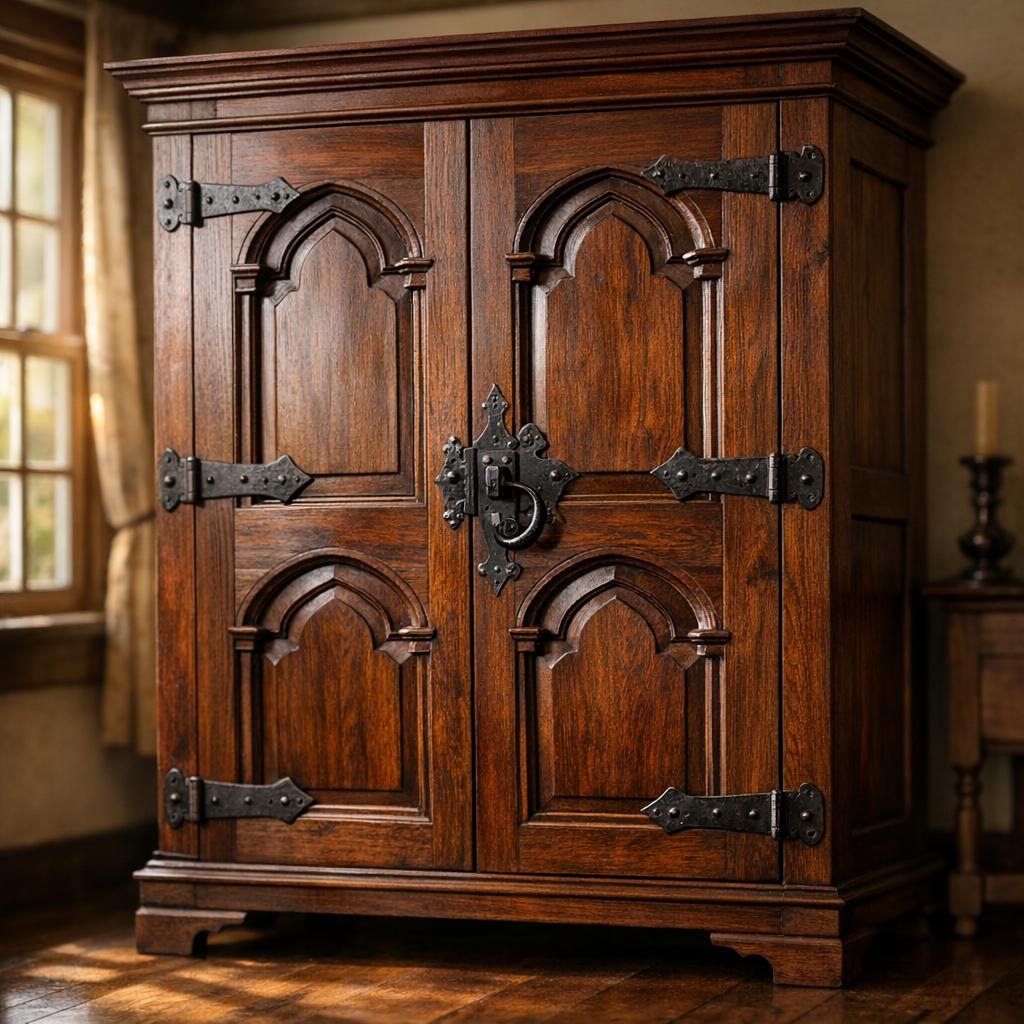
No. Strap hinges can be reused or newly made, and they’re common on later rustic-style furniture. Focus on whether hinge wear, screw/nail types, and surrounding wood all tell the same timeline.
What photos should I send for an identification appraisal?
Send a complete set: overall views, underside, joints, hardware close-ups, and marks/labels. A ruler in at least one photo helps with scale, and a flashlight-at-an-angle photo helps reveal tool marks.
Key takeaways
- Start with consistency: wood + joinery + hardware + marks should “agree” on age.
- Primary vs secondary woods are normal; modern sheet goods in key areas are a red flag.
- Handwork clues live in hidden areas—undersides and interiors, not polished exteriors.
- Hardware swaps are common; photograph old hole patterns and wear halos.
- comparable-sale records show huge spreads—materials and venue matter.
Search variations collectors ask
Readers also search for:
- how to identify caoba wood on antique furniture
- cedro vs caoba drawers how to tell the difference
- how to date furniture by dovetails and screws
- are iron strap hinges a sign of Spanish colonial furniture
- what does a maker stamp on antique furniture look like
- Venezuelan colonial furniture cabinet identification checklist
- how to spot restored antique furniture hardware swaps
- how to photograph furniture labels and stamps with raking light
Each question is addressed in the woods, joinery, hardware, labels, restoration, and market evidence sections above.
References
- Appraisily internal auction results database: Sotheby’s lot 33 (Jul 5, 2023), Arthouse Hejtmánek lot 4 (Dec 4, 2024), Templum Fine Art Auctions lot 231 (Jul 18, 2024).
- Collector-safe inspection guidance (standard appraisal practice): photograph underside/interiors, use raking light for tool marks and stamps, and document fastener types before cleaning.