1) Start with the right value type (the purpose changes the number)
In art markets, “value” isn’t a single universal number. Appraisers and auction specialists choose a value definition based on what you need:
- Fair market value (FMV): typical for estates and donation/tax work—what a willing buyer would pay a willing seller.
- Insurance replacement value: often higher—what it costs to replace with a comparable item through retail channels.
- Liquidation / forced-sale value: typically lower—what you could realize quickly under time pressure.
If you pull a single auction price and call it “the value,” you can easily get the wrong answer. For example, insurance replacement value for a desirable print might reflect dealer retail pricing, not last month’s auction hammer.
2) The six drivers of value in arts (a simple framework)
Collectors often assume the “name” is everything. In practice, value is a bundle of factors that reinforce—or undermine—each other:
- Artist: career stage, scholarship, catalogue raisonné, market recognition.
- Provenance: receipts, gallery labels, exhibition history, prior collections.
- Condition: original vs restored, stability, conservation costs.
- Rarity: unique vs editioned, scarce period/subject, limited production.
- Demand: current collector focus, museum attention, trends.
- Timing: seasonality, major retrospectives, market cycles.
3) How to pull market evidence (without fooling yourself)
Market evidence are most useful when they’re truly comparable. Start broad, then tighten your filters:
- Match the artist (and confirm you’re not mixing similarly named artists).
- Match the medium (oil vs acrylic, lithograph vs serigraph, bronze vs resin, etc.).
- Match the scale (size is a major price driver in many markets).
- Match the edition (AP/EA proofs, edition size, later states/printings).
- Adjust for condition (tears, fading, relining, overcleaning, repairs).
- Confirm the sale type (hammer price vs price with buyer’s premium; auction vs private sale).
Rule of thumb: if you can’t explain why a comparison matches (period, medium, size/edition, condition), don’t anchor your estimate to it.
5) Visual guide: details appraisers photograph (and why)
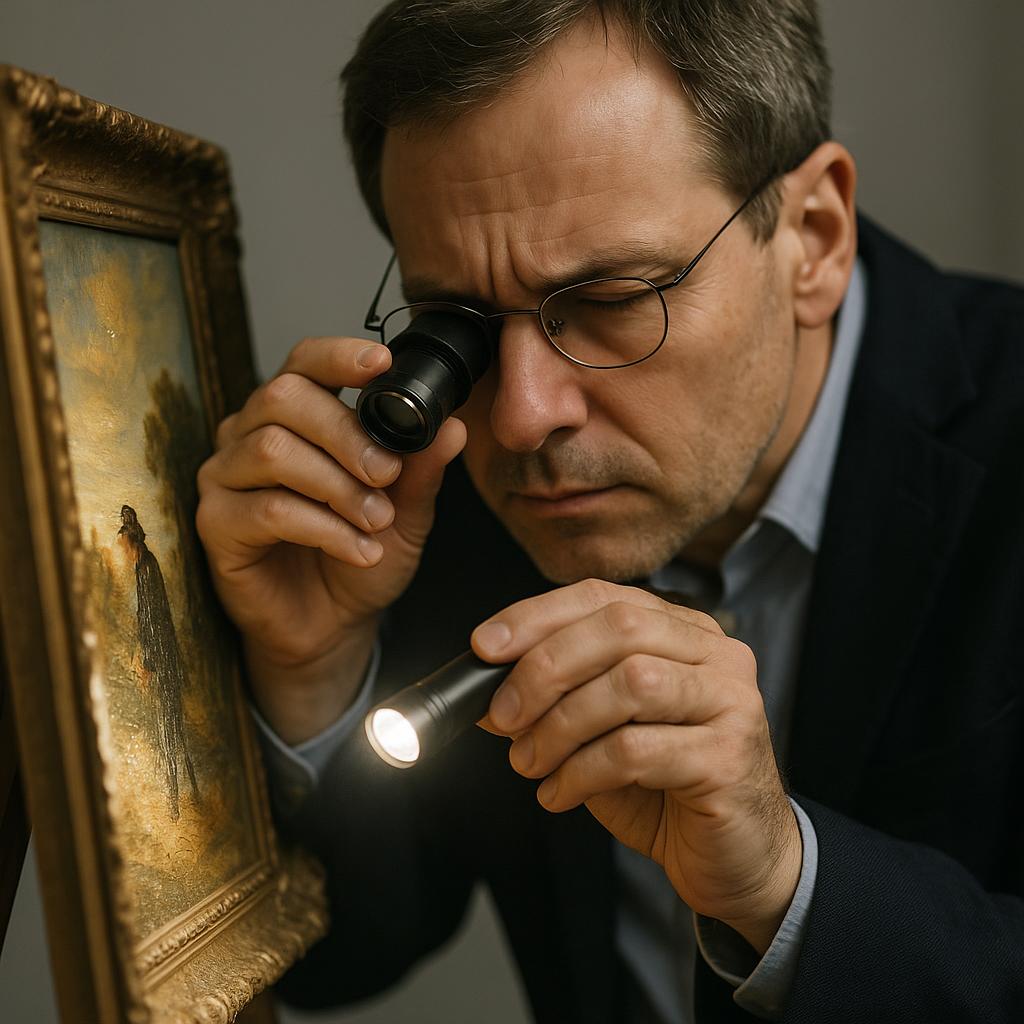
If you’re trying to estimate value, the fastest improvement you can make is to collect the right images. These are the “money shots” that help a specialist identify, document, and find correct market evidence.
6) Condition: the most underrated value lever
Two works by the same artist can sell in different price bands if one has heavy restoration, fading, or structural issues. Condition is especially critical for:
- Works on paper: foxing, toning, tape stains, folds, light fading, trimming.
- Paintings: craquelure stability, flaking, relining, overcleaning, varnish discoloration.
- Photographs: silvering, abrasion, curling, provenance stamps/labels.
- Sculpture/ceramics: repairs, chips, reattached elements, re-patination.
If a work needs conservation, treat that as a cost (and a risk). Market buyers often discount uncertain condition more than the raw cost of repair.
7) Provenance: what counts (and what doesn’t)
Provenance is not just “a story”—it’s a chain of evidence. Strong provenance can increase confidence (and value) because it reduces originality risk. Useful provenance includes:
- Invoices/receipts with dates, gallery names, and item descriptions
- Labels, stamps, and inventory numbers on the verso
- Estate inventory documents (especially for older collections)
Be careful with: generic certificates or expert opinions without supporting paperwork, unverifiable “artist said so” stories, and unsigned letters without context. These may help as leads, but they’re not the same as a documented chain.
8) When you should hire a professional appraiser
A self-serve estimate is fine when you’re just deciding whether something is worth researching. But get a professional appraisal when:
- You need insurance scheduling, tax/donation support, or estate documentation
- The piece is high value, fragile, or you suspect it’s by a listed artist
- Condition is complicated (restoration, tears, flaking, mold, water damage)
- Attribution review has real financial consequences (sale/consignment decisions)
Professionals also know when to escalate to conservation labs or subject-matter specialists. That’s often where “value in arts” becomes defensible in the real world.
Key takeaways
- “Value” depends on the purpose: FMV, insurance replacement, or liquidation.
- Strong market evidence match artist, medium, size, edition, and condition—not just “looks similar.”
- Condition and provenance are the two most common reasons an estimate is wrong.
- Photograph the details (labels, stamps, plate marks, texture) before you price anything.
- When stakes are high, a written appraisal is cheaper than a costly mistake.
Need a specialist for your category?
Browse appraisal resources, or start a written appraisal anchored to market evidence.
Directories
Browse art valuation topics
Explore related guides by medium and market segment to narrow your market-evidence set faster.
Explore Art ValuationHow We Research Valuation Data
Our appraisal guides are based on auction results, dealer pricing data, and professional appraiser insights. We may earn a commission when you use our free professional appraisal service. Learn about our editorial standards.
Appraisals
Start a written appraisal
Upload photos and details. We will review the evidence and show you the clearest next step.
Start nowReferences
Search variations collectors ask
Readers often Google:
- how is art value determined (artist, provenance, condition)
- how to find market evidence for artwork
- what makes a painting valuable vs decorative
- how to value limited edition prints and lithographs
- fair market value of art for donation (IRS appraisal rules)
- insurance replacement value vs fair market value for art
- does a signature increase the value of art
- how to check if an artwork is documented
- how to appraise art at home before selling
Each phrase maps back to the value types, market evidence workflow, and documentation checklist in the guide above.