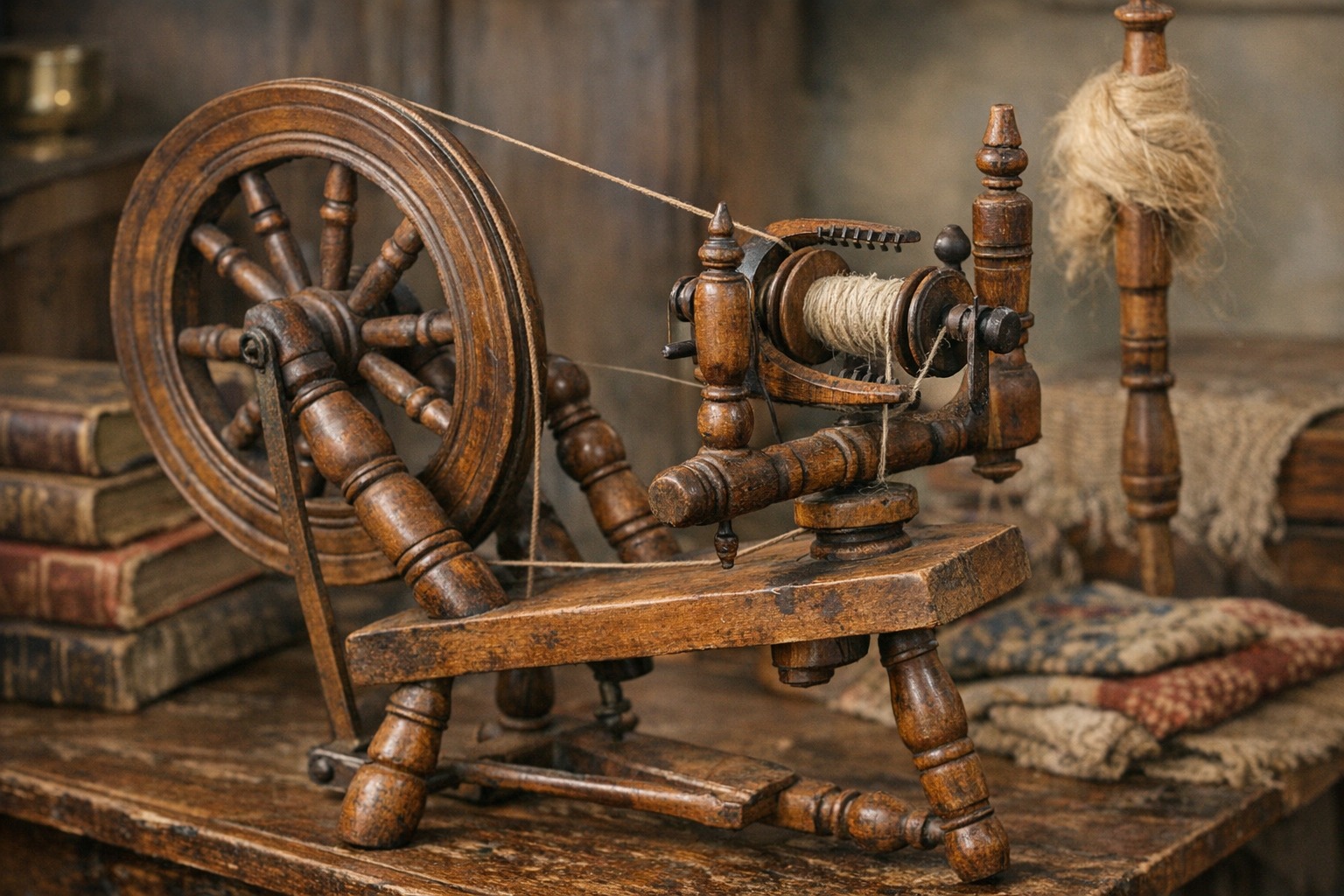
Unlocking the Past Determining the True Value of Your Antique Spinning Wheel: appraisal and value basics
Unlocking the Past Determining the True Value of Your Antique Spinning Wheel research should start with identification, condition, provenance, and item-specific market evidence. Use this guide to compare the signals that matter before paying for a formal appraisal or deciding whether to sell.
Antique spinning wheel value checklist
Antique spinning wheels sit at the intersection of functional technology, vernacular design, and domestic history. Determining true value requires more than guessing at age or admiring intricate turnings—it’s a balancing act of type, attribution, condition, completeness, function, provenance, and market demand. Whether you’re a collector, spinner, or appraiser, this guide will help you recognize what you have, date and attribute it accurately, judge what matters most in valuation, and make sound decisions about preservation or sale.
What Exactly Do You Have? Types, Forms, and Regional Signatures
Before talking numbers, identify the form. “Antique spinning wheel” encompasses several distinct types, each with different buyer audiences and value profiles.
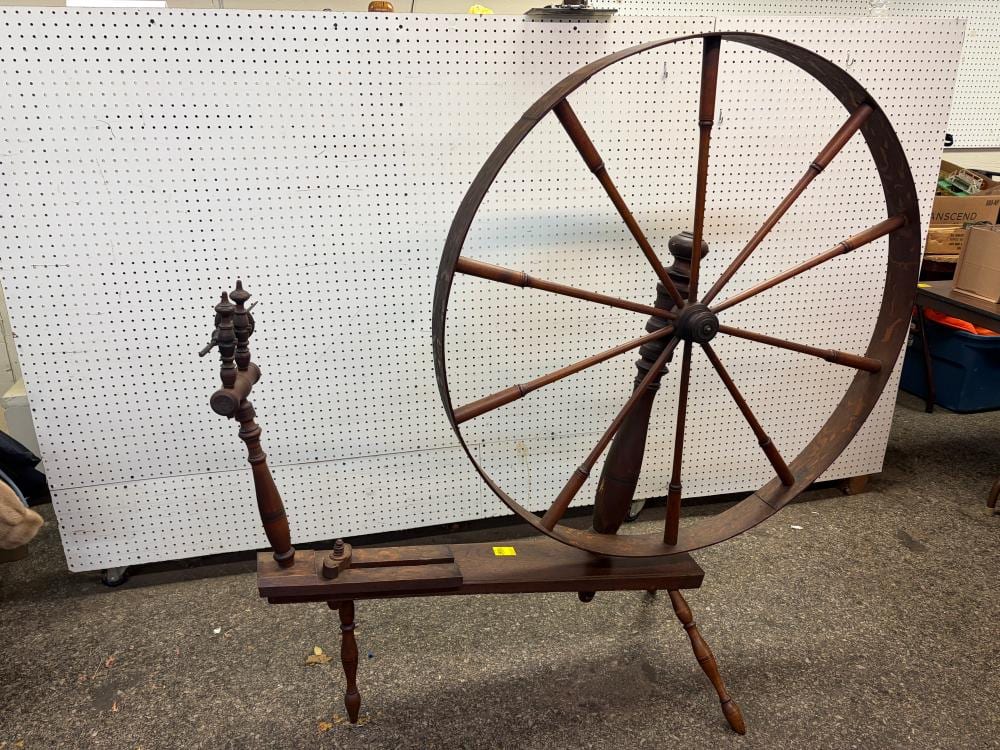
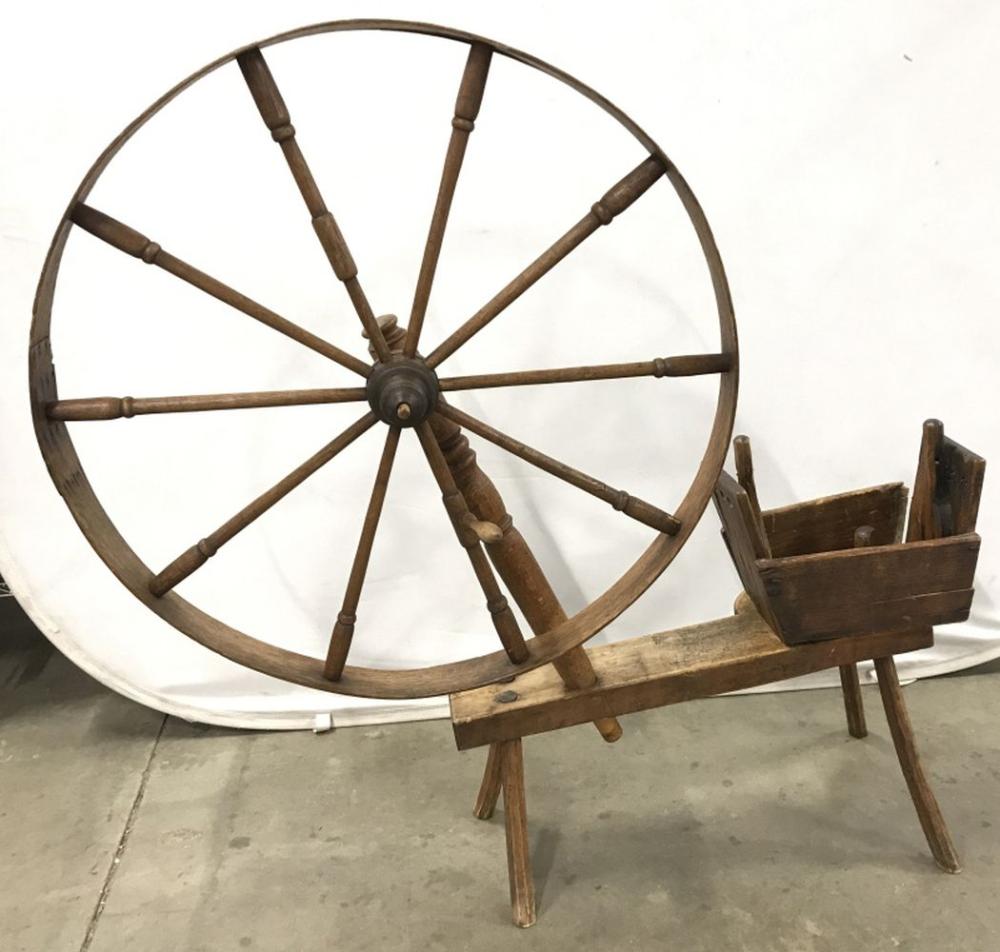
- Great wheel (walking wheel): Large, horizontally oriented drive wheel (often 36–50 inches diameter) used for long-draw spinning; no flyer—just a spindle. Common in 18th–19th century North America and Britain. Iconic silhouette; valued by decorators and textile historians.
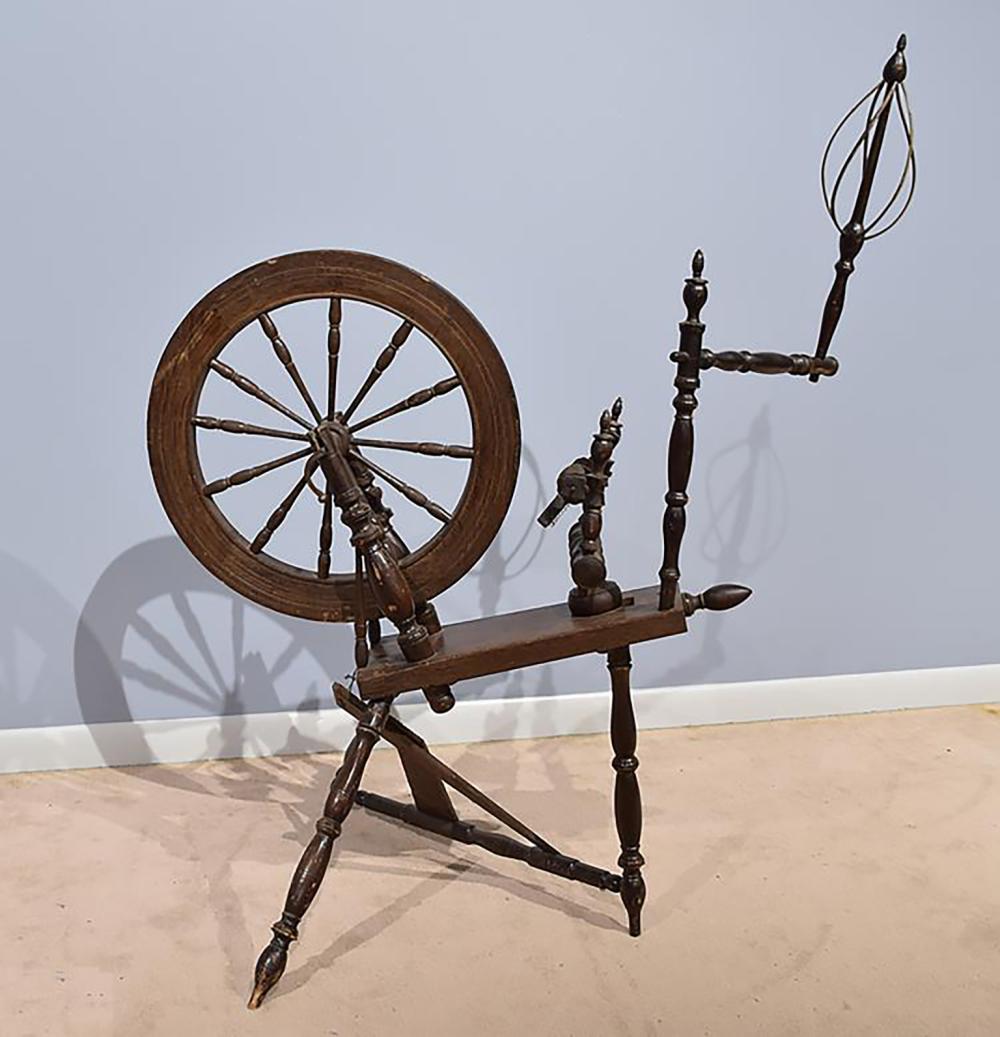
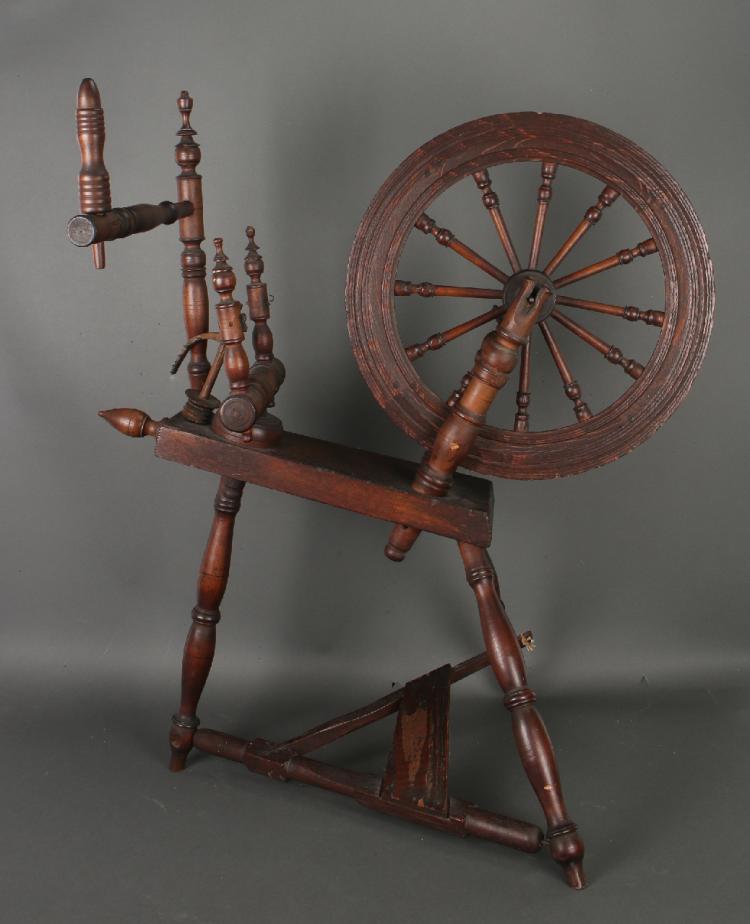
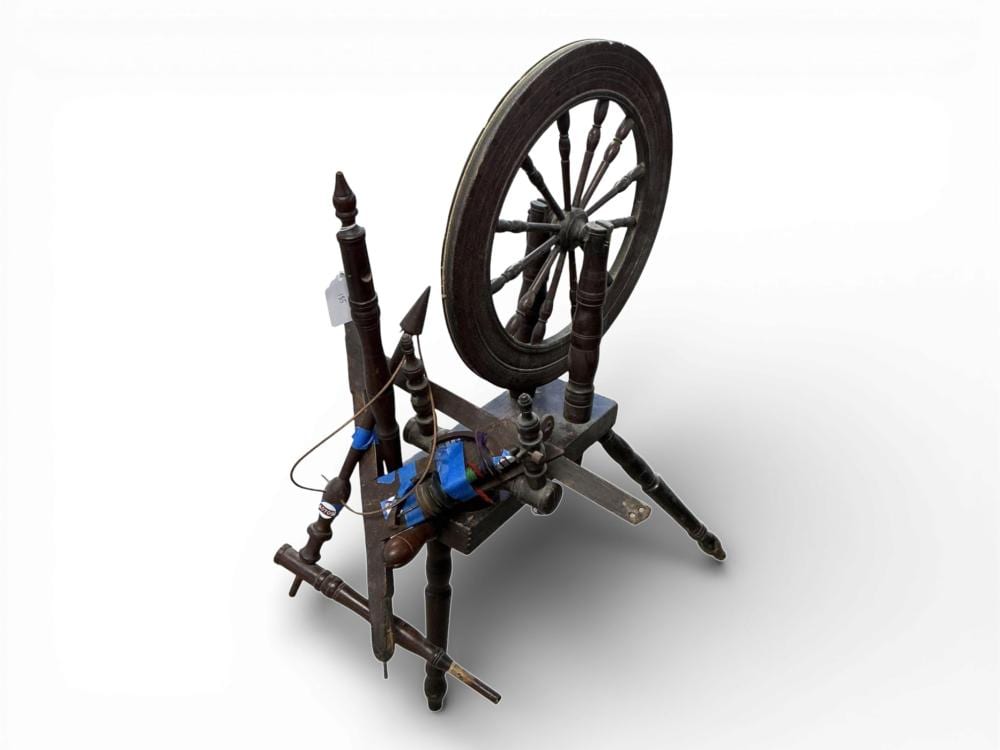
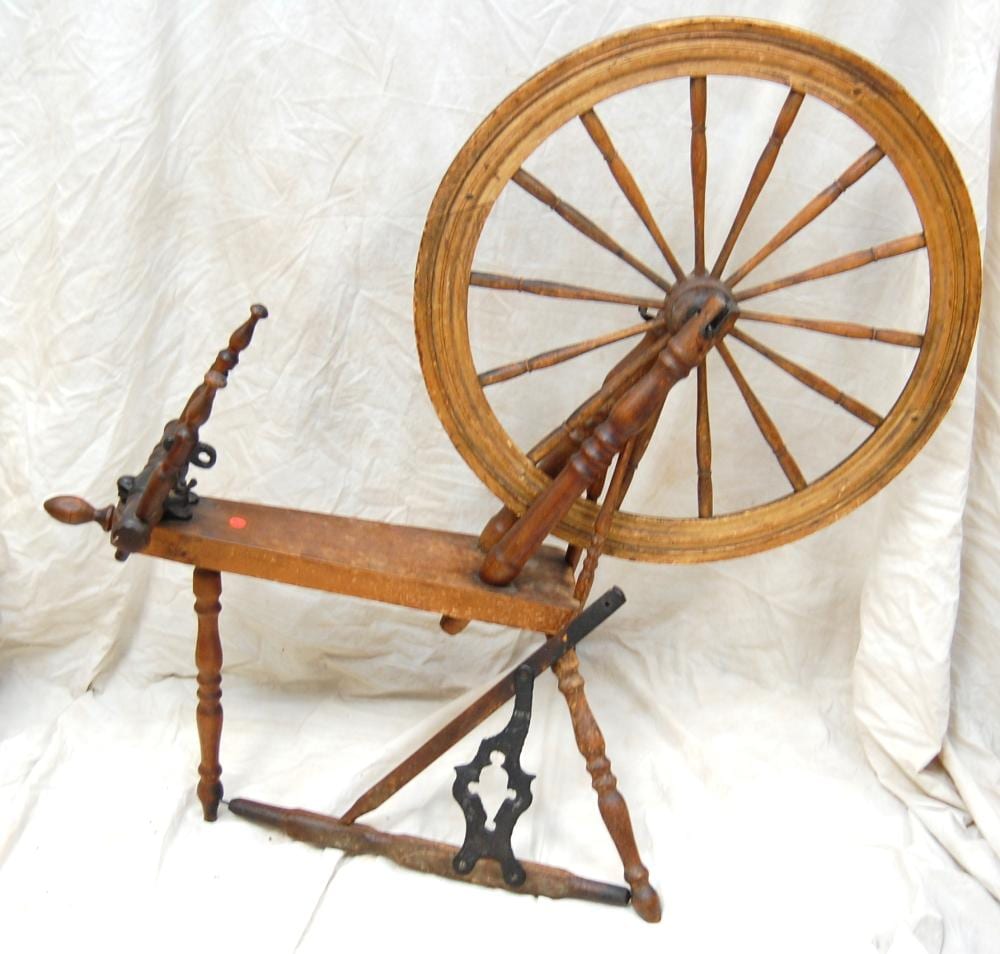
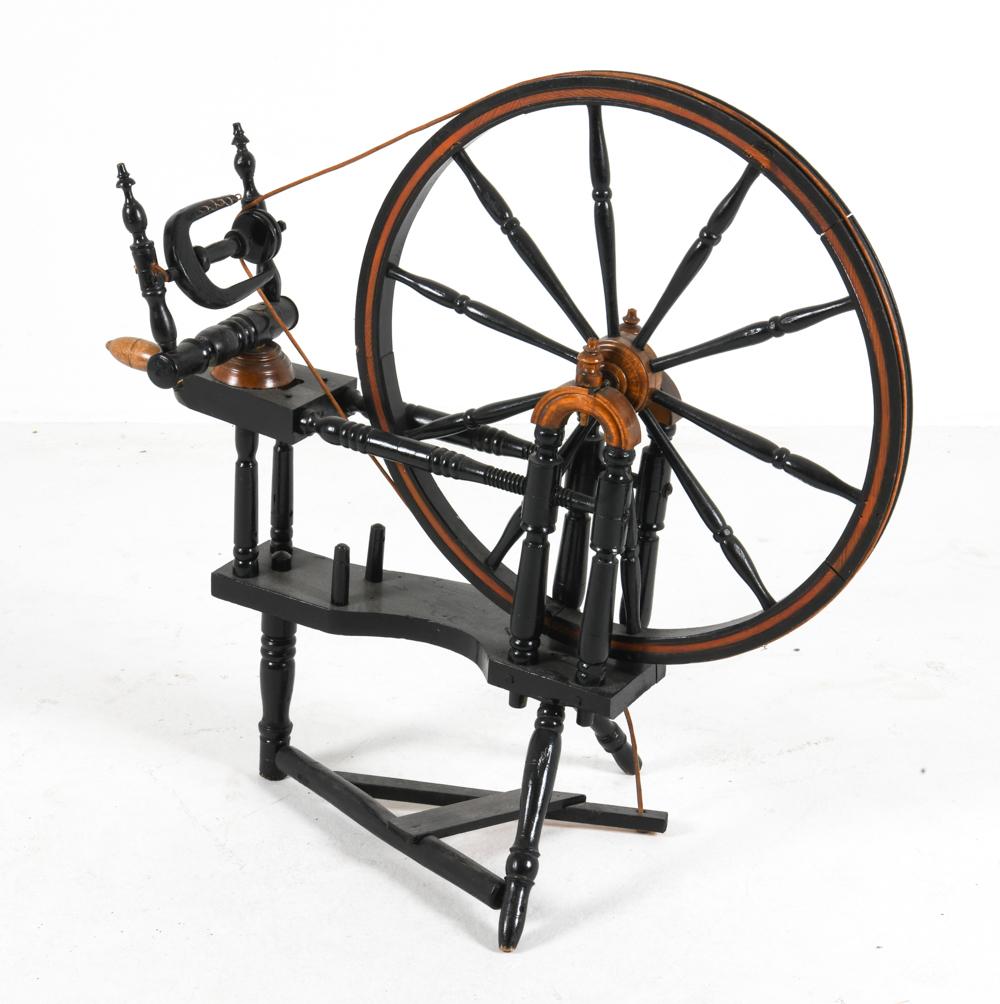
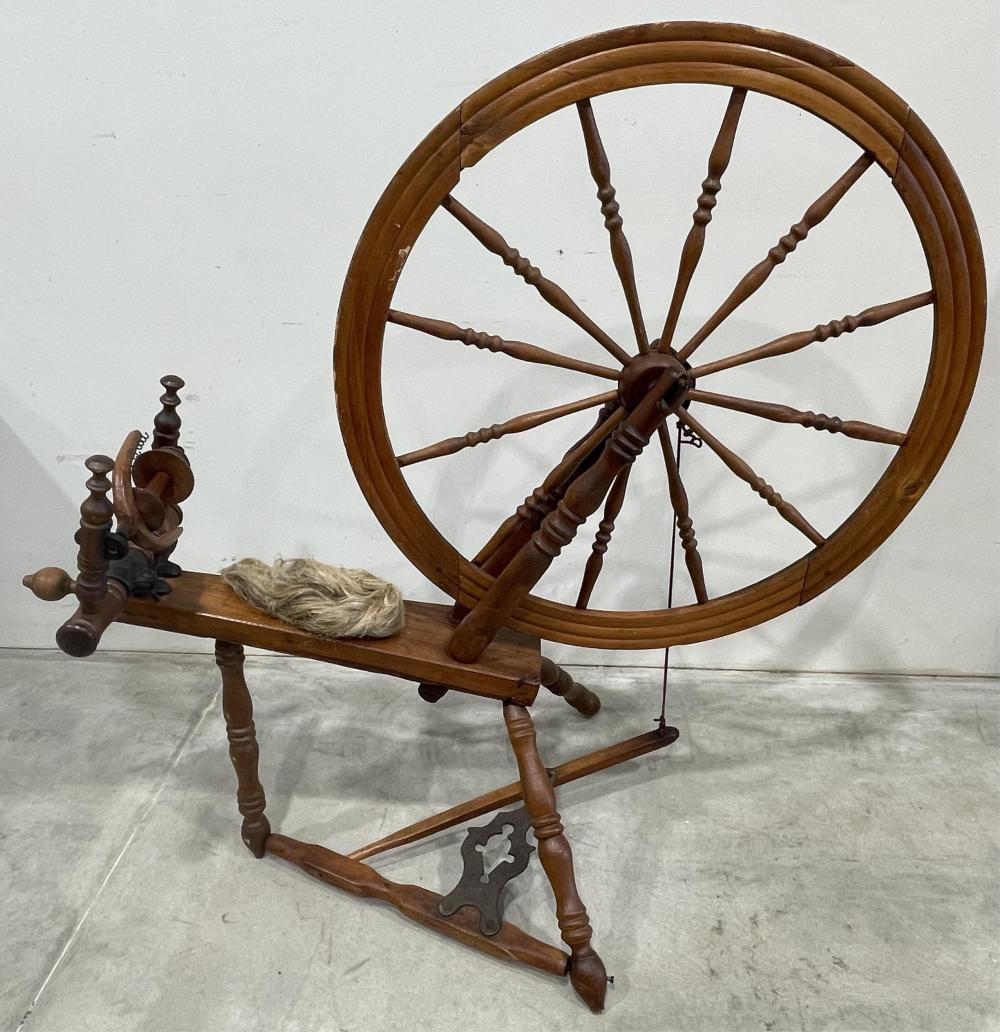
- Saxony wheel: The classic “horizontal” flyer wheel most people picture. Drive wheel and flyer/bobbin sit in line on a bench with three or four splayed legs. Found across Europe and North America in the 18th–19th centuries; often for wool or flax.
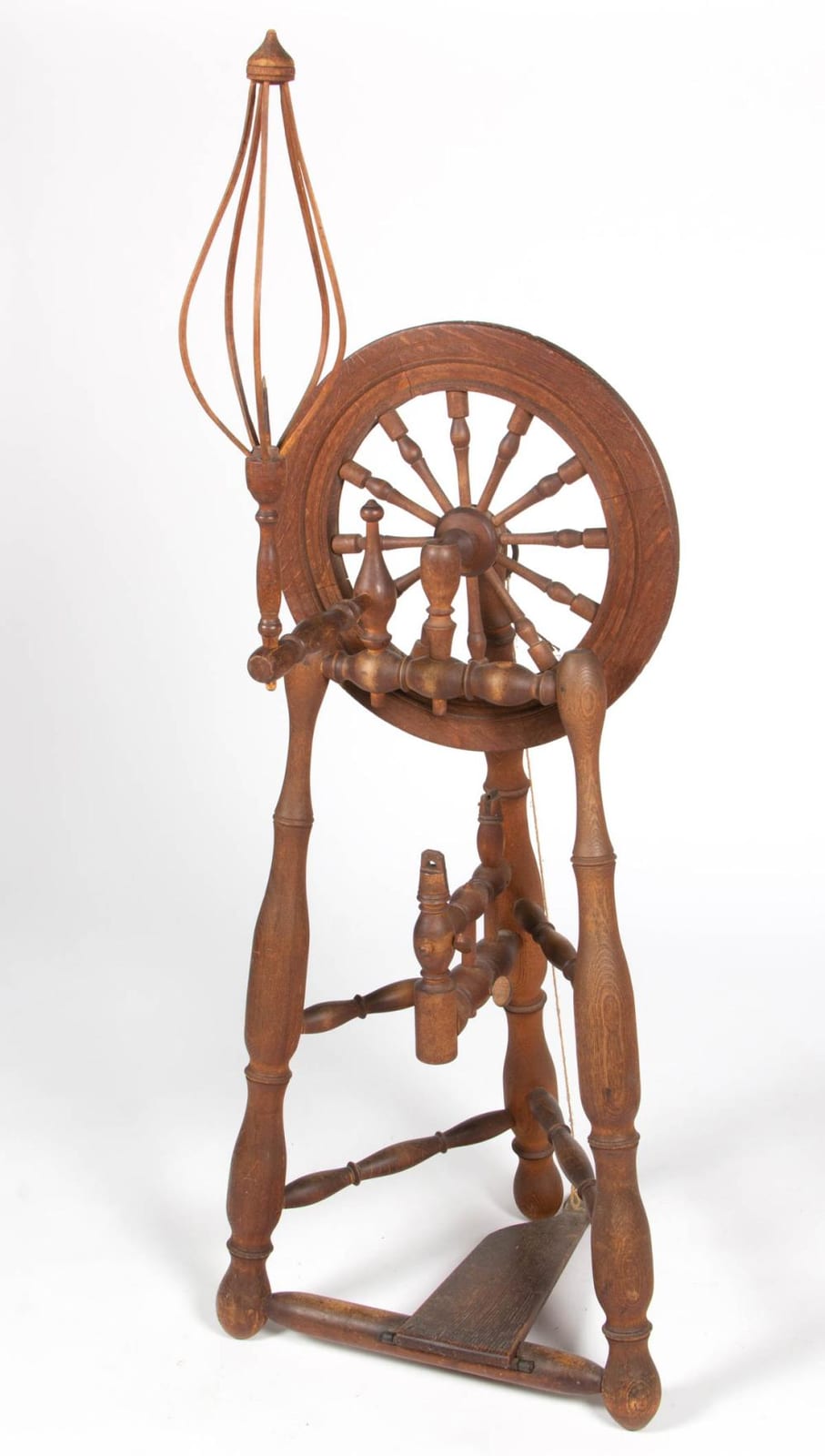
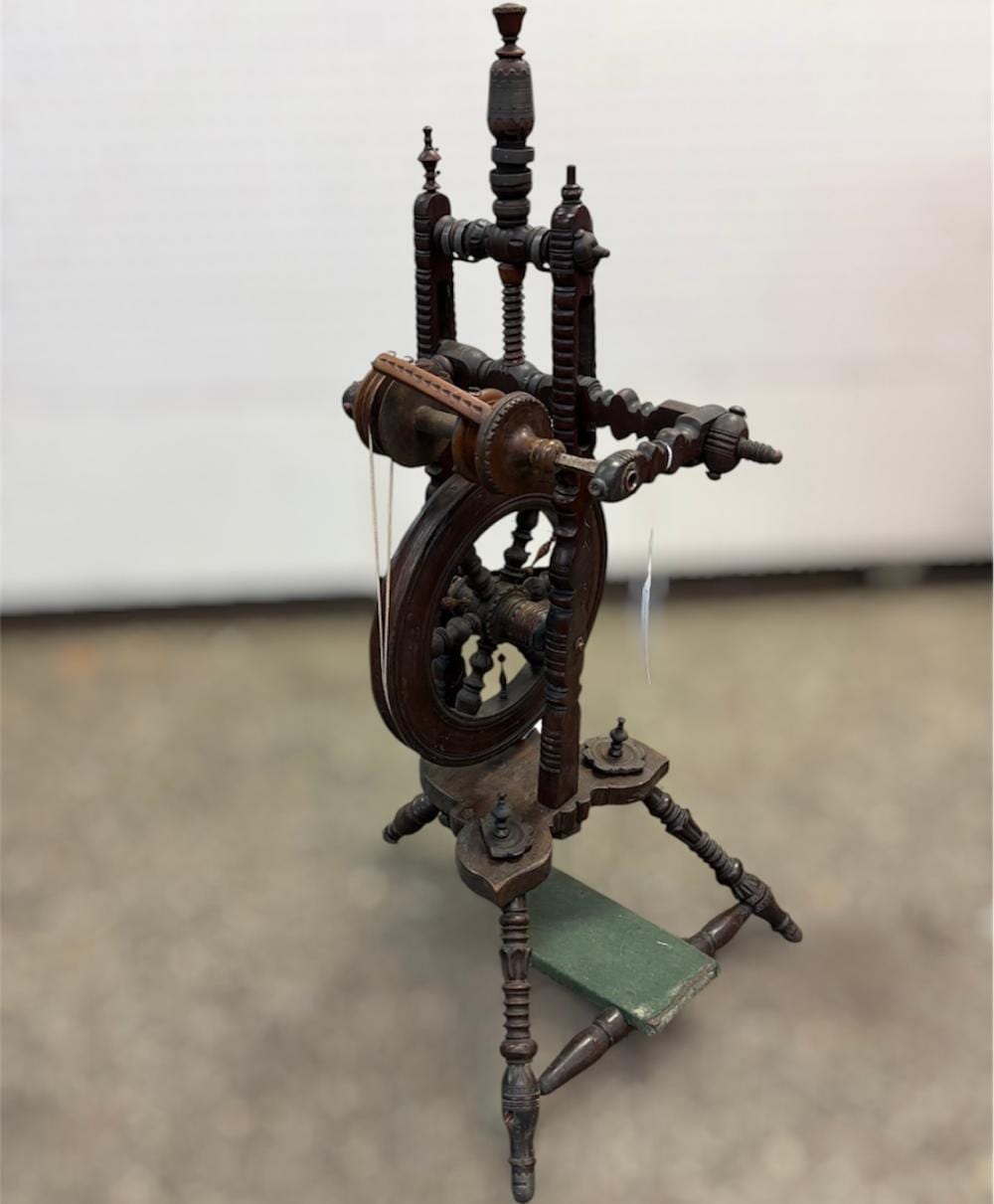
- Castle wheel: Upright “vertical” form, compact footprint, with the flyer assembly above the wheel. Popular in Scotland and Ireland; often finer woods and more elaborate turning.
- Scandinavian and Baltic variants: Norwegian/Swedish examples may feature chip-carving, polychrome decoration (including rosemaling), elongated distaffs for flax, and elegantly turned posts; some are signed or dated.
- Continental flax wheels: High distaffs, delicate turnings, sometimes bone, horn, or ivory inlay on high-status pieces. Dutch and German wheels can show precise lathe work and pegged joinery.
- Miniature/training/sample wheels: Small-scale working or presentation models; sometimes made as salesmen’s samples or apprentices’ masterpieces. Scarcer and collectible if genuinely period and functional.
Regional signatures to look for:
- Scotland/Ireland: Castle form in mahogany or oak; compact with tight architectural symmetry.
- New England/Canadian Maritimes: Practical Saxony and great wheels, maple or birch; simpler turnings; often no maker’s mark.
- Pennsylvania German: Painted decoration, heart or tulip motifs, bold turning profiles; occasional maker or owner initials.
- Scandinavia: Bright polychrome paint, chip carving, long distaffs; regional dates or names painted under the table.
Dimensions matter. Note drive wheel diameter, overall length/height, and footprint. For spinners, size and geometry affect usability—smaller castle wheels appeal to apartment spinners; large great wheels appeal to display buyers and specialized spinners.
Dating and Attribution: Telltale Clues in Wood, Joinery, and Finish
Dating is a skill built from layers of observation. Use these clues:
- Joinery and fasteners:
- Pegged mortise-and-tenon joints and square nails suggest 18th to early 19th century.
- Hand-cut screws with off-center slots precede uniform machine screws.
- Later 19th-century and 20th-century “revival” wheels often show machine-cut threads and uniform hardware.
- Turning and tool marks:
- Hand lathe turnings have subtle asymmetry and tool chatter; crisp, repetitive profiles indicate later machine turning.
- Hand-planed surfaces under the table reflect earlier manufacture; sandpaper “scratch” uniformity points later.
- Wood species and sourcing:
- Maple, birch, ash common in North America; beech and oak in Europe; mahogany on better Scottish castle wheels.
- Imported exotic veneers or inlays (e.g., mother-of-pearl, bone) are rarer and typically higher tier.
- Finish and patina:
- Oxidized shellac and oil finishes darken with age; varnish drips and polyurethane are modern.
- Honest wear—polished handholds at the maidens, soft edge rounding on treadles—develops differently than artificial distressing.
- Maker’s marks and inscriptions:
- Some wheels are branded, ink-stamped, or signed by turners, especially in Scandinavia and parts of Germany.
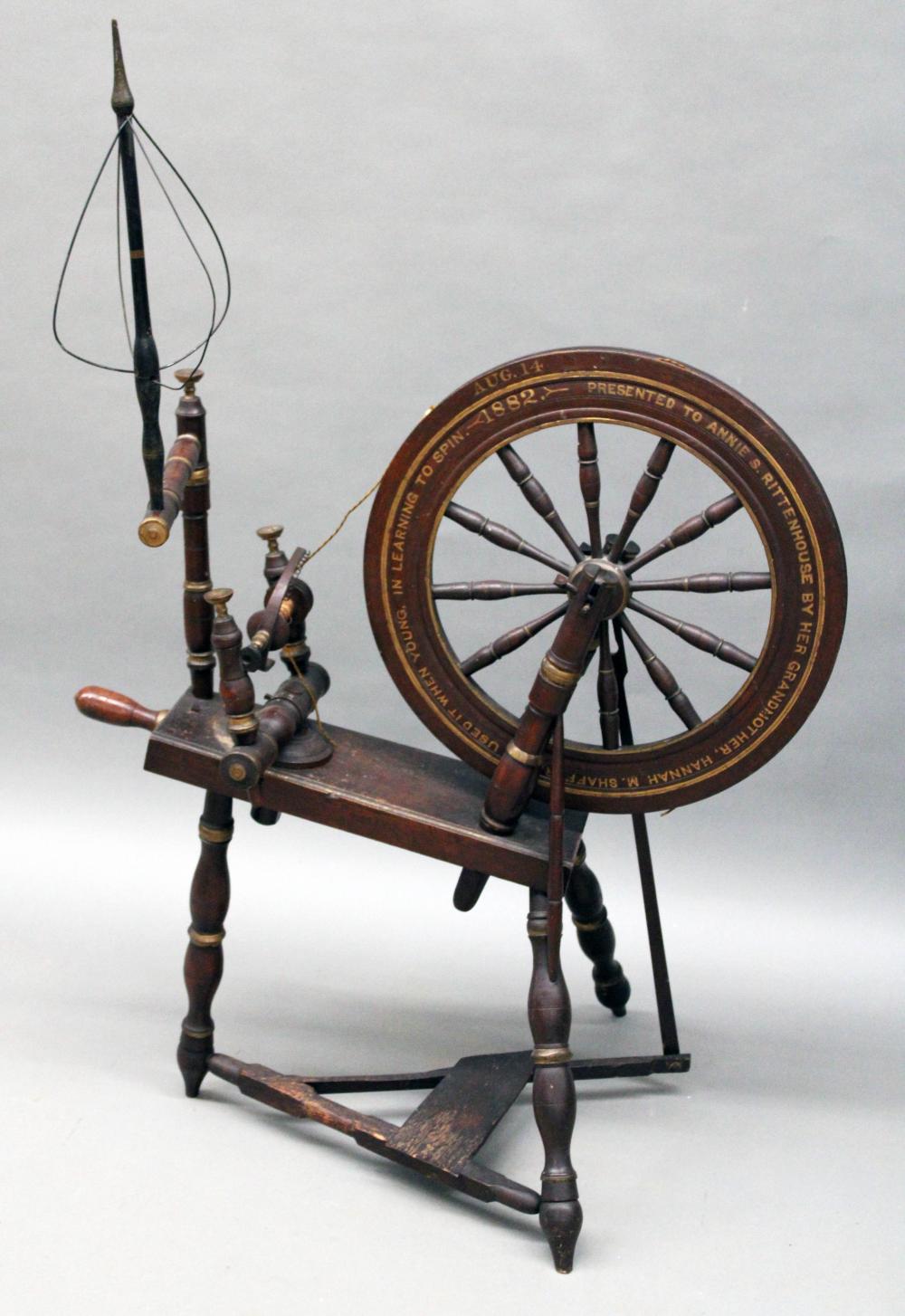
- Owners’ names and dates (often on the distaff or underside) can establish provenance if period to construction or early use.
- Functional system clues:
- Double-drive systems and early screw tensions can align with particular regions and periods.
- Great wheels with early, hand-forged spindle supports and whorls can point to 18th century.
Establishing originality is part of dating. Added cleats, modern screws in stress points, or a replaced flyer might indicate later repairs or adaptations; that doesn’t negate authenticity, but it influences both date and value.
Condition, Completeness, and Function: How They Impact Value
Antique wheels were tools, and tools saw use. Condition is not just cosmetic; it’s structural and functional.
- Completeness:
- Essential parts: drive wheel, axle, table/bench, legs, mother-of-all (flyer support), flyer, bobbin(s), whorl(s), treadle, footman, tension system, distaff (for flax wheels).
- Missing distaffs are common; if period replacements match wood and turning style, the value hit is moderate. Missing flyer or bobbin is more serious.
- Structural integrity:
- Check trueness of the drive wheel: spin it and watch for wobble or hop; warped rims or loose spokes reduce value and usability.
- Examine the table for splits, worm holes (pin-prick exit holes, fine frass), and loose joints. Insect damage is a red flag if active; inactive historic worming is mostly cosmetic if structurally sound.
- Repairs and replacements:
- Old, competent repairs with wood pegs or period screws are acceptable. Modern brackets, epoxy fills, and mismatched parts reduce desirability.
- Refinished surfaces erase patina and can halve value on otherwise scarce examples.
- Functionality:
- Spinners will pay a premium for tuned, working wheels with good ratios and minimal vibration.
- Decorative buyers prize silhouette and surface, sometimes more than function. Know your likely buyer.
Create a brief condition grade in your notes (e.g., Excellent original; Very good with minor period repairs; Good with losses; Fair with structural issues) and be specific about what is original vs. replaced.
Market Value Drivers: Ranges, Rarities, and Comparables
Prices vary by region and venue, but recurring drivers include type, scarcity, originality, maker attribution, and appeal to spinners vs. decorators.
Generalized ranges for intact, honest examples (not auction outliers, and excluding exceptional museum pieces):
- Great wheels (walking wheels):
- Typical 19th-century North American: a value that must be established from current, topic-matched sales depending on diameter, form, and condition.
- Early or unusually large, with fine turnings: a value that must be established from current, topic-matched sales.
- Saxony wheels:
- Common 19th-century American/European, functional with flyer intact: a value that must be established from current, topic-matched sales.
- Decorated or attributed (e.g., PA German painted, signed Scandinavian): a value that must be established from current, topic-matched sales+.
- Castle wheels:
- Scottish/Irish examples in good wood with original flyer: a value that must be established from current, topic-matched sales.
- High-style mahogany with fine turnings or inlays: a value that must be established from current, topic-matched sales+.
- Scandinavian/Baltic polychrome flax wheels:
- Strong original paint and date/inscription: a value that must be established from current, topic-matched sales+.
- Miniature/presentation wheels:
- Genuinely period, working: a value that must be established from current, topic-matched sales+. Later tourist miniatures can be under a value that must be established from current, topic-matched sales.
Factors that push value up:
- Proven provenance with dates and owners, especially if linked to a known maker or community.
- Original finish with rich, undisturbed patina and incidental wear consistent with use.
- Completeness with multiple original bobbins, intact distaff, and a straight, true drive wheel.
- Functional tuning attractive to contemporary spinners (quiet, steady, balanced ratios).
Factors that pull value down:
- Refinished wood, heavy polyurethane, or stripped surfaces.
- Missing or replaced flyer assemblies, crude modern repairs, significant warping.
- Assembled “marriages” of parts from different wheels.
- Shipping/logistics for very large wheels can suppress final prices in online venues.
Use comparables wisely:
- Focus on realized prices from reputable auction houses and specialty textile-tool dealers.
- Adjust for condition, completeness, and geography. A castle wheel may bring more in the UK than in rural US markets; the reverse may hold for large great wheels.
- Be mindful of seasonality and fashion. Minimalist interiors may depress demand for elaborate wheels, while a resurgence in handcrafts can boost functional examples.
Preservation vs. Restoration: Doing No Harm While Adding Confidence
The guiding principle is reversibility and respect for original surfaces.
- Cleaning:
- Dry dusting first. If needed, a barely damp cloth followed by immediate drying. Avoid soaking. For grime, a mild conservation-grade cleaner on a cotton swab in a discreet area first.
- Wax: a thin coat of high-quality microcrystalline wax can nourish and protect; avoid silicone polishes.
- Stabilization:
- Tighten pegged joints gently; avoid forcing swollen or shrunken wood. Humidity management (40–55%) is often the best “repair.”
- If adhesive is absolutely required, use reversible options sparingly and document the intervention.
- Do not:
- Strip or sand original finish.
- Overclean painted or decorated surfaces; original paint carries disproportionate value.
- Replace core elements (flyer, bobbin, wheel rim) unless you must for safety; if you do, keep and label originals.
- Functional tune-ups for spinners:
- New drive bands, tension cords, and leather bearings are consumables and acceptable replacements when documented.
- Light dressing of the spindle/flyer hooks and proper alignment can make a big difference without harming value.
Documentation of any conservation work supports trust and value in the appraisal narrative.
Documentation, Provenance, and When to Seek a Formal Appraisal
Paper trails add credibility, and credibility adds value.
- Gather:
- Family histories, bills of sale, maker tags, inscriptions, and dated photos in situ.
- Measurements, wood IDs, and a complete part inventory with notes on originality.
- Photograph:
- All sides, underside of the table, close-ups of joints, flyer, bobbins/whorls, distaff, tension systems, and any marks.
- Ethics and regulations:
- Be alert to restricted materials (e.g., ivory inlays) that complicate sale or export. When present, keep documentation and understand jurisdictional rules.
- When to hire a professional:
- For high-style, decorated, or potentially early (18th century) wheels.
- When provenance suggests historical significance (e.g., association with a known workshop or documented weaver).
- For insurance valuations or equitable estate distribution.
A written appraisal should articulate identification, dating rationale, condition, market comparables, and value premise (fair market vs. retail replacement).
Practical Appraisal Checklist
- Identify the type: great wheel, Saxony, castle, or regional variant.
- Measure key dimensions: drive wheel diameter, overall length/height, footprint.
- Inventory parts and note originality: flyer, bobbins, whorls, treadle, footman, distaff.
- Spin-test the drive wheel for trueness; check for wobble or hop.
- Inspect joints, fasteners, and tool marks for dating clues.
- Assess surface: original finish vs. refinish; note paint, inlay, or inscriptions.
- Photograph all angles and details, including underside and any marks.
- Test functionality gently: tension system, treadle action, flyer rotation.
- Record condition issues: cracks, worming, repairs, replacements.
- Research comparables by type/region/condition; adjust for venue and geography.
- Compile provenance: ownership history, receipts, labels, family notes.
- Decide on conservation only; avoid irreversible restoration.
FAQ
Q: How can I quickly tell if my wheel is a decorator piece or a serious collectible? A: Look for originality (unstripped finish, intact flyer and distaff), regional features (paint, carving, inscriptions), and functional integrity (true wheel, smooth flyer). Tourist or revival pieces often have glossy modern finishes, uniform machine turnings, and generic parts.
Q: Do missing bobbins or a distaff ruin the value? A: Not necessarily. Missing bobbins reduce value more than a missing distaff, especially for spinners. Period-appropriate replacements can mitigate the impact; document what’s replaced and price accordingly.
Q: Should I restore a worn finish to increase value? A: No. Original surfaces carry significant value. Gentle cleaning and reversible conservation are preferred. Heavy refinishing usually depresses value, even if it looks “new.”
Q: Why do prices vary so much between shops and auctions? A: Venue, geography, and audience matter. Retail shops reflect curation and overhead; auctions reflect current demand and competition. Large wheels can be costly to ship, suppressing online prices. Always compare like with like in similar venues.
Q: Can an antique wheel still be used for spinning? A: Many can, if structurally sound and properly tuned. Consumables like drive bands and leather bearings can be replaced without harming value. However, prioritize preservation: avoid modifications that alter original parts, and document any reversible changes.
With careful identification, disciplined condition assessment, and thoughtful preservation, you can honor the history embedded in your wheel—and arrive at a value that stands up to scrutiny.