Shang Dynasty Sanxingdui Bronze Head Circa 18 19th Century: appraisal and value basics
Shang Dynasty Sanxingdui Bronze Head Circa 18 19th Century research should start with identification, condition, provenance, and recent comparable sales. Use this guide to compare the signals that matter before paying for a formal appraisal or deciding whether to sell.
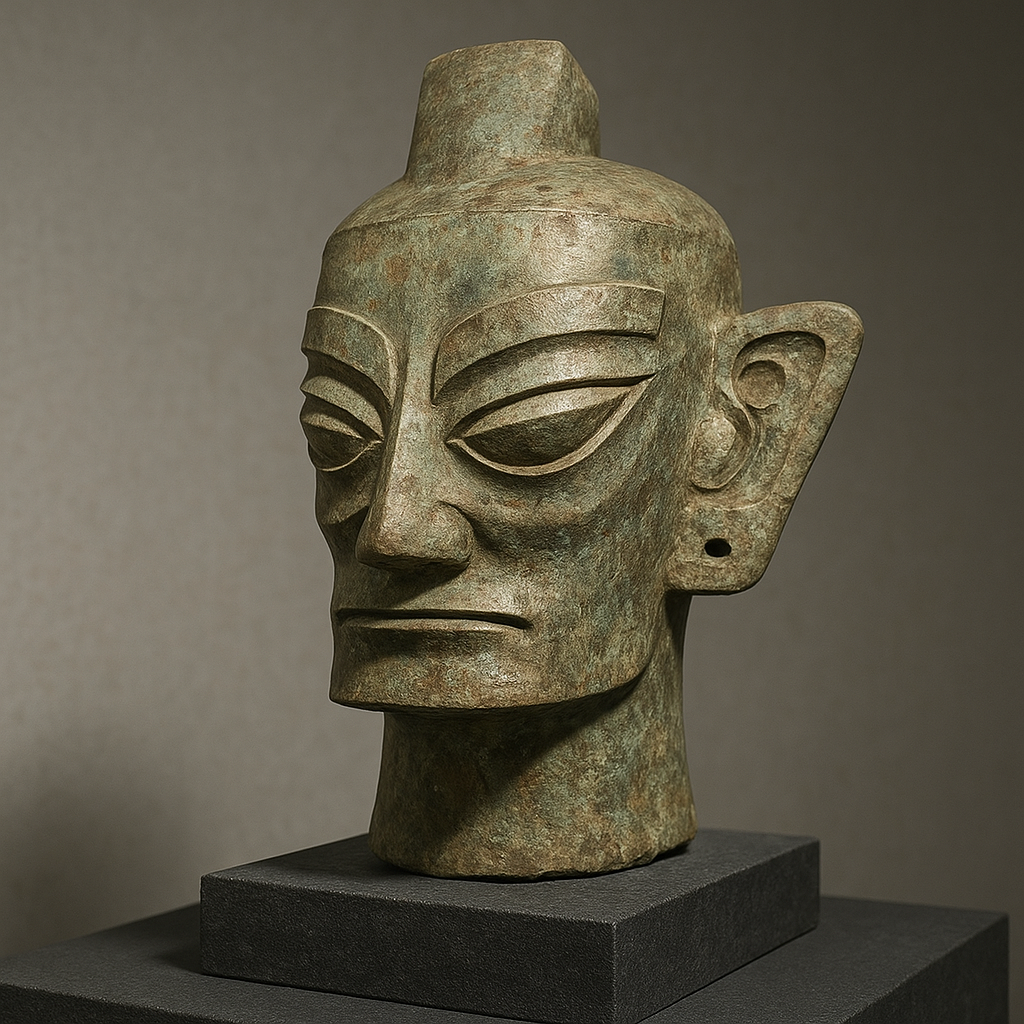
Items described as “Shang Dynasty Sanxingdui bronze heads” show up in estates, online listings, and tourist markets. The tricky part is that Sanxingdui is a real Bronze Age archaeological culture (2nd millennium BCE), but most privately circulating examples are later reproductions—including 18th–19th century archaistic work and modern decorative casts.
This guide explains how appraisers separate Shang-style from Shang-period, what to check in casting and surface condition, and how the market typically prices a head that looks ancient but is likely made much later.
Sanxingdui in plain English
Sanxingdui (Sichuan, China) is famous for dramatic bronze heads and masks with exaggerated eyes, sharp noses, and stylized ears. Sellers sometimes use “Shang dynasty” as shorthand for “Bronze Age China,” but it’s safer to describe these as Sanxingdui-style unless you have museum-grade provenance.
Why “18th–19th century” matters
An 18th–19th century attribution usually means one of two things:
- Archaistic revival: a later maker deliberately imitated ancient ritual bronzes for scholarship, display, or temple settings.
- Decorative reproduction: a later cast made for interiors or souvenir markets, sometimes artificially aged.
The market treats these categories very differently from verified excavated material. In practice: provenance and surface diagnostics drive value more than the “Shang” label.
Quick authentication checklist (non-destructive)
Before you clean or polish anything, use a flashlight and magnifier and check:
- Interior/back: is it hollow-cast? Do you see modern grinding marks, rotary tool lines, or fresh metal?
- Seams: are casting seams chased down by hand (irregular), or machine-sanded into uniform smoothness?
- Patina layering: does the color read as multiple layers (dark base with varied highlights) or a single uniform brown/green wash?
- Soil / encrustation: genuine burial accretions usually look embedded; pasted-on dirt can flake or sit on top.
- Wear patterns: authentic handling wear concentrates on high points; artificial wear often looks evenly “distressed.”
- Provenance: any receipts, export paperwork, old photos, collection labels, or documented pre-1970 history?
Casting clues: what appraisers expect to see
Many Sanxingdui-style heads are hollow casts. That’s not proof of age by itself, but it gives you useful diagnostic areas:
- Edges and openings: look for thin, irregular edges (hand-finished) versus thick, perfectly consistent rims.
- Chasing and finishing: older work often shows subtle, uneven chasing in recesses; modern repros may have uniform sanding and buffing.
- Attachment points: if ears or “horns” are separately attached, check for modern brazing, epoxy, or a very clean join line.
Surface & patina: smoothness is a red flag
A common tell in later reproductions is an overly smooth, “perfect” face. Authentic ancient bronzes often show micro-pitting, casting flaws, or corrosion texture under the patina. If the surface looks uniformly smooth like modern décor bronze, treat “Shang dynasty” claims as unproven until laboratory testing and provenance support them.
Provenance & legal considerations (important for antiquities)
Even when an object is genuinely old, buyers and institutions increasingly require clear collecting history. For high-value antiquities, expect questions like:
- Was it acquired legally and exported with documentation?
- Is there evidence it was in a collection before 1970 (a common due-diligence benchmark)?
- Has it been previously published, exhibited, or appraised by a recognized specialist?
If you lack documentation, get a careful appraisal that uses accurate language (for example: “Sanxingdui-style bronze head, later period”) rather than overstating a dynasty attribution.
Value drivers and realistic price bands
For a Sanxingdui-style bronze head dated to the 18th–19th century, value usually depends on:
- Casting and finishing quality: crisp detail and convincing archaistic modeling typically commands a premium.
- Size and presence: larger heads with strong “mask” impact sell better than small decorative miniatures.
- Surface integrity: stable patina is good; active corrosion, repairs, or broken attachments reduce value.
- Provenance: documented collection history can move pricing dramatically.
As a practical starting range (assuming no museum-level provenance): decorative modern reproductions often trade in the low hundreds to around $1,000 depending on size and finish, while better archaistic bronzes with credible dating/provenance commonly move into four figures and up.
Recent auction comparables (market context)
Below are three concrete comps pulled from Appraisily’s auction dataset (/mnt/srv-storage/auctions-data/chinese-bronze/). They aren’t Sanxingdui heads specifically, but they show how the market prices comparable “bronze head/mask” forms when provenance is limited.
- AZP Art Gallery Corp. (US) · 2024-11-30 · Lot 348 · $450 hammer · “A Chinese Bronze Mask”
- Hannam's Auctioneers (UK) · 2024-11-28 · Lot 900 · £200 hammer · “A Chinese Bronze Archaic Form Bronze Head”
- Chiswick Auctions (UK) · 2024-11-05 · Lot 218 · £1,100 hammer · “A Chinese Bronze Head of a Buddha on Wood Stand”
What to photograph for an appraisal
To get an accurate opinion quickly, photograph:
- front, back, and both profiles (straight-on, not angled)
- close-ups of the eyes, nose bridge, ear joins, and any inscriptions
- inside/back opening, seams, and any modern hardware
- any damage, repairs, cracks, or verdigris
- one photo next to a ruler or tape measure for scale
Care and storage
Most value loss happens after well-intended cleaning. Avoid metal polishes, acids, abrasive pads, and “re-patination” kits. Dust with a soft brush; if there is powdery green corrosion (active bronze disease), consult a conservator before it spreads.
References & data sources
- Appraisily auction dataset:
/mnt/srv-storage/auctions-data/chinese-bronze/(accessed 2025-12-15). Comps cited from page records containing AZP lot 348, Hannam's lot 900, and Chiswick lot 218. - Sanxingdui overview (reference)
- General bronze handling guidance: standard museum/conservation best practices (avoid polishing; preserve patina).
Search variations collectors ask
Readers often Google:
- is my Sanxingdui bronze head real or a reproduction
- how to tell if a Chinese bronze mask is ancient
- 18th century archaistic Chinese bronze value
- Sanxingdui-style bronze head appraisal near me
- what does smooth patina mean on a Chinese bronze
- how to check casting seams on archaic bronzes
- Chinese bronze head auction prices and comparables
- how to document provenance for Asian antiquities
Each question is answered in the valuation guide above.