Start here: what actually sets old Singer value
An old Singer sewing machine’s value depends first on its exact model and market demand, then on its cabinet or table, accessories, decals, working condition, cosmetic condition, and location. The serial number helps establish the production period and can narrow the model. It is not a price code.
Free. No card needed. Photo upload takes about two minutes.
| Evidence | What it tells you | How it affects a comparison |
|---|---|---|
| Full serial number | Production sequence, period, and sometimes factory context | Narrows the identity; does not set value alone |
| Model and configuration | Portable, hand-crank, electric, treadle, cabinet, or table setup | Determines which sold machines are genuinely comparable |
| Cabinet or table | Originality, completeness, wood condition, and treadle-base condition | Can add use and display appeal but also limits the buyer pool because of transport |
| Accessories | Case, foot control, attachments, manual, tools, and keys | Completeness can strengthen a like-for-like comparison |
| Condition and operation | Whether the machine turns, feeds, stitches, and remains cosmetically intact | Changes buyer confidence and the likely repair budget |
| Local demand | How many buyers can collect a heavy cabinet or table | Can matter as much as the object when shipping is impractical |
Fast first pass: write down the full serial number, record the model, photograph the front, bed, underside, cabinet, accessories, and any damage, then compare only sold examples that match the same configuration.

Use the serial number to narrow identity—not to guess a price
Start by copying every letter and digit exactly. Do not drop a prefix, assume a faint character, or rely on a family note that says “about 1920.” On many older machines the number is stamped into the machine bed or appears on a plate, but location varies by period and configuration.
- Photograph the whole number. Use side light so shallow characters remain readable.
- Transcribe it twice. Keep letters, leading zeros, and spacing in your notes.
- Check a dedicated database. The ISMACS Singer serial-number database can help date the sequence.
- Confirm the physical model. A date range does not replace features such as bed size, motor or hand-crank setup, bobbin arrangement, case, and cabinet.
- Move to sold evidence. Search the confirmed model and configuration, not just “old Singer.”
The official Singer value guide also emphasizes model and serial-number identification. The practical point is simple: the serial number gets you into the right comparison group. Condition and demand decide where your item sits inside that group.
Separate the machine, model, cabinet, and table
“Old Singer” is too broad for pricing. A portable Featherweight, a full-size electric machine in a cabinet, a hand-crank machine, and a treadle-base table are different objects for different buyers.
Model demand
Model-specific demand is the first filter. Featherweights have an active collector and user market. Decorative variants, including some Model 66 machines, can also attract interest. A famous name or early decade still does not override completeness and condition.
Cabinet and treadle base
Check whether the machine fits the cabinet correctly, the hinges and lift mechanism work, the treadle linkage is present, the iron base is stable, and the wood has not split, swollen, or been heavily altered. A complete setup may appeal to buyers, but size makes the market local.
Case, attachments, and manual
A fitted case, original accessories, attachment box, foot control, manual, tools, and cabinet key can improve completeness. Record what is present instead of describing a loose collection as “all original.”
For a second identification pass, use our guide to identifying old sewing machines. Before seeking a formal opinion, work through the sewing machine appraisal checklist so the serial, model, cabinet, and accessories stay together.
Read the auction proof before choosing a range
Sold lots show why model and configuration matter more than a generic “antique” label. Keep currencies separate, confirm whether a result includes the cabinet or case, and remember that a reported auction price is not automatically the amount a private seller receives.
A cast-iron Singer treadle machine presented as a timber-top side table, lot 6450 at Bargain Hunt Auctions on May 14, 2023, was reported at AUD 380. That is evidence for a furniture-style treadle configuration—not a universal table price.
A Singer Featherweight, lot 529 at Copake Auction Inc. on November 22, 2025, was reported at USD 500. Another Featherweight in the final set sold for a different amount, which is exactly why condition, completeness, and lot-specific evidence matter.
What similar items actually sold for
To help ground this guide in real market activity, here are recent example auction comps from Appraisily’s internal database. These matched sales are market context only, not an object estimate or identification, and they do not guarantee a price for your specific item.
Shown USD range: USD 275-USD 500. Median of these 4 USD examples: USD 350.
| Comparable | What sold | Auction house | Date | Lot | Reported price realized |
|---|---|---|---|---|---|
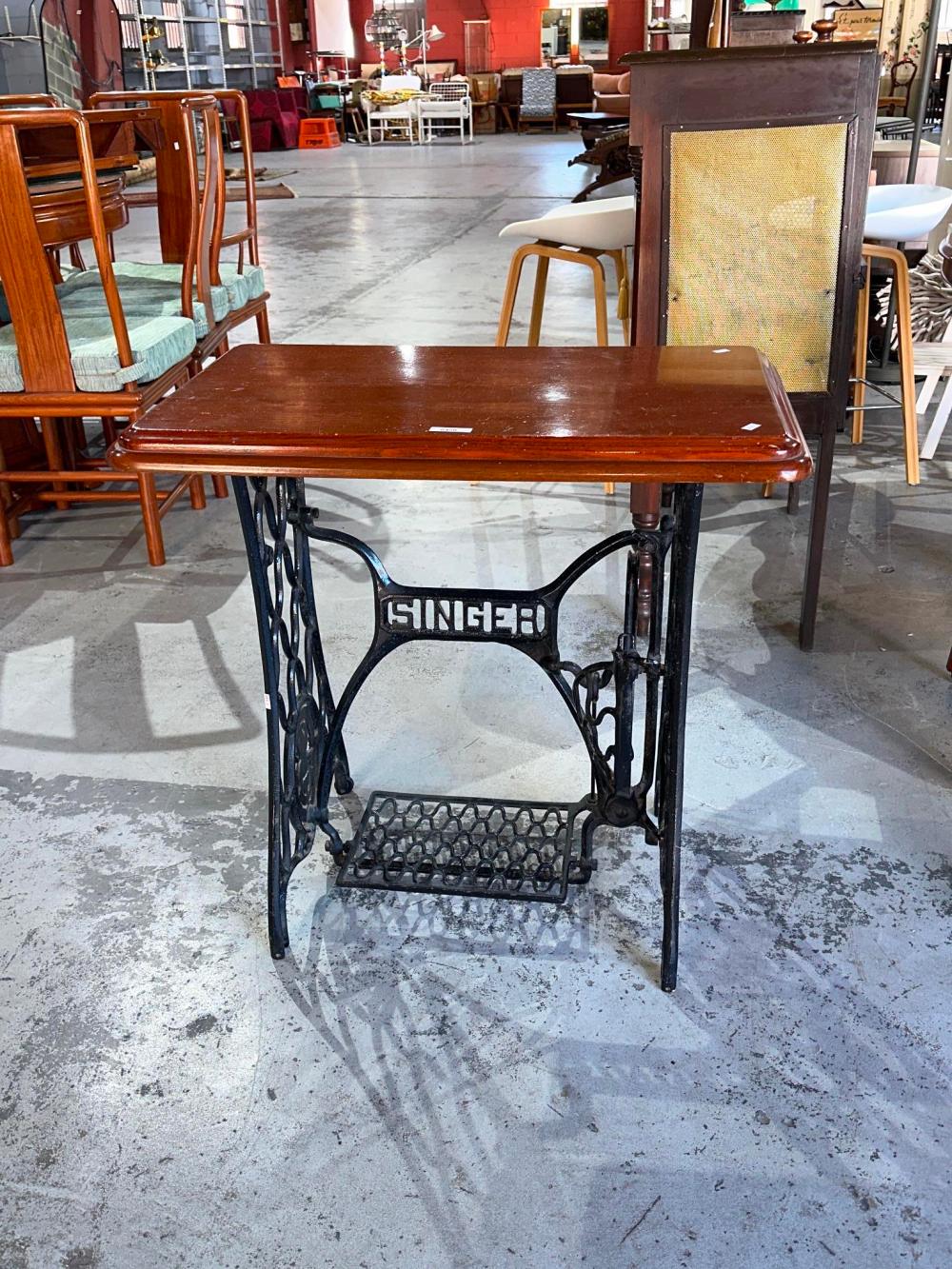 |
Side table with old cast-iron Singer sewing machine, treadle base, and timber top. 74 cm wide, 44.5 cm deep, 73 cm high. | Bargain Hunt Auctions | 2023-05-14 | 6450 | AUD 380 (price basis unavailable) |
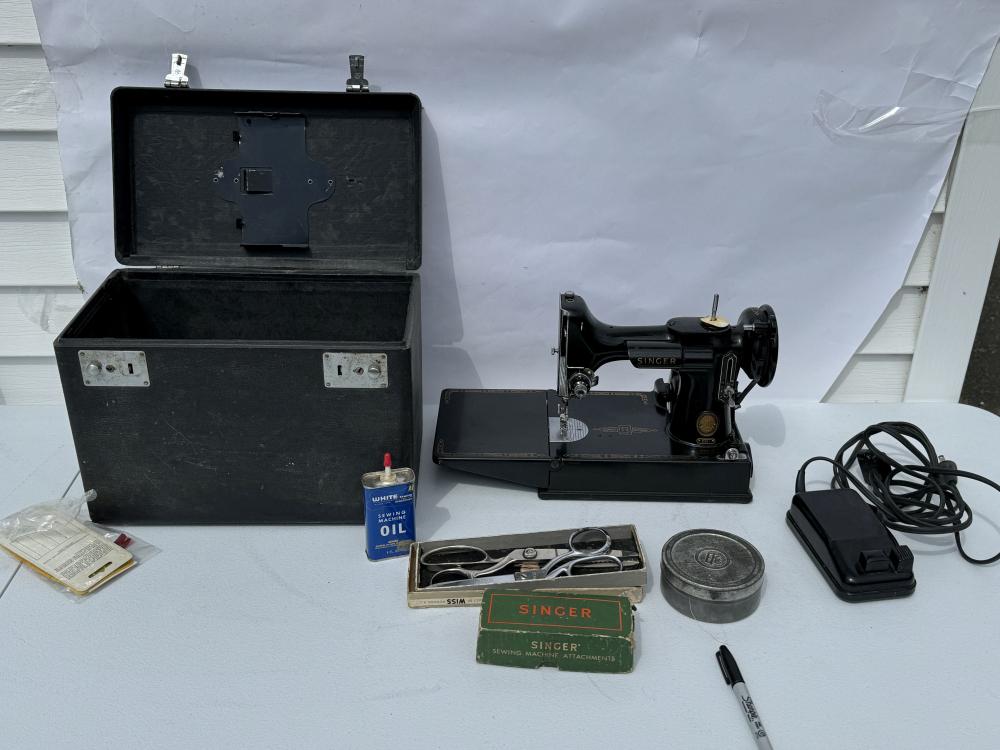 |
SINGER FEATHERWEIGHT SEWING MACHINE | Kimball's Auction | 2024-04-27 | 391 | USD 375 (price basis unavailable) |
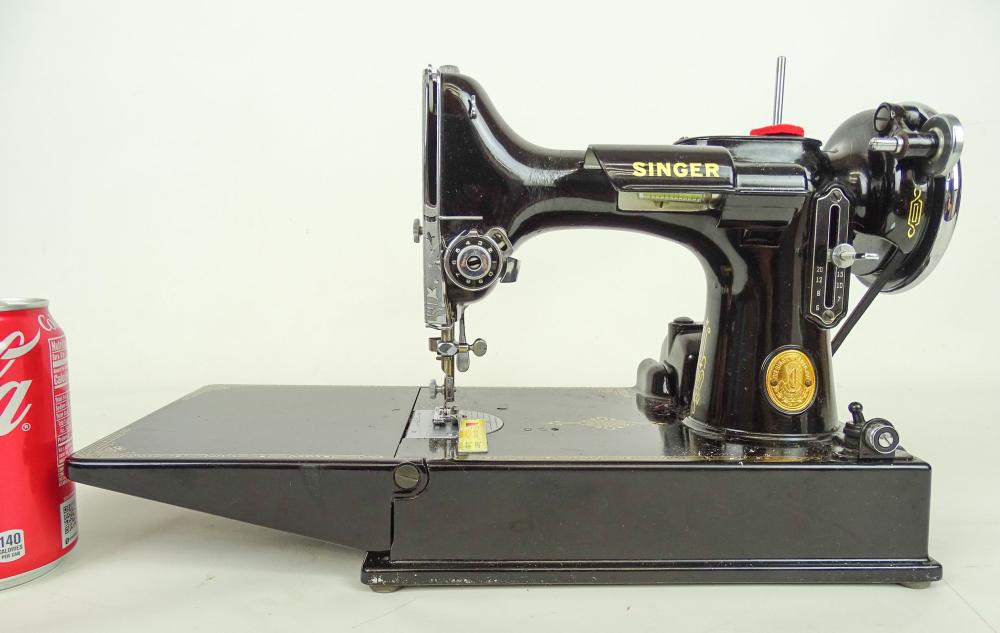 |
Singer Featherweight Sewing Machine | Copake Auction Inc. | 2025-07-12 | 931 | USD 325 (price basis unavailable) |
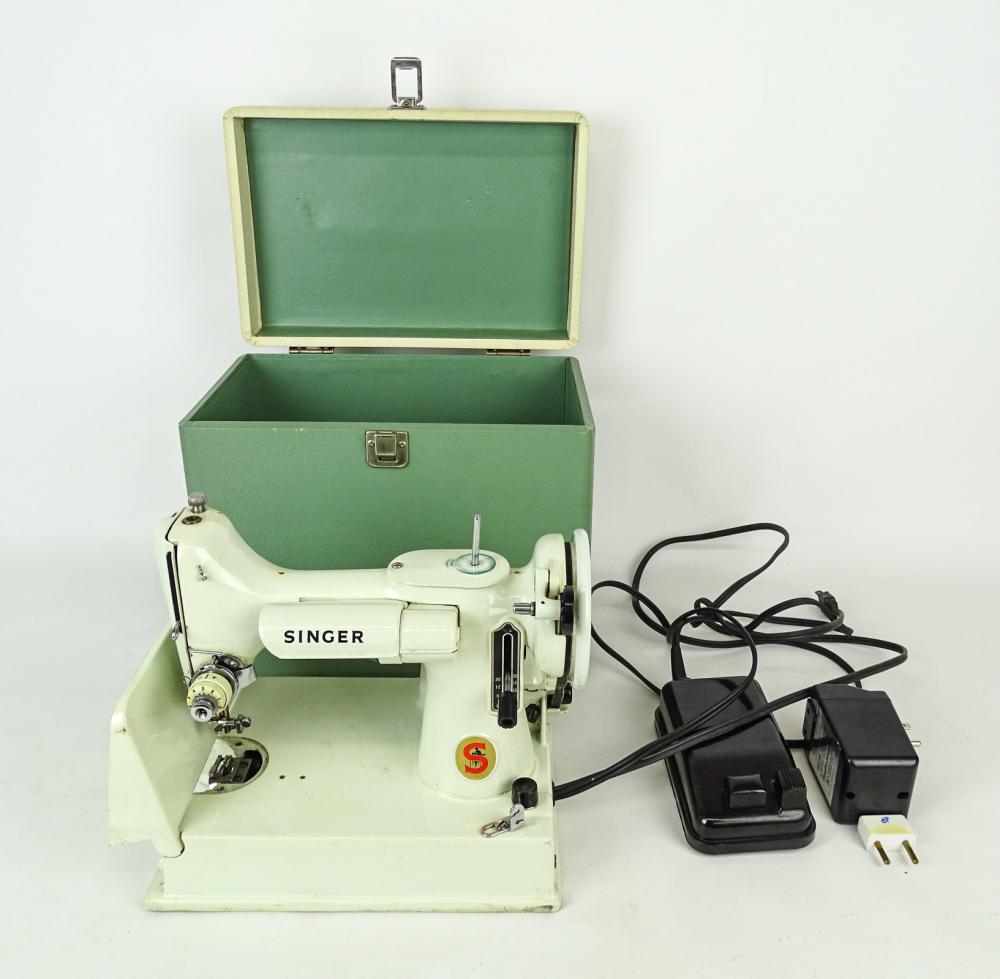 |
SINGER FEATHERWEIGHT SEWING MACHINE | Copake Auction Inc. | 2025-11-22 | 529 | USD 500 (price basis unavailable) |
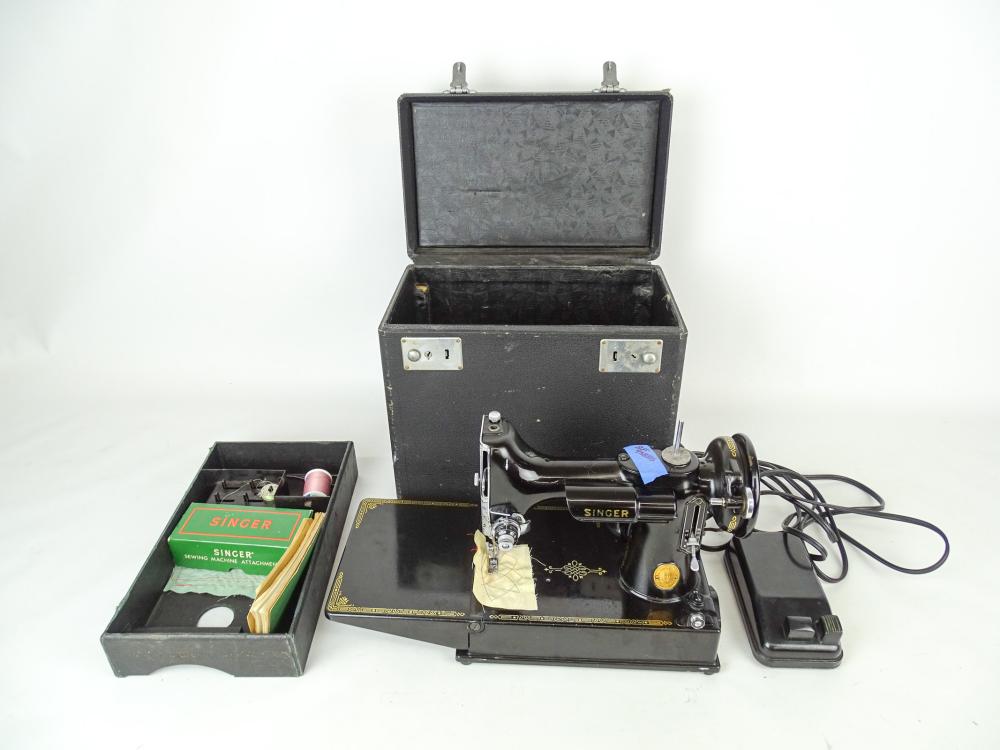 |
SINGER FEATHERWEIGHT SEWING MACHINE | Copake Auction Inc. | 2025-11-22 | 527 | USD 275 (price basis unavailable) |
How these auction records were verified
Each row retains its exact source URL, lot identity, retrieval time, collection-time access result, and immutable record hash. If an auction page is unavailable or challenge-protected, the retained evidence identity can still be inspected in the public comparable provenance record.
Disclosure: prices are shown as reported by auction houses and are provided for appraisal context. Learn more in our editorial policy.
Grade condition the way a buyer will
Condition changes the number faster than most owners expect. “Looks good for its age” is not a condition report. Buyers want to know what works, what is missing, and what may need service.
| Practical grade | Machine evidence | Cabinet and cosmetic evidence |
|---|---|---|
| Ready to demonstrate | Handwheel turns, motor or treadle operates, feed and stitch function can be shown | Stable cabinet, intact veneer or finish, legible decals, no major missing parts |
| Complete but untested | Major components appear present, but operation is not claimed | Honest wear, minor veneer loss, surface oxidation, or finish damage disclosed |
| Project or parts | Seized movement, cut wiring, missing motor, bobbin parts, hand crank, or linkage | Unstable base, major water damage, broken hinges, heavy repainting, or severe losses |
Do not plug in old wiring just to prove the motor runs. Turn the handwheel gently and disclose that the electrical system is untested if you cannot verify it safely. Cleaning dust is one thing; aggressive polishing, repainting, or replacing original surface before research can erase useful evidence and reduce collector appeal.
A typical estate-sale machine is described as “very old, with table” and priced from appearance alone. The better approach is to separate the machine from the furniture, confirm the model, record what operates, and compare local sold listings or auction records with the same setup.
Account for local demand, transport, and selling costs
A cabinet machine may be complete and attractive but difficult to ship. That shrinks the buyer pool to people within practical collection distance. A portable model with its case can reach a broader market, but packing risk and carrier costs still affect the net result.
- Compare results in the same currency and, when possible, the same country or region.
- Separate the reported hammer or realized price from buyer’s premium, seller’s commission, pickup, packing, and shipping.
- For a cabinet machine, measure width, depth, and height and state whether it can be carried safely.
- Use current sold evidence. An asking price proves only what a seller hopes to receive.
Free instant estimate
Not sure what your item is worth? Let us take a look.
Upload photos, share the serial number and model if known, and get a free first read. If the evidence supports a full appraisal, we will say so.
Free. No card needed. Takes about two minutes.
Treat 1920, 1950, and other years as context
There is no honest universal “Singer value by serial number and year” table. Two machines from the same decade can have different models, cabinets, motors, accessories, wear, and buyer demand.
- 1920 Singer sewing machine value
- Confirm the exact model and whether it remains in a treadle setup, hand-crank configuration, or later conversion. Then compare the same model and setup.
- 1950 Singer sewing machine value
- Do not assume “mid-century” means common or collectible. Portable models, cabinet machines, and Featherweights serve different markets.
- Machine in a wood cabinet
- Describe the machine and cabinet separately. A damaged cabinet can add transport work without adding buyer appeal; a complete original setup can strengthen the offer for the right local buyer.
Photograph and list the machine so buyers can compare it
A precise listing attracts better questions and makes appraisal or auction comparisons faster. Use this sequence:
- Full machine from front, back, both sides, and above.
- Complete serial number in sharp light.
- Model badge or model number, if present.
- Needle area, presser foot, bobbin area, handwheel, motor, wiring, and foot control.
- Case, cabinet, treadle mechanism, hinges, drawers, and underside.
- All attachments, manuals, tools, keys, and loose parts together.
- Close views of decal loss, rust, veneer damage, repairs, cracks, and missing parts.
- A short video only if operation can be demonstrated safely.
State what you know and what you do not. “Handwheel turns; electrical system untested” is more useful than “works great” when no safe stitch test has been completed.
Old Singer sewing machine value FAQ
How do I find out what my old Singer sewing machine is worth?
Record the complete serial number, confirm the model, describe the cabinet or table and accessories, grade condition and working order, then compare recent sold lots for the same model and configuration. The serial number helps establish identity and date; it does not set the price by itself.
How much is an old Singer sewing machine with a table worth?
There is no single table value. The answer depends on the machine model, whether the cabinet or treadle base is original and complete, wood and iron condition, working order, local demand, and transport costs. Compare sold examples in the same currency and market.
Does a Singer serial number tell me the value?
No. The number is an identity and dating clue. Use it to narrow the model, production period, and factory record, then value the complete machine from model demand, condition, cabinet, accessories, and comparable sales.
Which old Singer sewing machine models can attract stronger demand?
Demand is model-specific. Featherweights have an active collector and user market, while decorative variants such as some Model 66 machines can also draw interest. Rarity alone is not enough; completeness, originality, condition, and buyer demand still control the comparison.
Is a 1920 or 1950 Singer sewing machine automatically valuable?
No. A production decade is useful context, not a price. A common 1920 machine in a damaged cabinet may trail a desirable, complete, working 1950 model. Confirm the exact model and compare like with like.
Old Singer value questions this guide answers
- What is an old Singer sewing machine worth?
- Value of an old Singer sewing machine in a wood cabinet
- Singer sewing machine value by serial number lookup
- How much is an old Singer treadle table worth?
- 1950 Singer sewing machine value by model
- 1920 Singer sewing machine value with cabinet
- Which vintage Singer models are most collectible?
- How condition affects antique Singer sewing machine price
References and evidence
- Singer: What’s Your Sewing Machine Worth?
- International Sewing Machine Collectors’ Society: Singer serial numbers
- Comparable-sale records are retained with exact lot identity and pipeline provenance. Reported prices may exclude buyer’s premium, seller fees, shipping, restoration, and taxes.