Start here: the six details that decide whether your plate needs a closer look
Most Norman Rockwell collector plates are not priced like original Rockwell art. Some are common decorative porcelain issues; a smaller group uses precious metal, belongs to a sought-after series, or survives as a complete matched set. That difference can change the useful comparison completely.
- Maker and material: record Knowles, Gorham, Franklin Mint, or another name, plus porcelain, china, pewter, or sterling silver.
- Exact title and series: copy the wording from the back, including issue or plate number.
- Piece count: note whether you have one plate, a partial run, or a complete matched series.
- Condition: check for chips, hairlines, crazing, fading, scratches, repairs, and damaged hangers.
- Box: match its label to the plate and record crushing, stains, writing, or missing inserts.
- Certificate: confirm that the title and identifying number agree with the plate.
Fast answer: the box and certificate help document identity and completeness, but they do not create demand on their own. Maker, material, exact issue, piece count, condition, and current buyer demand do more of the pricing work.
Record the exact series before you compare a price
“Norman Rockwell plate” is too broad for a useful price search. The phrase can describe mass-produced porcelain, sterling-silver plates, commemorative issues, and groups assembled from different series. Compare the wrong material or format and the resulting number tells you very little.
Copy the back information word for word
Start with the maker, plate title, series title, issue number, copyright line, material statement, and diameter. Photograph the entire front and back in even light. Do not crop out the rim, hanging hardware, or any handwritten inventory label.
An edition number can help identify the issue, but a low-looking number is not automatic proof of scarcity. The practical question is whether buyers currently compete for that exact issue or complete series.
Separate porcelain from sterling before searching
Material is the first major fork. A sterling plate has precious-metal content and a different buyer pool from a porcelain collector plate. Verify an explicit sterling designation and weight evidence before using silver comparables; color alone is not enough.
Same maker, material, title or series, format, quantity, and similar condition.
Same artist name but different maker, material, size, or number of plates.
Decide what the box and certificate actually add
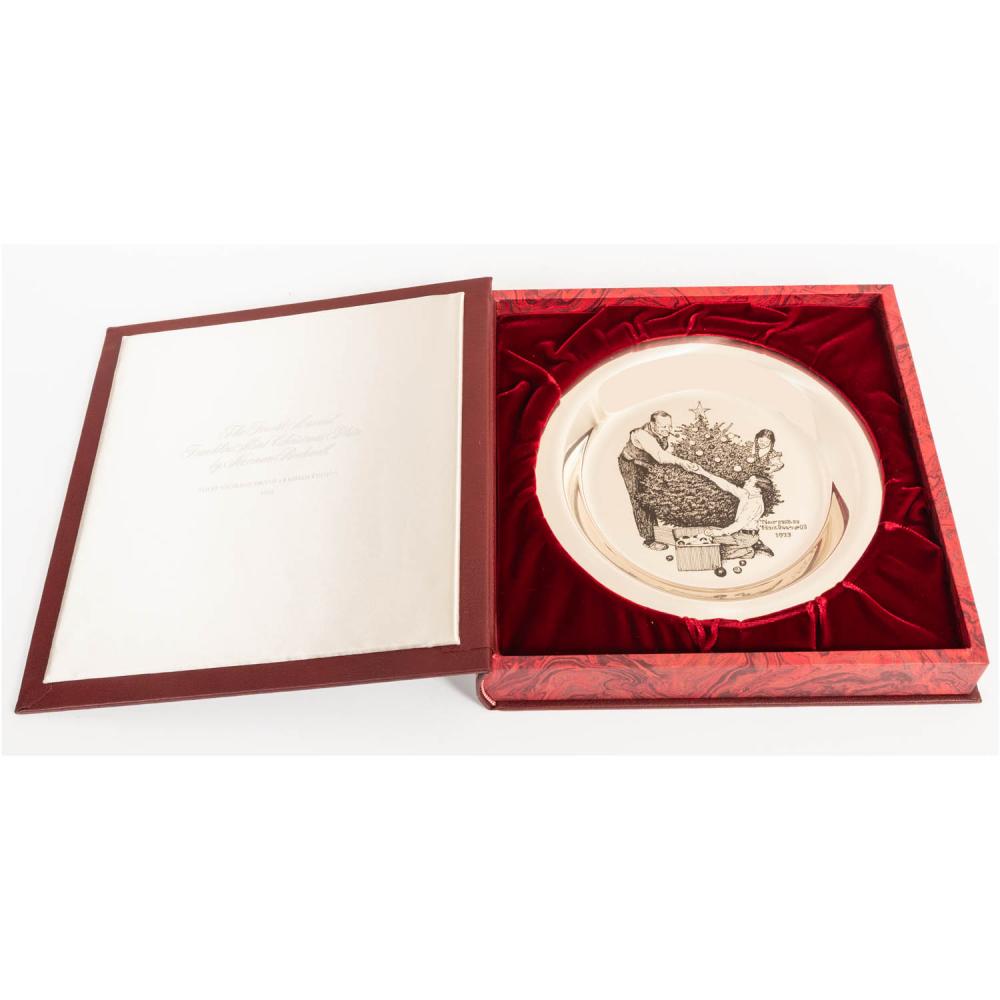
Original packaging and paperwork are useful when they complete the story of the item. They can make identification easier, reassure a buyer that the plate has not been mixed with another issue, and protect the surface during storage. Their effect is usually supportive, not magical.
Match the paperwork to the plate
- Compare the plate title, series name, and issue number on every component.
- Look for a box label that names the same plate rather than only the artist.
- Keep inserts, sleeves, and stands together if they were issued with the plate.
- Photograph any mismatch instead of silently pairing unrelated paperwork.
A certificate of authenticity can support issue identity, but it does not authenticate an original Rockwell painting or transform a licensed collector plate into original art. It should be evaluated as part of the manufactured collectible’s documentation.
Grade the box separately
A sound box with a readable matched label is more useful than a crushed or mildew-stained box. Still, a poor box does not necessarily make a clean plate unsellable. Describe the plate and packaging separately so a buyer knows which condition statement applies to which component.
Free instant estimate
Upload photos of your item for a free first read
Show us the front, back, box label, certificate, and any condition issue. We will help you decide whether the evidence supports a closer appraisal.
Free. No card needed. Takes about two minutes.
Grade condition the way a buyer will see it
Condition changes the number faster than most owners expect. A clean front can still hide a rim nick, hairline, repair, or scratched back. Use bright indirect light and handle the plate over a padded surface.
Check the rim, surface, and back
- Chips and hairlines: inspect the rim from both sides and note any line that catches the light.
- Crazing: record networks of fine glaze lines instead of calling them age alone.
- Decoration: look for fading, scuffs, scratches, or gold-rim loss.
- Repairs: note glue, fill, overpaint, replaced hangers, or residue.
- Back damage: photograph abrasions across the printed information and any wall-mount damage.
Do not use aggressive cleaners or metal polish before you know the material and finish. A before-cleaning photo is useful evidence, and a damaged surface cannot be restored by adding a certificate later.
Use a simple, honest condition ranking
| Working grade | What it means for your notes |
|---|---|
| Clean example | No observed chips, cracks, repairs, or major decoration loss; minor storage wear described. |
| Displayable with flaws | Noticeable crazing, scratches, rim wear, or packaging damage, but the plate remains intact. |
| As-is | Chip, crack, repair, heavy fading, or mixed paperwork that materially limits buyer confidence. |
Read the auction proof without inflating an ordinary plate
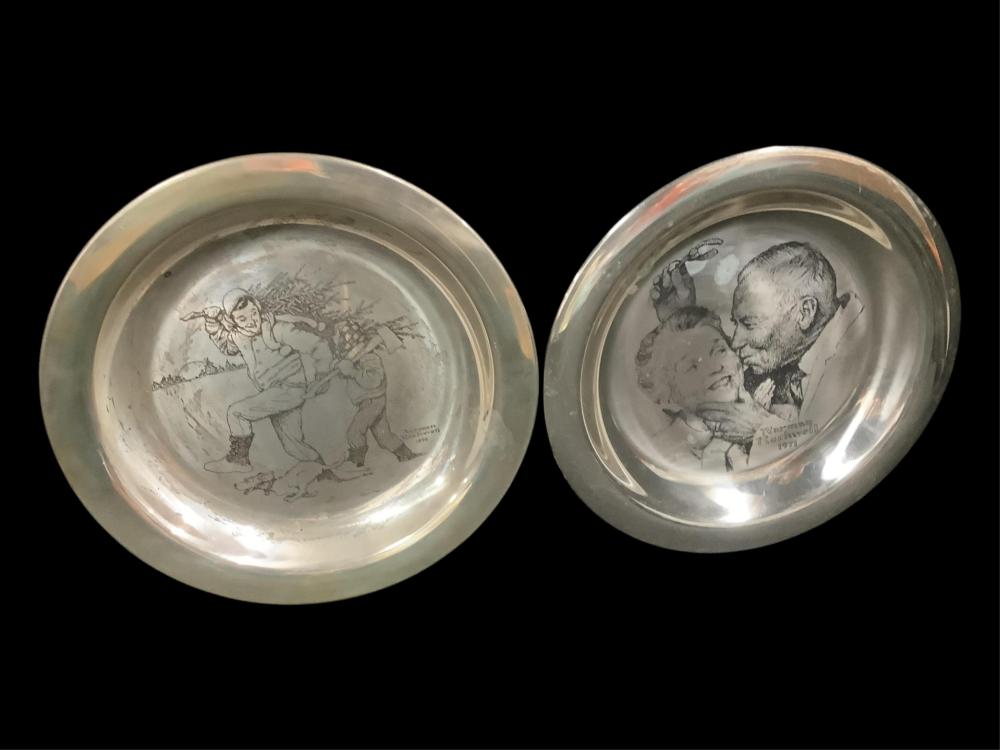
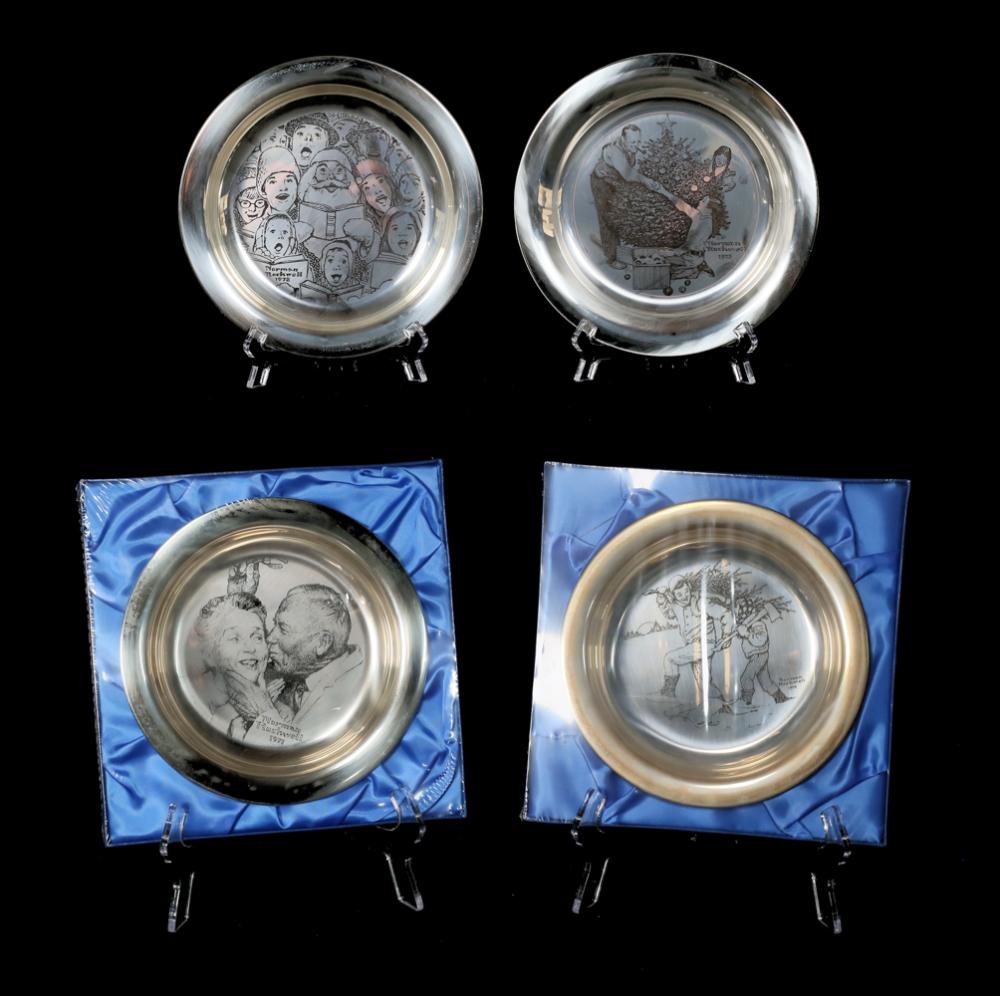
The strongest exact records available for this guide are Franklin Mint sterling-silver plates. They demonstrate why material must be matched before price. They are not a value range for common Knowles porcelain plates.
At Willow Auction House on February 22, 2024, lot 92—a group of four Franklin Mint Norman Rockwell sterling plates—was reported sold for USD 375.
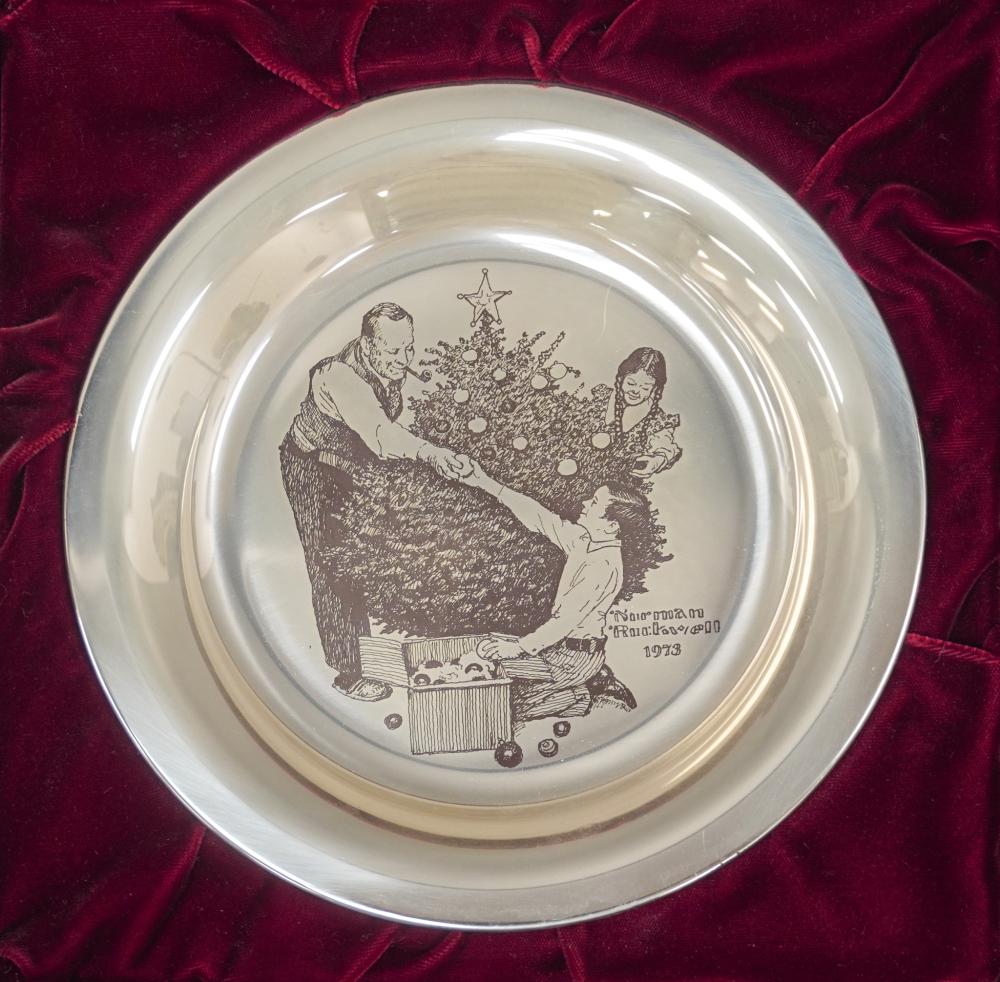
At Gray’s Auctioneers on January 21, 2026, lot 167—a Norman Rockwell sterling-silver Christmas plate—was reported sold for USD 500.
Those results are useful only when your item is genuinely comparable in material, format, quantity, and condition. A porcelain plate with the same artist name belongs in a different evidence set.
Turn sold evidence into a working range
Start with sold examples that match the object, not merely the name. Then adjust your interpretation for quantity, condition, timing, and transaction costs. One unusually strong result is a clue, not a complete market.
- Match material first. Porcelain, sterling silver, and other metals should not be blended.
- Match quantity. A four-plate group cannot be divided mechanically into four equal retail values.
- Match series and title. Demand can concentrate in a specific image or complete sequence.
- Match condition and completeness. Use the box and certificate as supporting fields, not as the headline.
- Check the price basis. Distinguish reported hammer or realized price from the buyer’s total cost and the seller’s net proceeds.
- Favor recent repeat evidence. Several relevant results are more useful than one old or exceptional sale.
Original retail price is not current market value. Active listings are also not sales. If a listing has been sitting unsold, it shows what the seller hopes to receive, not what a buyer has agreed to pay.
Choose whether to sell one plate or keep the series together
A complete matched series may be easier to describe and more attractive to the right collector, but it also costs more to pack and ship. A partial group may work better as individual replacement plates when buyers are trying to complete their own sets.
Keep a set together when the evidence supports it
- The plates share the same series and have sequential or clearly related issue details.
- Condition is reasonably consistent across the group.
- Boxes and certificates match their individual plates.
- Sold records show buyers choosing complete or substantial groups.
Consider single sales when replacement demand is clearer
Separate sales can make sense for a mixed lot, a broken series, or a group with uneven condition. The tradeoff is time: every plate needs its own photographs, description, packaging, and buyer.
A typical estate-sale scenario is a shelf of boxed plates described simply as “collectibles.” The efficient move is not to price every box first. Sort by maker and material, match paperwork, isolate damage, and then search the exact series. That first hour of organization usually prevents the largest comparison mistakes.
Know when an appraisal helps—and when it probably does not
A free first read is sensible when you have an uncertain plate, incomplete paperwork, or a mixed group. Clear photographs can often establish the useful comparison lane and show whether more research is justified.
A written appraisal becomes more useful for a substantial sterling group, an unusually strong exact-series result, insurance documentation, an estate inventory, or another decision that requires a supported value conclusion. For a common single decorative plate with clear identity and modest sold evidence, the cost of a formal report may not be practical.
Questions owners ask about Norman Rockwell plate value
Are Norman Rockwell plates worth more with the original box?
A matched, sound box can improve completeness, storage, and buyer confidence. It usually supports value rather than creating it. The exact plate, maker, material, condition, and demand still lead.
Does a certificate of authenticity make the plate valuable?
No, not by itself. The certificate should match the plate’s title and issue details. It documents the manufactured collectible; it does not make the plate original Norman Rockwell art.
Is a complete series always worth more?
Not always. A matched complete series can be more appealing, but shipping cost and limited buyer demand may offset the premium. Compare sold complete groups with sold single plates from the same series.
Does a low plate number guarantee rarity?
No. An issue number helps identify the plate, but scarcity must be connected to edition size, survival, and actual demand. Buyer competition matters more than a low-looking number alone.
Should I clean the plate before selling it?
Dust gently and stop if you do not know the material or finish. Avoid abrasive cleaners and metal polish. Photograph the plate before any treatment and disclose stains or residue.
Why are some Norman Rockwell plates worth more than others?
Material is a major reason. Sterling-silver plates have metal content and different auction demand from common porcelain issues. Maker, series, condition, piece count, and completeness add further separation.
Where can I sell Norman Rockwell collector plates?
Common single plates may suit local marketplaces or replacement-plate buyers because shipping is expensive relative to value. Better sterling groups or strong complete series may justify an auction or specialist review. Check fees, packing risk, and seller net before choosing.
Related Norman Rockwell plate value questions
- How much are Norman Rockwell collector plates worth today?
- Does the original box increase Norman Rockwell plate value?
- Are Norman Rockwell plates worth more with certificates?
- What is a complete Norman Rockwell plate series worth?
- How do I identify a Knowles Norman Rockwell plate?
- Are Franklin Mint Norman Rockwell sterling plates valuable?
- Where can I sell a Norman Rockwell plate collection?
- Do chips and crazing reduce collector plate value?
Sources and method
- Norman Rockwell plates value guide for broader maker and series context.
- Exact auction records retrieved through Appraisily’s governed comparable-sales pipeline; the injected table retains lot identity, access status, and public provenance.
- Appraisily editorial policy for comparable-sales and review standards.