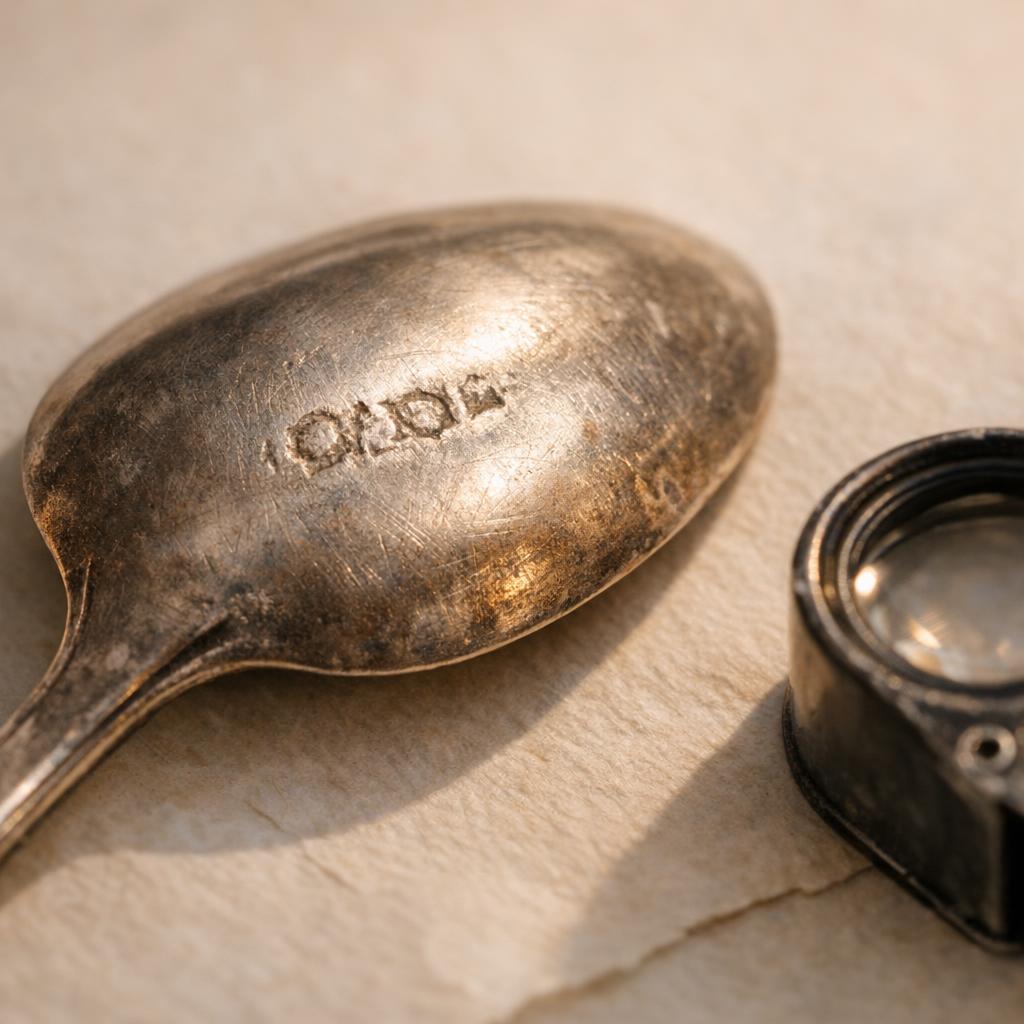
Sterling Silver Marks: appraisal and value basics
Sterling Silver Marks research should start with identification, condition, provenance, and recent comparable sales. Use this guide to compare the signals that matter before paying for a formal appraisal or deciding whether to sell.
Start with the mark, then test the object against it
If you collect silver long enough, you see the same mistake: a tiny stamp gets read too quickly, and every shiny object gets called sterling. The safer method is slower. Sterling marks, hallmarks, plated abbreviations, and retailer marks all look convincing on their own, but the whole object usually tells the truth if you examine it with discipline.
This guide focuses on the misreads that cause the most trouble: STERLING versus EPNS, 925 versus plate language, British hallmarks versus decorative stamps, and regional systems that look more official than they are. If it still feels ambiguous, send photos of the mark, the full object, and any worn edges rather than guessing.
Note: We couldn’t find enough auction records that directly match How to Identify Sterling Silver Marks Without Misreading Plate to publish a defensible price table. If you are valuing a specific item, include its maker, model, material, photos, and condition so the search can be narrowed.
What similar items actually sold for
The current auction search does not contain at least three clean, directly matched sales for How to Identify Sterling Silver Marks Without Misreading Plate yet. If you’re valuing a specific item, use the free estimate flow so the search can be narrowed by maker, material, photos, and condition.
| Image | Description | Auction house | Date | Lot | Reported price realized |
|---|---|---|---|---|---|
| No relevant auction comps found for this topic right now. | |||||
Disclosure: prices are shown as reported by auction houses and are provided for appraisal context. Learn more in our editorial policy.
Free first look
Send the mark photo and the full object
If the stamp still looks ambiguous, upload clear photos of the mark, the object, and any worn edges. We will review what the photos show and tell you whether it reads as sterling, plate, or a regional hallmark system.
How sterling marks differ from plate marks
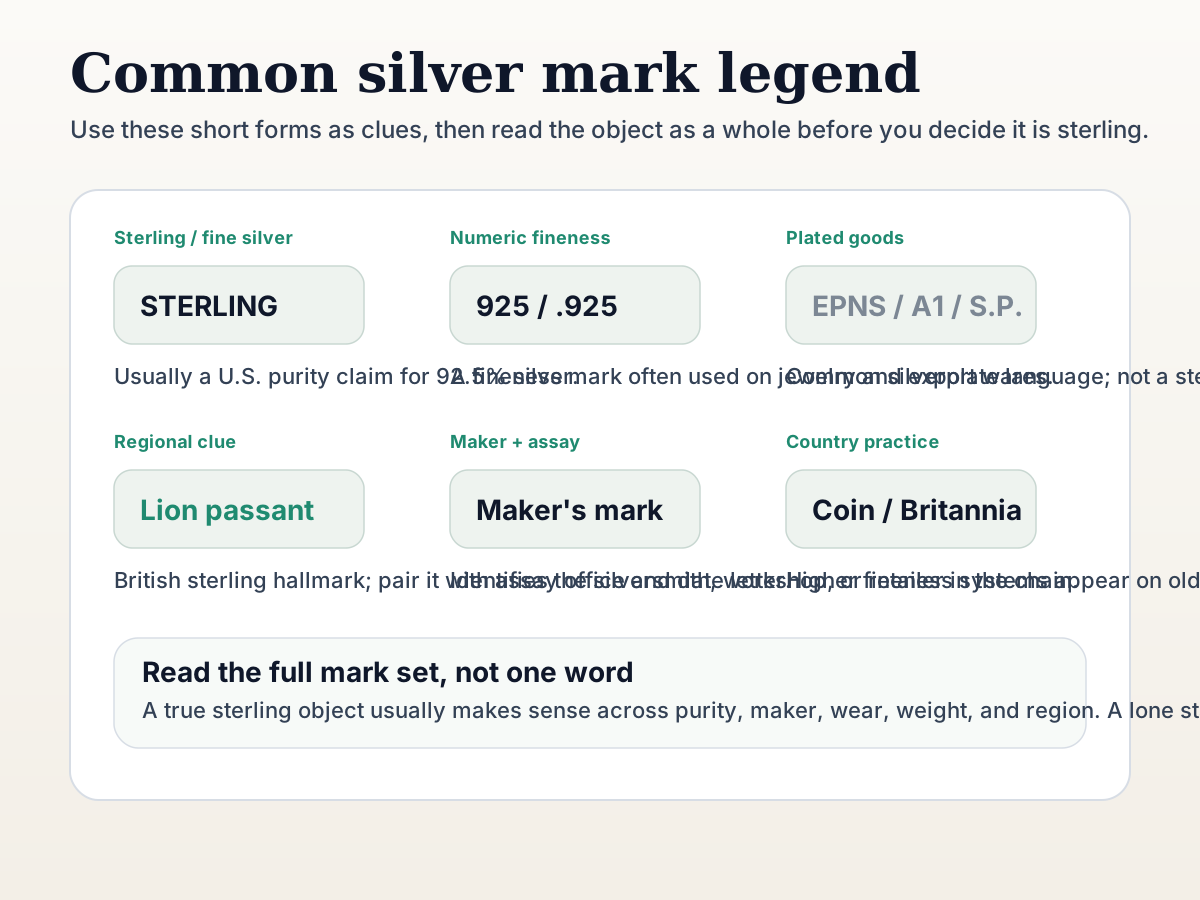
The fastest way to avoid a bad read is to separate the purity claim from the surface style. Sterling marks usually name the metal directly: STERLING, 925, .925, or a regional fineness system. Plate marks usually use coded language such as EPNS, A1, or silver plate.
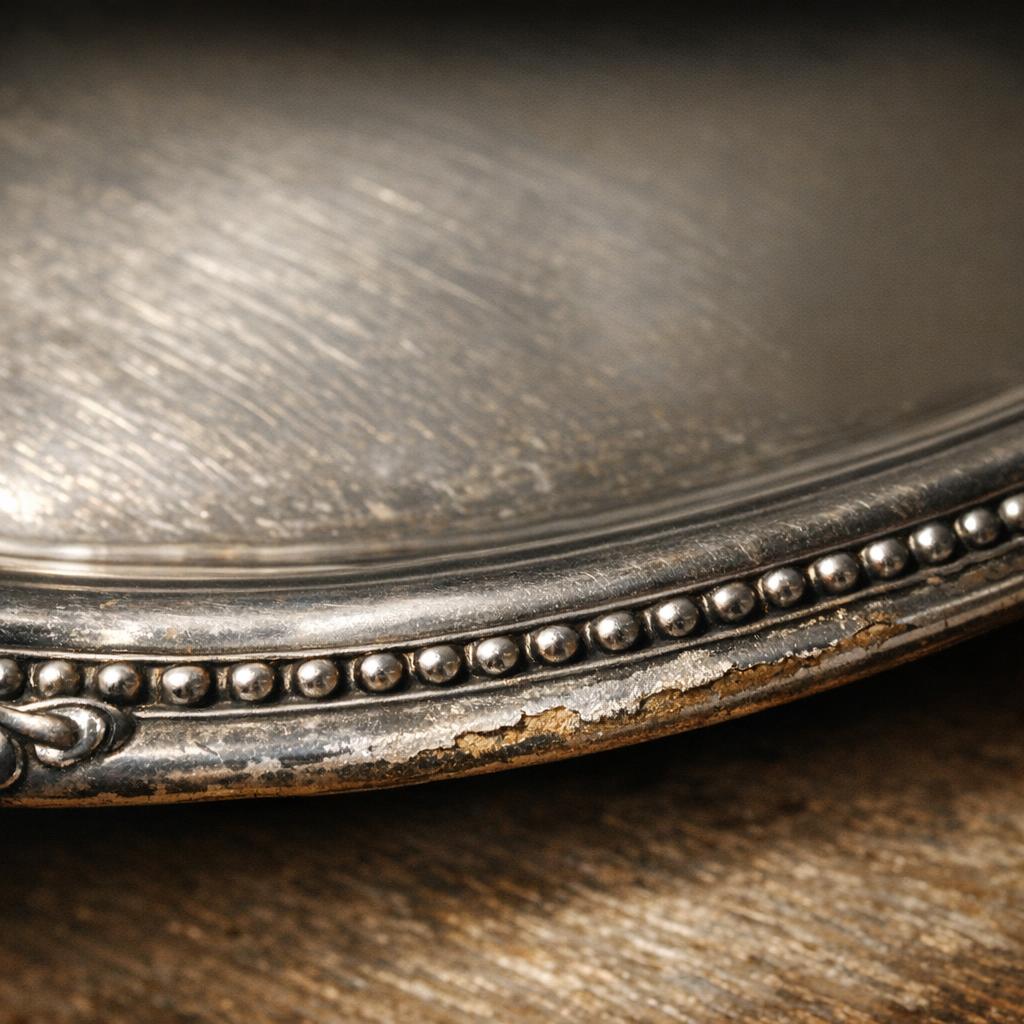
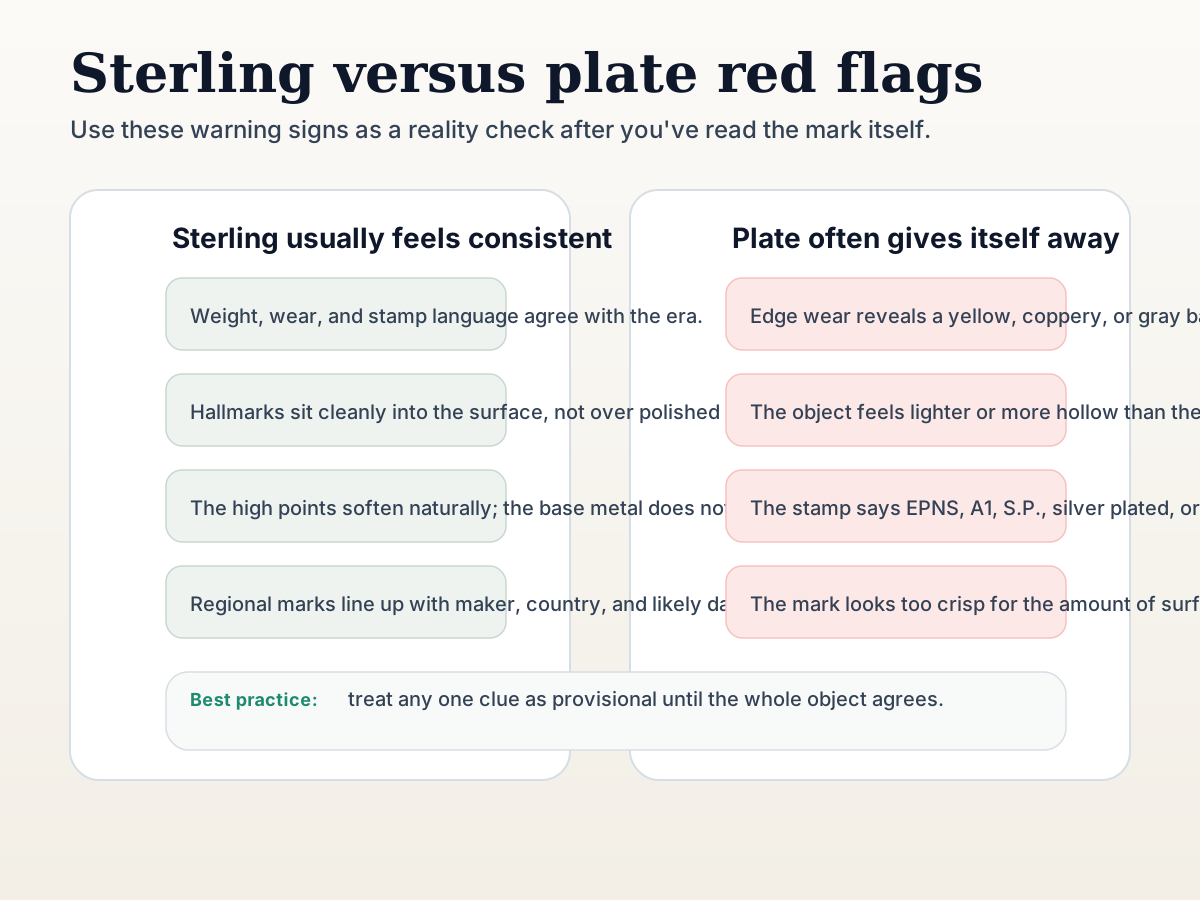
Then check whether the object behaves like silver. Sterling usually wears to a softer gray tone at the high points; plate often shows a thinner skin and a different substrate on rims, feet, handles, and other touch points.
Read the whole object, not the isolated word
One of the most common mistakes is to focus on a single word and ignore the rest of the object. A maker's mark can be genuine on either sterling or plate, and a family name or retailer stamp still does not prove purity.
The comps table above is the reality check. Mixed lots are often priced by the sterling portion, the maker, and the completeness of the service together.
Regional systems collectors misread most often
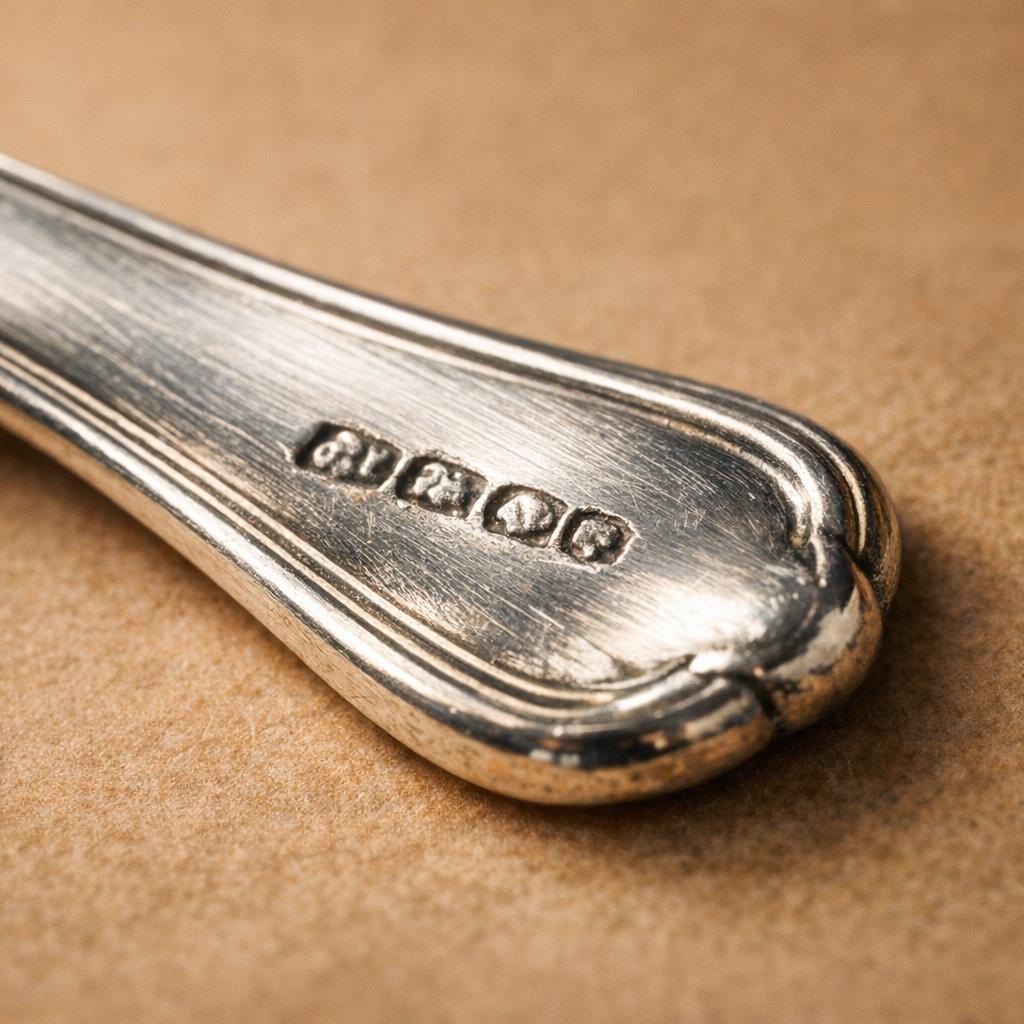
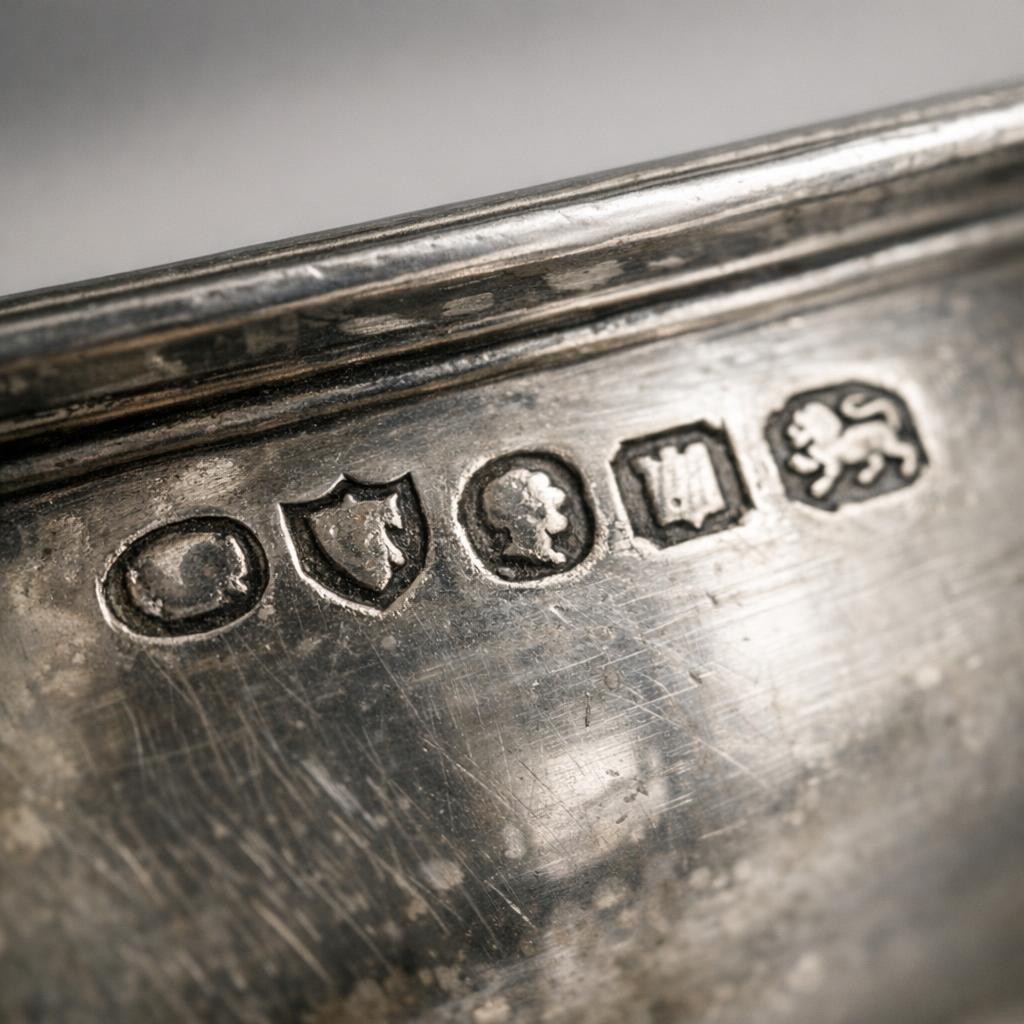
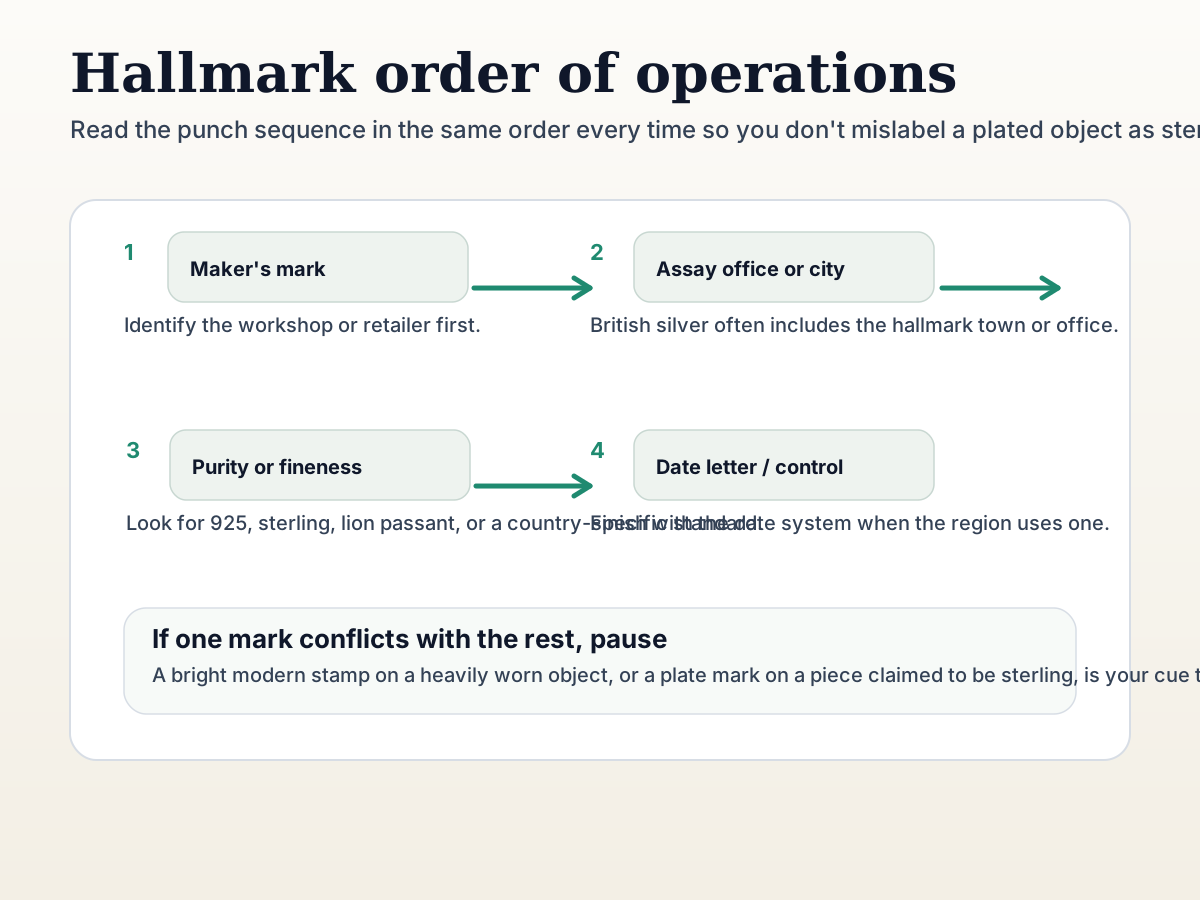
British hallmarks are the classic trap because they are read as a system. A lion passant suggests sterling in the U.K. context, but it needs the assay office, date letter, and maker's punch to support it. American and continental marks are simpler to read, yet that simplicity can also cause mistakes.
Plate marks are equally variable. EPNS, A1, and silver plate are clear enough when legible, but worn language, monograms, and presentation engravings are easy to over-read. A monogram tells you who owned the piece, not what the metal is.
Three easy misreads to watch for
- Branding versus purity: a maker's stamp can be genuine without meaning the object is solid silver.
- Wear versus truth: a worn stamp does not become sterling just because it is old.
- Language versus system: a familiar word like sterling needs the region and era to make sense.
A non-destructive checklist that actually works
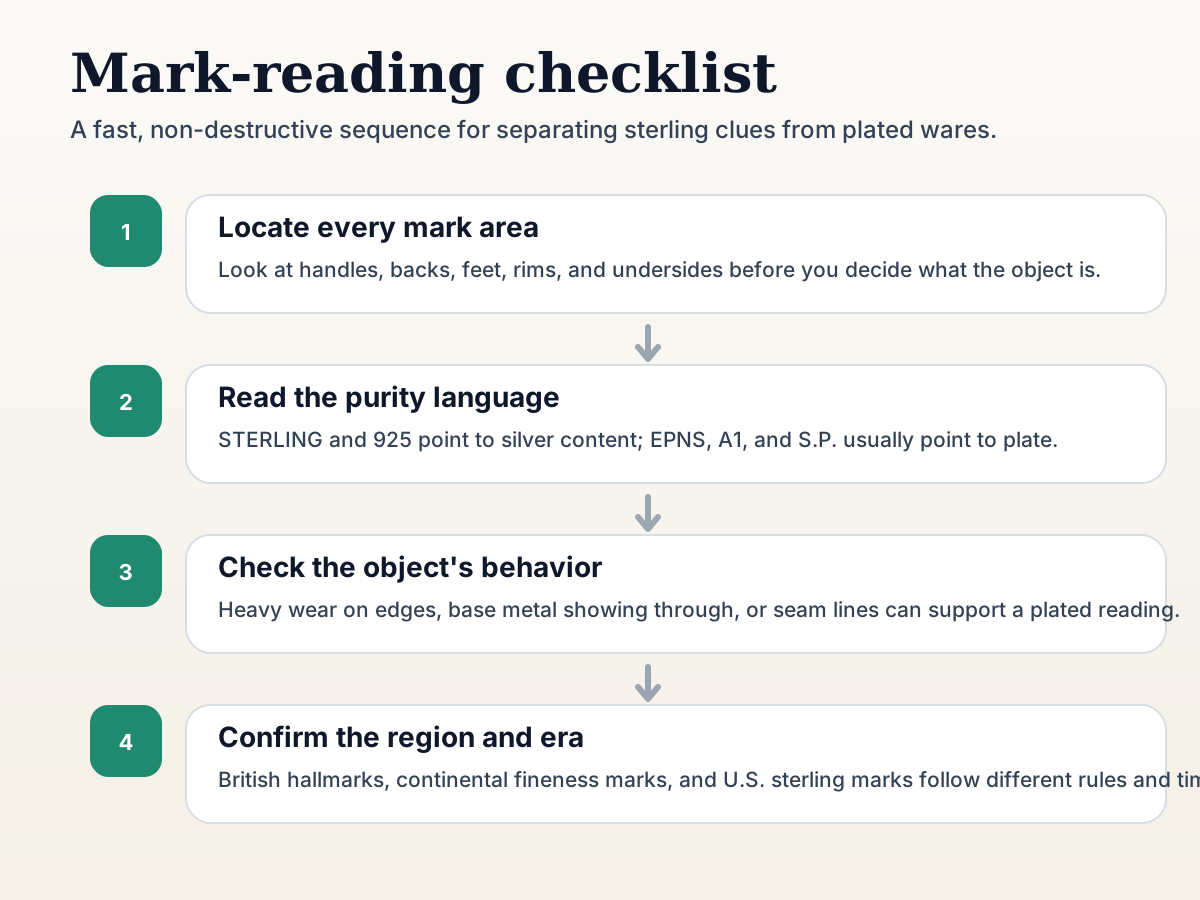
Use the same four questions every time. Where is the mark, what does it literally say, how does the object behave under light, and does the mark fit the region and period?
If any answer feels uncertain, stop. Magnet tests, scratching, and acid tests are usually unnecessary and can damage the finish. A clear photograph of the stamp, the full object, and any wear points is the safer move.
Mark-reading gallery
Use these visuals as a quick reference while you inspect the real object.
Frequently asked questions
Is 925 always sterling silver?
In most modern contexts, 925 means 92.5% silver and is treated as sterling or sterling-equivalent fineness. The mark still needs to fit the object's origin and age.
What does EPNS mean on silverware?
EPNS usually means electro-plated nickel silver: a plated surface over a base metal.
Can a British hallmark prove sterling on its own?
Only if the whole hallmark suite agrees. The lion passant, assay office, date letter, and maker's punch should fit together.
What if the stamp is worn and I still cannot tell?
Photograph the mark, the full object, and the worn edge under diffuse light. If it stays open, send the photos for review instead of scraping or testing.
Notes and sourcing
Comparable sales in this guide come from Appraisily's internal auction results database. For our editorial standards and review process, see Editorial policy.
- Compare material mix, maker recognition, and completeness—not stamp language alone.
- If a piece still feels unclear, send clear photos of the mark, the full object, and the edge wear.
- A quick photo review is usually enough to separate sterling from plate.
Search variations collectors ask
Readers often search for the same idea in slightly different ways. Each phrase maps back to the checklist above.
- how do I tell sterling silver from silver plate by the mark?
- what does EPNS mean on old silverware?
- is 925 always sterling on antique silver?
- how can I read British hallmarks on a spoon?
- why does a silver mark look worn on a plated tray?
- what does A1 mean on silverware and trays?
- how do I know if family silver is sterling or plated?
- should I send photos if the stamp is unclear?
These are the questions that matter when you are standing over the object with a loupe in hand.
How We Research Valuation Data
Our appraisal guides are based on auction results, dealer pricing data, and professional appraiser insights. We may earn a commission when you use our free professional appraisal service. Learn about our editorial standards.
Upload the marks, full object, worn edges, seams, handles, weight, dimensions, damage, and any maker or pattern information.
Need silver marks checked before you price the piece?
Upload close-ups of the mark, the full object, and the worn edges. That gives the specialist enough context to tell sterling, plate, and regional hallmark systems apart.
- Photo review for uncertain marks
- Guidance on sterling vs plate
- Clear next steps if the item needs inspection
Clear photos are enough to begin; no destructive testing required.