
Sterling Silver vs Silver Plate How to Tell and What the Price Gap Looks Like: appraisal and value basics
Sterling Silver vs Silver Plate How to Tell and What the Price Gap Looks Like research should start with identification, condition, provenance, and recent comparable sales. Use this guide to compare the signals that matter before paying for a formal appraisal or deciding whether to sell.
Why this comparison hurts when you get it wrong
That old bowl, tray, or spoon you just found in an estate closet can feel like a lucky find in the first minute and a sinking feeling in the second. A solid sterling piece can carry a resale floor that is very different from a plated lookalike, even when they seem identical at first glance. So the right question is not just “is it real silver?” It is “is it truly sterling silver, or plated silver trying to look the part?” That distinction changes how buyers treat a listing, what collectors bid, and what your next step should be.
This guide is written for the exact confusion point where people stop and ask: What should I do before I value this item? We will keep this practical: how to check marks, what the wear tells you, and where the value gaps are wide enough to matter. By the end, you should know if your piece should move toward a free instant estimate or if you need only basic cleanup before listing.
Start with a 60-second physical check
Before you buy, polish, repair, or list a silver item, run this quick physical screen:
- Use the metal clue first: Ask whether the visible edge has continuous silver content or only a thin overlay. Plated pieces often show a different core tone where wear is strongest.
- Check hallmarks and assay marks: Sterling is usually marked, but marks vary by era and geography. For U.S. pieces you commonly see “925” and often symbols from assay or hallmark systems.
- Test seams and corners: High-wear seams, hidden folds, and underside details often reveal if silver was added as a layer versus formed as the base.
- Compare weight-to-size: Similar shapes with comparable size can still differ materially when solid silver sits on a deeper, denser feel than thinly plated decorative work.
Do this sequence in order: mark scan → seam check → wear check → value decision. The order matters because once you confirm base material, the other observations become easier to interpret.
Flip it over: hallmark decoding for non-experts
Most buyers misread this step. They assume every silver-like object has the same marker language, but marks depend on where and when the item was made. Still, there are two reliable practical checks:
1) Hallmark pattern
Look for a maker mark, assay indicator, and fineness stamp near a less obvious location such as a stem, rim, or base edge. For many sterling objects, “925” is the strongest universal clue, but not the only one. The hallmark may be absent, worn, or copied on low-quality modern pieces.
2) Core behavior around high-stress zones
Where fingers, heat, and frequent handling meet the item, plated pieces often show edge wear first. If that wear exposes a clear non-silver substrate, the value implication changes fast. Sterling objects can also wear, but the failure pattern usually stays closer to uniform metal wear unless solder work has been stressed over time.
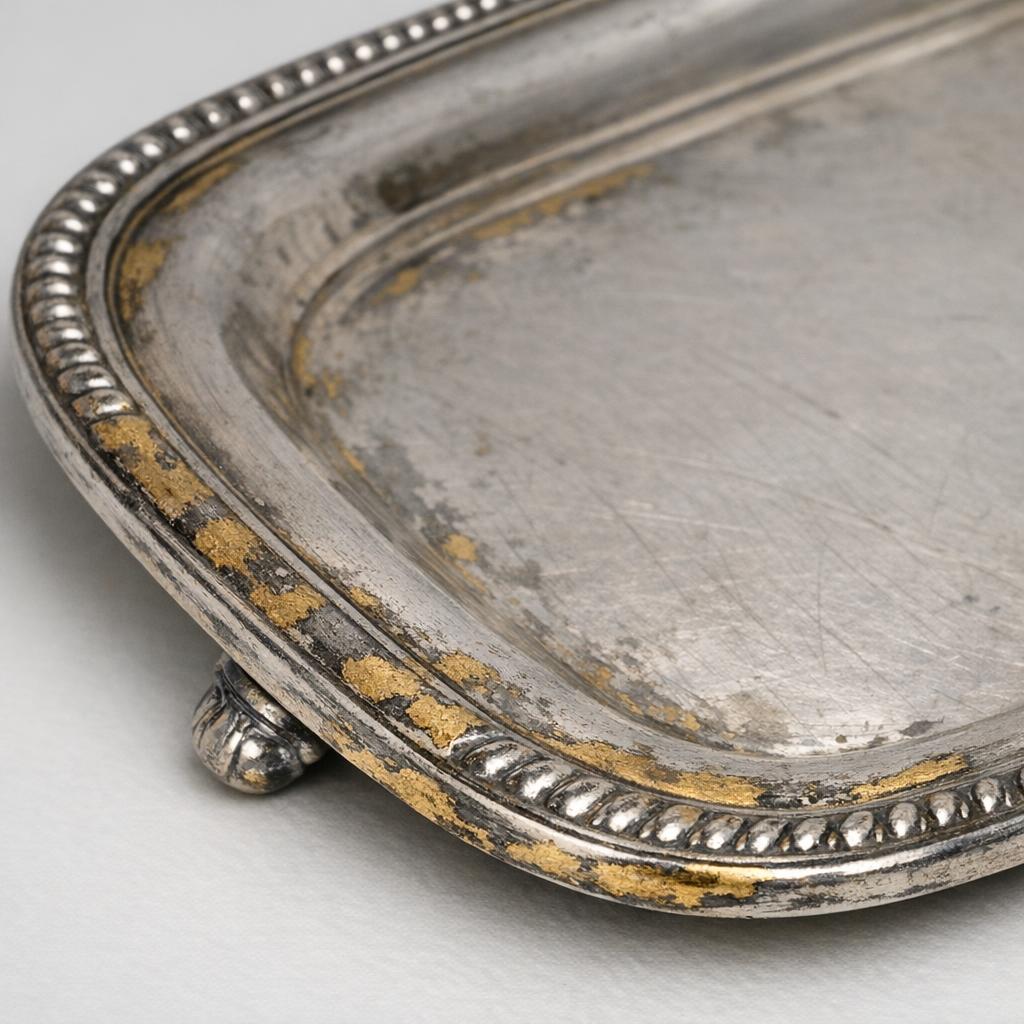
Does the item read as solid silver or silver-clad?
In a plated object, silver often behaves like skin: visually rich where untouched, but thinner where friction repeats. In solid silver, that “skin” is not a separate layer. You can use that difference without tools in the first pass.
Work from least destructive checks to most invasive:
- Inspect underside, hinge lines, and screw posts for color transitions.
- Look at rivets and solder lines under magnification, if possible.
- Check if any service points show bright patches only where wear accumulates.
- Compare matching parts in the set; plated tea or flatware sets often show inconsistent wear across pieces.
Do not do acid tests unless a pro instructs you and you own the item. A mistaken treatment can reduce trust and resale value.
Why price gaps are real, not just theory
In this topic, “similar looking” is the trap. Internal valuation signals for this keyword show silver lot outcomes across a wide range:
- (8 Pc) Camusso sterling silver tea set sold at $8,500 USD (Akiba Galleries).
- (7 pcs) vintage sterling Persian tea set sold at $1,700 USD (Akiba Galleries).
- £650 GBP for a sterling silver tea set at Curated Auctions.
- $2,700 USD for a mixed set with a sterling base and plated tray.
- $1,350 USD for a sterling silver tea set from Apple Tree Auction Center.
These are not guarantees for your specific lot, but they demonstrate why we treat provenance and condition as part of the same decision, not as side notes. The gap opens when one item is clearly marked and structurally consistent while another shares style but not material integrity.
Free instant estimate
Not sure if your item is worth appraising? Let us take a look.
Upload a photo, tell us what you know, and get a free first read. If a full appraisal makes sense, we will say so.
Free. No card needed. Takes about two minutes.
How to decide your next step by risk level
If your item carries strong marks and consistent construction, the decision is usually simple: run a short free review and move toward listing strategy or auction channel comparison. If marks are missing or inconsistent and the coating pattern is uneven, the practical next step is still the free estimate before spending on polishing or listing fees.
Public case context confirms this pattern: a London silver lidded tankard with dated and attributed hallmarks showed better clarity from direct examination of maker-era signals before any sale decision. That same approach applies to cups, tea sets, platters, and flatware—you reduce uncertainty by confirming structure first, then discussing price.
Common mistakes that overstate value
Most overvaluation cases happen because buyers anchor on appearance and skip structure. The biggest mistakes are:
- Assuming all “antique silver” photos imply sterling content.
- Trusting style over maker and marks.
- Assuming one heavy piece means high resale confidence.
- Ignoring solder, seam, and repair history.
- Trying to list before checking whether item and photos match the hallmark narrative.
For buyers, the fix is simple: verify material identity first. For sellers, it often changes who should receive the listing, how you describe provenance, and whether repair or storage context gets disclosed up front.
Note: We couldn’t find enough auction records that directly match Sterling Silver vs Silver Plate: Marks, Wear and Value to publish a defensible price table. If you are valuing a specific item, include its maker, model, material, photos, and condition so the search can be narrowed.
What similar items actually sold for
The current auction search does not contain at least three clean, directly matched sales for Sterling Silver vs Silver Plate: Marks, Wear and Value yet. If you’re valuing a specific item, use the free estimate flow so the search can be narrowed by maker, material, photos, and condition.
| Image | Description | Auction house | Date | Lot | Reported price realized |
|---|---|---|---|---|---|
| No relevant auction comps found for this topic right now. | |||||
Disclosure: prices are shown as reported by auction houses and are provided for appraisal context. Learn more in our editorial policy.
Search variations
People also ask about sterling silver and silver plate
- How do I tell sterling silver from silver plate in one glance?
- Do all sterling silver items have a 925 mark?
- Can silver plate still have value if it looks pristine?
- Why do sterling and silver plate prices move so far apart?
- What wear patterns prove a piece is plated?
- Is silverplate worth checking before listing for resale?
- How much does maker marks add to antique silver value?
- Can I use a free appraisal flow before listing silver?