
How to identify old paintings
Old painting identification starts with medium, surface, back, signature, labels, frame, age clues, condition, and provenance. Age alone is not enough.
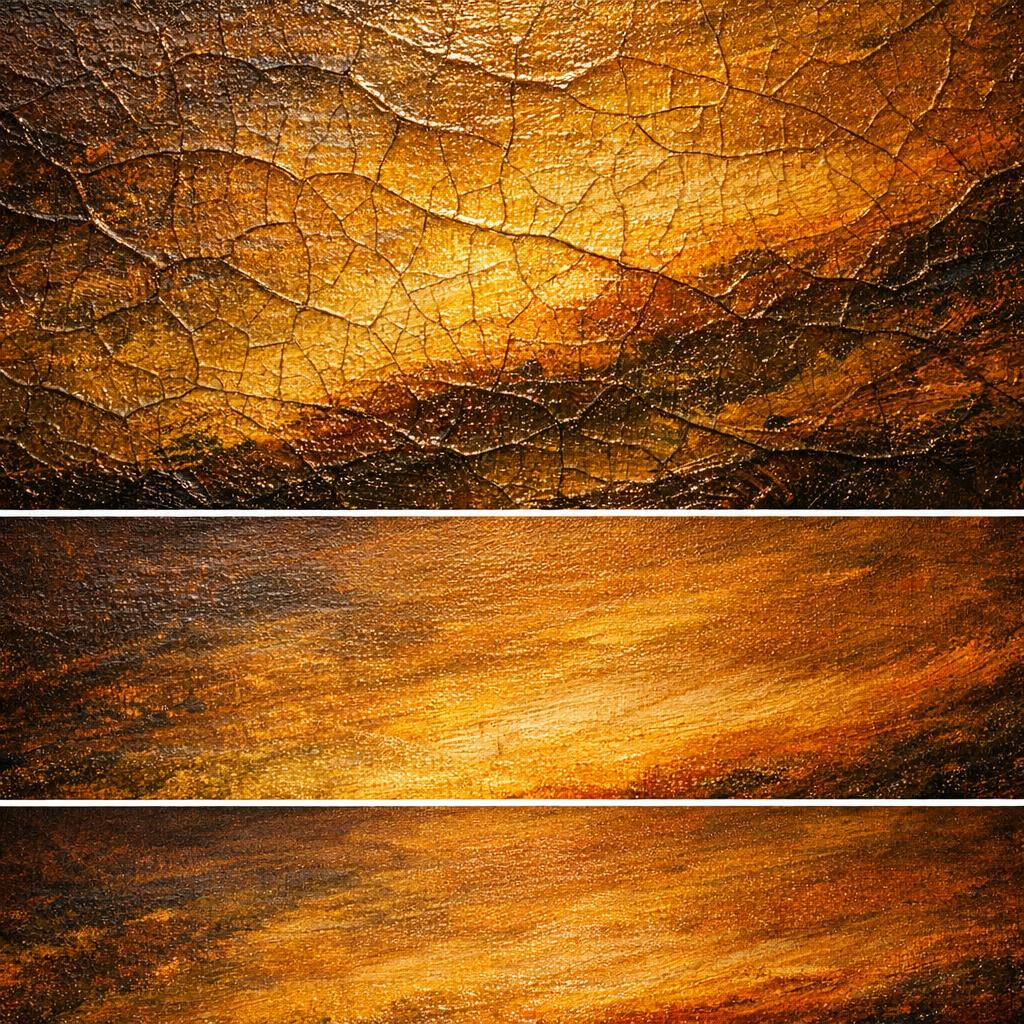
Found artwork and want to know if it matters?
Upload photos. We identify the object, check real sales, and show the right appraisal path.
Upload photos for a free first lookArt appraisalsStart an appraisalOne clear answer
Start by deciding whether the work is oil, watercolor, acrylic, gouache, pastel, print, reproduction, or mixed media. Then document the back and condition before assuming artist or value.
Auction records are market evidence, not a final appraisal. Condition, authenticity, provenance, size, medium, edition, subject, and demand can materially change value.
Evidence checklist
- Photograph the whole object, close details, back, frame or base, signatures, labels, condition issues, and scale.
- Include medium, dimensions, provenance, receipts, certificates, gallery labels, and prior appraisal records.
- Show the evidence that could prove or disprove the first assumption: texture, paper, canvas, plate mark, edition, foundry mark, surface, or damage.
What changes the answer
- Medium, artist, subject, quality, condition, provenance, and demand drive the next step.
- Back labels, stretcher marks, canvas, panel, paper, frame, and inscriptions can be more useful than the front alone.
- Dirty varnish, overpaint, tears, fading, and poor framing can change both identification and value.
Note: We couldn’t find enough auction records that directly match How to identify old paintings to publish a defensible price table. If you are valuing a specific item, include its maker, model, material, photos, and condition so the search can be narrowed.
What similar items actually sold for
To help ground this guide in real market activity, here are recent example auction comps from Appraisily’s internal database. These matched sales are market context only, not an object estimate or identification, and they do not guarantee a price for your specific painting.
Shown USD range: USD 65-USD 2,600. Median of these 10 USD examples: USD 237.50.
| Comparable | What sold | Auction house | Date | Lot | Source-reported amount |
|---|---|---|---|---|---|
 |
Ferdinand Pitard Oil Painting on Canvas Circa 1850 | Bruce Kodner Galleries | 2015-01-04 | 178 | USD 1,200 (buyer’s-premium treatment unknown) |
 |
FRAMED PAINTING: ATTRIBUTED TO CARL OLSON (Danish, 1818-1878). Boating in heavy seas. Unsigned. Oil on canvas, 8.75" x 11.75". | Eldred's | 2015-01-24 | 478 | USD 250 (buyer’s-premium treatment unknown) |
 |
Landscape Painting, Oil on Canvas, Early 20th Century, Signed "C.A. Murphy" | Fontaine's Auction Gallery | 2025-11-23 | 763 | USD 225 (buyer’s-premium treatment unknown) |
 |
Antique c. 1880 Dutch Woman Adjusting Her Stocking Oil on Canvas Painting FRAMED | One Source Auctions | 2025-05-26 | 248 | USD 65 (buyer’s-premium treatment unknown) |
 |
Large Mountainscape Painting, Unsigned. | Direct Auction Galleries, Inc. | 2026-03-21 | 208 | USD 190 (buyer’s-premium treatment unknown) |
 |
DANIEL SHERRIN (1868-1940) OIL PAINTING ON CANVAS OF A LANDSCAPE WITH A RIVER AND TREES WITH MOUNTAINS IN THE BACKGROUND. 35 1/2 X 23 3/4 INCHES. SIGNED LOWER RIGHT. | Dennis Auction Service | 2015-04-24 | 1190 | USD 400 (buyer’s-premium treatment unknown) |
 |
Antique 19th Century Signed J. Johnson Young Boy Smoking A Cigar Oil on Canvas Painting | One Source Auctions | 2017-07-24 | 147 | USD 140 (buyer’s-premium treatment unknown) |
 |
Painting, Oil on Canvas, Jacques Bouyssou | World Auction Gallery | 2021-09-12 | 36 | USD 450 (buyer’s-premium treatment unknown) |
 |
FRAMED PAINTING: BRYANT CHAPIN (American, 1859-1927). Autumn lake landscape with hills in the distance. Unsigned. Stamped "Estate of... | Eldred's | 2015-03-14 | 168 | USD 90 (buyer’s-premium treatment unknown) |
 |
Lu Yanshao Mark, Chinese Landscape Painting Paper Scroll | Hotspot Auctions | 2024-04-23 | 39 | USD 2,600 (buyer’s-premium treatment unknown) |
How these auction records were verified
Each row retains its exact source URL, lot identity, retrieval time, access result, and immutable record hash. Inspect the public comparable provenance record.
Disclosure: prices are shown as reported by auction houses and are provided for appraisal context. Learn more in our editorial policy.
Free instant estimate
Not sure if your painting is worth appraising? Let us take a look.
Upload a photo, tell us what you know, and get a free first read. If a full appraisal makes sense, we will say so.
Free. No card needed. Takes about two minutes.
Choose your next step
Use the path that matches the decision you need to make about the item.
Not sure it is worth appraising?
Start with a lower-friction screen to understand the likely category, evidence, and next step.
Upload photos for a free first lookWant proof before paying?
See how a signed report documents photos, comparable evidence, condition notes, and value conclusions.
View signed report sampleNeed a signed report?
Use this for insurance, estate, donation, resale, or documented value decisions.
Need documentation now? Start signed appraisalNeed local or specialist help?
Compare directory options when the work needs in-person review or a specialist near you.
Find local art specialistsSee what the report looks like
Sample reports show how photos, comparable evidence, condition notes, and a value conclusion are documented.
Need a clearer art answer?
Upload photos. Appraisily identifies the artwork, checks real sales where available, and shows whether a free screen or professional report makes sense.
Upload photos for a free first lookStart a professional appraisalSee a sample report