What determines flatware service value?
Flatware service value is usually decided by the metal, maker and pattern, completeness, condition, and the evidence in comparable sales. A matching sterling service with useful serving pieces is a different market proposition from an incomplete plated assortment, even when both fill the same chest.
- Start with material. Keep sterling and plated pieces separate until the service is identified.
- Count place settings and serving pieces. A precise count is more useful than “a full set.”
- Record maker, pattern, and visible condition. These details make a sold-lot comparison meaningful.
Build a useful inventory before you price it
Lay the service out by type: dinner forks, salad forks, teaspoons, soup spoons, knives, and serving pieces. Then count each group. If the set is presented as service for 8 or 12, note whether each place setting actually has the same pieces. A case or chest can be worth recording too, but it does not prove every piece belongs to the service.
Photograph the service as a whole, then make a second pass for any pattern detail and the maker wording. One clear photo of the front is all we need to start. Optional, but helpful: a close photo of any maker wording, the reverse of a representative piece, the serving pieces, and areas with wear or monograms.
Use the inventory to describe what you own accurately when you compare sales. That is especially important for mixed services: a buyer may value a group of place settings, a group of serving pieces, or a service that is complete for its stated table size differently.
Separate silver plate from sterling without guessing
Sterling and silver plate should not be treated as interchangeable. Sterling contains silver throughout the piece; silver plate is a surface layer over another metal. That distinction changes the role of weight, but it does not end the valuation question. A recognizable maker, a sought-after pattern, useful service pieces, and condition can matter to collectors and buyers.
Do not scrape, polish aggressively, or rely on a single vague impression to settle the material question. Instead, preserve clear photos of the wording already visible on the pieces and describe uncertainties plainly. If the service includes hollow-handle knives, separate blades, or non-silver inserts, include that context rather than treating a total weight as a final value.
For a broader decision about professional documentation, see our guide to finding antique appraisal services near you. If a set includes knives or another edged component, the related antique knife appraisal guide explains why object type and intended use matter.
Free photo check
Not sure what your flatware service needs next?
Upload one clear photo before deciding whether you need a signed report. Results usually appear within a few minutes; complex items can take longer.
Upload a photo for a free photo checkFree. No card needed. The photo upload usually takes about two minutes.
What similar items actually sold for
Real auction sales of items like your item. Open a sale to see the original listing.
Shown USD range: USD 400-USD 4,200. Median of these 5 USD examples: USD 1,800.
| Comparable | What sold | Auction house | Date | Lot | Source-reported amount |
|---|---|---|---|---|---|
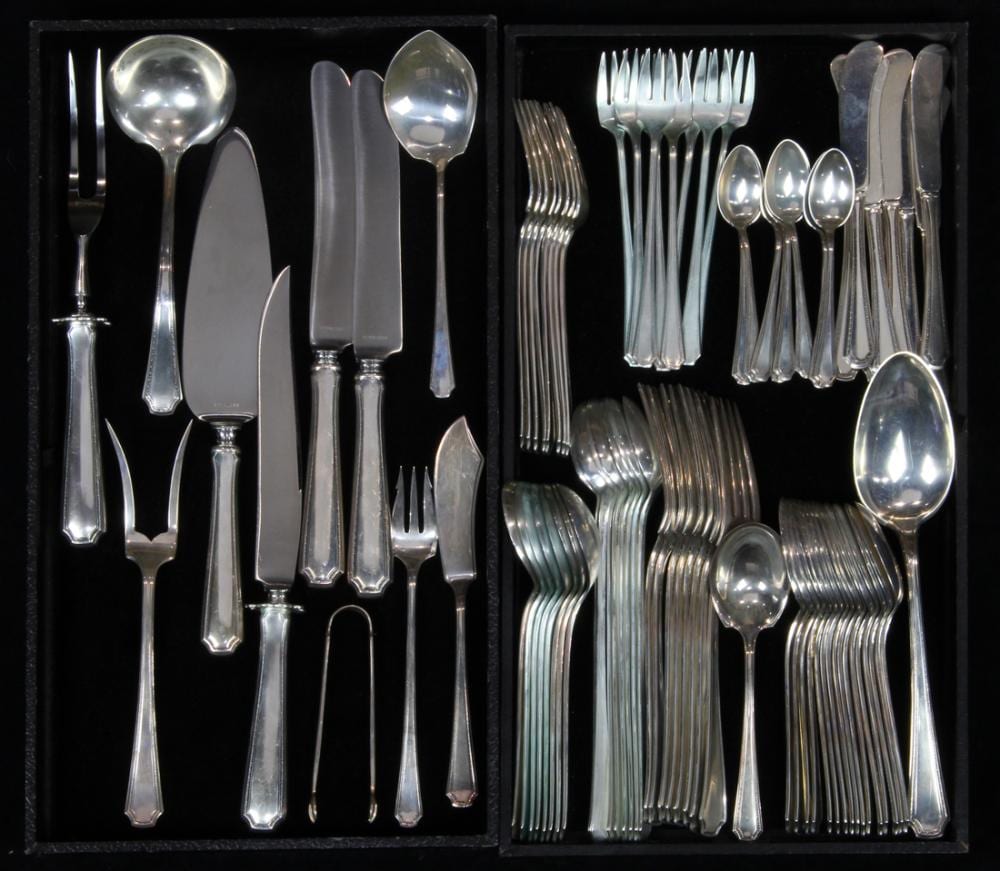 |
(lot of 87) Towle sterling silver flatware service in the "Lady Constance" pattern, consisting of (8) soup spoons, (8) ice tea spoon... | Clars Auctions | 2019-07-14 | 2724 | USD 922 |
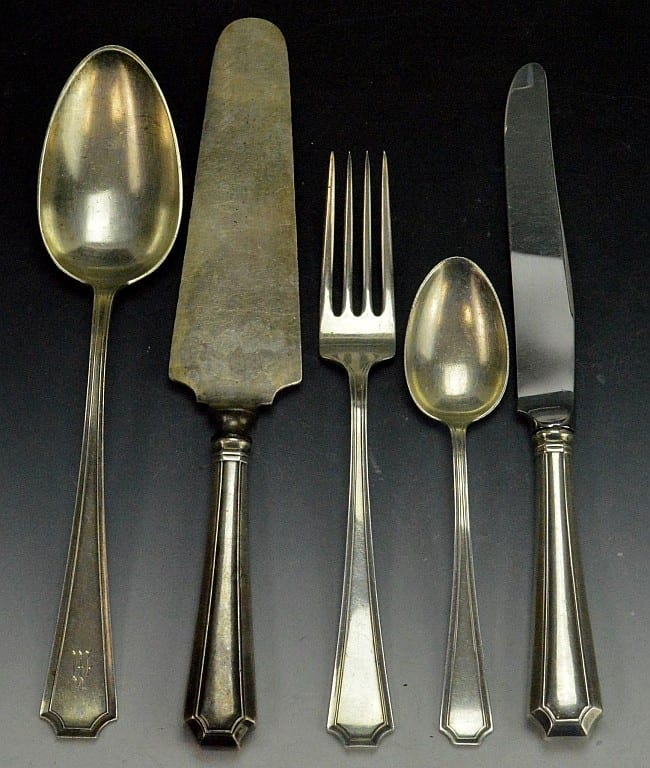 |
Gorham Sterling Silver Flatware Service | Searchlight / Saucon Valley Auctions | 2015-03-28 | 469L | USD 400 |
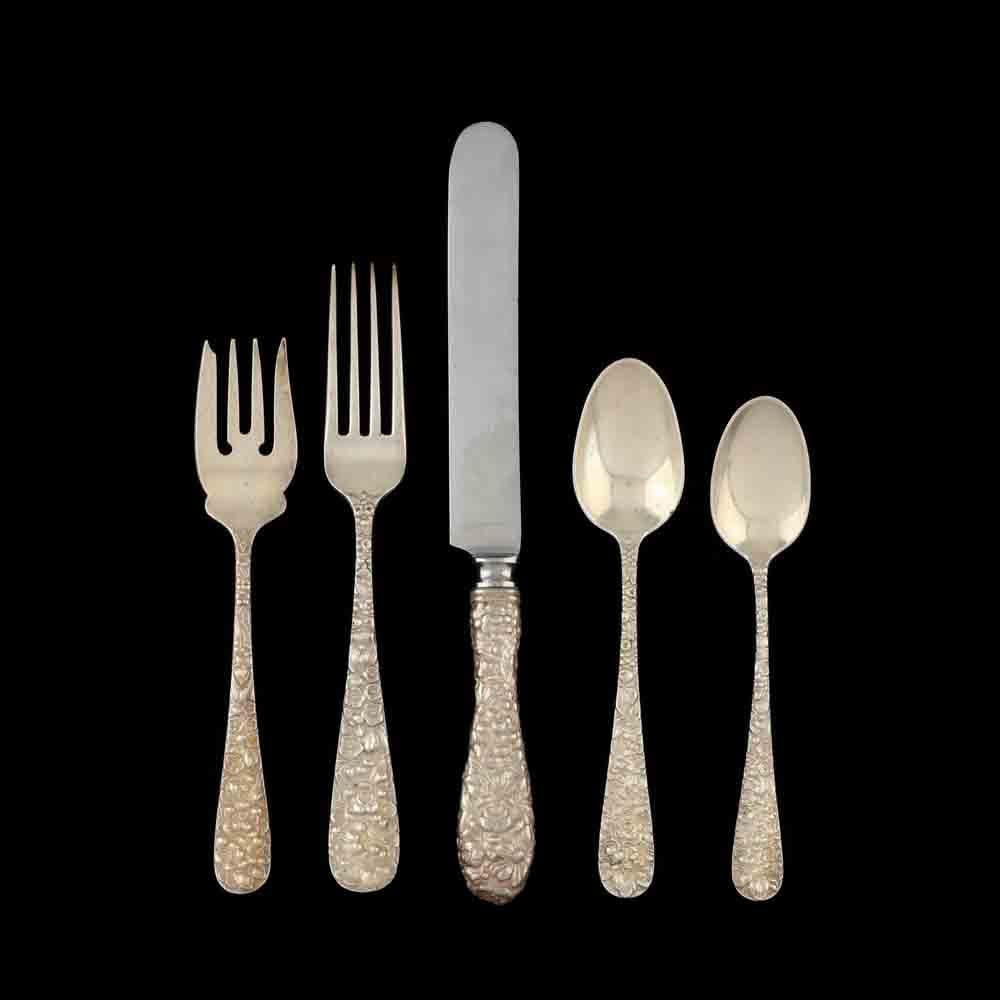 |
Stieff "Rose" Sterling Silver Flatware Service | Leland Little Auctions | 2020-09-19 | 417 | USD 1,800 |
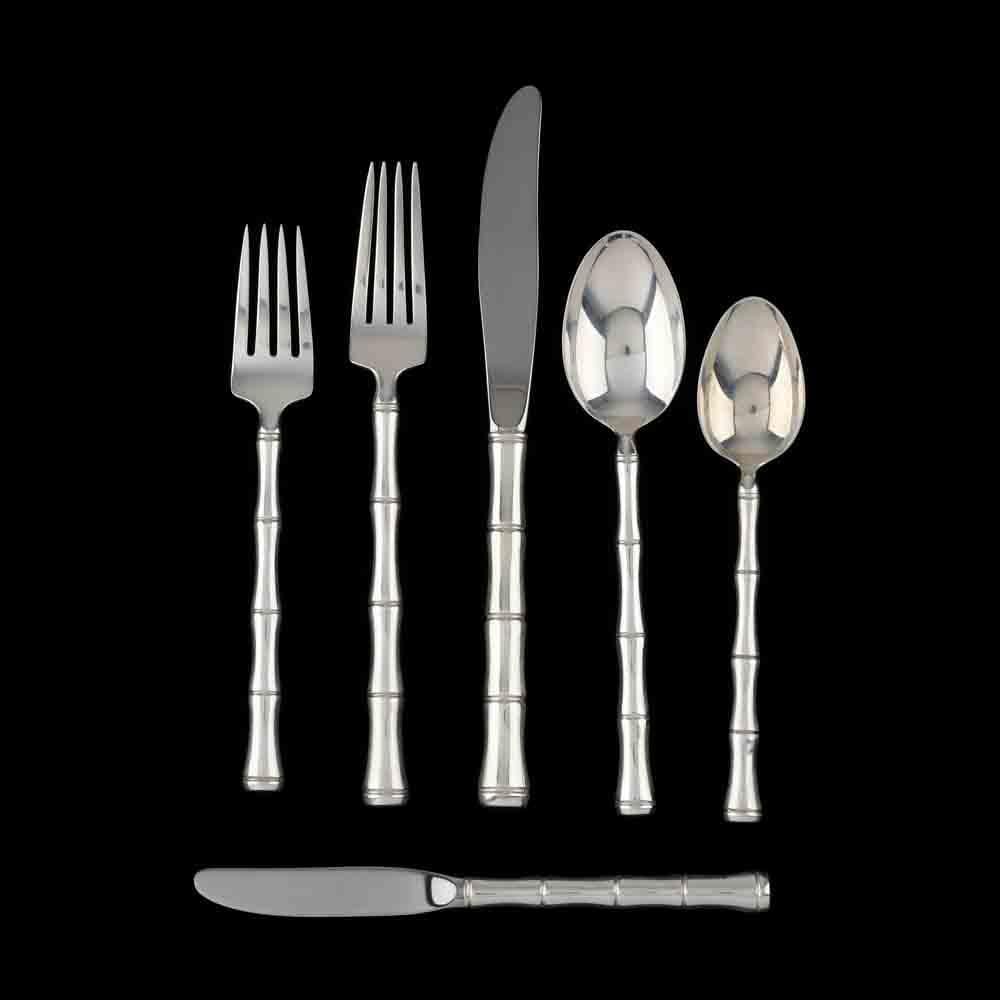 |
Towle "Mandarin" Sterling Silver Flatware Service | Leland Little Auctions | 2020-09-24 | 1275 | USD 2,200 |
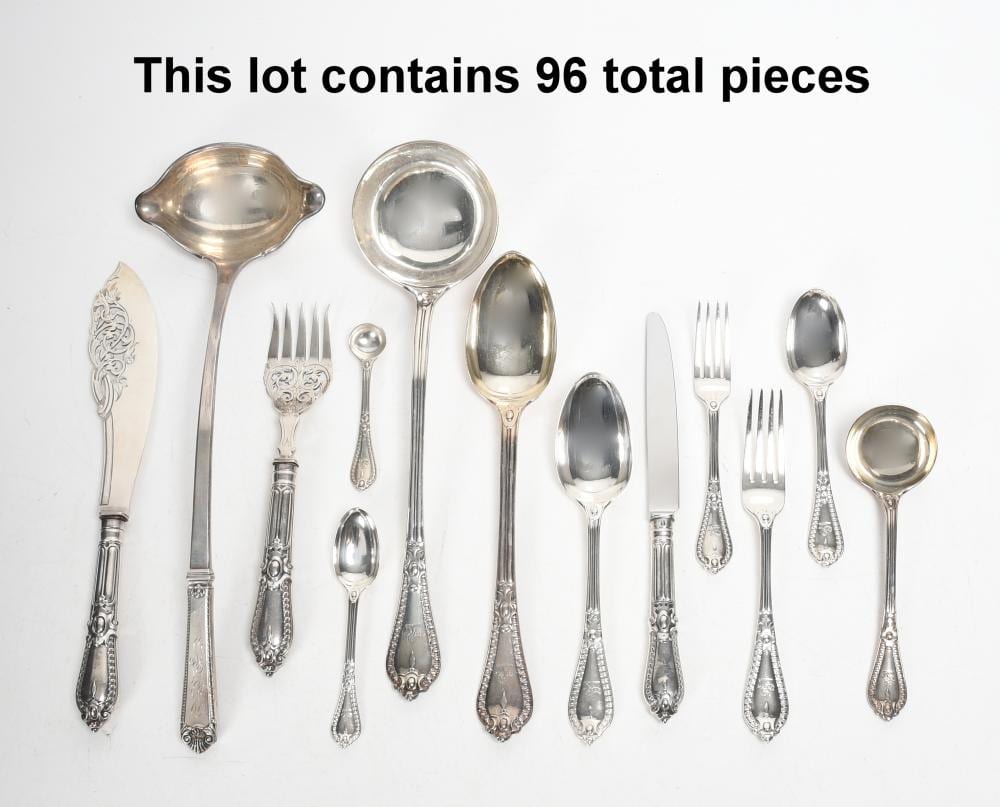 |
A Sterling Silver Flatware Service, London 1863 | Locati LLC | 2024-11-17 | 132 | USD 4,200 |
How these auction records were verified
These sales are market context, not an object estimate.
Each row retains its exact source URL, lot identity, retrieval time, access result, and immutable record hash. Live source access was blocked; the exact record matched Appraisily's immutable pipeline provenance. Inspect the public comparable provenance record.
When a flatware service needs a signed appraisal
A sold-lot table is useful market context, but it is not a signed appraisal or a promise of a selling price. A formal report can make sense when the service is being insured, included in an estate, donated, or otherwise needs documented scope and value. For ordinary collector research, start by documenting the item and reviewing close comparisons.
Need documentation for a specific purpose?
A standard signed appraisal is $59. Delivered within 24 hours of receiving your photos.
Start a signed appraisalIf you are comparing several household objects at once, our antiques appraisal services guide can help you decide which information to gather first.
Flatware value questions to take to your inventory
- How much is a sterling flatware service worth?
- How do I value a Towle flatware service?
- Does a flatware chest add value?
- What if my sterling service has missing pieces?
- How do I compare a flatware service to auction sales?
- Should I weigh sterling flatware with knives included?
Flatware service value FAQ
Is sterling flatware always worth more than silver plate?
Sterling usually has a precious-metal component, while silver plate is a base metal with a thin silver coating. Maker, pattern, completeness, condition, and buyer demand can still make the selling outcome vary.
Do missing pieces reduce flatware service value?
Often, especially when a service no longer covers its stated number of place settings or loses useful serving pieces. Inventory every piece before comparing it with a sold lot.
Should I weigh a flatware service before seeking a value?
A total weight can be useful context for sterling, but it should be paired with a piece count, maker or pattern details, and notes about hollow-handle knives or non-silver components.
When is a signed flatware appraisal useful?
A signed appraisal can be useful when a value needs to be documented for insurance, estate planning, donation, or another formal purpose. The needed scope depends on the intended use.