Baseball Card Value Guide: appraisal and value basics
Baseball Card Value Guide research should start with identification, condition, provenance, and item-specific market evidence. Use this guide to compare the signals that matter before paying for a formal appraisal or deciding whether to sell.
A baseball card’s value is not just “the player” — it’s the intersection of what you have (set/variation/rarity), what it looks like (condition), and how confidently it can trade (attribution review + grading + clear photos). If you’ve ever wondered why two “identical” cards sell for wildly different prices, this guide breaks down the mechanics.
Use this workflow: identify the exact issue, run a 10-minute condition scan, decide when grading is worth it, then sell safely with clear photos and rigid protection.
- Get precise: year + set + card # + variation + serial/auto.
- Document condition: centering, corners, edges, surface, stains.
Two-step intake
Want a condition and value range for your baseball card?
Share clear photos (front, back, and close-ups of corners/edges/surface) and we’ll estimate condition, flag alteration risks, and provide a pricing range you can use for selling, insurance, donation, or estate work.
Secure intake. Routed to the right specialist. Checkout only if you decide to proceed.
What you’re actually pricing (FMV vs insurance vs “sell it fast”)
Before you look up market evidence, decide what question you’re answering. The same card can have different “prices” depending on the goal.
| Goal | What it means | How to use market evidence |
|---|---|---|
| Fair market value (FMV) | What a willing buyer and seller agree to in an open market. | Use recent sold results for the same card and comparable condition/grade. |
| Insurance documentation | What it costs to replace a comparable item (often higher than a quick sale). | Use strong retail/comparable-sale records and document condition clearly. |
| Liquidation / sell fast | Speed-focused pricing that trades profit for certainty. | Anchor to sold market evidence, then discount for fees, shipping, and time. |
This guide focuses on FMV and realistic selling. If you need insurance or donation paperwork, a written appraisal can be worth it even when you’re not actively selling.
Step 1: Identify the exact card (year, set, variation, and format)
“Baseball card values” is really a bundle of markets. Prewar tobacco cards, postwar vintage, the overproduced “junk wax” era, and modern parallels don’t behave the same way. Start by identifying which bucket you’re in, then get precise:
- Year + set: Topps/Bowman/Fleer/Donruss/etc. (and the specific release name for modern products).
- Card number + player: verify the exact issue, not just the player.
- Variation or parallel: short prints, errors, refractors, color parallels, and serial-numbered versions can change value dramatically.
- Autograph / relic / patch: confirm it’s pack-issued; many markets treat autos and memorabilia as separate categories.
- Singles vs sets: complete vintage sets and sealed wax often have different buyers than individual cards.
If you’re unsure whether something is a true variation, photograph front/back plus any serial/hologram and verify against a trusted checklist before pricing.
Step 2: 10-minute condition checklist (the grade drivers)
Graders and buyers usually look at the same five buckets. Run this scan under bright light, then under raking light (a low-angle light source that makes surface flaws pop).
- Centering: are borders balanced left/right and top/bottom? Centering can cap top grades even on clean cards.
- Corners: check for rounding, dings, and whitening. Corners are fast “eye appeal” signals.
- Edges: look for chipping, fraying, nicks, and “too clean” edges that suggest trimming.
- Surface + stains: tilt for scratches/print lines/scuffs and note wax, gum residue, writing, or paper loss.
Avoid aggressive cleaning. Solvents and abrasion can change the surface and create an alteration problem. If you’re aiming for grading, keep handling minimal and use a sleeve + rigid holder.
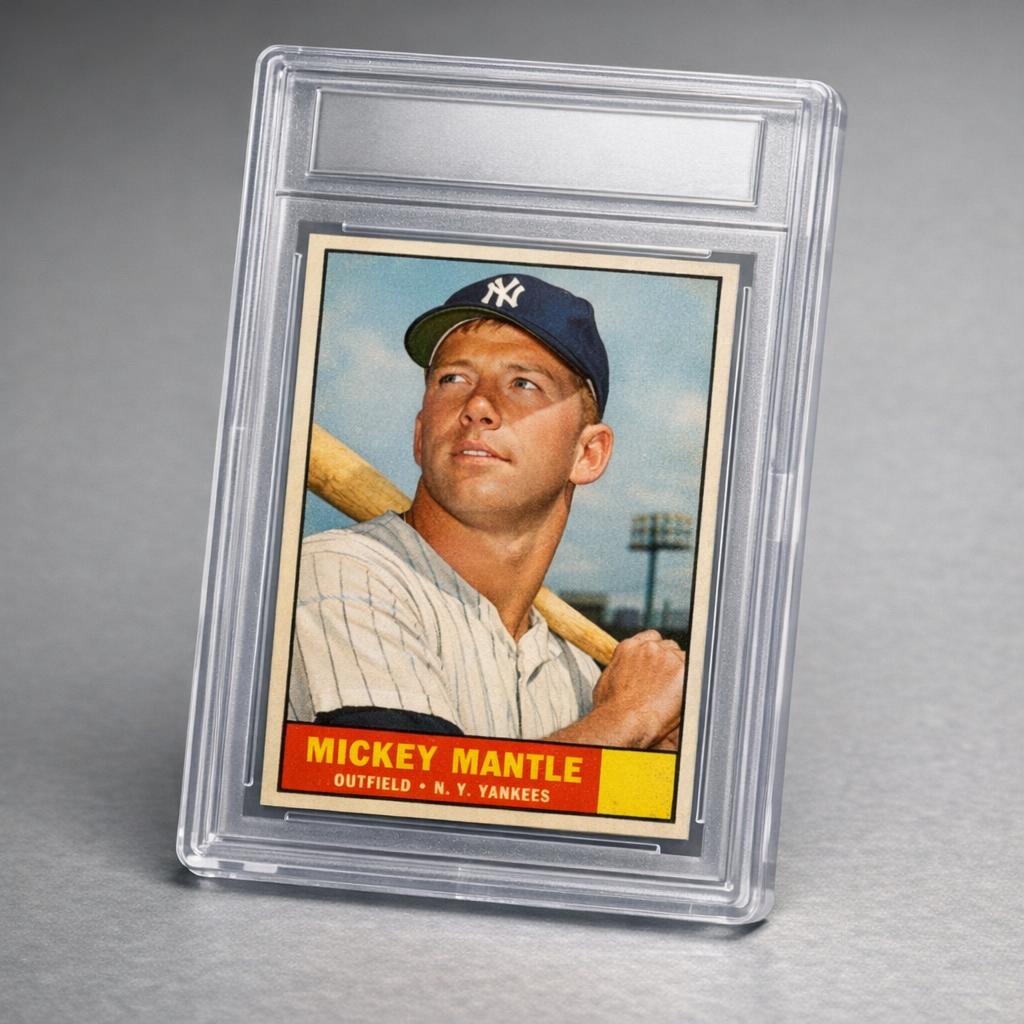
Step 3: Grading basics (PSA, SGC, BGS) in plain English
Third-party grading exists because it reduces “condition disputes.” A graded card is easier to sell at the higher end because buyers trust that a neutral party checked originality and assigned a consistent condition grade.
- PSA: often commands strong resale premiums in many baseball categories, especially for key vintage and modern chase cards.
- SGC: strong reputation for vintage; many collectors like their holders and consistent eye-appeal standards.
- BGS: often associated with subgrades (centering/corners/edges/surface) and certain modern markets.
Grading isn’t magic — it mainly boosts value by making condition comparable across sales and reducing disputes.
Quick grade bands (collector shorthand)
- 9–10: strong centering, sharp corners, clean edges, and near-flawless surface.
- 7–8: light wear (corner/edge/surface) and minor centering issues; still attractive.
- 1–6: noticeable wear (creases, stains, paper loss); value leans on rarity and demand.
Common red flags (what graders and buyers flag)
- Trimming: edges that look “too clean,” uneven, or freshly cut can lead to an “Altered” outcome.
- Color touch / recolor: marker or paint touch-up can be subtle; raking light and magnification help.
- Fake autos: autographs should be documented if the sale depends on it.
- Counterfeits and reprints: more common on high-demand vintage and certain modern chase cards.
When grading is worth it (simple math)
Grade when the expected value premium is bigger than the all-in cost (fees + shipping + insurance + time), or when you need third-party documentation for insurance, donation, or estate work.
- Grade it: key rookie / vintage star / scarce parallel + strong eye appeal + active demand.
- Consider selling raw: common card, lower demand, or major defects that cap grade.
What sells (and what tends to sit)
In most markets, the “easy sale” items share two traits: strong demand and low ambiguity. Here’s what typically moves:
- Graded key rookies and vintage stars: buyers pay for confidence, especially at higher price points.
- Scarce parallels / serial-numbered modern cards: scarcity + current player demand can create fast markets.
- Sealed wax and complete vintage sets: often sell well when originality and completeness are clear.
- Lots with clear sorting: labeled lots (team/player/year) sell better than “random box of cards.”
How to sell safely (fees, shipping, and scam-proofing)
- Pick the right venue: marketplace vs consignment/auction vs local shop (speed vs net).
- Factor fees: platform + payment + shipping/insurance can change your net.
- Photograph like a grader: front/back + corners/edges + raking-light surface.
- Ship rigid: sleeve/top loader + cardboard sandwich + tracked mail.
Photo checklist (what to capture for grading, selling, or appraisal)
- Front and back (straight-on)
- Corners and edges (macro)
- Surface under raking light
- Serial/hologram (modern) + close-ups of any disclosed defects
Image gallery: baseball card grading and condition cues
Use this gallery as a quick visual checklist of what to look for (and what to photograph) when estimating grade.
When to get a professional appraisal
- Insurance or estate: you need documented condition and a defensible market range.
- Donation/tax: fair market value work requires careful documentation and market evidence.
- Consignment/sale: an expert can flag alteration risks and help set expectations before you pay grading fees.
References & data sources
- Appraisily internal auction results (via valuer-agent). Market evidence cited: Richard L. Edwards Auctioneer lot 156A (2025-01-18); EJ'S Auction & Appraisal lots 21 and 22 (2025-01-04).
- General grading practice: defect-based assessment used by collectors and third-party grading firms, plus seller best practices for documenting condition and originality.
- PSA grading resources: https://www.psacard.com/resources/gradingstandards
- SGC grading resources: https://www.gosgc.com/grading
- BGS/Beckett resources: https://www.beckett.com/grading
Search variations collectors ask
Readers often Google:
- is it worth grading baseball cards before selling
- baseball card condition checklist (centering, corners, edges, surface)
- how to spot a trimmed baseball card edge
- PSA 9 vs PSA 10 price difference (why it’s so big)
- how to value vintage Topps baseball cards by condition
- what baseball cards sell best (rookies, parallels, sets, sealed wax)
- how to photograph baseball cards to avoid returns
- best way to ship baseball cards safely
- how to price a complete vintage baseball card set
Each question is answered in the checklist, grading notes, and photo workflow above.


