Early 20th-Century French Dining Set Guide: appraisal and value basics
Researching an early 20th-century French solid wood dining room set should start with identification, condition, provenance, and relevant market context. Use this guide to organize the evidence before paying for a formal appraisal, insuring the object, or deciding whether to sell.
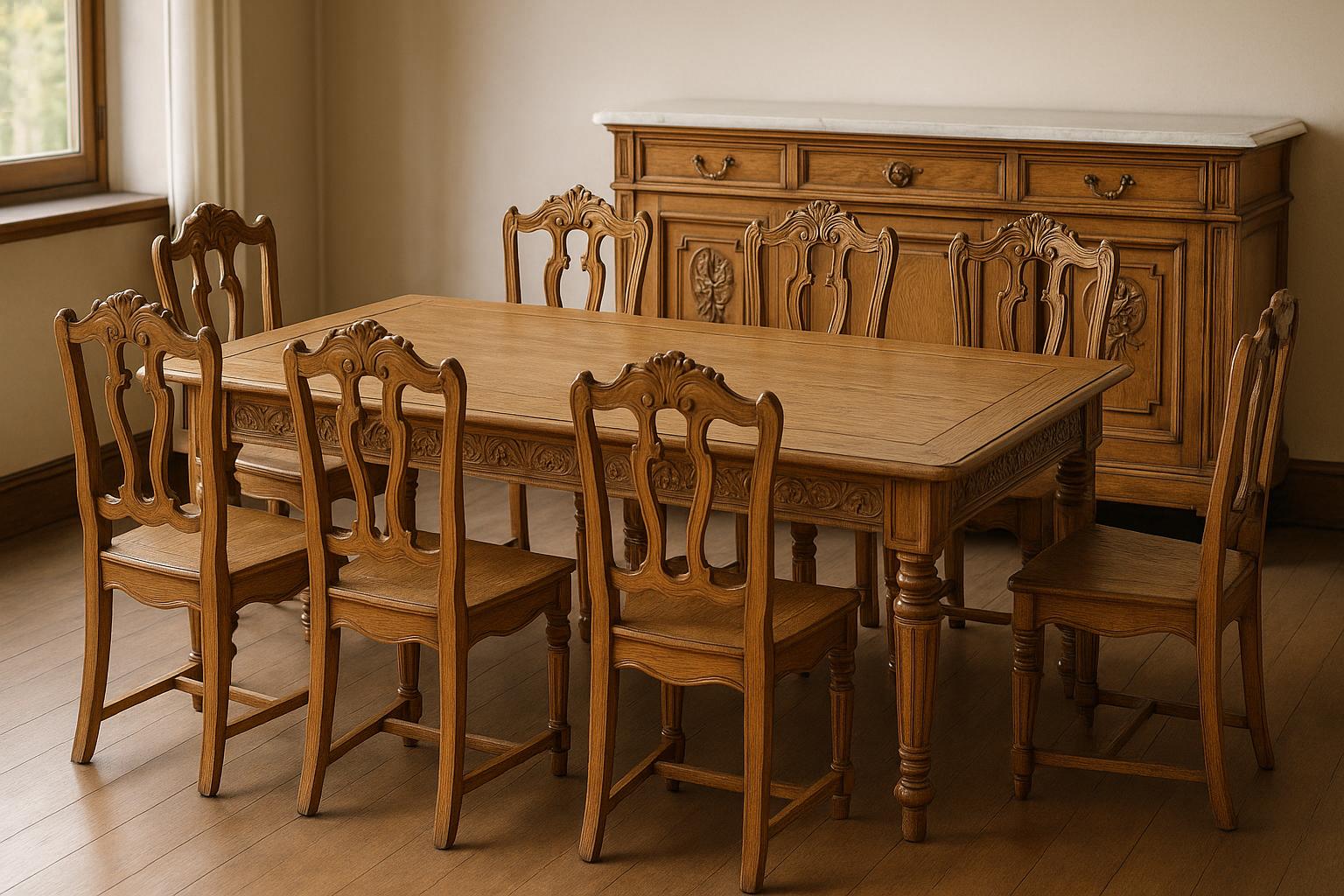
When people say “French dining room set” they can mean everything from a rustic French Provincial oak suite to a signed Art Nouveau designer set. If yours is described as solid wood (often oak), hand carved, and dated to the early 1900s—with a possible marble-topped buffet or server—your value is mostly driven by originality, condition, and how well the pieces match as a set.
This article explains how to confirm what you have, what collectors and buyers pay for comparable sets at auction, and the practical steps to document it for sale, insurance, or an estate.
Photo review
Get the right appraisal for your situation
Send photos of the table underside, chair backs/legs, any stamps, and the buffet (including the marble top). We’ll confirm style and age, flag later hardware or repairs, and provide a market range based on current market evidence.
Secure photo review. Checkout only if you decide to proceed.
How We Research Valuation Data
Our appraisal guides are based on auction results, dealer pricing data, and professional appraiser insights. We may earn a commission when you use our free professional appraisal service. Learn about our editorial standards.
Quick value snapshot: what similar sets sell for
A typical early-20th-century French Provincial or Louis XV Revival dining suite (table + 6 chairs, sometimes with buffet) often trades in the low-to-mid four figures depending on condition, finish, and whether the set is complete.
- Local pickup / estate sale pricing: often lower because shipping furniture is expensive.
- Retail/antique mall pricing: can be 2× to 4× auction, especially if refinished and staged.
- Designer/maker pieces: signed sets (e.g., Majorelle) can be dramatically higher.
How to identify an early-1900s French dining room set
Many “early 20th century” French sets are revival styles made around 1900–1930, inspired by earlier Louis XV/Louis XVI forms. The best way to narrow the age is to look at construction details (joinery and hardware) together with design cues.
Common style labels you may see
- French Provincial: rural-inspired forms, often oak, with carved rosettes, cabriole/turned legs, and warm patina.
- Louis XV Revival: curvier profiles (cabriole legs, shell/rocaille carving), often from 1890–1930.
- Louis XVI Revival: straighter lines, fluting, medallion backs, ribbon-and-tie motifs.
- Victorian-influenced export pieces: heavier carving and darker finishes for overseas markets.
Wood species: “solid oak” is a good sign, but confirm
Oak is common in French Provincial sets, but sellers sometimes call anything brown “oak.” Look at the open pores and ray fleck in quarter-sawn oak. Walnut and fruitwoods also appear in French furniture, especially in higher-end or regionally specific pieces.
Marble top on the buffet/sideboard
A marble top (often white or light gray) is a strong visual cue for French buffet/servers from the late 1800s through early 1900s. Chips, cracks, and replaced marble matter: intact original marble boosts desirability, while replaced stone can signal heavy restoration.
Originality checklist (what to photograph for an appraisal)
You don’t need a maker’s mark to value a French set, but you do need documentation. Take a photo set that includes:
- Underside joinery: rails, corner blocks, and how the table base is attached.
- Hardware close-ups: hinges, screws, locks, and pulls (especially on a buffet/sideboard).
- Chair construction: underside of seats, stretchers, and any wobbly joints or repairs.
- Signs of veneer: edge banding, grain direction changes, and thin lifted areas.
- Any stamps/labels: inside drawers, underside of table tops, or on the back of the buffet.
Condition factors that move value the most
For dining sets, condition is often more important than age because the set must be functional. Buyers pay for stability and a consistent finish.
- Loose chair joints: common; professional regluing is normal, but repeated repairs can reduce value.
- Refinishing: a sympathetic refinish may help retail appeal; a heavy sand-and-stain job can erase carving detail and patina.
- Upholstery/rush seats: replacement is expected, but mismatched seats lower the “set” premium.
- Marble damage: chips at corners, cracks over stress points, or replaced slabs change the price quickly.
- Missing pieces: a buffet without original pulls, or a set missing chairs, is valued as components rather than a suite.
Use market evidence carefully
Use outside sale records only when artist, medium, size, editioning, condition, and venue are genuinely comparable. For this sculpture, prioritize item-specific photos, signatures, material, base details, and provenance notes before drawing market conclusions.
How to estimate your set’s value (a practical method)
If your set is unsigned and in the French Provincial/Louis Revival category, a practical way to estimate value is to score four variables and adjust your range.
| Variable | What raises value | What lowers value |
|---|---|---|
| Completeness | Table + 6–10 matching chairs + buffet/server | Missing chairs; mixed styles/woods |
| Construction | Solid wood, tight joinery, crisp carving | Loose joints, later fasteners, warping |
| Condition | Stable, clean finish, intact marble | Major repairs, veneer loss, cracked marble |
| Provenance / maker | Stamped maker, documented origin, designer | No documentation (common; not fatal) |
Selling options (and what to avoid)
Shipping is the biggest friction point for dining sets. Your best outcome depends on how you plan to move the suite.
- Local sale (Marketplace / estate liquidator): fastest; expect lower prices but fewer logistics.
- Regional auction: good for signed makers or complete suites; auction houses can arrange movers.
- Consignment shop: higher asking prices, longer timeline; confirm pickup fees and consignment percentages.
Avoid “quick fixes” that can backfire: aggressively sanding carvings, painting over original finishes without documentation, or replacing all hardware with modern pulls. When in doubt, document first and restore second.
Search variations collectors ask
Readers often Google:
- early 20th century French dining room set value
- French Provincial oak dining table and chairs appraisal
- how to tell if a French buffet marble top is original
- Louis XV revival dining set worth and dating
- Louis Philippe dining chairs value at auction
- best way to sell a heavy antique dining set locally
- do refinished French oak dining sets lose value
- how to identify solid oak vs veneer on antique furniture
Each question is answered in the valuation guide above.
References & further reading
- Victoria and Albert Museum (V&A): decorative arts articles
- Smithsonian Museum Conservation Institute (collection care)
- British Museum collection database (design context)
Wrap-up
An early-20th-century French solid-wood dining room set can be a strong, usable antique—especially when the set matches well and retains original details like crisp carving and an intact marble top. Document the construction and hardware, compare to real auction results, and be realistic about moving costs when you choose a selling channel.