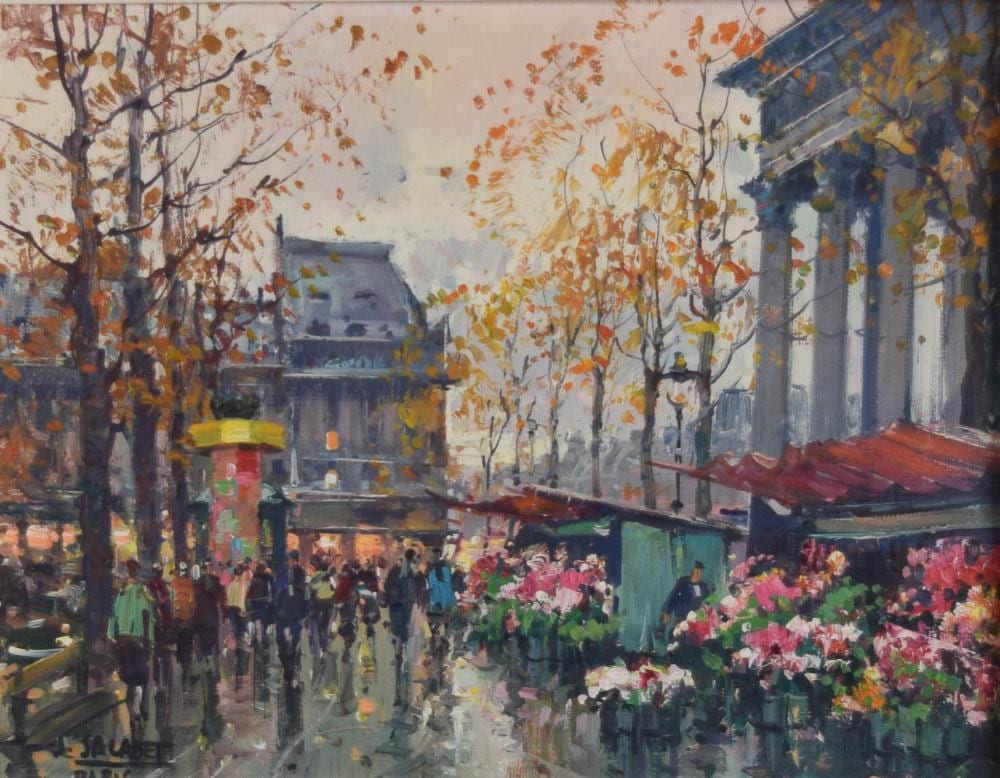
An Original Painting of Impresionist Paris Street Scene Circa Mid 20th Century: appraisal and value basics
An Original Painting of Impresionist Paris Street Scene Circa Mid 20th Century research should start with identification, condition, provenance, and recent comparable sales. Use this guide to compare the signals that matter before paying for a formal appraisal or deciding whether to sell.
An Original Painting Of Impresionist Paris Street Scene Circa Mid 20th Century
Mid-century “Impressionist” Paris street scenes occupy a fascinating niche: nostalgic, atmospheric views painted decades after the original Impressionist movement, yet executed with lively brushwork, glowing lights, and wet pavement reflections that collectors love. Whether your goal is identification, authentication, valuation, or conservation, this guide will help you evaluate an original painting from this popular category with confidence.
Note: the standard spelling is “Impressionist,” but period labels and catalog entries sometimes show variations.
Defining the Genre and Period
When collectors describe an “Impressionist Paris street scene, mid-20th century,” they usually mean an oil painting produced roughly 1945–1975, often by French or School of Paris artists channeling late-19th-century effects—broken color, optical light, and lively street life—rather than strictly adhering to the historical Impressionist canon of the 1870s–1880s.
Common motifs and cues:
- Settings: Boulevards lined with Haussmannian buildings; the Opéra, Notre-Dame, Place de la Concorde, Arc de Triomphe, café terraces, and flower markets.
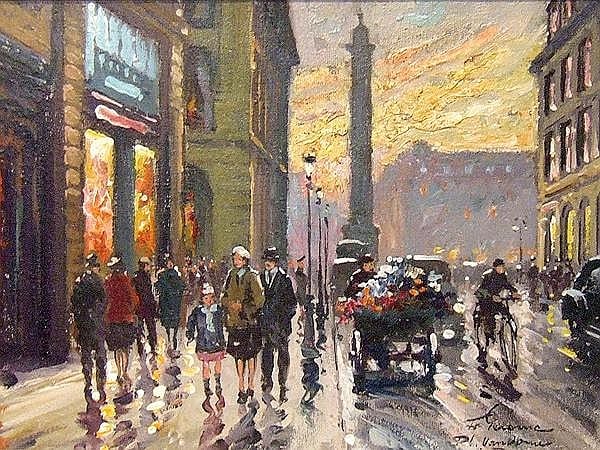
- Atmosphere: Drizzly or twilight scenes with lamp glow; puddle reflections; briskly suggested figures with umbrellas; horse-drawn carriages occasionally included for Belle Époque ambience.
- Technique: Lively, visible strokes or palette-knife impasto; warm greys; cadmium highlights; strong titanium white accents; jewel-like storefronts and café awnings.
- Sizes: French standard formats (e.g., 8F, 10F, 12F), often in landscape orientation for boulevards.
While painted mid-century, these pictures are nostalgic by design. Many originated in Montmartre studios or from street painters working around Place du Tertre for a growing tourist and export market. Others were produced by trained artists with gallery representation and well-documented careers.
Dating Clues: Supports, Pigments, and Varnish
Identifying materials and construction is the quickest route to confirming a mid-20th-century origin. Look for the following:
Supports and grounds
- Canvas vs. canvas board: Cotton canvas and commercial canvas panels became common after the 1930s; many mid-century Paris scenes are on panel or Masonite. True linen is possible, but cotton predominates in lower- to mid-tier works.
- Canvas fasteners: Staples on the stretcher typically indicate post-1950s manufacture; pre-1950 lean toward tacks. Exceptions exist, but it’s a useful directional clue.
- Stretcher bars: Machine-cut, keyable stretchers with beveled edges are expected. Absence of keys on a mid-century linen painting may indicate later re-stretching or lower-cost manufacture.
- Ground/priming: White, commercially prepared grounds are common. Acrylic-primed canvases (bright, even white) become more prevalent post-1950s; oil-primed grounds can show warmth and absorbency.
Pigments and paint handling
- Titanium white: Widely adopted by the 1920s–30s; mid-century paintings typically favor titanium white highlights over the creamier tonality of lead white.
- Modern pigments: Phthalocyanine blues/greens (post-1930s, broadly used after WWII) and azo yellows/naphthol reds are consistent with mid-20th-century palettes. Intense, synthetic “electric” blues and greens are clues to a post-1935 palette.
- Impasto: Palette-knife ridges that carry pigment across edges are difficult to fake convincingly; look for peaks and broken edges, not uniform surface texture.
Varnish and surface
- Natural resin varnishes (dammar) yellow with age and tend to fluoresce greenish under UV. Some mid-century works have non-fluorescing synthetic varnishes.
- Nicotine films are common; a warm, sticky surface that swabs brown with saliva on a cotton swab suggests tobacco or kitchen grime, typical of European interiors mid-century.
- Craquelure: Zinc-white-rich grounds can cause fine, brittle cracking; localized cupping or cleavage is possible, especially on panel edges.
Labels and stamps
- French-size notations (e.g., 10F, 12P) stamped on the stretcher or verso are period-consistent.
- Retailer/framer labels (e.g., Montparnasse frame shops), export stamps, or price tags in francs can support dating, though frames are sometimes reused.
Attribution and Authenticity: From Montmartre Painters to Named Artists
The spectrum runs from anonymous Montmartre painters to highly collected names. Distinguish between:
- Anonymous or workshop production: Sold to tourists and galleries, often in series. Quality varies, but many are charming originals with modest market values.
- Pseudonymous or studio brands: Some mid-century artists produced large bodies of Paris scenes under consistent signatures and stylistic formulas.
- Named artists with strong markets: Painters such as Edouard Cortès and Antoine Blanchard (pseudonym of Marcel Masson) specialized in Paris street scenes; both have active markets and many imitators. Earlier artists often emulated include Eugène Galien-Laloue and, more distantly, Utrillo and Gen Paul.
Signature scrutiny
- Placement: Lower right is common; mid-century hands often have a practiced, legible script designed to be seen.
- Paint integration: A genuine signature sits within the paint layer and shows age continuity; added signatures often sit on top of varnish, have different fluorescence under UV, or look tonally “fresh.”
- Known variants: Some artists changed signatures over decades; compare letterforms and diacritics to documented examples. Be wary of “Cortès” with awkward accenting or spacing and of “Blanchard” with uncertain, tremulous strokes.
Original vs. print or reproduction
- Loupe test: Offset prints show halftone dots; giclées reveal uniform micro-spray patterns. Original oils show chaotic, non-repeating pigment particles and brush/knife striations.
- Impasto edges: True impasto rises above the surface; textured prints often have uniform “goop” with shallow relief that stops abruptly at imagery edges.
- Signature edges: Printed signatures have dot patterns and flat sheen; a hand-signed overprint glistens differently and may lie atop a varnished surface.
- Verso clues: Oil seepage near tacking edges on canvas (especially linen) and aged panel backs support originality. Factory-printed backings or uniform foam cores suggest later reproductions.
Provenance and documentation
- Gallery invoices, export receipts, and exhibition tags are powerful. Keep all paperwork and refrain from removing old labels or stamps from frames or backs.
- Framer labels from mid-century Paris or New York dealers can corroborate date and distribution.
Condition, Frames, and Conservation Notes
Condition can swing value significantly. Common mid-century issues include:
- Surface grime and nicotine: Often removable by a trained conservator. Avoid over-the-counter cleaners; these can strip varnish or solubilize paint.
- Yellowed varnish: Professional varnish reduction can reveal original color. Testing and solubility mapping are essential; zinc-rich whites and delicate glazes need particular caution.
- Panel warping and edge cleavage: Masonite and thin hardboard are vulnerable in fluctuating humidity; local consolidation and backing strategies may be needed.
- Craquelure and cupping: Stabilization is preferred over aggressive flattening. Lead soaps and zinc issues require a conservator’s diagnosis.
- Frame condition: Montparnasse-style carved/gesso frames with grey or gilded finishes complement these works. Consolidate flaking gesso; retouch gilding minimally to preserve age. Original frames, even when shabby, can add value and context.
Handling and storage
- Keep away from heat sources and damp areas; target relative humidity around 45–55%.
- Store upright, not face-down; use corner protectors.
- Never tape the back of a canvas to “keep dust out”—it inhibits breathing and traps moisture.
Market Values and What Drives Price
Price depends on a stack of factors, not just a signature. Consider:
Primary drivers
- Artist attribution: Anonymous mid-century Paris scenes can bring a few hundred to a low few thousand, depending on quality, size, and condition. Named artists command multiples.
- Size and format: Larger French sizes in popular ratios (10F–15F and up) generally perform better, if quality is consistent.
- Subject and mood: Dusk and rainy scenes with busy figures, glowing storefronts, and recognizable monuments typically outpace bright midday views with sparse figures.
- Quality: Layering, confident drawing, integrated light sources, and convincing reflections separate strong works from formulaic, flat examples.
- Condition: Clean surfaces, stable paint, and original frames lift results; heavy overcleaning, large retouches, or warping depress value.
- Provenance: Gallery labels, period invoices, or documented exhibition history add confidence and price resilience.
Indicative ranges (broad, condition-dependent)
- Anonymous or workshop Paris street scene, oil on panel/canvas, mid-20th century: roughly $200–$1,500.
- Solid, distinctive hand with good scale and strong composition but limited name recognition: roughly $1,500–$4,000.
- Antoine Blanchard: often mid four figures to low five figures, depending on size, subject, and period.
- Edouard Cortès: routinely five figures; exceptional subjects/sizes can reach higher.
- “After” works (copies) or overpainted prints: significantly less than originals; often under $500 unless decorative framing adds retail appeal.
Costs to factor
- Conservation: Cleaning and minor stabilization might run a few hundred to a few thousand, depending on complexity.
- Framing: Restoring a Montparnasse frame can be cost-effective versus replacing it.
- Selling fees: Auction commissions, shipping, and insurance affect net proceeds.
Practical Appraisal Checklist
- Confirm it’s a painting, not a print: loupe for dot patterns; check impasto and brush ridges.
- Inspect signature integration: under magnification and UV; look for signatures on top of varnish.
- Check support: canvas, canvas board, or Masonite; note staples vs. tacks and French size stamps (e.g., 10F).
- Scan for labels: gallery/framer labels, export stamps, and notations; photograph and leave undisturbed.
- Evaluate palette: presence of titanium white and modern blues/greens supports mid-20th-century dating.
- Assess surface: nicotine and yellow varnish common; avoid DIY cleaning.
- Check condition: warping, craquelure, cupping, flaking, and retouches (UV can reveal overpaint).
- Frame review: period Montparnasse or French carved/gilded frames add value; record dimensions and condition.
- Subject strength: rainy/twilight scenes with active figures and landmarks tend to perform best.
- Quality indicators: confident drawing, layered lights, convincing reflections; beware stiff, formulaic repeats.
- Provenance: invoices, customs papers, exhibition tags; scan and keep with the work.
- Comparable sales: consider artist, size, condition, subject, and region; adjust for restoration needs and fees.
- Professional opinion: for named artists or high-value candidates, seek a conservator’s condition report and a specialist’s attribution review before selling or restoring.
What similar items actually sold for
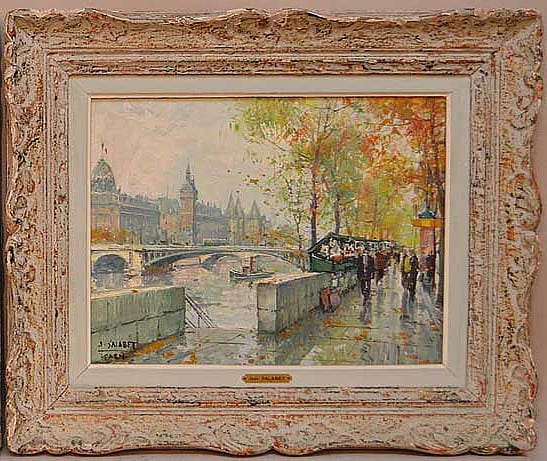
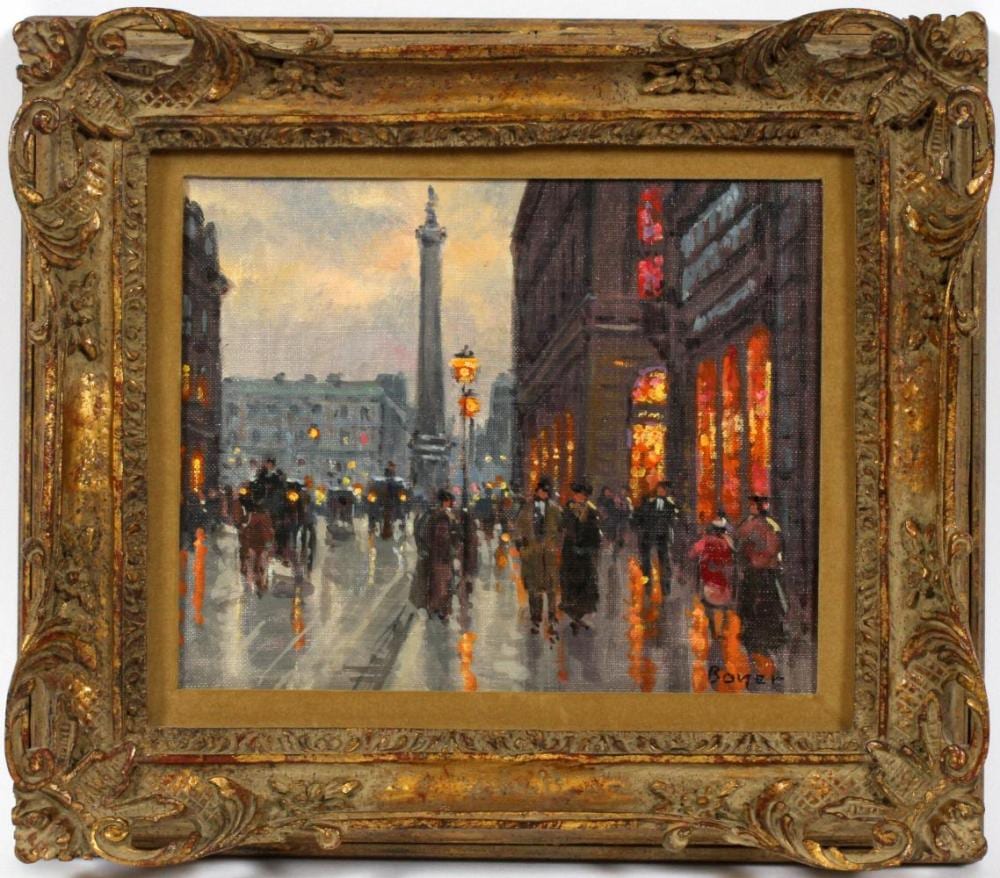
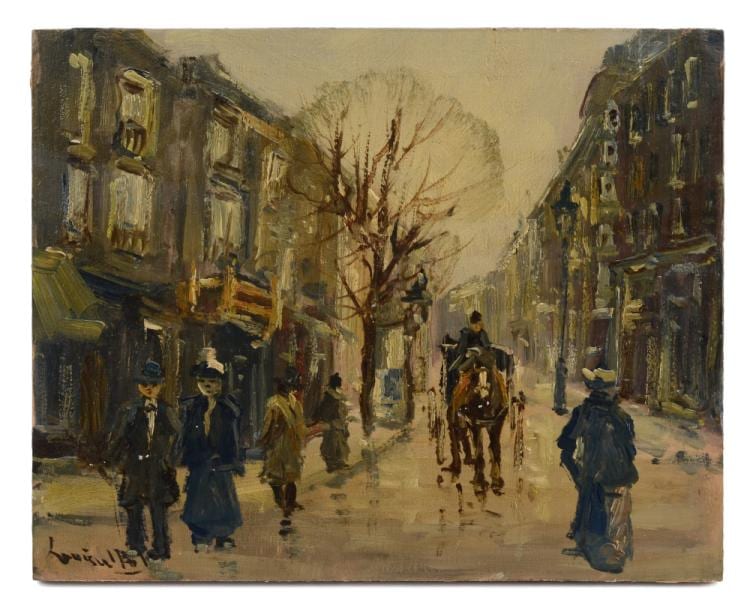
Real auction sales of items like your paris street scene. Open a sale to see the original listing.
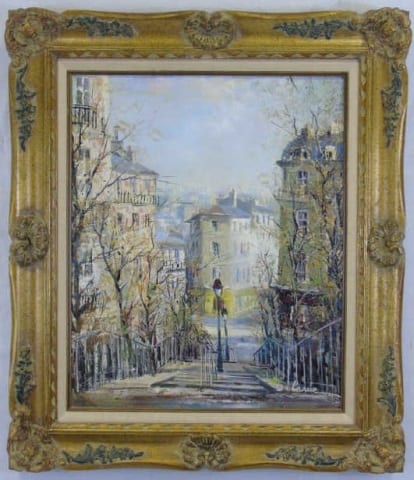
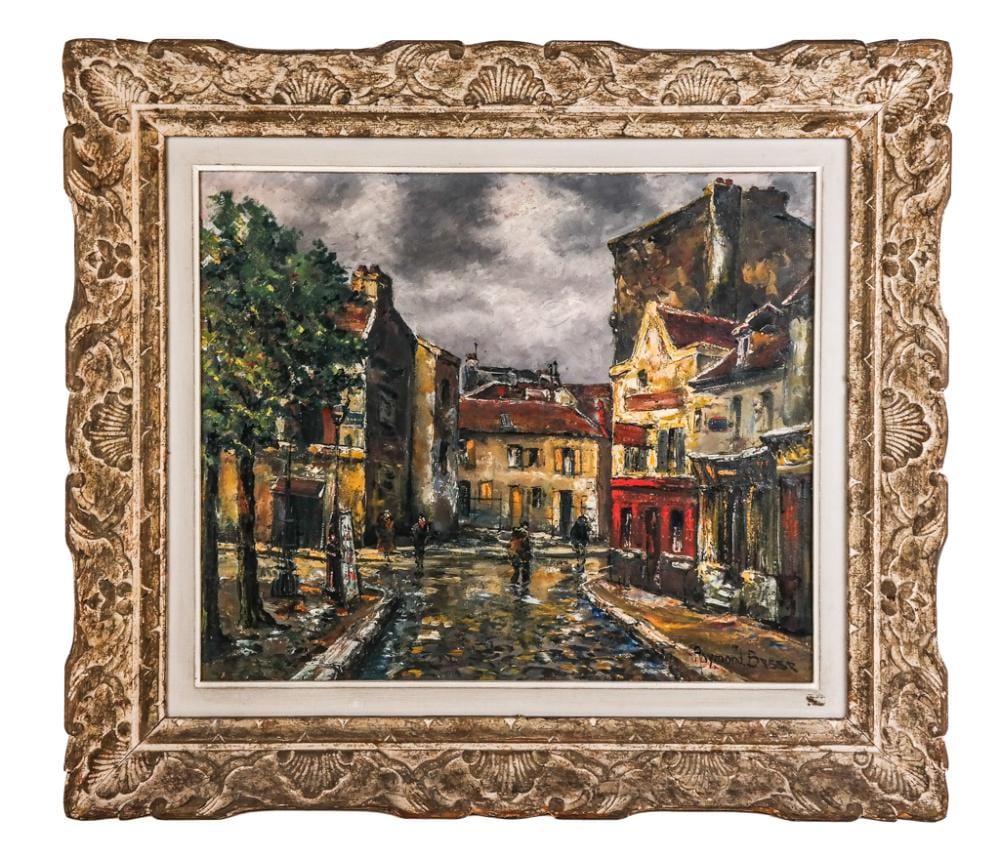
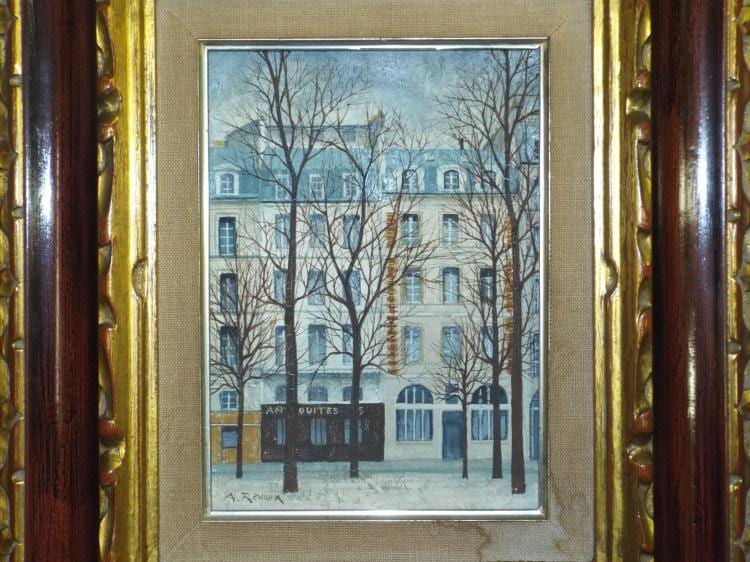
Shown USD range: USD 175-USD 1,300. Median of these 11 USD examples: USD 425.
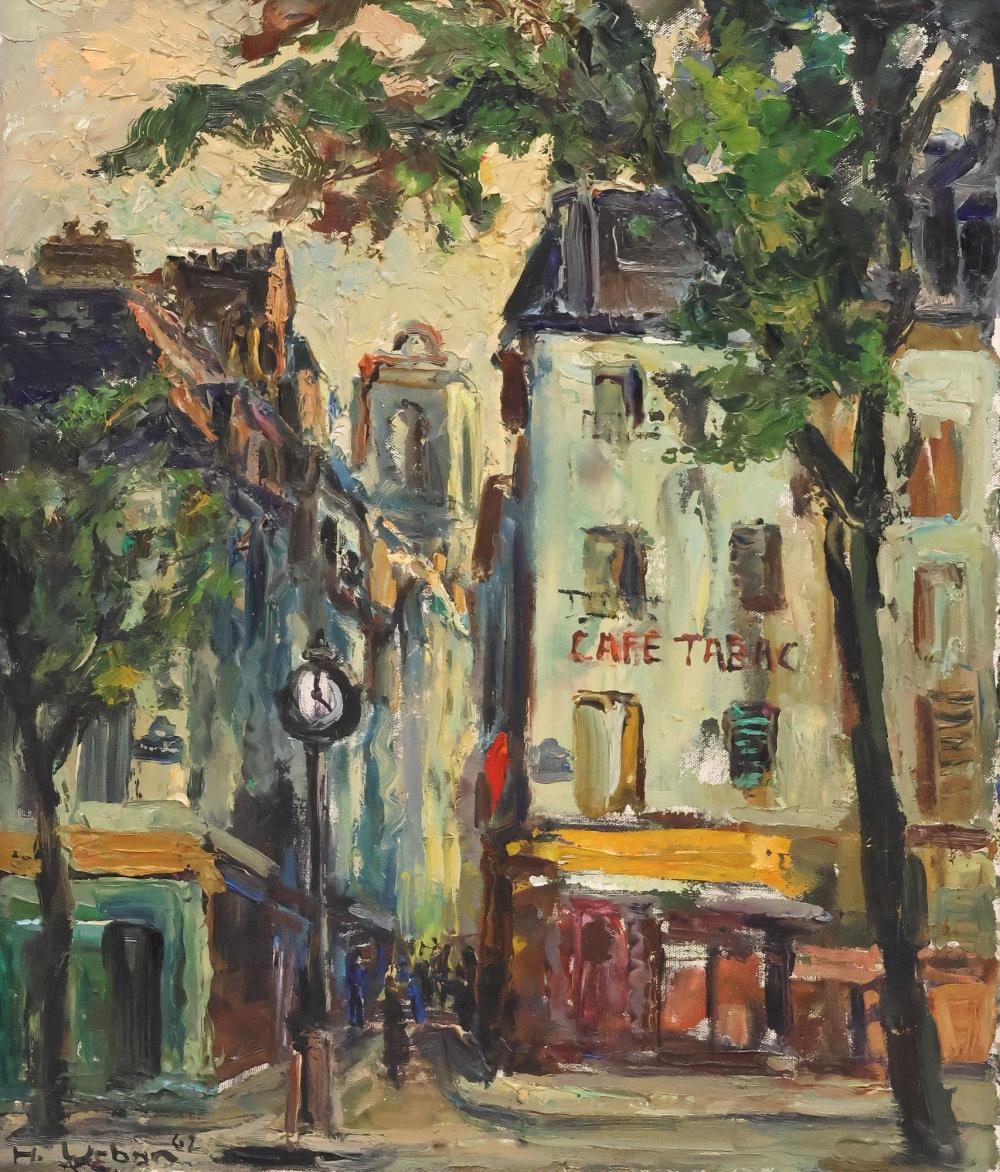
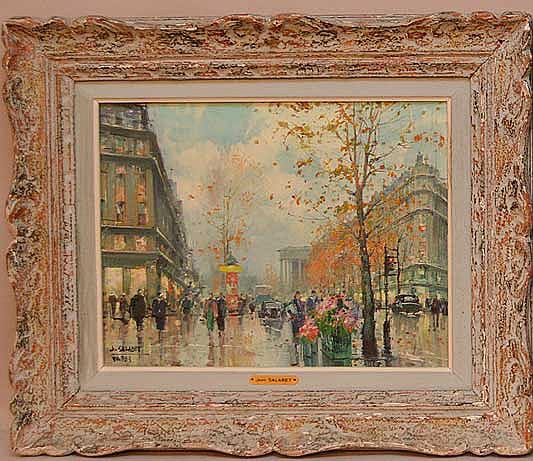
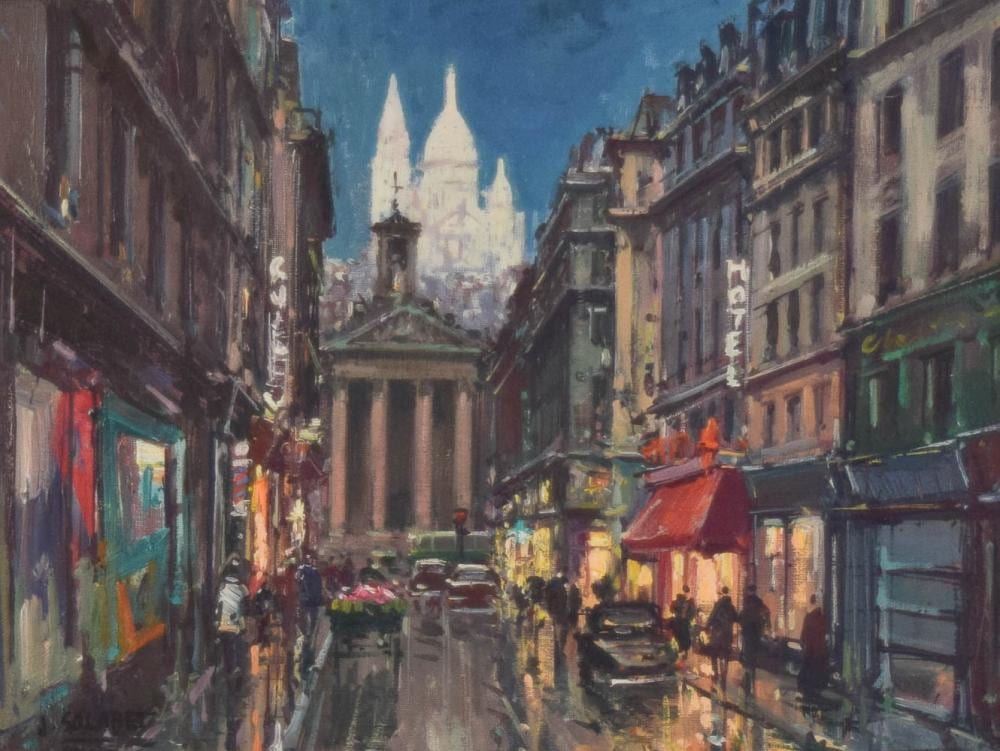
How these auction records were verified
These sales are market context, not an object estimate.
Each row is tied to its lot identity, retrieval time, access result, and immutable record hash. Live source access was blocked; the exact record matched Appraisily's immutable pipeline provenance. Inspect the public comparable provenance record.
Free photo check
Not sure if your painting is worth appraising? Let us take a look.
Upload a photo, tell us what you know, and get a free photo check. If a full appraisal makes sense, we will say so.
Free. No card needed. Takes about two minutes.
FAQ
Q: How can I quickly tell if my Paris street scene is an original painting or a reproduction? A: Use a 10x loupe. Originals show irregular pigment particles, distinct brush or knife striations, and varied gloss. Prints reveal uniform dot or spray patterns. Check the impasto—real paint stands proud of the surface and continues over underlying layers; textured prints often have shallow, uniform relief. Examine the signature edges and sheen.
Q: Is it safe to clean the yellowed varnish myself? A: No. Varnish and grime can look similar, and solvent action on zinc- or lead-sensitive passages can cause irreversible damage. A conservator can perform small-area tests, map solubility, and reduce varnish safely.
Q: Does the frame matter to value? A: Yes. Period frames—especially Montparnasse-style carved/gesso frames—complement these works and can add meaningful value and desirability. Preserve labels and inscriptions; avoid aggressive re-gilding.
Q: What do size markings like 8F or 10P mean? A: They are French standard sizes: F (Figure), P (Paysage/landscape), M (Marine). The number indicates the scale. A 10F, for example, is a common mid-size used for boulevard scenes.
Q: Are rainy, twilight scenes worth more? A: Often, yes. Collectors prize the glow of lamps and reflections on wet streets. Recognizable monuments, denser figures, and a strong color temperature shift (warm lights against cool greys) tend to enhance value.
With a structured review of materials, technique, provenance, condition, and comparables, you can place an original mid-20th-century Impressionist Paris street scene in its proper context and make sound decisions about care and value.