Dolland Tuscany scene: appraisal and attribution basics
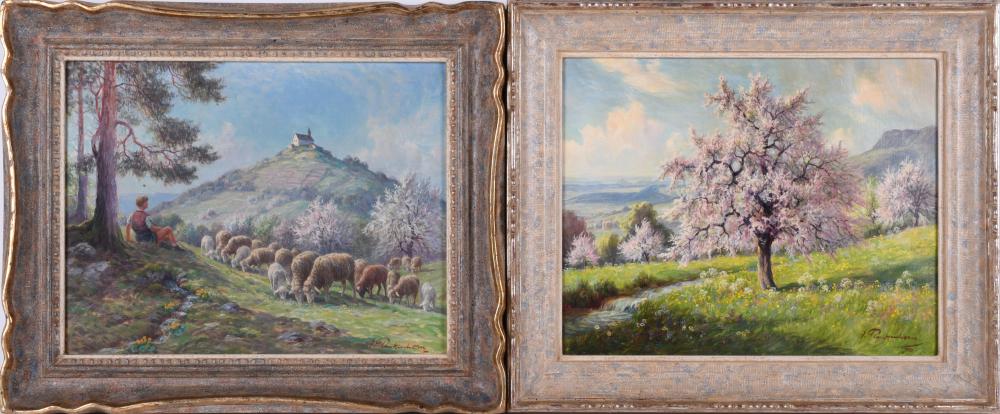
Start by treating Dolland as an attribution question, not a confirmed artist identity. Compare the paint signature, possible variants such as Dollard, Holland, Rolland, or Polland, the Tuscan landscape subject, German or Italian material clues, medium, support, condition, provenance, and market evidence that separates decorative landscapes, competent Continental School paintings, listed-artist candidates, and tourist-market work.
Dolland Tuscany Impressionist Scene Guide
Antique and art listings often compress a lot of assumptions into a few words. A description like “Dolland 20th-Century Tuscany Impressionist Scene Value Guide” is almost certainly shorthand rather than a definitive scholarly attribution. For buyers, sellers, and appraisers, decoding each piece of that phrase—while keeping an eye on materials, condition, provenance, and market data—is the key to a responsible valuation.
Below is a focused, step-by-step approach to understanding such a work, with practical indicators you can verify without a lab, and pointers on when to escalate to professional testing or scholarly review.
What the description likely means
- “Impressionist” and “Tuscany”: The misspelling suggests the text was taken from a handwritten note, auction lot card, or quick catalog entry. The intended phrase is almost certainly “Impressionist Tuscan” scene—i.e., an Italian landscape, probably featuring cypress-lined roads, hill towns, ochre farmhouses, or vineyards.
- “By Dolland”: This is presented as an artist’s name, but it may be a misread signature, a dealer’s guess, or a phonetic rendering. In many fast-turnover auction settings, “by” is used loosely; a more cautious “signed Dolland” (or “signed indistinctly”) is standard when the artist is not firmly identified.
- “20th-century” or “XXthC”: Dealer shorthand for “20th century.” It indicates an estimated date of creation, not necessarily an original period frame or first-sale date.
- “German”: Could mean several different things:
- School or origin (i.e., painted by a German artist).
- From a German collection or dealer.
- German materials (stretcher, canvas, or shop label).
- A cataloguer’s guess based on signature style or inscriptions on the verso.
Taken together, the phrase likely describes a 20th-century painting of a Tuscan view, rendered in an Impressionist idiom, bearing a signature that’s been read as “Dolland,” with some German connection. Your job is to separate what’s observable from what’s assumed.
Signature and attribution: is there a “Dolland”?
Because “Dolland” isn’t a widely recognized name in standard art dictionaries or price records, proceed with measured skepticism while keeping an open mind.
Practical steps:
- Read the signature under raking light: Tilt the painting under a strong side light to bring out raised paint and confirm letter forms. This can differentiate “Dolland” from “Dollard,” “Holland,” “Polland,” or “Rolland.”
- Check medium and tool: A signature executed in paint, forming part of the composition, is generally stronger evidence than a felt-tip or ballpoint note on the verso. A later gallery or owner inscription does not equal authorship.
- Compare letterforms: Does the first letter truly begin with a D? In cursive scripts, uppercase H, R, or P can be misread as D. Looping double-l’s can be mistaken for a long “ll” even when the name is different.
- Look for repeats: Is the name repeated on the back, a stretcher bar, or a frame plate? Are there inventory numbers, monograms, or signature variants that might resolve the reading?
- Consult local/regional references: Many competent 20th-century landscape painters were regionally active. Museum bulletins, exhibition leaflets, and city art society catalogs can surface “minor masters” not captured in global databases.
- Consider stylistic alignment: Does the brushwork, palette, and composition suggest a known circle or teacher? If you suspect a connection to a recognized school, an expert in that field may offer an attribution upgrade—or a caution.
Red flags:
- Signature sitting on top of grime or varnish rather than below it may indicate an added or “improved” signature.
- A signature unusually neat or in mismatched pigment relative to the rest of the palette.
- Frame plate with a name but no corroborating signature on the canvas.
If the signature remains unclear, catalog as “signed (indistinct), 20th-century German school, Tuscan view,” and pivot your value argument to quality, period, and market evidence rather than name.
Materials, technique, and dating clues
Most 20th-century Continental landscapes were executed in oil on canvas or panel; postwar works often appear on board or canvasboard prepared by art supply houses. The physical evidence will help you date and characterize the work.
Supports and stretchers:
- Canvas type: Handwoven linen was common earlier; cotton canvases proliferated in the mid-20th century. Machine-uniform cotton weave suggests post-1930s, often post-1950.
- Stretcher vs. strainer: Adjustable, keyed stretchers imply better workshop practice; fixed strainers are cheaper. German stretchers may bear metric dimensions and sometimes stamped words like “Keilrahmen.”
- Tacks vs. staples: Steel staples on the back generally indicate a post-1950s stretching or re-stretching; hand-cut tacks are more consistent with earlier practice (though re-stretching can confound this).
Ground and paint:
- Ground layer: A bright, uniform white ground with optical brighteners can fluoresce under UV and suggests post-1950 production. Warm, hand-brushed gesso or tinged primings can indicate earlier practice.
- Pigments:
- Titanium white (PW6) became dominant mid-20th century; its cool opacity differs from earlier lead white.
- Phthalocyanine blues/greens (e.g., phthalo) entered mainstream after the 1930s–40s; their intense chroma is a dating hint.
- Cadmium pigments were available earlier but more ubiquitous postwar.
- Varnish: Natural resins yellow with age; synthetic varnishes (post-1950s) remain clearer but can show a bluish UV fluorescence. An entirely unvarnished surface can be intentional in modern works.
Brushwork and method:
- Impressionist style hallmarks: Broken color, visible strokes, scumbled highlights, a vibrating edge where sky meets architecture, and a high-key Mediterranean palette (Naples yellow hues, warm earths).
- Knife work: Many mid-century “Italian view” paintings use heavy impasto with palette knives; this can point to tourist-market production if overly formulaic.
Verso evidence:
- Labels and stamps:
- German art-supply labels (Künstlerbedarf, Malgrund, Leinwand) indicate where materials came from, not necessarily the artist’s nationality.
- Export/retailer labels from Florence, Siena, or Rome support an Italian origin for materials or sale.
- Pencil inscriptions: Titles, dates, and shop prices in Deutsche Mark or other currencies help fix a time window.
Frames:
- A gilded, composition-molded frame may be later and chosen to “dress” the painting. Frames rarely confirm period; catalog dates should be tied to the painting, not the frame.
Condition:
- Craquelure pattern: Natural age craquelure tends to follow drying stresses; a uniform, tight, “alligator” pattern on a relatively new work can indicate accelerated drying or artificial aging.
- Overpaint and inpainting: Use UV light to spot dark patches (retouch) and matte fluorescing areas (varnish variations). Overcleaned skies or flattened impasto lower value.
Market and valuation: where does it sit?
Without a recognized artist, the market will price the work on quality, decorative appeal, size, and condition. A well-executed Impressionist Tuscan landscape is desirable decor, but buyers reward authorship and provenance.
Typical ranges (general guidance, subject to local markets):
- Anonymous or misread signature, mid-20th century, attractive quality, medium size (40–70 cm): regional auction hammer often stays at modest decorative levels.
- Strong quality, larger format, good condition, convincingly 1930s–60s, with appealing composition: can move above decorative levels in the right venue; private retail can be higher.
- Identified, well-listed artist within the German or Italian Impressionist tradition: ranges expand widely, from low four figures to much higher if exhibition history exists.
- Workshop/tourist-market pieces (1950s–1970s) with formulaic views: usually remains low to modest at retail; auction can be lower.
Value modifiers:
- Subject: Sunlit hill town with strong perspective, cypress silhouettes, and a dynamic sky tends to outperform generic farmland.
- Size: Larger works command disproportionately higher prices decoratively; shipping costs can depress this effect at auction.
- Condition: Clean surface, no canvas tears, stable varnish, and minimal inpainting support stronger bids. Structural issues (flaking, tears, heavy overpaint) can cut value in half or more.
- Provenance: A dated gallery label or receipt, especially from a reputable mid-century dealer, adds confidence and liquidity.
Selling venue matters:
- Regional auction: Faster sale, lower fees for buyers, but limited marketing for non-name artists.
- Online curated platforms: Broader reach; quality photography is crucial.
- Brick-and-mortar dealer: Higher asking price possible; consignment terms and time to sale vary.
Cost considerations:
- Cleaning/varnish removal: can be a material cost for medium works, depending on complexity.
- Structural repair (tear, lining): can exceed the painting's decorative value. Overcapitalizing on conservation for a modestly valued work is a risk; seek a written estimate first.
Practical checklist
- Read the label: Translate every word. “XXthC” = 20th century. “German” may refer to materials, not authorship.
- Verify the signature:
- Inspect under raking light; photograph macro details.
- Check if signature sits within original paint layer.
- Search plausible variants (Dollard, Rolland, Holland).
- Inspect supports and materials:
- Canvas weave and stretcher type (tacks vs. staples).
- UV check for varnish, retouch, optical brighteners.
- Look for pigment clues (titanium white, phthalo blues/greens).
- Document verso:
- Labels, stamps, retailer marks (German/Italian), inventory numbers.
- Inscriptions with dates, currencies, or titles.
- Assess condition:
- Craquelure pattern, lifting, losses, prior overpaint.
- Frame condition versus painting condition; separate the two.
- Build market evidence:
- Compare to anonymous 20th-century German/Italian school Tuscan views of similar size and quality.
- Adjust for subject strength, size, and condition.
- Decide on next steps:
- If the signature might match a listed artist, seek a specialist’s view.
- If decorative value dominates, price within the anonymous-quality band and avoid heavy restoration spend.
FAQ
Q: Is “Dolland” a known painter? A: There isn’t a widely recognized 20th-century painter by “Dolland” in standard reference sources. The name may be a misreading. Confirm letterforms and search close variants before treating it as an attribution.
Q: Does “German” confirm the artist was German? A: No. It may indicate German materials, a retailer, or a collection origin. The subject (Tuscan) suggests either an Italian trip by a German artist or simply an Italian scene painted by any Continental artist.
Q: How can I date the painting more confidently? A: Combine clues: canvas/stretcher construction, presence of staples, pigment use (titanium white, phthalo), UV response of varnish, and any dated labels or receipts. Together, these often narrow the window to a couple of decades.
Q: Should I clean it before selling? A: Only if a conservator confirms a safe, reversible treatment at a cost proportionate to expected value. For mid-market works, light surface dust removal and improved photography can boost interest without heavy expense.
Q: What if the signature proves untraceable? A: Market the work on quality: emphasize the Tuscan subject, execution, size, and condition. Price within established ranges for anonymous mid-20th-century Continental landscapes, and be transparent about the uncertain attribution.
With the right process—object-based analysis first, cautious language about authorship, and realistic market evidence—you can place a sensible value on a painting described as “Dolland 20th-Century Tuscany Impressionist Scene Value Guide,” and present it credibly to buyers or insurers.