Windmill slag glass hanging lamp: appraisal and value basics
Windmill slag glass hanging lamp research should start with identification, condition, provenance, and item-specific market evidence. Use this guide to compare the signals that matter before paying for a formal appraisal or deciding whether to sell.
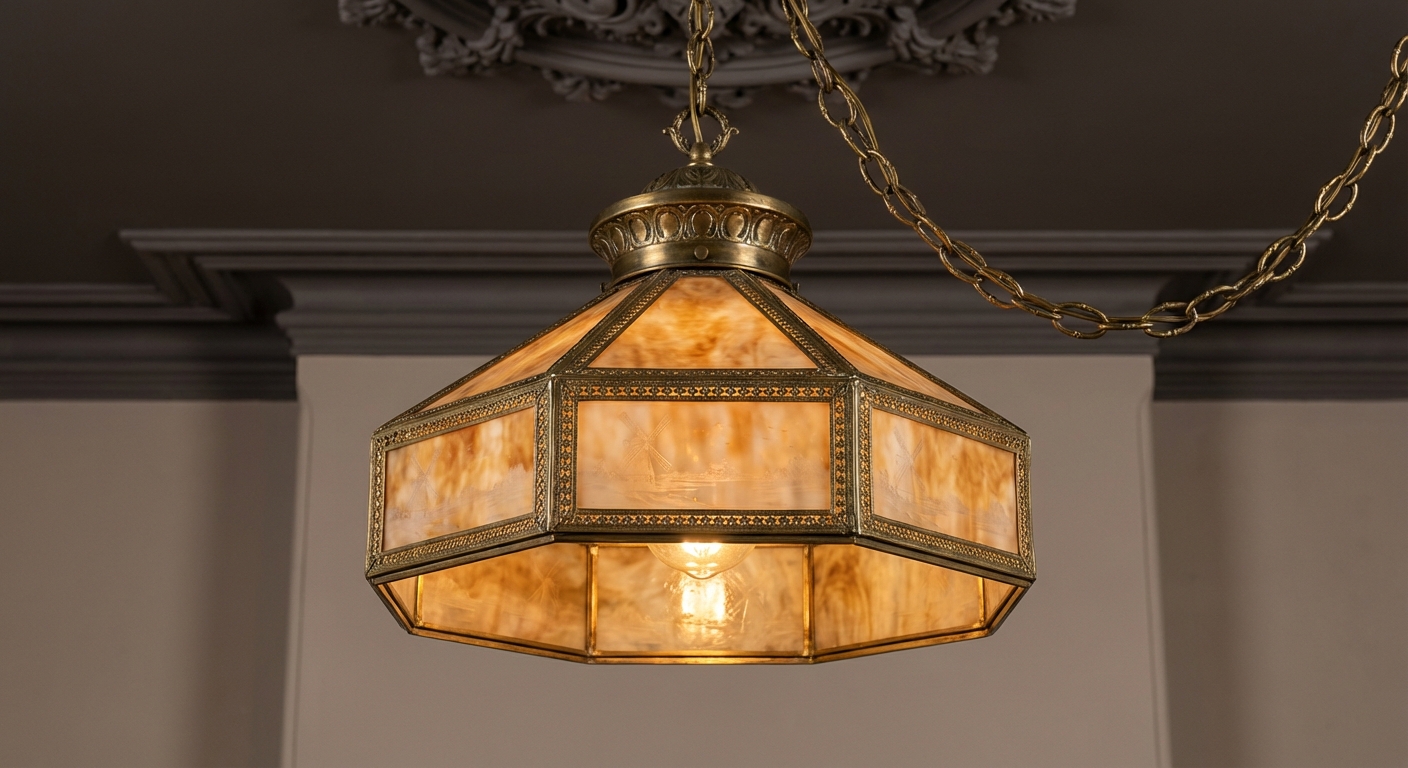
A large caramel slag glass hanging lamp with a windmill motif (often described as a repeating pinwheel pattern in each panel) is a classic early 20th century decorative light. Many examples date to roughly 1900–1920 and bridge Victorian and Arts & Crafts styling: warm amber/caramel panels, heavy metal caps, and chain suspension.
This migration upgrades the legacy WordPress appraisal into a collector-grade reference: how to confirm period vs. later reproduction, what to photograph (including markings like “Made in USA”), how condition and rewiring affect value, and how recent auction results anchor realistic pricing.
Free instant estimate
Not sure if your lamp is worth appraising? Let us take a look.
Upload a photo, tell us what you know, and get a free first read. If a full appraisal makes sense, we will say so.
Free. No card needed. Takes about two minutes.
How We Research Valuation Data
Our appraisal guides are based on auction results, dealer pricing data, and professional appraiser insights. Our professional appraisal service provides paid signed reports. The Screener offers a free first look. Learn about our editorial standards.
Quick value ranges for caramel slag glass hanging lamps (c. 1900–1920)
A large, unmarked caramel slag glass hanging lamp from the early 20th-century market typically trades as a decorative antique lighting collectible. In many real-world cases, a practical fair market value range for a complete fixture in good vintage condition is around a value that must be established from current, topic-matched sales.
Use these broad ranges before you start matching to market evidence (size, motif, and condition can push you well above or below the midpoint):
- Replacement shade only (no hardware): often a value that must be established from current, topic-matched sales depending on size and damage.
- Complete hanging lamp, unmarked, average condition: often a value that must be established from current, topic-matched sales.
- Large shade diameter + strong caramel color: often a value that must be established from current, topic-matched sales when condition is strong.
- Attributed or marked maker (high confidence): can reach a value that must be established from current, topic-matched sales+ for premium examples.
For insurance, the number you need is usually replacement cost (what it would cost to replace through a reputable dealer or lighting specialist). Replacement cost can be higher than auction pricing because sourcing, rewiring, and safe shipping are real costs.
What “caramel slag glass” means (and how to spot it)
Slag glass is an opaque, swirled glass made by mixing and marbling molten glass colors. In lamps, it is typically used as panels set into a metal frame. The caramel color family ranges from honey to butterscotch to deeper amber, usually with distinctive internal streaking.
Quick identification cues:
- Opacity: the glass glows when lit but isn’t transparent like stained glass.
- Swirls: natural marbling and banding, not a flat uniform tint.
- Thickness: period panels often feel heavier than modern pressed replacements.
Dating and attribution: what “Made in USA” can (and can’t) prove
Owners often report internal markings such as “Made in USA” on the inside of the cap or near the socket cluster. That’s a useful clue—but it’s usually a component mark (hardware, socket, canopy), not a definitive maker’s mark for the entire lamp.
For early 20th-century hanging fixtures, the most reliable dating comes from a consistent story across:
- Hardware style: chain links, canopy shape, and cap detailing.
- Socket cluster: construction and switch style (often rewired later).
- Wear/patina: honest surface wear in crevices, not uniform artificial aging.
- Construction logic: fittings that look engineered together (not mismatched parts).
Makers for comparable slag glass fixtures can include firms associated with early electric lighting and decorative arts. When you see a specific brand name claimed in a listing, ask for close-up photos of the mark and compare it to known examples—misattribution is common.
Construction checklist: what appraisers look for
When you describe (or photograph) an octagonal windmill-motif slag glass hanging lamp, capture details that directly affect both originality and value:
- Shade shape and panel count: octagonal paneled shades are common; measure the widest diameter.
- Motif execution: is the windmill/pinwheel motif embossed, cut, or painted? Crisp, consistent patterning helps.
- Fitter style: note how the shade attaches to the cap (set screws, collar, spider). Measure the fitter opening.
- Cap + finial: check for cracks, dents, or stress at screw points.
- Suspension: chain length, ceiling canopy, and whether parts match in finish/patina.
- Electrical: number of sockets and evidence of modern rewiring.
Condition checklist (and why it matters)
Condition is a major price driver because replacement panels are hard to match and buyers are cautious about safety. When you assess condition, separate cosmetic flaws from structural issues:
- Cracked or missing panels: even one cracked panel reduces value; missing glass or poorly matched replacements reduce it more.
- Loose panels: if the shade flexes, bows, or “rattles,” the frame may need stabilization.
- Edge chips: small chips can be acceptable if hidden in the frame; visible chips read strongly when lit.
- Hardware distortion: bent cap, warped fitter, stripped set-screw threads, or missing finials.
- Electrical safety: brittle insulation, frayed wire, or overheating should be addressed before use or sale.
A common buyer question is “Has it been rewired?” A professional rewire is usually a positive (safer), but sloppy wiring work or modern mismatched socket replacements can make buyers hesitate.
Recent comparable-sale records for slag glass lamps and hanging fixtures
Auction results provide real-world pricing anchors. Below are three market evidence from the public auction datasets that relate to caramel slag glass and hanging fixtures. These are hammer prices and may not include buyer’s premium, tax, or shipping.
How to interpret these market evidence for a windmill-motif caramel hanging lamp:
- The a value that must be established from current, topic-matched sales result shows how caramel slag glass + Arts and Crafts metalwork can bring strong bidding even when the piece is unmarked.
- The a value that must be established from current, topic-matched sales chandelier result demonstrates ceiling fixtures can outperform table lamps when they have desirable forms, multiple shades, and confident brand attribution.
- The a value that must be established from current, topic-matched sales shade-only result is a useful reality check: buyers do pay for replacement shades, but complete fixtures with matching hardware typically command more.
Photo checklist (for fast identification)
To get an accurate appraisal remotely, an appraiser typically needs:
- Full fixture photo (hanging) straight-on, unlit.
- Full fixture photo (lit) to show how the caramel glass glows.
- Four shade close-ups showing each panel type, seams, and any chips/cracks.
- Close-up of the windmill motif area (one panel) and the shade rim edge.
- Inside of the cap and fitter area showing attachment points and any stamps.
- Ceiling canopy and chain/rod details.
- Socket cluster and wiring (including safety labels or replacements).
Selling vs insuring: which value do you need?
“Appraised value” can mean different things. Before you lock in a number, decide which value type fits your goal:
- Fair market value: what a willing buyer and seller typically agree on (often anchored by auction results).
- Replacement cost: what it costs to replace with a comparable lamp from a reputable dealer (often used for insurance).
- Liquidation value: what you might get quickly (local resale, estate liquidator)—usually the lowest number.
A common pitfall is using auction hammer prices as replacement cost. If you need an insurance number, your appraisal should describe shade diameter, mounting type, motif, materials, and condition so the insurer can replace like-for-like.
Where slag glass hanging lamps sell best
For hanging fixtures, the best venue depends on weight, fragility, and whether you can offer safe packing:
- Local marketplaces: fastest, avoids shipping risk; often lower prices.
- Online auctions: can produce strong pricing if photos, measurements, and packing are professional.
- Dealers / consignors: best for heavier fixtures; fees are higher but they handle packing and client trust.
Search variations collectors ask
Readers often Google:
- windmill motif caramel slag glass hanging lamp value
- how to identify caramel slag glass lamp shade panels
- 1900–1920 Victorian slag glass ceiling lamp appraisal
- what does Made in USA mean inside an antique lamp cap
- how to measure fitter size for a slag glass hanging lamp shade
- does rewiring an antique hanging lamp reduce value
- best way to ship a heavy slag glass hanging lamp safely
- who made windmill motif slag glass lamps (Miller, Handel, B&H)
Each question is answered in the valuation guide above.
What similar items actually sold for
To help ground this guide in real market activity, here are recent example auction comps from Appraisily’s internal database. These matched sales are market context only, not an object estimate or identification, and they do not guarantee a price for your specific slag glass lamp.
Shown USD range: USD 35-USD 200. Median of these 10 USD examples: USD 120.
| Comparable | What sold | Auction house | Date | Lot | Source-reported amount |
|---|---|---|---|---|---|
 |
Slag glass lampSource blocked; provenance matched | Embassy Auctions International | 2015-05-20 | 103 | USD 175 (buyer’s-premium treatment unknown) |
 |
SLAG GLASS HANGING LAMP WITH SWANSSource blocked; provenance matched | Forsythe's Auctions | 2023-01-15 | 179 | USD 120 (buyer’s-premium treatment unknown) |
 |
SLAG GLASS LAMP WITH FLORAL MOTIFSource blocked; provenance matched | Manor Auctions | 2015-12-19 | 70361 | USD 90 (buyer’s-premium treatment unknown) |
 |
BENT PANEL SLAG GLASS LAMPSource blocked; provenance matched | THOS. CORNELL GALLERIES, LTD. | 2018-09-09 | 97 | USD 200 (buyer’s-premium treatment unknown) |
 |
Vintage Slag Glass LampSource blocked; provenance matched | Keystone Auctions LLC | 2018-07-28 | 163 | USD 35 (buyer’s-premium treatment unknown) |
 |
Antique Slag Glass LampSource blocked; provenance matched | Saco River Auction | 2018-07-25 | 5 | USD 50 (buyer’s-premium treatment unknown) |
 |
Vintage Slag Glass LampSource blocked; provenance matched | Gallery 95 Auctions | 2015-02-21 | 34 | USD 120 (buyer’s-premium treatment unknown) |
 |
Metal Overlay Slag Glass LampSource blocked; provenance matched | Regency Auction House | 2025-08-28 | 252 | USD 60 (buyer’s-premium treatment unknown) |
 |
Vintage Cherub Slag Glass LampSource blocked; provenance matched | One Source Auctions | 2015-03-17 | 196 | USD 120 (buyer’s-premium treatment unknown) |
 |
Bent Metal Slag Glass LampSource blocked; provenance matched | Jaremos | 2026-01-21 | 436 | USD 120 (buyer’s-premium treatment unknown) |
How these auction records were verified
Each row retains its exact source URL, lot identity, retrieval time, access result, and immutable record hash. Live source access was blocked; the exact record matched Appraisily's immutable pipeline provenance. Inspect the public comparable provenance record.
Disclosure: prices are shown as reported by auction houses and are provided for appraisal context. Learn more in our editorial policy.
References
- Locati LLC auction results (Hammers dataset), December 15, 2024, Lot 247.
- Ripley Auctions results (Chandeliers dataset), February 10, 2024, Lot 52.
- Bodnar’s Auction Sales results (Hats dataset), February 13, 2025, Lot 147.
Continue your valuation journey
Choose the next best step after reading this guide
Get a second opinion on shade construction and condition, or book a written insurance-ready report.
Decorative arts & lighting
Browse the Art Appraisers Directory
Connect with decorative arts appraisers who can review your lamp photos remotely.
Fast written report
Start an online appraisal
Upload your lamp photos and details. Get a documented valuation in 24 hours.