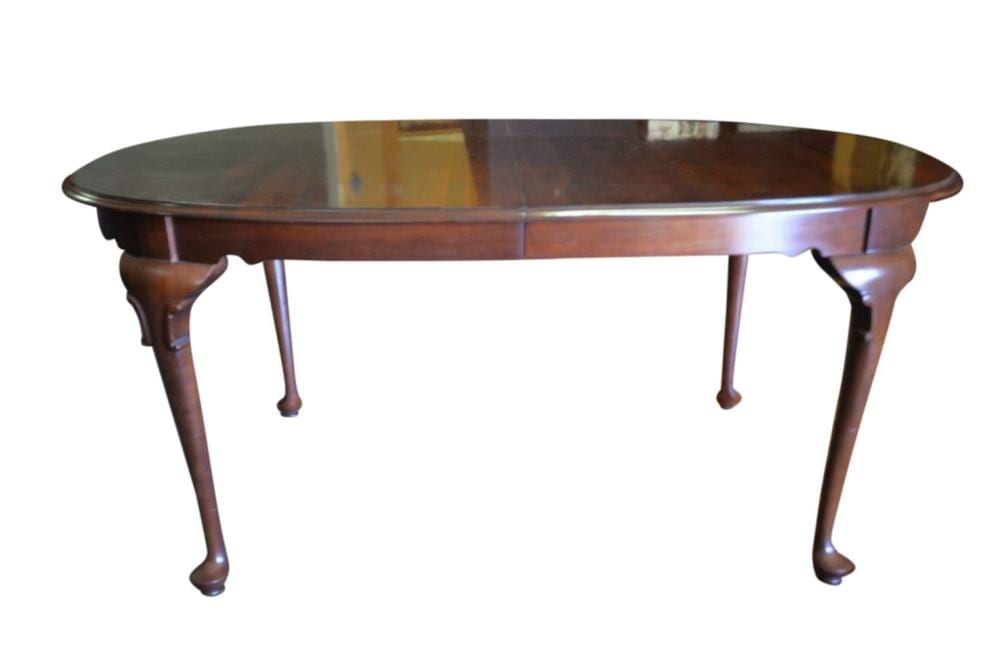
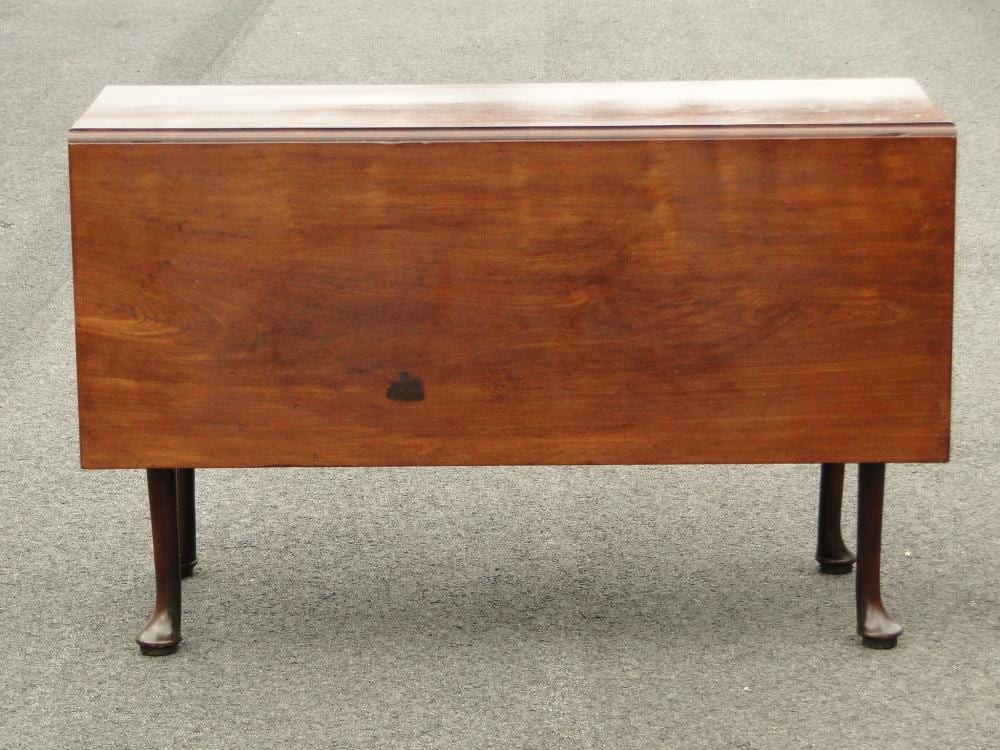
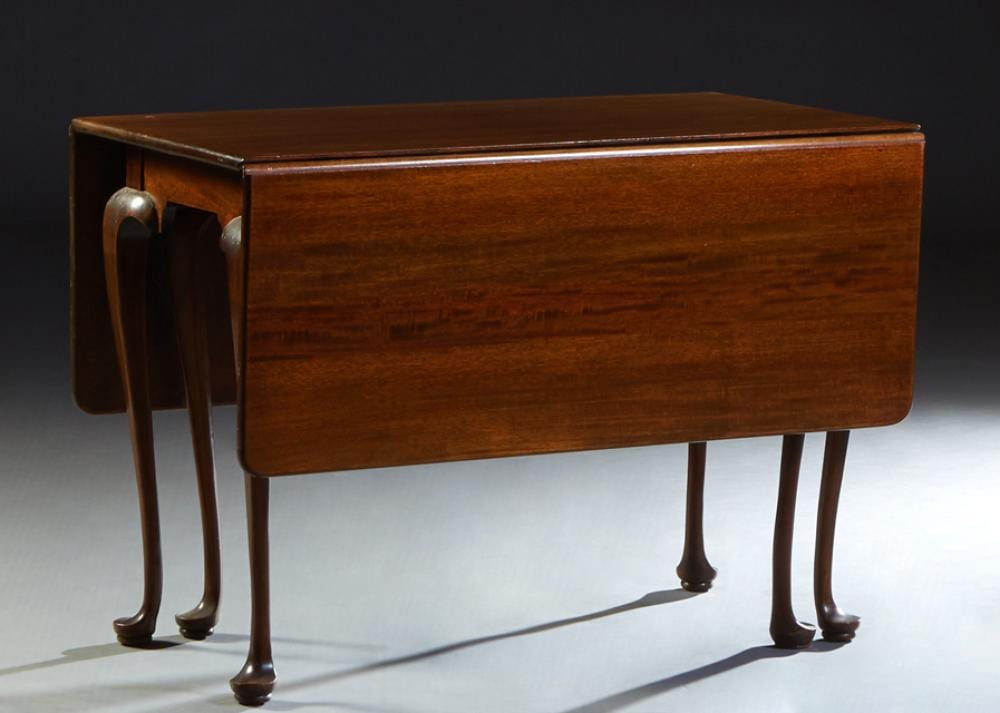
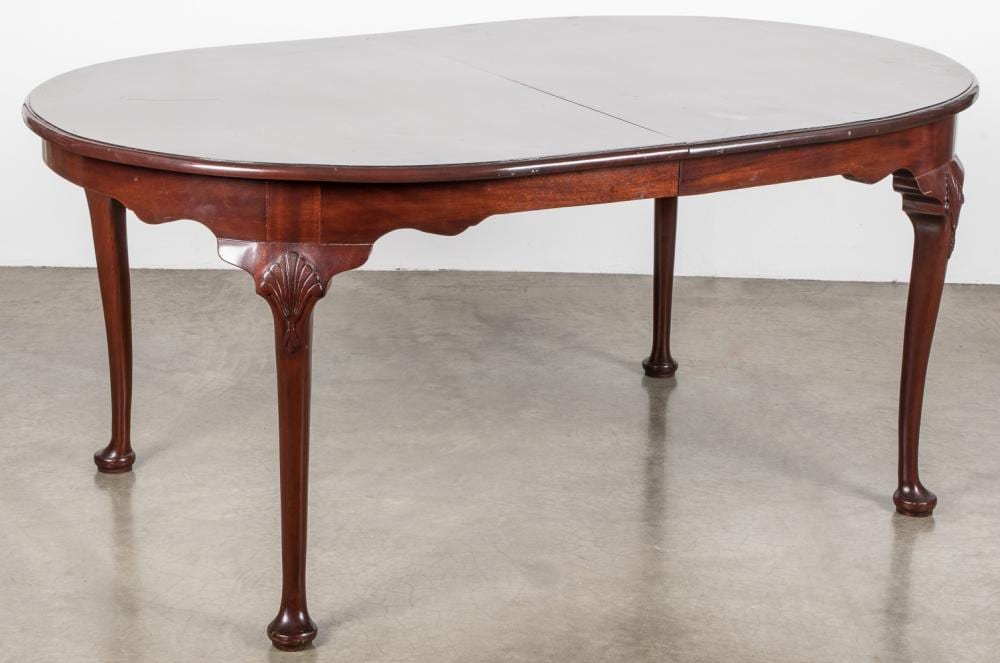
A Fine Quality Solid Wood Mahogany Dinning Table Queen Anne Circa Mid 20th Century: appraisal and value basics
A Fine Quality Solid Wood Mahogany Dinning Table Queen Anne Circa Mid 20th Century research should start with identification, condition, provenance, and recent comparable sales. Use this guide to compare the signals that matter before paying for a formal appraisal or deciding whether to sell.
If you were told you own a “fine quality solid wood mahogany dining table” in a Queen Anne revival style, you’re already in the right neighborhood: the marketplace does value solid, well-made furniture with classic curves. The challenge is that many mid-20th-century Queen Anne revival tables look similar at a glance, while values can swing widely depending on construction quality, size, maker, and condition.
This guide translates the appraiser workflow into something you can do at home: identify the Queen Anne cues, confirm whether the table is truly solid mahogany (vs. mahogany veneer), date the build using joinery and hardware clues, and then sanity-check your expectations against real auction results.
Throughout, remember that “table value” is not one number. For most furniture the right answer is a range tied to your selling channel (local pickup vs. shipping), the urgency of the sale, and the amount of restoration the buyer must take on.
Two-step intake
Get the right appraisal for your situation
Share the basics and we match your submission with a reviewer familiar with the relevant category; a written quote and next steps follow.
Secure intake. Routed to a reviewer familiar with the relevant category. Checkout only if you decide to proceed.
What “Queen Anne revival” means for a dining table
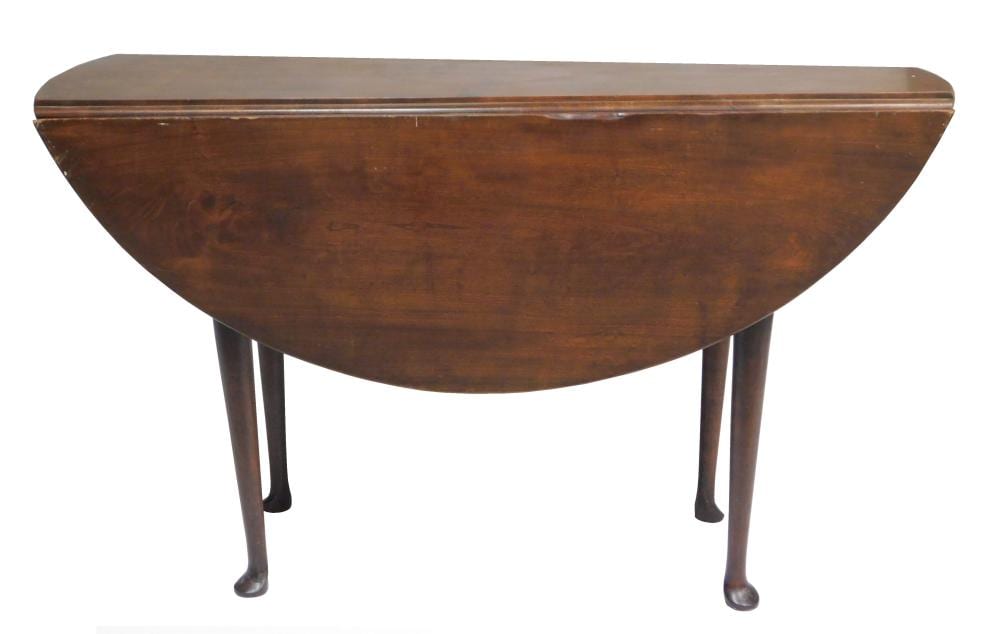
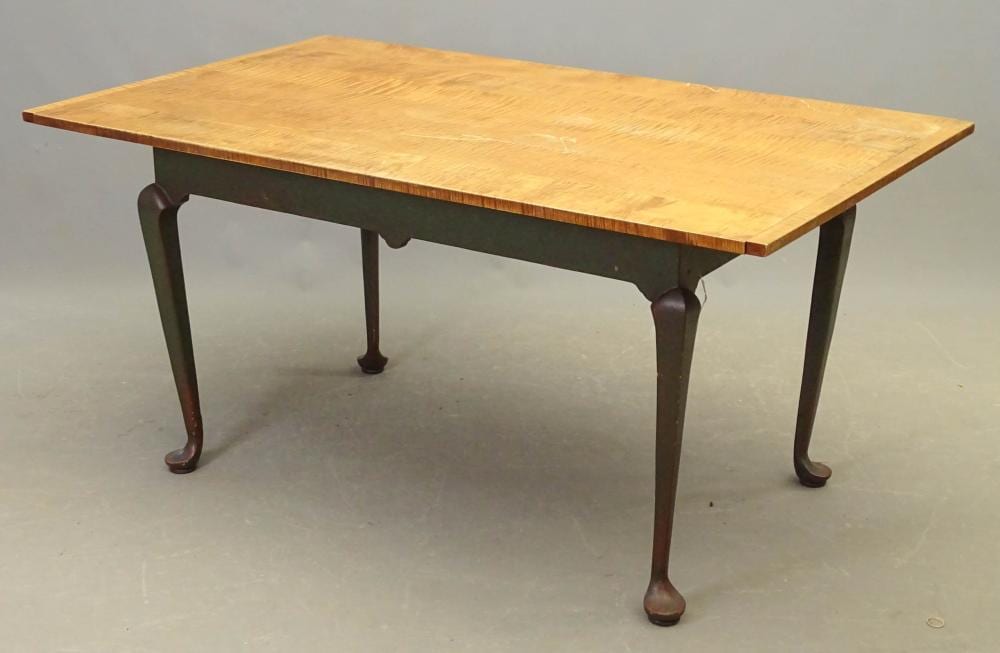
Original Queen Anne period furniture dates to the early 18th century, but the look was revived many times—especially in the late 19th and mid-20th centuries. For dining tables, “Queen Anne” is usually shorthand for a cluster of recognizable details rather than one strict pattern.
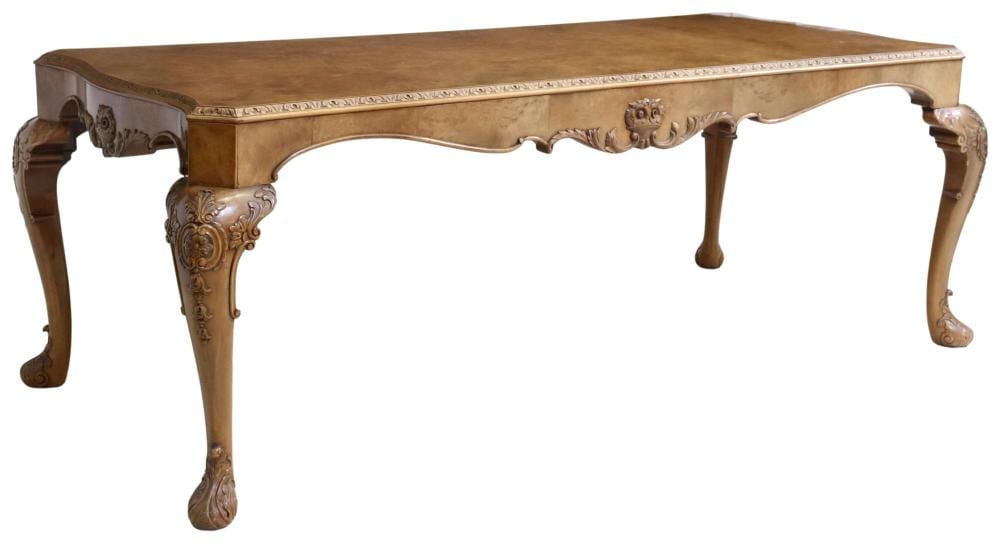
- Cabriole legs (an S-curve profile), often ending in a pad foot or a slightly flattened “club” foot.
- Scalloped or shaped apron under the tabletop instead of a straight, boxy skirt.
- Soft edge molding (a rounded or cyma edge) rather than a sharp, modern chamfer.
- Formal proportions that read “traditional” even when the table is a later reproduction.
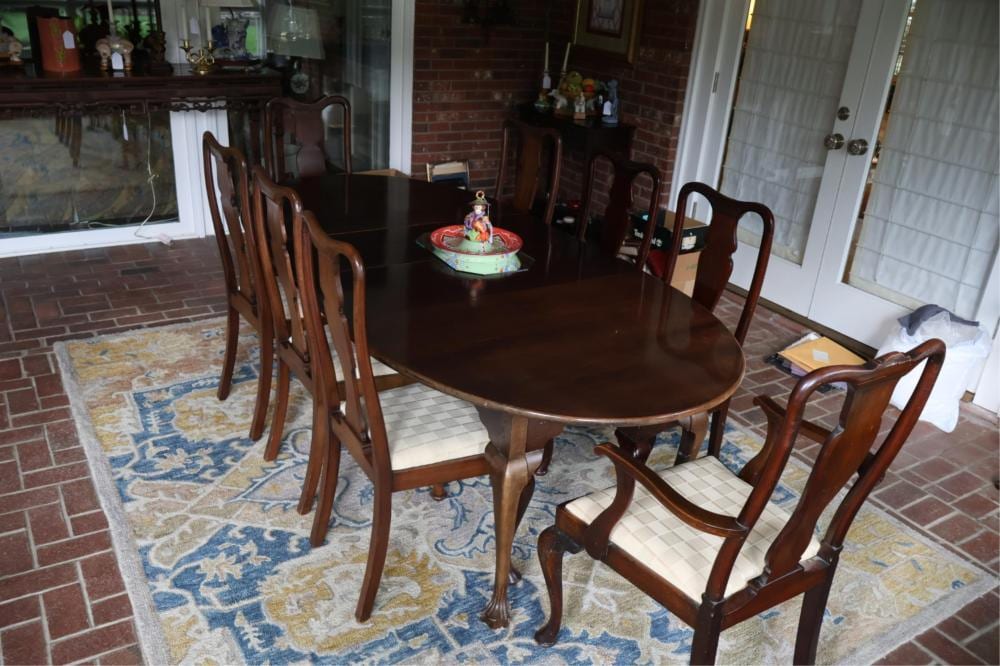
Mid-20th-century Queen Anne revival tables were often made for everyday dining rooms: solid wood frames, leaves for entertaining, and finishes meant to tolerate use. That makes them attractive, but it also means there are many comparable examples—so condition and quality have to do the heavy lifting for value.
Confirming mahogany (and whether it is solid)
Listings often say “mahogany” when the table is actually mahogany veneer over a secondary wood (poplar, gum, birch) or over engineered core. Veneer is not automatically “bad”—many high-quality tables use veneers—but you should know what you have before you price it.
Practical checks you can do without tools:
- Look at the underside of the top. Solid mahogany usually shows a consistent grain pattern and color on the underside. Veneered tops often show a different wood underneath or a more uniform, engineered look.
- Check edges and corners. Veneer can “wrap” around the edge with a seam line. Solid tops usually show continuous grain through the edge molding.
- Inspect end grain on hidden surfaces. Mahogany has open pores and a distinct end-grain structure; many substitutes look tighter and more uniform.
- Legs are a tell. Cabriole legs are often solid (or at least heavily built). If the legs feel unusually light or show a lamination line, the table may be a lower-cost reproduction.
Also note that “mahogany” can mean different species. Genuine Swietenia (Honduran/Caribbean) is prized, while African mahoganies (khaya/sapele) can look similar. A lab identification is rarely necessary for typical mid-20th-century dining tables, but it can matter for premium, maker-attributed pieces.
Dating clues: hardware, joinery, and leaf mechanisms
Most mid-20th-century Queen Anne revival tables do not carry an obvious date stamp, so you work by construction “tells.” Focus on the parts that manufacturers rarely bother to make “period correct.”
- Screws: mid-century screws are machine-made with uniform threads; earlier furniture may show irregularities or different head styles.
- Leaf slides and supports: a smooth, standardized metal slide system usually points to 20th-century production. Wooden slides can exist in later pieces too, but the machining is typically cleaner and more uniform.
- Apron blocks and corner bracing: factory tables often have standardized corner blocks and predictable stapled or screwed bracing.
- Finish: very glossy, even-toned finishes can indicate later sprayed lacquer, while older pieces may show shellac wear patterns and more variation.

If you find a label, branded mark, or paper tag underneath, photograph it immediately—those are often fragile and can disappear during cleaning. Maker attribution (even to a regional furniture company) can shift the value band upward because it reduces uncertainty for buyers.
Condition checklist (the value killers)
Dining tables are functional furniture, and buyers are surprisingly sensitive to stability and surface issues. Two tables can be the “same model” and sell for very different amounts purely because one needs repairs.
- Top damage: deep heat marks, black water rings, veneer lifting, or a cupped/warped top are major deductions.
- Leaf fit: leaves should sit flush with the main top. Misalignment or sagging can point to worn slides or frame distortion.
- Leg and joint looseness: wobble is common but buyers fear complicated repairs. Tight joints and a solid stance matter.
- Finish condition: uneven refinishing, heavy sanding (rounded edges), or mismatched stain can suppress collector interest.
- Structural repairs: glued breaks are not automatically fatal, but disclose them and price accordingly.
As a quick rule: if the table needs immediate repairs to be usable as a daily dining table, many buyers will pay “project pricing” even if the wood is solid mahogany.
Value ranges for mid-20th-century Queen Anne revival mahogany tables
Without a known maker, most mid-20th-century Queen Anne revival dining tables trade as attractive traditional furniture rather than as “rare antiques.” That typically puts them into a practical market band.
- Entry-level / local pickup: $150–$400 for smaller tables, cosmetic wear, or generic reproduction construction.
- Good quality, solid build: $450–$900 for sturdy cabriole legs, good finish, and a leaf system that works smoothly.
- Large extensions / notable maker: $900–$2,000+ for big seating capacity, strong proportions, and maker attribution (or high-end cabinetmaker quality).
These are typical USD resale bands. Local markets vary, and insurance replacement values are usually higher than quick-sale values because they reflect the cost to replace with a comparable item in similar condition (including dealer overhead).
Recent auction comparables (hammer prices)
The following benchmarks are pulled from recent auction results and are included to show where similar traditional mahogany dining tables are trading. Prices listed are hammer prices (before buyer’s premium and tax).
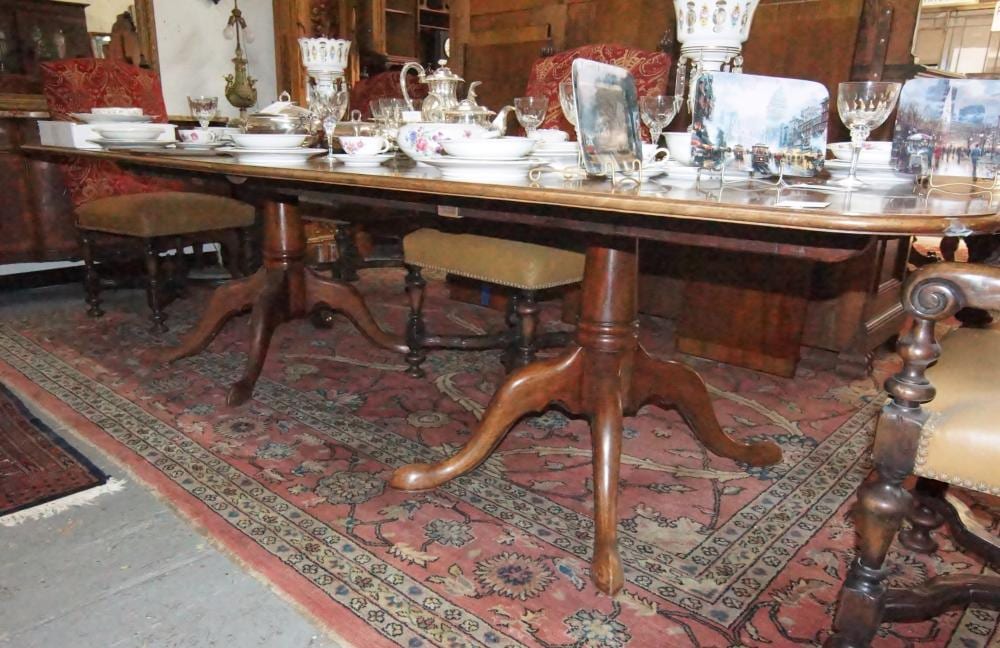
- Sloans & Kenyon (Feb 9, 2023), lot 498 — “EARLY 20TH CENTURY GEORGE III/FEDERAL STYLE MAHOGANY DOUBLE-PEDESTAL BASE DINING TABLE” — $450 hammer.
- Crescent City Auction Gallery (Jan 19, 2024), lot 315 — “Regency Style Round Mahogany Dining Table, 20th c.” — $350 hammer.
- Brunk Auctions (Nov 17, 2023), lot 637 — “George III Style Mahogany Three Pedestal Dining Table” — $750 hammer.
How to use these comps: if your table is smaller, has fewer leaves, or needs refinishing, it is likely to sit near (or below) the lower hammer prices above. If it is a large extension table with crisp cabriole legs, tight joinery, and a clean finish—and especially if you can name the maker—you can reasonably justify the upper band.
How to sell (or insure) your table intelligently
For most Queen Anne revival dining tables, shipping cost is the hidden factor. A table can be “worth” $800 but still struggle to sell if the only buyers are local and the top is heavily worn.
To improve outcomes:
- Photograph the underside. Buyers and appraisers want to see joinery, hardware, and leaf slides.
- Include measurements. Height, width, length closed, length fully extended, and leaf count are critical.
- Be honest about repairs. A transparent listing usually sells faster and reduces price renegotiation.
- Pick the right channel. Local marketplace for fast pickup; regional auction for exposure; dealer for convenience; appraisal for insurance documentation.
Key takeaways
- Queen Anne revival is a style cluster: cabriole legs, pad feet, shaped aprons, and traditional proportions.
- Confirm whether the top is solid mahogany or veneered before you price it.
- Hardware and leaf mechanisms are the fastest dating clues for mid-20th-century furniture.
- Condition (warps, veneer loss, leaf fit, wobble) usually drives the biggest value differences.
- Recent auction comps show many traditional mahogany dining tables trading in the low hundreds unless they are large or high quality.
Search variations collectors ask
Readers often Google:
- how to tell if a Queen Anne dining table is antique or reproduction
- mid century Queen Anne revival dining table value
- solid mahogany dining table with cabriole legs price range
- what does Queen Anne revival mean on furniture listings
- mahogany dining table veneer vs solid wood identification
- how much is a double pedestal mahogany dining table worth
- best way to sell a large mahogany extension dining table locally
- insurance appraisal value for vintage dining table with leaves
Each question is answered in the valuation guide above.
References
- Judith Miller, Miller’s Antiques Handbook & Price Guide, latest edition (furniture identification and condition terminology).
- Sloans & Kenyon sale listing (Feb 9, 2023), lot 498 (mahogany double-pedestal dining table result cited in text).
- Crescent City Auction Gallery sale listing (Jan 19, 2024), lot 315 (Regency style mahogany dining table result cited in text).
- Brunk Auctions sale listing (Nov 17, 2023), lot 637 (George III style mahogany dining table result cited in text).