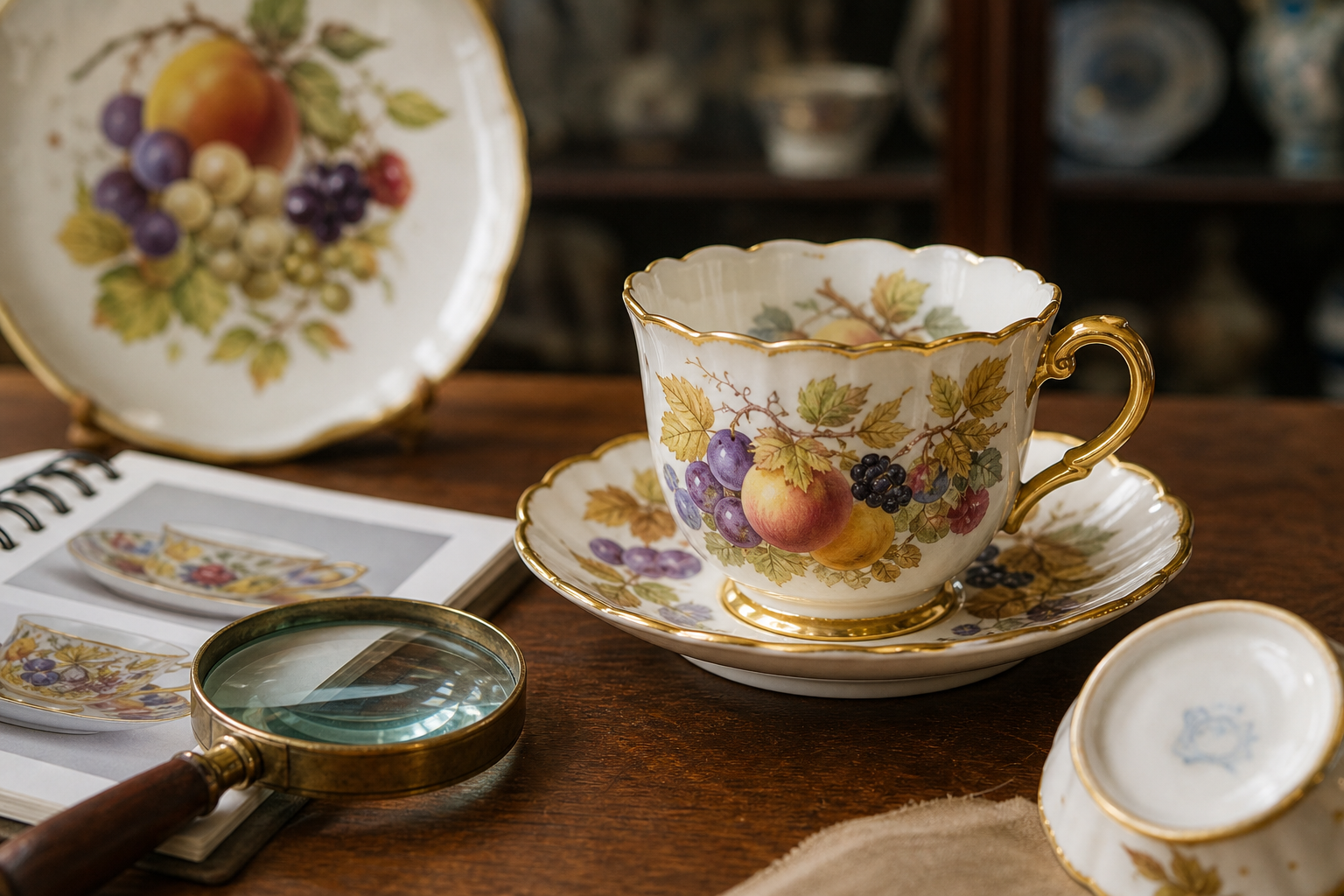
A Fine Quality Aynsley England Bone China Circa 1934 1950 Orchard Gold: appraisal and value basics
A Fine Quality Aynsley England Bone China Circa 1934 1950 Orchard Gold research should start with identification, condition, provenance, and recent comparable sales. Use this guide to compare the signals that matter before paying for a formal appraisal or deciding whether to sell.
A Fine Quality Aynsley England Bone China Circa 1934–1950: Orchard Gold
Among mid-20th‑century British porcelain, few cabinet pieces attract the same admiration as Aynsley’s fruit-painted “Orchard Gold.” Produced in Stoke‑on‑Trent and celebrated for its high-quality bone china and lustrous gilding, Orchard Gold delivers a warm tableau of peaches, apples, grapes, and berries against a mossy, sunlit ground. For appraisers and collectors, understanding what the market means by “Orchard Gold,” how to date it to the 1934–1950 period, and how to separate hand-painted work from later transfer-printed wares is essential to establishing authenticity and value.
What Collectors Mean by “Orchard Gold”
“Orchard Gold” is a collector’s shorthand for Aynsley’s richly gilded, fruit-decorated bone china. While Aynsley produced various fruit motifs across decades, the pieces prized as Orchard Gold share several visual traits:
- A warm, predominantly golden or ochre ground that frames a central arrangement of orchard fruits—commonly peaches, apples, plums, grapes, blackberries, raspberries, and leaves.
- Hand-applied shading that mimics soft sunlight, with darker mossy stippling around the fruits to create depth.
- Generous gilt detailing to rims, handles, and sometimes grounds—applied over a fine, white bone china body.
- Cabinet pieces such as cups and saucers, plates, comports, and small vases intended as display pieces as much as for service.
Collectors often use “Orchard Gold” to distinguish these fruit studies from plainer Aynsley floral patterns or from other firms’ fruit wares. While the fruit arrangements vary, consistent features include lively color transitions, visible brushwork, and nuanced highlights painted on fruit skins and leaves.
Dating Orchard Gold: Backstamps and Period Cues (1934–1950)
Aynsley’s backstamps are the fastest way to anchor a date range. For the mid-century “Orchard Gold” period:
- Crown-and-banner Aynsley mark: Expect a crown above a scroll or shield device containing “AYNSLEY,” with “ENGLAND” or “MADE IN ENGLAND” beneath. The precise layout and typography vary, but the crowned banner/shield mark is typical for the 1930s–1950s.
- “Bone China” wording: Many pieces include “Bone China” as part of the backstamp in this period. Its presence supports, but does not guarantee, a 1930s–1950s date.
- Handwritten pattern numbers: Look for hand-painted or penciled pattern numbers or workman’s marks in enamel paints (often red, green, or orange) near the base rim. These can help group pieces within a workshop period even if the exact pattern number is undocumented.
- Painter’s signatures or initials: Some fruit scenes are signed, typically tucked within the painted ground near berries or leaves. Signatures are not universal; their presence suggests a higher grade of studio work.
Additional period cues:
- War-era variation (1939–1945): You may observe slightly lighter bodies, more economical gilding, or subtle quality fluctuations due to material restrictions. Not all wartime pieces show these traits, but minor anomalies in finish are not uncommon.
- Postwar refinement (late 1940s): After the war, gilding and finish quality often regained pre-war richness. Later pieces in this range may show bolder or more uniform gilt.
Caution: Aynsley continued producing fruit-related designs later in the 20th century, and older shapes were occasionally reused. Always interpret a single clue (such as a gilt tone or one mark detail) in combination with others—backstamp, pattern notation, painting method, and overall workmanship.
Hand-Painted vs Transfer: How to Tell in Seconds
The single greatest value driver is whether the fruit is hand-painted or transfer-printed (decal). Use a 10x loupe and good natural light to check:
- Brushwork and layering: Hand painting shows individual brush strokes, feathered shading, and overlapped color layers, especially where fruit meets shadow. Leaves display veins picked out in freehand, not uniform lines.
- Stippling variation: The “mossy” background behind fruit should look subtly irregular, with variations in dot density and color. Transfers tend to show mechanical repetition or dot matrices at the edges of tonal areas.
- Edge definition: Hand-painted highlights on grapes or berries taper naturally. Transfer edges can appear unnaturally crisp, with a printed outline that floats above the glaze.
- Gilt application: On higher-grade cabinet pieces, the gilding is more than a simple rim line—expect built-up, hand-burnished gilt with a soft, rich glow. Transfer-decorated wares often pair with plainer gilt work.
- Surface feel: Very lightly, and only if safe, you may sense elevated enamel from hand-applied paint, particularly in darker accents. Decals are flatter and even.
It’s not unusual to see a hybrid approach—transfer outlines with hand-finishing—but fully hand-painted scenes remain more desirable and typically command stronger values.
Forms, Sets, and Desirable Variants
Aynsley’s Orchard Gold appears on multiple forms. Recognizing them helps set expectations:
- Cabinet cups and saucers: The quintessential Orchard Gold format, often with fruit filling the bowl of the cup and saucer well. Some interiors are almost completely painted, with a gilt or colored exterior.
- Duos and trios: Teacup and saucer duos—or trios adding a side plate—were common. Cabinet-grade trios with matching, richly painted fruit centers are especially appealing.
- Plates and comports: Fruit-centred dessert plates and pedestal comports exist. Large plates with balanced fruit composition and deep gilding are particularly display-worthy.
- Vases and small wares: Smaller vases, pin dishes, or cabinet ornaments sometimes carry Orchard Gold motifs and can be excellent entry points for collectors.
What elevates desirability:
- Strong composition: Well-spaced, mixed fruits with convincing depth and harmony of color. Overcrowded or sparse arrangements can feel less accomplished.
- Balanced ground: A gradient from warm gold/ochre to a darker mossy edge that frames the fruit naturally.
- Signature: Not guaranteed, but a discrete painter’s signature or initials can provide both confidence and market appeal.
- Matching sets: Original duos/trios or assembled sets that maintain uniform ground color, fruit style, and gilding thickness are more sought after than unrelated pieces grouped later.
Condition, Restoration, and Value Drivers
Condition is paramount. For Orchard Gold, look at:
- Gilding: The gold is both a visual and monetary cornerstone. Check for even wear on rims, handles, and saucer wells. Patchy, brassy, or rubbed gilt reduces value sharply.
- Surface and glaze: Look for scratches in the painted area (particularly in the saucer well), crazing, or matte “cleaned” patches. Fine, stable crazing is more acceptable on some wares than on cabinet-grade Aynsley fruit scenes.
- Chips and hairlines: Even tiny rim nicks or tight hairlines materially affect desirability. Use a bright light and edge-tap test (gentle, safe) to detect cracks.
- Overpainting and regilding: Restoration is common. Compare gold tone under magnification—fresh gilt can skew in color, and restored areas may lack the soft burnish of original hand-applied gold. UV light can help reveal overpaint on fruit areas.
- Staining: Tea-stained interiors or absorbed discoloration in crazing is problematic. Deep stains are hard to remove without invasive work.
Value typically increases with:
- Fully hand-painted scenes of high quality
- Strong, intact gilding
- Desirable forms (cabinet cups, matching trios, larger plates)
- Painter signatures or workshop marks that indicate higher studio attention
- Crisp mid-century backstamps consistent with the 1934–1950 window
Market caution:
- Misattribution to other makers (e.g., Royal Worcester fruit) occurs; confirm the Aynsley backstamp.
- Later transfer-decorated pieces can be mistaken for earlier hand-painted examples.
- Modern re-gilding can make a piece look “too new”; always reconcile gilt with the expected age and use.
Care, Handling, and Long-Term Display
- Handling: Support cups by the bowl and saucer from beneath, not by the handle alone. Avoid abrupt temperature changes that stress glaze and enamel.
- Cleaning: Use lukewarm water, mild pH-neutral soap, and a soft cloth. Do not soak for long periods. Avoid harsh abrasives and dishwasher cycles.
- UV and light: Display away from direct sunlight to prevent fade of enamels and degradation of old gilt.
- Storage: Interleave with acid-free tissue or soft cloth. If stacking plates, use felt dividers to protect gilding.
- Documentation: Keep a record of backstamps, any signatures, and purchase provenance. Photographs of marks and close-ups of fruit detail help with future appraisals.
Practical Checklist for Appraisers and Buyers
- Confirm backstamp: Crown-and-banner Aynsley, “(Made in) England,” and “Bone China” consistent with 1934–1950.
- Inspect decoration: Hand-painted brushwork and irregular stippling versus flat transfer patterning.
- Check gilding: Even tone and burnish; watch for wear, brassy edges, or mismatched regilding.
- Look for signatures: Discrete initials within the painted ground can indicate higher studio work.
- Evaluate condition: No chips, hairlines, or deep scratches in the vignette; minimal crazing; clean glaze.
- Cross-check form and match: Cup, saucer, and plate that match in fruit style, ground color, and gilt thickness.
- Note wartime/postwar cues: Slight quality variance acceptable; reconcile with other evidence.
- Record details: Photograph backstamps, inscriptions, and any pattern numbers or painter’s marks.
What similar items actually sold for
To help ground this guide in real market activity, here are recent example auction comps from Appraisily’s internal database. These matched sales are market context only, not an object estimate or identification, and they do not guarantee a price for your specific aynsley orchard gold.
Shown GBP range: GBP 20-GBP 230. Median of these 8 GBP examples: GBP 62.50.
| Comparable | What sold | Auction house | Date | Lot | Source-reported amount |
|---|---|---|---|---|---|
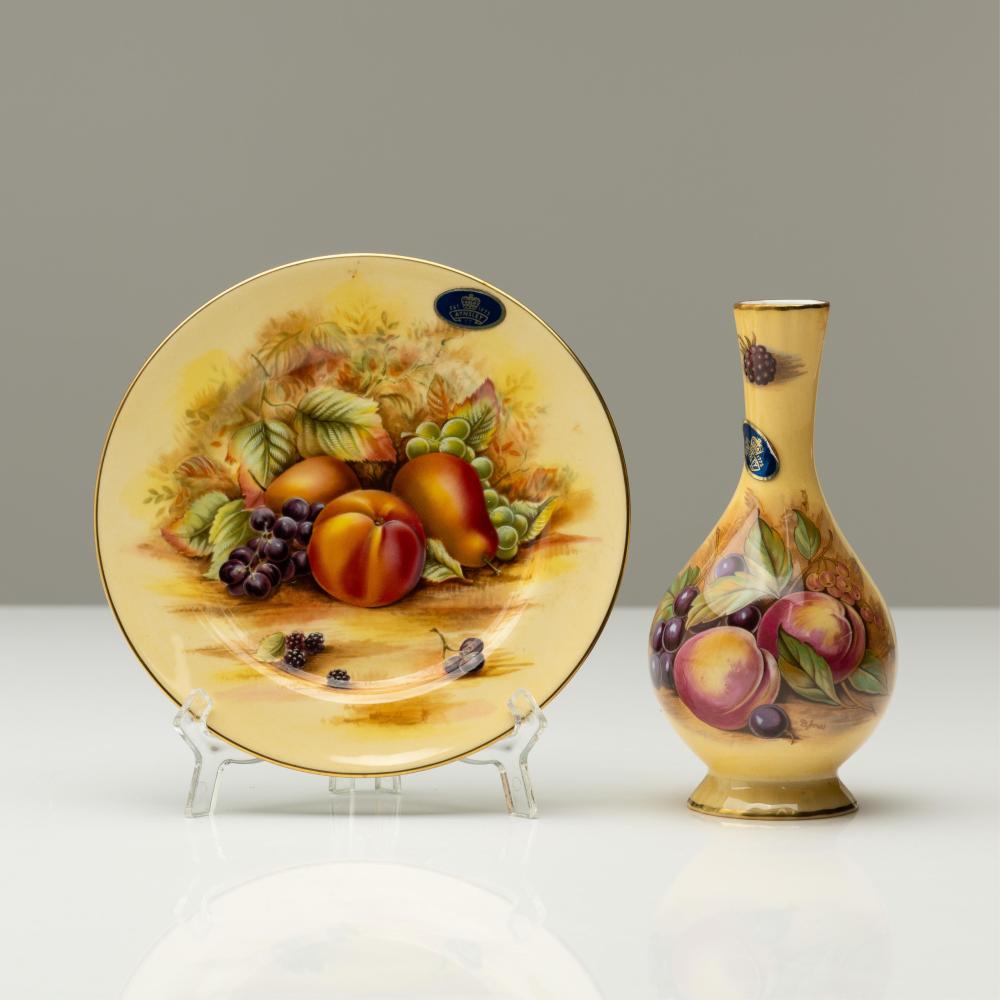 |
Aynsley porcelain "Orchard Gold" design display plate and vase (Dia:16-H:16cm)Source blocked; provenance matched | Lawsons | 2025-02-20 | 154 | AUD 60 (buyer’s-premium treatment unknown) |
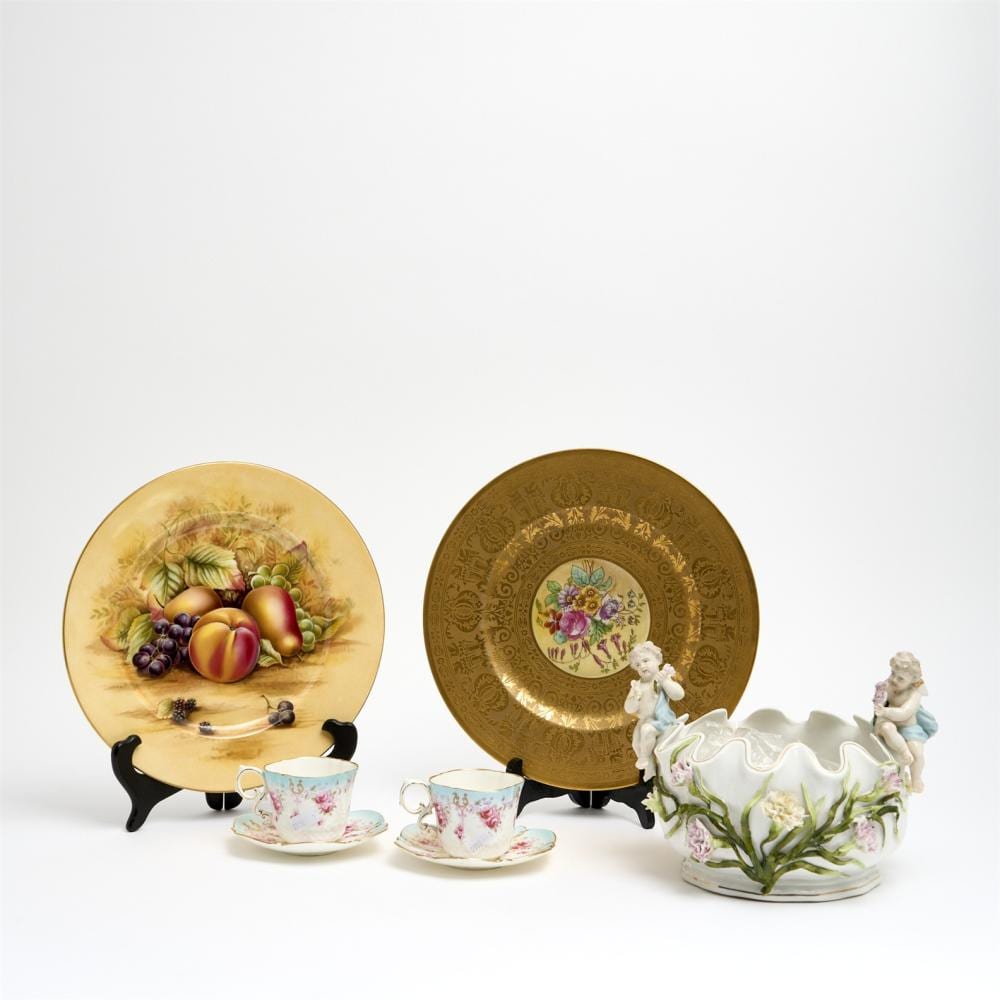 |
A COLLECTION OF PORCELAIN INCLUDING AN AYNSLEY ORCHARD GOLD PLATE, A PAIR OF AYNSLEY CUP AND SAUCERS, A BAVARIAN PLATE AND CONTINENT...Source blocked; provenance matched | Leonard Joel | 2026-01-29 | 2006 | AUD 120 (buyer’s-premium treatment unknown) |
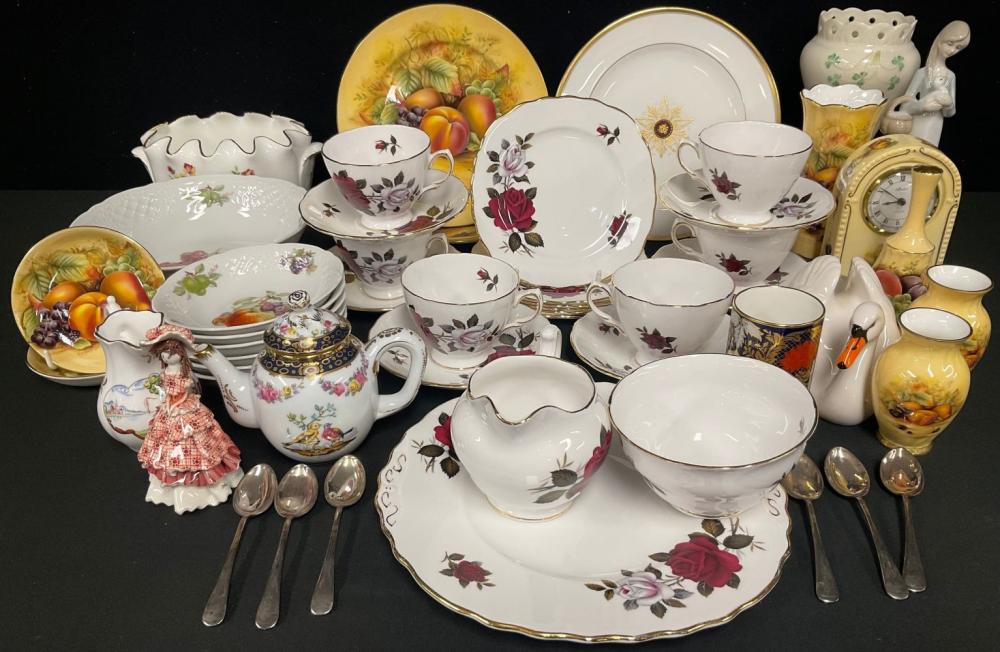 |
Ceramics - a pair of Aynsley Orchard Gold dessert plates; other Orchard Gold including bell, mantel clock, vases, etc; a Colclough Rose pattern tea service for six; a Lynton Hamilton Imari cylindrical vase; a Belleek vase; a Beswick model, of a swan;Source blocked; provenance matched | Bamfords Auctioneers and Valuers Ltd | 2024-11-27 | 328 | GBP 40 (buyer’s-premium treatment unknown) |
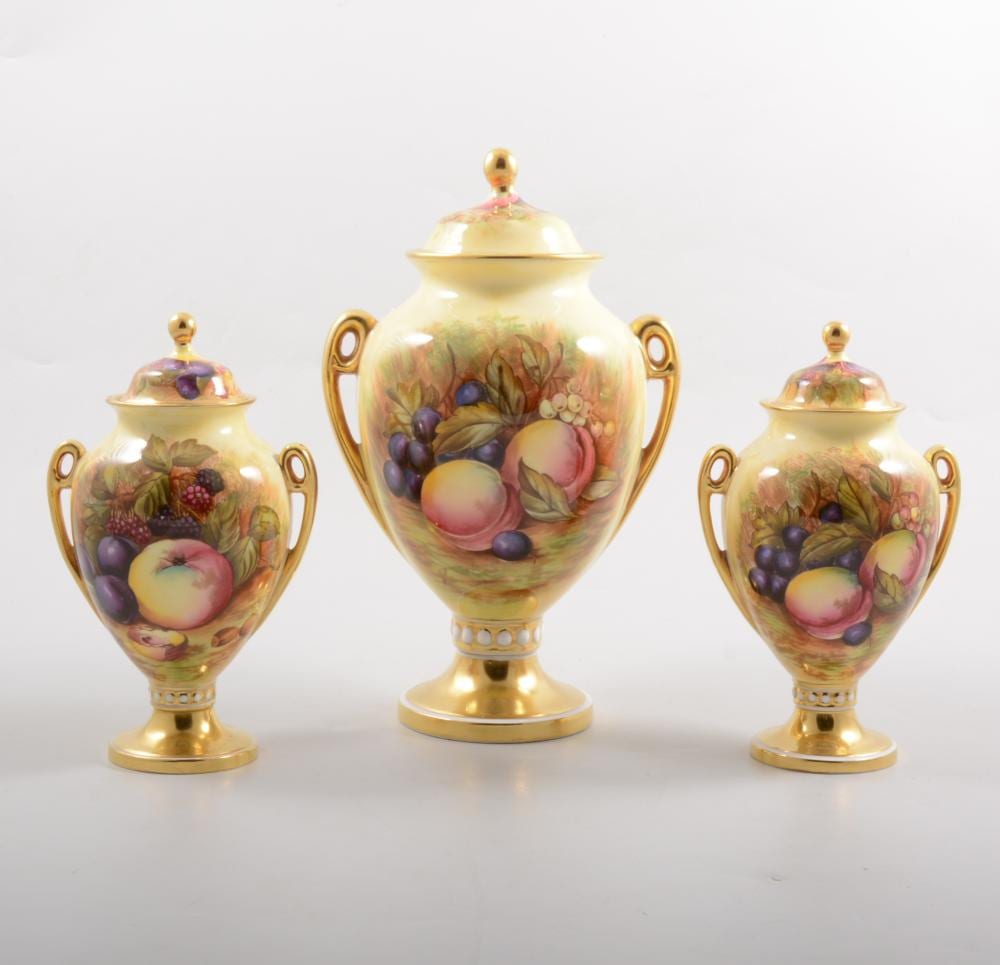 |
Aynsley ''Orchard Gold'' bone china 21cm bowl, a garniture of three liddedSource blocked; provenance matched | Gildings Auctioneers | 2018-07-31 | 4 | GBP 150 (buyer’s-premium treatment unknown) |
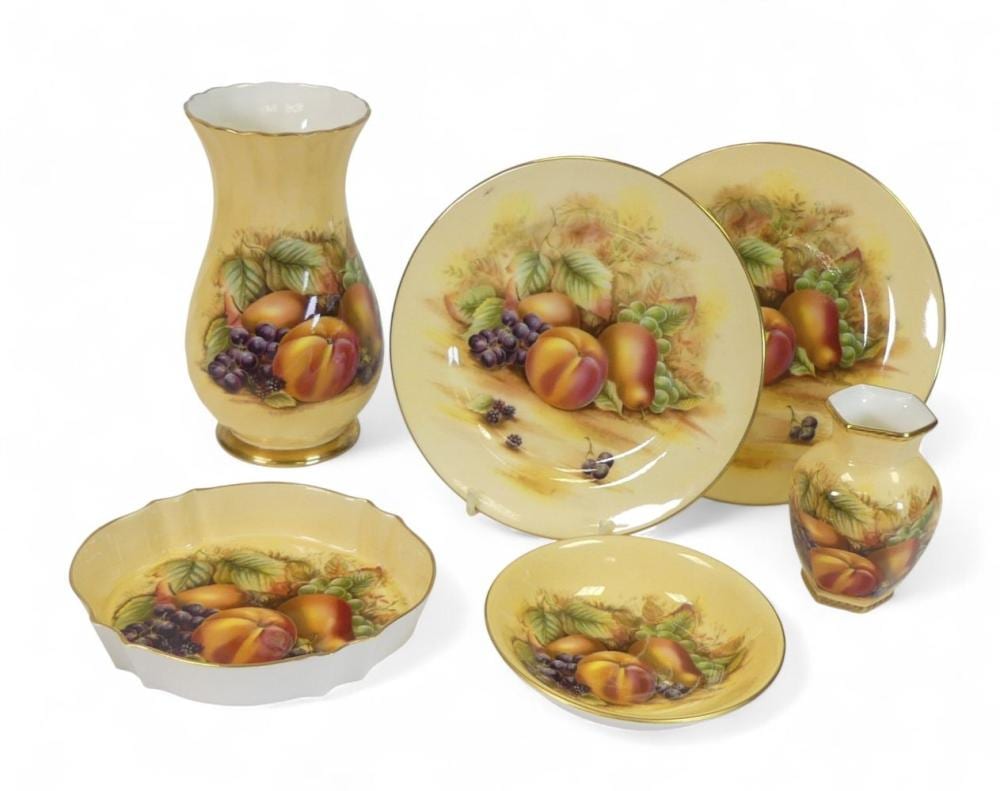 |
Aynsley 'Orchard Gold' design to include:- Footed ribbed vase, miniature hexagonal footed vase, oval bowl, pin tray, two side plates. Tallest:-15cm (6 pieces)Source blocked; provenance matched | Potteries Auctions | 2025-12-12 | 628 | GBP 35 (buyer’s-premium treatment unknown) |
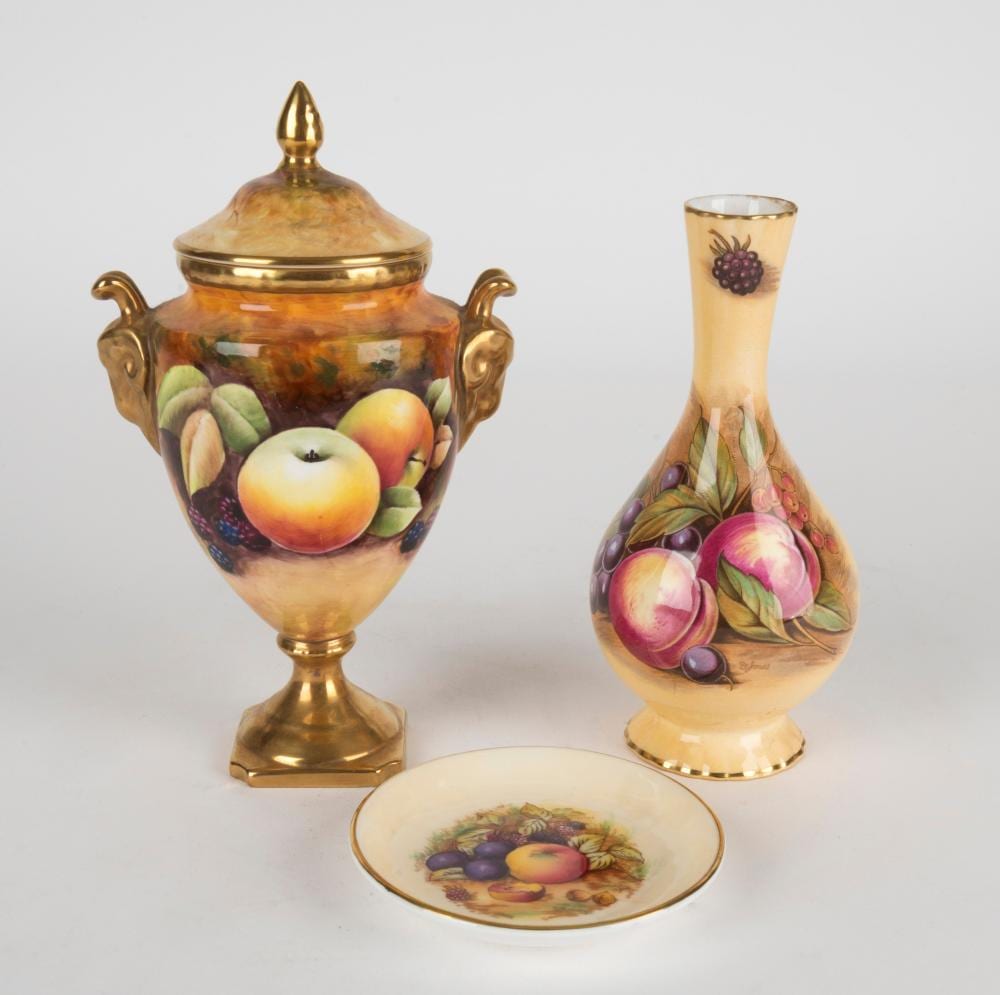 |
COALPORT vintage English porcelain lidded urn with hand-painted fruit decoration signed "M. PINTER", together with an AYNSLEY "ORCHARD GOLD" porcelain vase and pin dish, 20th century, (3 items), the urn 18cm highSource blocked; provenance matched | Leski Auctions Pty Ltd | 2023-03-18 | 326 | AUD 160 (buyer’s-premium treatment unknown) |
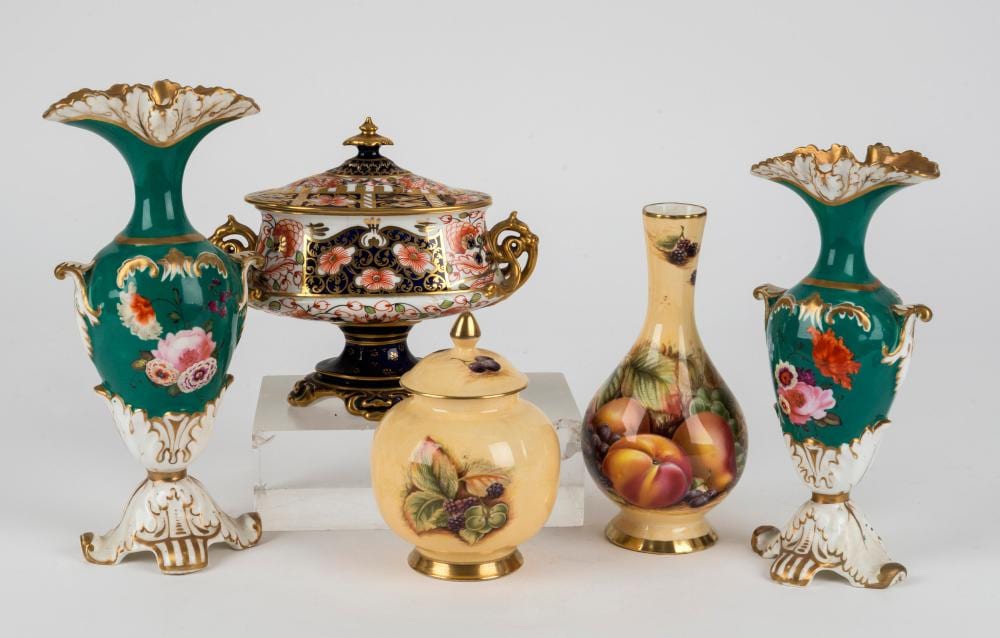 |
ROYAL CROWN DERBY lidded urn, AYNSLEY "Orchard Gold" vase and ginger jar together with a pair of antique soft paste English porcelain vases, 19th/20th century, (5 items), the largest 21cm highSource blocked; provenance matched | Leski Auctions Pty Ltd | 2023-03-18 | 387 | AUD 140 (buyer’s-premium treatment unknown) |
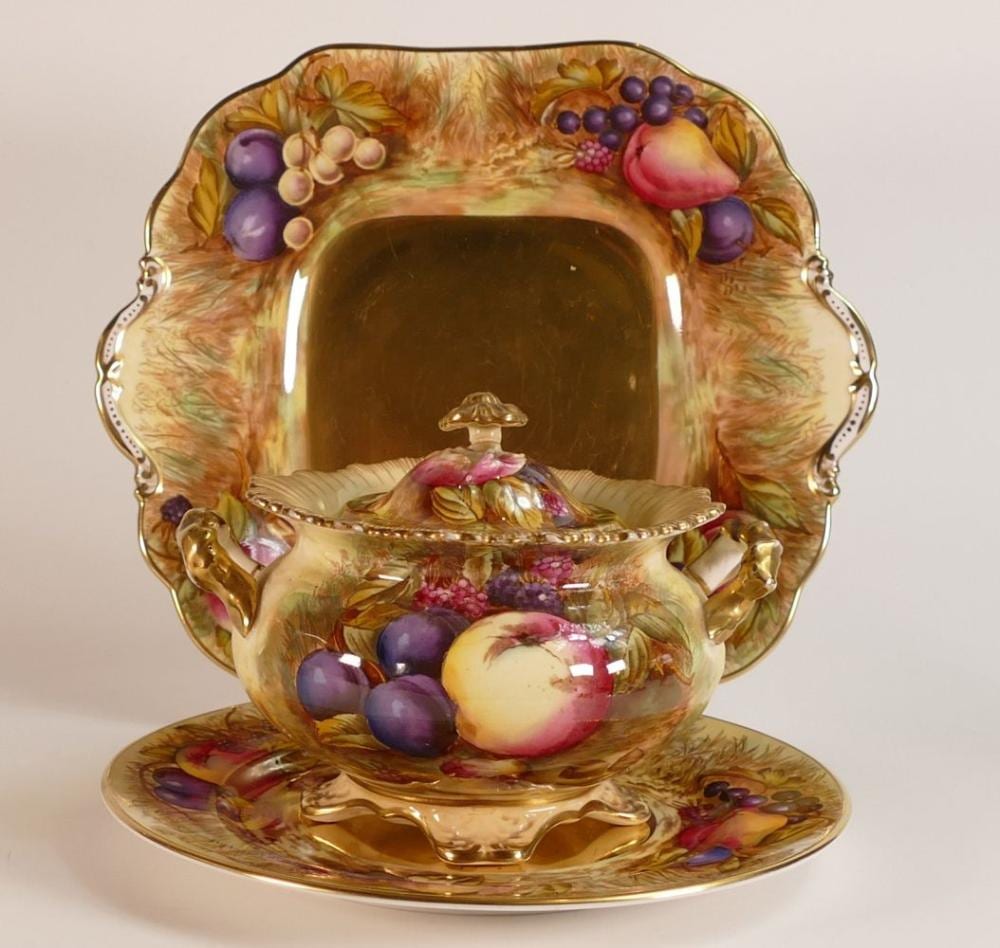 |
Aynsley, three gilt Orchard Gold items including a lidded Sucrier sugar bowl a/f, sandwich plate and plate. (3)Source blocked; provenance matched | Potteries Auctions | 2024-11-08 | 918 | GBP 80 (buyer’s-premium treatment unknown) |
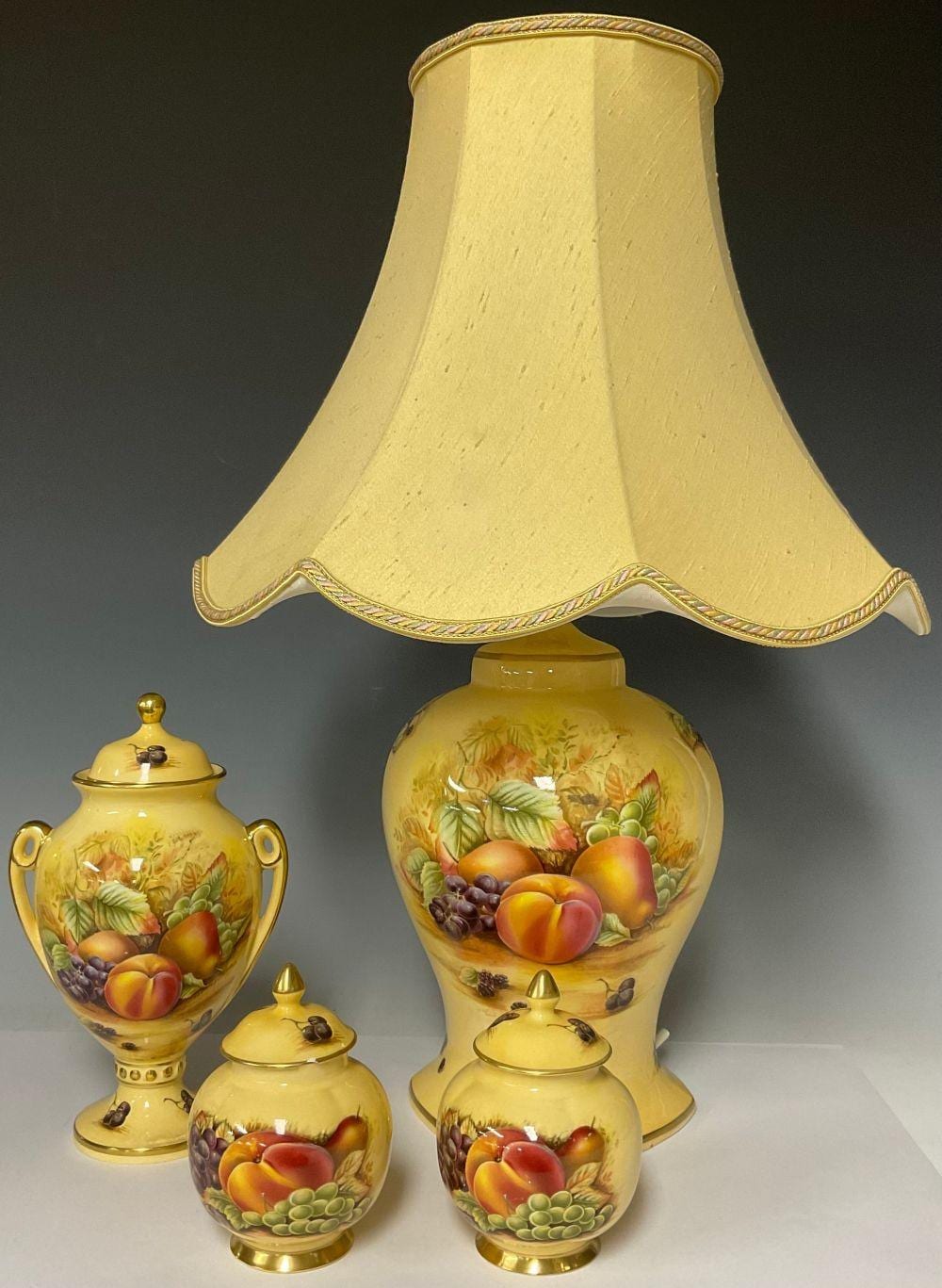 |
An Aynsley Orchard Gold pattern two-handled pedestal vase, 23cm high; a pair of Aynsley Orchard Gold ginger jars; an Aynsley Orchard Gold pattern lamp, 56cm high including shade (4)Source blocked; provenance matched | Bamfords Auctioneers and Valuers Ltd | 2024-04-17 | 72 | GBP 45 (buyer’s-premium treatment unknown) |
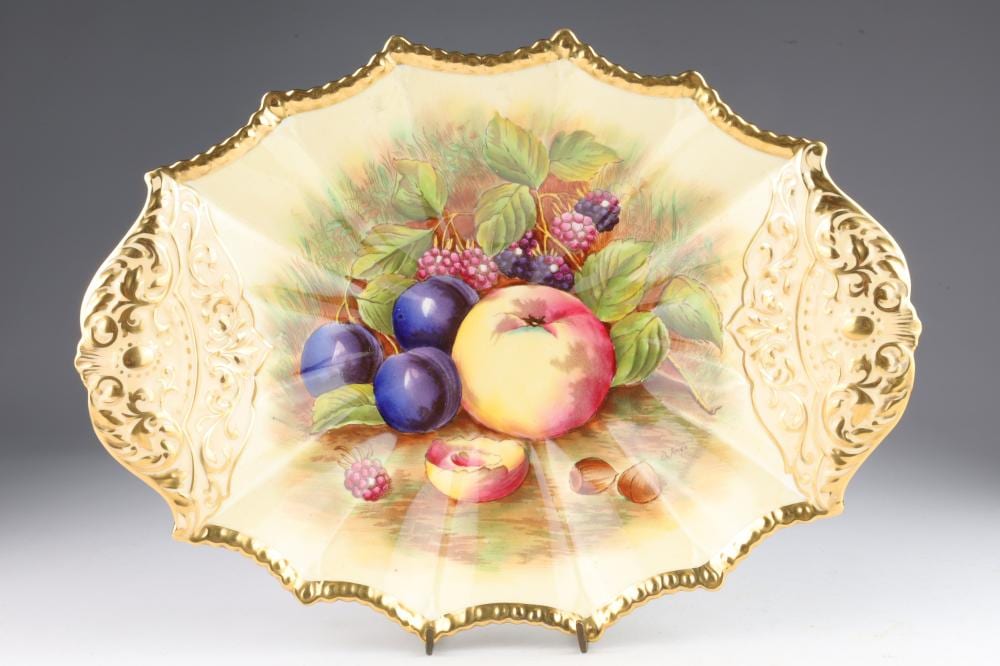 |
Aynsley Orchard Gold Shell Shaped Bowl SignedSource blocked; provenance matched | Kavanagh Auctions | 2024-03-23 | 340 | CAD 160 (buyer’s-premium treatment unknown) |
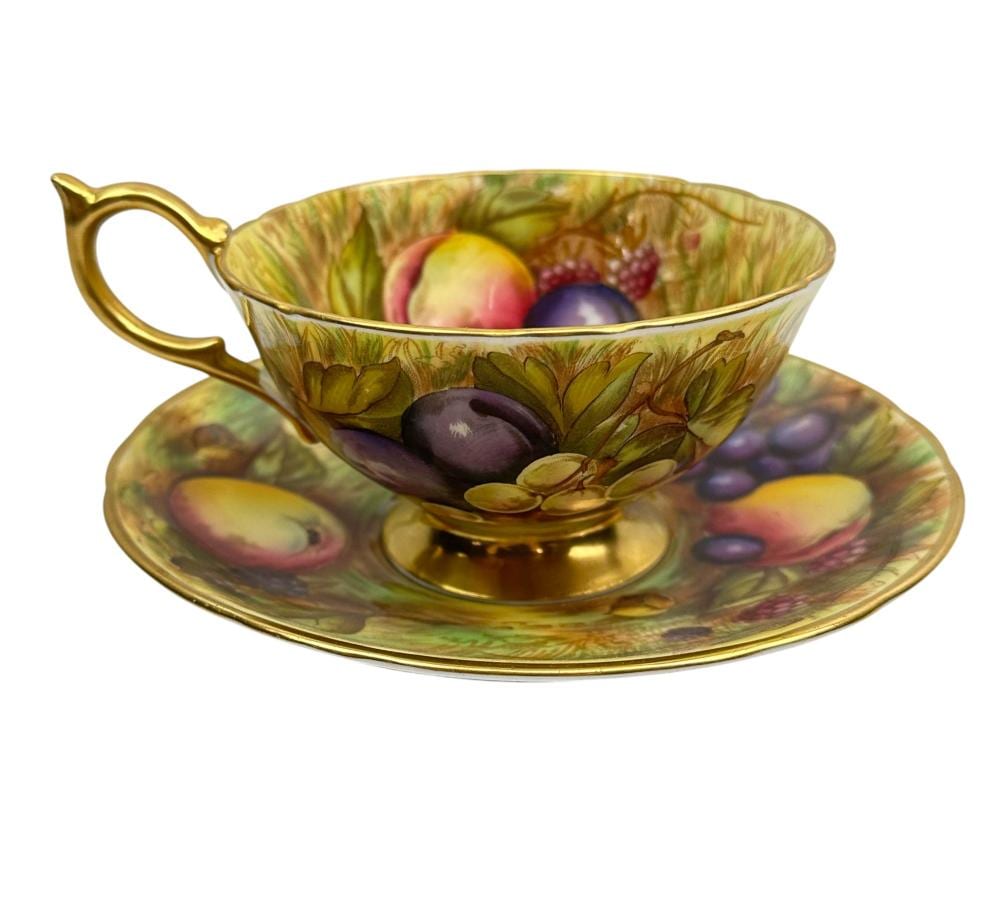 |
Aynsley Orchard Gold English China Tea Cup SaucerSource blocked; provenance matched | MiddleManBrokers | 2025-05-21 | 95 | USD 40 (buyer’s-premium treatment unknown) |
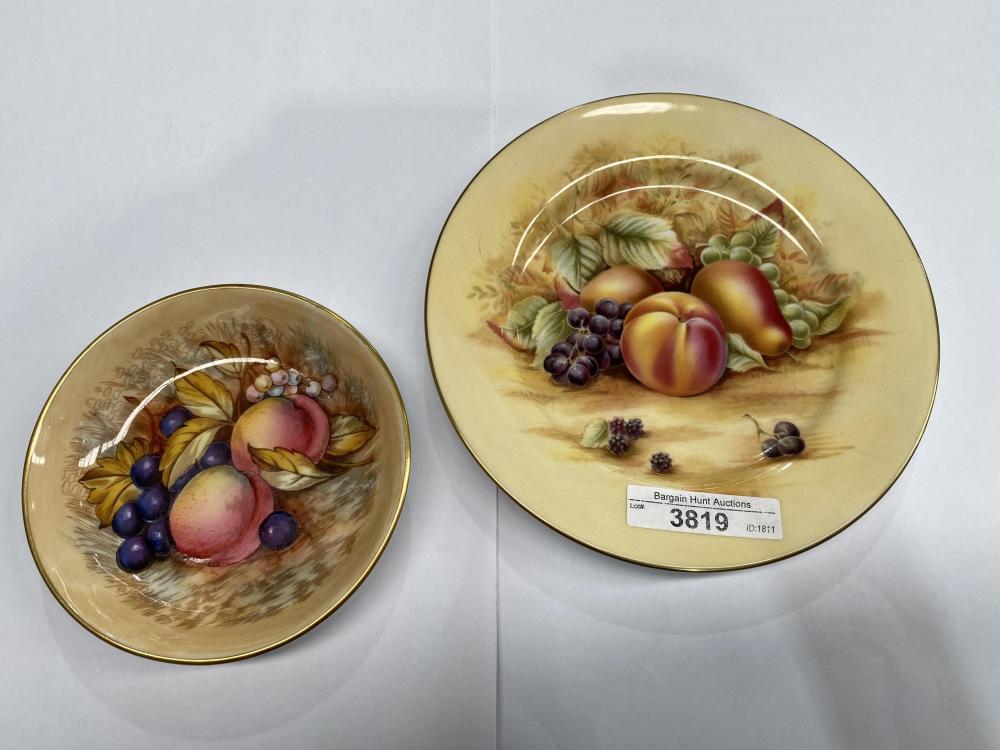 |
2 x Aynsley Orchard Gold plates - 1 side plate and small dishSource blocked; provenance matched | Bargain Hunt Auctions | 2025-02-13 | 3819 | AUD 35 (buyer’s-premium treatment unknown) |
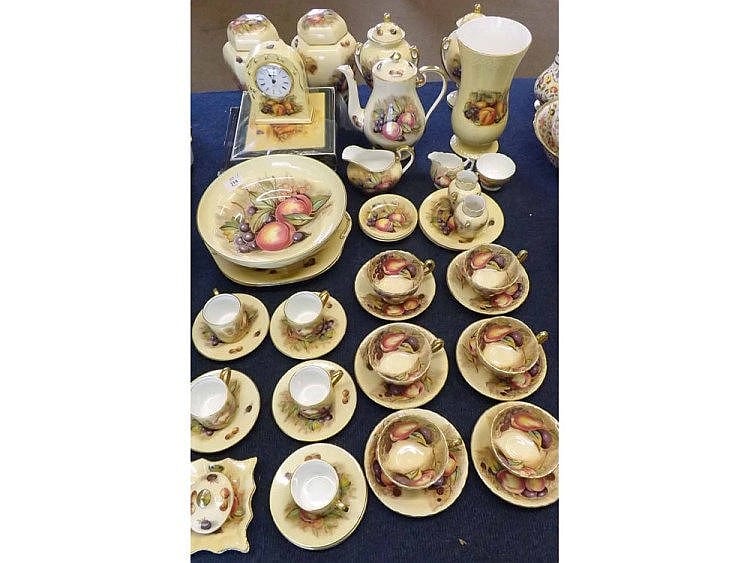 |
A large quantity Aynsley Orchard Gold China Wares to include pair of octagonal CSource blocked; provenance matched | Keys Fine Art Auctioneers | 2015-10-06 | 208 | GBP 230 (buyer’s-premium treatment unknown) |
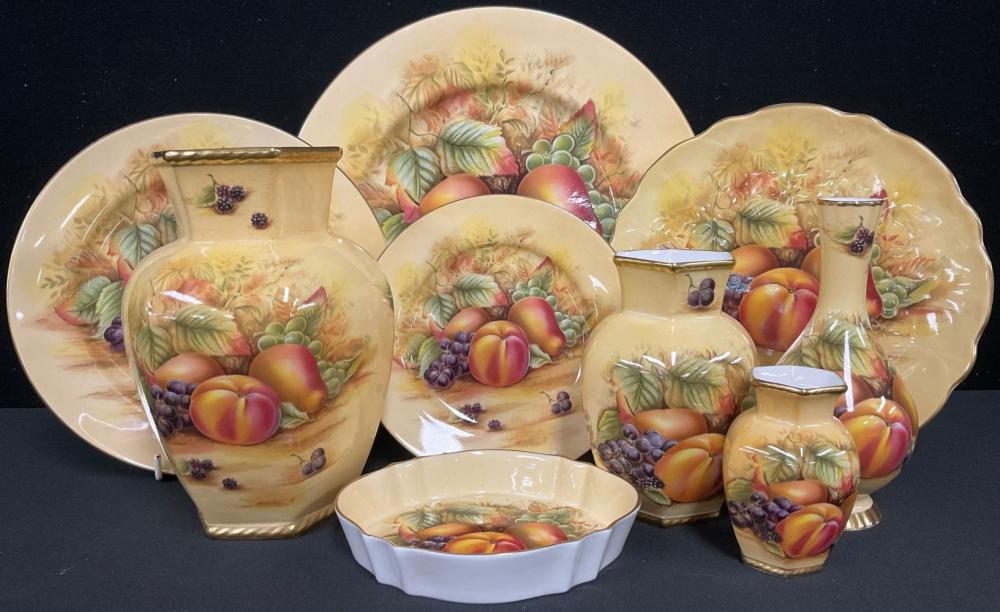 |
Aynsley Orchard Gold - two graduated vases, bud vase, plates bowls etc (9)Source blocked; provenance matched | Bamfords Auctioneers and Valuers Ltd | 2024-12-11 | 273 | GBP 20 (buyer’s-premium treatment unknown) |
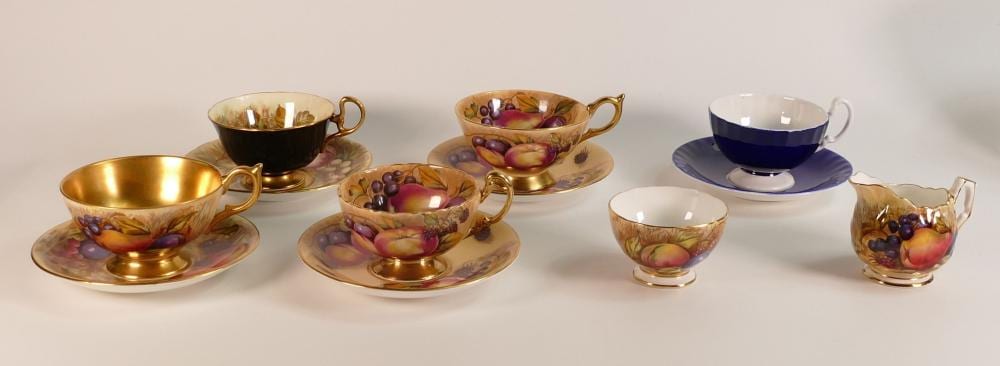 |
Aynsley, five Aynsley Orchard Gold tea cups and a small milk jug and open sugar bowl. Signed D. Jones and N. Brunt (7)Source blocked; provenance matched | Potteries Auctions | 2024-11-08 | 911 | GBP 110 (buyer’s-premium treatment unknown) |
How these auction records were verified
Each row retains its exact source URL, lot identity, retrieval time, access result, and immutable record hash. Live source access was blocked; the exact record matched Appraisily's immutable pipeline provenance. Inspect the public comparable provenance record.
Disclosure: prices are shown as reported by auction houses and are provided for appraisal context. Learn more in our editorial policy.
Free instant estimate
Not sure if your item is worth appraising? Let us take a look.
Upload a photo, tell us what you know, and get a free first read. If a full appraisal makes sense, we will say so.
Free. No card needed. Takes about two minutes.