Antique or vintage: why age matters
Most antique glass sells for modest sums, and a few types bring much more. This page lists 100 recorded auction sales; in the table below, the 68 priced in US dollars range from $9 to $1,300, with a median of $72.50. A blue pressed-glass compote sits near the bottom of that range and a Loetz silver-overlay vase well above the median. What moves the price is the type of glass (art glass, cut crystal, carnival, Depression, pressed), a known maker, a rare color or pattern, and condition: chips, cracks and dishwasher clouding cut value. Glass counts as antique at 100 years old and as vintage at 40.
According to appraisers and auction houses, truly antique glassware is at least 100 years old, while vintage pieces are typically 40+ years old. The distinction matters significantly for valuation purposes. While some mass-produced vintage pieces sell for very little, rare antique examples in excellent condition can command high prices.
Antique Glass Market Highlights
100+ years: Age requirement for true “antique” glass designation
40+ years: Age requirement for “vintage” glass designation
Most Valuable Types of Antique Glass
Evolution of Collectible Glass
- 1700s-1800s
Early American Glass
Early American glass from companies like Sandwich Glass Company and New England Glass Company can be extremely valuable, particularly pieces with historical significance or unusual colors.
- 1880s-1920s
Art Glass Era
The Art Nouveau and Art Deco periods produced distinctive art glass from makers like Tiffany, Steuben, and Loetz. These artistic pieces typically represent the high end of the antique glass market.
- 1920s-1940s
Depression Glass
Mass-produced during the Depression era, these colorful pieces now have significant collector interest. Rare patterns and colors can command premium prices despite their once-affordable origins.
- 1940s-1970s
Mid-Century Glass
This period covers everything from kitchenware to decorative pieces. Mid-century manufacturers like Fire King, Pyrex, and Fenton created distinctive pieces now in high demand.
Milk Glass
Milk glass features an opaque white appearance and has been produced since the 16th century, though American milk glass from the late 19th and early 20th centuries is most commonly collected. According to America’s Antique Mall, common milk glass pieces typically sell for modest amounts each, though rare examples can fetch significantly more.
Cut Crystal
High-quality cut crystal from prestigious makers like Waterford, Baccarat, and Lalique commands premium prices. These pieces feature precise geometric patterns cut into the glass and often have substantial weight compared to ordinary glass.
Carnival Glass
Known for its iridescent surface with a metallic sheen, carnival glass was originally given away as prizes at carnivals in the early 1900s. Today, rare patterns and colors can sell for hundreds or even thousands of dollars.
Art Glass
Art glass from renowned makers like Tiffany Studios, Steuben, and Loetz represents some of the most valuable antique glass available. These artistic pieces often incorporate innovative techniques and unique designs that can command five-figure prices at auction.
Depression Glass
Colorful Depression glass produced during the 1920s-1940s has developed a strong collector following. While common pieces sell for modest amounts, rare colors and patterns can reach hundreds of dollars.
What drives value in each type of glass
Current market price estimates based on category and condition
How to Identify Valuable Antique Glass
Look for Maker’s Marks
Many premium glass manufacturers marked their pieces, though not all did consistently. Look for:
- Acid-etched signatures (common on art glass)
- Embossed marks on the bottom
- Paper labels (though these often don’t survive)
- Distinctive pattern numbers or symbols
Examine Pattern and Design
Knowledgeable collectors can identify valuable patterns that may not be immediately obvious to beginners:
- Research popular patterns for specific manufacturers
- Note unusual or intricate design elements
- Look for hand-painted details or gold accents
- Check for unusual or rare colors
Assess Manufacturing Technique
The way a piece was made significantly impacts its value:
- Hand-blown glass (often has a pontil mark on the bottom)
- Hand-cut crystal (features precisely cut patterns)
- Pressed glass (exhibits seam lines from the mold); see pressed glass dish values
- Carnival glass (distinctive iridescent surface treatment)
Consider Color and Rarity
Color can dramatically affect value, with certain hues being more desirable:
- Unusual colors often command premiums (like blue milk glass)
- Certain manufacturers are known for specific colors
- Multi-colored pieces may be more valuable than single-colored ones
- “Test colors” or experimental pieces are highly collectible
Condition checklist for glassware
Check all applicable conditions that affect your glassware's value
- No chips, cracks, or fleabites
- Original finish intact (no wear to painted/gilded elements)
- No clouding or etching from dishwasher use
- Complete set (if applicable)
- Original box or packaging present
- No repairs or restorations
- Good clarity without internal bubbles/flaws (unless period-appropriate)
- Bright, unfaded colors
What decides antique glass value
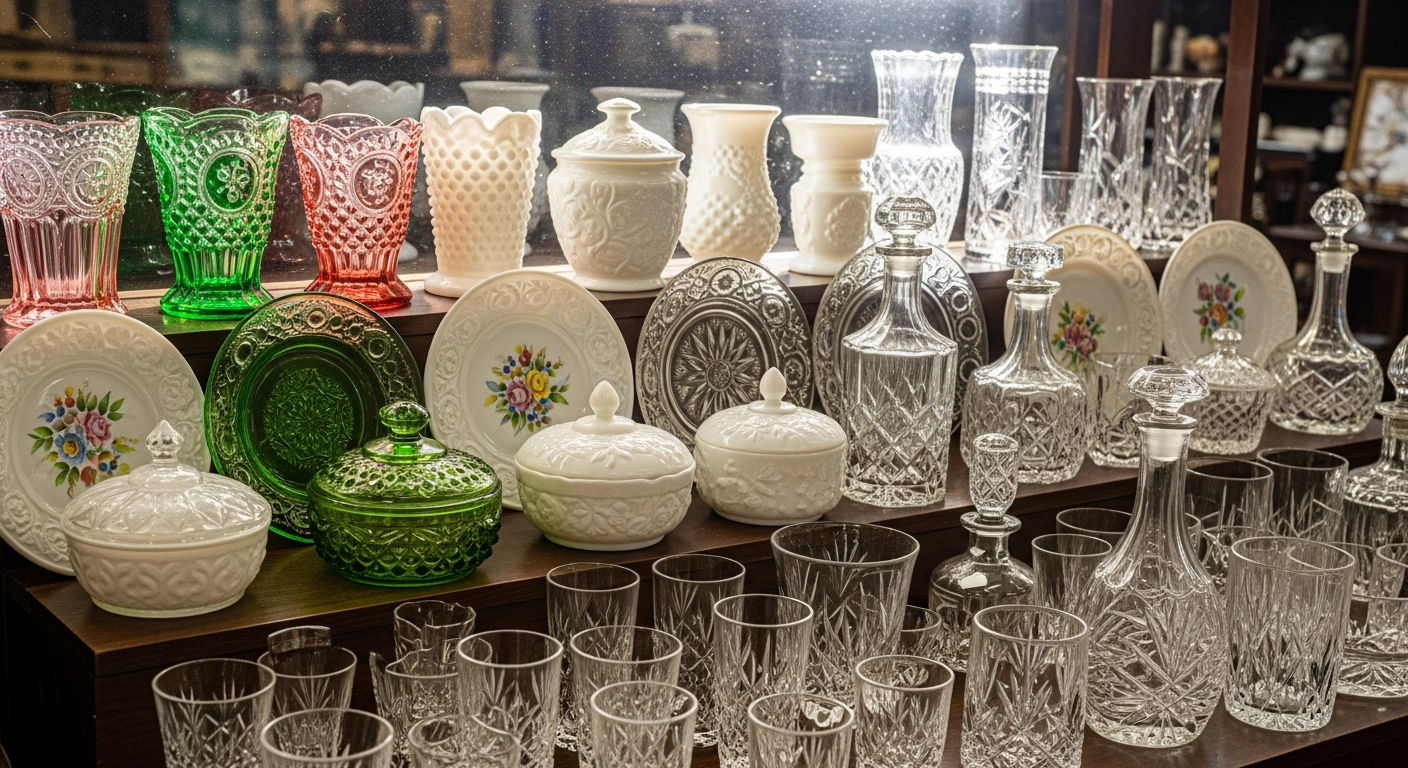
Condition
Condition is paramount for antique glass value. Even minor damage can reduce value substantially:
- Chips, cracks, or fleabites significantly diminish value
- Original finish should be intact (no wear to painted or gilded elements)
- Cloudiness from dishwasher use greatly reduces value
- Professional restoration may preserve some value but typically reduces it from mint condition
Rarity and Desirability
Scarcity drives premium prices, especially when combined with collector demand:
- Limited production runs command higher prices
- Discontinued patterns from popular manufacturers
- Unusual colors or experimental pieces
- Complete sets (especially hard-to-find serving pieces)
Provenance and History
A documented history can add significant value:
- Association with historical events or figures
- Original documentation or purchase receipts
- Exhibition history at museums or galleries
- Prior ownership by notable collectors
Originality
Distinguishing genuine antiques from modern reproductions is crucial:
- Manufacturing techniques consistent with the period
- Age-appropriate wear patterns
- Correct weight, color, and pattern details
- Proper markings for the purported maker and era
| Category | What drives value |
|---|---|
| Milk Glass (Common) | Per piece, depending on size and form |
| Milk Glass (Rare) | Rare forms, colors, or manufacturers |
| Cut Crystal (Standard) | Based on pattern and manufacturer |
| Cut Crystal (Premium) | Rare patterns, complete sets, or prestigious makers |
| Art Glass | Signed pieces from renowned artists/manufacturers |
| Depression Glass (Common) | Common patterns and colors |
| Depression Glass (Rare) | Rare colors, patterns, or complete sets |
| Carnival Glass (Common) | Common patterns and marigold color |
| Carnival Glass (Rare) | Rare patterns or unusual colors |
The Most Collectible Mid-Century Glass
Fire King
Fire King glassware, produced by Anchor Hocking from the 1940s through the 1970s, has developed a strong collector following. Particularly valuable are:
- Jade-ite (jade green opaque glass)
- Restaurant ware collections
- Unusual promotional items
- Complete nesting bowl sets
Pyrex
Vintage Pyrex, especially patterned pieces from the 1950s and 1960s, is widely collected:
- Promotional patterns with limited production runs
- Primary Colors nested mixing bowl sets
- Pattern-specific pieces like divided dishes or casseroles
- Complete sets in original packaging
Fenton Art Glass
Fenton’s colorful art glass from the mid-century period offers distinctive designs that appeal to collectors:
- Hobnail milk glass pieces
- Hand-painted decorative items
- Silver crest and gold crest lines
- Animal figurines and novelty items
Viking Glass
Known for its bold colors and modern shapes, Viking Glass produced striking mid-century designs:
- Epic line with distinctive thick bases
- Persimmon (bright orange) colored pieces
- Unusual forms like tall compotes and swung vases
- Art glass experiments with controlled bubbles
How to get antique glassware appraised
Professional Appraisal Options
For valuable or historically significant pieces, professional appraisal provides the most accurate valuation:
Appraisily signed appraisal - a signed appraisal costs $59 per item; an appraiser reviews your photos against comparable sales and signs a PDF report with the documented value.
Online Appraisal Services - Appraisily's free photo check tells you what the item is from one photo and, when it can, a rough value band. No card needed.
Appraiser associations - Look for glass specialists through organizations like the International Society of Appraisers (ISA) or the American Society of Appraisers (ASA).
Antique Shows and Events - Many antique shows feature appraisal booths where experts evaluate items for a nominal fee.
Preparing for Appraisal
To get the most accurate appraisal:
- Clean your glassware gently (without using harsh chemicals)
- Photograph pieces from multiple angles in good lighting
- Gather any documentation on provenance or history
- Research comparable pieces that have recently sold
- Be prepared to discuss any known history of the pieces
DIY Valuation Resources
While not as definitive as professional appraisal, these resources can help estimate value:
- Reference books specific to your type of glassware
- Online auction results for similar pieces
- Glass collector club publications and price guides
- Online communities focused on specific glass types
Common Questions About Antique Glass Value
How do I appraise antique glass?
- Identify the manufacturer, pattern, and approximate age
- Assess the condition (chips, cracks, wear, cloudiness)
- Determine rarity by researching production volumes and availability
- Evaluate market demand through item-specific market evidence
- Consider any special characteristics like unusual colors or experimental techniques
How can I get my glass valued?
- Appraisily’s free photo check: upload one photo to see what the item is and, when it can, a rough value band
- Look for glass specialists through appraiser associations like the International Society of Appraisers
- Attend antique shows or events that offer appraisal booths
- Join collector groups for your specific type of glass, where experts often share knowledge
What is the most collectible vintage glass?
- Colored Pyrex kitchenware, especially patterned pieces from the 1950s-60s
- Fire King glassware, particularly jade-ite (jade green opaque glass)
- Fenton Art Glass, especially hobnail milk glass and hand-painted items
- Mid-century Scandinavian art glass from makers like Orrefors and Kosta
- Certain Depression glass patterns in rare colors
Is vintage cut glass worth anything?
- Maker: Pieces from prestigious manufacturers like Waterford, Baccarat, or high-quality American cut glass companies command premium prices
- Pattern complexity: Intricate, well-executed cutting patterns are more desirable than simpler designs
- Age: Earlier examples, particularly American Brilliant Period cut glass (1876-1917), are typically more valuable than later pieces
- Condition: Any chips, cracks, or excessive wear significantly reduce value
How can I tell if my glassware is antique or vintage?
- Manufacturing techniques: Hand-blown glass with a pontil mark on the bottom, irregularities in thickness, or bubbles within the glass often indicates older pieces
- Maker’s marks: Research signatures, logos, or marks to determine when they were used
- Weight and feel: Older glass often has substantial weight and a different feel than modern pieces
- Pattern research: Identify the pattern and research when it was produced
- Glass formula: Black light testing can reveal different fluorescence properties of older glass formulations
External Resources for Antique Glass Valuation
How to Identify Antique and Vintage Glassware
Expert-backed guide on identifying different types of antique and vintage glassware by distinctive characteristics.
Antique Glassware & Vintage Glass for Sale
Marketplace featuring various antique and vintage glass with pricing examples and educational resources.
M.S. Rau Antique Glass Collection
High-end dealer showcase of museum-quality antique glass with detailed descriptions and historical context.
America's Antique Mall Glass Guide
Collector-focused guide to the most valuable types of antique glass currently in demand.
eBay Antique Glassware Marketplace
Active marketplace showing current asking prices and recently sold items to gauge market value.
Before you sell or insure glass
For the most valuable pieces, professional appraisal remains the gold standard. However, the resources in this guide provide a starting point for your own research and preliminary assessment.
Whether you’re looking to sell, insure, or simply appreciate your glass collection, knowledge is your most valuable tool. Take time to document your pieces, research their history, and preserve their condition to maintain their value for future generations.
What similar items actually sold for
Real auction sales of items like your antique glass piece. Open a sale to see the original listing.
Shown USD range: USD 9-USD 1,300. Median of these 68 USD examples: USD 72.50.


How these auction records were verified
These sales are market context, not an object estimate.
Each row retains its exact source URL, lot identity, retrieval time, access result, and immutable record hash. Live source access was blocked; the exact record matched Appraisily's immutable pipeline provenance. Inspect the public comparable provenance record.
Free photo check
Not sure if your item is worth appraising? Let us take a look.
Upload a photo, tell us what you know, and get a free photo check. If a full appraisal makes sense, we will say so.
Free. No card needed. Takes about two minutes.
Get antique glass appraised
Upload glass photos, pattern and maker details, pontil or mold marks, measurements, condition notes, set counts, and the report purpose.
- Signed report with photos and market context
- Delivered within 24 hours of receiving your photos
- Fixed, upfront pricing
No obligation. Secure upload.
Find a local antique or art appraiser
Ready for pricing guidance?
Start a secure online appraisal
Upload images and details. Delivered within 24 hours of receiving your photos.
Upload photos for a free first look View signed report sample