What antique glass dishes are worth
Most antique glass dishes are worth modest sums, and a few are worth far more. In the table below, the 69 dishes priced in US dollars range from $2 to $6,000, with a median of $30; a pink Depression glass candy dish sits near the low end and an American Brilliant cut glass cheese dish well above the median. What decides value is the type of glass (Depression, carnival, milk, cut or art glass), the pattern and color, the maker, and condition. Chips, cracks, repairs and cloudiness that won’t wash out all cut the price. Blue Depression glass is less common than pink or green.
Antique glass dishes can be both beautiful decorative pieces and valuable collectibles, from vibrant Depression glass to iridescent Carnival glass.
What appraisers check first
When evaluating antique glass dishes, appraisers and collectors typically consider:
- Age - Generally, older pieces (especially those from the 19th century) command higher prices
- Rarity - Limited production runs or discontinued patterns are more valuable
- Condition - Chips, cracks, or repairs significantly reduce value
- Origin - American-made glass from certain periods is highly sought after
- Pattern and Color - Some patterns and colors are more desirable to collectors
- Provenance - Documented history can increase value
While common pieces sell for modest sums, rare and exceptional antique glass dishes can fetch far more.
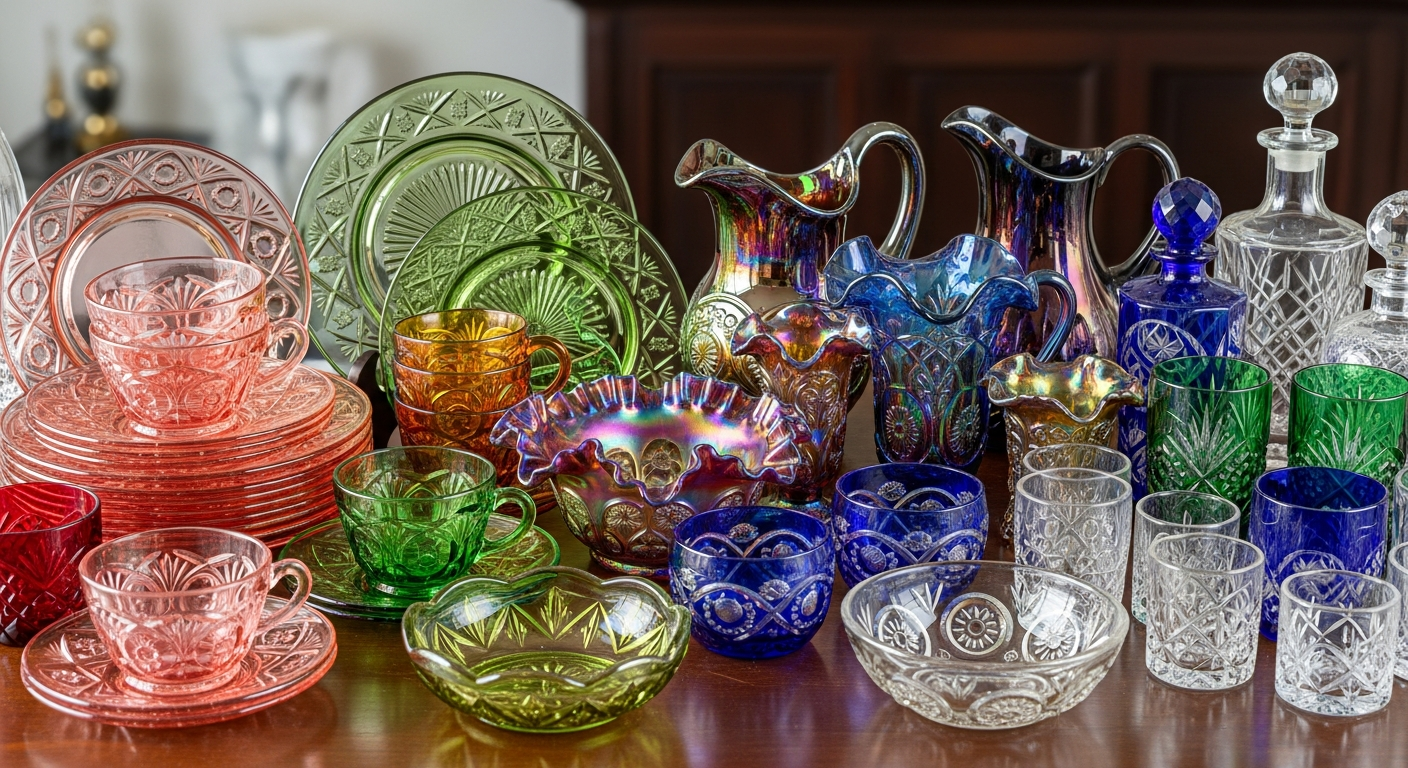
Most Valuable Types of Antique Glass Dishes
Carnival Glass
Carnival glass, with its distinctive iridescent finish, was first produced around 1908 by Fenton Art Glass Company. Originally given away as prizes at carnivals (hence the name), these pieces now range significantly in value based on pattern, color, and rarity.
Common Carnival glass pieces are modestly priced, while rare specimens can sell for thousands. For instance, a rare “Millersburg People’s Vase” in blue has sold at specialized auctions for far more than common pieces.
Depression Glass
Produced during the 1920s-1940s, Depression glass was often distributed free with purchases of other products during the Great Depression. Today, rare patterns and colors can be quite valuable.
Depression glass colors and value
How color and condition affect value
Milk Glass
Milk glass is recognizable by its opaque white appearance, though it can also be found in other colors. As noted by America’s Antique Mall, most milk glass is modestly priced per piece, though rare items from the Victorian era can command much higher prices.
Cut Glass and Crystal
American Brilliant Period cut glass (1876-1917) represents some of the most valuable antique glass dishes. These intricately cut pieces can range from several hundred dollars for small dishes to several thousand for larger, more ornate pieces in perfect condition.
Art Glass
Art glass pieces, particularly those from renowned makers like Tiffany, Steuben, or Loetz, are among the most valuable antique glass. These artistic pieces can fetch prices from the hundreds to tens of thousands of dollars depending on the maker, rarity, and artistic significance.
How to Identify Valuable Antique Glass Dishes
Examine Markings and Signatures
Many valuable glass pieces bear the maker’s mark, often found on the bottom of the item. According to The Outer Banks Candle Company, glassware with pontil marks (circular scars on the bottom from the glassmaking process) is typically considered more valuable because these marks indicate older manufacturing methods.
Look for:
- Maker’s signatures or logos
- Etched pattern numbers
- Country of origin marks
- Pontil marks on the base
Assess Pattern and Design
Certain patterns are more collectible than others. Research pattern names using collector’s guides or online resources like Etsy’s vintage glass section to compare your pieces with known patterns.
Popular valuable patterns include:
- Fenton’s Hobnail pattern in milk glass
- Imperial Glass’s Candlewick pattern
- Depression glass patterns like American Sweetheart and Cameo
Evaluate Color and Clarity
The color of antique glass can significantly impact its value. Some colors were produced in limited quantities, making them rarer and more valuable today.
Particularly valuable colors include:
- Blue depression glass (less common than pink or green)
- Vaseline glass (yellow-green glass that glows under UV light)
- Red or amethyst carnival glass (commands higher prices than more common marigold)
- Black amethyst glass (appears black but shows deep purple when held to light)
Condition checklist for glass dishes
Use this checklist to evaluate the condition of your antique glass dishes
- No chips or cracks visible
- No signs of repair or restoration
- Original color with no fading
- Pattern details are crisp and clear
- Original maker's mark or signature present
- No excessive wear on base or rim
- Piece has balanced shape with no warping
- Surface has appropriate patina for age
What affects antique glass dish value
Age and Historical Significance
Generally, older pieces hold greater value. According to Dakil Auctioneers, American-made glassware from the 19th century is particularly valuable due to its rarity and historical significance. Similarly, certain English and French glassware from the same period can command high prices.
Rarity and Scarcity
Limited production runs, experimental pieces, and items from factories that operated for only brief periods typically have higher values. For example, Northwood’s rare “Grape and Cable” pattern in ice blue carnival glass is highly sought after due to its scarcity.
Manufacturer Reputation
Pieces from prestigious manufacturers generally command higher prices:
- Tiffany Studios (Art Nouveau glass)
- Steuben Glass (fine art glass)
- Fenton Art Glass Company (carnival and art glass)
- Waterford Crystal (fine crystal)
- Lalique (art glass and jewelry)
Condition Considerations
Condition is perhaps the most critical factor affecting value. According to glass appraisal experts, the difference between mint condition and good condition can make a large difference in value.
Value-reducing damage includes:
- Chips and cracks (even small ones)
- Repairs (professionally repaired pieces are worth significantly less than intact ones)
- Excessive wear to decorative elements
- Staining or cloudiness that cannot be removed
American glassware by era
- 1800-1850
Early American Glass Period
Early hand-blown and molded glass production with distinctive regional styles. Pieces from this period are extremely valuable today.
- 1876-1917
American Brilliant Period
The golden age of American cut glass featuring elaborate patterns and exceptional craftsmanship. These pieces command premium prices in today's market.
- 1908-1930s
Carnival Glass Era
Originally inexpensive "poor man's Tiffany," carnival glass has become highly collectible with rare pieces selling for thousands.
- 1920s-1940s
Depression Glass Period
Mass-produced colored glassware that was often given away with purchases. Now collected worldwide, with value set by color, pattern, and piece type.
- 1940s-1970s
Mid-Century Modern Glass
Innovative designs from companies like Blenko and Fenton.
How to price your antique glass dishes
Research Market Evidence
One of the most effective ways to estimate value is by researching recent sales of similar items:
- Check completed listings on eBay’s Antique Glassware section
- Visit online specialty stores like M.S. Rau and Wyler Antiques
- Look through auction results from major auction houses, such as these recorded pressed glass dish sales
Consult Reference Guides
Several comprehensive guides can help identify patterns and estimate values:
- Warman’s Depression Glass: Identification and Price Guide
- Collector’s Encyclopedia of Carnival Glass
- Milk Glass: Imperial Glass Corporation
Seek Professional Appraisal
For potentially valuable pieces, consider professional attribution review and appraisal:
- Appraisers specializing in glassware
- Reputable antique dealers with glass expertise
- Auction house specialists who focus on decorative arts
As noted by Dakil Auctioneers, a professional appraiser can provide an accurate value estimate based on your glass dishes’ specific characteristics and current market conditions. If you’re not sure a dish is worth that step, you can upload a photo of the dish and its base for a free check.
Where to sell antique glass dishes
Online Marketplaces
- eBay: Reaches millions of potential buyers but involves fees and shipping logistics
- Etsy: Great for vintage items; Etsy’s vintage glass dish marketplace shows active buyers for antique glassware
- Ruby Lane: Specializes in antiques and may attract more knowledgeable collectors
Auction Houses
- Traditional Auctions: Better for higher-value rare pieces that might benefit from competitive bidding
- Online Auctions: Companies like Heritage Auctions offer specialized glass sales
- Local Auction Houses: May have lower fees but potentially smaller buyer pools
Antique Dealers and Shows
- Antique Dealers: Offer immediate payment but typically at wholesale prices
- Antique Shows: Allow for direct sales to collectors but require booth fees and time commitment
- Consignment Shops: Split proceeds but handle display and customer interaction
For items of exceptional value, specialty dealers like M.S. Rau may offer the best return, as they connect with serious collectors willing to pay premium prices for rare specimens.
| Color | Notes |
|---|---|
| Pink Depression Glass | Higher values for rare patterns |
| Green Depression Glass | Common but still collectible |
| Blue Depression Glass | Rarer color commands premium |
| Yellow Depression Glass | Moderate collectibility |
Tips for Collecting Antique Glass Dishes
Focus on a Specific Category
Specializing in one type of glassware allows you to develop deeper expertise:
- Choose a specific manufacturer (Fenton, Fostoria, Cambridge)
- Focus on a particular era (Depression era, Victorian period)
- Collect a specific pattern or color
Learn to Identify Reproductions
The antique glass market is filled with reproductions. Learn the telltale signs:
- Modern carnival glass often lacks the fine iridescence of vintage pieces
- Reproductions may have mold marks in different locations
- Colors may be slightly different from original production
- Weight and sound (when tapped) often differ from documented pieces
Build Knowledge Before Building a Collection
Before spending significantly:
- Visit museums with glass collections
- Attend glass collector club meetings and shows
- Study reference books on your area of interest
- Watch identification videos like City Farmhouse Antiques’ guide to carnival glass
Handle with Care
Proper handling and storage are essential:
- Use both hands when handling pieces
- Store items with adequate padding between them
- Clean only with appropriate methods (often just warm water)
- Display away from direct sunlight to prevent color fading
External Resources for Antique Glass Research
Explore these trusted sources for more information about antique glass values and identification
America's Antique Mall: Valuable Antique Glass Guide
Comprehensive guide to the most valuable types of antique glass with price estimates and identification tips.
M.S. Rau: Rare Antique Glassware Collection
Gallery of museum-quality antique glass with detailed descriptions and valuations of exceptional pieces.
The Outer Banks Candle Company: Identifying Antique Glass
Detailed tutorial on identifying antique and vintage glassware with visual examples and pattern identification.
Dakil Auctioneers: Determining Glassware Value
Expert guidance on evaluating whether your antique dishes and glassware have significant market value.
City Farmhouse Antiques: Identifying Carnival Glass
Video tutorial demonstrating how to identify and value antique colored carnival glass with examples.
How to clean and store antique glass
Cleaning and Maintenance
Antique glass requires special care:
- Avoid dishwashers at all costs
- Hand wash gently with mild soap and lukewarm (never hot) water
- Use soft cloths or brushes with natural bristles
- Never soak pieces with applied decorations or labels
- Allow to air dry naturally or dry with a soft, lint-free cloth
Display Considerations
How you display your collection affects both enjoyment and preservation:
- Keep pieces away from direct sunlight to prevent color fading
- Secure displays to prevent tipping or falling
- Use museum gel or wax to stabilize pieces on shelves
- Consider glass display cabinets to reduce dust accumulation
- Place more valuable or fragile pieces out of high-traffic areas
Documentation and Insurance
For valuable collections:
- Create a detailed inventory with photographs and descriptions
- Keep records of purchase receipts, appraisals, and provenance
- Consider specialized insurance coverage for high-value items
- Update appraisals every 3-5 years as market values change
Common Questions About Antique Glass Dish Values
Are glass dishes worth anything?
How do I appraise antique glassware?
- Examine the piece for maker’s marks, signatures, or pattern numbers
- Research the manufacturer and pattern using reference books or online resources
- Check the condition carefully, noting any chips, cracks, or repairs
- Compare with similar pieces that have recently sold using online marketplaces or auction records
- Consider consulting a professional appraiser for valuable or rare pieces
What is the most valuable antique glassware?
- Rare Tiffany art glass pieces (can sell for tens of thousands)
- American Brilliant Period cut glass from 1876-1917 (especially large, intricate pieces)
- Rare carnival glass patterns in unusual colors (particularly ice blue, red, and aqua opalescent)
- Early American pattern glass from before 1860
- Art glass from renowned European makers like Lalique, Gallé, and Daum
How can I tell if my Depression glass is valuable?
- Color - Pink, blue, and lavender are generally more valuable than green or amber
- Pattern - Rare patterns like Cameo, Mayfair, and Parrot command higher prices
- Piece type - Unusual pieces like covered candy dishes are worth more than common plates
- Condition - Must be excellent with no chips or cracks
- Complete sets - Full place settings or serving piece sets often bring premium prices
What is collectible glassware from the 40s, 50s, and 60s?
1940s:
- Late Depression glass patterns
- Early Pyrex colored bowls and bakeware
- Elegant glass from Fostoria and Cambridge
1950s:
- Blenko art glass in bright colors
- Mid-century modern Scandinavian glass
- Murano Italian art glass
- Federal Glass Company’s patterned tumblers
1960s:
- Viking glass in bright colors
- Fenton hobnail milk glass
- Anchor Hocking Fire-King Jadeite
- Mid-century barware sets and cocktail glasses
How can I identify antique glassware patterns?
- Look for maker’s marks or signatures on the bottom
- Examine distinctive pattern elements and compare to reference guides
- Note the color, texture, and manufacturing techniques
- Check online pattern identification resources like Replacements.com
- Join collector groups on social media for pattern identification help
- Bring pieces to antique shows for expert opinions
- Use pattern identification books specific to your type of glass
What makes carnival glass rare and valuable?
- Color - Pastel colors like ice blue, aqua opalescent, and red are rarer and more valuable than common marigold
- Pattern - Some patterns were produced in limited quantities
- Shape - Unusual shapes like hatpins, powder jars, or animal figurines command premiums
- Manufacturer - Pieces from Northwood, Millersburg, and Fenton are especially prized
- Iridescence quality - Strong, vibrant iridescence is more desirable
Where is the best place to sell valuable antique glass dishes?
For high-value pieces:
- Specialized auction houses like Skinner, Bonhams, or Heritage Auctions
- High-end antique dealers or consignment galleries
- Specialized glass collector shows
For mid-value pieces:
- Online marketplaces like eBay or Etsy
- Regional auction houses
- Antique malls on consignment
For lower-value pieces:
- Direct sales via Facebook Marketplace
- Local antique shops
- Collector club sales or swap meets
Before you sell or insure glass dishes
Collectors show particular interest in rare, high-quality pieces from notable manufacturers.
Whether you’re inheriting family heirlooms, hunting for treasures at estate sales, or deliberately building a collection, understanding the factors that influence antique glass dish values can help you make informed decisions.
Remember that condition is paramount—even a rare piece with damage will typically sell for significantly less than a more common piece in perfect condition. When building a collection, focus on quality over quantity, and always purchase the best examples you can afford.
For those with potentially valuable pieces, professional appraisal remains the gold standard for determining true market value. Online resources and reference guides can provide excellent starting points, but the nuanced expertise of a specialist can reveal hidden value or document questionable pieces.
What similar items actually sold for
Real auction sales of items like your antique glass dish. Open a sale to see the original listing.
Shown USD range: USD 2-USD 6,000. Median of these 69 USD examples: USD 30.


How these auction records were verified
These sales are market context, not an object estimate.
Each row retains its exact source URL, lot identity, retrieval time, access result, and immutable record hash. Live source access was blocked; the exact record matched Appraisily's immutable pipeline provenance. Inspect the public comparable provenance record.
Free photo check
Not sure if your item is worth appraising? Let us take a look.
Upload a photo, tell us what you know, and get a free photo check. If a full appraisal makes sense, we will say so.
Free. No card needed. Takes about two minutes.
Get antique glass appraised
Upload glass photos, pattern and maker details, pontil or mold marks, measurements, condition notes, set counts, and the report purpose.
- Signed report with photos and market context
- Delivered within 24 hours of receiving your photos
- Fixed, upfront pricing
No obligation. Secure upload.
Find a local antique or art appraiser
Ready for pricing guidance?
Start a secure online appraisal
Upload images and details. Delivered within 24 hours of receiving your photos.
Upload photos for a free first look View signed report sample