A Victorian Era Solid Wood Oak French Renaissance Revival Style Circa Late 19th Century: appraisal and value basics
A Victorian Era Solid Wood Oak French Renaissance Revival Style Circa Late 19th Century research should start with identification, condition, provenance, and recent comparable sales. Use this guide to compare the signals that matter before paying for a formal appraisal or deciding whether to sell.
Victorian-era dining suites in the French Renaissance Revival taste can look “older than they are” at first glance: heavy carved oak, strapwork panels, bold crest rails, and ornate feet echo 16th-century French furniture. Most examples you’ll see on the market today, however, were made in the late 19th century (and sometimes later) for households that wanted a grand, historic look in the dining room.
The legacy WordPress post behind this migration described a complete suite: an extendable dining table, six chairs, a large side cabinet with working locks and keys, a ceiling light, and a high-back hallway chair with storage under the cushion. This guide turns those notes into a collector-friendly workflow: how to confirm the style and era, what condition issues matter most, and how to build a value range that matches your local market.
Free photo check
Not sure if your item is worth appraising? Let us take a look.
Upload a photo, tell us what you know, and get a free photo check. If a full appraisal makes sense, we will say so.
Free. No card needed. Takes about two minutes.
At-a-glance identification checklist
Before you compare prices, write down what you can confirm quickly, without disassembling anything. These notes help you match your suite to the right comparables (and avoid pricing a “style” reproduction as a true 1800s set).
- Pieces included: table dimensions + extension method, chair count, sideboard/buffet, any extra hall chair or light fixture.
- Wood species: solid oak vs. oak veneer over softwood; look for medullary rays on quarter-sawn panels.
- Carving motifs: strapwork, masks, acanthus, claw feet, cartouches, and columns are common Renaissance Revival signals.
- Hardware clues: key escutcheons, hinge style, and screw types (machine-cut screws indicate later than 18th century).
- Condition changes: reupholstered seats, refinishing, repaired cracks, missing leaves, replaced locks/keys.
What “French Renaissance Revival” means (and what it doesn’t)
Renaissance Revival (sometimes cataloged as “Henri II style”) is a 19th-century historic revival. It borrows the visual language of 1500s–1600s France—arched panels, classical ornament, and bold symmetry—but it is not Renaissance-period furniture.
That distinction matters for valuation. True 16th–17th century furniture is exceptionally scarce and typically shows hand-forged hardware and different construction conventions. A late-19th-century suite can still be highly valuable, especially if it’s a matched set with strong carving, solid oak, and excellent preservation.

Dating & construction checklist (10 minutes, no tools)
- Confirm revival motifs. Strapwork panels, masks, columns, and heavy symmetry signal Renaissance Revival taste.
- Look at screws and hinges. Uniform machine screws and standardized hinges support late-19th-century manufacture.
- Check hidden tool marks. Circular saw marks and consistent turning are typical of Victorian-era workshops.
- Inspect the table extension. Photograph the mechanism and rails; missing leaves or warped rails impact value.
- Open the sideboard. Photograph drawer construction, backs, and hardware; working locks/keys are a plus.
- Document upholstery work. Seat reupholstery is normal; note if original buttons/trims remain.
Materials: confirming solid oak (and why it matters)
Solid oak is a major driver of durability (and buyer confidence) in carved dining furniture. Many suites use solid oak structurally (legs, rails, posts) and veneer where it’s visually effective (large panels). Neither is inherently “bad,” but thick solid components and stable panels usually bring stronger prices.
Quick checks: look for end grain in hidden areas (undersides and back edges), medullary rays on quarter-sawn surfaces, and consistent weight across pieces. The WP notes mention original buttons on the upholstery and that the seat cloth was replaced—reupholstery is common; the key is whether chair frames remain tight and unaltered.
Value guide (AUD & USD): auction vs. private sale vs. insurance
Values vary dramatically by country and completeness. In Australia, well-presented full dining suites can achieve materially higher private-sale values than single pieces at U.S. local auctions because supply is thinner and importing large furniture is costly.
| Market context | Typical range | What moves it up |
|---|---|---|
| Local auction (hammer) | US$800–$3,500 (suite) / AU$1,200–$5,500 | Complete set, strong carving, clear photos, minimal repairs needed, local pickup demand. |
| Private sale / local dealer | US$3,500–$9,000 / AU$5,500–$14,000 | Matched suite, tight chairs, smooth extension, working locks/keys, tasteful upholstery, proven origin. |
| Insurance replacement (retail) | Often AU$10,000+ | Documentation, restoration receipts, strong retail comparables, and the cost to replace a matching suite. |
The legacy appraisal-style figure in the original WP post was AU$12,000–14,000 for the complete suite described (table, chairs, side cabinet, light, and hall chair) in excellent condition. Treat that as a replacement-style benchmark for a full matched set, then adjust for your local market and the suite’s exact condition.
How to sell a carved oak dining suite without leaving money behind
- List the suite as a set first. Matched suites can command a premium; only split pieces if the set doesn’t move.
- Photograph function. Show the table extending (both sides if applicable), plus close-ups of carved details and hardware.
- Document the sideboard interior. Photograph locks, keys, drawer construction, and any maker labels or stamps.
- Be honest about upholstery. “Seats reupholstered; original buttons retained” is valuable detail.
- Choose your channel. Large furniture often sells best locally because shipping is expensive and risky.
- Price strategically. For a faster sale, start around 70–85% of your private-sale range and negotiate around pickup logistics.
What similar items actually sold for
Real auction sales of items like your renaissance revival dining. Open a sale to see the original listing.
Shown USD range: USD 600-USD 3,750. Median of these 5 USD examples: USD 750.
| Comparable | What sold | Auction house | Date | Lot | Source-reported amount |
|---|---|---|---|---|---|
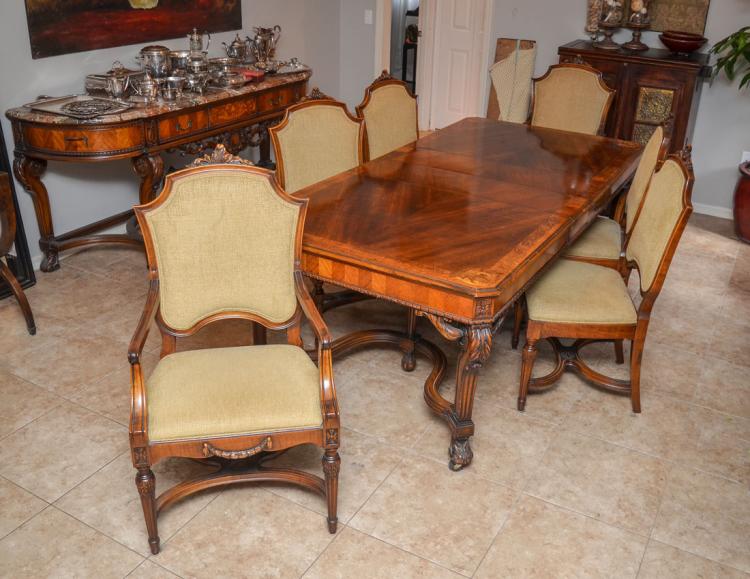 |
ITALIAN RENAISSANCE REVIVAL DINING SUITE | Burchard Galleries Inc | 2018-02-25 | 1101 | USD 3,750 |
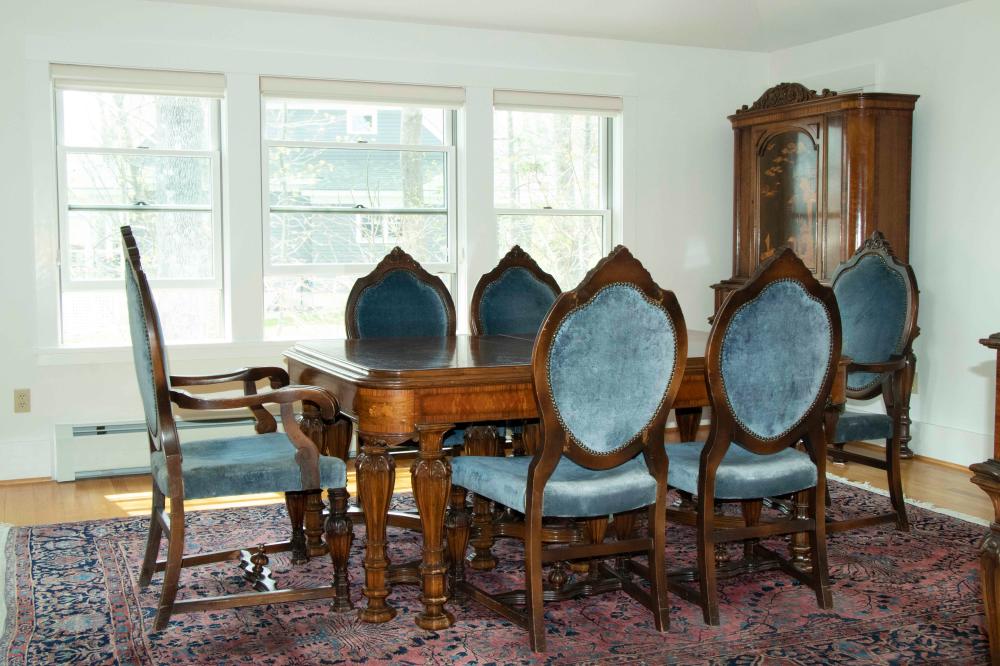 |
(10 PC) RENAISSANCE REVIVAL DINING SUITE | Thomaston Place Auction Galleries | 2023-07-09 | 3249 | USD 600 |
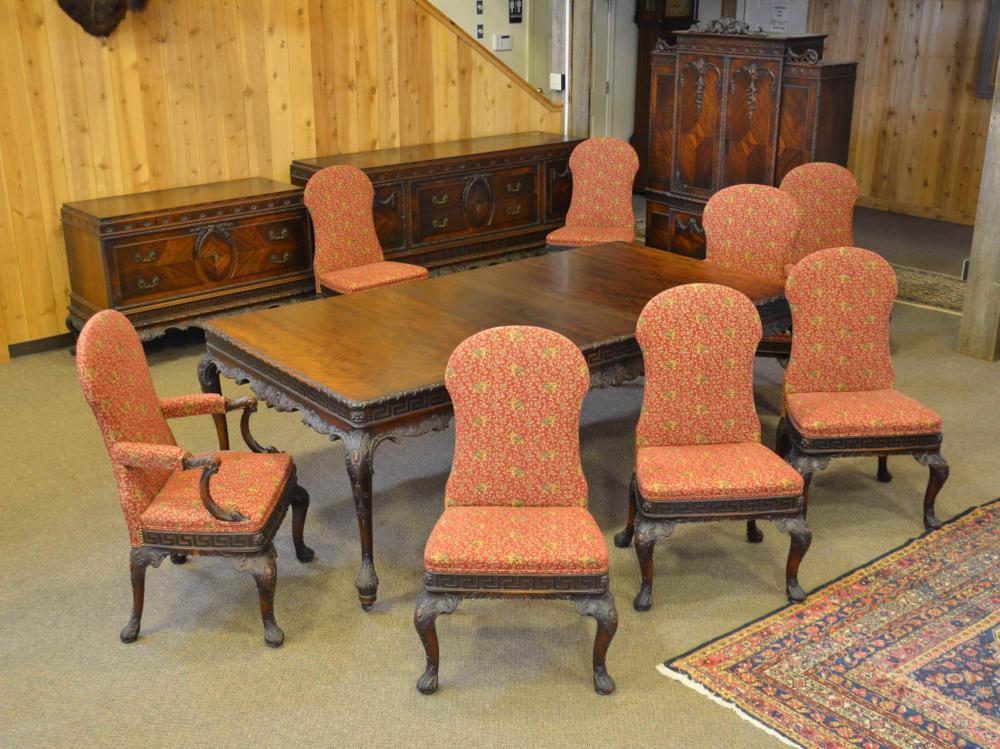 |
12 PIECE RENAISSANCE REVIVAL DINING ROOM SET. | Poulin Antiques & Auctions | 2024-08-27 | 1345 | USD 750 |
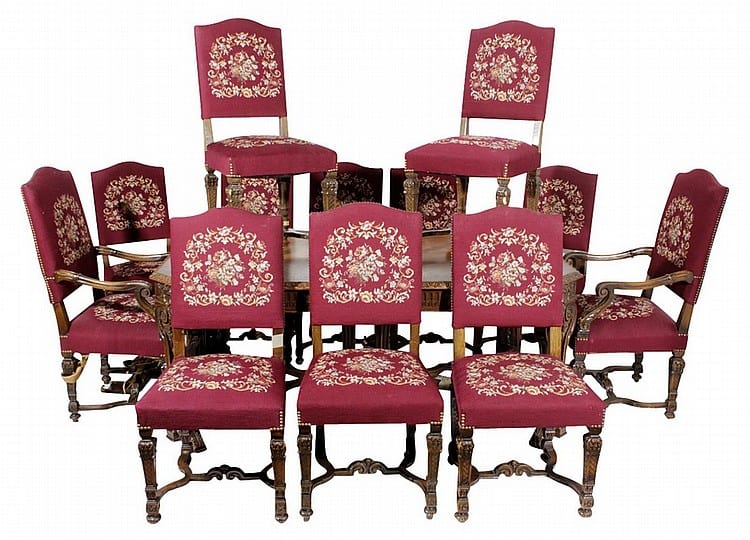 |
Renaissance Revival Dining Table & 12 Chairs | Peachtree & Bennett | 2018-06-09 | 88 | USD 750 |
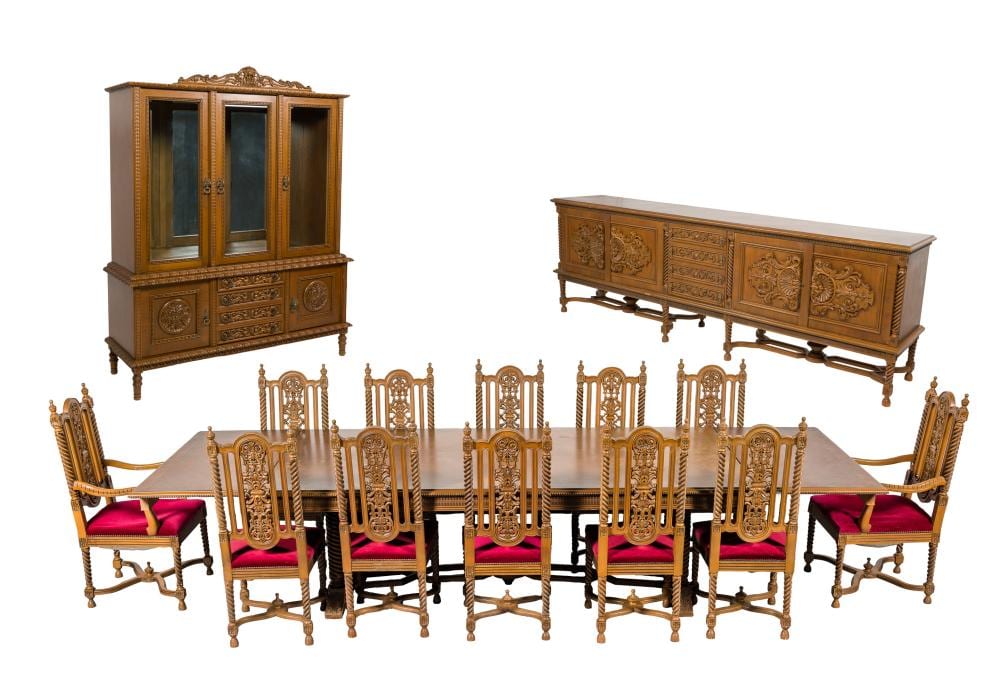 |
12 SEAT RENAISSANCE REVIVAL DINING ROOM SUITE | Cordier Auctions & Appraisals | 2022-11-19 | 59 | USD 1,000 |
How these auction records were verified
These sales are market context, not an object estimate.
Each row is tied to its lot identity, retrieval time, access result, and immutable record hash. Live source access was blocked; the exact record matched Appraisily's immutable pipeline provenance. Inspect the public comparable provenance record.
Search variations collectors ask
Readers often Google:
- how to date a French Renaissance Revival oak dining set
- Victorian carved oak dining suite value Australia
- how to tell Renaissance Revival furniture from original Renaissance
- oak Renaissance Revival sideboard with original keys value
- what affects value of extendable Victorian dining tables
- best way to sell an antique dining suite locally without shipping
- insurance replacement value for late 19th century carved oak suite
- Swiss-made Victorian oak furniture identification marks
Each question is answered in the valuation guide above.
Key takeaways
- “Renaissance Revival” is a 19th-century historic style; construction clues help confirm late-1800s production.
- Completeness matters: a matched suite (table + chairs + sideboard) typically outperforms single pieces.
- Working mechanisms and hardware (extensions, locks, keys) are value multipliers when documented clearly.
- Expect lower outcomes at local auctions; private sale and insurance values are often higher because they reflect replacement cost.
References
- Victoria and Albert Museum (V&A), collection notes on 19th-century historic revival furniture (Renaissance Revival / Henri II style).
- General furniture conservation guidance on finishes, adhesives, and structural repairs from museum conservation practice summaries.
- Auction dataset entries cited in-text (O'Gallerie; Leonard Joel; Mebane Antique Auction) as price-context examples.