What similar items actually sold for
Real auction sales of items like your royal vienna vases. Open a sale to see the original listing.
Shown USD range: USD 20-USD 600. Median of these 8 USD examples: USD 187.50.
| Comparable | What sold | Auction house | Date | Lot | Source-reported amount |
|---|---|---|---|---|---|
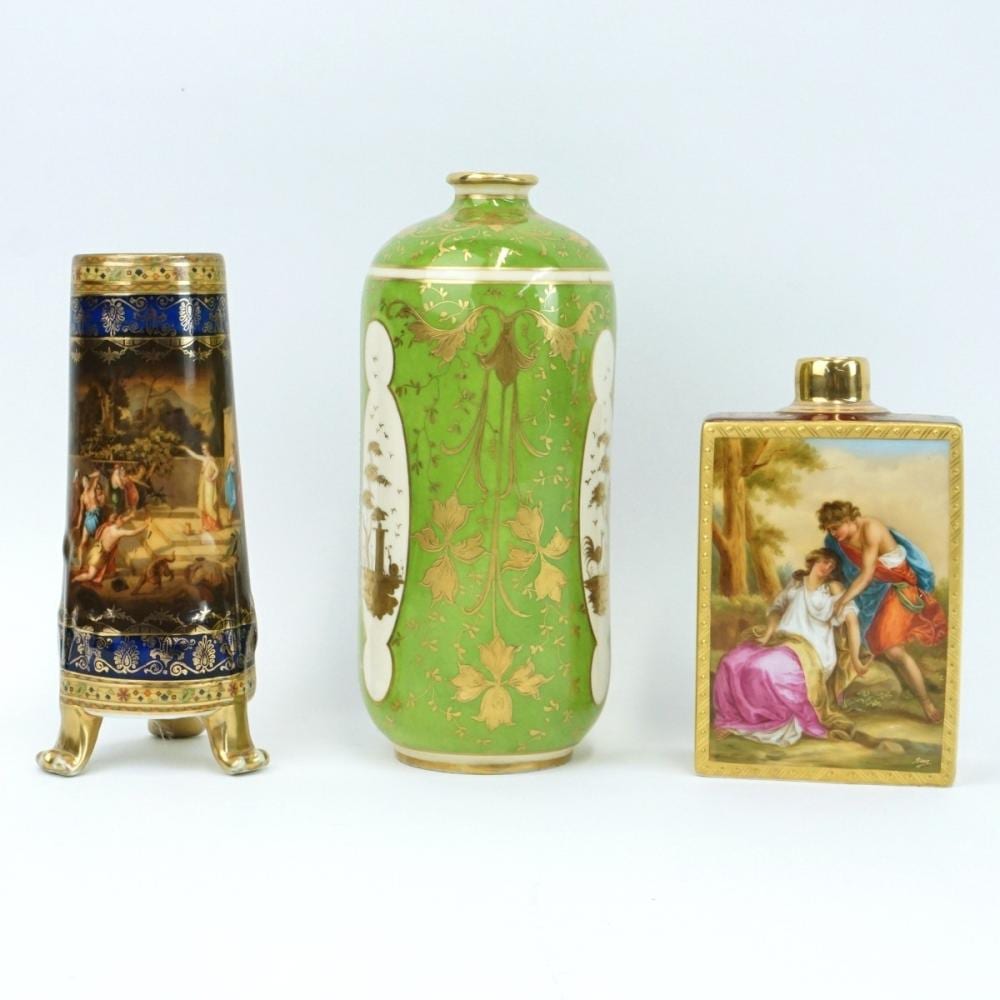 |
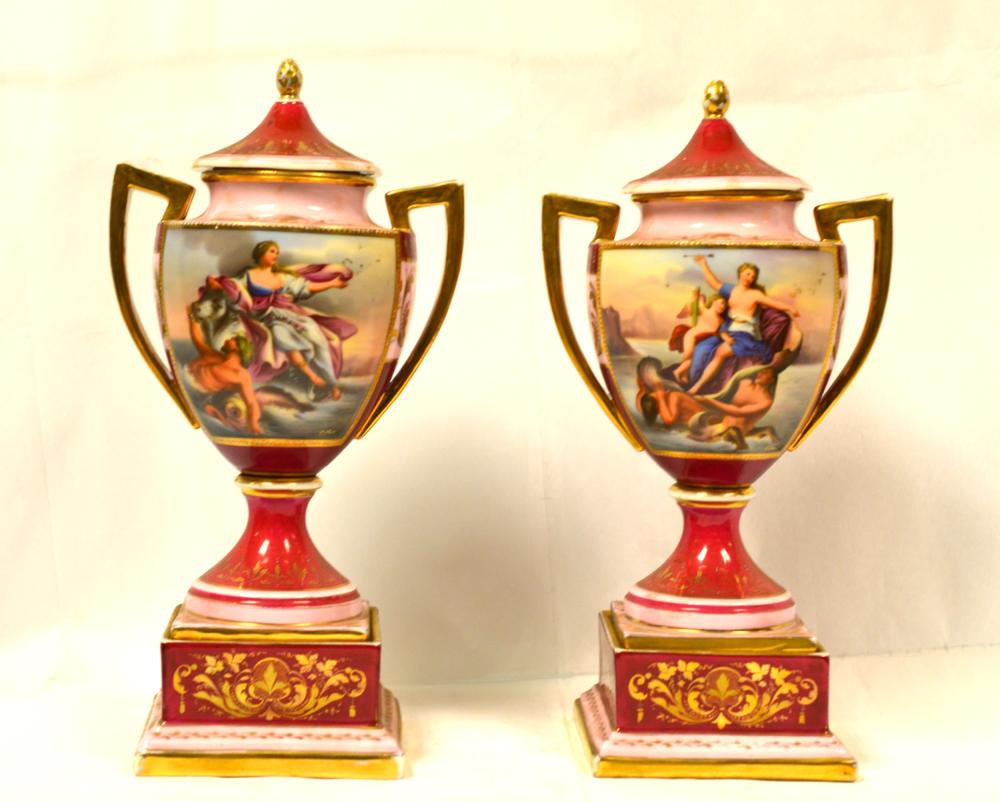
Royal Vienna Vases | Kodner Galleries | 2022-03-23 | 107 | USD 125 |
 |
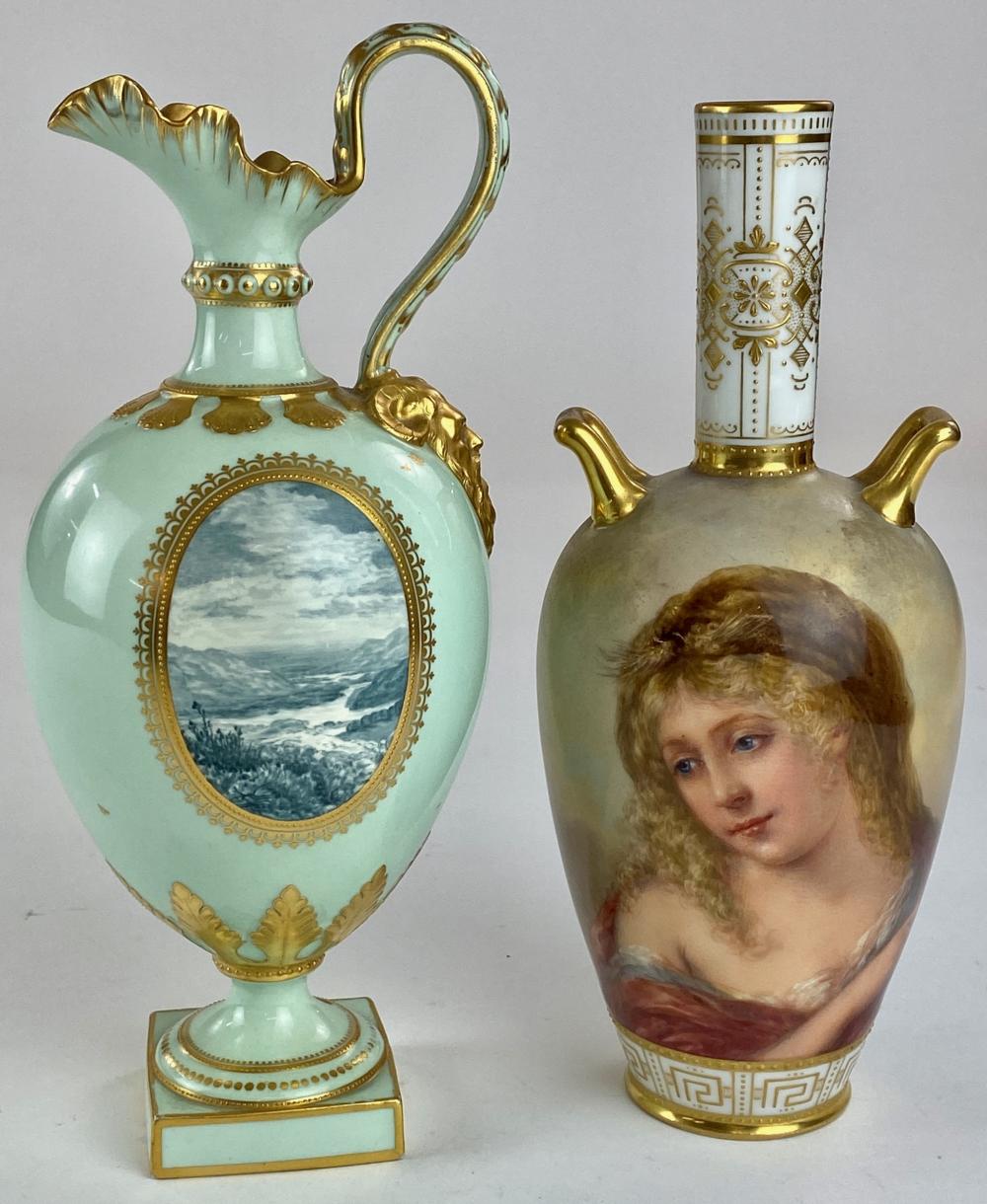
Pr Royal Vienna Vases | The Popular Auction, LLC | 2023-02-26 | 72 | USD 600 |
 |
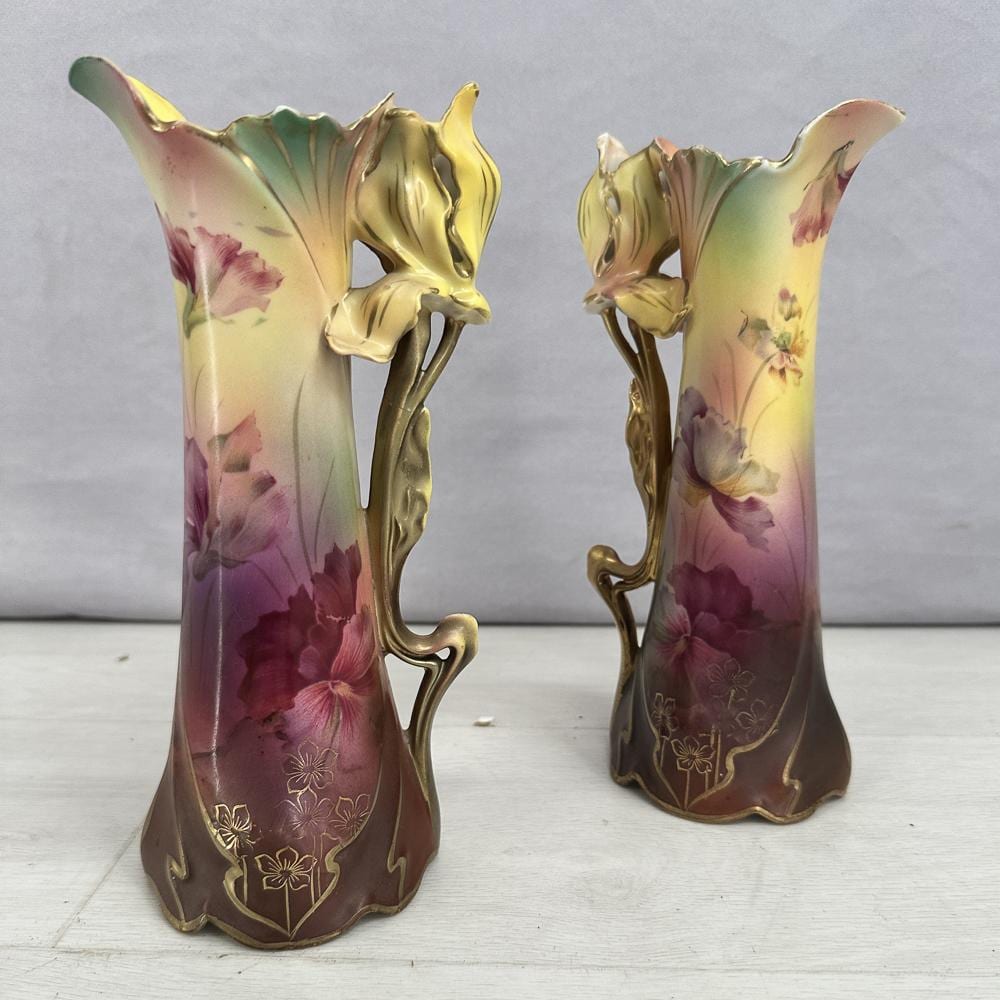
Pair of Royal Vienna Vases | Caza Sikes | 2021-06-06 | 9 | USD 425 |
 |
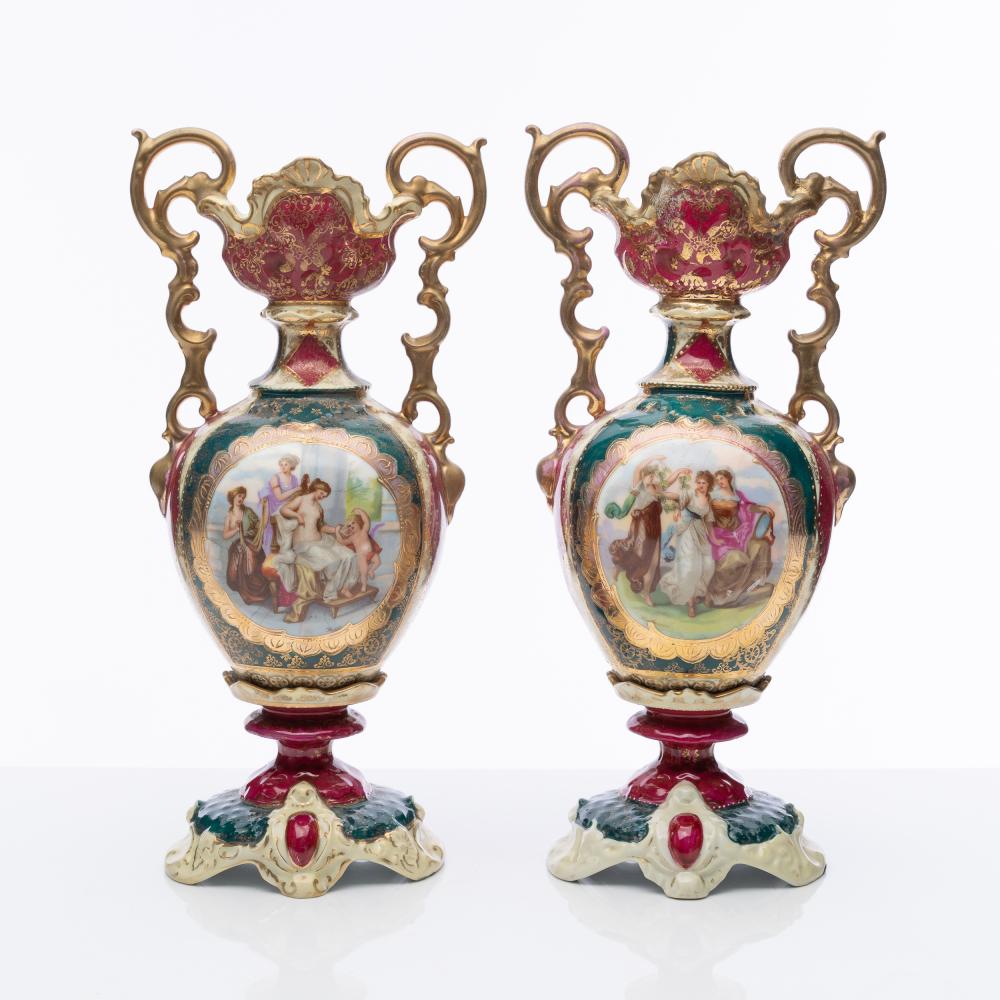
PAIR ROYAL VIENNA VASES, EWERS | Ashcroft and Moore | 2024-08-15 | 38 | USD 325 |
 |
Pair of Royal Vienna vases, Height 35cm | Lawsons | 2024-04-24 | 75 | AUD 200 |
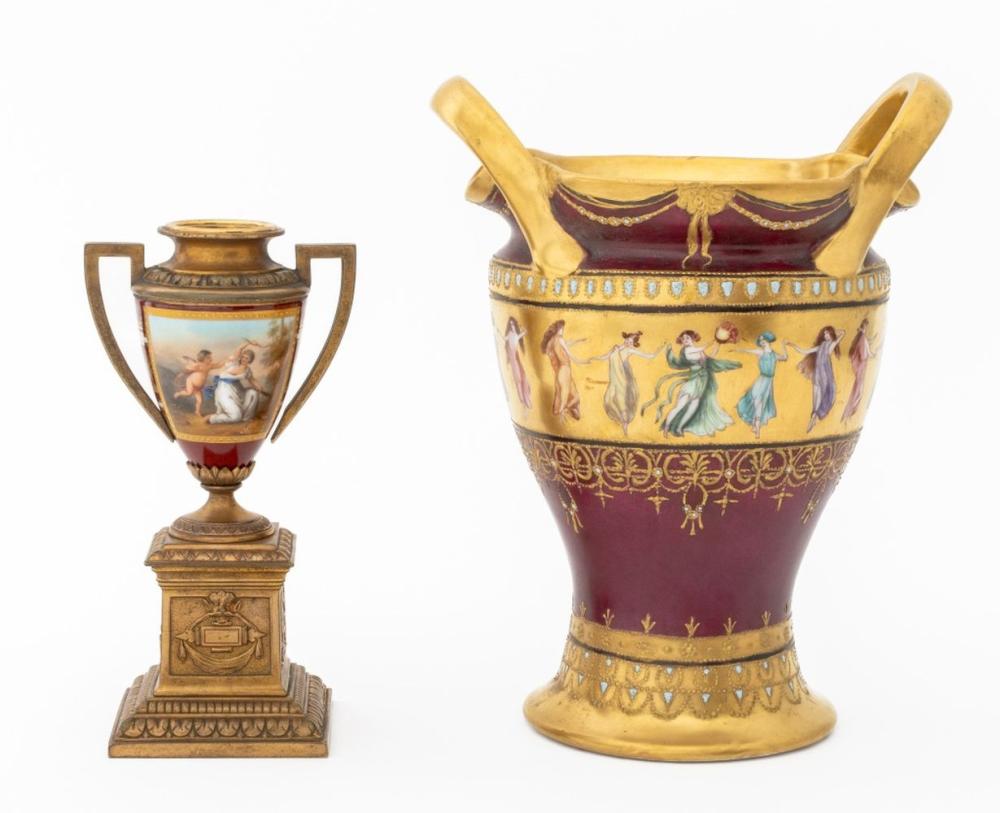 |
Royal Vienna Porcelain Vases, 2 | Auctions at Showplace | 2025-11-25 | 166 | USD 250 |
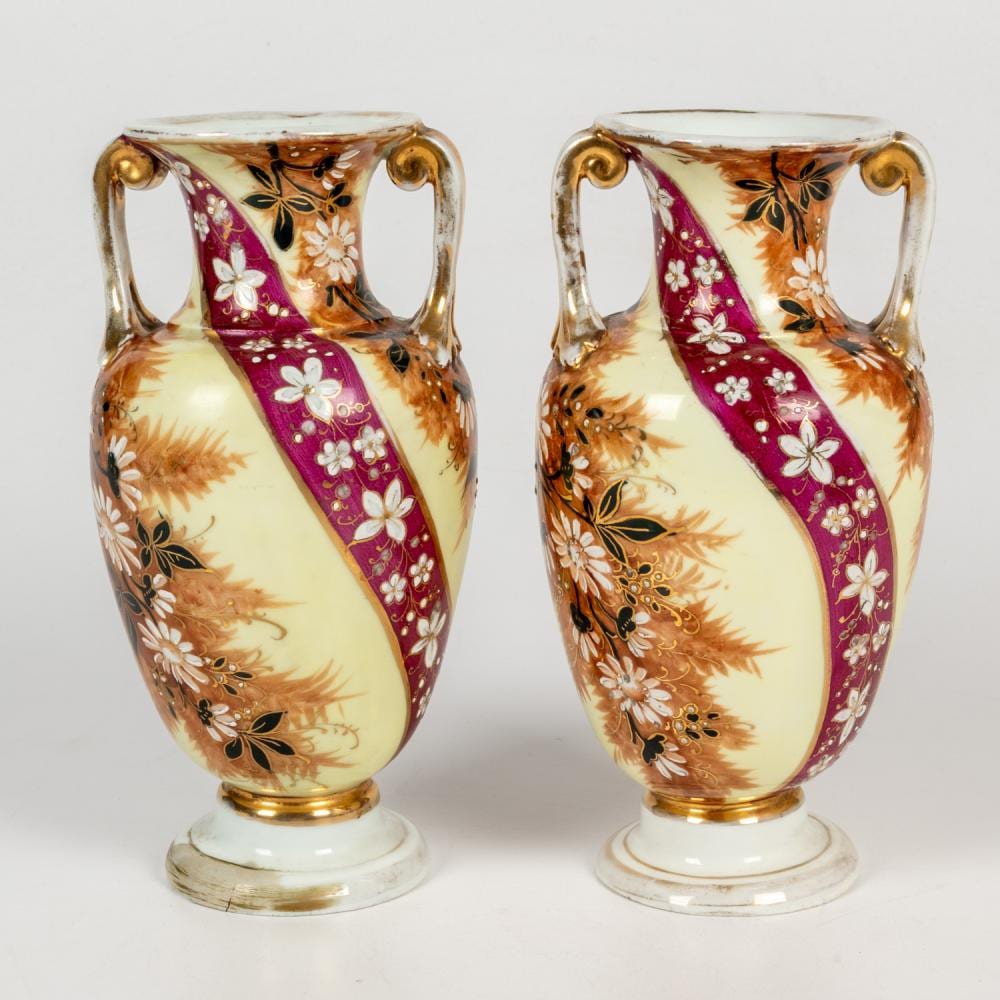 |
Pair of Royal Vienna Porcelain Vases | Gray's Auctioneers | 2026-01-21 | 137 | USD 20 |
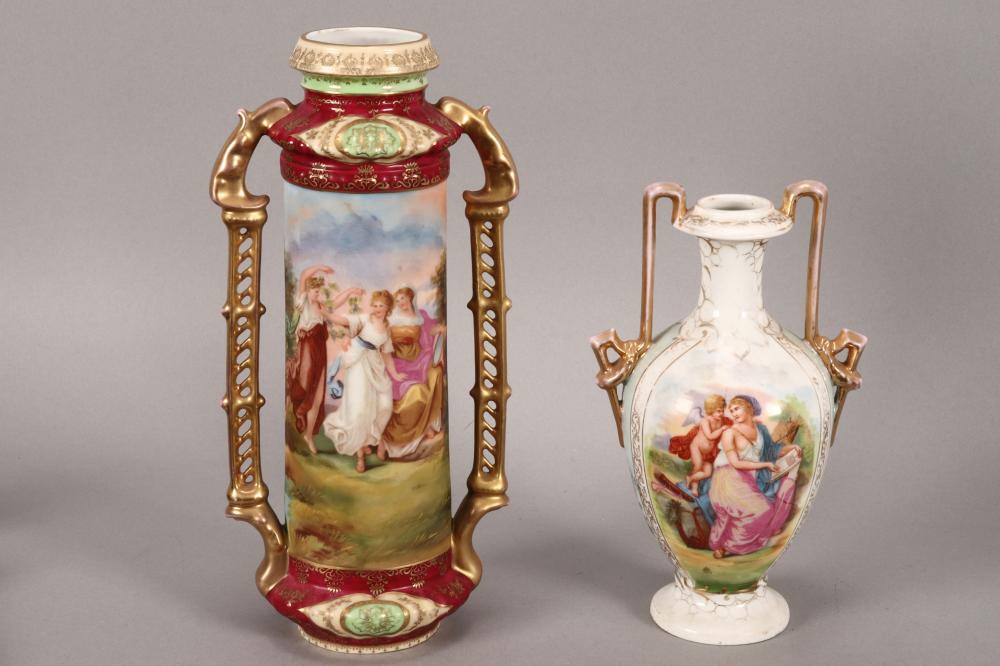 |
Two Royal Vienna Porcelain Vases, | Aalders Auctions | 2024-08-28 | 1187 | AUD 60 |
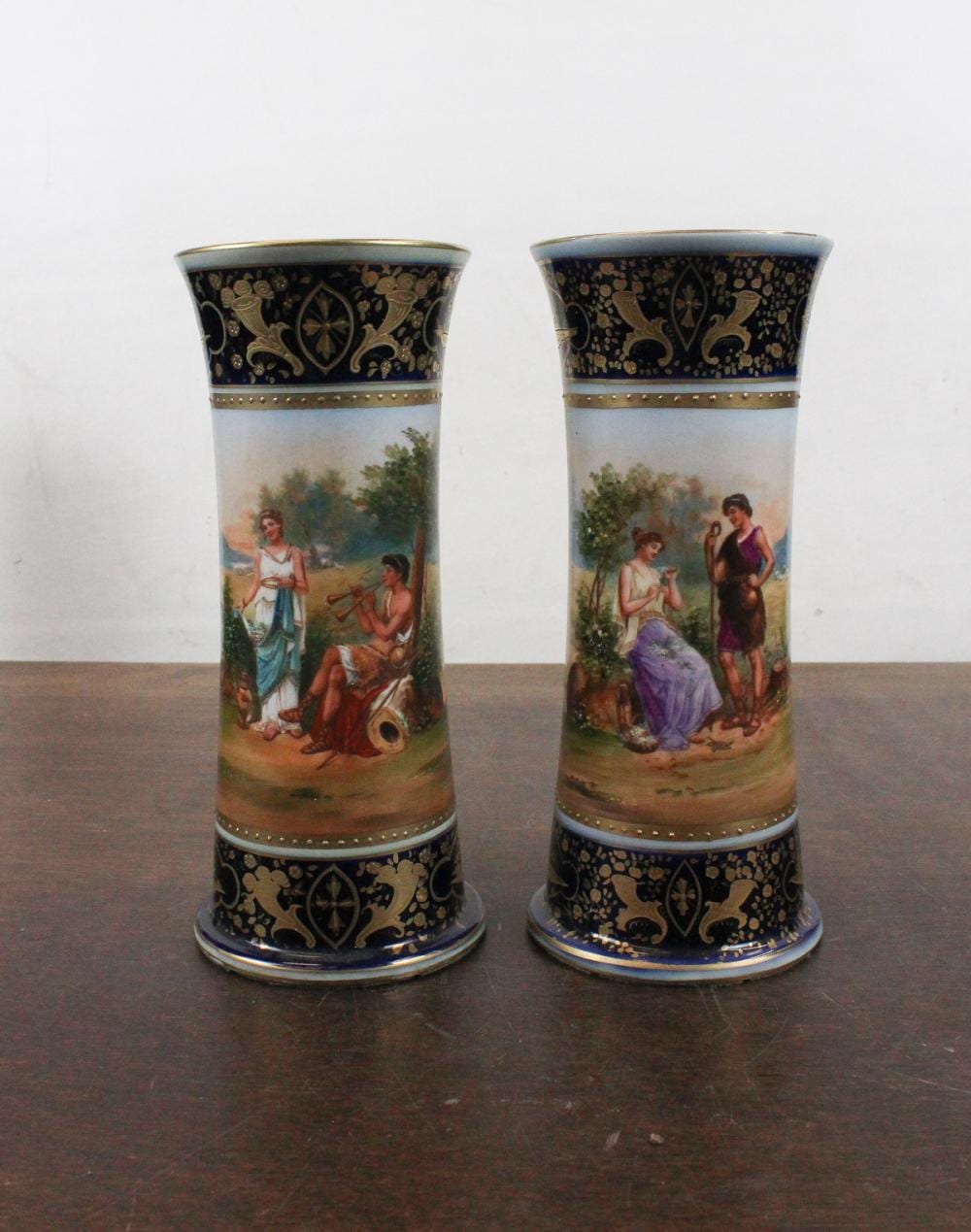 |
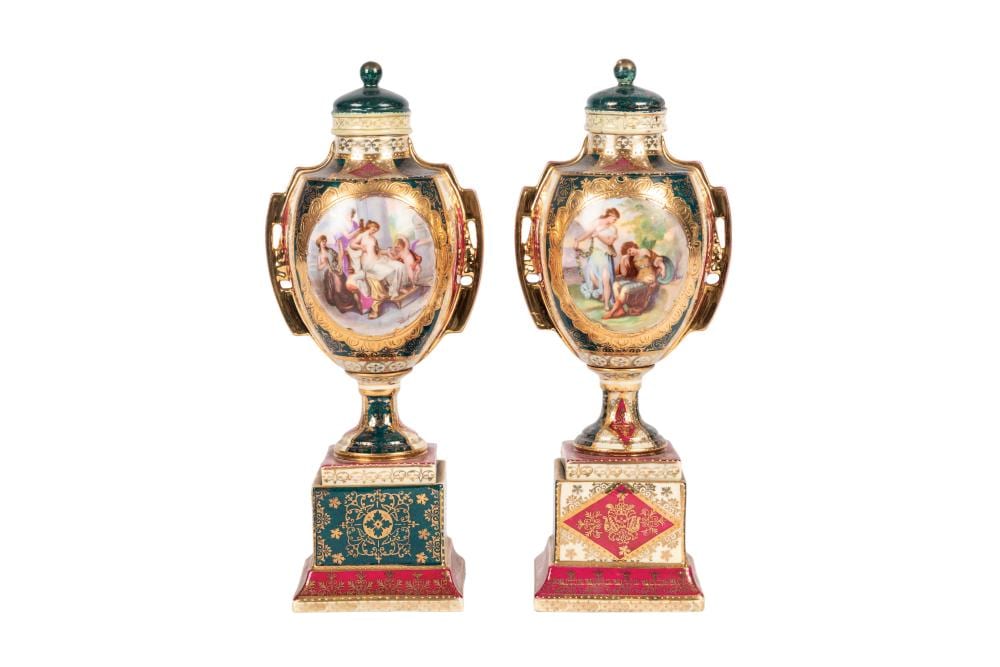
PAIR OF ROYAL VIENNA STYLE PORCELAIN VASES | O'Gallerie | 2022-09-19 | 56 | USD 120 |
 |
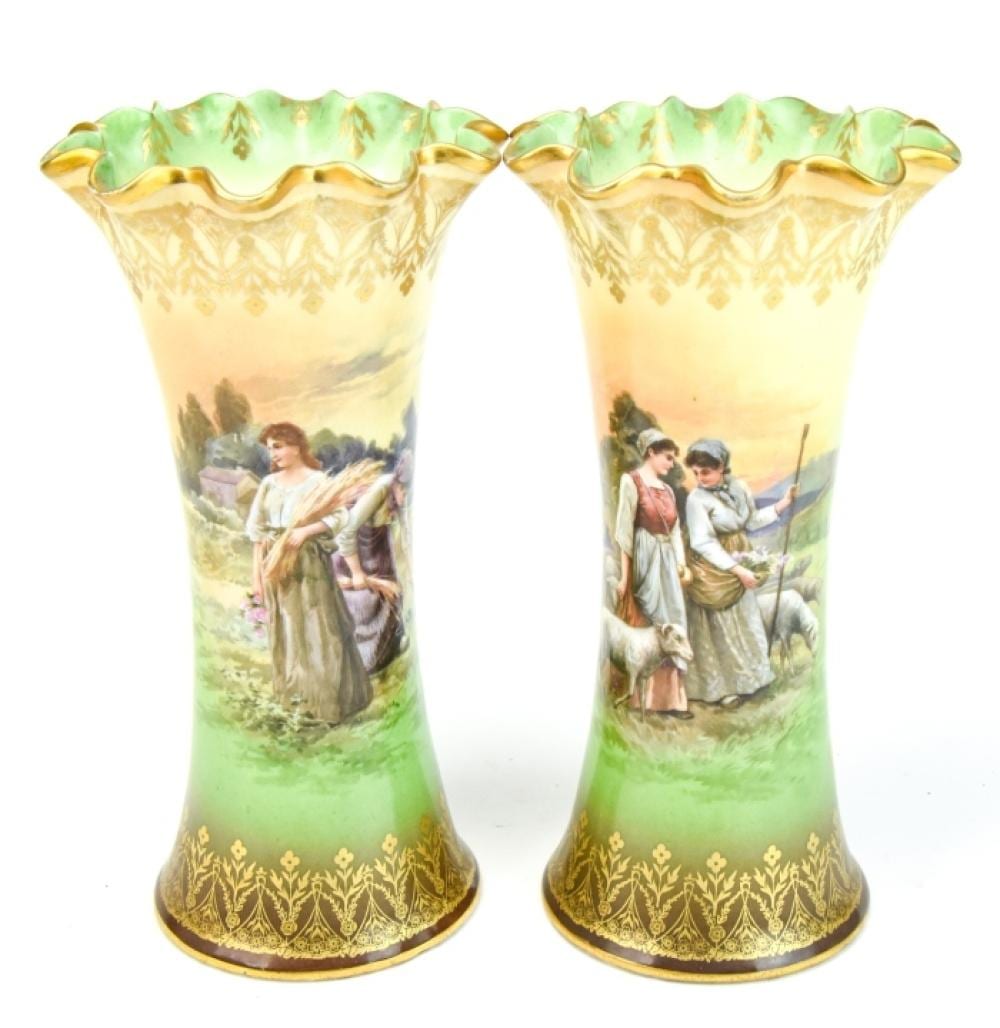
A pair of porcelain vases Royal Vienna 1900 | Duran Arte y Subastas | 2022-07-20 | 686 | EUR 120 |
 |
Pair Antique Royal Vienna Hand Painted Vases | Greenwich Auction | 2025-04-24 | 307 | USD 50 |
How these auction records were verified
These sales are market context, not an object estimate.
Each row is tied to its lot identity, retrieval time, access result, and immutable record hash. Live source access was blocked; the exact record matched Appraisily's immutable pipeline provenance. Inspect the public comparable provenance record.
Free photo check
Not sure if your vase is worth appraising? Let us take a look.
Upload a photo, tell us what you know, and get a free photo check. If a full appraisal makes sense, we will say so.
Free. No card needed. Takes about two minutes.
A Pair Of Antique Royal Viena Circa Late 19th Century Vases
Late 19th-century “Royal Vienna” vases occupy a coveted niche in porcelain collecting: richly decorated, technically refined, and visually compelling. Yet the category is also riddled with confusing terminology, studio practices, and later copies. If you’re researching or appraising a pair of Antique Royal Viena (sic) circa late 19th century vases, this guide will help you pin down what you have, how it was made, what to look for in marks and decoration, and how condition and presentation impact value.
What “Royal Vienna” Really Means
- The original Vienna Porcelain Manufactory (Wiener Porzellanmanufaktur) became an imperial factory in 1744 and closed in 1864. Strictly speaking, pieces from the closed factory cannot be “late 19th century.”
- After 1864, a strong market emerged for Vienna-style porcelain—Austrian, Bohemian, and German blanks—decorated by independent Viennese studios and regional factories in the Royal Vienna taste. These include firms and decorators active in the 1875–1900 window (e.g., Viennese studios such as Josef Riedl; Bohemian/Turn-Teplitz concerns like those associated with Wahliss/Amphora; and other Central European makers).
- Many of these later pieces bear a painted or stamped “beehive” or shield mark, referencing the Habsburg Bindenschild used by the original factory. On later wares, the mark is an attribution device, not proof of origin.
Your pair, described as “circa late 19th century,” almost certainly belongs to this second category: Vienna-style vases decorated to emulate the earlier imperial standard while catering to burgeoning international demand.
Forms, Grounds, and Decoration You’re Likely to See
Late 19th-century Vienna-style pairs typically follow classicizing silhouettes and employ sumptuous surface treatments drawn from earlier neoclassical taste.
Common forms:
- Amphora or krater vases with high-scroll or loop handles, sometimes with mask terminals (ram, satyr).
- Baluster bodies on waisted stems and square or circular socle bases.
- Covered vase pairs (with dome lids and flame or berry finials), though many late examples are open forms.
Grounds and colorways:
- Deep cobalt blue (“bleu de roi”) with gilt tooling is the signature look.
- Also seen: claret/puce, apple green, ivory, and black grounds, sometimes in combination with white reserves.
- “Jeweled” decoration using raised enamel dots in turquoise, ruby, and white to simulate cabochons on gilt borders.
Pictorial reserves:
- Hand-painted portrait roundels of idealized beauties.
- Mythological and allegorical scenes, often after Old Masters or the prints of Angelica Kauffmann (frequently spelled “Kaufmann” on later pieces).
- Classical landscapes or romantic vignettes. Titles may be inscribed in German on the base (e.g., “Psyche,” “Ruth,” “Sabina”).
Gilt work:
- Burnished and matte gold in combination, tooled with laurel, acanthus, husks, or beaded borders.
- Raised paste gilding in higher-grade examples, with crisp tooling and minimal pooling.
On matched pairs:
- Mirror-imaging is a plus: handles facing outward; reserves placed symmetrically; matching borders and height.
- The strongest pairs share the same decorator’s hand and identical border patterning; both vases usually carry compatible shape codes, size, or decorator numerals underneath.
Marks and Attributions: Beehive, Country Names, and Signatures
Understanding marks is critical—and rife with pitfalls.
The beehive/shield:
- Original Vienna used an underglaze blue shield mark (Bindenschild) while in operation (pre-1864).
- After the closure, numerous studios and factories applied a painted beehive/shield mark—sometimes overglaze, sometimes underglaze—to signify Vienna-style decoration. These are “apocryphal” marks: traditional but not factory-authentic.
- On genuine late 19th-century Vienna-style pieces, the beehive is often cleanly painted in underglaze blue or in enamel. Overglaze versions exist, but sloppy, thick, or smudged beehives are a red flag.
Country of origin:
- “Austria” (or “Made in Austria”) appears on many late 19th- and early 20th-century exports. After 1891 (U.S. McKinley Tariff), country names were generally required for imports to the U.S. Thus, a beehive plus “Austria” strongly indicates post-1891 Vienna-style production, not the imperial factory.
Other marks you may find:
- Impressed numerals (shape or size numbers), decorator’s marks in red or green, fraction-like painter’s codes, and pattern numbers.
- Retailer or workshop stamps (Vienna- or Bohemia-based) in red or black.
- Occasional double-marking where blanks from one region were decorated in another studio.
Signatures and inscriptions:
- Panel paintings might be signed “Wagner,” “Kaufmann/Kauffmann,” “H. Stadler,” or other decorator/painter names. Treat signatures with caution; popular names were copied liberally.
- Titles in German under the base often correspond to the painted subject; script consistency between the two vases is a good sign for a true pair.
Key takeaways:
- A late 19th-century date aligns with Vienna-style decoration on Austrian/Bohemian/German porcelain bodies, not with imperial factory production.
- The beehive alone does not prove early origin; evaluate mark quality, placement, and accompanying country or retailer marks.
Dating and Differentiating: Late 19th Century vs. Later Copies
Clues to a genuinely late 19th-century Vienna-style pair:
Paste and glaze:
- Hard-paste porcelain with a tight, bright white body is typical. Earlier Vienna can show slightly warmer tones, but body alone is not decisive.
- Fine, even glaze with minimal orange-peel. Overly glassy, bluish, or thick glazes may suggest later manufacture.
Decoration quality:
- Hand-painted reserves with visible brushwork and layered shading; background stippling is controlled and subtle.
- Borders sharply tooled; raised paste is crisp, not blobby. Jeweled enamel beads are consistent in size and spacing.
Transfer vs. hand painting:
- Under magnification, hand-painted work lacks the uniform dot matrix of transfers.
- If you see a regular pattern of micro dots beneath color, it may be a transfer or transfer-enhanced painting (common in later reproductions).
Wear patterns:
- Period-appropriate gilding wear appears on high spots: rim edges, handle tips, and socle corners. Artificial wear can look random, harsh, or solvent-smeared.
- Foot rims should show honest shelf wear; a freshly ground foot can indicate later alteration or restoration.
Mark execution and context:
- A neat beehive with ancillary pattern/painter numbers and a compatible “Austria” mark suits the 1891–1900 window well.
- Modern fantasy marks often pair a crude beehive with incongruous stamps (e.g., wrong fonts, “Germany” combined with “Vienna” claims, or meaningless logos).
Size and proportion:
- Late 19th-century Vienna-style display vases commonly measure 10–18 inches (25–46 cm). Oversized spectacle pieces exist but are rarer and demand top-tier painting to be desirable.
Condition, Restoration, and Their Impact on Value
Pairs are more sensitive to condition discrepancies than single vases. Assess each vase individually and then consider the pair.
Typical condition issues:
- Hairlines at the neck, beneath handles, or around the foot; tight glaze lines along the shoulder.
- Gilt losses to rims, handles, and raised borders; rubbing on high-relief jewels.
- Overpainting to hide scuffs on cobalt or to “improve” portraits; regilding of rims and handles.
- Professional restorations: handle reattachments, filled chips to socle corners, or replaced finials on covered vases.
How to detect:
- UV light can reveal overpaint and filled areas; modern restorations often fluoresce differently.
- Oblique light shows surface undulations where fills were leveled; gilding with a different sheen or color temperature suggests regilding.
- The “ring test” (a gentle tap) should produce a clear ring in intact porcelain; a dull thud may indicate a crack or heavy restoration. Use caution—don’t stress the piece.
Impact on value:
- Matched, unrestored pairs with consistent, high-grade painting command a premium.
- Minor and honest wear is acceptable; professional, well-blended restoration can be tolerated if disclosed.
- Structural cracks, heavy regilding, or mismatched repairs between the two vases reduce desirability substantially.
Good documentation is part scholarship, part storytelling. It enhances appraisal accuracy and buyer confidence.
- Measurements: Height to rim, maximum width, base dimension. If lidded, list height with and without lids.
- Form and decoration: Describe shape (amphora, krater, baluster), ground colors, gilt techniques, and jewel work.
- Subjects and inscriptions: Identify portrait titles or mythological scenes; note any German titles under base and any signatures on the artwork.
- Marks: Photograph and transcribe all marks—beehive/shield, “Austria,” impressed numbers, decorator codes, retailer stamps. Note whether marks are underglaze or overglaze.
- Condition report: Itemize wear, chips, hairlines, and any restoration; include UV photos if available.
- Provenance: Any receipts, family history, or previous appraisals add credibility.
- Pair integrity: Explain how the two vases match—mirror image placement, identical border motifs, matching or sequential decorator numbers.
Presenting this information clearly allows appraisers and buyers to evaluate quality and authenticity efficiently.
A Practical Checklist
- Confirm category: Vienna-style, late 19th century, not imperial factory.
- Examine painting: Hand-painted (no dot matrix), strong modeling, clean outlines.
- Inspect gilt and jewels: Crisp tooling, consistent bead size, period-appropriate wear.
- Read the marks: Beehive/shield quality, under/overglaze; presence of “Austria” suggests post-1891 export; record all numbers and stamps.
- Verify pair status: Mirror-imaged scenes, matching borders, similar height and proportions, compatible underside codes.
- Assess condition: Use loupe and UV; look for hairlines at stress points; note regilding or overpaint.
- Photograph thoroughly: Front, back, sides, reserves close-up, marks, and any flaws.
- Compare market comps: Match quality, size, subject, and condition; prioritize recent, reputable results.
- Document provenance: Any history or paperwork can add weight to your appraisal.
FAQ
Q: If the vases have a blue beehive mark, are they authentic Royal Vienna from before 1864? A: Not necessarily. The beehive/shield was widely used after 1864 by Vienna-style decorators. Evaluate the execution of the mark, accompanying country stamps (e.g., “Austria”), decoration quality, and other codes. A late 19th-century date is compatible with Vienna-style, not with imperial factory output.
Q: How can I tell if the portrait is hand-painted or a transfer? A: Under a 10x loupe, hand painting shows continuous brushwork and nuanced shading without a regular dot pattern. Transfers reveal a matrix of tiny, evenly spaced dots beneath or within the color. Edges of reserves and delicate features (eyes, lips) are revealing areas.
Q: Do signatures like “Wagner” or “Kaufmann” guarantee high value? A: No. Such signatures were popular and often copied. Value depends primarily on the quality of the painting and the overall presentation. A convincing signature that aligns stylistically and chronologically can help, but it’s not determinative.
Q: My pair has “Austria” under the base. Does that reduce value? A: It doesn’t inherently reduce value; it simply places production in the export era (post-1891). Many excellent late 19th-century Vienna-style vases bear “Austria.” Quality of painting and condition remain the main drivers.
Q: Should I restore worn gilding before selling? A: Generally, no. Over-restoration can deter serious buyers. If there’s discreet, professional stabilization of structural issues, disclose it. Leave honest wear as-is and provide clear photos; buyers prefer transparency.
By focusing on form, painting quality, marks, and condition—then documenting the pair thoroughly—you can confidently position a pair of late 19th-century Royal Vienna-style vases for appraisal or sale, and avoid the common pitfalls that cloud this richly collected category.