Mid-20th-Century Japanese Cloisonne Vase Appraisal: appraisal and value basics
Mid-20th-Century Japanese Cloisonne Vase Appraisal research should start with identification, condition, provenance, and recent comparable sales. Use this guide to compare the signals that matter before paying for a formal appraisal or deciding whether to sell.

A Circa Mid 20th Century Cloisonne Japanese Vase
Mid-century Japanese cloisonné (shippo) sits at an appealing intersection of craftsmanship, modern export design, and accessible collecting. If you’re assessing a circa 1940s–1960s Japanese cloisonné vase, your appraisal should focus on construction techniques, marks, motifs, and condition—each factor meaningfully affects attribution and value. This guide distills what to look for and how to place your vase in its proper context.
Dating the Vase: What “Mid-20th Century” Means
In Japanese cloisonné, “mid-20th century” typically aligns with the late Showa era’s early decades, roughly from the final wartime years through the 1960s. Several clues point to this window:
- Export orientation: After WWII, Japan rebuilt its decorative arts industry with strong export demand, especially to the U.S. Common signals include English-language paper labels, “JAPAN” or “MADE IN JAPAN” marks, and sometimes “MADE IN OCCUPIED JAPAN” (c. 1947–1952).
- Color palette and finish: Mid-century vases often feature high-gloss, even enamel surfaces with fewer pits due to improved firing and polishing. Palettes favored clean, saturated tones—turquoise, apple green, cobalt, plum—often with subtle gradient shading (bokashi).
- Techniques promoted postwar: Two techniques are prominently seen:
- Yusen (wired cloisonné): Traditional fine wire partitions, often very precise, with elegant shading inside cells.
- Musen (wireless cloisonné): Wireless sections that produce painterly, soft-edged motifs, popularized by quality makers such as Ando.
- Ginbari (foil-backed) popularity: Translucent enamels over silver foil (ginbari) were common for export wares, creating luminous grounds or lively florals and birds.
- Mounts and rims: Gilt brass rims and foot-rings are common; better vases may have silvered rims. Postwar silver mounts are sometimes stamped “SILVER” or .950; occasionally you’ll see the kanji for pure silver (純銀, jungin).
The presence of an English-language brand label (e.g., Ando Cloisonné, Amita, Ohta/Ota) or a simple “JAPAN” mark tends to confirm a mid-century export piece. Conversely, “NIPPON” was phased out by 1921 for U.S. imports; encountering it would point to an earlier era.
Identifying Japanese Cloisonné Techniques
Understanding how the vase was made helps confirm it as Japanese and situate quality.
- Body and wires:
- Base metal: Usually copper (lighter than brass-bodied Chinese pieces). The shape is hand-formed or spun.
- Cloisons: Fine silver or copper wires (approx. 0.3–0.5 mm) soldered to the body to outline designs in yusen work. Japan’s better workshops used extremely precise, cleanly laid wires; lines should look deliberate and confident.
- Enamel application and firing:
- Cells are filled with ground glass enamels and fired repeatedly. Look for nuanced shading inside petals and leaves—Japanese artisans excel at gradations.
- Counter-enamel (the interior or underside enamel) stabilizes the piece during firing. Mid-century bases often have dark counter-enamel: glossy black, chocolate brown, very deep teal, or blue.
- Surface finishing:
- After the final firing, surfaces are stone-ground and polished to a smooth, glass-like gloss. On quality pieces, wires sit flush with the enamel; under magnification you should see crisp borders without sloppy overfill.
- Techniques you might encounter:
- Yusen (wired): The most common. Expect taut, clean wirework.
- Musen (wireless): Sections where wires disappear under enamel, creating soft edges; often seen in floral and bird motifs by higher-end makers.
- Ginbari: Translucent enamel over silver foil; look for shimmering or patterned foil under flowers, birds, or clear grounds.
- Moriage (raised): Subtle relief in petals or motifs, achieved through thicker enamel buildup. Typically controlled and modest on mid-century examples.
- Less common postwar: Totai shippo (openwork cloisonné over pierced metal) is more associated with earlier periods but does appear; verify construction carefully if encountered.
Key Japanese vs. Chinese mid-late 20th cues:
- Japanese wires tend to be finer and more even, with sophisticated color shading; Chinese export from the later 20th century often shows heavier brass bodies, thicker wires, and flatter color.
- Japanese foot-rings are usually smoothly machined with a careful transition; Chinese examples may feel bulkier with heavier brass exposure.
- Motifs and spacing on Japanese pieces often appear balanced and refined, with restrained negative space.
Marks, Labels, and Attributions
Marks are a crucial dating and attribution tool, though many quality vases carry only paper labels—now often lost.
- Common postwar export labels and marks:
- “MADE IN JAPAN” or simply “JAPAN” (mid-century export).
- “MADE IN OCCUPIED JAPAN” (c. 1947–1952).
- Branded foil or paper labels: Ando Cloisonné (sometimes a diamond-shaped label), Amita, Ota/Ohta, Tamura, Inaba. English-language labels strongly suggest postwar export.
- Silver marks on rims:
- “SILVER” or “950” indicates silver mountings and a higher-quality product. You may see “JUNGIN” or the kanji 純銀. These marks are a positive indicator but not mandatory for quality.
- Studio or artist signatures:
- Less common on mid-century export vases than on earlier, deluxe Meiji/Taisho works. When present, they’re often on the box (tomobako). Original tomobako with brush inscriptions (and a maker’s seal) significantly strengthen attribution and value.
- Absent or removed labels:
- Don’t dismiss unlabeled vases. Many lost their paper tags during cleaning. Rely on construction, palette, and workmanship for attribution.
Maker notes:
- Ando Cloisonné Co. (Nagoya/Owari) is the best-known mid-century producer, renowned for musen and refined yusen. Their export vases display excellent polishing and elegant color.
- Other quality workshops include Tamura, Inaba, and Ota/Ohta. While not always labeled, their quality is generally a step above mass-market souvenirs.
Motifs, Color Palettes, and Forms
Mid-century Japanese cloisonné often blends classical Japanese motifs with export-friendly aesthetics.
- Motifs you’ll commonly see:
- Florals: Chrysanthemum, peony, plum, iris, and camellia, often with shaded petals and fine leaf veining.
- Birds and nature: Kingfishers, songbirds, butterflies, and dragonflies—all favorites in ginbari and musen.
- Traditional emblems: The shippo “seven treasures” pattern (interlaced circles), stylized scrolls, and wave patterns.
- Mythical creatures: Phoenix (ho-o) appears, though less frequently than in earlier Meiji works.
- Color palettes:
- Translucent aquas and teals over foil (ginbari), glowing plums and reds, cobalt and midnight blue grounds with delicate shading within cells.
- Black grounds are common and elegant, highlighting floral motifs; quality black enamels are deep and mirror-like.
- Forms:
- Ovoid or baluster vases 20–30 cm (8–12 in.) are typical mid-century export sizes.
- Slender meiping-like forms and short-shouldered pear forms also appear.
- Floor vases exist but are less common; pairs of medium vases are prized and typically command a premium.
- Rims and bases:
- Gilt brass rims and foot-rings dominate; higher-end vases may have silver rims. The base counter-enamel should be neatly applied with a clean, even foot.
Practical Checklist for Appraisal and Care
Use this quick list when examining and maintaining a mid-century Japanese cloisonné vase.
Appraisal checklist:
- Measurements and form:
- Height and maximum diameter; note if part of a matched pair.
- Construction:
- Copper body (lighter feel), even counter-enamel on base interior, finely gauged wires with tidy soldering.
- Techniques present:
- Identify yusen vs. musen; check for ginbari (foil) and any moriage (raised) effects.
- Marks and labels:
- Look for paper/foil labels (Ando, Amita, Ota/Ohta, Tamura), “JAPAN” or “MADE IN JAPAN,” “MADE IN OCCUPIED JAPAN,” silver marks (SILVER, 950, 純銀).
- Motifs and palette:
- Note subject matter, color shading quality, and ground color; assess overall design balance.
- Condition under strong, raking light:
- Dings to metal showing as star-cracks in enamel.
- Hairlines, craze lines, or “spiderweb” bruising.
- Pits, bubble clusters, or matte patches (possible inexpert repairs).
- Rim/foot wear, over-polishing, or enamel replacements (color mismatch or sheen difference).
- Completeness and provenance:
- Original tomobako (signed box) or old shop tags add confidence and value.
Care and handling:
- Display away from heat sources and direct sun; avoid rapid temperature swings.
- Handle with clean, dry hands or cotton gloves; support from the base, not the rim.
- Dust with a soft brush or microfiber. Avoid abrasive cloths and harsh cleaners.
- Do not immerse in water; if used for flowers, insert a liner to prevent moisture intrusion and corrosion.
- Professional restoration only; poorly matched cold enamels diminish value.
Value pointers (general ranges vary by market and condition):
- Typical mid-century 8–12 in. vases with sound condition: roughly the low hundreds USD; decorative but anonymous examples might bring $80–$250.
- Better workshops (refined musen or exceptional ginbari), silver rims, or superior artistry: commonly $300–$1,200.
- High-grade Ando or comparable studio pieces, especially with tomobako or as pairs: $600–$2,500+, with standout examples higher.
What similar items actually sold for
To help ground this guide in real market activity, here are recent example auction comps from Appraisily’s internal database. These matched sales are market context only, not an object estimate or identification, and they do not guarantee a price for your specific japanese cloisonne vase.
Shown USD range: USD 20-USD 875. Median of these 13 USD examples: USD 150.
| Comparable | What sold | Auction house | Date | Lot | Source-reported amount |
|---|---|---|---|---|---|
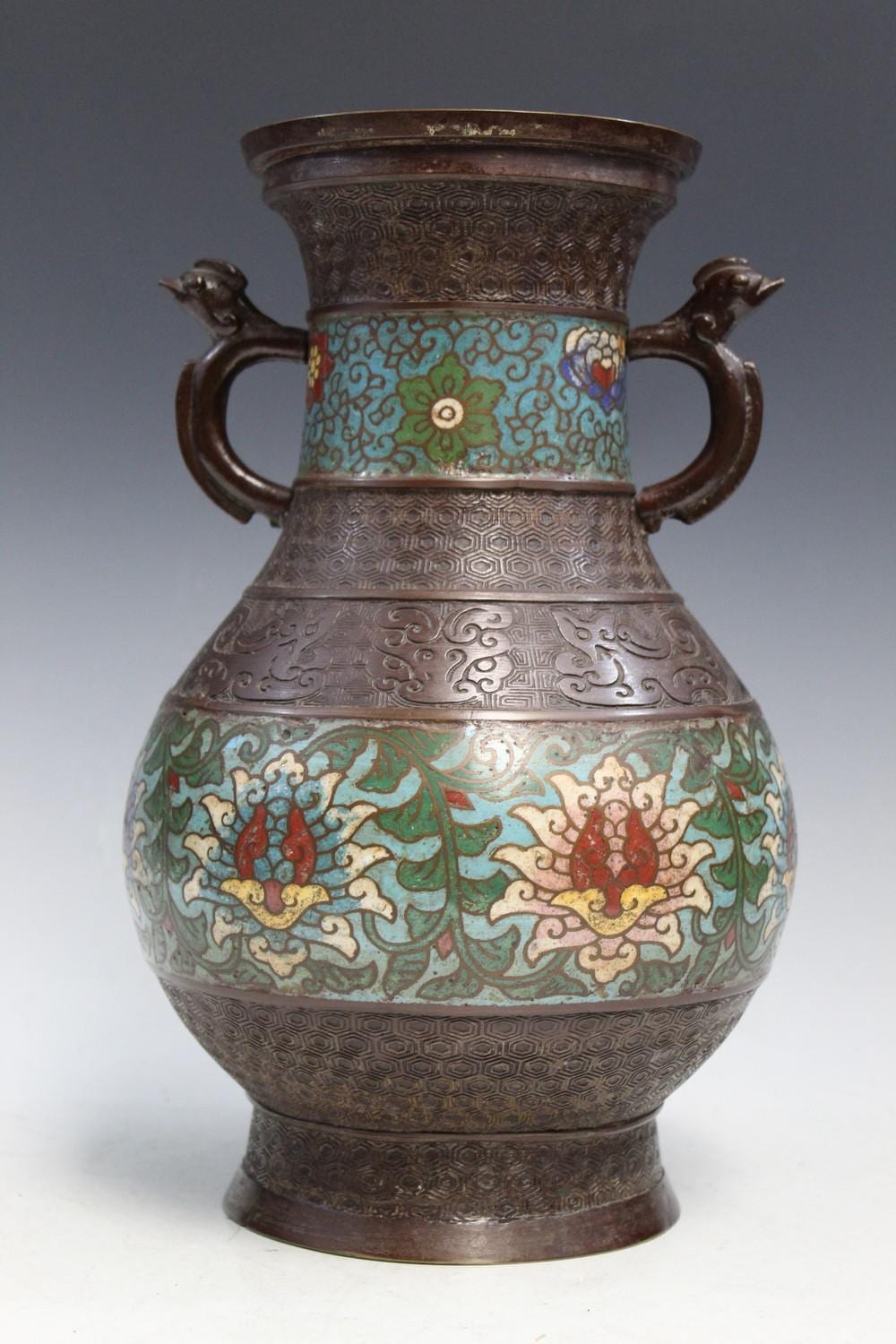 |
Japanese Cloisonne VaseSource blocked; provenance matched | Montgomery Auction | 2024-12-22 | 4519 | USD 90 (buyer’s-premium treatment unknown) |
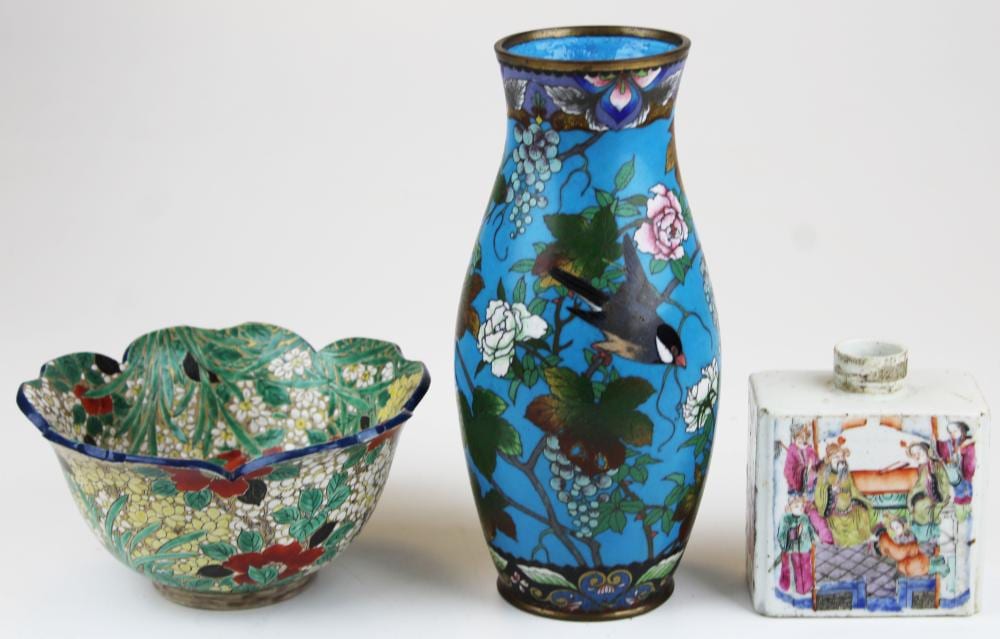 |
Chinese cloisonné vase, jar, & Japanese bowlSource blocked; provenance matched | Merrill's Auctioneers & Appraisers | 2018-06-30 | 287 | USD 100 (buyer’s-premium treatment unknown) |
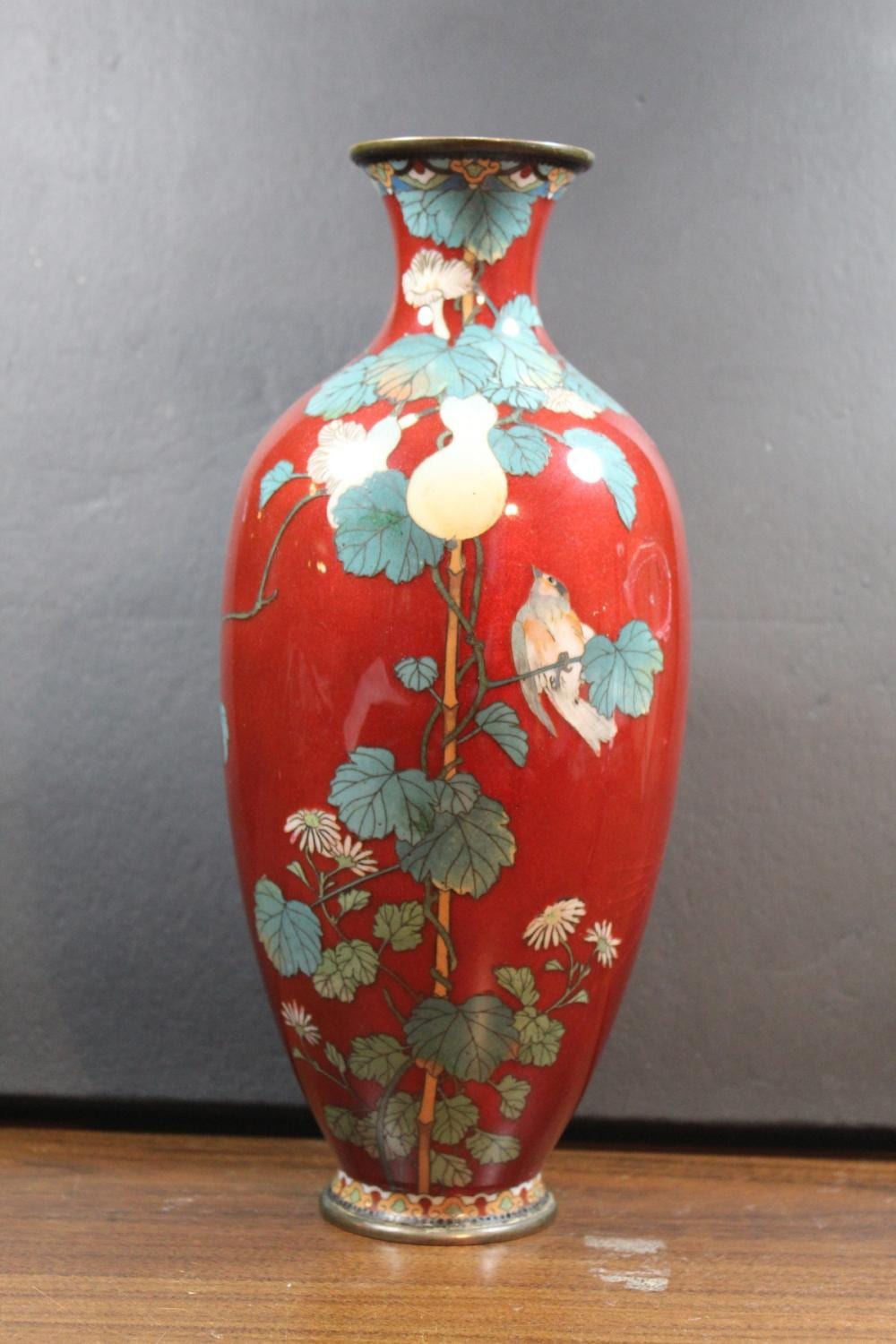 |
Japanese Cloisonne VaseSource blocked; provenance matched | Montgomery Auction | 2024-11-24 | 3443 | USD 275 (buyer’s-premium treatment unknown) |
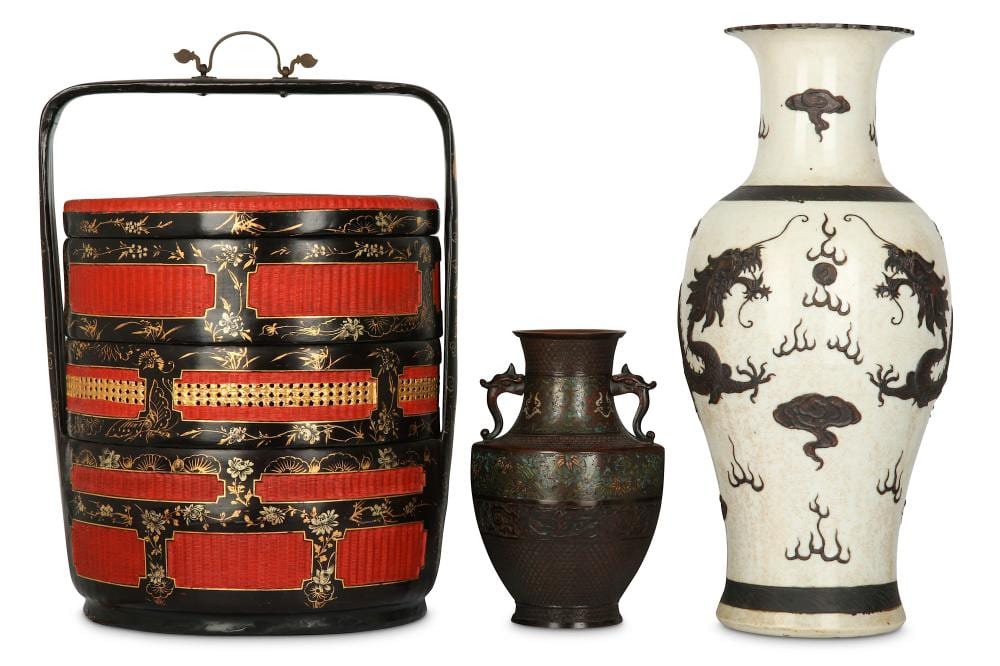 |
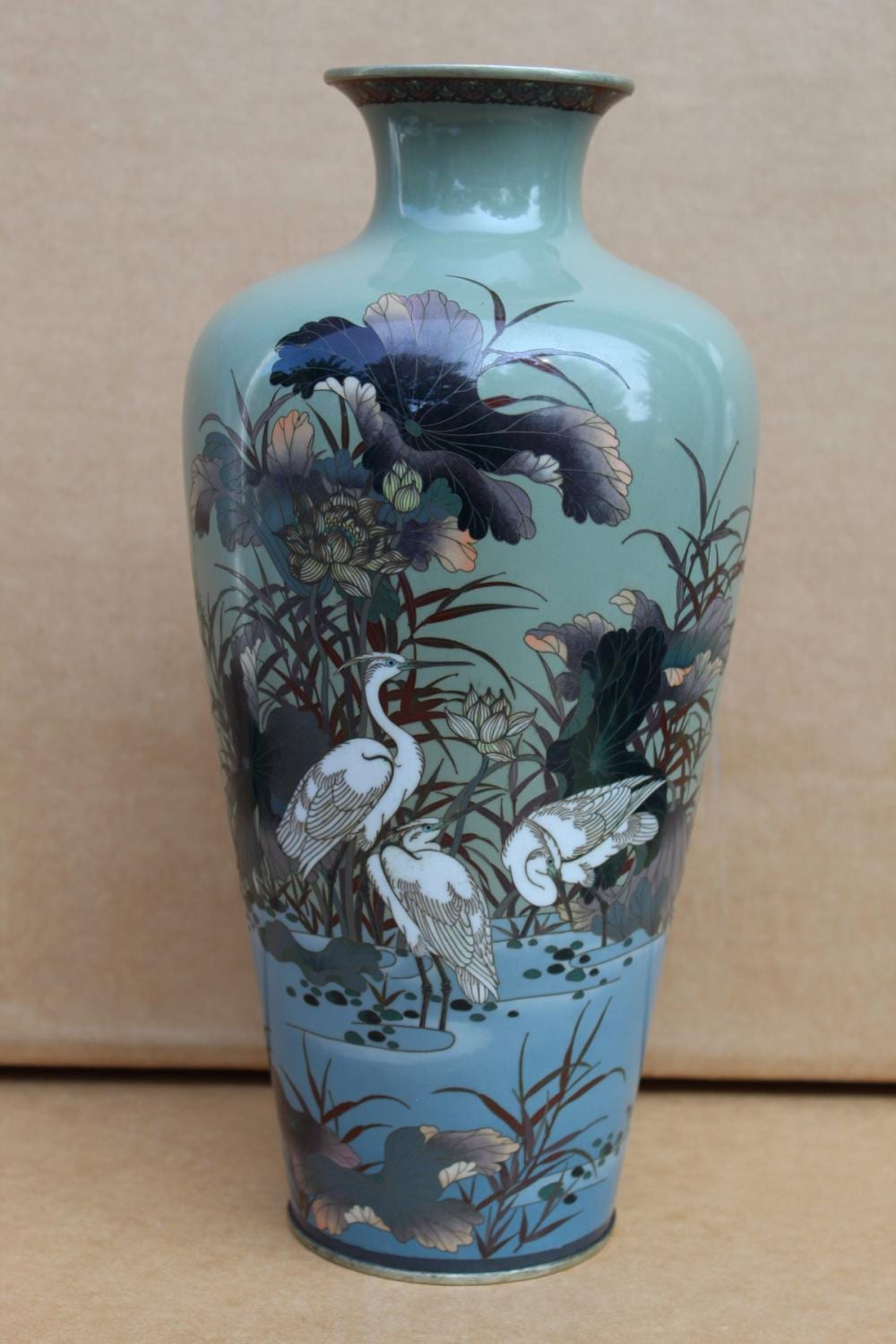
A CHINESE DRAGON VASE, A FOOD BASKET AND A JAPANESE CLOISONNÉ VASE.Source blocked; provenance matched | Chiswick Auctions | 2020-02-18 | 422 | GBP 160 (buyer’s-premium treatment unknown) |
 |
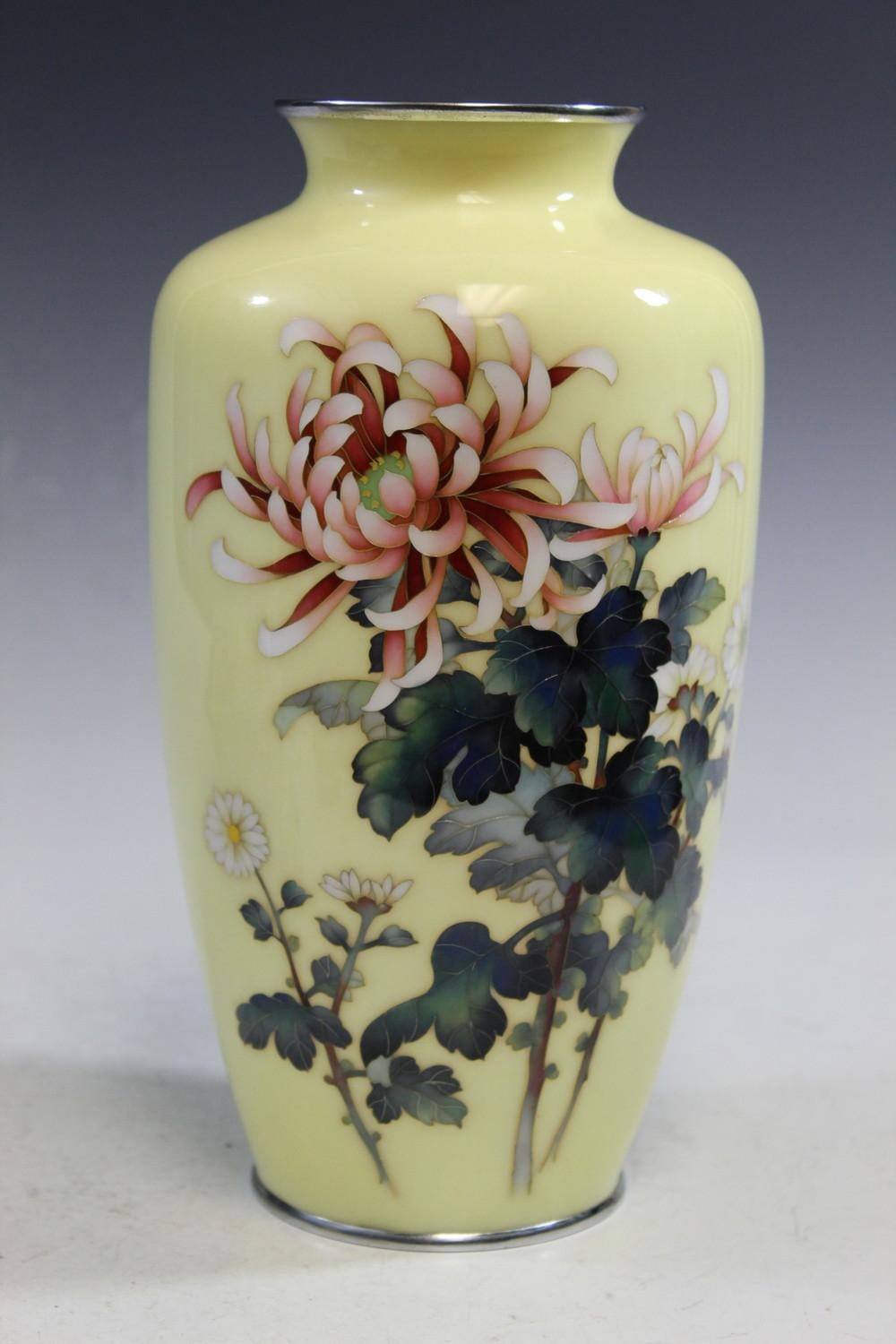
Japanese Cloisonne VaseSource blocked; provenance matched | Montgomery Auction | 2024-11-24 | 3434 | USD 275 (buyer’s-premium treatment unknown) |
 |
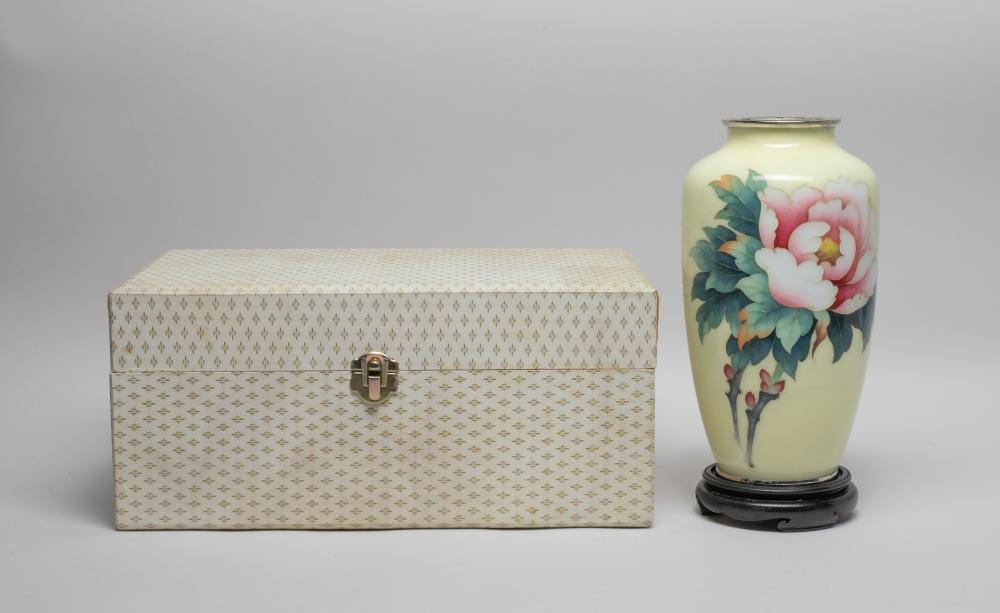
Japanese Cloisonne VaseSource blocked; provenance matched | Montgomery Auction | 2024-11-24 | 3057 | USD 80 (buyer’s-premium treatment unknown) |
 |
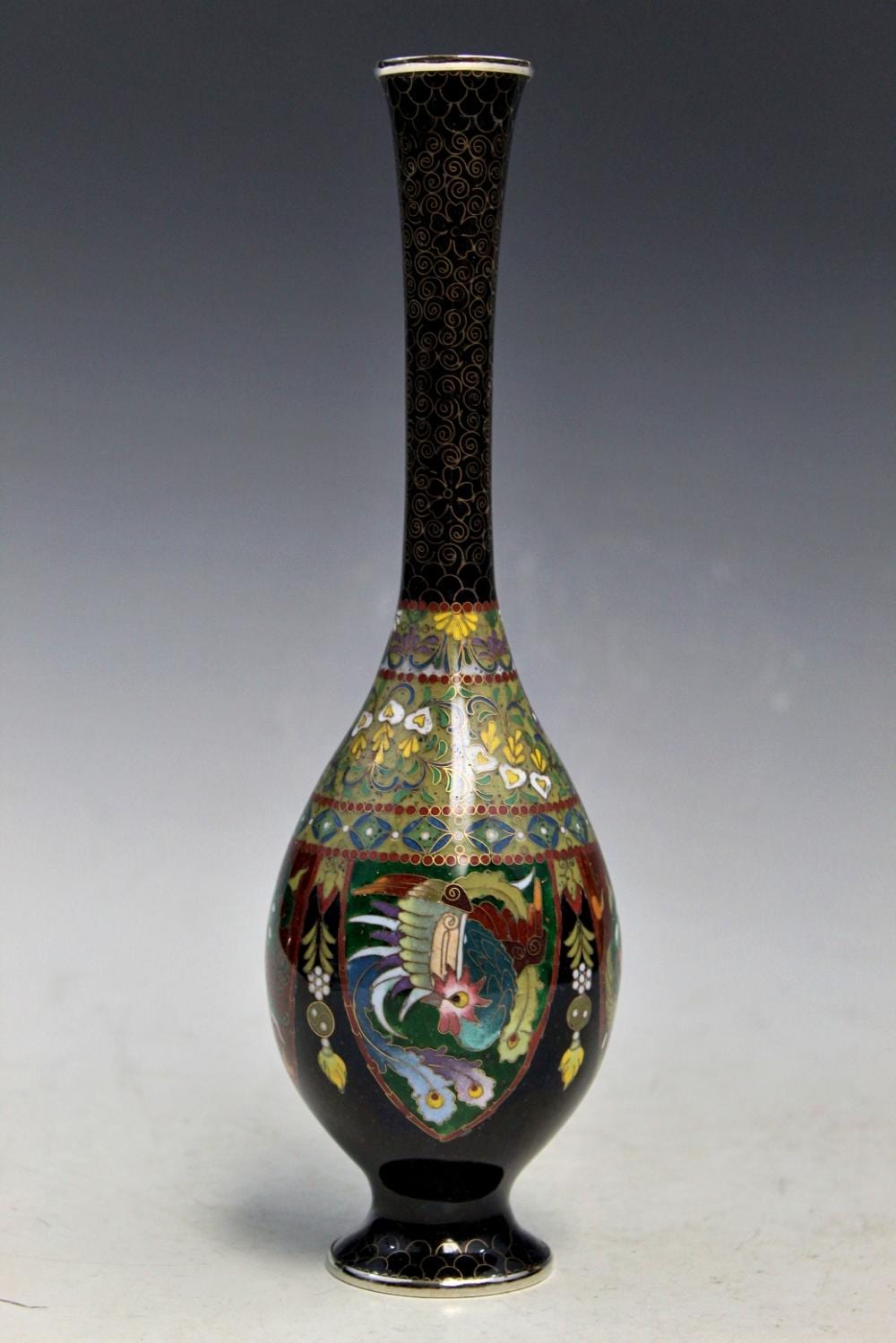
Vintage Japanese Cloisonne VaseSource blocked; provenance matched | Wealthier Art & Auction | 2025-03-22 | 1938 | USD 20 (buyer’s-premium treatment unknown) |
 |
Japanese Cloisonne Vase, Marked.Source blocked; provenance matched | Montgomery Auction | 2024-11-24 | 3377 | USD 200 (buyer’s-premium treatment unknown) |
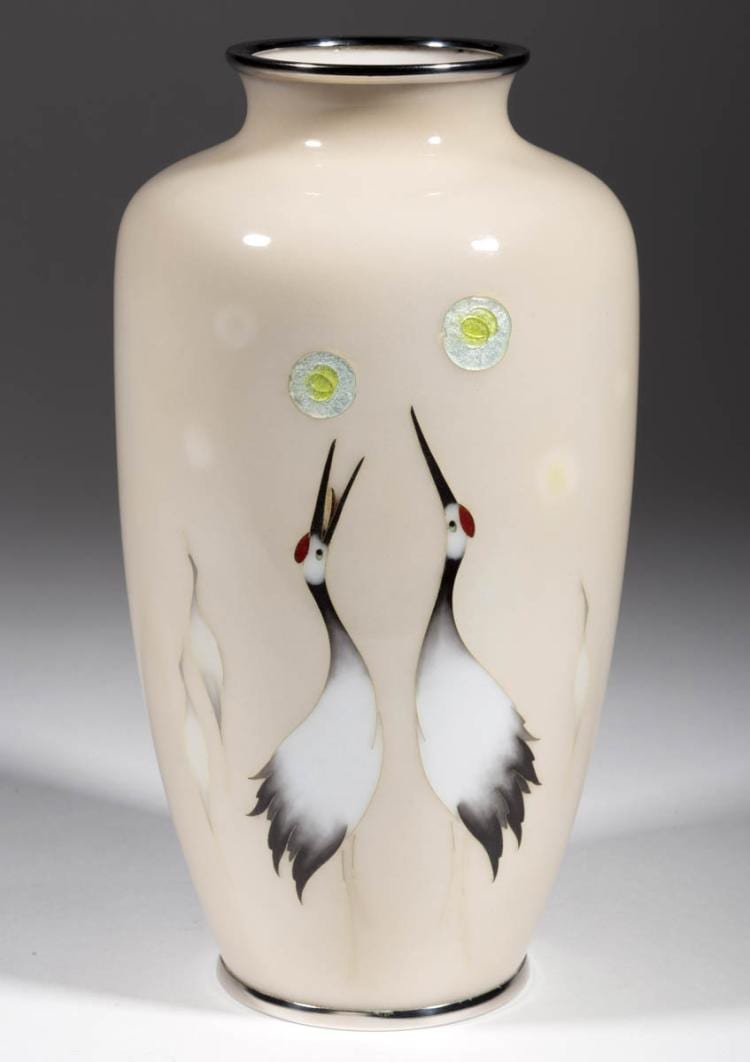 |
TAMURA JAPANESE CLOISONNE VASESource blocked; provenance matched | Jeffrey S. Evans & Associates | 2018-04-28 | 1035 | USD 292 (buyer’s-premium treatment unknown) |
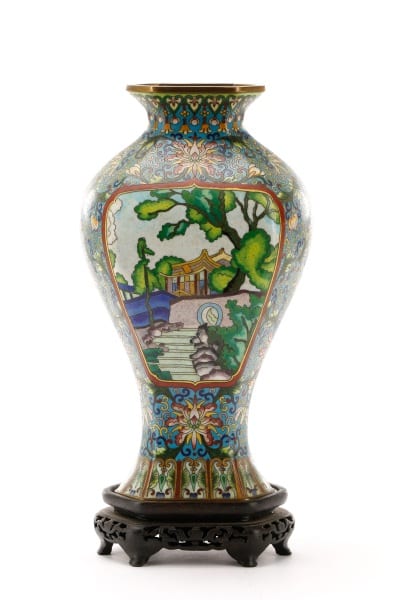 |
Japanese Cloisonne Vase with Pagoda MotifSource blocked; provenance matched | Ahlers & Ogletree Inc. | 2016-06-25 | 579 | USD 500 (buyer’s-premium treatment unknown) |
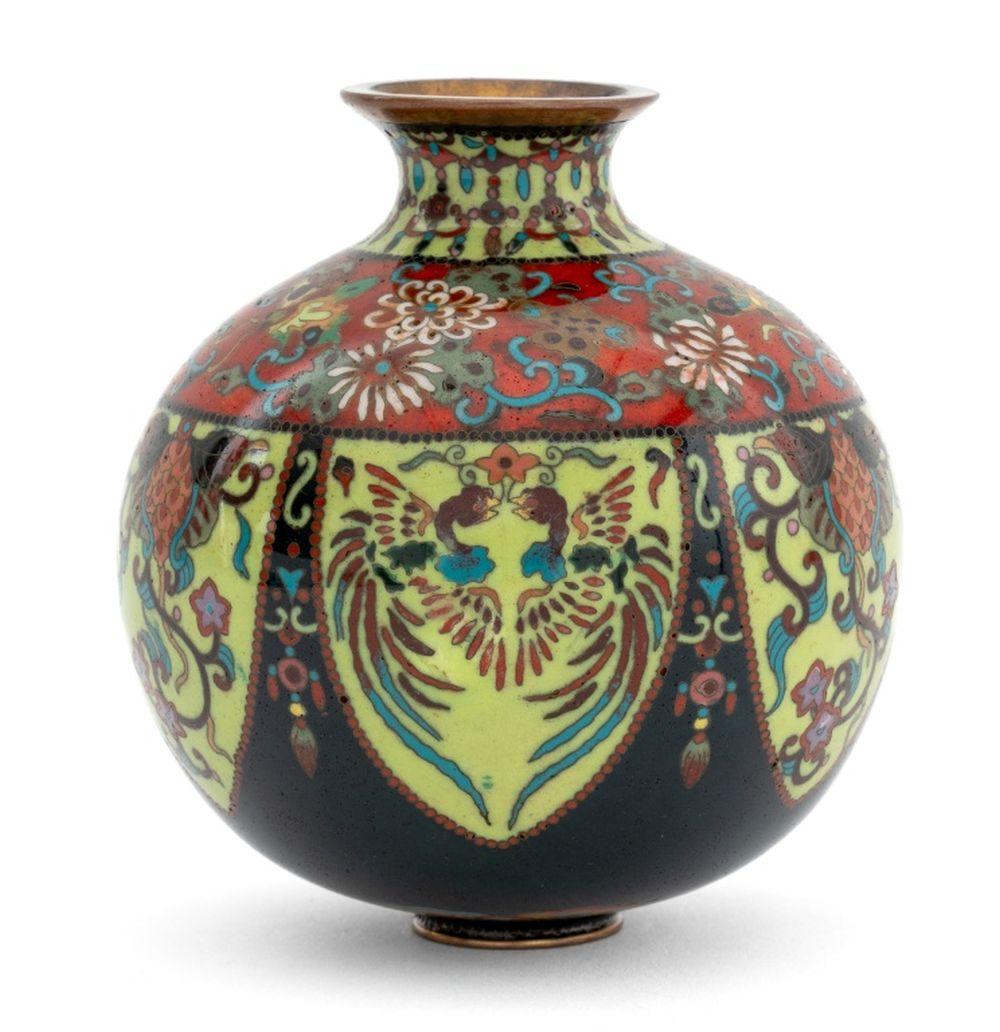 |
Japanese Cloisonne Enamel Ovoid VaseSource blocked; provenance matched | Auctions at Showplace | 2025-08-28 | 354 | USD 100 (buyer’s-premium treatment unknown) |
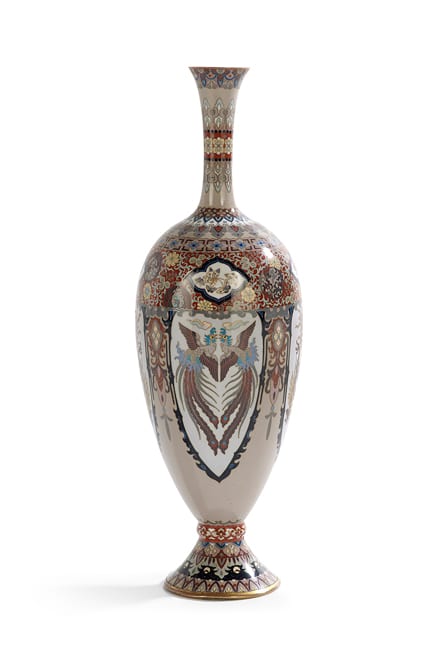 |
Japanese Amphora-Shaped Cloisonne VaseSource blocked; provenance matched | New Orleans Auction Galleries | 2016-12-10 | 639 | USD 875 (buyer’s-premium treatment unknown) |
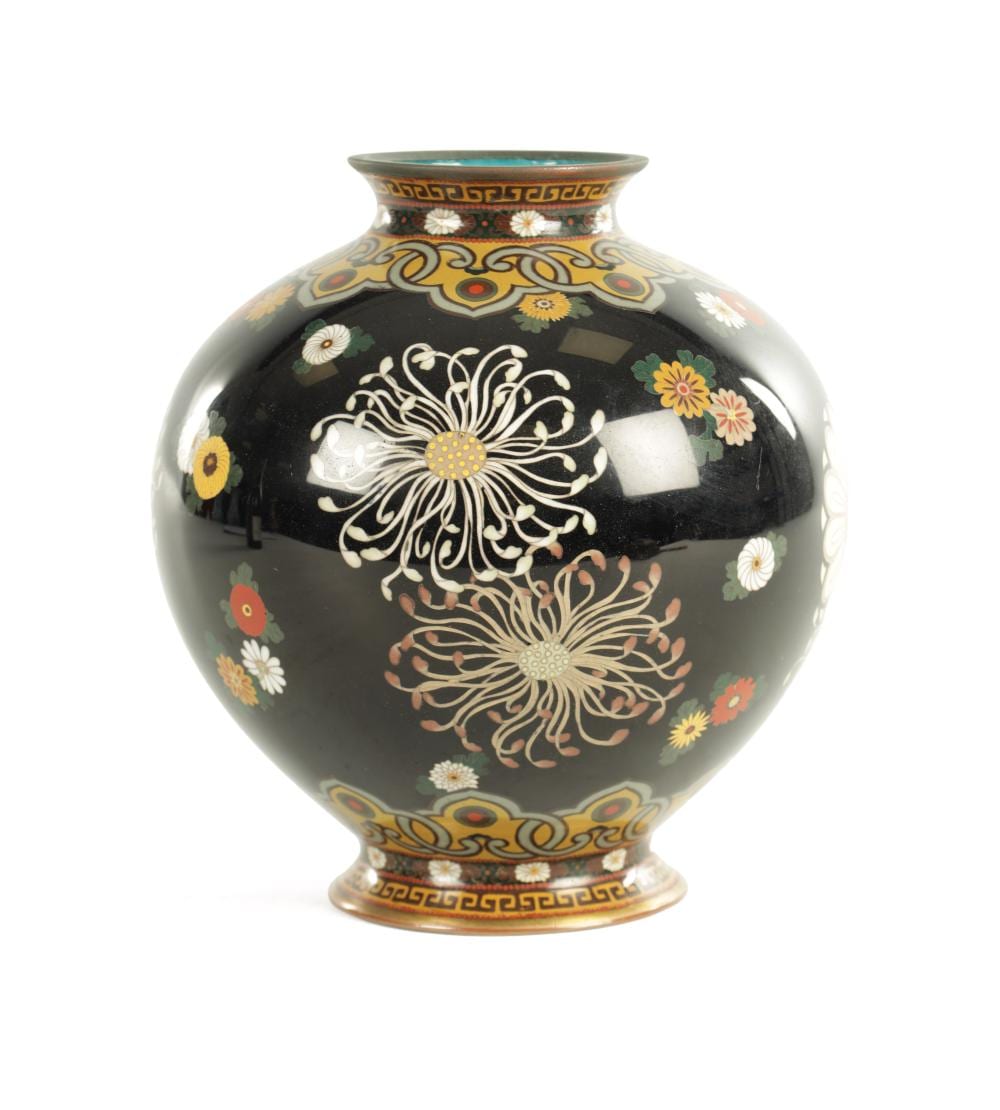 |
A JAPANESE MEIJI PERIOD CLOISONNE VASESource blocked; provenance matched | Hutchinson Scott Limited | 2025-01-22 | 225 | GBP 420 (buyer’s-premium treatment unknown) |
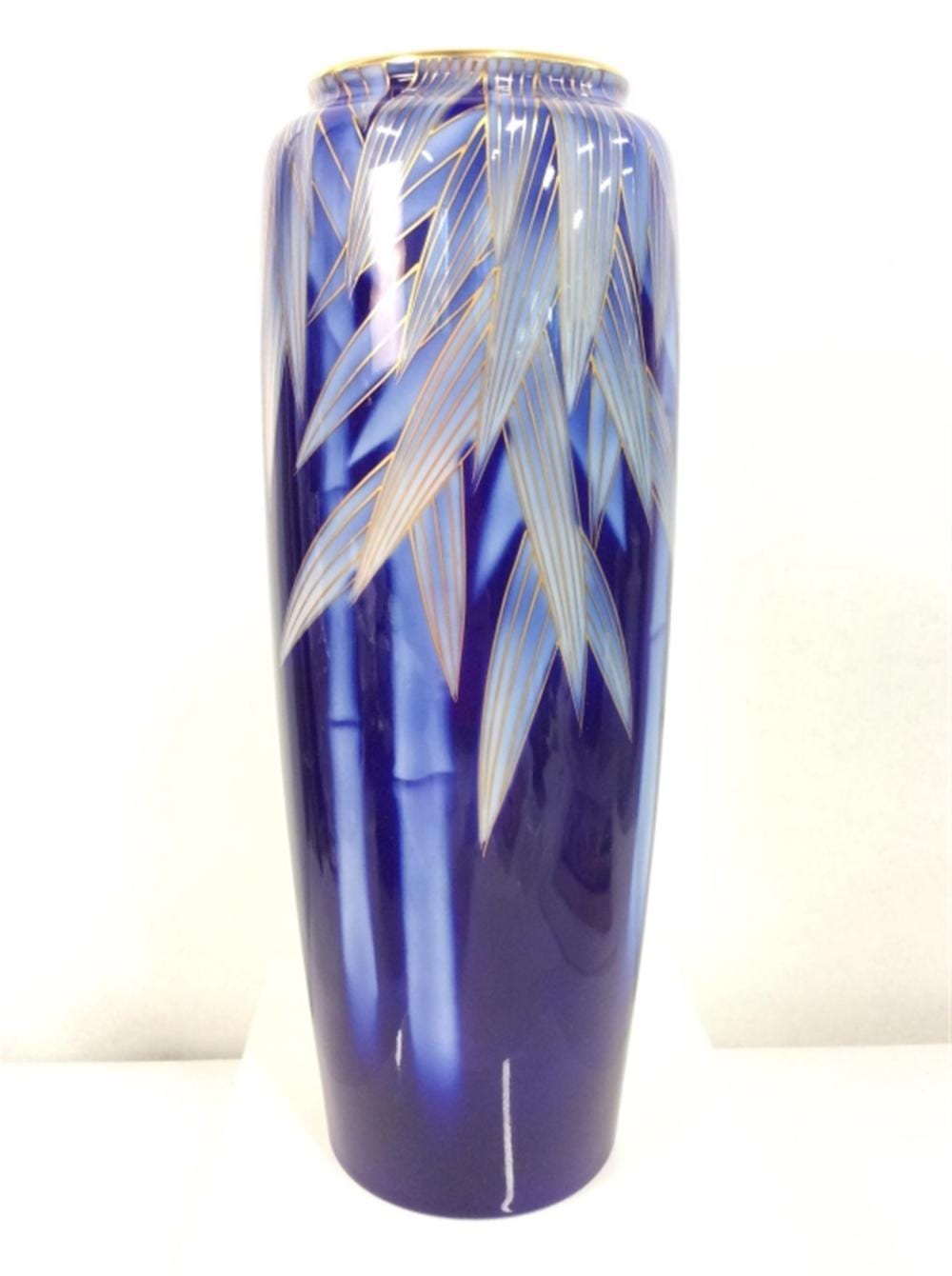 |
Fukagawa Cloisonne Japanese Porcelain VaseSource blocked; provenance matched | The Benefit Shop Foundation Inc. | 2018-08-08 | 347 | USD 25 (buyer’s-premium treatment unknown) |
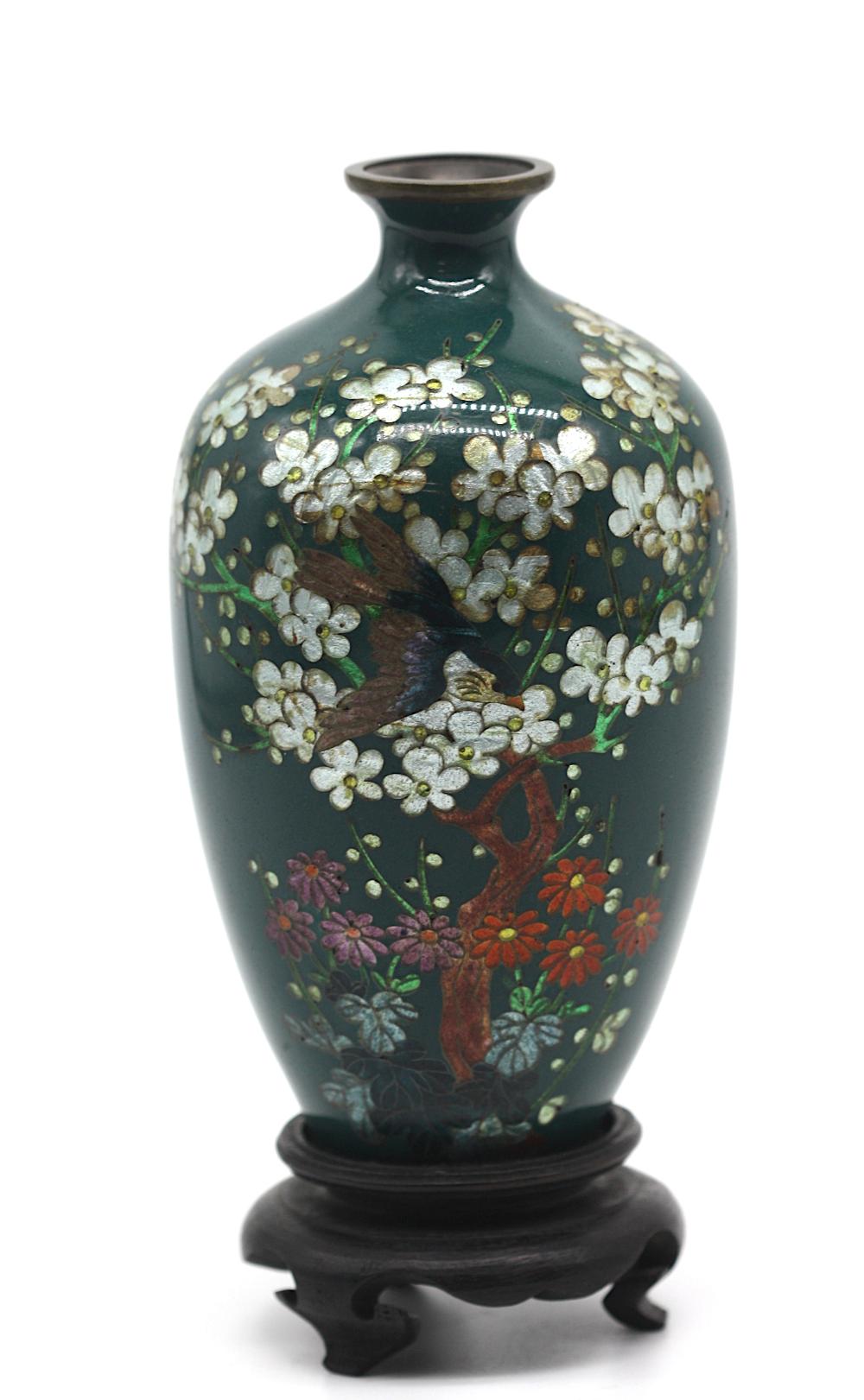 |
Japanese Cloisonne Enamel Bud VaseSource blocked; provenance matched | A.B.Levy’s Palm Beach | 2023-12-14 | 93 | USD 150 (buyer’s-premium treatment unknown) |
How these auction records were verified
Each row retains its exact source URL, lot identity, retrieval time, access result, and immutable record hash. Live source access was blocked; the exact record matched Appraisily's immutable pipeline provenance. Inspect the public comparable provenance record.
Disclosure: prices are shown as reported by auction houses and are provided for appraisal context. Learn more in our editorial policy.
Free instant estimate
Not sure if your vase is worth appraising? Let us take a look.
Upload a photo, tell us what you know, and get a free first read. If a full appraisal makes sense, we will say so.
Free. No card needed. Takes about two minutes.
FAQ
Q: How can I tell Japanese cloisonné from Chinese mid-late 20th century pieces? A: Look for finer, more consistent wirework; nuanced shading within cells; lighter copper bodies; neatly finished foot-rings; and dark, even counter-enamel. Labels in English with Japanese brand names and “MADE IN JAPAN” are strong indicators. Later Chinese work often uses heavier brass, thicker wires, and simpler color transitions.
Q: Does a “MADE IN OCCUPIED JAPAN” mark guarantee quality? A: It reliably dates the piece to c. 1947–1952 but doesn’t guarantee high quality. Evaluate workmanship, techniques (musen/yusen), wire precision, enameling, and condition to judge value.
Q: Are silver rims a sign of a better vase? A: Generally yes. Silver or silvered rims suggest a higher-grade product, and silver stamps (SILVER, 950, 純銀) add confidence. However, overall artistry and condition still drive value more than mounts alone.
Q: What condition issues reduce value the most? A: Impact bruises that star-crack the enamel, visible hairlines, enamel losses near the rim, discolored or poorly matched repairs, and extensive pitting. Clean, original surfaces with minimal wear hold the strongest value.
Q: Do original boxes matter? A: Yes. A signed tomobako with calligraphy and maker’s seal can materially increase value, improve attribution, and ease resale—especially for Ando and other recognized studios.
By focusing on construction, techniques, marks, motifs, and condition, you can confidently place a cloisonné vase in the mid-20th century Japanese context and form a defensible appraisal. While many export pieces are affordable, refined works—especially wireless (musen) florals, luminous ginbari, and silver-mounted examples from known workshops—remain sought-after and continue to perform well when paired with clean condition and solid provenance.