Qing Dynasty Hetian Jade: Identification and Value: appraisal and value basics
Qing Dynasty Hetian Jade: Identification and Value research should start with identification, condition, provenance, and recent comparable sales. Use this guide to compare the signals that matter before paying for a formal appraisal or deciding whether to sell.

Qing Dynasty Hetian Jade: Identification and Value
Understanding Hetian Jade in the 19th-Century Qing World
“Hetian jade” (Hotan jade) is the traditional Chinese name for nephrite sourced from the Tarim Basin of Xinjiang, long prized at the imperial court. It is not jadeite. In the 19th century—spanning the Jiaqing, Daoguang, Xianfeng, Tongzhi, and Guangxu reigns—court taste still revered the achievements of the earlier Qianlong era: archaistic forms, refined polishing, and auspicious imagery. Yet the material landscape had shifted. Readily available river boulders of the purest “mutton-fat” white (yangzhi bai) were waning, imperial patronage became uneven, and workshops beyond the palace took a larger role in meeting elite and export demand.
For appraisal, this period sits at a crossroads:
- Material quality ranges from very fine white to more common white-with-tinge, celadon, gray, yellow (“huangyu”), and brown/black jades, often with russet “skin” retained.
- Workmanship spans Beijing court ateliers, Suzhou’s literati-carving tradition, southern export-oriented workshops, and provincial studios. Each leaves different stylistic and technical signatures.
- Many later inscriptions and apocryphal reign marks were added to elevate value. An attribution to “Qianlong style” may describe a mode rather than an origin.
Understanding this mix of material, method, and market is essential when evaluating a piece described as a “Qing dynasty Chinese antique hand-carved Hetian jade.”
Material Identification: What True Hetian Nephrite Looks and Tests Like
Hetian is nephrite, a dense, tough, fibrous amphibole aggregate. Hallmark properties help separate it from jadeite, serpentine, and glass:
- Composition: Nephrite (tremolite–actinolite series), not jadeite (a pyroxene).
- Hardness: ~6–6.5 Mohs. Nephrite will not be scratched by a steel pin but can be scratched by quartz; avoid scratch tests to prevent damage.
- Specific gravity (SG): ~2.95 (2.9–3.1). A hydrostatic “weigh in water” test is non-destructive and reliable in skilled hands.
- Refractive index (spot): ~1.61 (range 1.606–1.632). Aggregates show a diffuse reading on a gem refractometer.
- Luster and translucency: Oily to waxy luster; soft glow rather than glassy shine; translucency increases at thin edges, especially in finer white.
- Microstructure: Interlocking felted fibers give exceptional toughness and a silky polish; under magnification, a subtle “orange peel” or silky texture may be visible.
- UV response: Typically inert. Polymer-impregnated or wax-dressed surfaces can show different fluorescence; check fissures and the back with longwave UV.
- Sound: A light tap with a fingernail yields a soft, muted ring rather than a bright “glass” tone.
Color and skins:
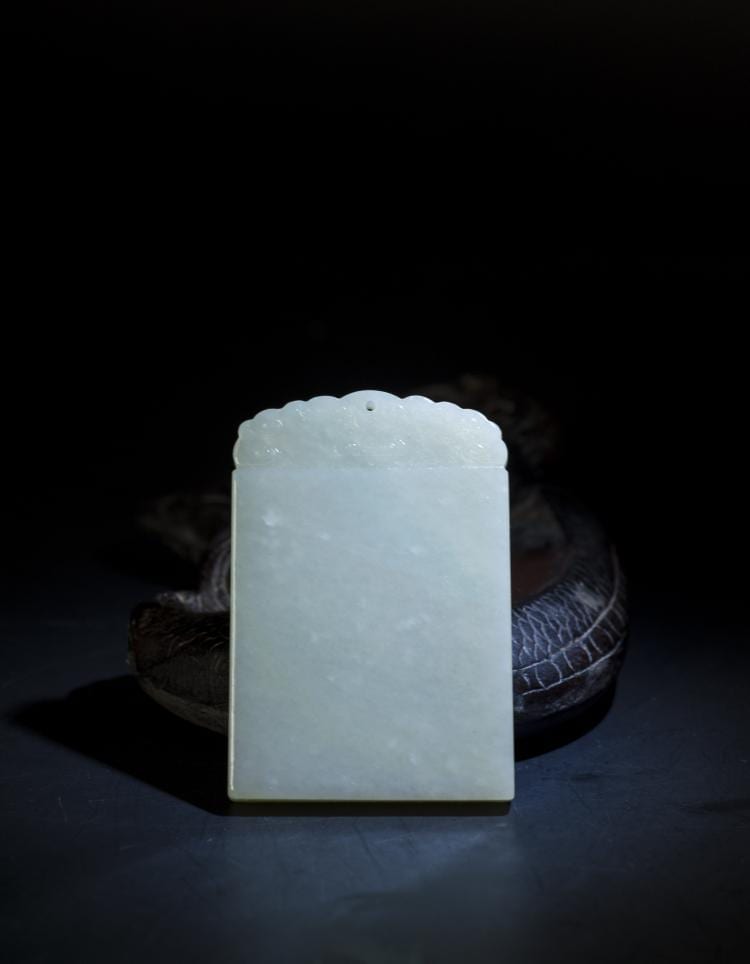
- White (baiyu) varies from chalky white to the highly coveted even, creamy “mutton-fat” (yangzhi). Many 19th-century pieces show slight warmth or gray-green undertones.
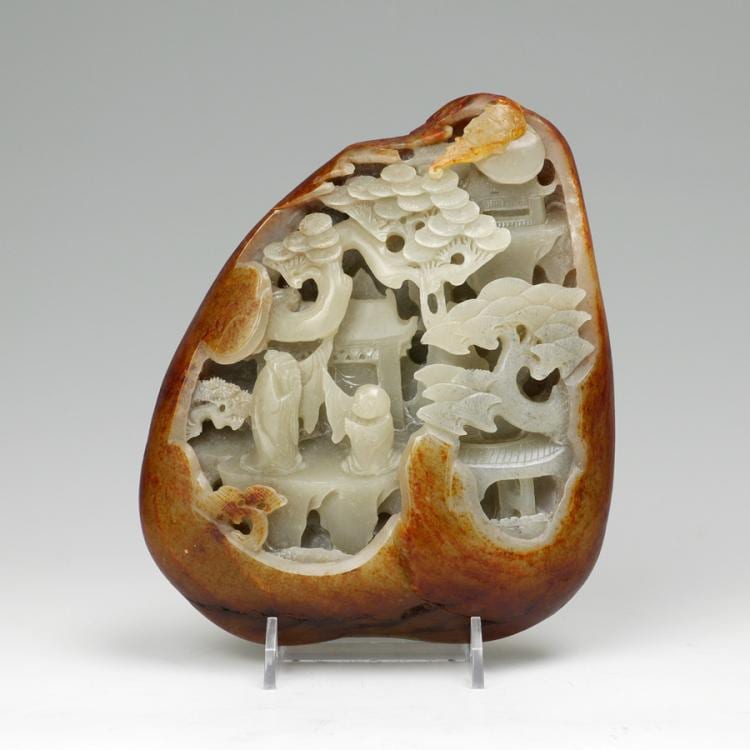
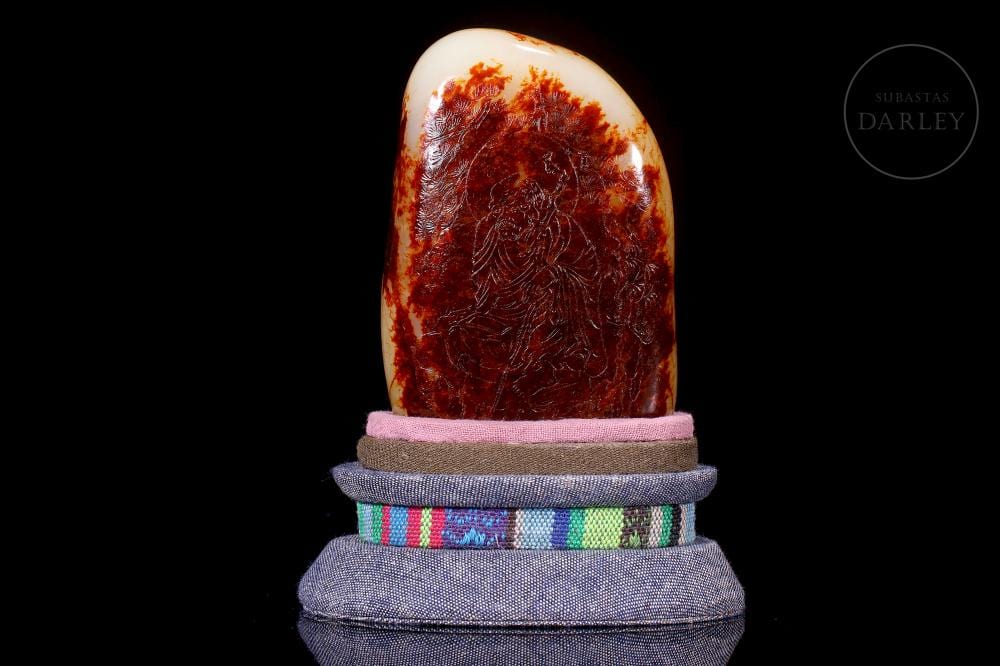
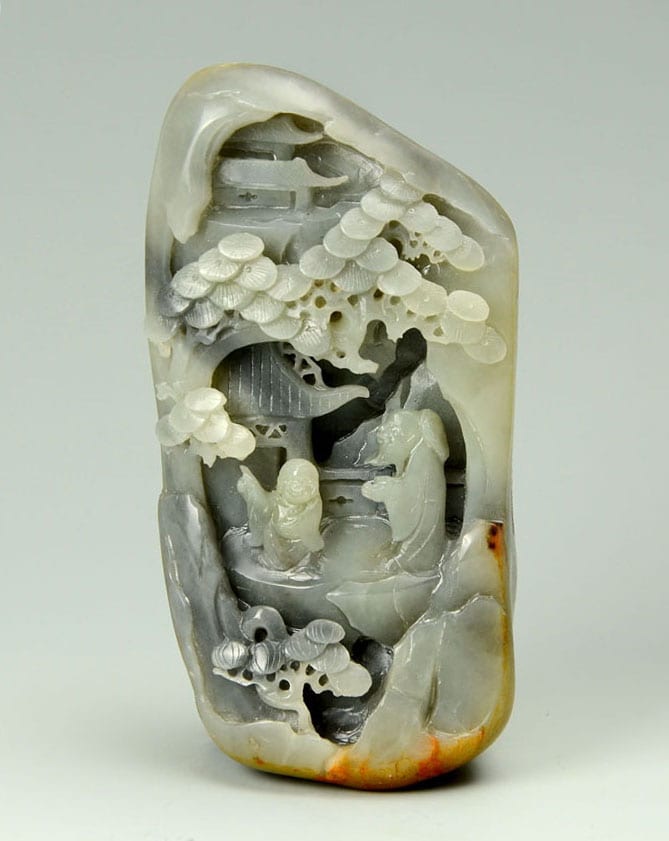
- Celadon/green (qingyu), blue-green (qingbai), yellow (huangyu), and black (heiyu) were used. Iron-rich russet skins are common and were often deliberately retained (liupi) to frame carving or create pictorial effect.
- Inclusions may include dark “black spots” (magnetite) or cloudy “baihua” (whitening along old fractures). Natural diffusion of color across a gradient is more convincing than sharp, superficial dye lines.
Common impostors and treatments:
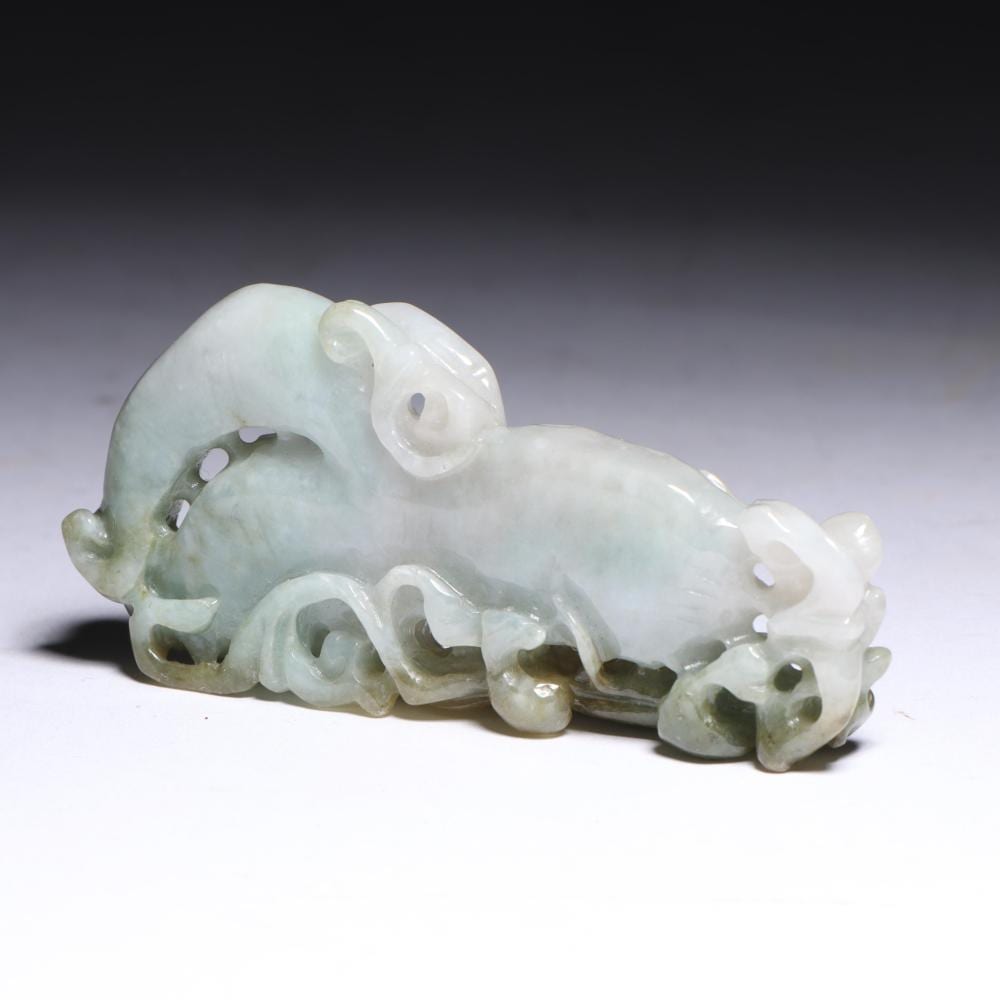
- Jadeite: Higher RI (~1.66–1.68), typically brighter, crisper translucency; the fibrous felted look is absent. Many buyers confuse fine white jadeite with white nephrite—tests resolve the difference.
- Serpentine, calcite, quartzite, and glass: Different SG, RI, luster, and reaction to UV; glass often shows bubbles and a very bright glassy shine.
- Bleaching/dyeing/impregnation: Dyes concentrate in cracks; under UV, dyed fissures may fluoresce. Polymer impregnation can dampen the tactile “drag” of real nephrite and give unnatural uniformity.
If the piece is significant, a qualified gemological report confirming nephrite (and recording SG/RI) reduces risk without invasive testing.
Style, Iconography, and Workshop Clues of the Late Qing
Stylistic analysis complements material tests. Common 19th-century formats:
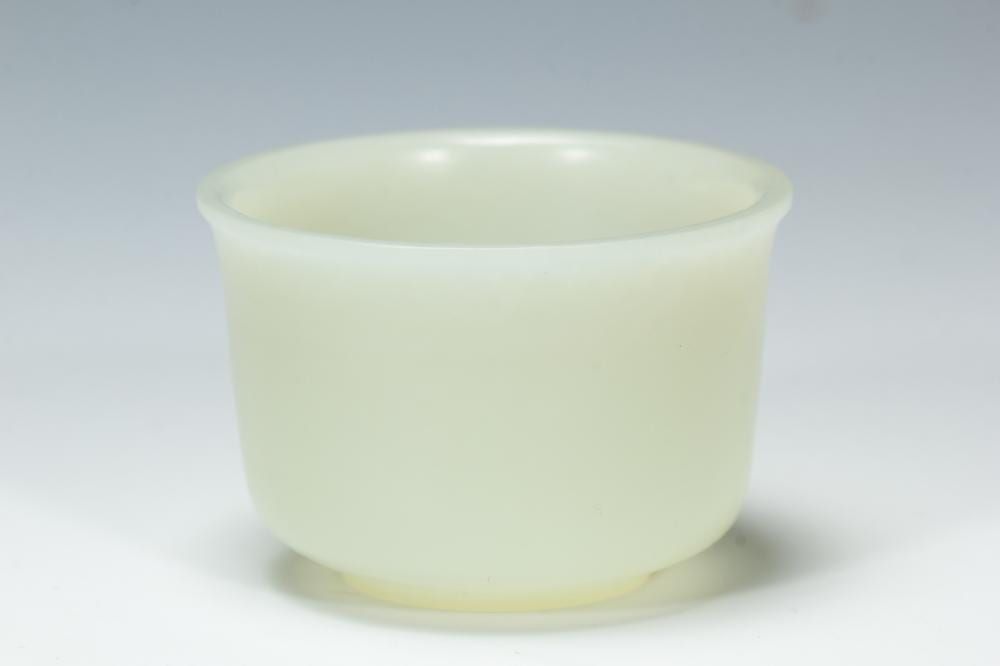
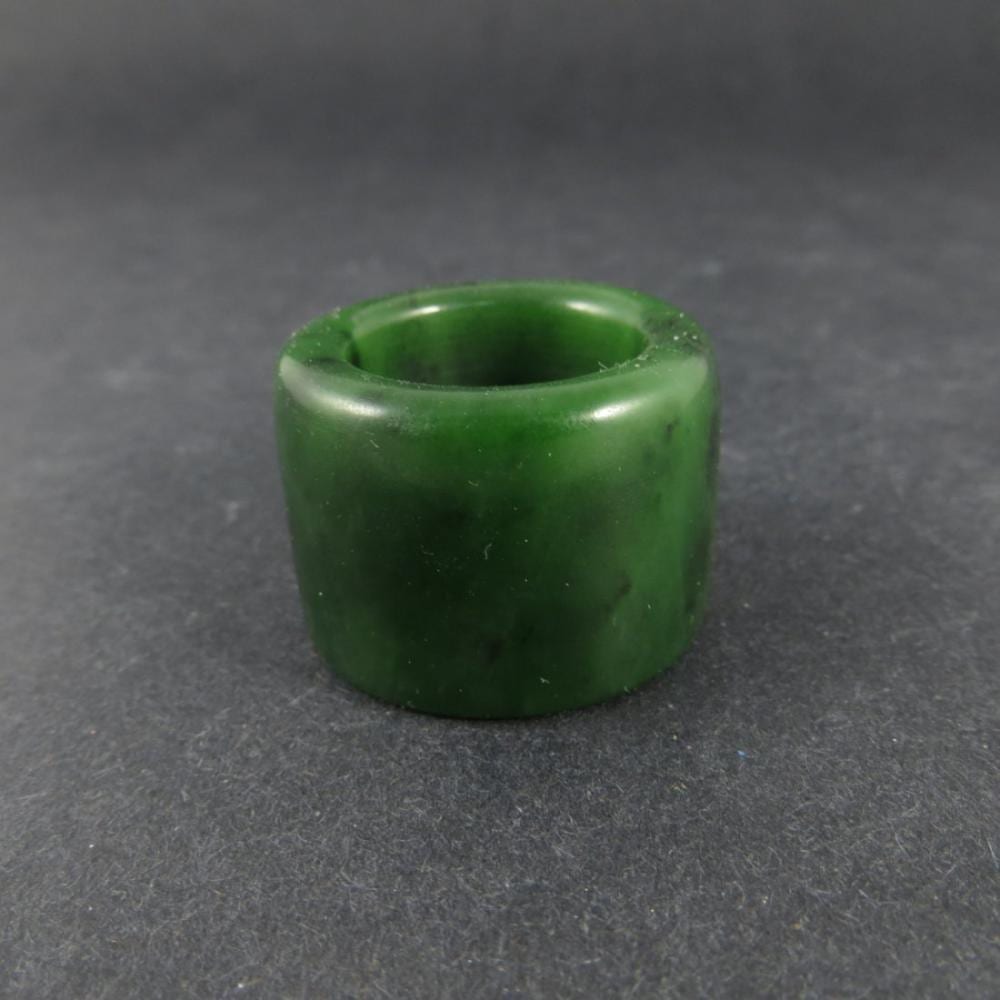
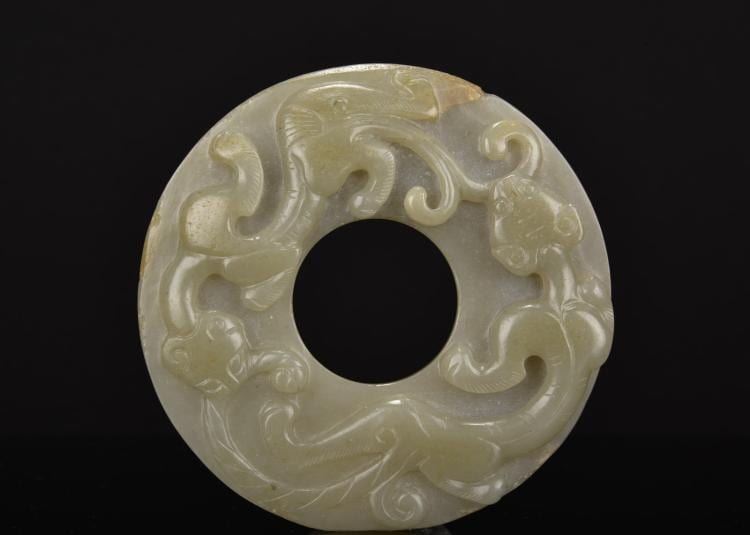
- Scholar’s objects: Brush washers, water pots, small bowls and cups, pendants and toggles (pei), belt hooks, archer’s rings, bi/discs, seals, paperweights.
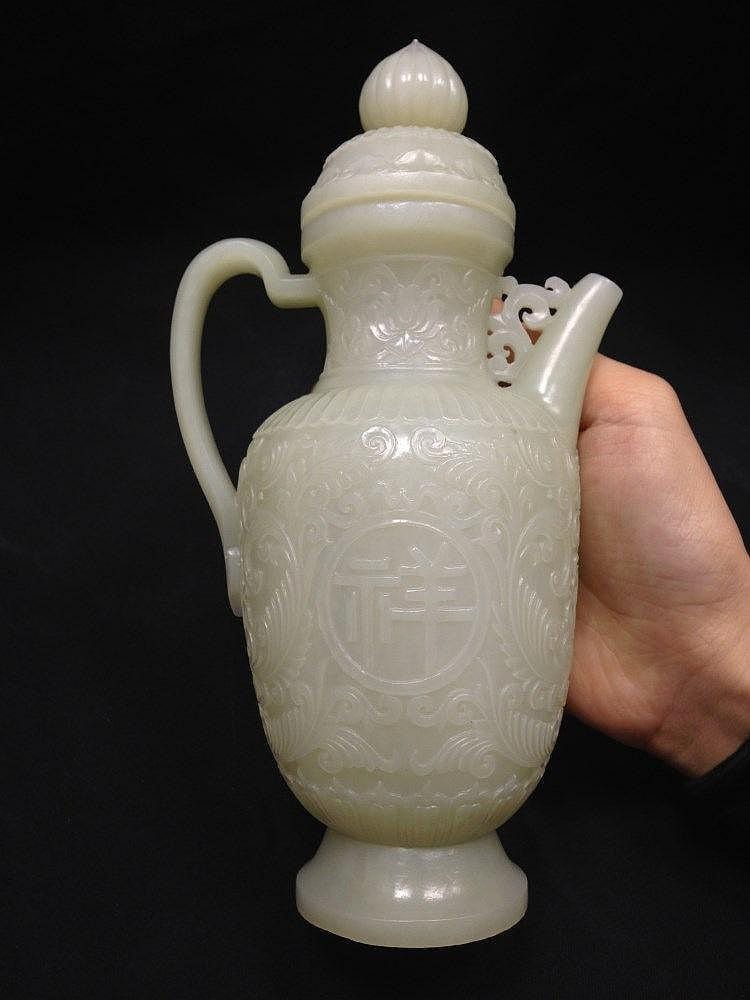
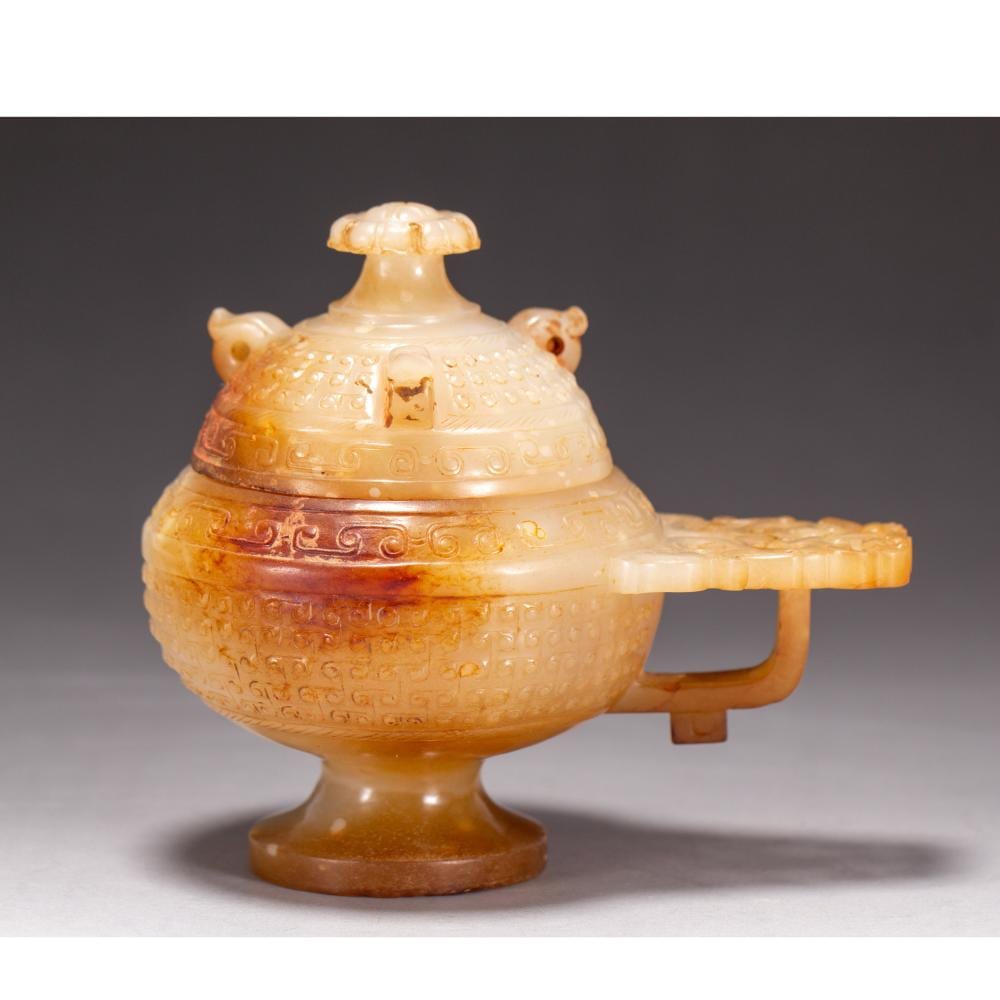
- Decorative vessels: Lidded vases with covers and chains, censers with swing handles, double gourd forms, archaistic gui/you/cong pastiches.
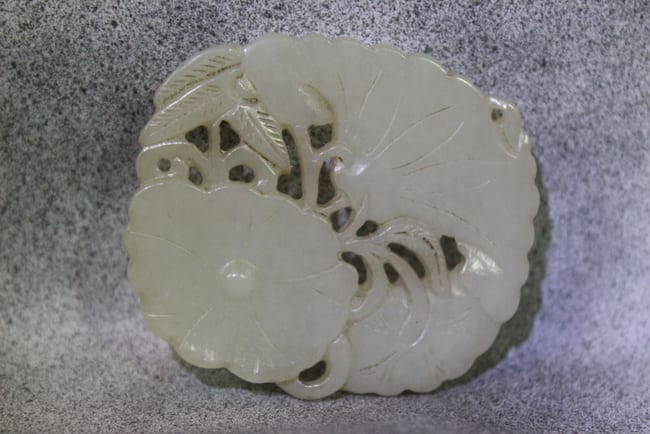
- Figurative subjects: Immortals, boys at play, Buddhist lions, peaches of longevity, bats (fu), ruyi heads, lingzhi, lotus, cranes—visual puns for blessings (fu), longevity (shou), and harmony.
Tendencies in the 19th century:
- Archaistic revival persists, but carving often becomes busier with deeper relief and more openwork compared to the restrained, ultra-crisp Qianlong norm.
- Thin, even walls and ambitious chain-link work appear on court or top workshop pieces; provincial and export workshops may showcase ornate pierce-work with slightly less disciplined symmetry.
- “Retained skin” effects (liupi) are frequently used to paint a scene in contrasting russet and white. Look for thoughtful integration of the skin into the composition rather than randomly placed brown patches.
- Inscriptions: Poetic couplets, collector’s seals, and four-character marks appear. Many are apocryphal. Calligraphy quality (line modulation, spacing) and tool confidence are better indicators than the mere presence of a mark. Sharp, modern-looking V-shaped incisions in a “perfect” calligraphy hand warrant skepticism.
Workshop footprints:
- Beijing Palace Workshops (Zaobanchu) and leading Jiangnan ateliers (Suzhou tradition) show disciplined symmetry, deliberate transitions, and a luminous, even polish that preserves detail.
- Canton/Guangzhou export pieces (late 19th) tend toward decorative exuberance, floral sprays, and matched pairs designed for Western interiors.
- Russian Ural nephrite entered the Chinese sphere in the late 18th/19th centuries; some very white pieces may use non-Xinjiang nephrite yet still be period works. Focus on workmanship and historical plausibility, not just origin lore.
Workmanship, Tool Marks, Patina, and Condition Red Flags
Tooling and polish reveal both age and workshop type:
- Cutting and drilling:
- Traditional bow- or treadle-driven abrasive tools leave broad wheel facets and gentle, sweeping arcs; interior drill channels may be slightly hourglass-shaped with subtle irregularities.
- Modern high-speed diamond tools tend to leave uniform, parallel micro-grooves, tight inside corner radii, and sharply cylindrical drill holes with concentric striations.
- Undercuts and interiors:
- On period work, interiors are finished but may retain faint wheel marks where polish tools had limited reach. Overly perfect, mirror-like interiors can indicate modern reworking.
- Edges and relief:
- Time-softened ridges and a mellowed, satiny gloss are consistent with age and handling. Crisp but not razor-sharp edges are normal. Overly sharp “knife” edges with no softening can be a reproduction tell.
- Polish:
- A deep, oily sheen with micro-variation beats a glassy, synthetic-looking gloss. Repolishing can blur detail and round motifs; look for loss of tool “life” on high points.
- Patina and skin:
- Natural russet on river boulders penetrates in gradients and follows surface topography. Artificial staining pools in crevices and shows telltale tidemarks.
- Stands:
- Period zitan or hongmu stands with oxidized, tight grain and hand-cut tenons add confidence. Machine-cut modern stands with fresh lacquer and uniform milling seldom match a genuinely old jade.
Condition issues and alterations:
- Shallow edge nicks, minute bruises, and minor fissures (“hua”) are common in old nephrite. Excessive crack filling, colored waxes, or resin consolidants under UV are red flags.
- Later additions—applied metal mounts, added chains, reworked rims—affect value. Check joins for adhesive residues.
- Beware “enhanced” inscriptions or reign marks cut into previously plain surfaces. Tool angle, depth, and polish in the grooves often disclose later work.
Appraisal and Market: Factors that Drive Value Today
Valuation rests on the intersection of material, workmanship, date, subject, size, and condition. Key levers:
- Material quality:
- Purity and color evenness weigh heavily. Fine, evenly translucent white (“mutton-fat”) commands strong premiums; attractive celadon and yellow tones with good translucency are also sought.
- Size of the sound, high-quality area matters; large flawless blanks are exponentially rarer.
- Workmanship:
- Precision of modeling, balanced composition, and confident tool control trump mere complexity. Court-quality surfaces have vitality even under magnification.
- Period attribution:
- A carefully argued 19th-century attribution rooted in tool marks, style, and provenance will outperform generic “old jade” claims. The presence of a mark is not decisive; connoisseurship is.
- Subject and format:
- Scholar’s objects with literati appeal (brush washers, archaistic forms) and auspicious themes (bats and peaches for “fu shou”) have deep collector bases. Rare or especially poetic compositions excel.
- Condition:
- Honest age wear with intact carving is acceptable. Major cracks crossing focal motifs, significant re-polish, or repairs suppress value.
- Provenance:
- Early export history, old collection labels, and documented ownership add liquidity. Matching original stands are a plus.
Pricing shifts with taste cycles and supply. Use multiple comparables and weigh them by true material and workmanship parity, not just headline descriptors like “mutton-fat” or “imperial style,” which are often used loosely in the trade.
Practical strategy for buyers and appraisers:
- Start with material: confirm nephrite. Then scrutinize workmanship and tool evidence. Finally, position style and iconography within late Qing norms.
- If justified by value, obtain a gemological report and a specialist opinion. Never rely on marks alone.
Practical Appraisal Checklist and FAQ
Practical checklist (use in-hand with a loupe and good light):
- Confirm nephrite: SG around 2.95 and spot RI near 1.61; avoid destructive scratch tests.
- Assess luster: oily/waxy with soft glow; edges should transmit light subtly.
- Check translucency: look for evenness; excessive chalkiness or glassy glare is a caution.
- Inspect color and skins: natural gradients; retained russet integrated into the design.
- Magnify tool marks: broad wheel facets and graceful arcs suggest traditional tooling; uniform micro-grooves and perfect cylindrical drill holes suggest modern methods.
- Examine interiors and undercuts: finished but not unnaturally flawless on period work.
- Evaluate edges and high points: time-softened ridges; excessive rounding indicates repolish.
- Look for dye or fillers: colored residues in cracks; anomalous UV fluorescence at fissures or along inscriptions.
- Read the composition: balanced, confident carving with thoughtful use of thickness and voids.
- Crosscheck inscriptions/marks: calligraphy quality, cut profile, and polish inside strokes; do not accept marks as proof of period.
- Consider subject and size: auspicious themes and literati forms in good proportion rate higher.
- Condition review: note cracks, chips, repairs, re-polish, later mounts/stands.
- Provenance: record labels, old collection numbers, receipts; photograph any period stands.
- Risk management: for significant pieces, commission gemological confirmation and a specialist appraisal.
FAQ: 19th‑century Hetian jade
Q: How do I tell Hetian (nephrite) from jadeite? A: Measure SG and RI if possible: nephrite ~SG 2.95, RI ~1.61; jadeite ~SG 3.3–3.4, RI ~1.66–1.68. Nephrite shows a fibrous, felted texture and an oily luster; jadeite has granular “sugar” texture and a brighter, glassier translucency. Avoid relying on color alone—both can be white or green.
Q: What does “mutton-fat” jade really mean? A: It denotes exceptionally even, fine-grained white nephrite with a creamy, luminous translucency. The term is often abused in the market. True examples have both purity and a soft glow; chalky or opaque white is not “mutton-fat.”
Q: Are reign marks on jade reliable for dating? A: No. Many are apocryphal or later-added. Use marks as one data point only; prioritize material, tool marks, workmanship, and coherent stylistic context. Quality calligraphy alone does not confer imperial origin.
Q: Can I safely clean an old Hetian jade? A: Gently dust with a soft brush and, if necessary, wipe with a barely damp lint-free cloth. Avoid harsh chemicals, ultrasonic cleaners, and aggressive scrubbing. Do not attempt to remove old waxes or residues without professional advice.
Q: What are common signs of a modern reproduction? A: Overly sharp, uniform tool lines; perfectly cylindrical, concentric drill holes; mirror-perfect interiors; unnatural glassy polish; dyed fissures; gratuitous, fresh-looking inscriptions; and a mismatch between flamboyant style and supposedly early date.
By combining disciplined material testing with close observation of carving language and surface history, you can build a defensible appraisal for 19th-century Qing Hetian jade—balancing connoisseurship with clear-eyed risk controls.