12 Place Settings Set Royal Albert China Appraisal: appraisal and value basics
12 Place Settings Set Royal Albert China Appraisal research should start with identification, condition, provenance, and recent comparable sales. Use this guide to compare the signals that matter before paying for a formal appraisal or deciding whether to sell.
12 Place Settings Set Royal Albert China Appraisal
Royal Albert bone china sits at a sweet spot where tradition, design, and collectibility converge. Appraising a 12-place setting—especially one with service pieces—requires more than a quick look at a pattern name. This guide walks you through identification, dating, completeness, condition grading, and market value so you can confidently document and price a set for sale, insurance, or estate purposes.
Understanding a 12-Place Setting in Royal Albert
“12 place settings” is a headline number; the reality is in the piece count and configuration. Royal Albert produced many shapes and pattern lines over more than a century, so confirm what’s actually included before attaching a value.
Typical place-setting configurations:
- Traditional 5-piece place setting: dinner plate (approx. 10–10.5"), salad or dessert plate (approx. 8"), bread & butter plate (approx. 6–6.5"), teacup (usually footed, 6–7 oz), and saucer (approx. 5.5–6").
- Expanded place setting: adds a rim soup bowl (approx. 8–8.5") or cereal/coupe bowl (approx. 6–6.5").
- Continental variants: sometimes include a luncheon plate (approx. 9") or a fruit/dessert dish.
What “12 place settings” can mean in practice:
- Basic 12 x 5 pieces = 60 pieces.
- With soups: 72 pieces.
- With fruit bowls and mugs as well: 84+ pieces.
Service pieces often included in large Royal Albert sets:
- Teapot (with lid), coffee pot, hot water/tea kettle (less common)
- Creamer and covered sugar
- Gravy boat and underplate (stand)
- Oval platters (13" and 15–16")
- Open or covered vegetable bowls
- Cake plate or tiered cake stand
- Bread tray, sauce dishes, butter dish with cover
Value hinges on both the count and the mix. A “12-place” set without service pieces can be worth less than a smaller set that includes high-demand servers.
Identification and Dating: Backstamps, Shapes, and Patterns
Accurate identification anchors the appraisal. Royal Albert’s marks and forms evolved, and mixed-era sets are common.
Backstamps and dating cues (general, indicative ranges):
- “Royal Albert Crown China” marks: commonly early 20th century (c. 1905–1935). Often features a crown motif and sometimes “England.”
- “Royal Albert Bone China England”: mid-20th century; appears in various layouts. Pre- and post-war usage (c. 1930s–1950s).
- “Made in England”: widespread from post-WWII through late 20th century; often paired with pattern name and copyright date for specific designs.
- “Royal Albert Ltd” or years such as “1962, 1986, 1993 Royal Albert Ltd”: used on patterns like Old Country Roses to note design copyright; does not equal year of manufacture by itself.
- Late 20th to 21st century: some marks omit “England,” or state “Made in …” (e.g., Indonesia/Thailand/China) as production moved overseas after Royal Doulton group changes; English production largely ceased in the early 2000s.
Corporate timeline highlights:
- Royal Albert emerged from Thomas C. Wild & Sons, Longton, Staffordshire (late 19th to early 20th century).
- Became part of Royal Doulton in 1972.
- Production shifted abroad in the early 21st century; country-of-origin lines reflect this shift.
Shapes and pattern tells:
- Cup shapes: “Montrose” (rounded, flared rim) is iconic for Old Country Roses and several florals; “Avon” and others appear on select patterns.
- Edge treatments: scalloped with gilt, smooth with platinum, or embossed relief rims affect desirability and replacement matching.
- Transfer prints and decals: hand-applied decals and hand-painted gold trim can show slight variations; thicker, more luminous gilt is typical of earlier English production.
Popular patterns you’ll encounter:
- Old Country Roses (1962–): the best-known; English-made early runs are prized.
- Lady Carlyle, Moonlight Rose, Serena, Lavender Rose, Tranquillity, Blossom Time, Provincial Flowers series, Centennial Rose, and seasonal or commemorative lines.
- Discontinued patterns with limited production runs may be scarcer than evergreen lines, but demand drives value more than rarity alone.
Documentation to capture:
- Pattern name, exact backstamp photos, any registration or copyright marks.
- Measurements for each form; Royal Albert offered multiple plate sizes and two main bowl types.
- Whether cups are footed and if the handles match across the set (a clue to mixed assembly).
Condition Grading and Completeness
Condition has an outsized impact on value—especially for gilt-rich florals like Royal Albert.
Grade systematically:
- Mint/Unused: no signs of use; crisp glaze; no utensil or stacking marks; intact gilt with no breaks.
- Excellent: minimal expected light wear under angled light; no chips, cracks, crazing, or stains.
- Very Good: minor utensil or stacking wear; tiny gilt rubs at high points; no structural flaws.
- Good: noticeable wear; small gilt losses; possible light, stable crazing; still displayable.
- Fair: hairlines, chips, staining, heavy wear; functional but of low collectible value.
Common condition issues:
- Gilt wear at rims and handles; “windowpane” rub to saucer wells from cup bases.
- Utensil marks on dinner and salad plates.
- Crazing (fine glaze cracks); can darken with moisture/oils and reduce value materially.
- Hairline cracks at cup handles; base nicks and foot ring abrasions.
- Factory seconds: sometimes marked by a scratch through the backstamp or a dot; discount accordingly (often 20–40% vs first quality).
Completeness considerations:
- Matching counts across forms (12 of each) increases appeal.
- A “built” set (mixed backstamps/eras) is common; declare the mix. English-made mixed with later overseas production reduces top-end value.
- Presence of high-demand service pieces (covered vegetable, large platter, teapot/coffee pot with original lids) can add more value than extra bread plates ever will.
Market Demand and Valuation Approaches
Appraise with the intended use in mind—replacement, fair market, auction, or liquidation. Values here are illustrative ranges; adjust using current comparables for the exact pattern and production era.
Valuation types:
- Replacement value (insurance): cost to replace at full retail from a specialist or dealer. Highest number. For a 12-place English-made set in a popular pattern with key servers, this can span roughly high hundreds to low thousands depending on pattern and condition.
- Fair market value (FMV): price a willing buyer and seller agree upon in an open market. Typically lower than replacement; think collector-to-collector or reputable marketplace transactions.
- Auction value: net realizable price under competitive bidding; can be below FMV in soft periods or exceed it in hot seasonal windows.
- Estate/liquidation value: expedited sale estimate; often the lowest.
Demand drivers:
- Pattern popularity: Old Country Roses leads; Lady Carlyle and Moonlight Rose are consistently strong; some discontinued florals have loyal followers.
- Production origin: “Made in England” commands a premium over later overseas production of the same pattern in equivalent condition.
- Completeness and servers: sets with teapot, covered veg, and 15–16" platter outperform bare-bones arrays.
- Seasonality: floral tea wares see uplift before holidays and spring wedding season.
- Market venue: specialized dealers and replacement retailers yield higher list prices; local auctions may underperform unless well targeted.
Illustrative value positioning (to calibrate expectations; verify with matched comps):
- 12 x 5-piece Old Country Roses, all “Made in England,” Very Good–Excellent, no servers: often mid-to-high hundreds FMV depending on wear.
- Same set with teapot, covered veg, gravy+stand, and large platter: typically into the low-to-mid four figures in retail replacement; FMV meaningfully lower but still elevated versus a bare set.
- Later overseas production in similar quantity and condition: discount meaningfully; often half or less versus English-made.
Use comparables:
- Match pattern, backstamp era, specific forms, and condition.
- Verify whether lids and stands are included and original to the piece.
- Adjust for shipping costs and regional supply when interpreting sales.
What similar items actually sold for
Real auction sales of items like yours. Open a sale to see the original listing.
Shown USD range: USD 150-USD 1,500. Median of these 5 USD examples: USD 225.
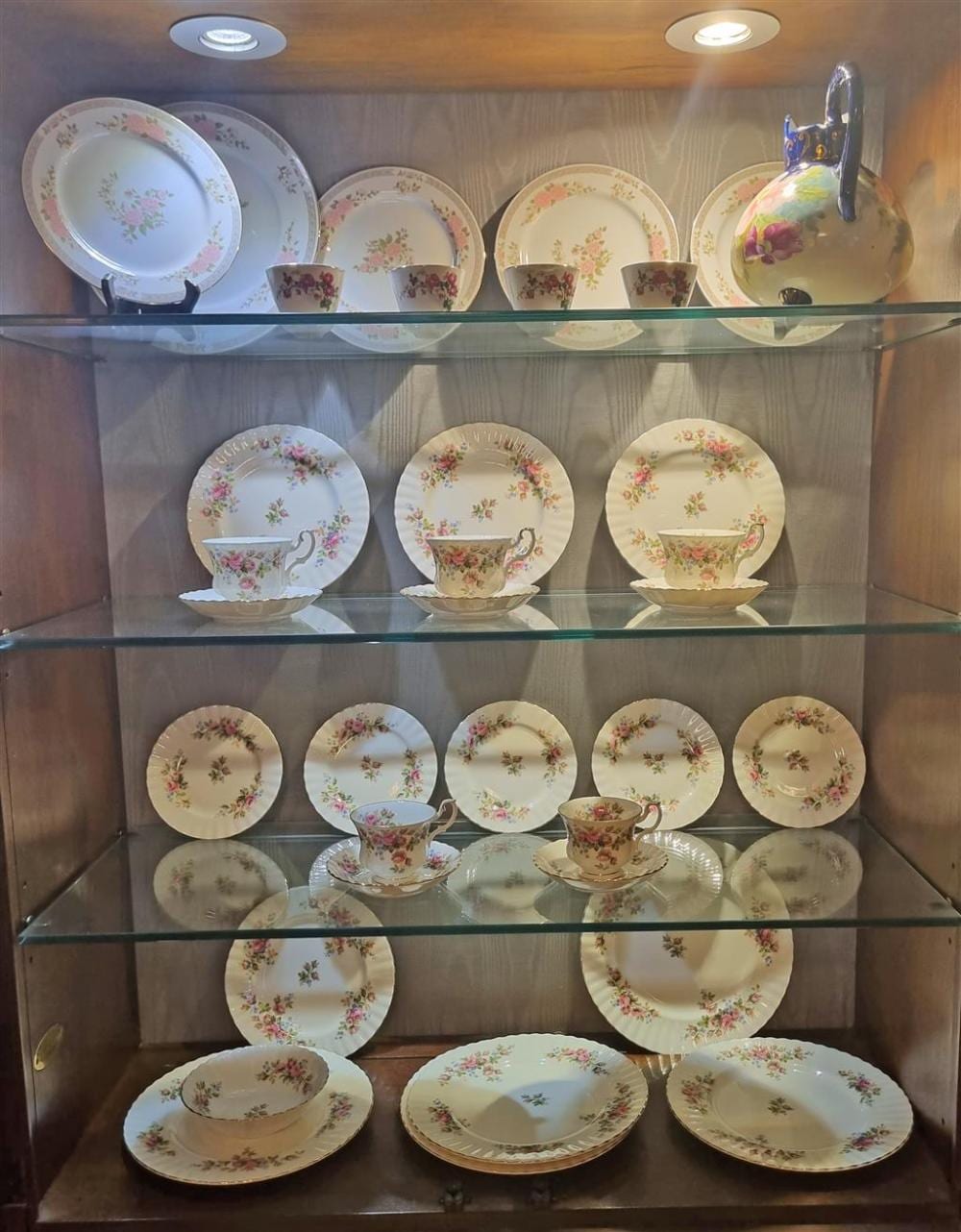
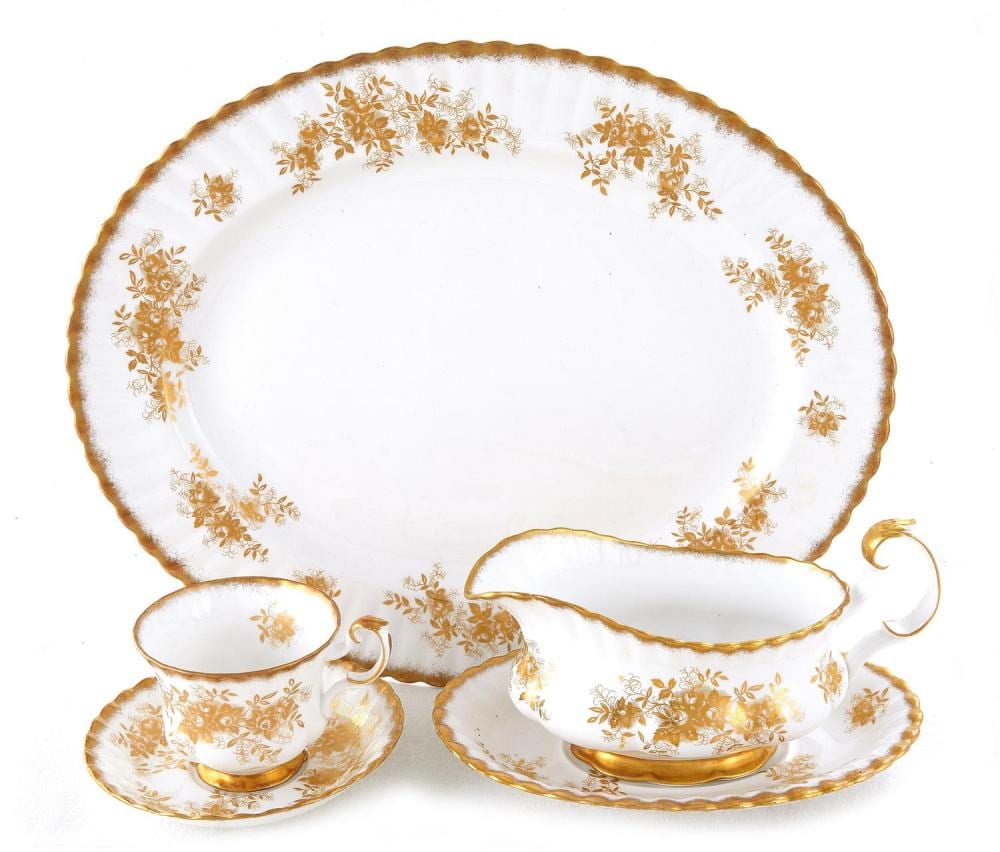
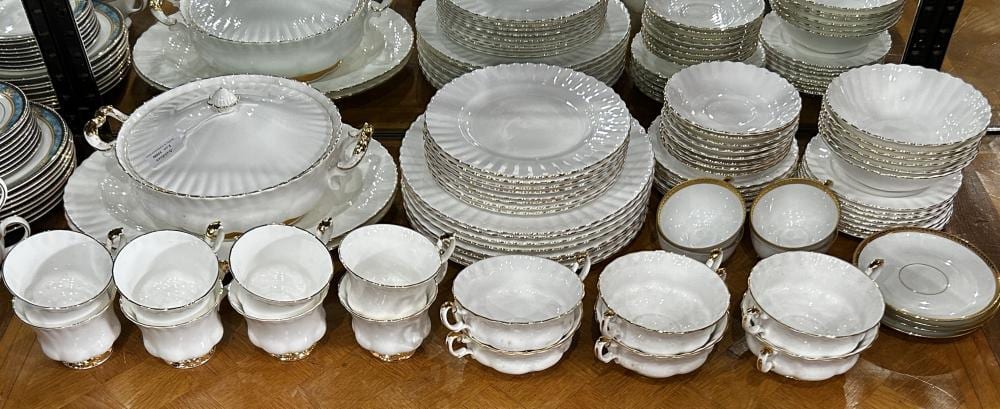
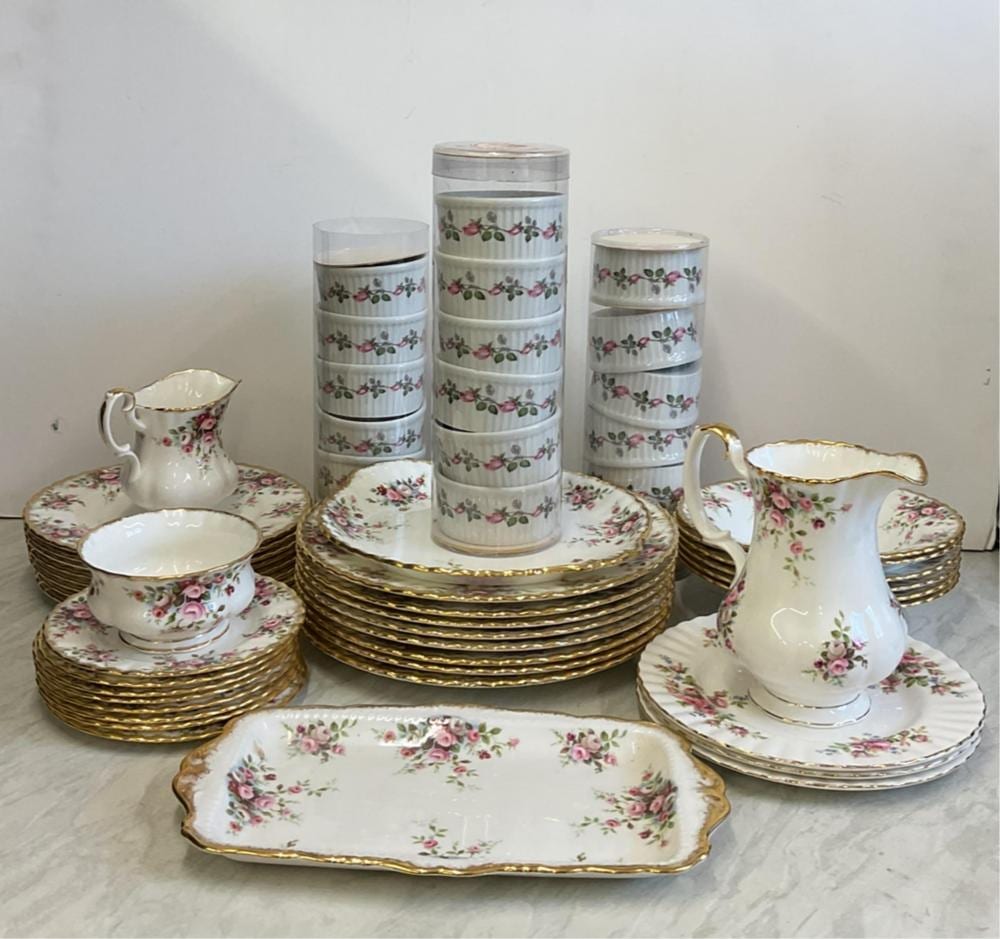
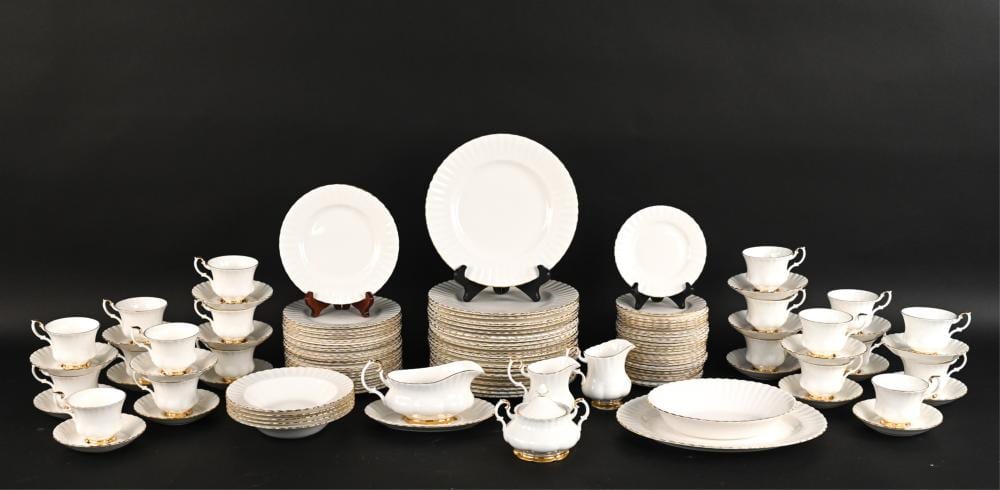
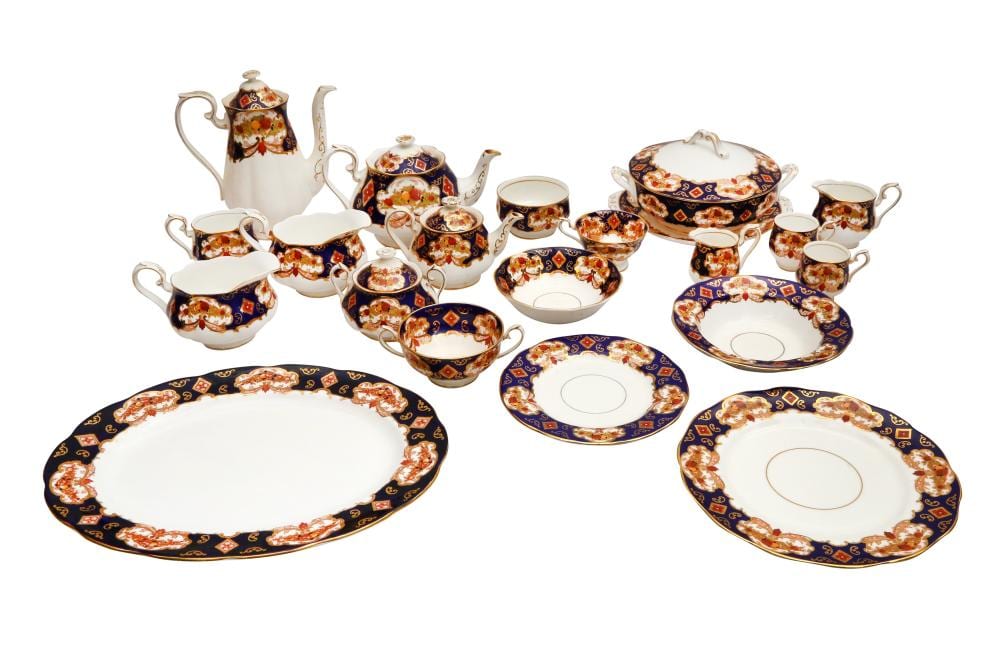
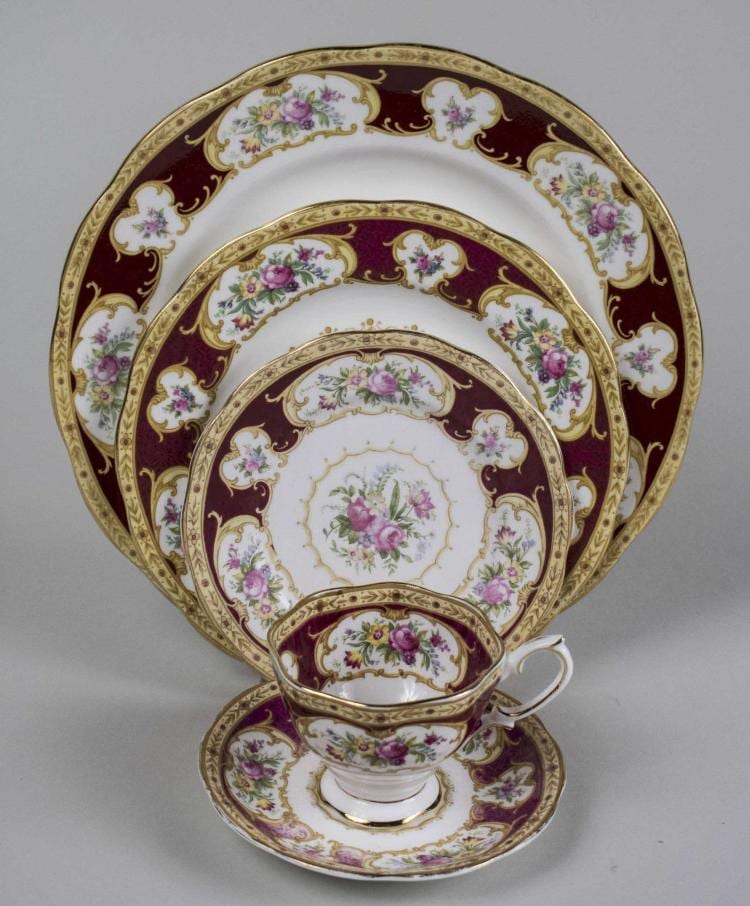
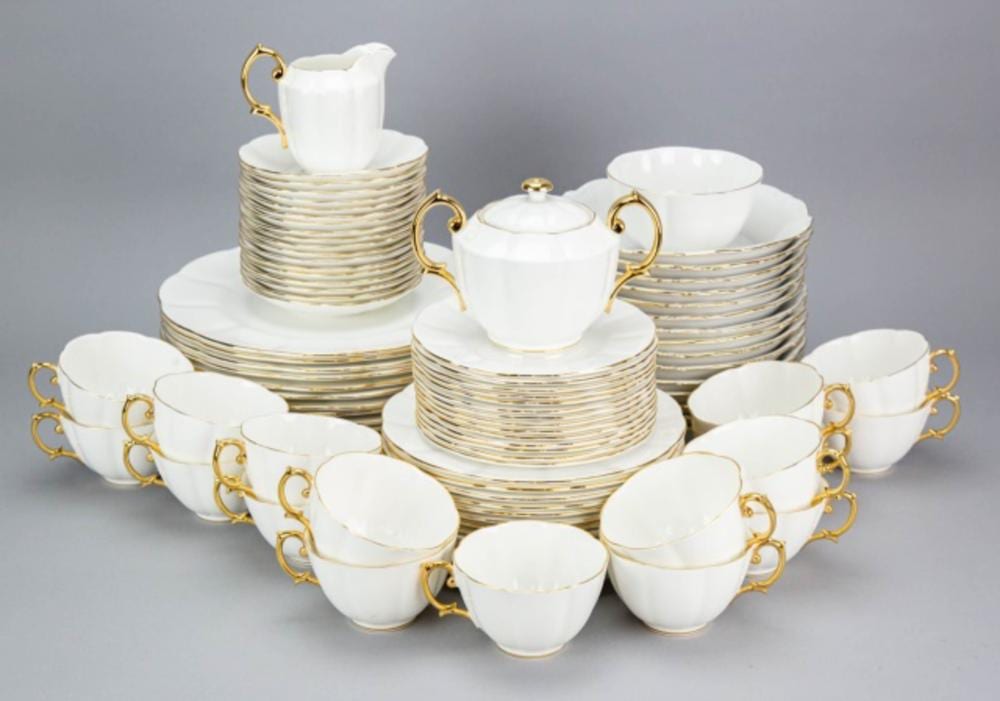
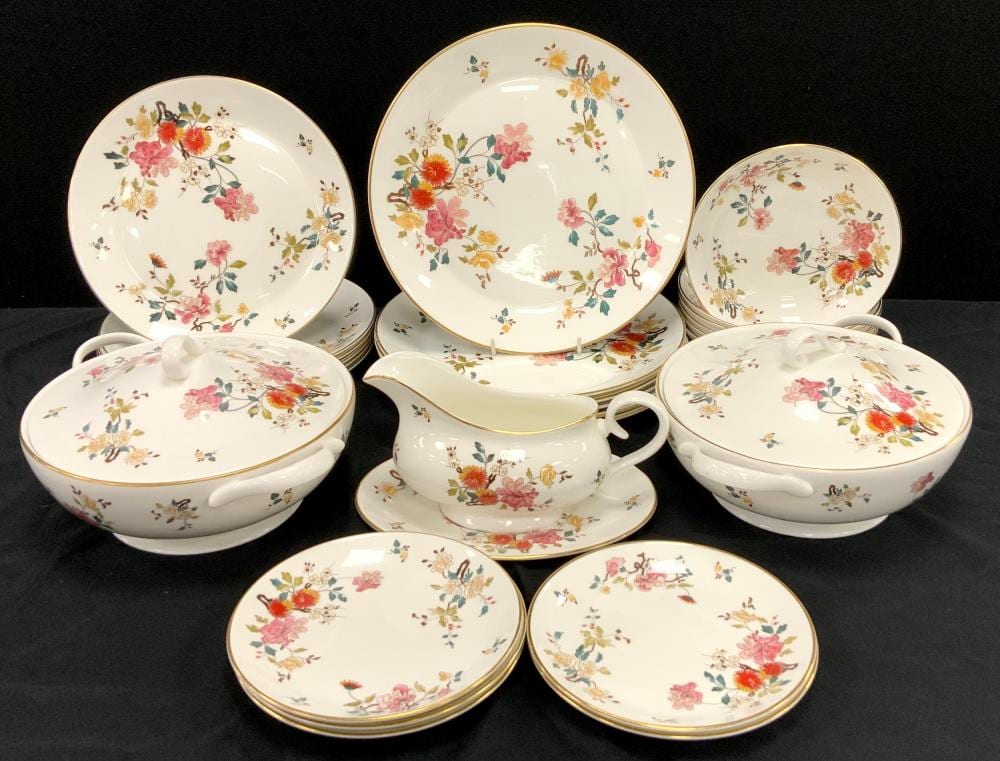
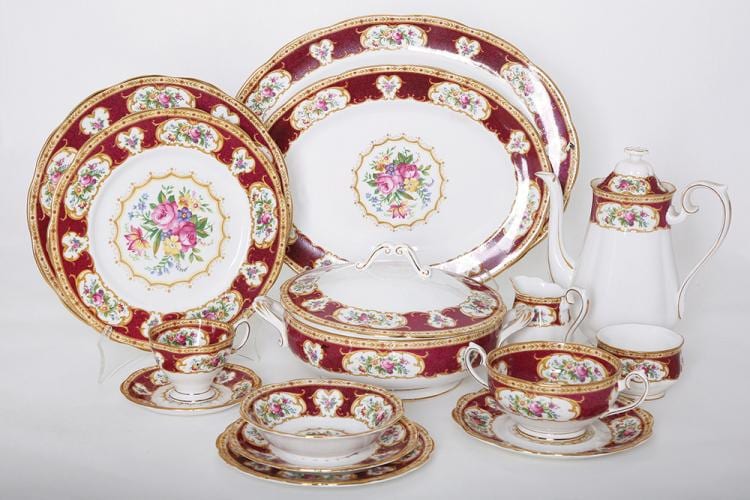
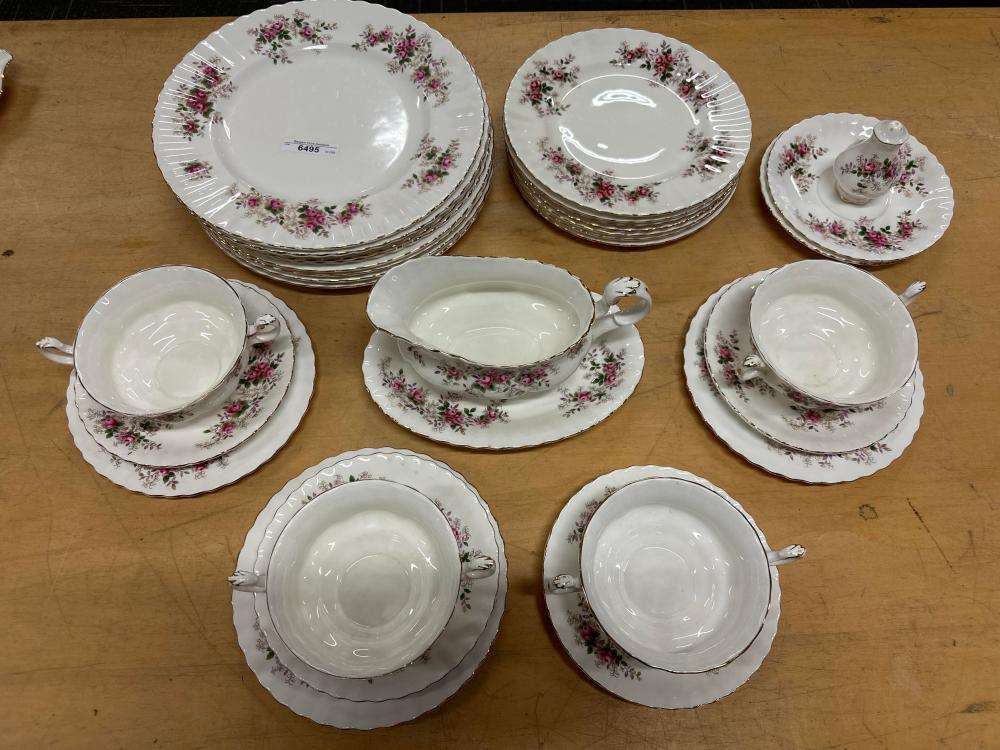
How these auction records were verified
These sales are market context, not an object estimate.
Each row is tied to its lot identity, retrieval time, access result, and immutable record hash. Live source access was blocked; the exact record matched Appraisily's immutable pipeline provenance. Inspect the public comparable provenance record.
Free photo check
Not sure if your item is worth appraising? Let us take a look.
Upload a photo, tell us what you know, and get a free photo check. If a full appraisal makes sense, we will say so.
Free. No card needed. Takes about two minutes.
Use the free screener to share backstamp photos, a full piece count, service-piece details, and condition notes before paying for a written report.
Care, Handling, and Presentation for Appraisal
Your handling can protect value and help you secure a confident number.
Handling and cleaning:
- Handwash only for gilt-trim Royal Albert. Avoid dishwashers, harsh detergents, lemon/citrus, and abrasive pads.
- Line sinks with a towel; keep water lukewarm. Wash cups and plates separately to avoid knock damage.
- Dry immediately with lint-free cloths to prevent water spots that mimic glaze issues.
Inspection tips:
- Use bright, angled light for utensil and stacking wear.
- Run a clean finger along rims and handles to find micro-nicks.
- Check the underside foot rings and saucer wells for circular wear.
- Hold thin pieces to light to spot hairlines; avoid flexing.
- Photograph each backstamp variant; group like-with-like to identify mixed era assembly.
Documentation for reports:
- Itemized inventory by form and count (e.g., 12 dinner, 12 salad, 12 B&B, 12 cups, 12 saucers; plus servers).
- Condition grade summary with notes on recurring issues (e.g., light utensil wear on dinners; gilt rubs on two cups).
- Backstamp matrix (how many of each mark).
- Representative measurements and weights.
- Five to eight representative images per form and close-ups of flaws.
Practical Appraisal Checklist
- Confirm pattern name(s) and cup/plate shapes.
- Photograph every backstamp; note country of origin and any “Ltd” or copyright lines.
- Inventory by form and count; confirm which “12-place” configuration you have.
- Measure standard pieces to validate shapes and replacements.
- Grade condition consistently; note chips, hairlines, crazing, stains, and gilt wear.
- Identify factory seconds marks and mismatched lids or stands.
- Separate English-made from later production; quantify the mix.
- Identify and value-add service pieces individually (teapot, covered veg, large platter, gravy+stand).
- Pull recent comparables matched for pattern, origin, forms, and condition.
- Assign valuation by purpose: replacement vs FMV vs auction/liquidation.
- Document with clear photographs and a concise written summary.
FAQ
Q: What exactly qualifies as a “12 place settings” Royal Albert set? A: There’s no single standard. The most common is 12 each of dinner, salad, bread & butter, teacups, and saucers (60 pieces). Some sellers include soups or fruit bowls, pushing the count to 72 or 84 pieces. Always list the exact piece count and forms.
Q: Does mixing backstamps or production eras hurt value? A: Usually, yes. Sets assembled from mixed eras—especially a blend of “Made in England” and later overseas production—command less than uniform English-made sets. Disclose the mix and value accordingly.
Q: Is Old Country Roses always the most valuable? A: It’s the most demanded and easiest to sell, but value still depends on origin, completeness, and condition. A complete English-made service with key servers can outperform most other patterns; later production or heavy wear narrows the gap.
Q: How should I clean Royal Albert before selling or appraising? A: Handwash gently with mild soap in lukewarm water, avoid soaking, and never use a dishwasher on gilt-trimmed pieces. Dry immediately and avoid stacking while wet. Do not use bleach or abrasive cleaners.
Q: Should I insure a 12-place Royal Albert set? A: If replacement cost approaches or exceeds what you’re willing to self-insure—especially for English-made sets with teapot/larger servers—consider a rider with replacement value documentation and photographs.
By combining pattern identification, backstamp dating, rigorous condition grading, and pattern-specific comparables, you can place a defensible and transparent value on any 12-place Royal Albert china set.