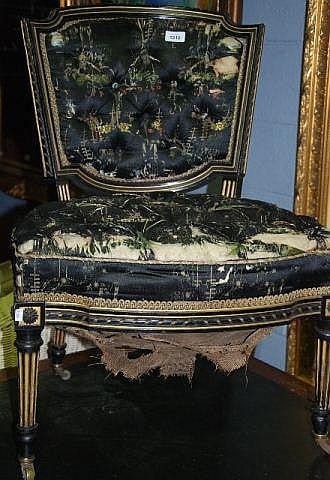
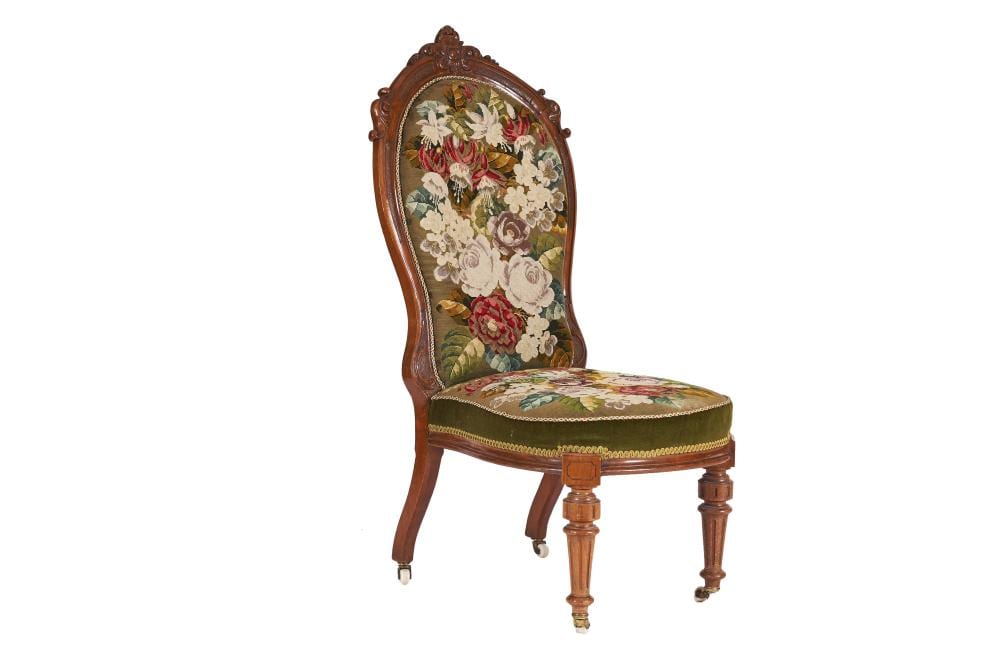
Victorian Circa Late 19th Century Solid Wood Hand Carved Nursing Chair: appraisal and value basics
Victorian Circa Late 19th Century Solid Wood Hand Carved Nursing Chair research should start with identification, condition, provenance, and item-specific market evidence. Use this guide to compare the signals that matter before paying for a formal appraisal or deciding whether to sell.
Victorian nursing chair value checklist
Victorian nursing chairs occupy a distinctive niche in 19th-century domestic furnishings: compact, low-seated, and often richly carved, they were designed for comfort near the hearth and practicality in the nursery. For appraisers and collectors, these chairs offer a rewarding study in workmanship, materials, and regional taste. This guide focuses on late 19th-century British Victorian examples in solid wood with hand carving, detailing how to identify period construction, differentiate documented pieces from later revivals, evaluate condition and value, and care for them responsibly.
What Is a Victorian Nursing Chair?
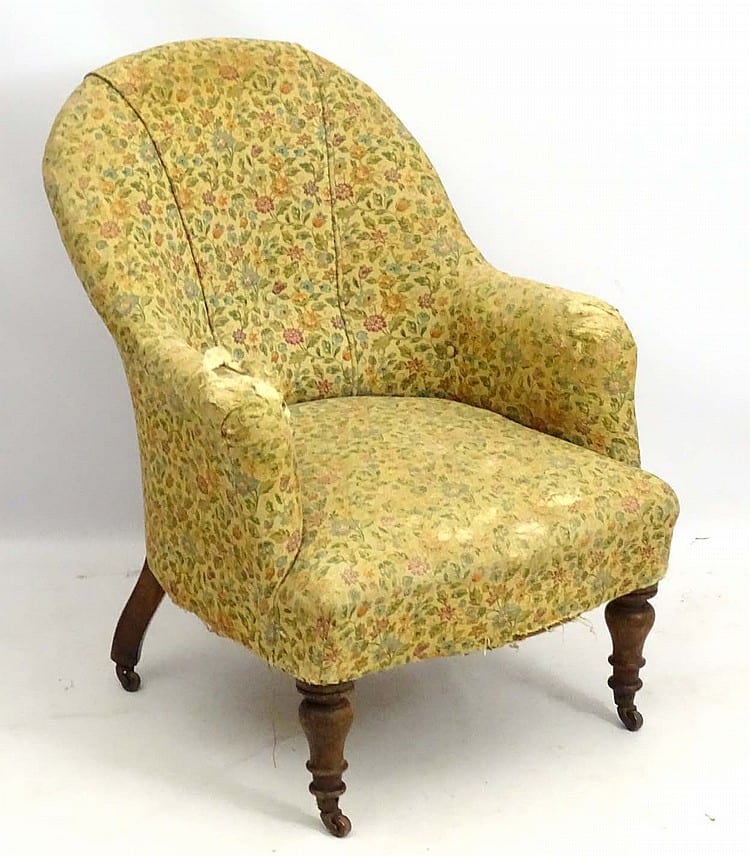
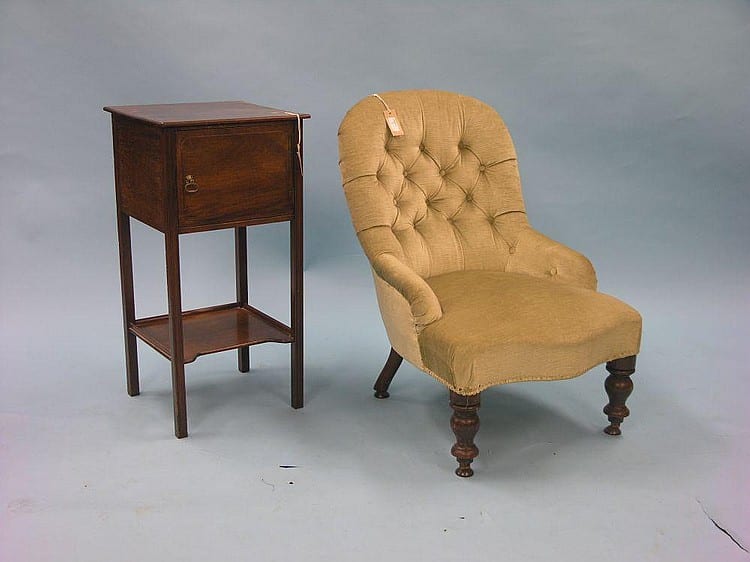
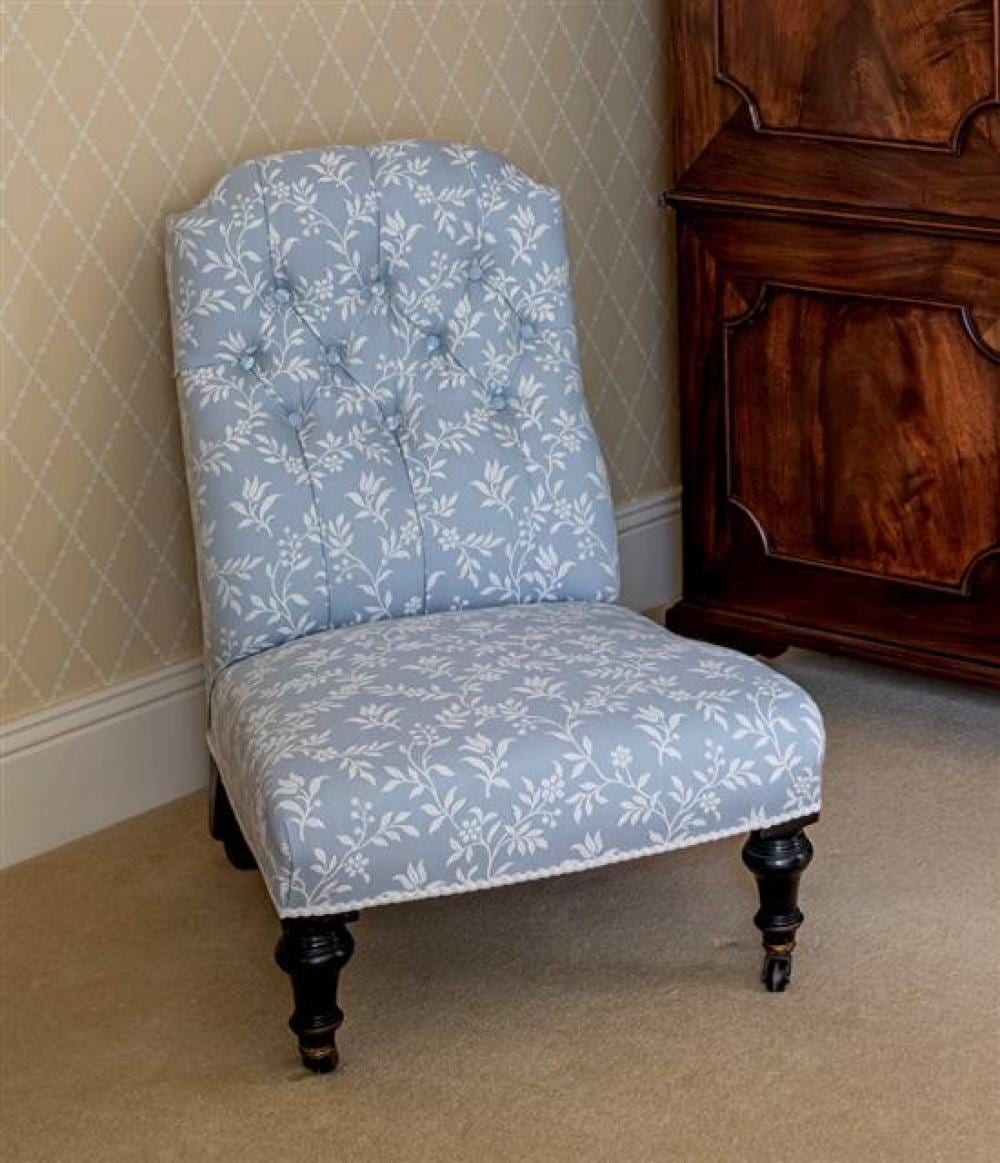
A Victorian nursing chair is a low-seated, typically armless or minimally-armed chair intended to make tending to infants—nursing, dressing, soothing—easier for adults seated close to floor level. The low seat (often 12–16 inches high) also facilitated conversation by the fire and helped a caregiver maintain eye contact with a child on the floor. While some 19th-century “nursing chairs” in America refer to rockers, the British term commonly describes a stationary, armless upholstered chair with a slightly canted back.
Key profile traits:
- Seat height: approximately 12–16 in (30–40 cm).
- Back: moderately low to mid-height, sometimes button-tufted or carved.
- Arms: usually armless; if present, arms are small and set low.
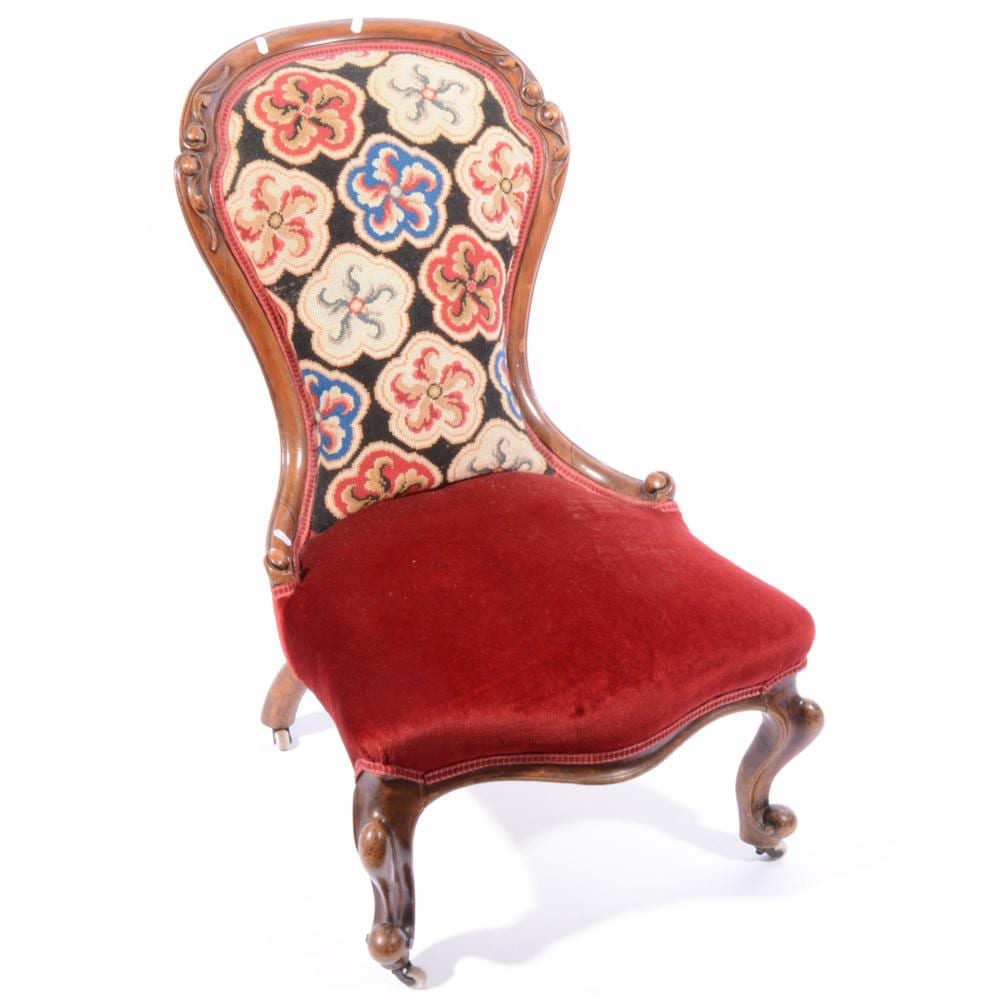
- Base: four legs (turned, cabriole, or square; often with brass and ceramic casters).
- Function: meant for domestic comfort, not a child’s chair (dimensions are adult-scaled but low).
Stylistically, late Victorian nursing chairs bridge multiple currents: Rococo Revival lingered earlier in the period; by the 1870s–1890s, Eastlake influence (incised geometric carving, chamfered edges) and Aesthetic Movement elements (ebonized details, subtle Japanese-inspired motifs) are common. More conservative examples retain classical motifs such as acanthus leaves, rosettes, and scrolling foliage. Regional cabinetmakers produced most chairs; retailer labels (e.g., Maple & Co.) appear occasionally, while stamps of major London firms are rarer.
Construction, Wood, and Upholstery
Understanding construction and materials underpins sound appraisal.
Wood species:
- Walnut: a late Victorian favorite for show-wood frames; takes crisp carving and polishes well.
- Oak: increasingly common toward the 1880s–1900; heavier, with pronounced grain.
- Mahogany: used on higher-end chairs; deep reddish hue, close grain.
- Beech: frequently used as a frame wood under upholstery; often stained to imitate mahogany or walnut.
- Mixed woods are typical: show wood in walnut/mahogany, secondary in beech/softwood.
Joinery and frame:
- Mortise-and-tenon joints on rails and legs, sometimes pegged.
- Corner blocks in seat frames, hand-shaped and chamfered, glued and nailed.
- Saw marks: circular saw marks are expected by the late 19th century; presence of some hand-planing and irregularities still support hand craftsmanship.
- Tooling: chisel facets inside joints; slight asymmetries in carved motifs; evidence of hand-scraping.
Carving:
- Hand-carved ornament often includes low-relief foliage, rosettes, and scrolls; Eastlake-type “spoon” carving and incised lines appear from the 1870s.
- Expect minor variations between left and right sides; repetitive, perfectly identical patterns suggest machine carving from later reproductions.
Finish:
- Shellac or French polish is typical; warm, deep patina with light “craquelure” is common.
- Ebonized accents (blackened edges or panels) and gilt-paste highlights appear on some Aesthetic Movement pieces.
- Avoid assuming polyurethane or high-build varnish is original; those are 20th-century interventions.
Upholstery:
- Period fillings: horsehair, coir, curled hair, straw, cotton batting; jute/hessian webbing; early steel coil springs (mid-late 19th century), all fixed with cut tacks.
- Fabrics: wool damask, tapestry, needlepoint, silk brocade; edges finished with gimp or decorative braid.
- Original upholstery often survives only in fragments; beneath later coverings, look for square-shank tacks, hand-sewn ties, jute webbing with stenciled supplier marks.
Hardware:
- Casters: brass cups with ceramic or brass wheels are typical. White ceramic wheels signal 19th-century fittings; plastic or rubber wheels are 20th century.
- Screws: single-slot screws with irregular slots and tapered shanks indicate period repairs; Phillips-head screws are post-1930s.
Identification and Dating: How to Read the Details
Dating a late Victorian nursing chair is a matter of stacking clues:
Profile and proportions:
- Low seat height with a gently reclined back is consistent with nursing function.
- Wider seat base than a child’s chair; if the chair looks miniature overall, it may be a child’s or doll’s chair.
Stylistic motifs:
- Eastlake influence (c. 1870–1890): linear incisions, geometric sunflower rosettes, chamfered corners, restrained relief carving.
- Aesthetic Movement details: ebonized borders, Japonisme-influenced surface decoration.
- Classical and floral motifs persisted, but by the 1890s carving tends to be flatter and more stylized than mid-century Rococo.
Joinery and tool marks:
- Mortise-and-tenon construction with animal glue is expected.
- Corner blocks shaped by hand; nails with rectangular or slightly irregular shanks and rose heads.
- Circular saw marks are not a red flag for late 19th century; however, perfectly uniform machine-milled surfaces all around can indicate later manufacture.
Fabric and fillings:
- Horsehair “crunch” and seed-like inclusions (from organic stuffing) hint at original layers.
- Tacks rather than staples; staples indicate 20th-century reupholstery.
Hardware:
- Brass/ceramic casters; oxidized brass with soft edges. Newer, sharply machined brass or chrome casters point to replacements.
- Slotted screws; absence of Phillips-head screws in original structure.
Labels, stamps, and marks:
- Paper retailer labels under the seat, chalk or pencil assembly marks, and pattern numbers are meaningful. Photographically document all before cleaning.
Differentiating originals from revivals/reproductions:
- Machine-carved repetition: identically mirrored patterns or “fuzzy” router-cut valleys are typical of later reproduction carving.
- Plywood, particleboard, or MDF indicates modern construction.
- Foam block cushions, nylon webbing, and staples denote 20th–21st century upholstery.
- Perfect symmetry, overly glossy sprayed finishes, and bright orange shellac often signal recent work.
Condition Assessment and Conservation
A nursing chair’s value is closely tied to structural integrity, surface originality, and sympathetic conservation.
Common condition points:
- Joints: loose mortise-and-tenons from glue failure; wracking and squeaks under load. Examine corner blocks and rail ends for movement.
- Woodworm (anobium punctatum): flight holes, frass; probe discreetly to assess activity. Old, inactive worm rarely threatens structure; active infestation requires treatment.
- Carving damage: chipped leaf tips, softened details from over-sanding.
- Finish: alligatoring and micro-cracks are normal; heavy stripping removes patina and lowers value.
- Upholstery: collapsed springs/webbing, stained or perished fabric; check for broken seat rails caused by aggressive modern reupholstery.
Conservation best practices:
- Stabilize joints with hot hide glue (reversible), not PVA or epoxy when possible.
- Consolidate loose finish with French polish techniques; avoid stripping unless beyond salvage.
- Treat active worm responsibly; if in doubt, consult a conservator. Retain evidence of age rather than filling every hole.
- Reupholster ethically: photograph layers; save original textile fragments; rebuild with traditional materials (jute webbing, coil springs, horsehair/cotton batting) where feasible.
- Avoid silicone polishes. Use microcrystalline or high-quality beeswax pastes sparingly after gentle cleaning.
Environmental care:
- Maintain stable relative humidity; avoid direct sunlight and heat sources.
- Use felt pads or cups beneath casters to protect floors and reduce stress.
- Limit heavy daily use; these are historical objects, best as occasional seating or accent pieces.
Market and Valuation Considerations
Values vary with region, quality, style, and condition. Late Victorian nursing chairs remain relatively accessible, though demand increases for high-quality carved walnut examples and those with compelling upholstery or maker attribution.
Value drivers:
- Carving quality and design: crisp, deep, balanced hand carving elevates value.
- Wood species and show-wood: walnut and mahogany frames often command more than stained beech.
- Originality: intact finish, period casters, and survivals of early upholstery layers support value even if the fabric is worn.
- Condition: sound joints, minimal worm damage, and careful conservation matter.
- Provenance: retailer labels, documented history, or association with a known maker (e.g., Maple & Co., Gillows) can add a premium.
Market contexts:
- Auction: functional, average-quality late Victorian nursing chairs typically achieve modest prices; exceptional examples or named pieces fare better.
- Retail/dealer: higher asking prices reflect restoration costs, curation, and overhead.
- Insurance/replacement: should reflect retail replacement cost for a chair of equivalent quality and state of preservation.
Pricing guidance is inherently fluid; use current comparables in your region and factor in restoration levels. Photograph construction details and finishes to support appraisals and insurance records.
Variants and Related Forms
- Rocking nursing chairs: more common in American contexts; low rockers with upholstered backs.
- Slipper chairs: also low-seated and armless, but intended for dressing; often simpler carving and broader seats; overlap exists.
- Child-sized chairs: smaller overall proportions and seat widths (<14 in wide) distinguish them from adult nursing chairs.
- Eastlake nursing chairs: easily recognized by incised, geometric carving and rectilinear outlines.
Understanding these variants prevents misattribution and helps place a chair in the correct functional and stylistic lineage.
Quick Appraisal Checklist
- Measure seat height: 12–16 inches is typical for nursing chairs.
- Verify construction: mortise-and-tenon joints, hand-shaped corner blocks, animal glue residues.
- Inspect wood: walnut/mahogany/oak show-wood; beech or softwood as secondary; look for patinated shellac/French polish.
- Assess carving: slight asymmetry and chisel facets suggest hand work; avoid machine-perfect repetition.
- Check hardware: brass/ceramic casters; slotted screws; no Phillips heads in original structure.
- Examine upholstery layers: horsehair, jute webbing, square-shank tacks; staples and foam indicate later work.
- Screen for worm and damage: inactive vs active; document before treatment.
- Note labels/marks: retailer labels, chalk numbers, stencils under the seat.
- Evaluate originality vs restoration: period finish and hardware boost value; stripping and aggressive reupholstery reduce it.
- Photograph everything: overall, joints, underseat, carving, hardware, and upholstery layers.
FAQ
Q: How do I distinguish a Victorian nursing chair from a slipper chair? A: Both are low and armless, but nursing chairs often have a slightly reclined, supportive back and can be narrower with a more compact footprint. Slipper chairs, intended for dressing, often have broader seats and a more upright back. Overlap exists, and period sources sometimes use the terms loosely.
Q: Is it acceptable to reupholster a nursing chair? A: Yes, if done ethically. Document all layers, retain original textiles if possible, and rebuild with traditional materials. Avoid staples and foam on valuable examples; choose period-appropriate fabrics and reversible methods.
Q: What finish is correct for a late 19th-century chair? A: Shellac or French polish. Many chairs show a warm, slightly crackled patina. Avoid stripping to bare wood; conserve and replenish the existing finish wherever feasible.
Q: Are ceramic casters original? A: Often, yes. White or off-white ceramic wheels in brass cups are common on late Victorian chairs. Plastic or rubber wheels are later replacements; brass-only wheels can be period or later depending on style and wear.
Q: How can I tell if the carving is hand-done? A: Look for minor left-right differences, crisp tool exits, and small irregularities within repeated motifs. Machine carving tends to produce perfectly identical patterns with smoothed valleys and rotary tool signatures.