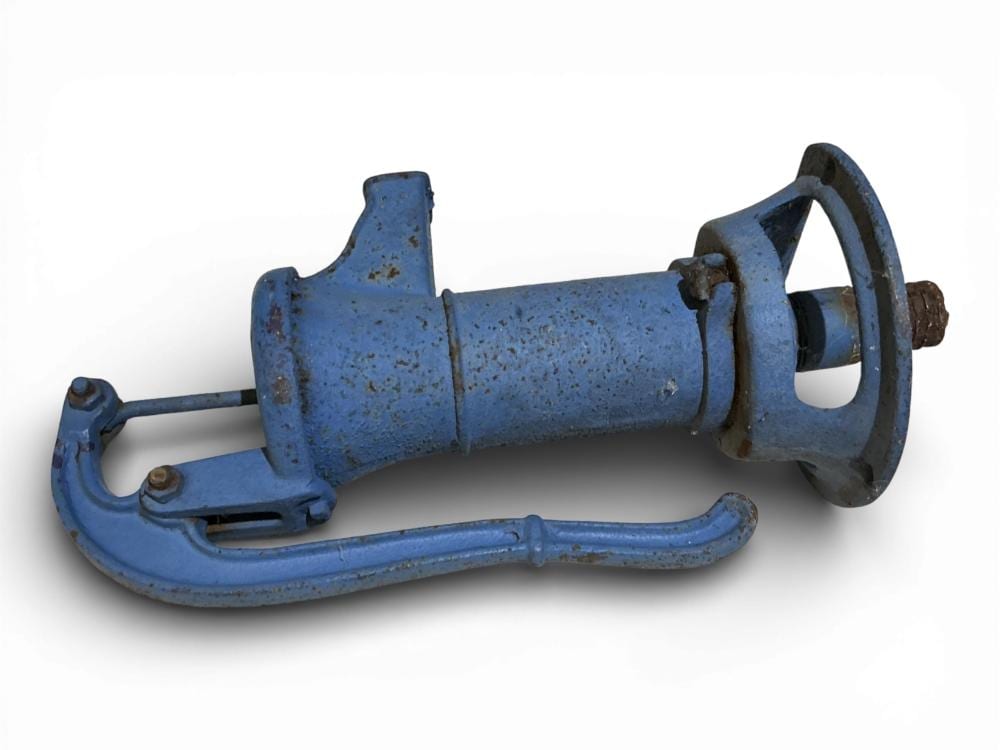
What is an antique water pump worth?
Most antique cast-iron pitcher pumps sell for modest sums. The 25 sales in US dollars in the table below range from $16 to $2,000, with a median of $46: a Deming Co. pitcher pump sits near the median, a Buckeye force pump above it, and the top of the table is an ornate cast-iron garden pump or fountain. What raises value is a known maker such as Myers, Red Jacket or Deming, a complete pump with handle, cap, spout and internals, a sound casting with no cracks at the base flange or spout, original paint or decals, and a larger ornate street or stand form. New castings made as garden décor have low collector value.
About antique hand water pumps
Antique water pumps occupy a sweet spot in the collectibles world: they’re functional artifacts of rural life, compelling pieces of industrial design, and striking decorative statements for gardens, porches, and farmhouse kitchens. Whether you’ve discovered a hand pump in a barn or you’re contemplating a purchase at a farm auction, understanding what drives value can mean the difference between a passable purchase and a prize find.
Why collectors want old water pumps
At first glance, a cast-iron pump is utilitarian. Look closer and you’ll notice nuanced patterns of casting, embossed maker’s marks, and elegant curves of spouts and handles. Collectors, decorators, and historians value them for several reasons:
- Cultural history: Pumps anchor stories of homesteads, dairies, and early municipal systems before electrification and modern plumbing.
- Design: From simple pitcher pumps to ornate street stand pumps, many are sculptural showpieces.
- Materials: Heavy cast iron, brass, and nickel-plated indoor models showcase 19th- and early 20th-century manufacturing.
- Versatility: They function as garden focal points, fountain heads, indoor décor, or even restored, working pumps for wells and cisterns.
- Brand heritage: Names like F.E. Myers & Bro., Red Jacket, Fairbanks, Morse & Co., Deming, Monitor (Baker Mfg.), Goulds, Woodford, and Dempster appeal to brand collectors.
Identify the maker, type and material
Accurate identification is step one in any appraisal. Focus on:
Maker’s marks and dates
- Embossed names: Look for raised lettering on the pump head, body, base flange, or handle. Common marks include “F.E. Myers & Bro.,” “Fairbanks, Morse & Co.,” “Red Jacket Mfg.,” “Deming,” “Monitor,” “Goulds,” and “Woodford.”
- Patent dates: A series of raised patent dates can bracket the production era. Remember: a patent date predates manufacture, sometimes by years.
- Model numbers and casting codes: Often on the barrel or underside of the cap. These help determine type and parts compatibility.
Types and functions
- Pitcher or yard pumps: Single-acting hand pumps with a visible spout and handle. The most commonly seen form on farmsteads.
- Cistern and sanitary indoor pumps: Sometimes nickel-plated or tinned for kitchen use; smaller and finished more finely.
- Deep-well and force pumps: Heavier bodies, sometimes with a side outlet or pressure capability; designed to push water up from deeper sources or feed pressure tanks.
- Rotary or specialty pumps: Less common, often with gears or cranks; typically more valuable if complete.
- Windmill-driven pump heads: Aermotor and similar heads used with windmills; collectable, especially when branded and straight.
Materials and finishes
- Cast iron: The standard for outdoor pumps; look for crisp casting detail and well-defined letters.
- Brass or bronze: Used in marine, fire service, or sanitary settings; brings a premium if original.
- Nickel-plated iron: Indicative of indoor use; plating loss is common but still desirable.
- Original paint and decals: Early paints (greens, reds, blacks) and brand decals meaningfully affect value.
Warning signs of reproductions
- Generic, thin castings with soft details; spouts and lettering look “melted.”
- Modern Phillips-head screws, metric fasteners, or bright powder-coat finishes out of character with age.
- No maker’s marks or odd, generic codes; repeated models with identical artificial “casting flaws.”
- “Decor only” markings or obviously new wood handles on otherwise “old” bodies.
What makes a water pump worth more
Value is a compound of several attributes. Calibrate your appraisal by weighing these variables:
Rarity and maker cachet
- Some makers and models are scarce or have devoted followings, lifting prices.
- Region matters: Midwest brands can be more common locally but command premiums elsewhere.
Completeness
- Handles, caps, spouts, leathers, plungers, rods, and foot valves should be present. Missing or mismatched parts reduce value.
- Matching numbers or consistent casting styles suggest original pairing of components.
Condition and structural integrity
- Cracks around the base flange, spout throat, pivot ears, and cap threads are common deal-breakers.
- Old, expert brazing repairs can be acceptable; crude welds or stitched fractures lower value.
- Threads, pivots, and pin bosses should be sound. Frozen fasteners are typical but surmountable.
Original surface vs repaint
- Honest, stable patina with traces of original paint or decals is highly desirable.
- A sensitive, period-correct repaint can be acceptable for display; heavy grinding, filler, and glossy modern paint depress value for purists.
Functionality (if represented as working)
- A pump advertised as operational should build suction and lift water from a primed source.
- Leather cups, check balls, springs, and seals should be recent replacements; original internals are not expected to function after a century.
Scale and aesthetics
- Larger, ornate street or stand pumps command higher prices than small, plain yard pumps.
- Distinctive design cues—fancy finials, fluted columns, embossed logos—boost desirability.
Provenance and context
- Documented farm or municipal history adds interest. Matching original well covers, pedestals, or signage increases appeal.
Price tiers by pump type
Values vary with locality and market timing, but these comparisons help frame expectations (assuming sound, complete examples unless noted):
Common pitcher/yard pumps
- Unmarked or generic cast-iron: the most common and least expensive
- Branded with good lettering (Myers, Red Jacket, Deming): a step up
- With original paint/decals, excellent patina: the best of the common pumps
Indoor/nickel-plated or brass
- Small kitchen or cistern pumps, worn plate: modest
- Brass/bronze marine or fire-service hand pumps: usually more, depending on scale and completeness
Deep-well and force pumps
- Heavy bodies with side outlet, branded: priced on maker and condition
- Complete systems with rods/cylinders or restored to function: worth more than a pump body alone
Ornate street/stand pumps
- Tall, decorative columns, municipal or European styles: among the most valuable pumps
- Exceptional figural or rare patterns: the top of the market when complete and undamaged
Windmill-associated pump heads
- Aermotor/Monitor pump heads and cylinders: priced on condition and branding
Damaged or parts-only
- Cracked bodies, missing handles/caps: low prices; often purchased for décor or spares
Reproductions (decorative)
- New castings marketed for garden use: sold as décor; low collector value
Notes:
- Regional supply can push common branded pumps lower in farm country.
- Exceptional provenance, untouched original paint, or scarce models justify prices at the top of the market.
Cleaning, repair and repainting
Value preservation favors conservation over aggressive restoration. Use a “do no harm” approach.
Assessment
- Inspect for cracks with a bright light. Pay special attention to the base flange, pivot ears, spout, and threaded cap/bore.
- Check for wobble at the handle pivot and ovalized holes. Excess play suggests wear or poor repairs.
- Verify threads are clean; cross-threading or broken caps are value hits.
Cleaning
- Dry brushing and gentle washing remove dirt without stripping patina.
- For iron, stabilize with a light oil (e.g., penetrating oil) wiped dry, or apply a microcrystalline wax. Avoid heavy, glossy coatings.
- Preserve original decals and paint. Mask and work around them.
Repairs
- Traditional brazing on iron can be acceptable when neat and disclosed; modern welds should be minimal and structurally sound.
- Replace internals with period-correct leather cups and check valves if functionality is expected. Keep any original internals for provenance.
- Save original fasteners; if replacements are necessary, use slotted-head screws/bolts in correct profiles.
Repainting
- If repainting is unavoidable, match original color tones (deep greens, oxides, blacks) and avoid high-build modern glazes.
- Lightly letter the brand by hand only if well-documented; fabricated logos can mislead and harm credibility.
Safety
- Do not represent antique pumps as potable-water safe. Old plumbing and coatings may contain lead or other contaminants. Functional demonstrations are fine; drinking water through antique systems is not recommended.
How to price and sell an old pump
A methodical process yields defensible valuations and smart buying/selling decisions.
- Identify and document
- Photograph multiple angles: marks, patent dates, casting numbers, repairs. If you can’t find a maker or aren’t sure the pump is old, you can upload those photos for a free check.
- Measure height, barrel diameter, spout reach, and base bolt pattern.
- Record material and finish (patinated iron, nickel plate, brass).
- Grade the condition
- Structure: intact/brazed/cracked.
- Completeness: handle, cap, spout, internals present.
- Surface: original paint, patina, or repaint; presence of decals; corrosion level.
- Establish comparables
- Look for recent auction and marketplace sales by maker and model, noting condition and completeness.
- Adjust for regional pricing, shipping costs, and seasonality (spring/summer décor demand).
- Calculate price bands
- Parts-only, decorator, collector-grade, and premium examples each occupy distinct price tiers. Place your piece accurately.
- If selling retail, consider the dealer’s margin and time-to-sale. Wholesale or auction estimates will be lower.
- Consider restoration ROI
- Estimate costs for leather kits, fasteners, crack repair, and a professional repaint if chosen.
- Only restore if it elevates the piece into a higher price bracket that recoups effort and cost.
- Choose selling venue
- Local pickup reduces shipping friction for heavy iron.
- Specialized farm and industrial antiques shows attract educated buyers.
- General marketplaces reach decorators; emphasize aesthetics and display readiness.
- For high-end pieces, consider consignment with dealers experienced in mechanical antiques.
- Pack and ship carefully
- Remove the handle and cap if possible; wrap separately.
- Double-box heavy components with rigid insulation; protect protrusions (spouts, ears).
- Disclose weight and base footprint; freight may be necessary for large stand pumps.
Quick Practical Checklist
- Confirm maker: Locate embossed brand, model, and patent dates.
- Verify type: Pitcher, deep-well/force, indoor sanitary, or windmill pump head.
- Check structure: Inspect base flange, spout, pivot ears, and threaded cap for cracks.
- Assess completeness: Handle, cap, spout, internals present and matching.
- Evaluate surface: Original paint/decals and stable patina vs repaint or heavy rust.
- Test basics: Handle moves freely; plunger action present; cap threads clean.
- Screen for reproductions: Soft details, modern fasteners, generic markings.
- Photograph and measure: Include all marks and dimensions for market evidence and buyers.
- Set price band: Place in parts-only, decorator, collector-grade, or premium tier.
- Decide strategy: Conserve vs restore; local sale vs freight; target buyer (collector or decorator).
FAQ
Q: How old must a water pump be to qualify as “antique”? A: In the strict sense, “antique” implies 100+ years old. Many collectible pumps date from the late 19th century through the 1930s. Later mid-20th-century examples are often called “vintage” but can still be desirable.
Q: What’s the quickest way to spot a reproduction? A: Look for soft, blurry cast details; lack of a credible maker’s mark; modern Phillips or metric hardware; and flawless, bright powder-coated finishes. Antique pumps usually show crisp lettering, wear-consistent patina, and period-appropriate fasteners.
Q: Can I make an antique pump safe for drinking water? A: It’s not advisable. Old coatings, solder, and plumbing can contain lead or other contaminants. Use restored pumps for demonstration or non-potable garden features and supply potable water through modern systems.
Q: Does repainting always lower value? A: Not always. Sensitive, period-correct repaints can improve décor value, especially for decorators. For purist collectors, original paint and patina carry premiums. Heavy grinding, filler, or glossy modern colors usually reduces collector value.
Q: What is a nice, branded pitcher pump worth? A: For complete, structurally sound examples from makers like Myers, Red Jacket, or Deming, compare recent sold examples of the same maker and model; strong original paint and decals add a clear premium. Regional markets and condition can push prices up or down.


