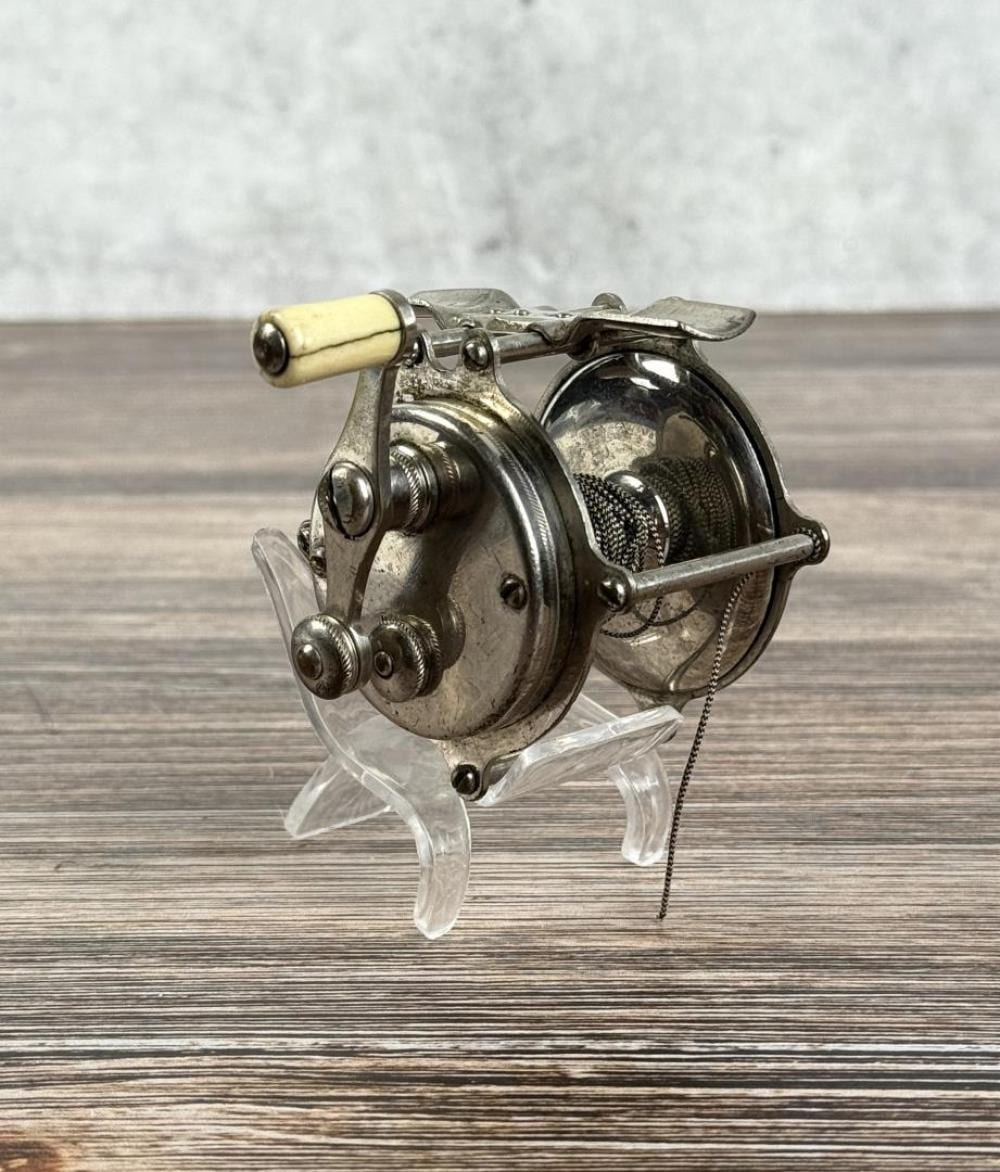
Unlocking the Worth of Nostalgia a Collectors Guide to Determining Old Fishing Reels Value: appraisal and value basics
Unlocking the Worth of Nostalgia a Collectors Guide to Determining Old Fishing Reels Value research should start with identification, condition, provenance, and item-specific market evidence. Use this guide to compare the signals that matter before paying for a formal appraisal or deciding whether to sell.
Old fishing reel appraisal checklist
Old fishing reels are compact machines full of stories—of waters fished, design breakthroughs, and craft traditions. For collectors and appraisers, their value is shaped by far more than age alone. Maker, model, originality, condition, and even regional taste all play a role. This guide shows you how to identify, grade, and price old fishing reels with confidence, whether you’ve inherited a tackle box or are curating a focused collection.
The Major Types and Eras of Old Fishing Reels
Knowing what you have begins with understanding type and era. Each category has its own market dynamics.
- Early brass and Nottingham reels (mid-19th to early 20th century): British wood “Nottingham” reels and solid-brass winches often appeal to display-oriented collectors. Condition, size, and maker marks drive value.
- Kentucky-style baitcasting reels (late 19th to early 20th century): Precision, small-diameter reels in German nickel silver and hard rubber by makers like Meek, Milam, and Talbot. Tournament casters and presentation pieces can command major premiums.
- Hard rubber and nickel silver classics (1890s–1930s): Edward Vom Hofe, Julius Vom Hofe, and similar American makers built high-quality reels with hard rubber sideplates and nickel silver frames. Saltwater trolling sizes and intact agate guides are especially desirable.
- Early level-wind baitcasters (1900s–1930s): Companies like Pflueger and Shakespeare introduced level-wind mechanisms and anti-backlash features. Earlier patent dates and jeweled end caps can raise interest.
- Fly reels: Hardy (Perfect, St. George), Dingley, J.W. Young, Orvis-branded reels, and American bench-made pieces. Pre-war Hardys with red agate line guards, scarce sizes (e.g., 2 5/8", 3 5/8"), and clean lead finishes are sought after.
- Spinning reels (post-war through 1970s): Mitchell 300, ABU Garcia Cardinals, DAM Quick, and others became the every-angler workhorses. Rare variants, early serials, boxed examples, and unusual colors bring premiums.
- Big game and trolling (1900s–1950s): Penn Senator, Edward Vom Hofe, Fin-Nor, and Coxe. Larger sizes in exceptional condition with provenance to notable anglers or boats can be particularly valuable.
Popular makers to note:
- American: Meek, Milam, Talbot, Vom Hofe (Edward and Julius), Pflueger, Shakespeare, Penn, Ocean City, Coxe.
- British: Hardy, Dingley, J.W. Young, Allcock.
- European: ABU (Ambassadeur, Cardinal), Mitchell, DAM Quick.
Era cues include materials (brass vs. early aluminum), finish (lead, ebonite, anodized), and mechanical innovations (check mechanism styles, level-wind patents).
What Drives Value: Scarcity, Desirability, Condition, Originality
Value is rarely about age alone. Consider the following, in order of typical market impact:
- Scarcity and desirability: A common mass-market reel in mint condition may still be worth less than a scarcer model with moderate wear. Limited runs, odd sizes, tournament models, or early patent examples can change the equation drastically.
- Maker and model recognition: Names like Hardy, Edward Vom Hofe, Meek, and early Talbot resonate with advanced collectors. Within brands, specific models or eras dominate: Hardy Perfect pre-war with agate line guard, Meek No. 3, early Ambassadeur 5000 with low serials.
- Originality and completeness: Original finish, parts, screws, handle knobs, line guard inserts (agate vs. replacement metal), and unmodified foot stamps matter. Boxes, labeled cases, wrench tools, paperwork, and extra spools can add significantly to value.
- Condition and grading accuracy: The market uses approximate grades—Poor, Fair, Good, Very Good, Excellent, Near Mint, Mint. Honest, uniform patina is acceptable on older pieces; harsh polishing that rounds edges, erases knurling, or removes plating is not.
- Regional taste and crossover appeal: A Hardy fly reel may do better in fly-centric markets; a big Penn could shine with offshore collectors. Cross-collectibility with lures, bamboo rods, or sporting art can expand bidder pools.
- Provenance: Documented ownership by notable anglers, presentation engravings, or a direct link to a famous shop can add significant premiums.
How key models compare (highly condition-sensitive; use for orientation, not offers):
- Mitchell 300 (1950s–60s): common and modestly priced as found; considerably more mint in box with paperwork and matching serials.
- ABU Ambassadeur early low-serial 5000/6000: a collector favorite; special editions or rare colors higher.
- Pflueger Supreme (pre-war): moderate for most examples; noticeably more with box, tool, and tags.
- Hardy Perfect pre-war (3 3/8" with agate): strong, steady demand; scarce sizes or pristine examples bring a significant premium.
- Edward Vom Hofe saltwater 6/0: a high-end reel to begin with; exceptional or engraved examples higher.
- Meek & Milam Kentucky reels: among the most valuable American reels, with the finest at the top, depending on model, originality, and presentation features.
Identification and Dating: Maker Marks, Patents, and Design Clues
Accurate identification is the backbone of valuation. Work from macro to micro.
- Foot stamps and maker marks: Examine the reel foot for stamped maker names, model numbers, serials, and patent dates (“Pat’d” followed by a date). Many Hardys have stampings inside the frame or on the foot; ABU and Mitchell often display model and serial on the reel foot or body.
- Materials and finish:
- German/nickel silver: Warm, non-magnetic alloy common on high-grade American reels. Over-polishing dulls crisp edges.
- Hard rubber (ebonite) sideplates: Found on Vom Hofe and others; look for shrinkage cracks, warping, and color uniformity.
- Brass: Early British and American pieces; browned or lacquered finishes vary.
- Aluminum: Early fly reels often have leaded finishes that wear to silver-gray.
- Agate vs. metal line guards: Original red or clear agate inserts on fly reels are prized; replacements are visible by non-period bezel styles or modern stone.
- Mechanisms and features:
- Level-wind and anti-backlash: Early patents and jeweled end caps on baitcasters are markers of quality.
- Check/drag types: For fly reels, pawl-and-ratchet vs. adjustable check; for saltwater, star drag vs. preset.
- Spool arbors and pillars: Number of pillars, slotted vs. solid, and arbor design can tie to maker and era.
- Measurements and configuration:
- Reel diameter and spool width: Record in inches or millimeters; rare sizes elevate interest.
- Handle knobs: Ivorine, early plastics, wood, or metal; color and shape variants matter.
- Foot shape: Taper, length, and stamping style help spot swapped feet or re-stamps.
- Packaging and paperwork:
- Boxes with matching labels and handwritten size/model notations strengthen originality.
- Period catalogs, price lists, and receipts can narrow dates and support provenance.
Be alert for reissues and reproductions. Modern re-makes often have different fonts, sharper CNC edges, metric fasteners, or incorrect finishes. Artificial aging leaves uniform scratch patterns or chemical patina that doesn’t match wear at contact points (foot edges, handle knob, pillar shoulders).
Pricing Reality: Reading the Market and Building Market evidence
Reel values are dynamic. Appraise against recent, confirmed sales of comparable examples, adjusting for condition and completeness.
- Prioritize sold prices, not asking prices: Active listings inflate expectations; realized sales reflect liquidity. Note buyer’s premiums or platform fees where applicable.
- Compare like-for-like: Match maker, model, size, material, era, finish, and features (agate vs. metal guard, early vs. late patent). A 3 1/8" Hardy Perfect is not necessarily comparable to a 3 3/8".
- Adjust for condition: Move in tiers, not absolutes. For example, a Hardy Perfect in Very Good might realize noticeably less than an Excellent example; with a replaced line guard, less again.
- Originality multipliers: Unpolished finish and correct parts can double value compared to over-restored or parts reels. Mint-in-box (MIB) premiums vary by brand but often run 1.5x–3x.
- Seasonality and venue: Fly-focused reels often peak ahead of prime fishing seasons; big-game reels can trend before summer. Specialist auctions and dedicated collector groups may outperform general platforms for high-end pieces.
- Currency and geography: Exchange rates and shipping limits influence cross-border bidding; rarity in one region may be commonplace in another.
Build a valuation file for each reel:
- Identify and record marks, measurements, and distinctive features.
- Photograph all angles in diffused light: faceplate, foot stamps, spool, pillars, line guard, interior mechanism, and any accessories.
- Compile 3–6 close comparables with source, date, grade, and realized price.
- Apply adjustments (condition, completeness, originality, venue) to derive a range, then choose a midpoint for insurance or a lower bound for quick sale.
Practical Valuation Checklist
Use this quick sequence to arrive at a defendable value.
- Classify type and era: baitcaster, fly, spinning, trolling; estimate pre-war vs. post-war.
- Note maker, model, size: capture exact stamps, serials, and patent dates.
- Measure: diameter, spool width, foot length; weigh if relevant.
- Verify materials and features: nickel silver vs. chrome, agate vs. metal, level-wind, jeweled end caps.
- Assess originality: look for replaced screws, swapped feet, re-cut threads, or modern knobs.
- Grade condition: Poor/Fair/Good/Very Good/Excellent/Near Mint/Mint; document defects and finish state.
- Check completeness: box, papers, case, tools, extra spools; confirm matching labels.
- Build market evidence from recent sold examples; match model, size, and condition closely.
- Adjust for venue and timing; set a realistic range (wholesale, typical, and retail-high).
- Decide strategy: hold (if rising), sell (if hot category), or restore minimally (only if value supports it).
FAQ: Quick Answers for Owners and Buyers
Q: Are old fishing reels actually valuable? A: Many are modest, but select categories command strong prices. Early Kentucky reels (Meek, Milam), Edward Vom Hofe hard rubber/nickel silver reels, pre-war Hardy Perfects with agate guards, and early ABU Ambassadeur variants are consistently desirable. Condition, originality, and completeness make the biggest difference.
Q: How can I date my reel without a catalog? A: Start with foot and frame stamps (maker, model, serial, patent dates). Then read materials and features: leaded finish and agate guards suggest pre-war Hardys; early level-wind patents help date baitcasters; low serial plates narrow ABU production windows. Measurements and handle knob materials also offer clues. Combine these against documented period features.
Q: Should I polish or restore before selling? A: Usually no. Over-cleaning reduces value by removing original finish and softening edges. Limit care to gentle dusting, a light wipe with a barely damp cloth, then a microcrystalline wax on metal surfaces if desired. Add a drop of quality, pH-neutral oil to the spindle only if the mechanism is dry. Avoid abrasives, steel wool, and aggressive solvents.
Q: What are signs of a reproduction or parts reel? A: Inconsistent wear (heavy patina on non-contact surfaces, pristine foot edges), mismatched screw heads and slot styles, modern metric hardware, fonts that don’t match period stamping, and incorrect agate bezels. Re-stamped feet and swapped spools are common; cross-check serial ranges and details with known examples.
Q: How should I store a valuable reel? A: Remove old line that can trap moisture. Store in a stable, dry environment, away from direct sunlight. Wrap in acid-free tissue or a soft, non-abrasive bag; avoid long-term storage in deteriorating leather cases. Keep reels separate to prevent abrasion and monitor for verdigris or mold.
By combining accurate identification with sober grading and recent market evidence, you can translate the pull of nostalgia into defensible valuations. Whether you are appraising a single attic find or shaping a specialist collection, method beats myth—and condition, originality, and completeness remain the bedrock of old fishing reels value.


