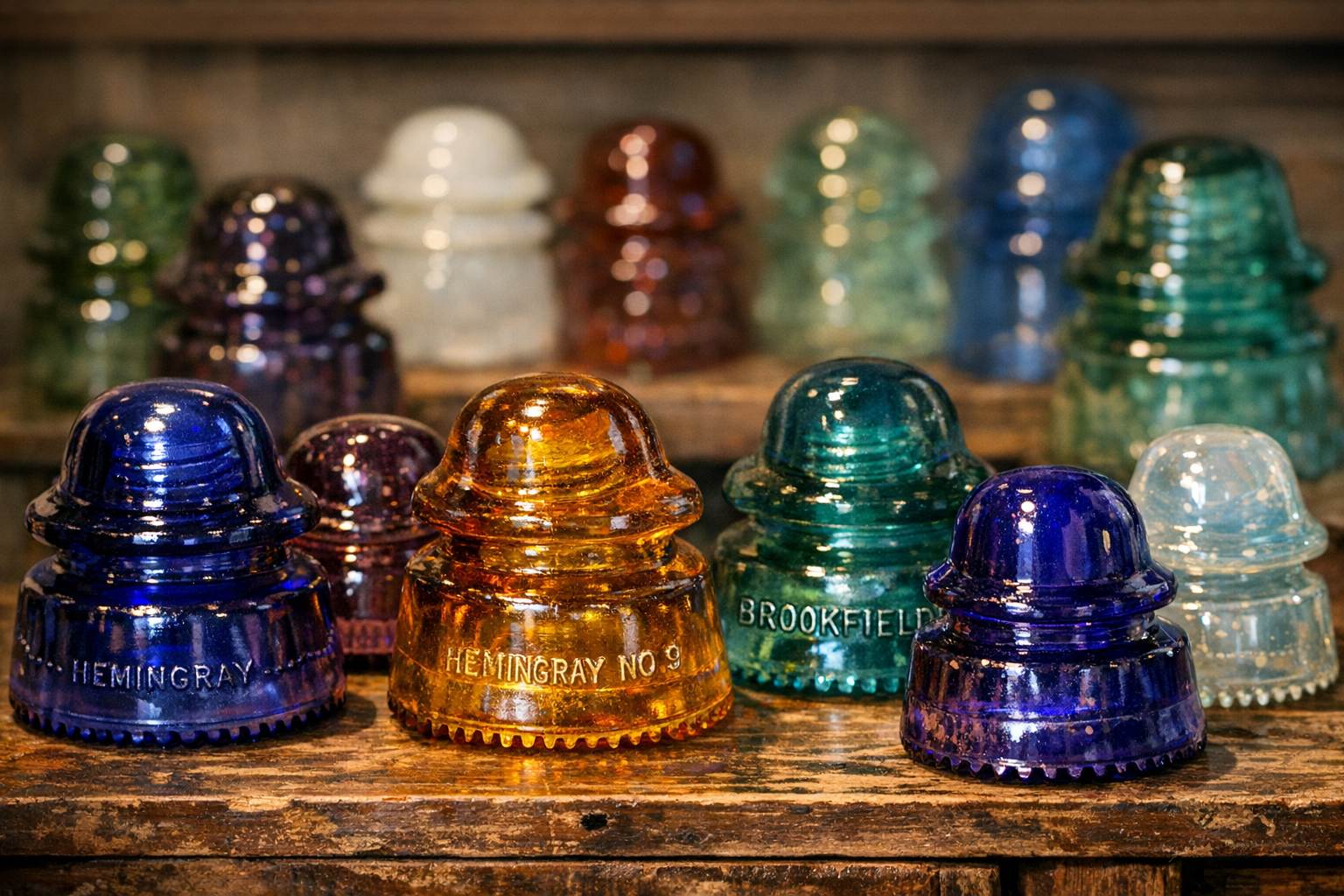
Unlocking the Worth of History a Collectors Guide to the Value of Old Glass Insulators: appraisal and value basics
Unlocking the Worth of History a Collectors Guide to the Value of Old Glass Insulators research should start with identification, condition, provenance, and item-specific market evidence. Use this guide to compare the signals that matter before paying for a formal appraisal or deciding whether to sell.
Old glass insulator appraisal checklist
Old glass insulators began as rugged, purely functional hardware—guardians of telegraph, telephone, and early power lines from the mid-1800s to the mid-20th century. Today, their color, form, and embossed histories have made them compelling collector objects with a market that ranges from casual curiosity to serious investment. Values run from a few dollars for common aqua pieces to thousands for rare, early, or unusually colored examples.
If you’re appraising a small group from a local barn, organizing a focused collection, or considering the sale of a prized rarity, understanding what drives value is essential. This guide breaks down the key components—designs, makers, colors, condition, and originality—so you can confidently judge what you have and price or purchase with precision.
Why Old Glass Insulators Have Staying Power
- Historical resonance: Each piece often carries the name of a glasshouse, a city, or a utility, tying it to specific lines, technologies, and eras of infrastructure development.
- Design diversity: From squat “pony” styles to elaborate power-line profiles like the “Mickey Mouse” CD 257, forms and embossings are rich and varied.
- Color appeal: Aquas and greens dominate, but the market pays premiums for scarce hues like cobalt blue, peacock, deep purple, and true amber.
- Tactile durability: These were designed to survive weather and wire—many endure in collectible condition, making the category accessible to new collectors while still offering holy-grail rarities for advanced enthusiasts.
Understanding these fundamentals helps set expectations: many insulators are common and inexpensive, yet there are defined pockets where demand, rarity, and condition converge to generate strong prices.
The Core Value Drivers
- Consolidated Design (CD) number and shape
- The CD system classifies insulators by silhouette. It’s the lingua franca of insulator collectors, allowing quick comparison across makers and embossings.
- Certain CDs are more desirable due to limited production, distinctive looks, or association with early technology. Examples include CD 731 (threadless), CD 141 (EC&M), CD 145 (telegraph “beehive”), CD 257 (“Mickey Mouse” power), and CD 281 (“Muncie”).
- Maker and embossing
- Embossings (raised lettering) identify makers and sometimes utilities. Common names include Hemingray, Brookfield, Whitall Tatum, Armstrong, Kerr, Lynchburg, Dominion (Canada), California, and EC&M (Electric Co. & Mfg. Co., San Francisco).
- Variants matter: different embossing styles, shop numbers, patent dates, “blot-outs” (where old embossing was ground and re-cut), and scarce utility marks can significantly affect value.
- Color and clarity
- Most were made in aqua/blue-green. Uncommon colors—true cobalt, rich purples, peacock blue, sapphire, emerald, true amber, olive, and two-tone swirls—command premiums. Subtle tints (straw, ice blue, sage) can also add interest.
- Clarity (crystal-clear vs. bubbly or wispy) and attractive impurities (straw marks, bubbles, milk swirls) increase desirability when not distracting.
- Age and technology
- Threadless insulators (1850s–1860s) and early threaded telegraph types are often rarer and more valuable than later mass-produced telephone or electric power pieces.
- Transitional or experimental designs, as well as early drip-point variants, can be noteworthy.
- Condition and originality
- Chips on the wire ridge, base flakes, inner skirt damage, stress fractures (“annealing lines”), and heavy cleaning or polish all affect price.
- Original, unaltered surfaces are preferred. Evidence of polishing, dyeing, or irradiation to alter color harms value.
- Provenance and desirability
- Documented line use (railroad, telegraph company, historic region), “pole-top finds,” and provenance from well-known collections or digs can bolster value for select items.
- Aesthetic desirability is real: beautifully saturated colors, well-centered embossing, and balanced bubbles routinely attract premiums.
Decoding CD Numbers, Shapes, and Embossings
CD numbers provide structure in a category with thousands of variations:
- Threadless (e.g., CD 731): Pre-thread designs that sat on wooden pins. Rare, high-value survivors from the earliest telegraph era.
- Pony sizes (e.g., CD 102, CD 112): Smaller forms used for low-voltage telegraph/telephone. Widely collected, with color and embossing driving value.
- Telegraph “beehive” (CD 145): Classic, compact profile. Strong in uncommon colors and rarer embossings.
- Signal/toll designs (CD 154, CD 162): Common workhorses made in great numbers; unusual colors and scarce embossing variants are the standouts.
- Power/distribution (CD 257 “Mickey Mouse,” CD 281 “Muncie”): Larger, dramatic pieces. Demand is strong for unusual colors and nicer examples.
Embossings to know:
- Hemingray: America’s dominant maker; “Hemingray-42” CD 154 is extremely common (typically a value that must be established from current, topic-matched sales in aqua). Early “H.G. Co.” embossings and odd colors can be much scarcer.
- Brookfield: Rich variety of greens and aquas; certain beehives and tolls have strong followings.
- Whitall Tatum: Known for clean embossing; some CD numbers in uncommon colors bring premiums.
- California: Often manganese-decolorized glass that naturally turns amethyst with UV exposure; swirled purples are prized.
- EC&M (San Francisco): Highly coveted CD 141 telegraph insulators; cobalt and deep aqua examples can reach four and five figures.
- Dominion, Lynchburg, Armstrong, Kerr: Later makers with plentiful common types; scarcity lies in color, embossing variants, or specific CDs.
Note: Some pieces bear shop numbers, patent dates, or city names. These details can distinguish a a value that must be established from current, topic-matched sales example from a a value that must be established from current, topic-matched sales one when they intersect with desirable CDs or colors.
Color: The Fastest Visual Value Clue
Color is often the first trigger for a closer look:
- Common: Aqua, blue-green, light green, clear. Most mass-produced Hemingray and Brookfield pieces fall here.
- Desirable: Ice blue, teal, sage, apple green, smoky hues, opalescent “milk swirls,” and glass with attractive bubbles or amber wisps.
- Premium: Cobalt blue, sapphire, deep peacock, true amber/olive amber, strong amethyst (naturally sun-colored), and dramatic two-tone or swirling.
- Regional/color-specific standouts: California purples, oddball Canadian greens, and select hues in power-line profiles.
A note on purple and “SCA”:
- SCA (sun-colored amethyst) results from manganese in the glass reacting to long-term UV exposure. Natural SCA shows varying saturation with typically uneven tone.
- Artificially altered glass (via irradiation) may show a uniform, heavy grape-purple or off-hues atypical for the maker/CD; these pieces are considered altered and carry reduced value. UV inspection, knowledge of known natural colors for a maker/CD, and experience with surface patina help differentiate.
True amber is different from light straw tint. Amber’s warm brown to honey coloration is scarce in many CDs and is often a clear value driver.
Condition, Grading, and Originality
Appraisers and collectors use shorthand grades:
- Mint (M): As-made with no post-manufacture damage.
- Very Near Mint (VNM): Minute, hard-to-see flaws; essentially display-perfect.
- Excellent (EX): Small wire-ridge nicks (“flea bites”), tiny base flakes, or light wear.
- Very Good/Good (VG/G): Noticeable chips, base flaking, scuffs, or inner skirt damage. Displayable, but discounted.
- Damaged/As-Is: Cracks, bruises, significant base loss; typically for placeholders or color references.
What to look for:
- Wire ridge: Chips here are common; small ones lightly affect value on common pieces but count more on high-end examples.
- Base and inner skirt: Flakes, bruises, and chipping can be hidden when displayed; still meaningful to price.
- Stress lines and annealing checks: As-made but visible; acceptability varies by severity and location.
- Drip points: Early drip-point variants (sharp vs. round) may have value nuances; breakage to drips reduces grades.
Originality red flags:
- Tumble polishing or fire polishing: Overly glossy, “softened” embossing or rounded mold lines suggest resurfacing. While some collectors tolerate light polish on common items, original surfaces are preferred and command more.
- Dyed or irradiated color: Uniform, unnatural purples, odd blues, or greens for the maker/CD often indicate alteration. Compare with known natural color ranges.
- Glued repairs or reconstructed “ears” (notably on CD 257): Check under magnification; adhesives fluoresce differently under UV and joints look matte or uneven.
- Ground bases or re-cut inner skirts: Altered to remove base chips; look for concentric grinding marks and mismatch with factory finish.
A UV flashlight, loupe, and familiarity with a maker’s expected surface texture are your best tools for authenticating.
Where Value Hides: Notable Types, Price Context, and Market Realities
Baseline references:
- Common Hemingray-42 (CD 154) aqua: typically a value that must be established from current, topic-matched sales.
- Common Brookfield tolls and signals in aqua/light green: usually under a value that must be established from current, topic-matched sales unless notably clean or with interesting embossing variants.
- Attractive but not rare colors (teal-ish aquas, ice blues) in common CDs: a value that must be established from current, topic-matched sales depending on clarity, embossing, and condition.
Where it starts to climb:
- Uncommon colors in familiar CDs (e.g., strong amethyst, well-saturated blue, true amber): a value that must be established from current, topic-matched sales+ depending on CD, maker, and condition.
- Early telegraph shapes (CD 145 with scarce embossings or colors): a value that must be established from current, topic-matched sales+ for top-tier variants.
- Power-line showpieces (CD 257 “Mickey Mouse,” CD 281 “Muncie”) in desirable colors and clean condition: several hundred to low thousands.
Top-tier rarities:
- Threadless (CD 731 and kin), especially with intact skirts and strong provenance: four to five figures.
- EC&M (CD 141), notably in cobalt, peacock, or deep aqua: often several thousand to five figures based on condition and exact embossing.
- Exotic colors or one-of-a-kind swirls in otherwise scarce CDs: prices are case-specific; comparable-sale evidenceetition can be intense.
Market dynamics:
- Condition is the great equalizer: a small wire-ridge flake on a common insulator barely matters; the same flaw on a high-dollar rarity can halve value.
- Provenance pushes the best higher: documented line use or a well-known collection pedigree can influence results, especially for high-end pieces.
- The color premium is real but maker- and CD-dependent: not every purple or blue is valuable; the combination must be plausible for the mold and era.
Selling and buying tips:
- Compare like-for-like: same CD, maker, embossing variant, color family, and condition.
- Use multiple market evidence: recent show and auction results, price guides, and collector consensus will triangulate a credible range.
- Photograph smartly: neutral light, clear images of embossing, base, inner skirt, and any damage. Color must be accurate; avoid backlighting that distorts hue.
Practical Appraisal Checklist
- Identify the CD number by profile and measurements.
- Read and record the full embossing, including shop numbers and patent dates.
- Assess color in neutral daylight; note unusual tints or swirls honestly.
- Grade condition systematically: wire ridge, base, inner skirt, stress lines.
- Check originality with a loupe and UV: look for polish, dye, or irradiation.
- Note manufacturing features: drip points, mold lines, bubbles, straw marks.
- Confirm maker/color plausibility for the CD and era.
- Photograph true-to-color images and close-ups of embossing and flaws.
- Pull comparables by CD + maker + color + condition, not by “looks similar.”
- Adjust pricing for damage, desirability, and provenance; document your rationale.
Care, Cleaning, and Display
- Cleaning: Start with warm water and mild detergent. A soft brush will remove dirt. For mineral staining, a gentle cleanser containing oxalic acid can help, but avoid aggressive abrasives that scratch or dull the surface.
- Avoid extremes: Don’t subject insulators to rapid temperature changes; thermal shock can extend stress lines.
- Skip the tumbler: Mechanical polishing removes original surface and hurts value on anything but the most common examples used for décor.
- Display: Use stable shelves or stands. Sunlight shows color beautifully, but prolonged intense UV can deepen SCA amethyst; disclose this in appraisals if color changes over time.
- Storage: Wrap individually to prevent wire-ridge nicks; avoid stacking heavy pieces on drip points.
Short FAQ
Q: Are purple insulators always valuable? A: No. Many purples are common sun-colored aquas that only bring a modest premium. Artificially irradiated purple pieces are considered altered and are discounted. Value depends on CD, maker, natural color plausibility, and condition.
Q: How much does a small chip affect value? A: On common insulators, a small wire-ridge chip may reduce price only slightly. On scarce colors or rare CDs, even minor damage can drop value significantly—sometimes by half or more.
Q: What’s the difference between “threadless” and “threaded” insulators? A: Threadless insulators (mostly 1850s–1860s) lack internal threads and are placed over wooden pins. They are earlier and typically rarer. Threaded types (late 1860s onward) have internal threads and are more common overall.
Q: Do bubbles and straw marks hurt value? A: Usually no; these are as-made. Attractive bubbles and characterful straw marks can even enhance appeal. Cracks, bruises, and significant chips do hurt value.
Q: Which makers should I learn first? A: Start with Hemingray and Brookfield due to their breadth. Then study Whitall Tatum, California, Dominion, Lynchburg, and specialty makers like EC&M. Pair maker knowledge with CD identification for the clearest valuation picture.
By combining CD identification, maker and embossing knowledge, rigorous condition grading, and a well-calibrated eye for color and originality, you’ll unlock the true worth of old glass insulators. Whether you’re pricing a bin of aquas or evaluating a deep-cobalt EC&M, the same disciplined framework leads to fair, defensible appraisals—and a more rewarding collecting journey.
![[ SILVER ] A THREE PIECE AMERICAN SILVER OCTAGONAL TEA SERVICE (Mark of Gorham, Providence, Rhode Island) Mark of Gorham, Providence, Rhode Island, c.1910 Parcel gilt, octagonal shape, urn shaped finials and ivory insulators, a period Old English 'G' sold by Heritage Auctions, lot 18278 — auction record photograph](https://assets.appraisily.com/comps/auction-lots/48074501/thumb/h1042-l11817871.jpg)