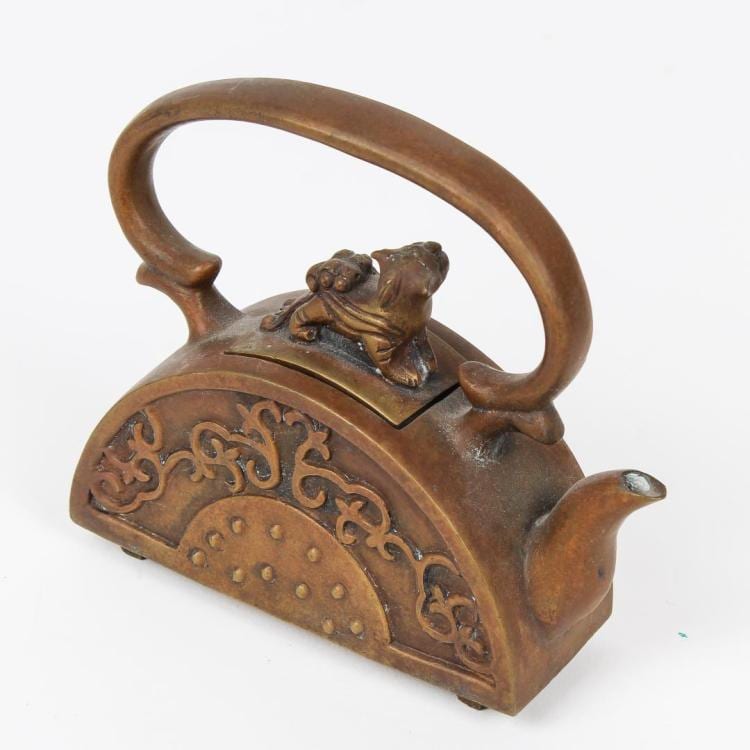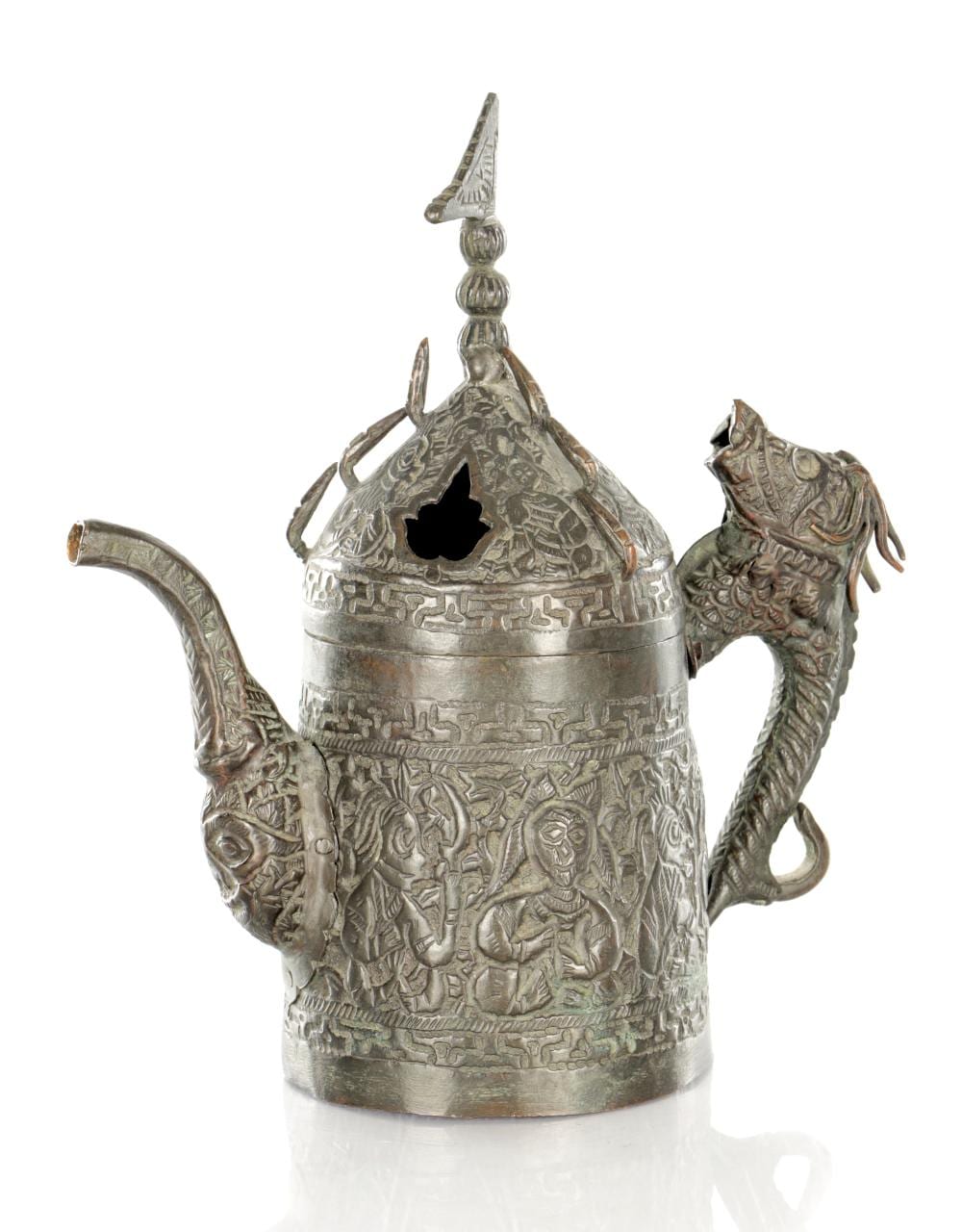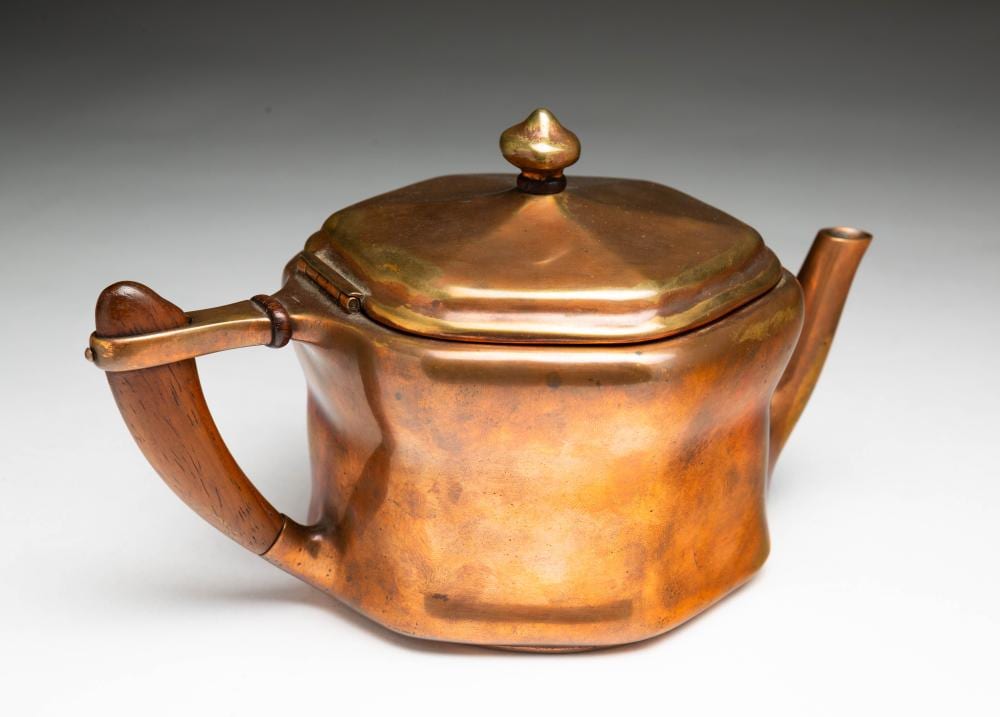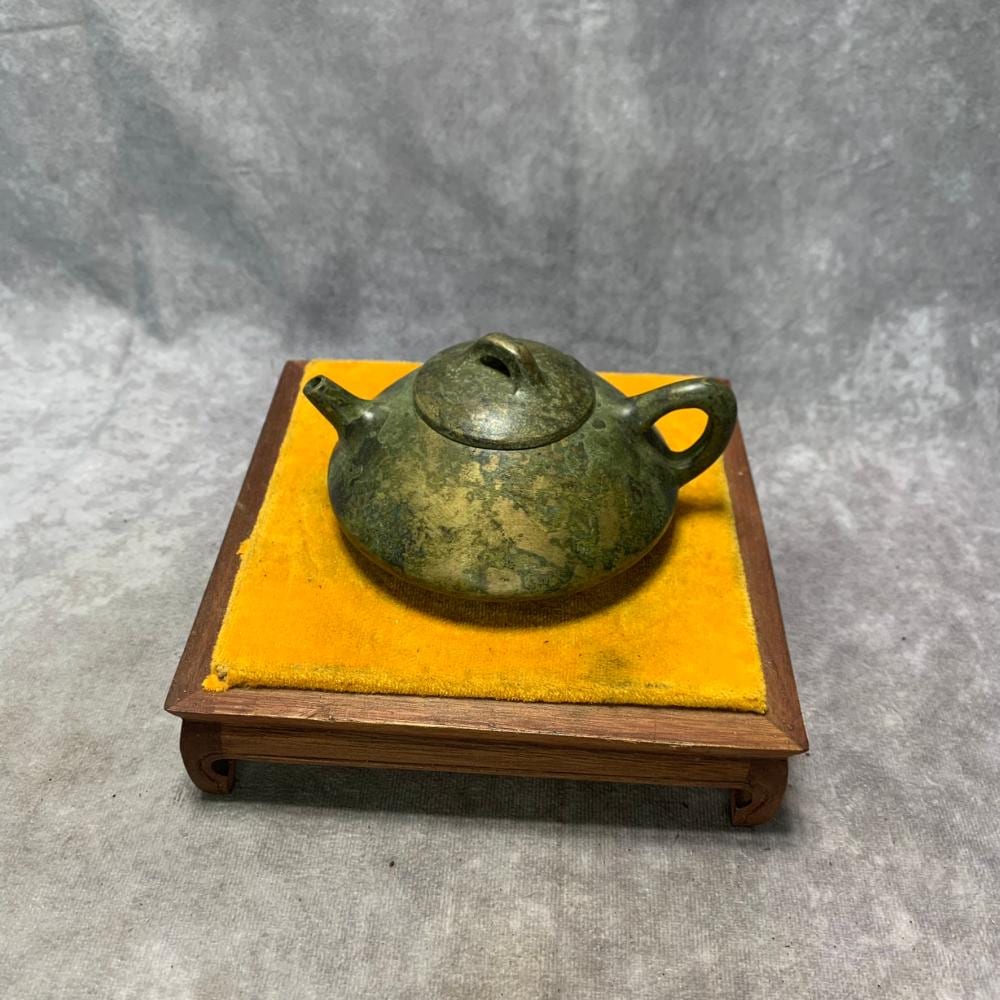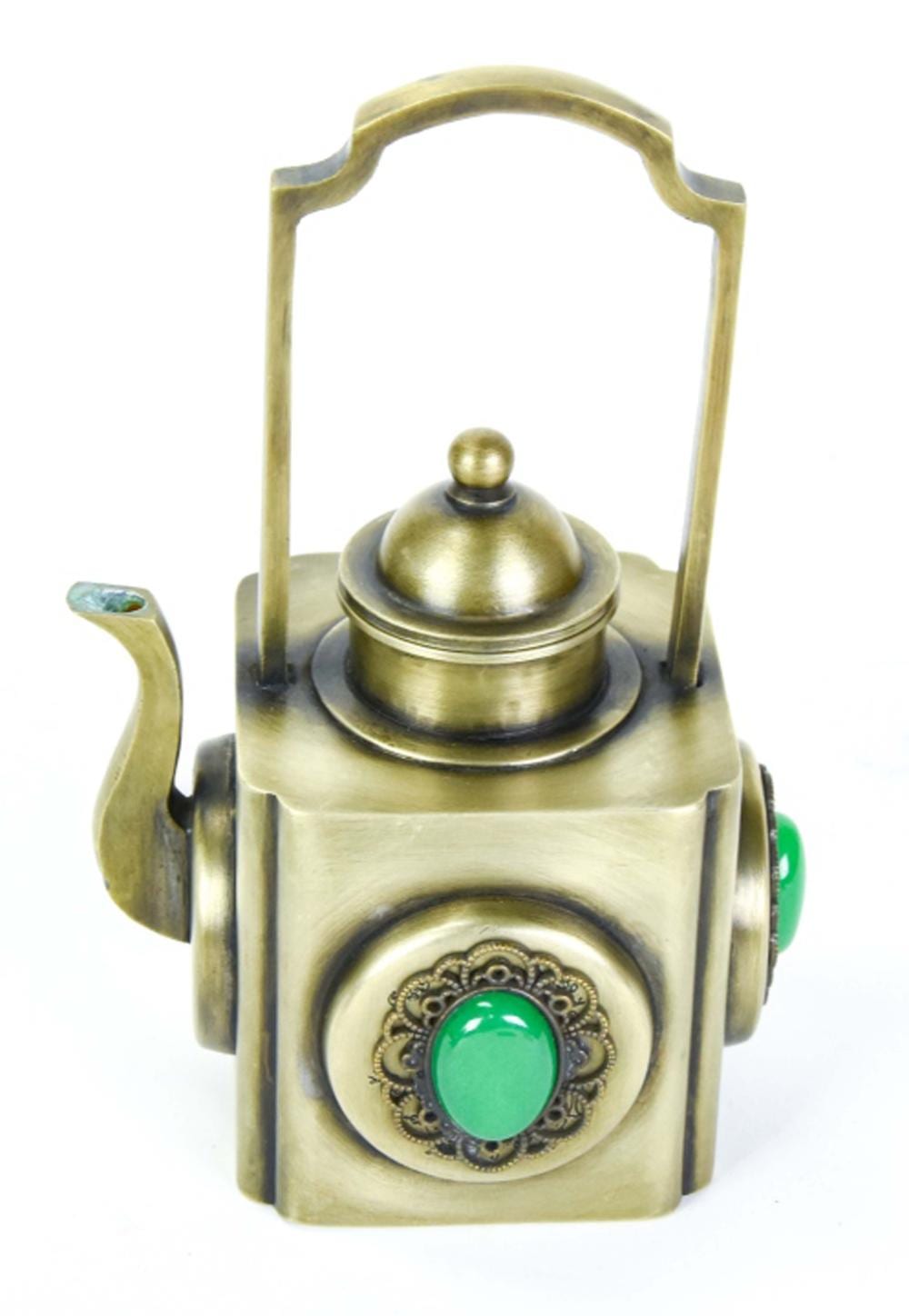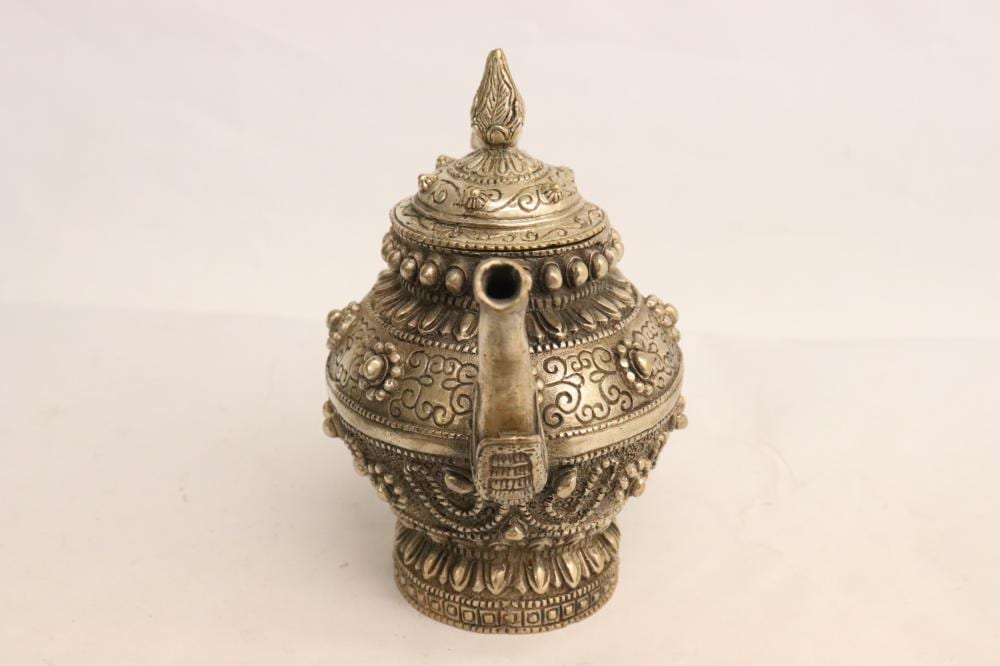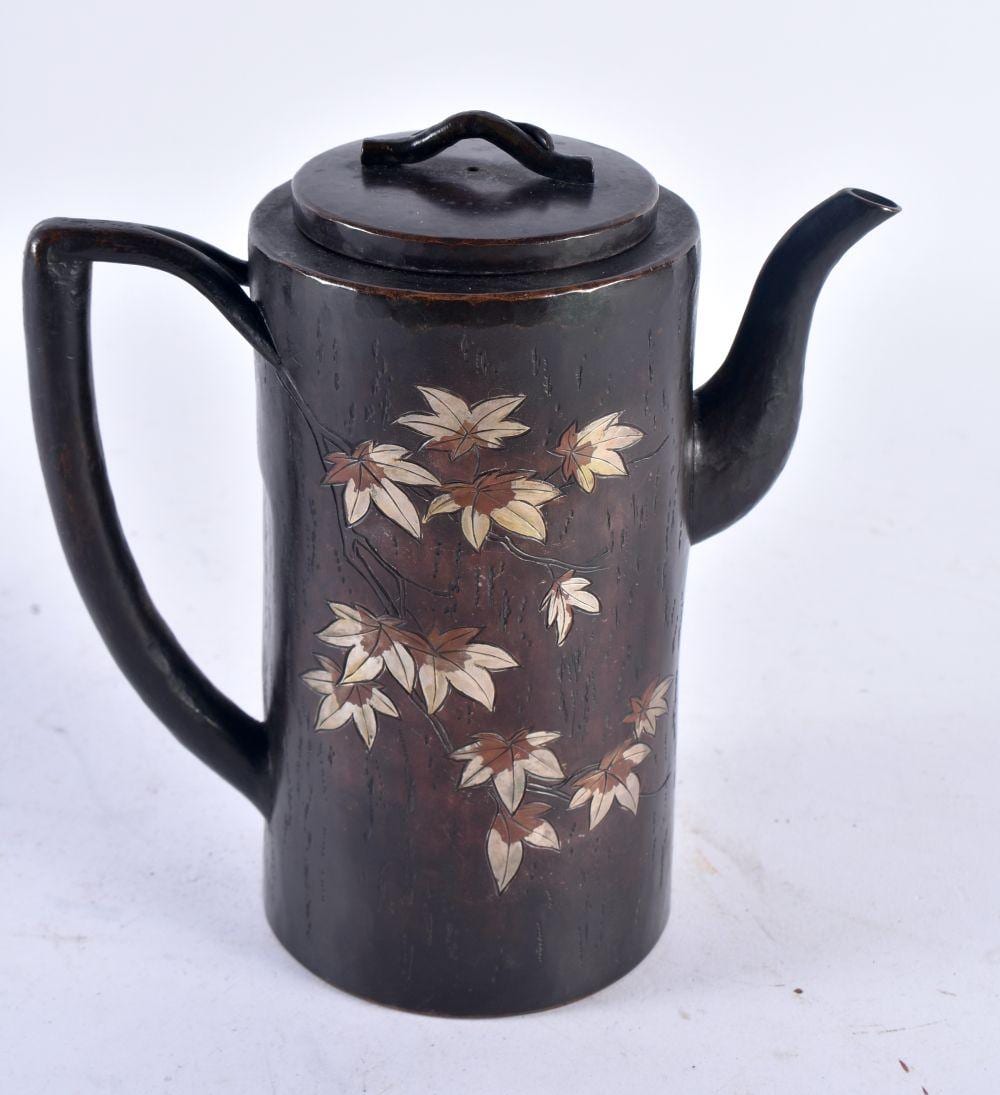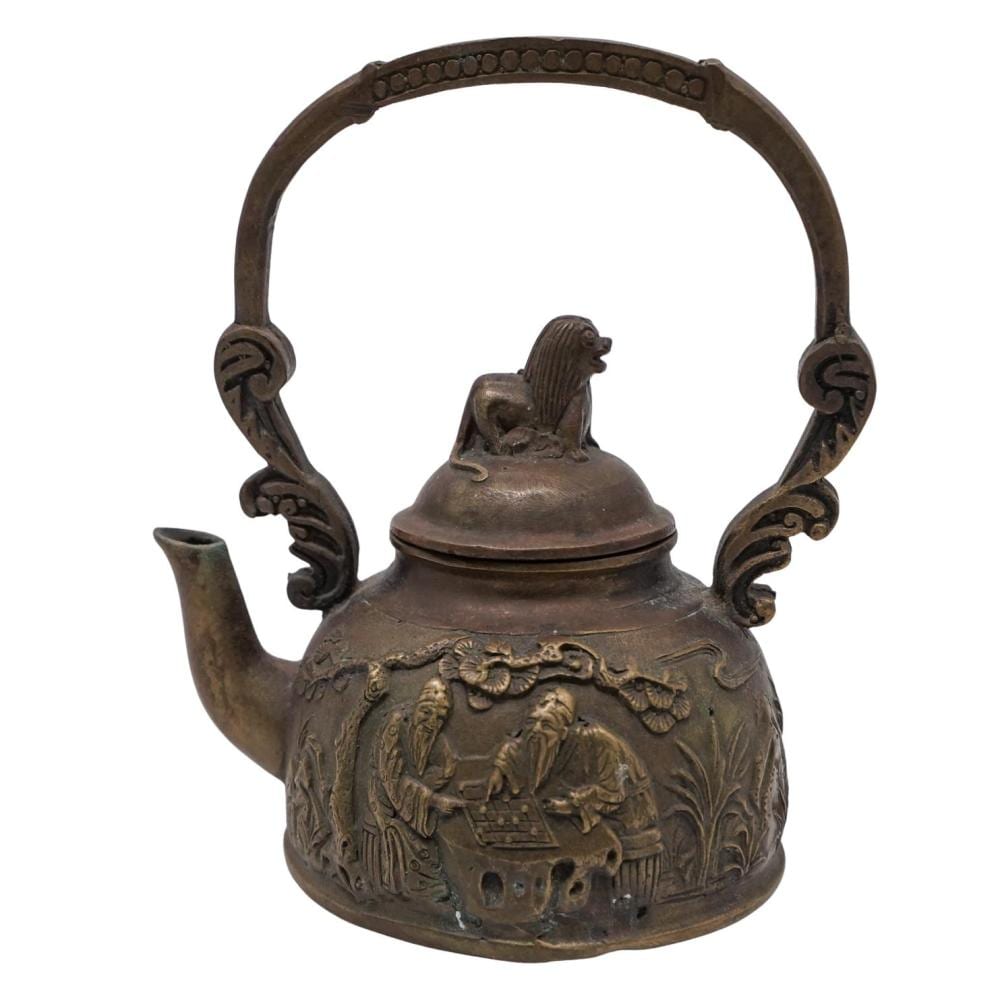
Unlocking the Worth of Antique Brass Teapots a Collectors Guide to Determining Value: appraisal and value basics
Unlocking the Worth of Antique Brass Teapots a Collectors Guide to Determining Value research should start with identification, condition, provenance, and item-specific market evidence. Use this guide to compare the signals that matter before paying for a formal appraisal or deciding whether to sell.
Antique brass teapot appraisal checklist
Antique brass teapots sit at an interesting crossroads of utility, design, and global trade history. They range from humble household vessels to finely worked, exhibition-quality metalwork. Yet pricing can be all over the map—from a few dozen dollars to several thousand—because value hinges on a matrix of age, origin, craftsmanship, condition, and current demand. This guide walks you through that matrix so you can assess, compare, and value brass teapots with a professional’s eye.
Why Brass Teapots Matter (and What They Are Not)
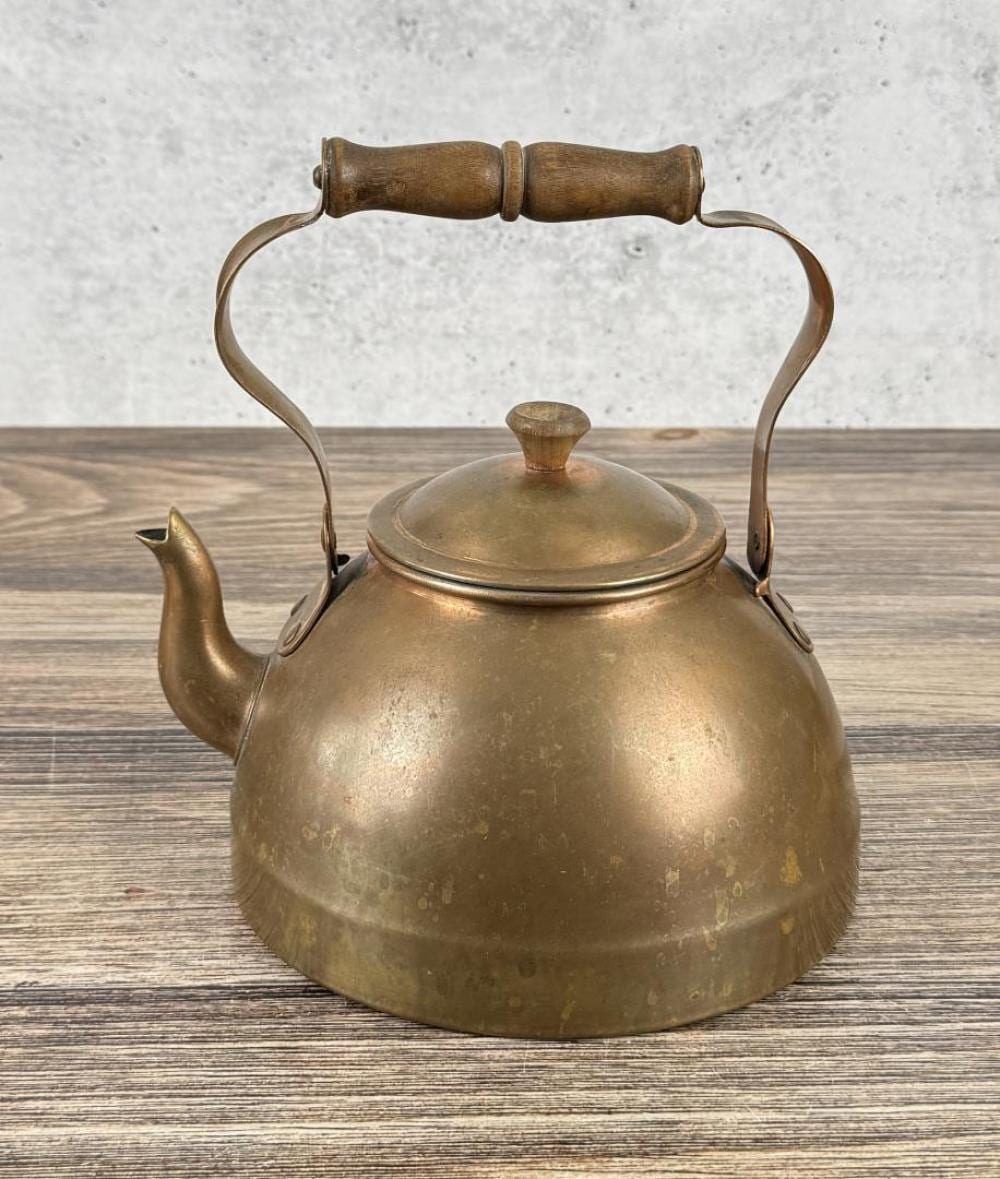
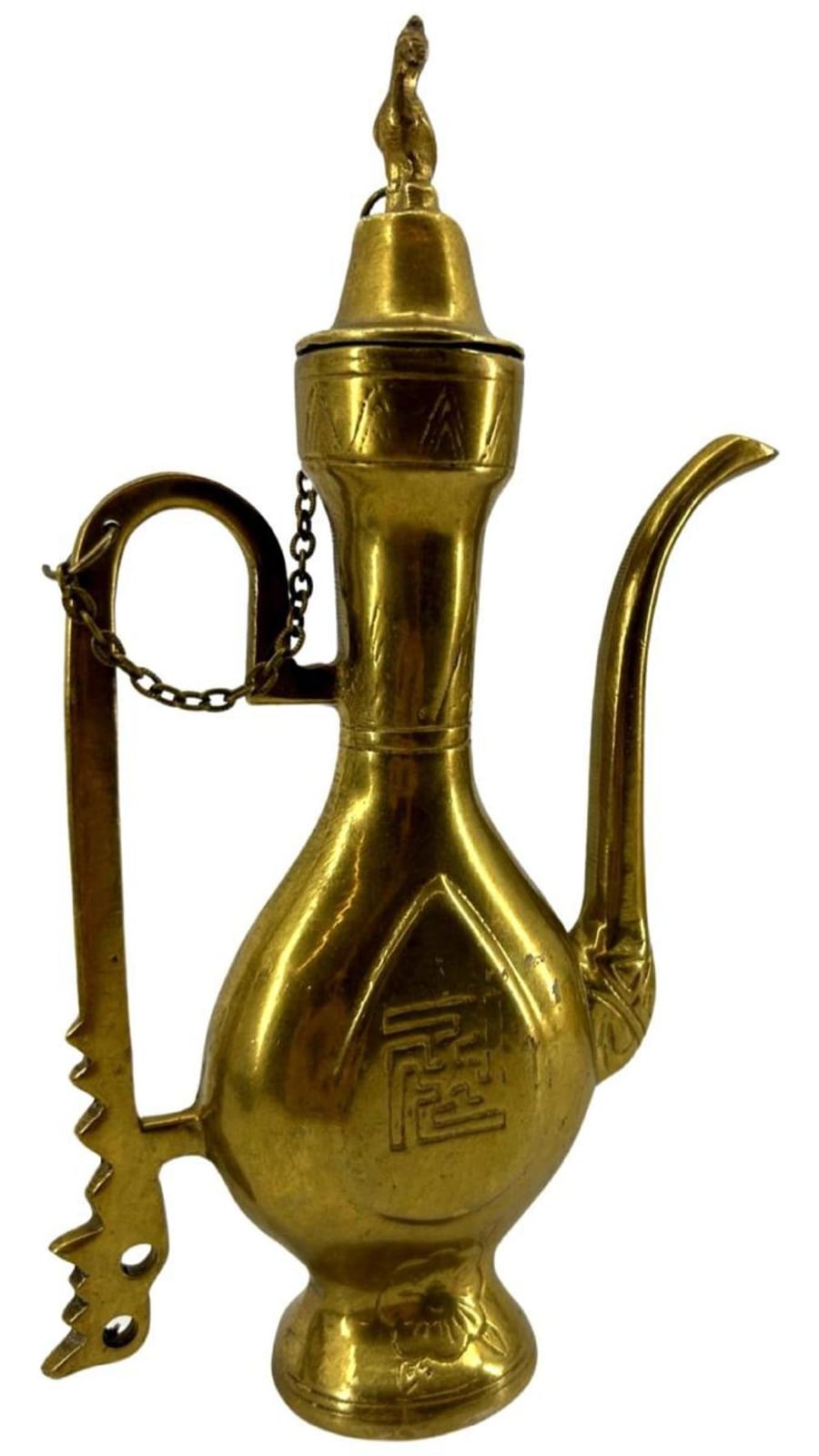
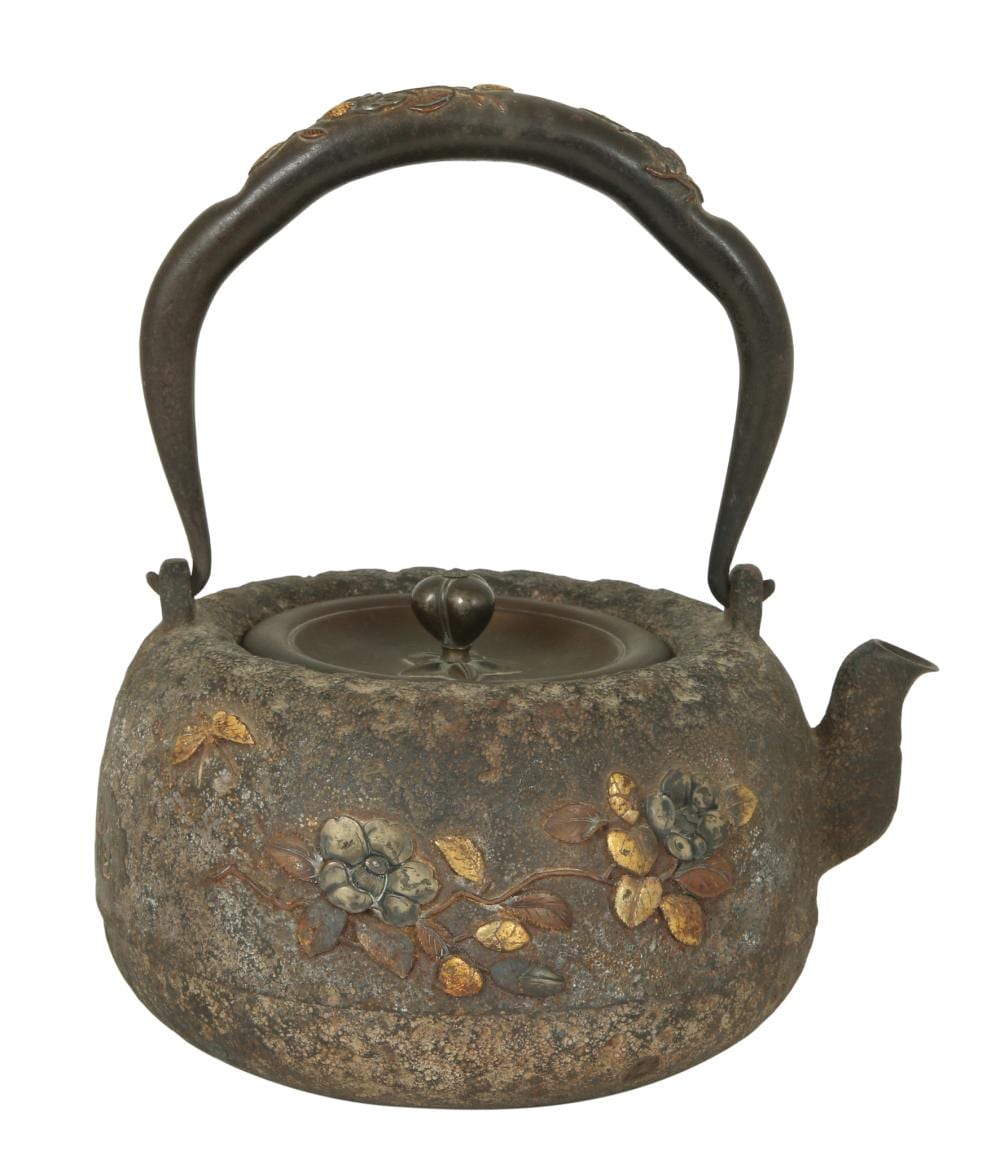
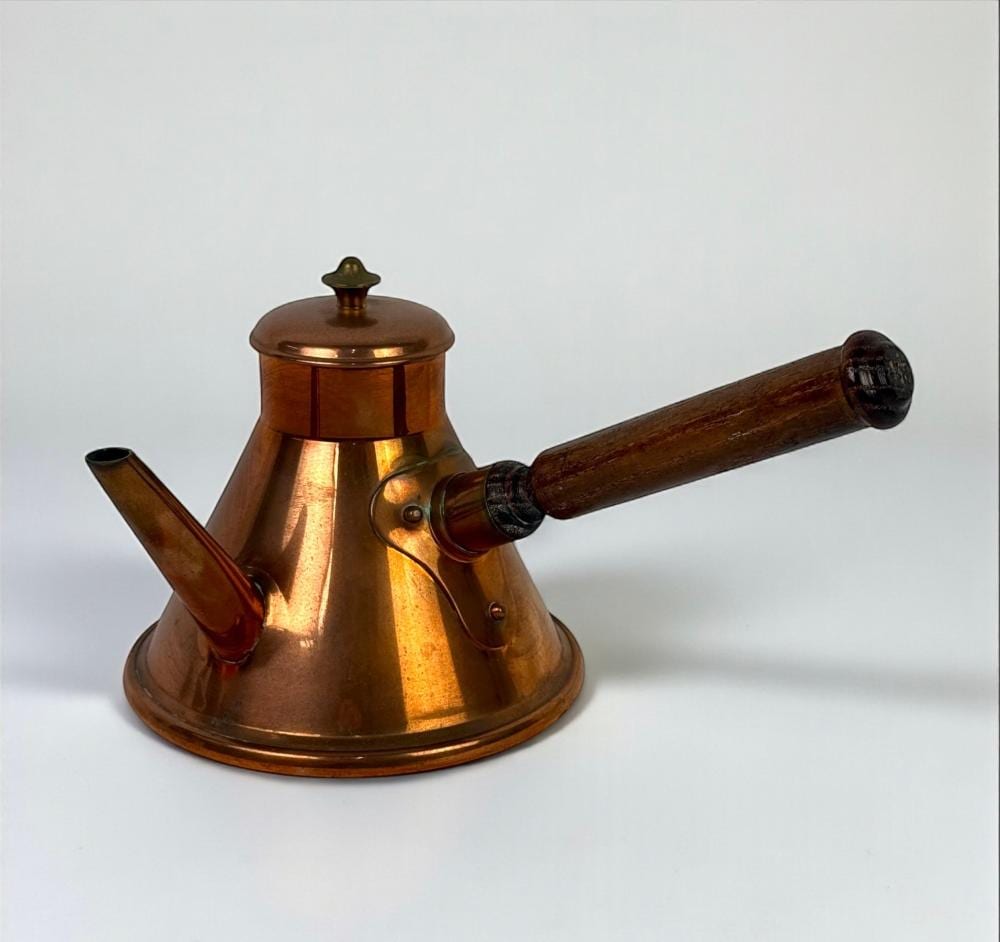
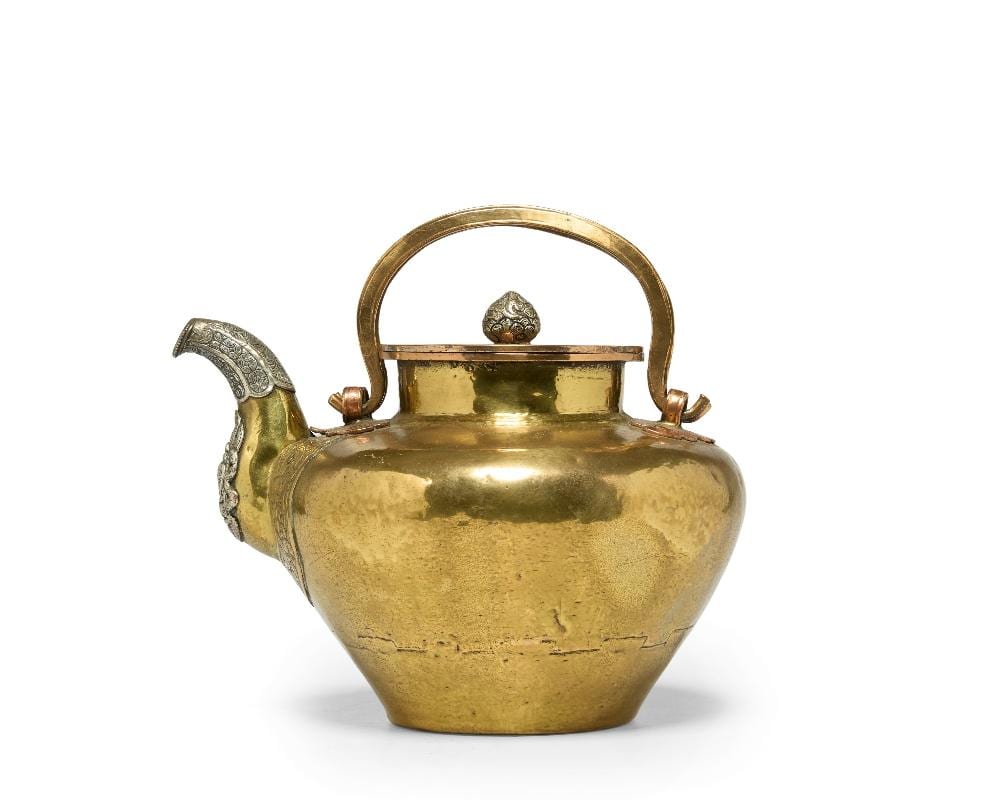
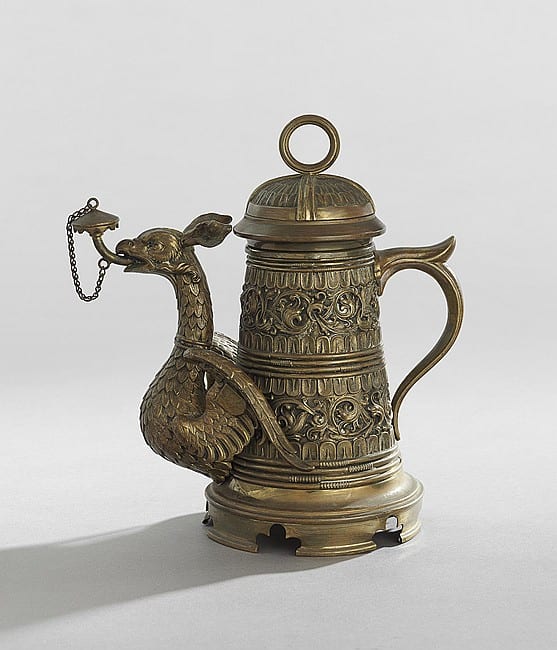
- Teapot vs. kettle: Teapots are for brewing/serving; kettles heat water. Some brass “teapots” are actually small kettles or coffee pots. Shape gives clues: gooseneck spouts and compact, lidded bodies signal teapots; wide bellies and stronger bail handles suggest kettles; tall, tapering forms with distinctive spouts may be coffee pots (e.g., Middle Eastern dallah).
- Brass vs. bronze and copper: True brass is a copper-zinc alloy (often with small amounts of lead, tin, or nickel). Bronze is copper-tin. Copper was favored for cookware; brass gained popularity for decorative service ware in the 19th century.
- Lined interiors: Utilitarian brass teapots were often tinned or occasionally silvered inside to avoid metallic taste and leaching. Unlined interiors tend to indicate a decorative or ceremonial role, or a later tourist/export piece.
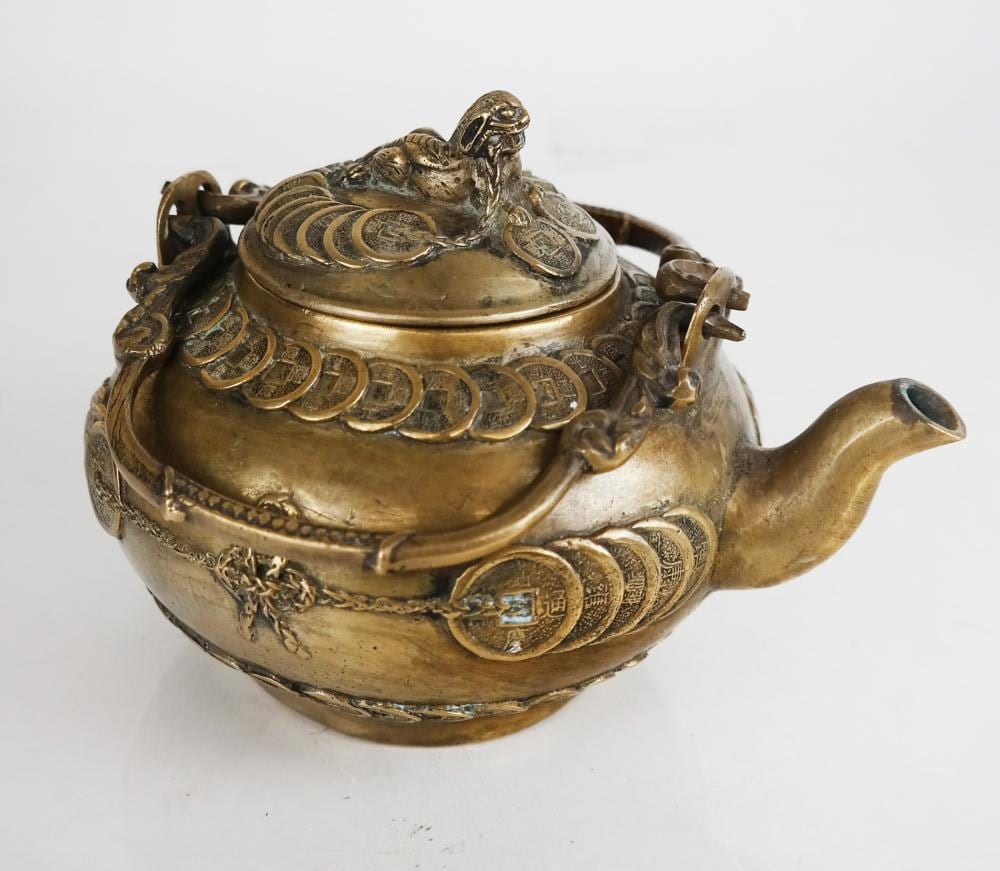
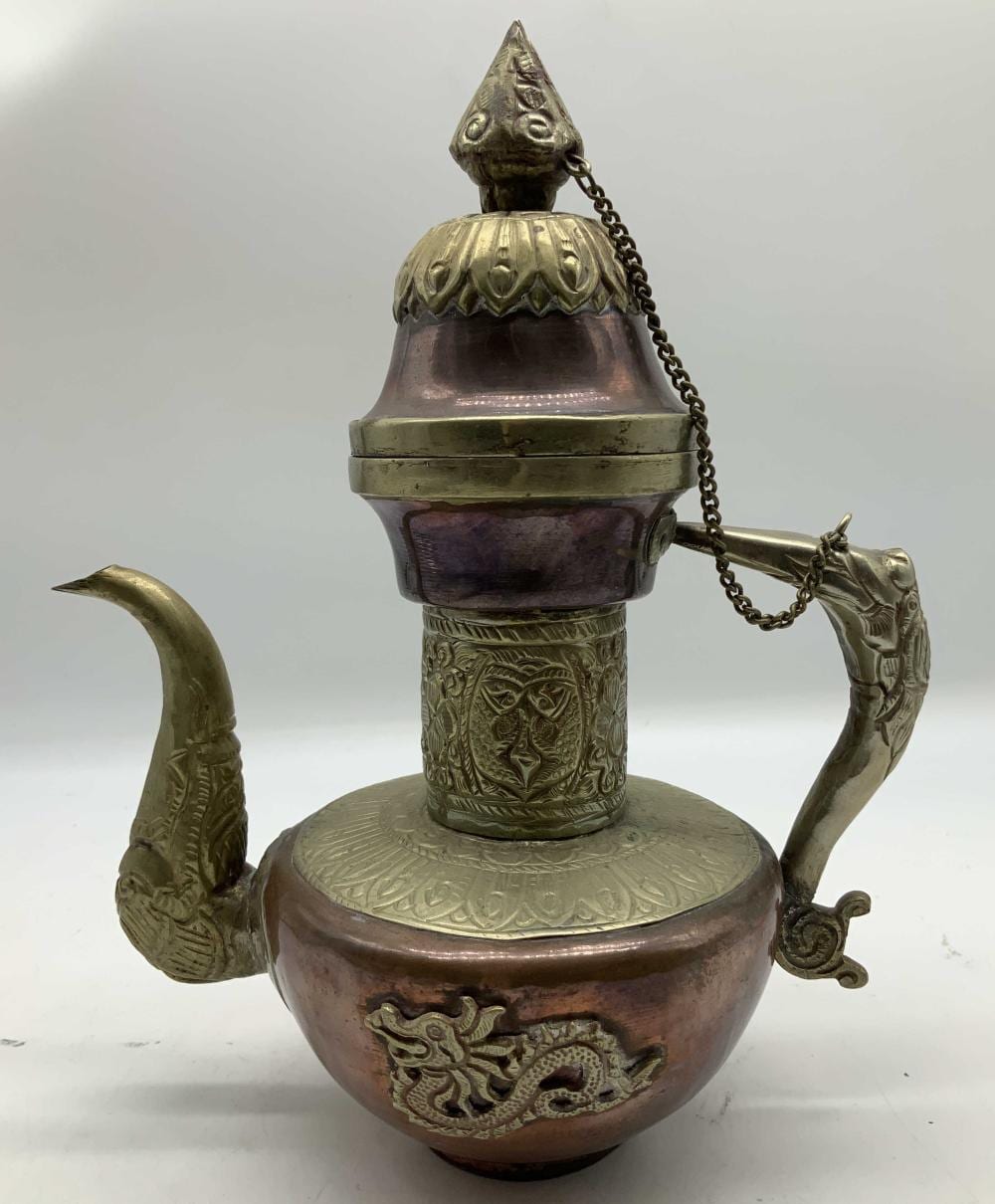
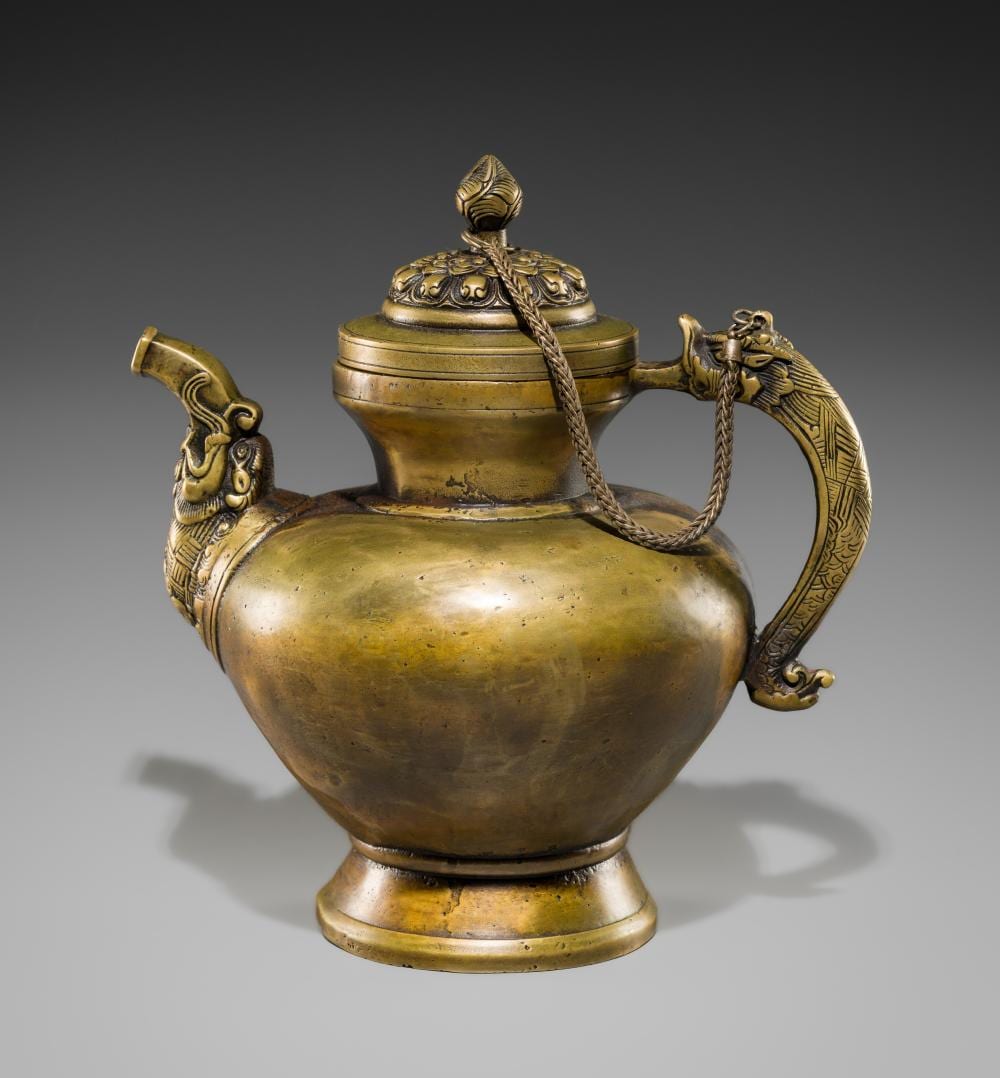
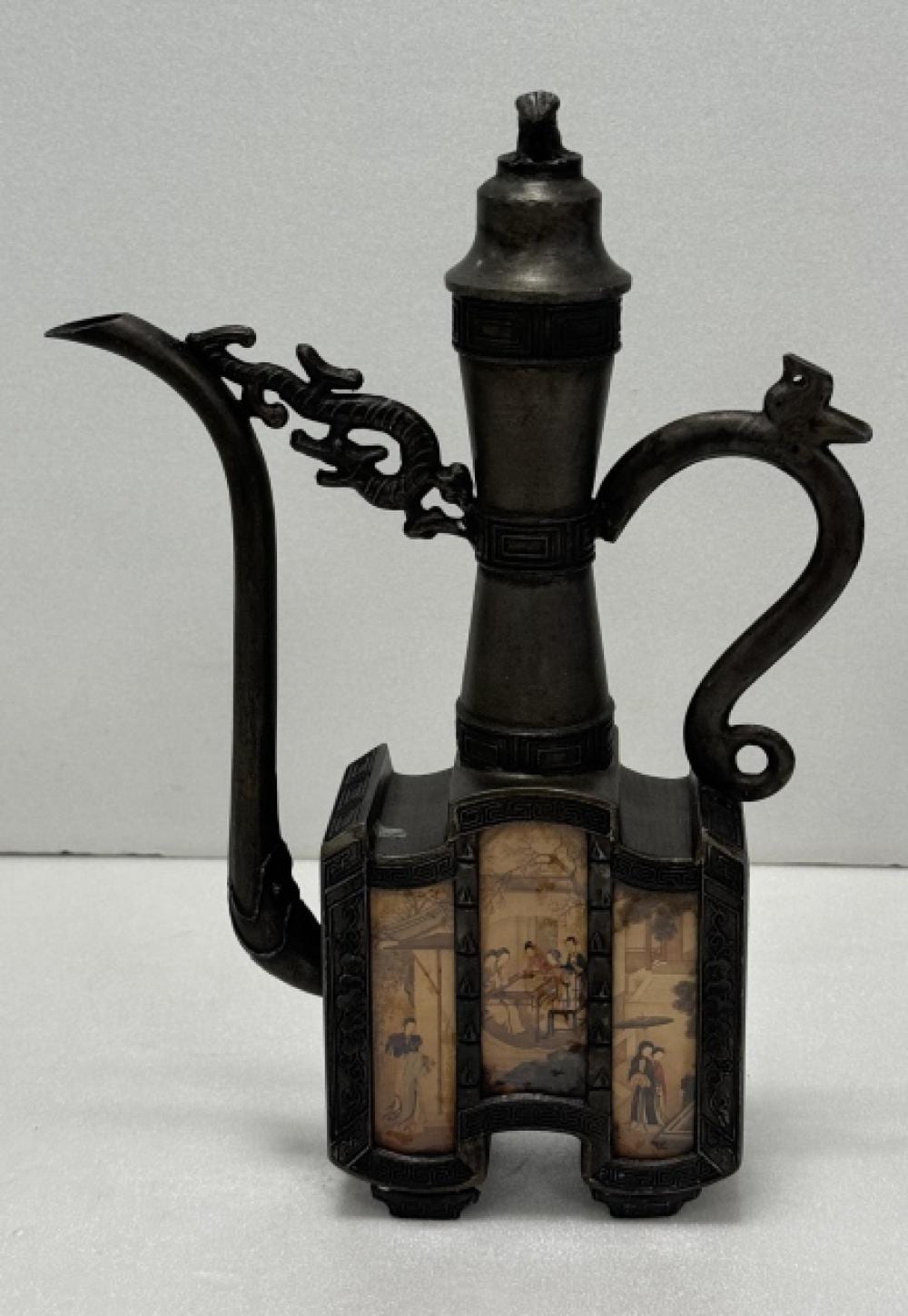
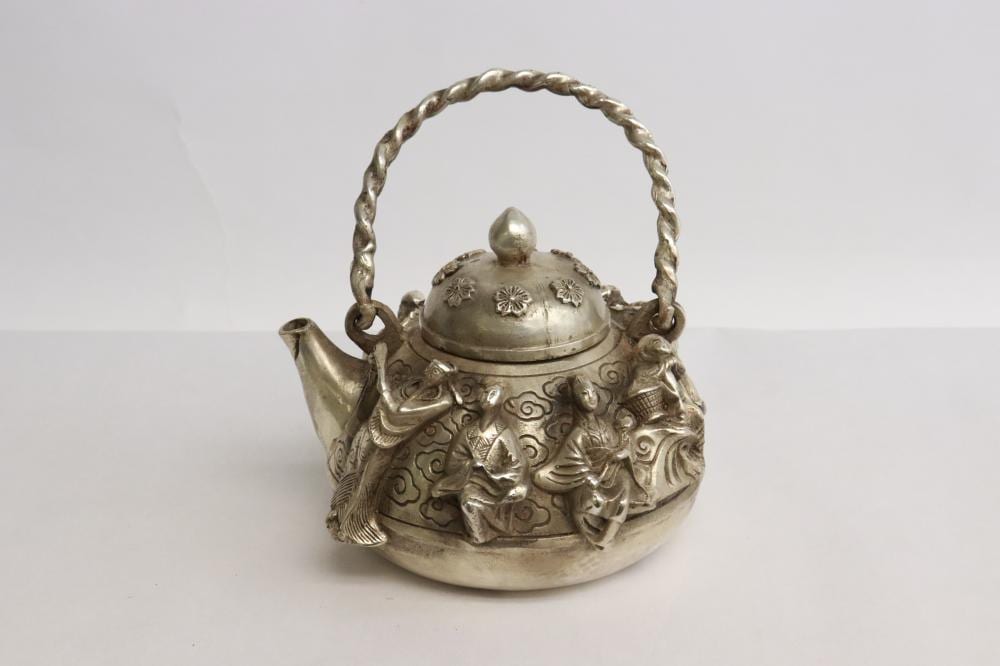
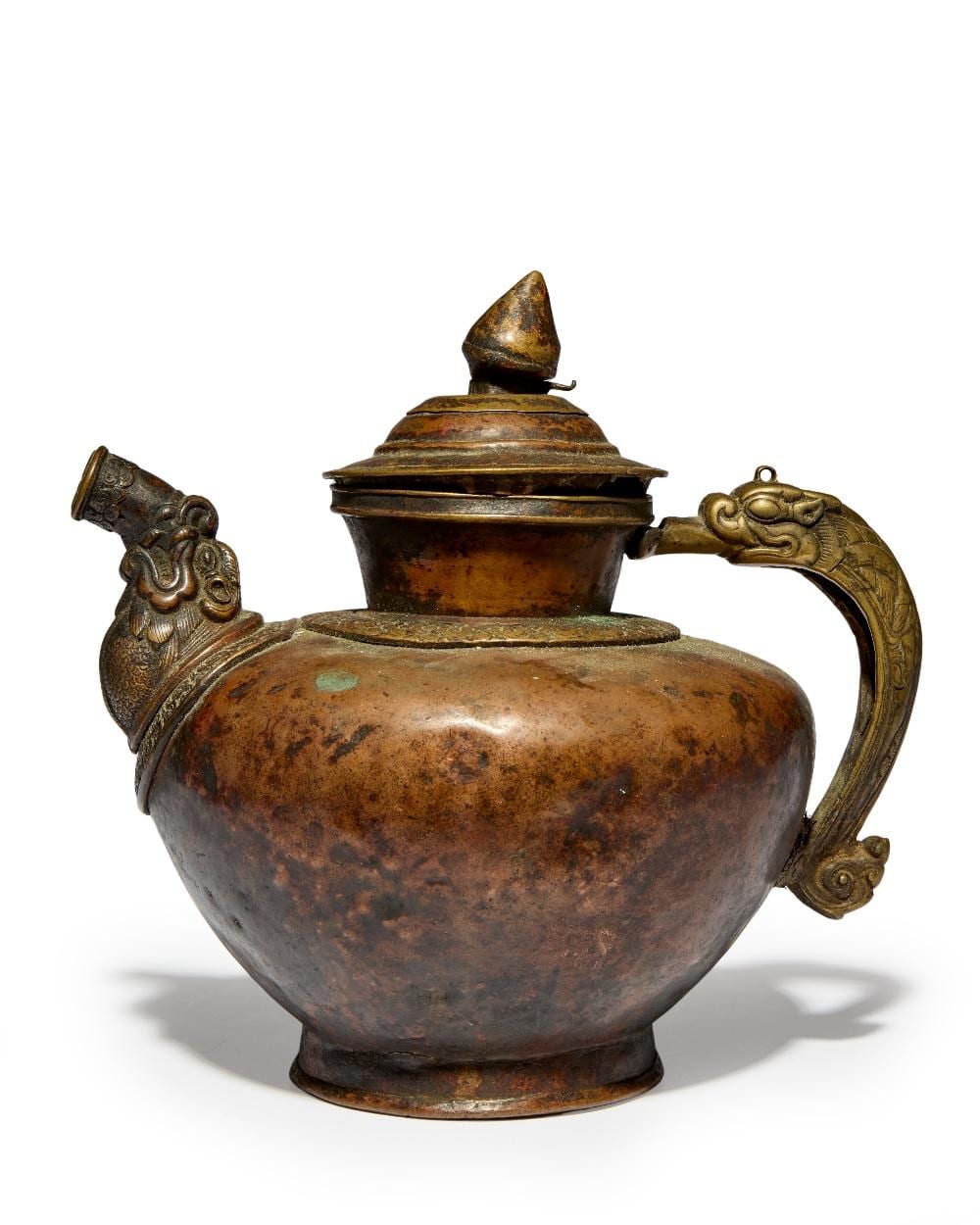
- Global reach: Notable centers include Britain and continental Europe (Georgian through Arts & Crafts periods), India (Benares/Varanasi engraved brass for the export trade), the Middle East (Arabian/Persian coffee pots often misidentified as teapots), and China (dragon-engraved export items).
Understanding these distinctions helps avoid misidentifications that skew value—most commonly, calling a coffee pot a teapot, or assuming any engraved piece is Victorian English.
The Appraiser’s Framework: Six Drivers of Value
- Age
- Earlier is not always better, but documented 18th–early 19th century examples in honest condition usually outrun later items.
- Indicators include hand-hammered construction, dovetail or brazed seams, hand-riveted handles, and tinned interiors.
- Origin and Maker
- Documented workshops (e.g., Arts & Crafts schools or named smiths) and retail stamps add value.
- Country-of-origin marks point to the late 19th–20th century export trade; rare workshop marks can push pieces into higher tiers.
- Craftsmanship
- Fine hammering, uniform walls, neatly chased or repoussé decoration, crisp engraving, well-fitted lids, and elegantly proportioned spouts/handles all raise the bar.
- Mixed-metal inlays (occasional silver/copper inlay on brass) or complex cast finials indicate higher skill.
- Condition
- Dents, splits at stress points (spout base, hinge), heavy corrosion, and replaced parts reduce value. Original surface (including old lacquer) and intact tin lining usually help.
- Rarity and Design
- Unusual forms, transitional styles, and motifs tied to specific movements (Aesthetic, Arts & Crafts) are sought after.
- Miniatures or salesman samples can be collectible niches when documented.
- Provenance and Demand
- Documented history or association with an estate/collection can lift prices.
- Trends matter: design-forward interiors can boost decorative brass, while functional-use collectors favor lined interiors and utilitarian forms.
Dating and Identifying: Materials, Construction, and Marks
Material and Surface
- Patina: Old brass oxidizes to warm brown with subtle color shifts; edges and high points may reveal yellow metal. An even, glassy “perfect” brown can signal modern chemical patination or lacquer.
- Dezincification (“red rot”): Pinkish or coppery patches indicate zinc loss—age and environmental exposure can cause it; severe cases weaken structure and lower value.
- Original lacquer: A thin amber film was used historically to retard tarnish. Surviving lacquer is a plus; flaking or stripped lacquer can reveal polish marks.
Construction Clues
- Hammered vs. spun: Hammered bodies show irregular planishing marks and slight asymmetry; spun bodies (late 19th/20th century) show smooth curves with faint concentric tool marks inside or beneath.
- Seams and joins: Early bodies can be brazed or occasionally dovetailed (more common in copper but seen on some brass). Later seams may be soldered; gold-toned braze vs. gray solder color helps distinguish.
- Handles and attachments: Hand-forged handles with rivets suggest age; machine screws appear later. Phillips-head screws indicate mid-20th century or later. Cast handles/finials show parting lines and file finishing.
- Lids and hinges: Tight-fitting, domed lids with hand-made pinned hinges often predate machine-standardized hardware. Loose lids or mismatched hinge pins often mean repairs.
- Interiors: A thin, matte gray lining is tin; bright, mirror-like is more consistent with silver plating (less common). Bare brass interior suggests decorative use or lost lining.
Marks and Inscriptions
- Country-of-origin: “India,” “China,” or similar stamps point to export-era production (late 19th–20th century). “Made in …” phrasing generally indicates a 20th-century mark.
- Workshop/retailer: Stamps from Arts & Crafts workshops (e.g., British school movements), department stores, or colonial retailers add interest. Hand-engraved inscriptions (gifts, presentation dates) aid dating and provenance.
- Numerals and assembly marks: Hand-scratched numbers inside lids/bodies can be original assembly guides, not inventory numbers.
Style Indicators That Help Date
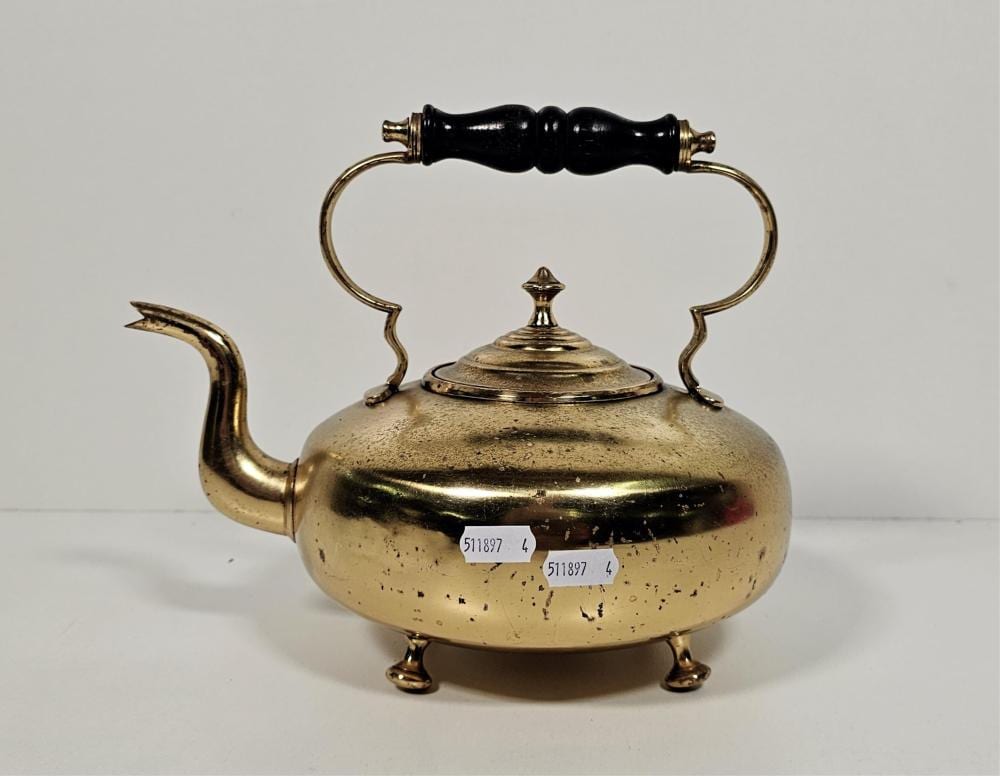
- Georgian/early 19th century: Pear-shaped bodies, gooseneck spouts, plain or lightly engraved surfaces; functional, often tinned interiors.
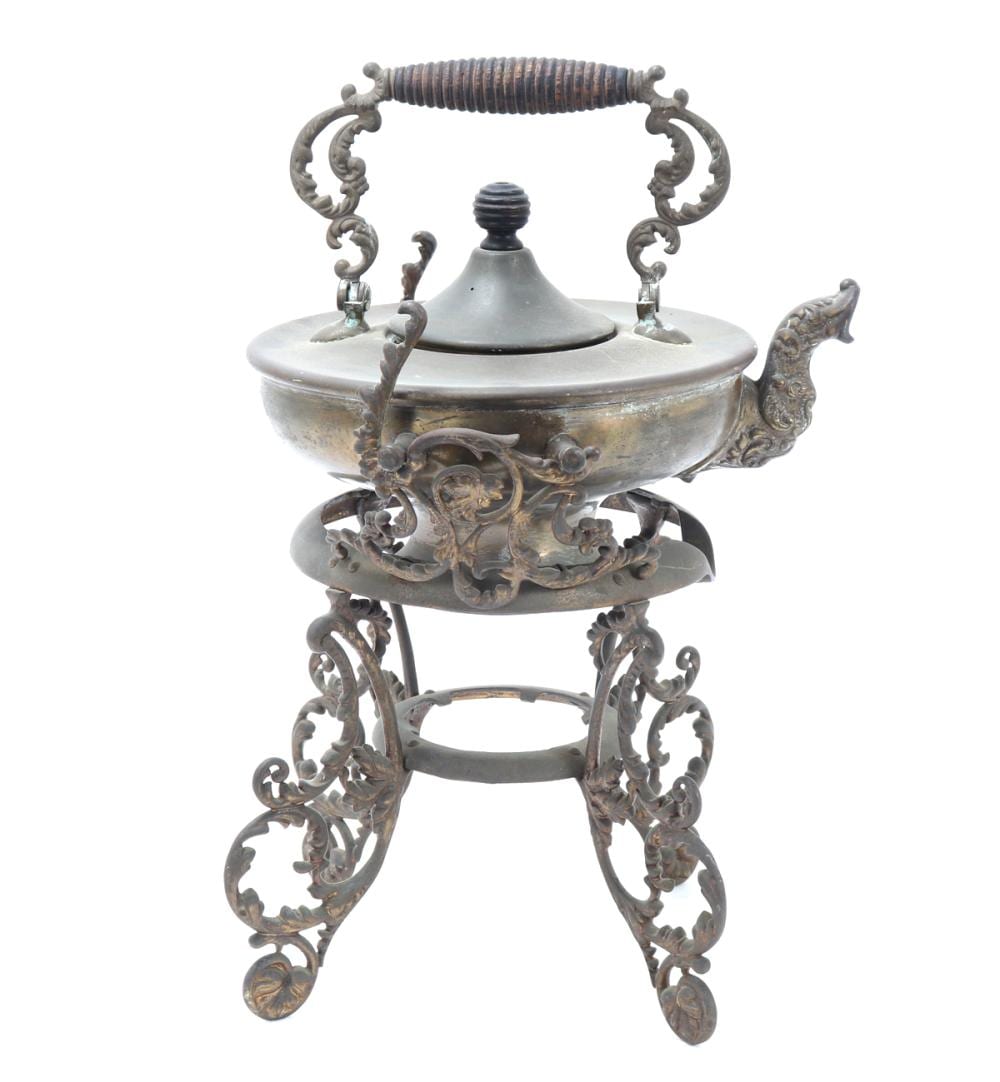
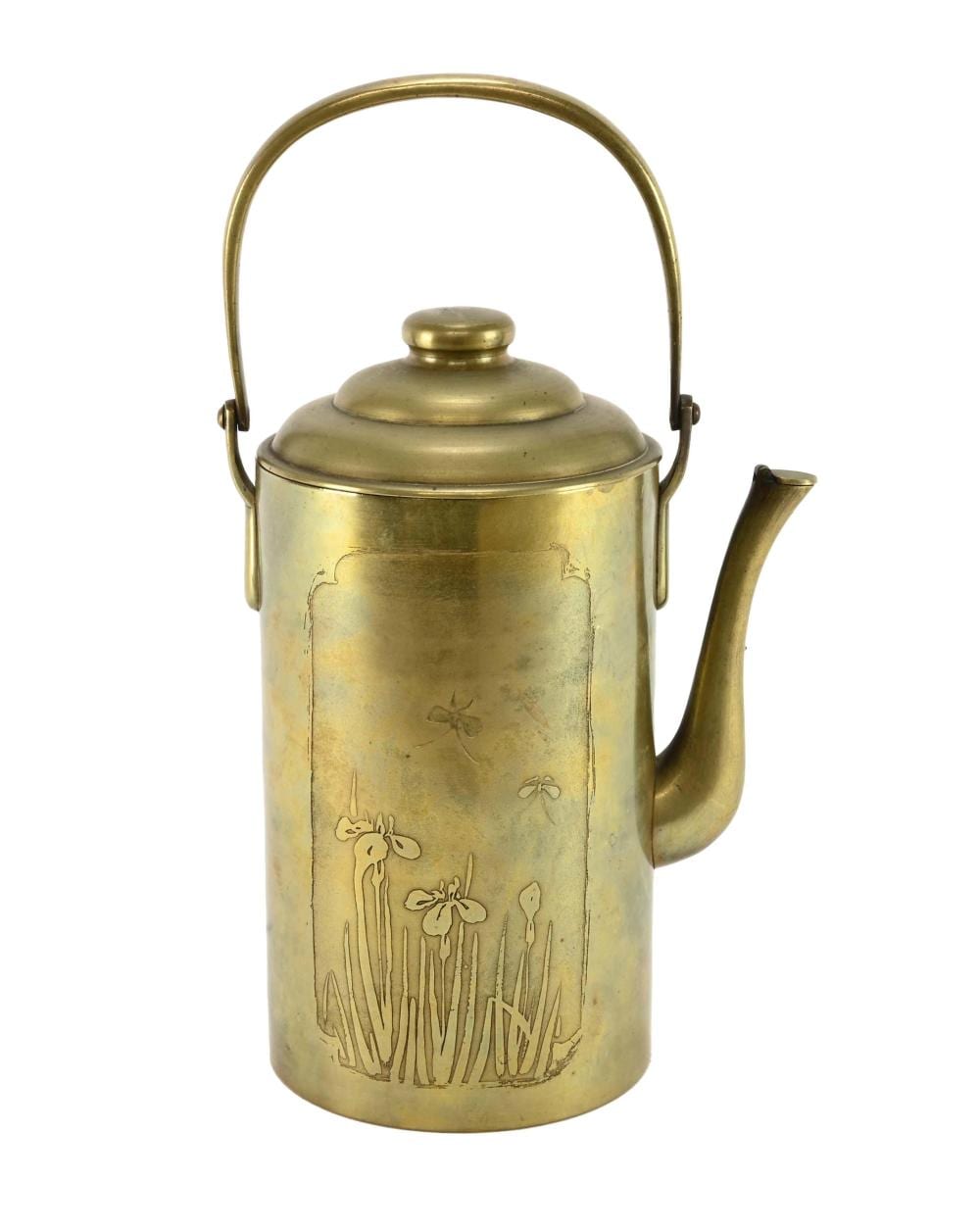
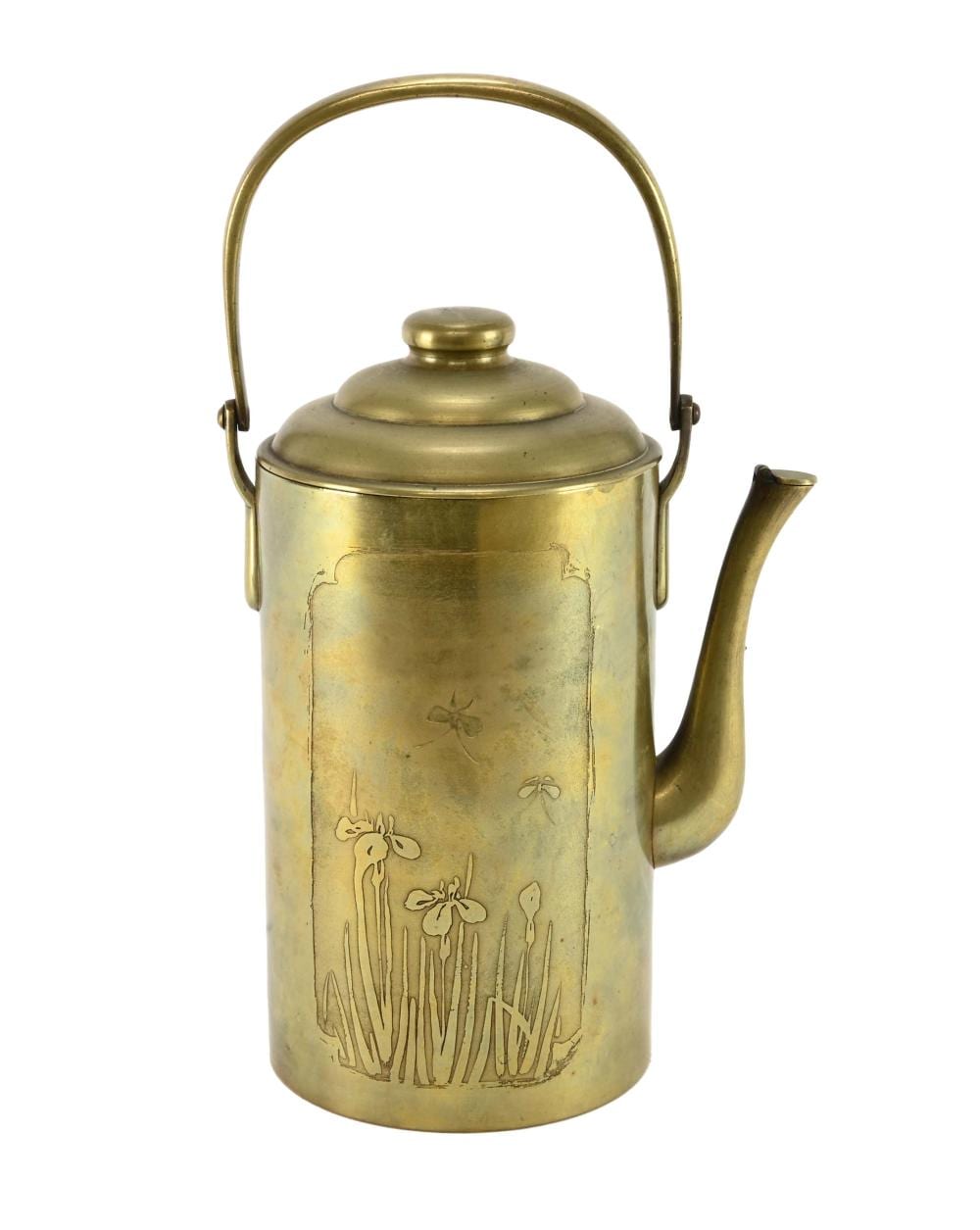
- Victorian/Aesthetic Movement: Engraved flora, birds, Japonisme motifs; sometimes mixed techniques and bolder ornament.
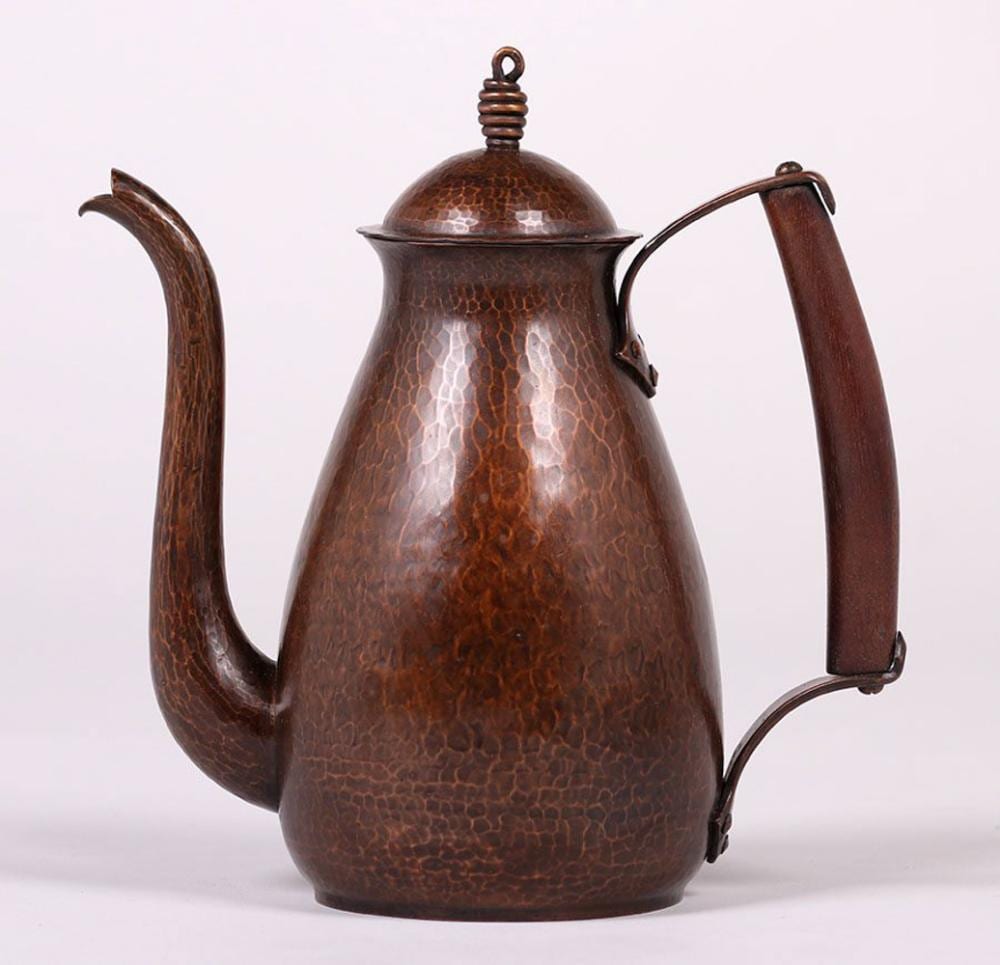
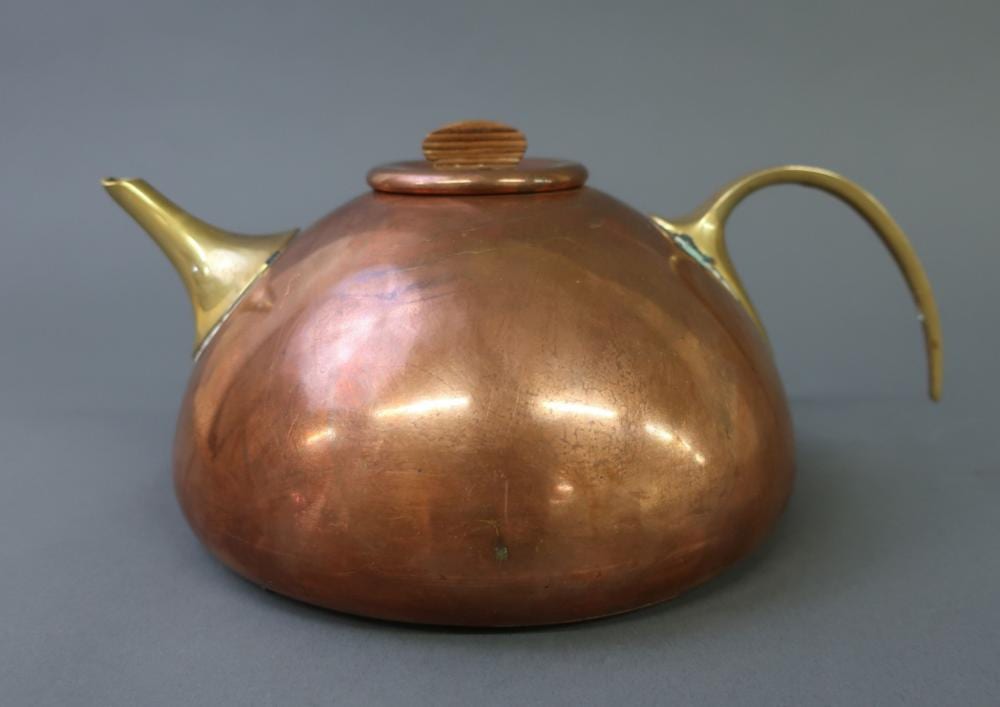
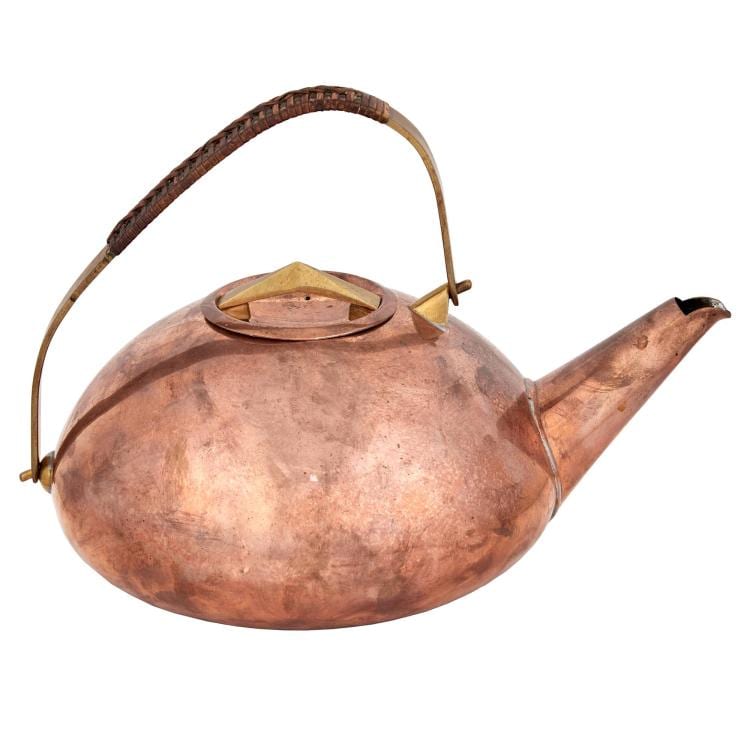
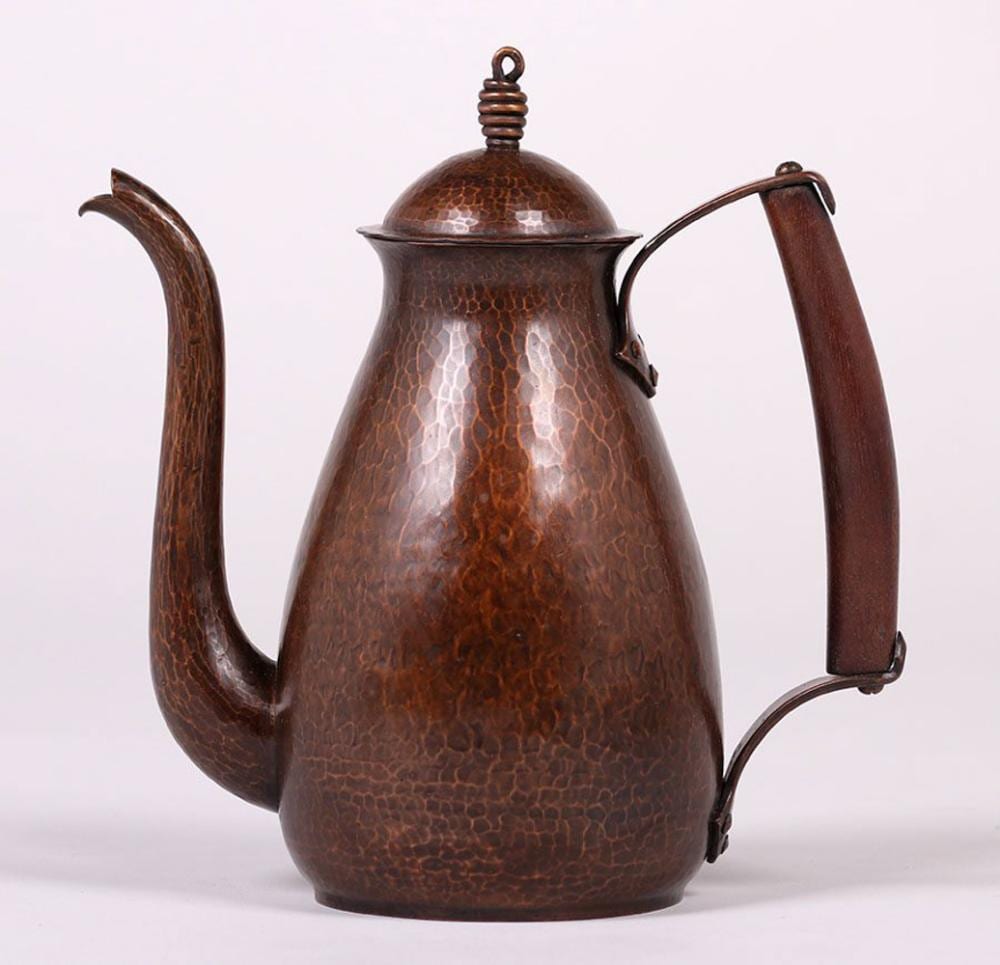
- Arts & Crafts (late 19th–early 20th): Hammered surfaces, honest joinery, purposeful simplicity; workshop marks possible.
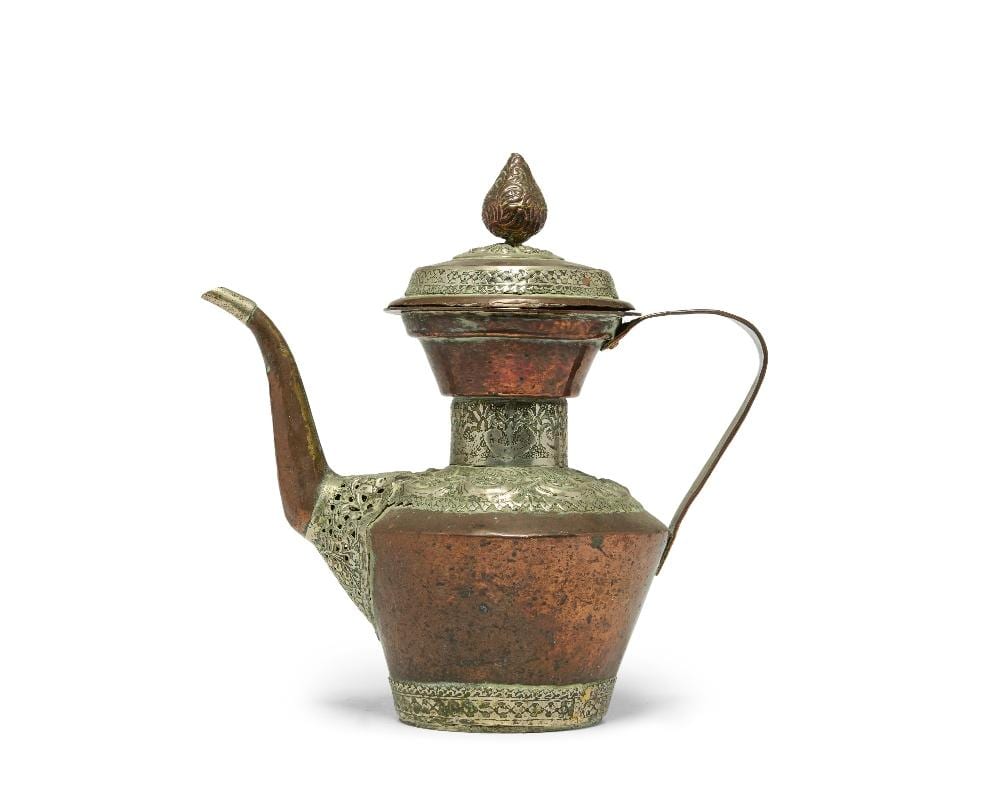
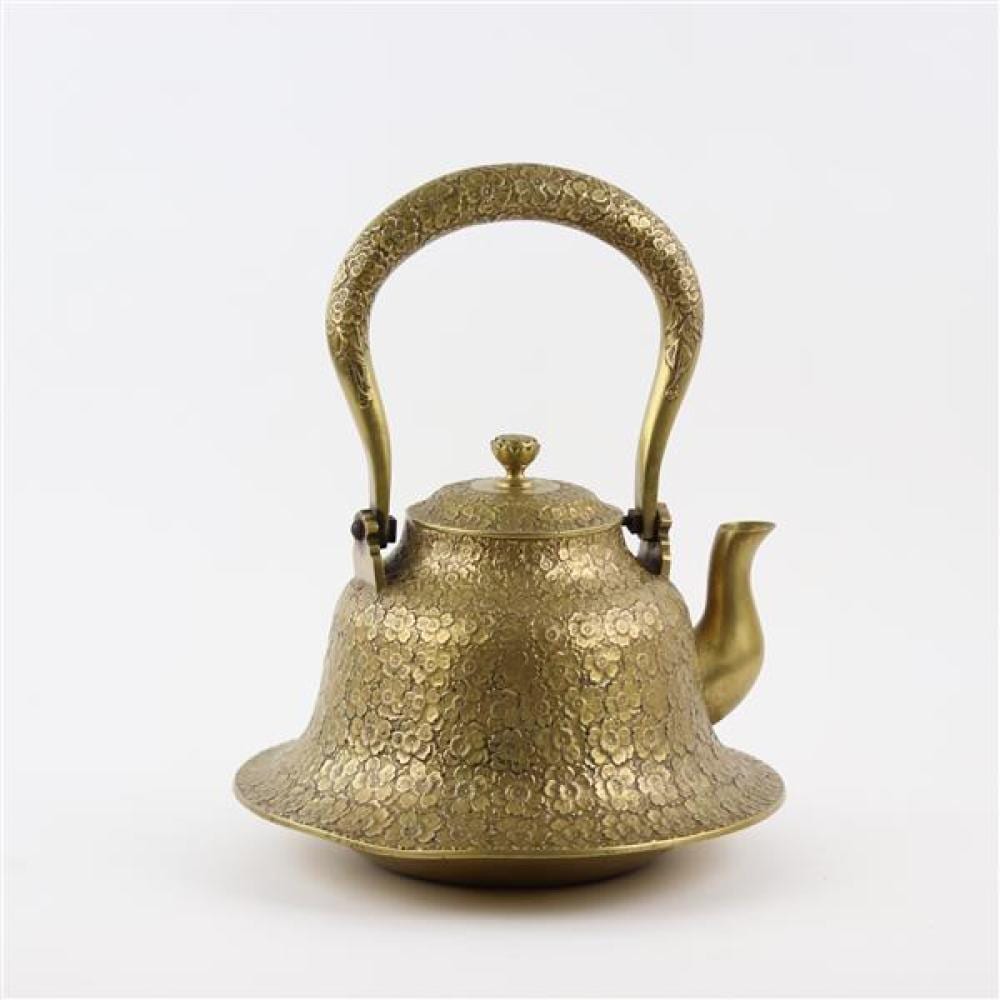
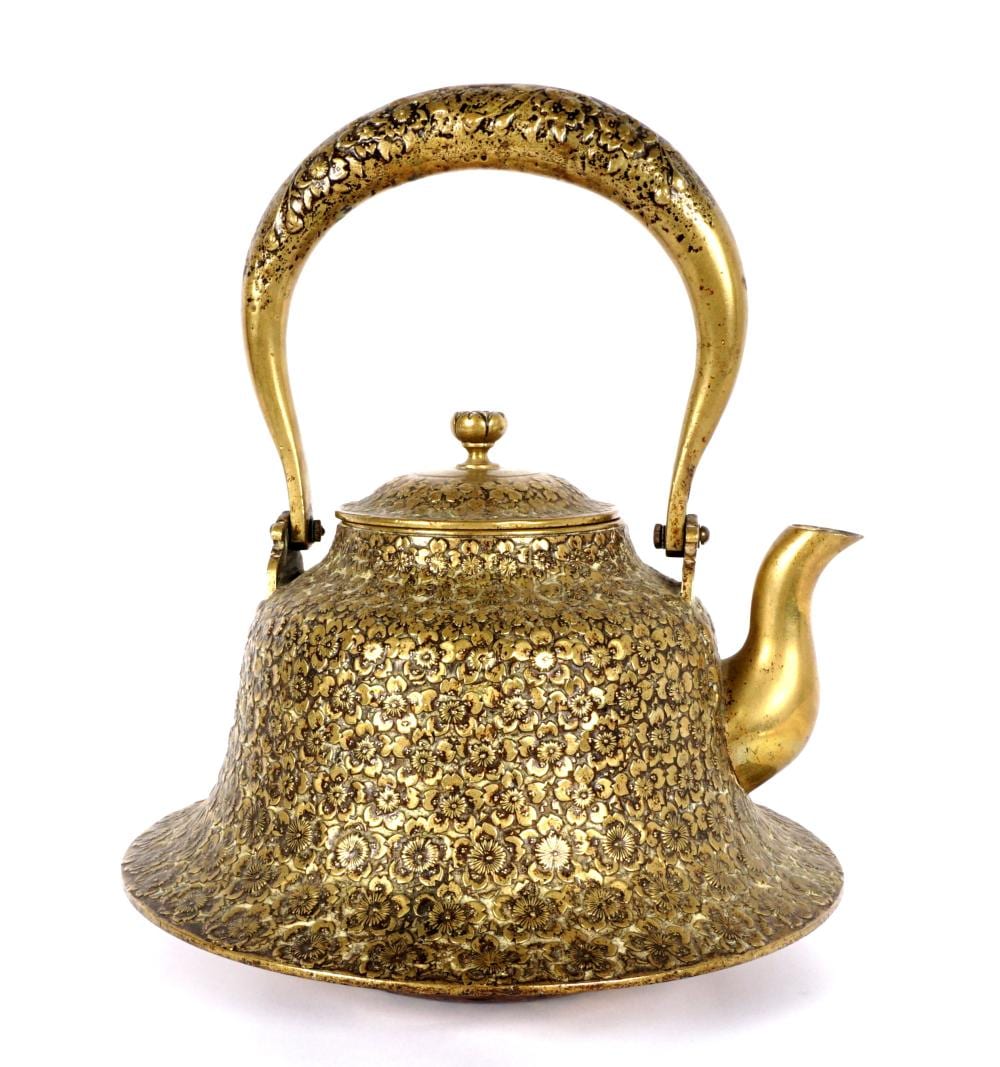
- Anglo-Indian/Benares brass (late 19th–early 20th): Dense, all-over chasing and engraving, often with floral or geometric fields, made for export.
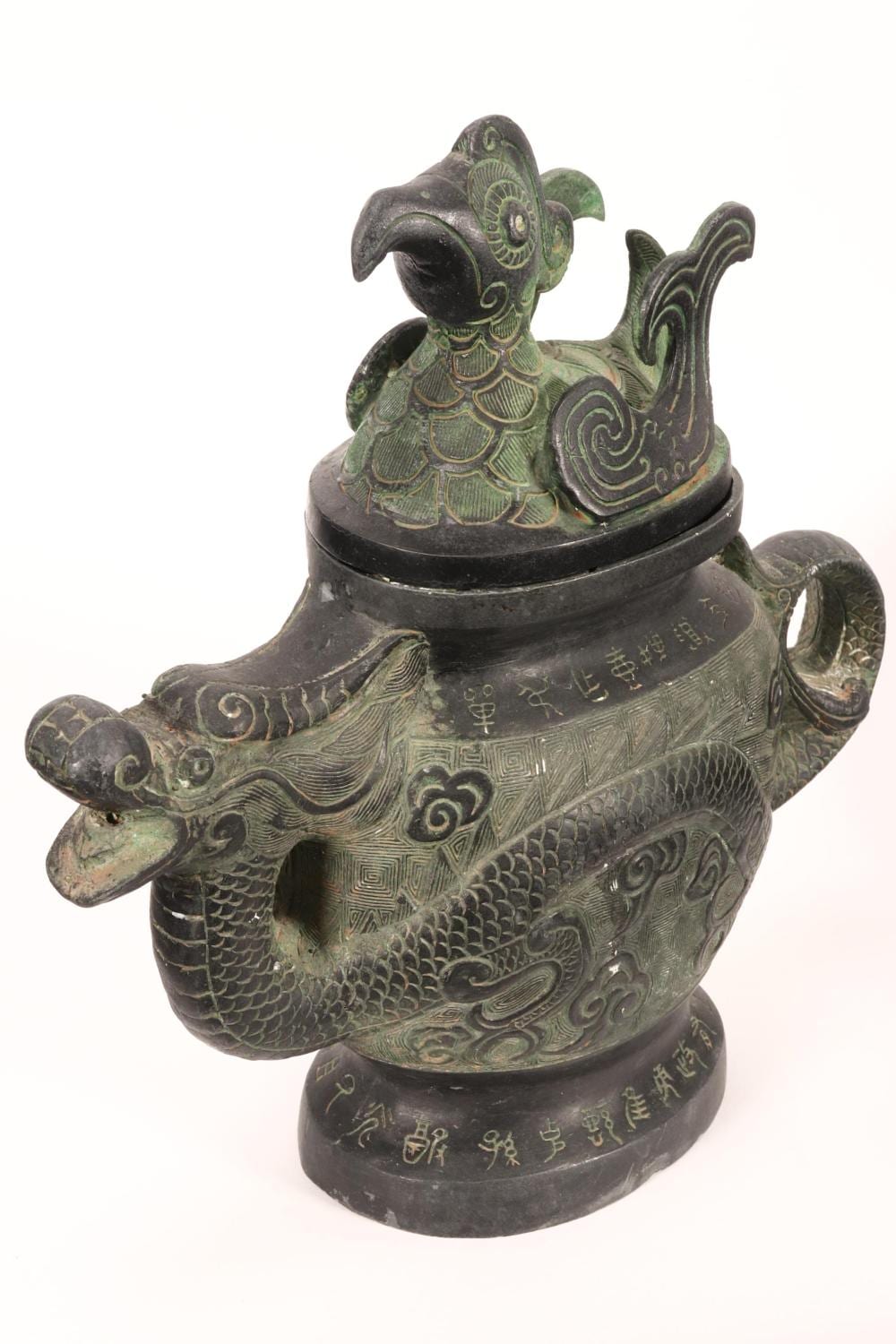
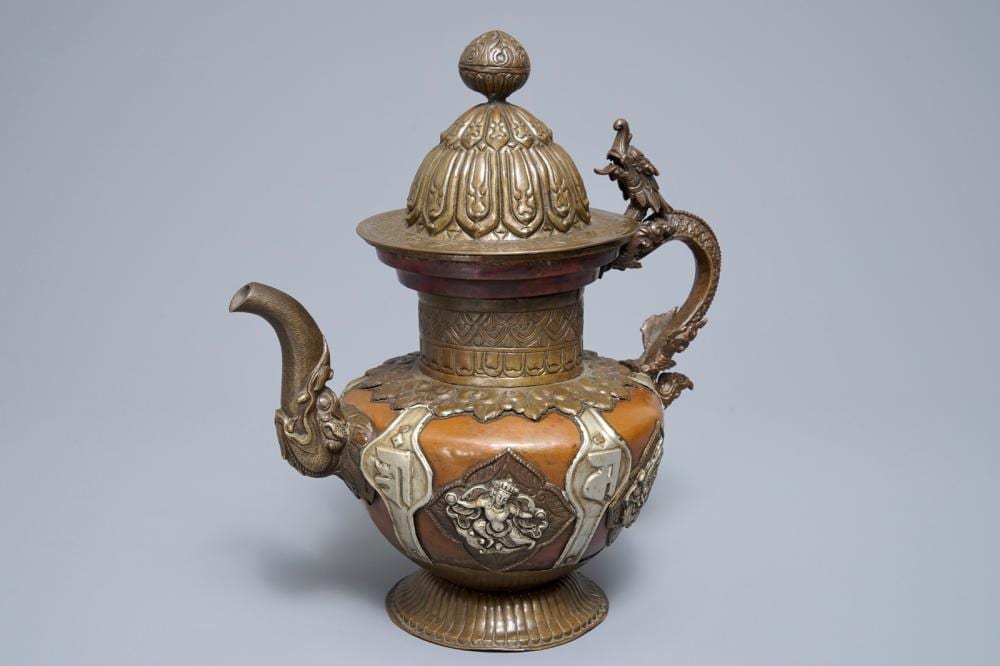
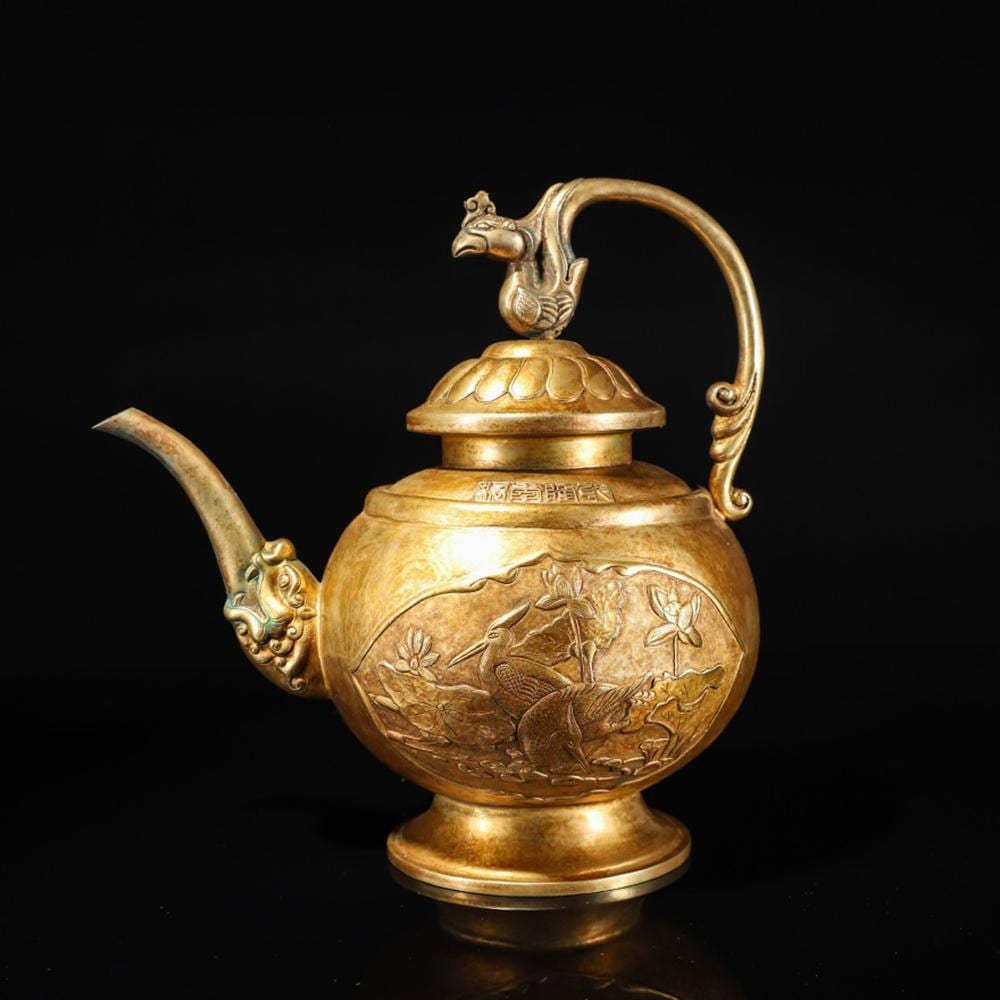
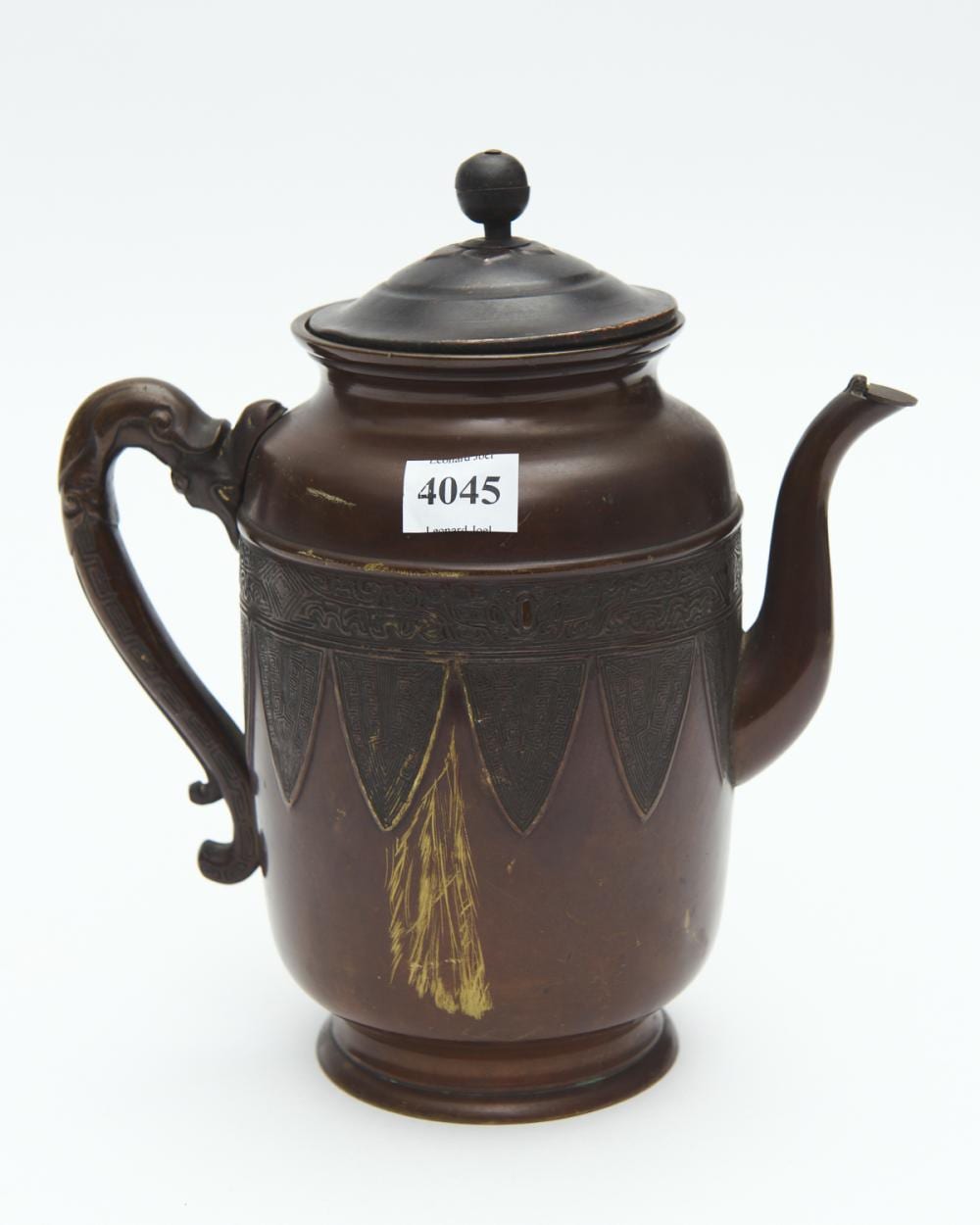
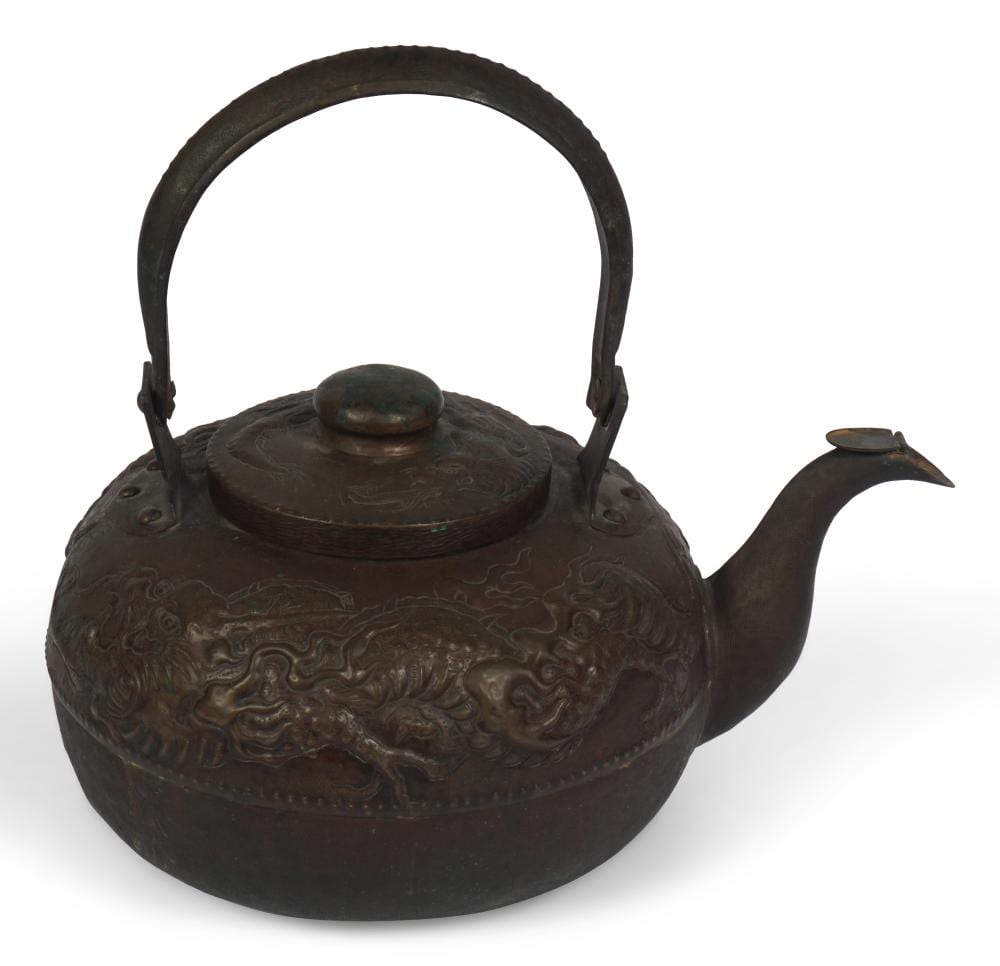
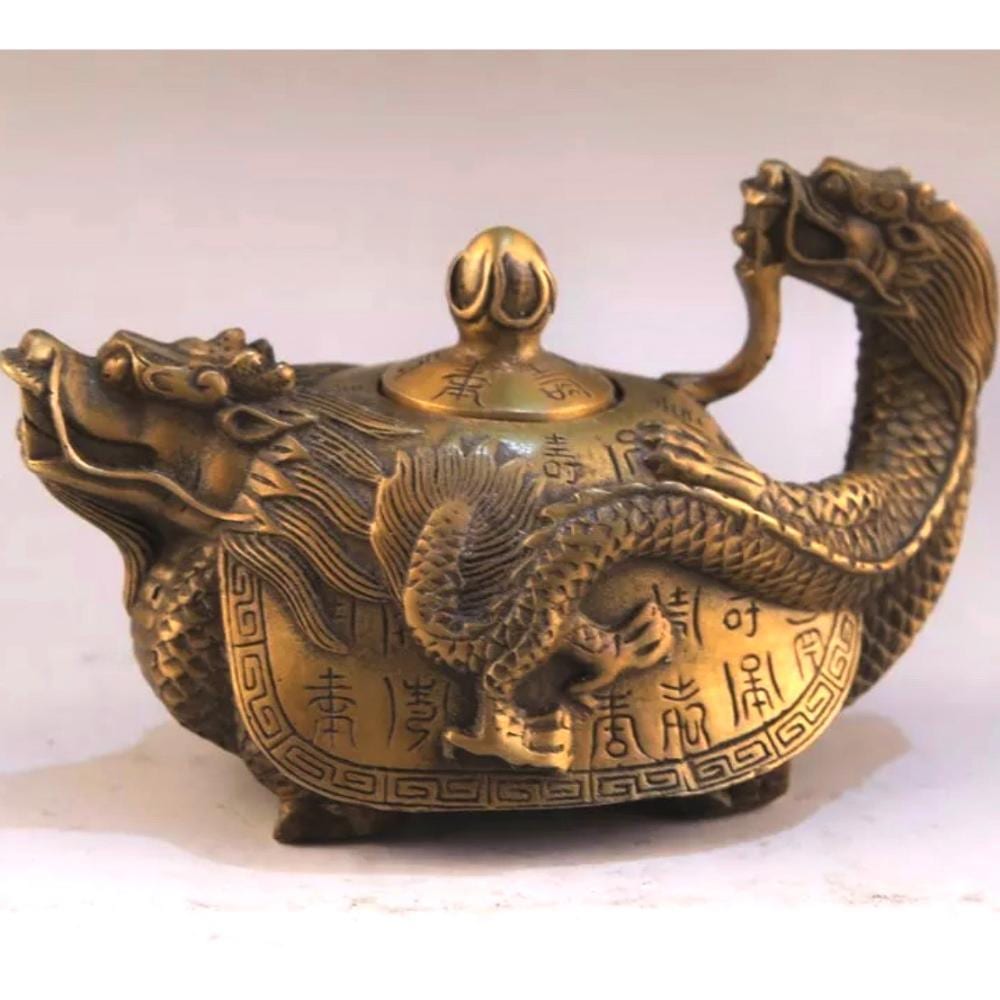
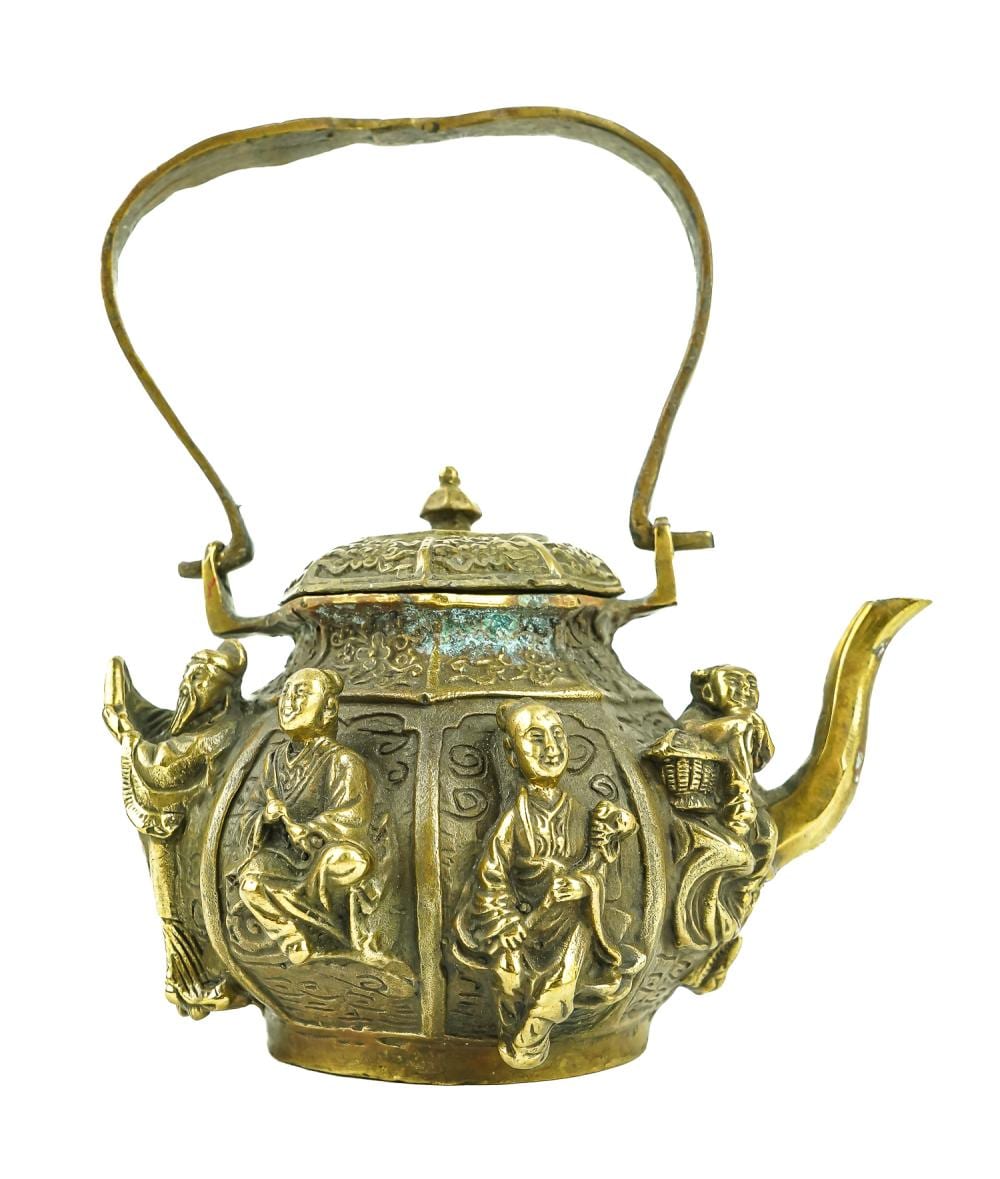
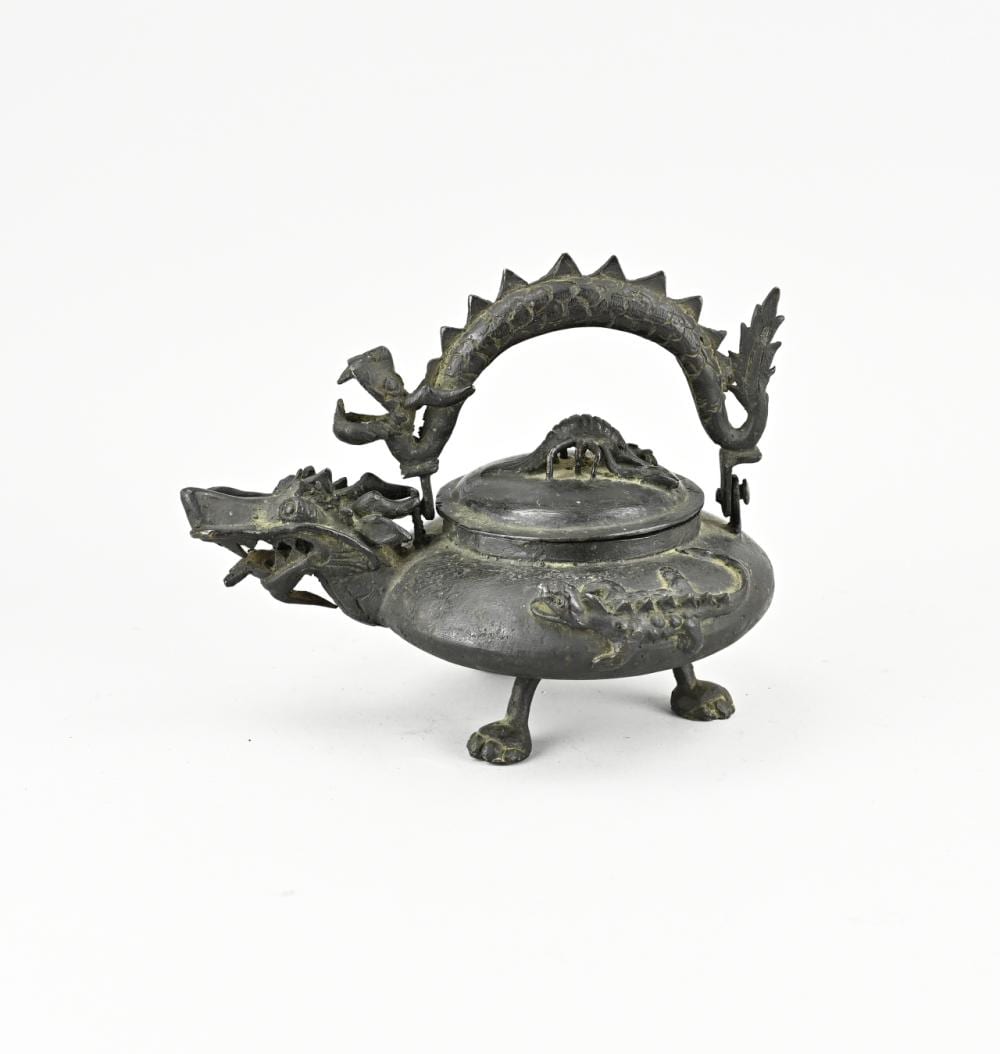
- Chinese export (late Qing/Republic): Dragon and wave motifs, sometimes with “CHINA” or Chinese character marks.
Regional Styles and What They’re Worth
Note: Prices vary by size, quality, and market. This is how each group compares for fair market value (private sale/auction) in typical condition.
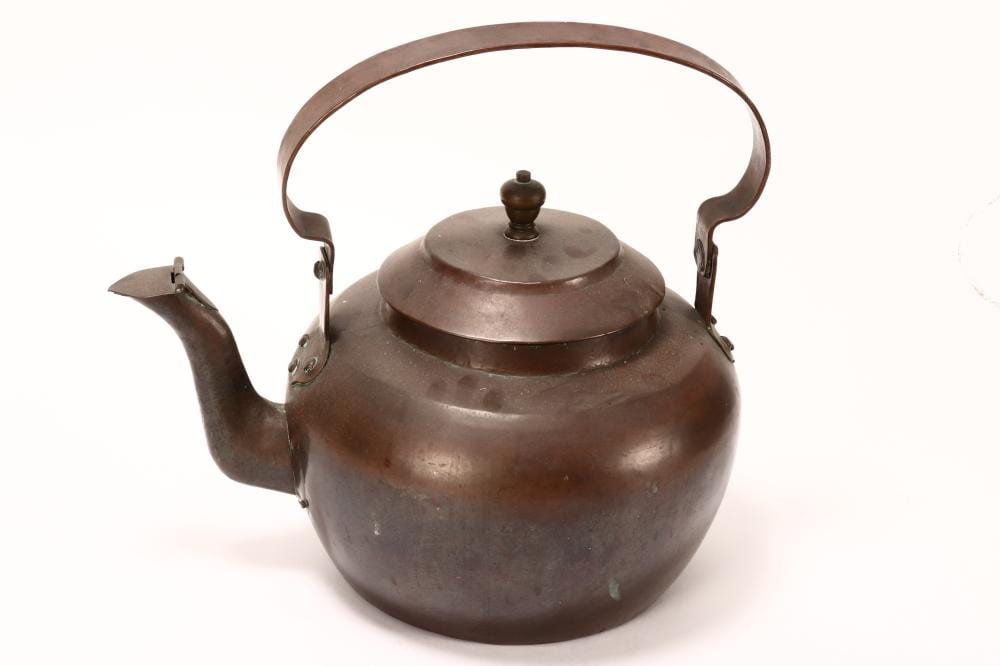
British/European, early 19th century utilitarian teapots (tinned interior, hand-hammered, well-proportioned): Typical examples are priced on form and condition; exceptional form/condition or documented provenance brings considerably more.
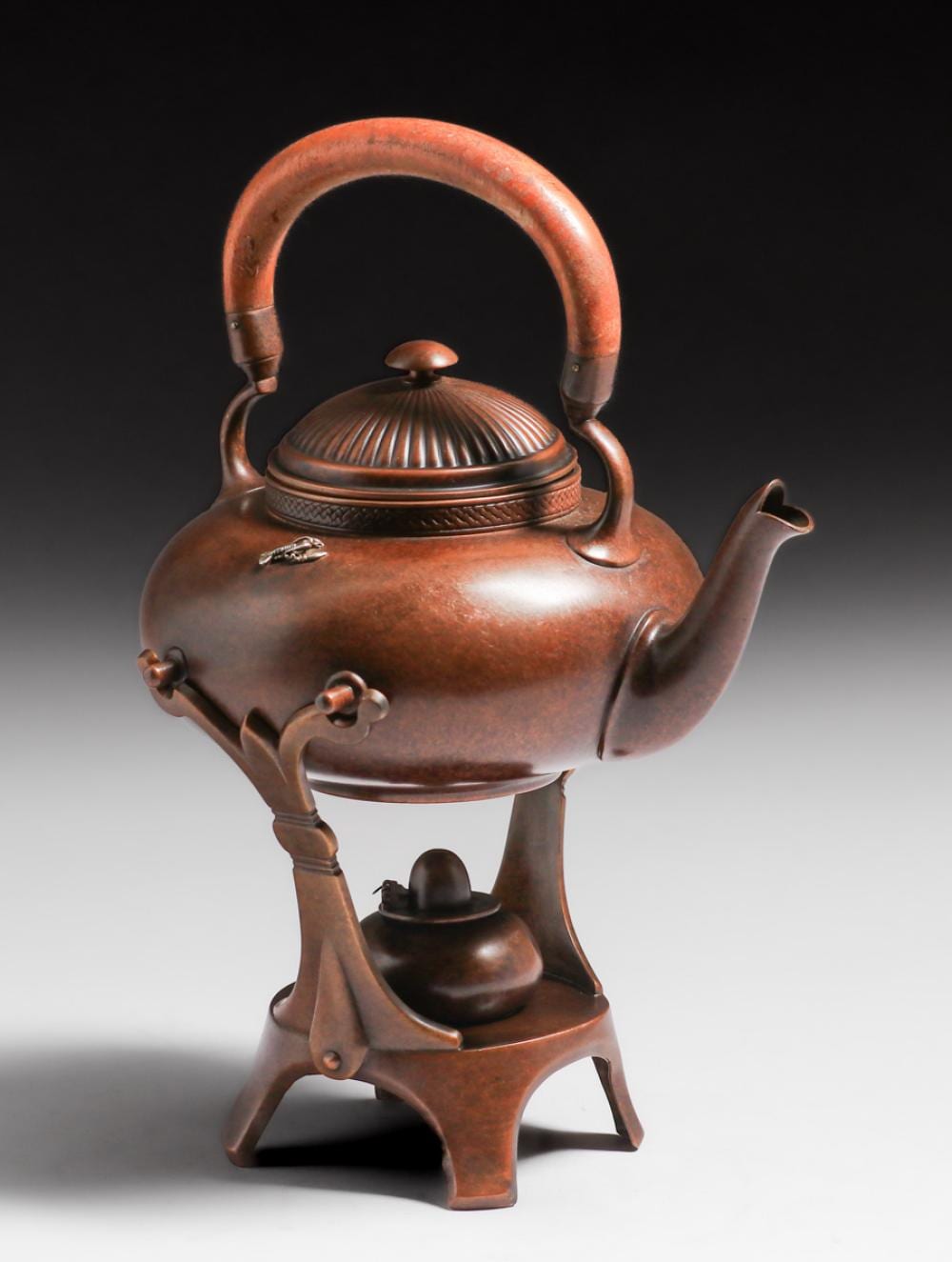
Arts & Crafts workshop pieces (clearly hammered, balanced proportions, possible marks): Unmarked pieces are priced on workmanship; a mark, named school or documented maker with superior workmanship sells for considerably more.
Anglo-Indian/Benares engraved brass (export, decorative): Common quality is plentiful and modest; larger pieces with better-executed engraving in crisp condition sell for more, and superior or early colonial-era examples with exceptional chasing bring the most.
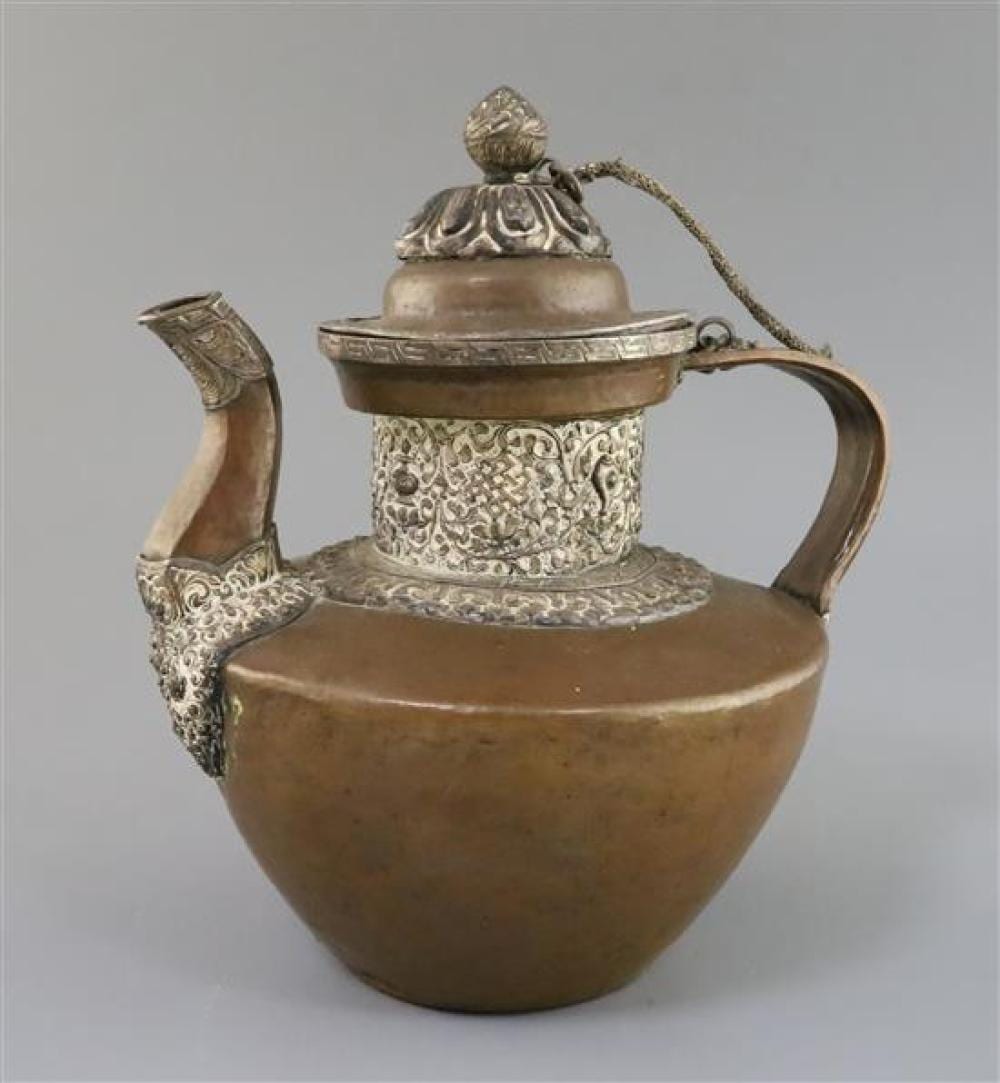
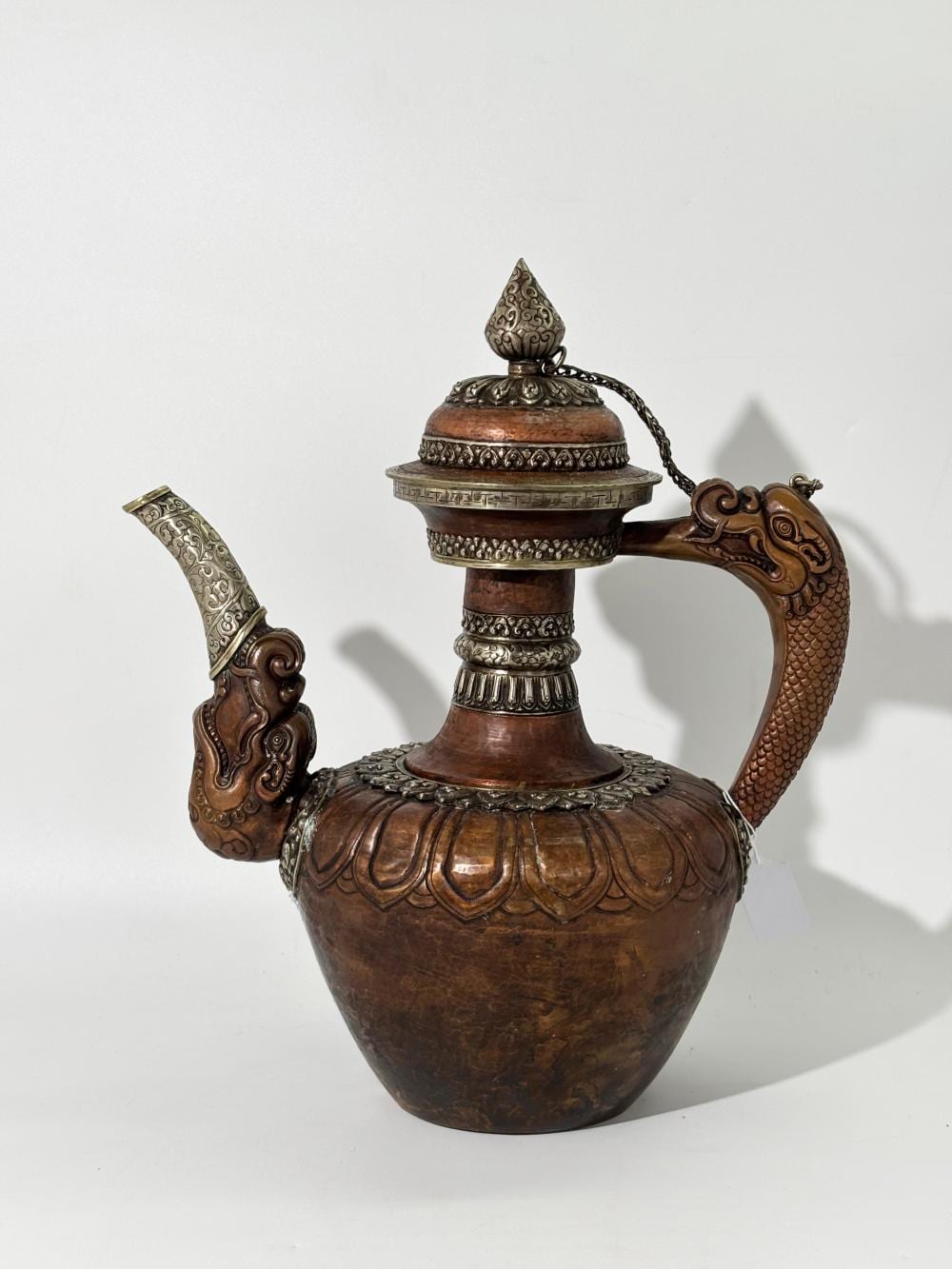
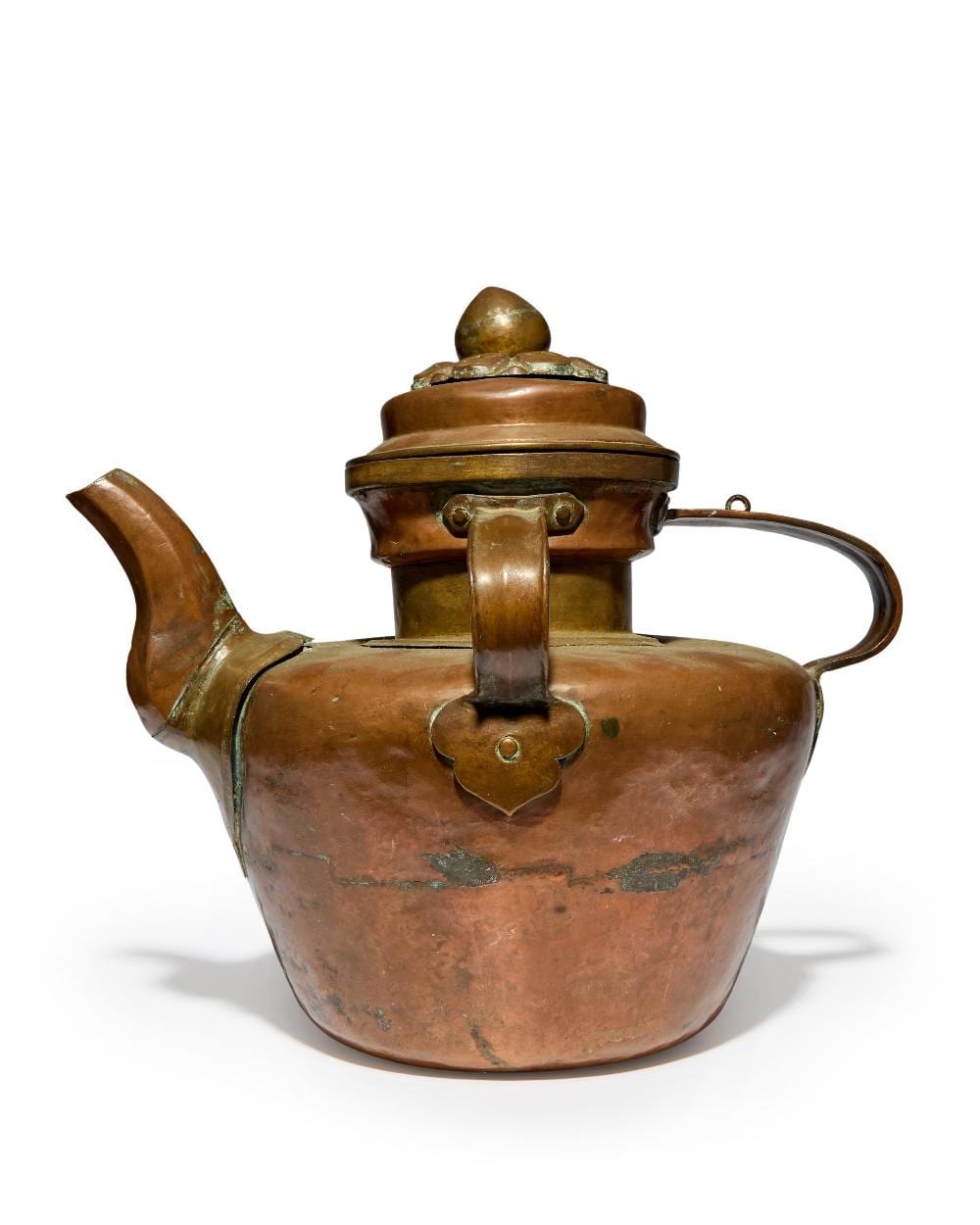
Middle Eastern coffee pots (dallah/ibrik often mislisted as teapots): Tourist-grade mid-20th century pots are the least expensive; earlier, hand-hammered pots with script and good age sell for more, and exceptional examples with silver inlay or documented age bring the most.
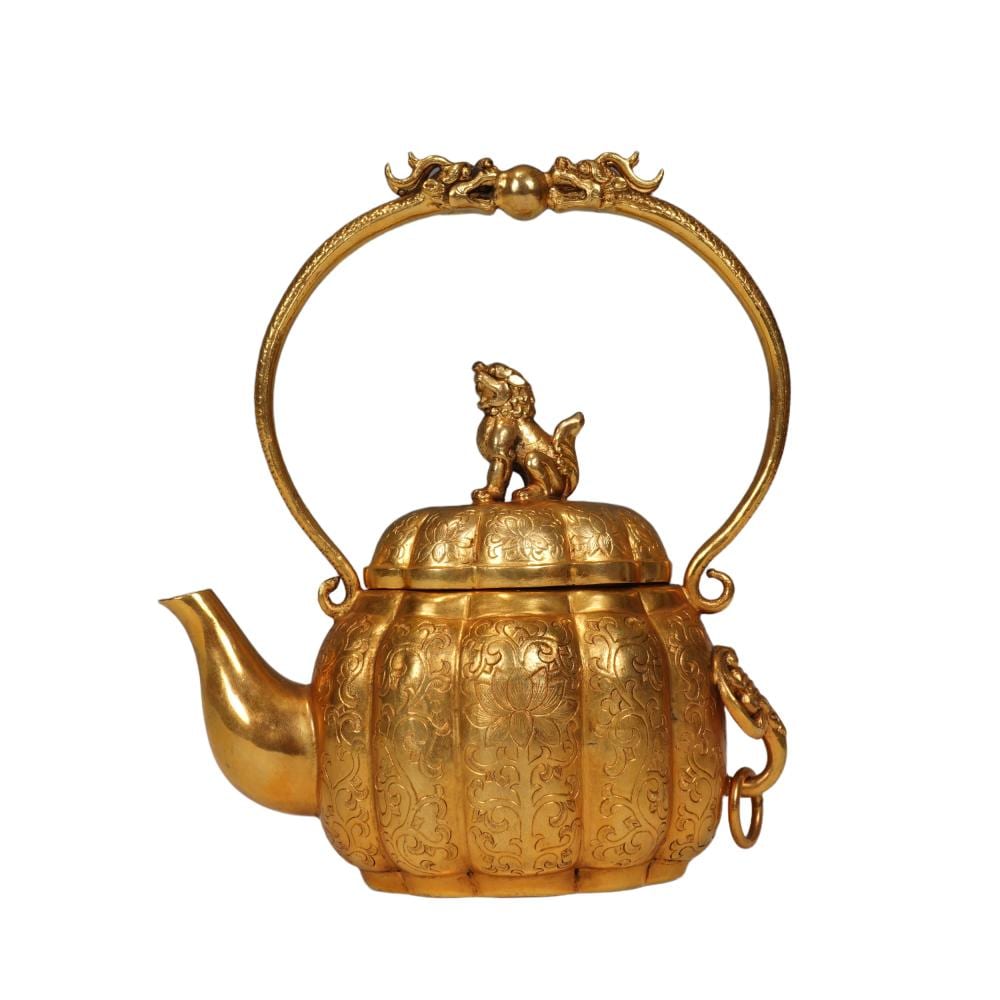
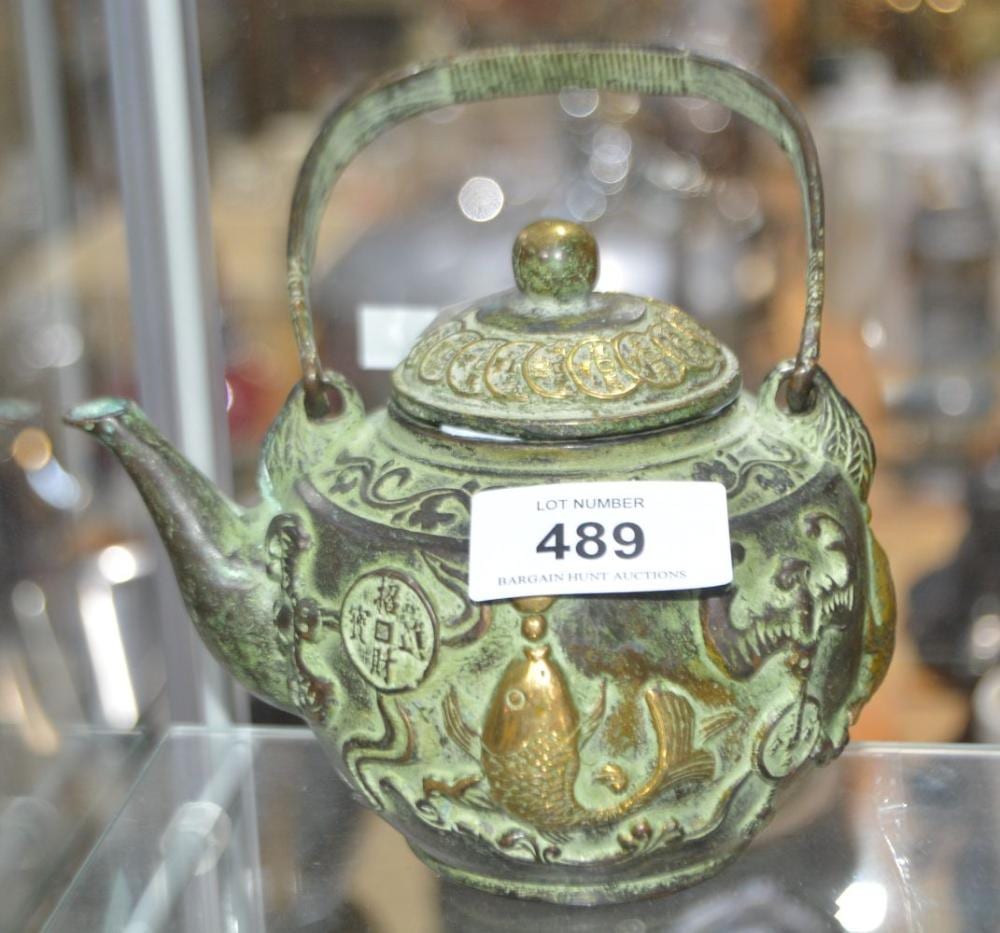
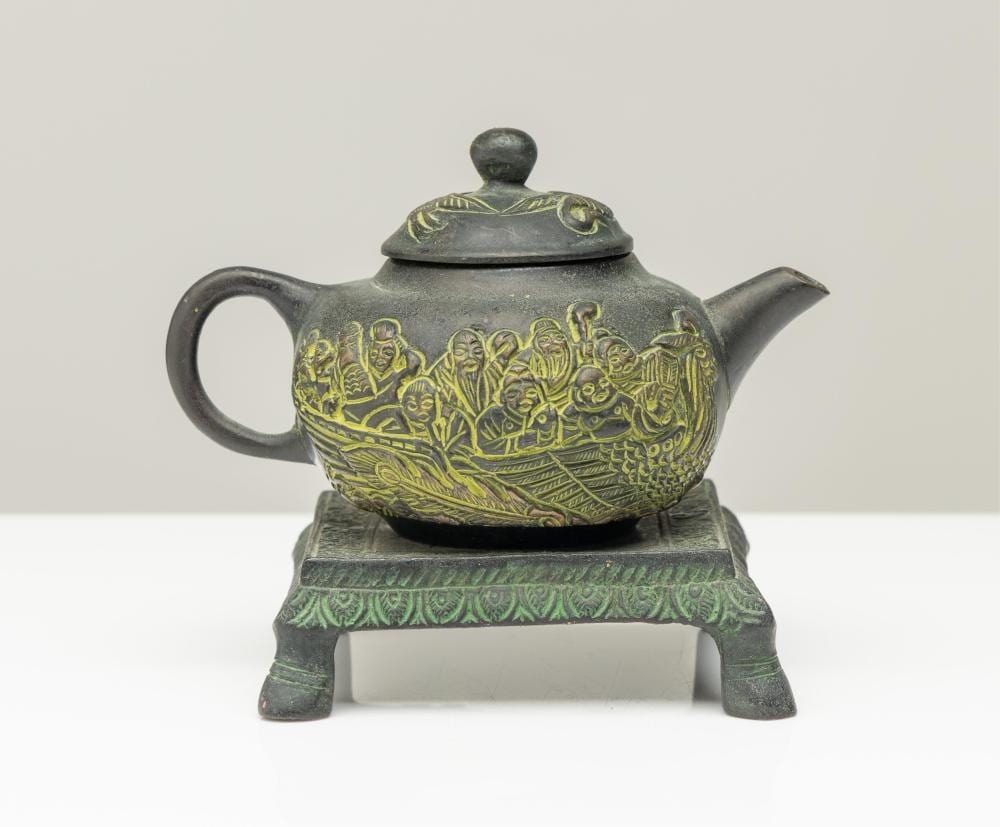
Chinese export brass with dragon motifs: Modest examples are common; larger, finely engraved pieces with period marks sell for considerably more.
These comparisons assume honest surfaces and minimal restoration. Heavy dents, leaks, crude solder, missing parts, or stripped patina can halve values. Conversely, strong provenance or a rare form can push a piece well above a typical example.
Condition, Restoration, and Originality Red Flags
Condition Factors
- Dents and distortions: Look along the profile for flat spots and at the base rim for out-of-roundness. Moderate dents are restorable; major deformations impact value.
- Spout/base stress: Check for hairlines where the spout meets the body and around the lower body seam; leaks here are common.
- Hinge and finial integrity: Replacement hinge pins and finials are common; mismatched metal color or modern screws signal alterations.
- Surface integrity: Over-polishing rounds edges and erases tool marks/engraving crispness. Uniform shine on an “old” piece can indicate recent machine polishing.
Restoration Considerations
- Solder and braze: Fresh, bright gray solder is a giveaway; sympathetic restoration aims for compatible color and minimal spread. Brazed joints should read golden, not silver-gray.
- Tin lining replacement: Re-tinning can be appropriate for functional use; declare it in valuation notes—usually neutral to slightly positive if done well.
- Lacquer: Old, intact lacquer is a positive; new lacquer over-polish is neutral to negative for purist collectors.
Originality and Misidentifications
- Artificial patina: Chemical patination often pools in recesses and reads too even; faint chemical odors or sticky feel can betray recent work.
- Mixed parts: Lids, finials, or handles swapped from other vessels. Check diameter fit, hinge alignment, and color continuity.
- Coffee pots sold as teapots: Dallah and other coffee forms routinely get mislabeled. Correct identification matters because it affects buyer pool and price.
Market Reality: Pricing Bands and How to Compare a Piece
Approach valuation like a professional:
- Define the piece: Teapot, kettle, or coffee pot? Region and period? Construction and decoration specifics?
- Grade the six drivers (Age, Origin/Maker, Craftsmanship, Condition, Rarity/Design, Provenance/Demand) on a 0–5 scale to create a profile.
- Build market evidence: Use multiple comparable examples with similar form, size, decoration quality, and condition. Weight recent sales more heavily; adjust for restoration and completeness.
- Contextualize demand: Decorative interiors trends can lift engraved and sculptural forms; functional tea enthusiasts pay premiums for lined, pour-ready teapots from earlier periods.
Example walk-through
- Object: Hammered brass teapot, pear-shaped, gooseneck spout, tin-lined, riveted handle, no visible maker mark, even brown patina, tight-fitting lid.
- Assessment: Early–mid 19th century European; utilitarian form; honest use; no major dents; hinge sound; interior tin worn but present.
- Valuation: Priced as a typical utilitarian European teapot, skewing higher if proportions are elegant and pouring is clean; lower if significant interior wear or repairs.
Care, Storage, and Ethical Use
- Use: If you plan to brew, prefer tinned interiors. Avoid using unlined brass for hot, acidic beverages. Be mindful of old solder (possible lead). Many collectors keep antique brass for display only.
- Cleaning: Wash gently with mild soap and water; dry thoroughly. Avoid ammonia and harsh abrasives. Never machine-buff antique surfaces.
- Polishing: Minimal is better. If patina is desirable (often is), do not polish. If you must, polish lightly and evenly, protecting engravings and edges.
- Protection: Microcrystalline wax can stabilize a surface and slow tarnish. Store in a dry environment, padded, with lids slightly ajar to prevent trapping moisture.
- Documentation: Keep notes on provenance, restoration, and any conservation treatments—this paper trail supports value.
Practical Checklist: Antique Brass Teapot Valuation
- Identify form: teapot, kettle, or coffee pot?
- Check construction: hammered or spun; seams (brazed/soldered); rivets vs screws.
- Inspect interior: tin/silver lining present? Bare brass?
- Evaluate surface: original patina/lacquer vs over-polish; signs of chemical patina.
- Test integrity: lid fit, hinge play, spout join, handle sturdiness, base level.
- Note marks: country-of-origin, retailer/workshop, inscriptions, assembly marks.
- Assess decoration: quality of engraving/chasing, crispness, stylistic period cues.
- Record condition issues: dents, cracks, corrosion, leaks, replacements.
- Place in a type/style category: e.g., Arts & Crafts British; Anglo-Indian engraved; Chinese export; Middle Eastern coffee form.
- Set a value band: reference market evidence for similar form, quality, and condition; adjust for restoration/provenance.
FAQ
Q: How can I quickly tell if a brass teapot is antique or a modern reproduction? A: Look for construction clues: hand-hammering, brazed/riveted joins, a tinned interior, and a lid/hinge that feels hand-fitted. Uniform surfaces, Phillips screws, and overly even patina suggest later manufacture. Country-of-origin marks indicate export-era production (late 19th–20th century), while named workshop marks are rarer and often earlier or higher-grade.
Q: Is it safe to brew tea in an antique brass teapot? A: Use caution. Prefer teapots with intact tin (or silver) linings. Avoid using unlined brass or pieces with unknown solder content for hot, acidic liquids. Many collectors display antiques and use modern teaware for brewing.
Q: Should I polish my brass teapot to increase its value? A: Generally, no. Collectors often prefer original patina and surface. Over-polishing can soften details and reduce desirability. If a gentle clean is needed, do it minimally and consider applying a microcrystalline wax to protect the surface.
Q: What single factor increases value the most? A: It’s the combination of exceptional craftsmanship and honest, original condition. A well-proportioned, finely hammered, tightly constructed teapot with proven workshop or period attribution will outperform a more ornate but over-restored example.
Q: My “teapot” looks like a Middle Eastern dallah. Does that change value? A: Yes. Coffee pots occupy a different category with their own market. Good early dallah can be valuable, but tourist-grade examples are common. Correct identification ensures you’re comparing to the right market evidence and attracting the right buyers.
With a practiced eye for construction, surface, and style—and a disciplined approach to market evidence—you can confidently unlock the worth of antique brass teapots and related forms.