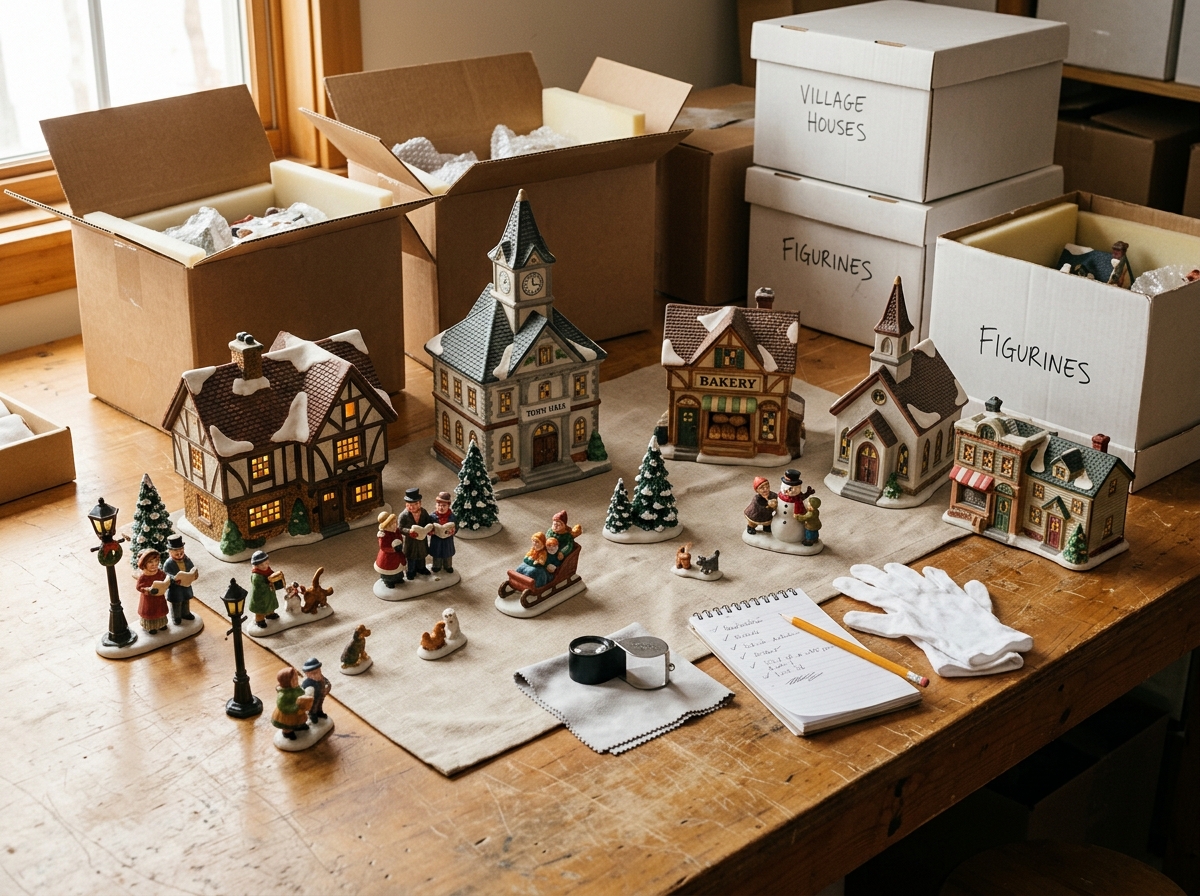
Unlocking the Treasure Trove the Collectors Guide to Department 56 Retired Pieces Values: appraisal and value basics
Unlocking the Treasure Trove the Collectors Guide to Department 56 Retired Pieces Values research should start with identification, condition, provenance, and item-specific market evidence. Use this guide to compare the signals that matter before paying for a formal appraisal or deciding whether to sell.
Department 56 retired pieces value checklist
Department 56 is a rare crossover: it’s decorative art with a deeply engaged collector base and a decades-long production history that rewards connoisseurship. For appraisers and enthusiasts, retired pieces from lines like Snow Village, Dickens’ Village, Christmas in the City, North Pole, and the broader Heritage Village present a rich ecosystem of scarcity, condition nuance, and market timing. This guide distills how to identify, evaluate, and price retired Department 56 pieces with confidence.
How Department 56 Retirement Creates Value
Department 56 retires SKUs annually. Once retired, that specific model is no longer produced, and scarcity starts working—gently at first, sometimes dramatically later—depending on demand. Not all retirements are equal:
- Standard open editions: Produced for one or more seasons, then retired. Most fall into predictable price bands once secondary market supply stabilizes.
- Limited/numbered editions and event exclusives: Produced for a fixed run or tied to in-person events or dealer exclusives. These can command strong premiums, especially iconic subjects.
- Landmark and architectural showpieces: Large-format, identifiable buildings (think skyscrapers and cathedrals) tend to maintain stronger demand and higher ceiling values than small shops and accessory figures.
Village lines and their broad value tendencies:
- Snow Village: The foundational line; earlier, well-preserved pieces and large centerpiece buildings do best. Early original-series examples can bring a premium when complete and boxed.
- Dickens’ Village (Heritage Village): Rich storytelling and historical architecture. Larger churches and landmark buildings (e.g., cathedrals) are perennial performers.
- Christmas in the City: Urban landmarks and skylines—skyscrapers are among the most sought-after retired pieces.
- North Pole: Popular and whimsical; collectors chase complete scenes. Flagship buildings and limited holiday tie-ins can spike.
- Snowbabies and accessories: Figures and small accessories are generally lower-value individually but can add meaningful value in curated sets.
Typical secondary market ranges (assumes complete, tested, no damage):
- Common retired buildings: a value that must be established from current, topic-matched sales
- Desirable mid-tier buildings: a value that must be established from current, topic-matched sales
- High-demand landmarks and limiteds: a value that must be established from current, topic-matched sales+
- Scarce “grails” in exceptional condition: a value that must be established from current, topic-matched sales is possible
Examples of historically strong performers include large city landmarks (e.g., Empire State Building, Chrysler Building), major churches from Dickens’ Village (e.g., St. Paul’s Cathedral), and special-edition Times Square countdown-style pieces. Specific results hinge on condition, box presence, and seasonality.
What Really Drives Value (and What Doesn’t)
- Completeness: Original box sleeve, Styrofoam insert, light cord/adaptor, hang tags, certificates, and any packaged accessories. Missing boxes can materially affect value depending on the piece.
- Condition of the piece: Chips, hairline cracks, broken finials, or missing applied details (signboards, railings, trees) depress value sharply. Even excellent repairs usually trail mint examples.
- Box condition: The green/white (or later gray) cardboard sleeve and fitted Styrofoam matter. Collectors care about clean, untorn, odor-free packaging with intact art and legible labels.
- Subject matter: Name recognition and display presence drive demand. Taller or ornate buildings and culturally resonant subjects outperform small, generic structures.
- Rarity and run length: Short-run or limited pieces often do better, but only when demand exists. A niche subject with a tiny audience won’t spike simply because it’s scarce.
- Timing: Prices generally rise in Q3–Q4 as collectors and decorators prepare for the season. January–March often sees softer sell-through and lower averages.
- Provenance: Dealer receipts, event signatures (documented), or original retirement announcements can add confidence and value.
- Market supply at listing time: A flood of the same piece suppresses prices in the short term.
What rarely moves the needle:
- Minor yellowing of Styrofoam inserts (cosmetic, often age-typical).
- Replacement of a standard light cord with a working equivalent.
- Superficial dust (as long as it cleans safely).
Identification and Documentation: Getting It Right
Before seeking comps or setting prices, document each piece thoroughly.
- Confirm the village line and title
- The village line (e.g., Dickens’ Village, Christmas in the City) appears on the box and is commonly printed or stamped on the underside of the building.
- The official title is on the box label and often on the base. Use the exact title for accurate comparables.
- Record the item/stock number
- Department 56 items carry a printed label with an item number on the outer sleeve and sometimes on the base. Note this number—sold examples keyed to item numbers are more precise.
- Verify production quality
- Look for crisp, well-defined ceramic details, clean color separations, and quality glazing. Counterfeits and knockoffs tend to have soft molds, muddy paint, or incorrect fonts on applied signage.
- Weight and feel: Authentic buildings have a consistent heft and tight-fitting Styrofoam. Poorly fitted inserts or generic foam can be a red flag.
- Check completeness
- Light cord/adaptor included and working.
- All detachable elements present (fences, signs, weathervanes, trees if original to the SKU).
- Pack-in literature, certificates, and hang tags.
- Inspect condition under bright light
- Scan edges, spires, chimneys, applied signs, and figure extremities. These are common break points.
- Use a fingertip test along edges to detect fine chips you may not see.
- Repairs: Look for gloss shifts, hairline seams, or visible adhesive. UV light can reveal some glues; if found, document clearly.
- Box grading
- Sleeve: rate for tears, dents, staining, odors, and label integrity.
- Styrofoam: check for punctures or splits at corners; ensure both halves mate cleanly and latch (taped or tabbed as original).
- Photograph methodically
- Front, sides, back, underside (showing stamps/marks), problem areas, and all packaging components. Clear, honest photos speed sales and reduce returns.
A note on variations: Some pieces show slight color or detail variation across production runs. Unless documented as a known and desirable variant, assume standard value.
Pricing Framework: From Comps to a Defensible Number
- Define the valuation purpose
- Fair market value (FMV): What a willing buyer pays a willing seller with no compulsion. This is the standard for estate and personal property valuations.
- Retail replacement value (RRV): The cost to replace with a similar item at retail; typically higher and used for insurance.
- Build a comp set
- Collect 5–10 recent sold prices for the exact item number, same line and title, with condition and completeness similar to your piece. Focus on sold/realized results, not asking prices.
- Note the date sold and month. If most sales occurred in Q4, adjust expectations if you’re pricing for Q2.
- Normalize the comps
- Remove outliers (damaged bargains or anomalous high auctions with poor descriptions).
- Adjust for condition and box qualitatively:
- Missing outer sleeve: meaningful value impact
- Damaged or stained box: smaller but still relevant value impact
- Minor chip or professionally repaired small part: significant value impact
- No cord/adaptor: minus a value that must be established from current, topic-matched sales (or a modest percentage for higher-end pieces)
- Apply a seasonality factor
- Q4 demand: values often strengthen from late September to mid-December, especially for popular buildings.
- Q1 softness: expectations often soften from January through March.
- Land on a price
- FMV: Take the trimmed mean of your normalized comps.
- Asking price for retail listing: FMV with room for negotiation.
- Quick-sale reserve (auction): FMV adjusted downward if you want faster turnover.
- Special case adjustments
- Landmark skyscrapers, cathedrals, and numbered editions often warrant the top of your comp range or a premium.
- Display-used items (former dealer displays) with glue residue, sun fade, or dust tend to trail stronger examples materially.
Value tiers to sanity-check your conclusion:
- Under a value that must be established from current, topic-matched sales: Common retired buildings and most accessories.
- a value that must be established from current, topic-matched sales: Desirable mid-tier buildings with strong display presence.
- a value that must be established from current, topic-matched sales+: High-visibility landmarks and limiteds in excellent condition.
- a value that must be established from current, topic-matched sales outliers: Scarce, iconic, pristine examples with complete packaging and seasonal demand.
Marketplaces, Timing, and Selling Strategy
- Fixed-price marketplaces: Best for curated listings with strong photos, complete packaging, and patience. Ideal for mid- to high-tier pieces.
- Auction platforms: Useful for rare items with uncertain ceilings—let competitive bidding work. Also effective for bulk liquidation of common stock.
- Specialty consignment and local auction houses: Reduce your workload; expect commissions. Good for estates and large collections when shipping is impractical.
- Collector communities and shows: Knowledgeable buyers, but they know the market—price realistically.
Timing:
- List in late summer through early December for best exposure. Pre-holiday momentum often lifts the entire category.
- If you must sell in Q1, consider bundling complete scenes or village subsets to enhance perceived value.
Bundling strategies:
- Curate by theme: a Dickens street scene, a North Pole workshop cluster, or a Christmas in the City skyline group.
- Include trees, figures, and lighting to create a display-ready package. Bundles move faster even if individual line items would part out slightly higher.
Shipping and risk management:
- Use the original Styrofoam insert whenever possible. If missing, carve custom foam or use dense cushioning; avoid loose peanuts contacting delicate edges.
- Double-box: 2–3 inches of padding between the inner and outer box.
- Secure internal movement with soft tissue/paper; never tape directly to paint or glaze.
- Insure shipments and require signature on high-value pieces.
- Photograph the packing process; it discourages frivolous damage claims.
Care, Storage, and Preservation
Cleaning:
- Use a soft natural-bristle brush or compressed air (light, angled passes) to remove dust. Avoid soaking.
- Spot-clean the ceramic base with a slightly damp microfiber. Do not wet painted or applied details.
- Never submerge; water wicks into ceramic and can lift paint or damage adhesives.
Display:
- LED bulbs run cooler than incandescent and reduce heat stress. Make sure brightness and color temperature suit your scene.
- Keep away from direct sunlight to minimize fade.
Storage:
- Return pieces to their fitted Styrofoam, then to the outer sleeve. Store upright in a stable, dry environment.
- Avoid attics and basements prone to temperature and humidity swings. Add silica gel packets if humidity is a concern.
- Label shelf edges by village and item number for quick retrieval.
Repairs and restoration:
- Small clean breaks repaired with museum-grade, reversible adhesive can stabilize a sentimental piece but won’t restore full market value.
- For valuable items, professional restoration is only sensible if the repair cost plus expected resale still nets a gain; disclose repairs in any sale.
A Practical Checklist For Valuing Department 56 Retired Pieces
- Identify the village line and exact title from the box/base.
- Record the item number; photograph the underside marks.
- Inventory all parts: light cord, accessories, tags, certificates.
- Grade the piece’s condition under bright light; note chips, cracks, and repairs.
- Grade the box and Styrofoam; check for odors or staining.
- Test lighting components for function and heat.
- Photograph comprehensively: all views, packaging, and flaws.
- Build a comp set of recent sold prices for the same item number.
- Normalize for condition/box and apply a seasonality factor.
- Set FMV; choose an asking price that allows negotiation.
- If selling, plan safe packing, insurance, and timing around Q4.
- Document everything in a spreadsheet for easy portfolio oversight.
FAQ: Department 56 Retired Pieces and Value
Q: How do I confirm a piece is retired? A: If it’s no longer in current dealer catalogs and only appears as secondary market stock, it’s retired. Many boxes include production and retirement notes; you can also infer retirement by the absence of current retail listings and the presence of sold results only.
Q: Does a missing box destroy value? A: Not always, but it hurts. Expect a meaningful value impact, depending on the piece’s desirability. For high-end landmarks, collectors strongly prefer original packaging for protection and documented originality.
Q: Should I clean a dusty piece before selling? A: Yes—gently. Use a soft brush and light compressed air. Avoid water on painted details and applied parts. Clean sells better and photographs better.
Q: Are artist signatures worth a premium? A: If documented and verifiable, a modest premium is typical—more as a tie-breaker than a major value driver. Focus first on condition and completeness.
Q: Is it better to sell a large collection as one lot or individually? A: For top-dollar results, sell mid- and high-value items individually and bundle common accessories by theme. For speed and simplicity, consignment or a curated multi-lot auction can be effective, accepting lower net proceeds.
Department 56 rewards careful appraisal. Clear identification, honest condition reporting, seasonal timing, and thoughtful presentation will do more for your realized prices than any single “secret.” With a disciplined process, retired village pieces can be valued—and sold—with the same rigor applied to fine and decorative arts.