Unlocking the Secrets of Time a Beginners Guide to Antique Clock Identification: appraisal and value basics
Unlocking the Secrets of Time a Beginners Guide to Antique Clock Identification research should start with identification, condition, provenance, and item-specific market evidence. Use this guide to compare the signals that matter before paying for a formal appraisal or deciding whether to sell.
Antique clock identification checklist
Antique clocks reward close observation. With the right approach, you can distinguish a 19th-century Vienna regulator from an American ogee, recognize a French Brocot escapement, and spot a “marriage” (mismatched case and movement) before it misleads your appraisal. This guide walks you through the essentials—case style, movement mechanics, marks, materials, and condition—so you can identify, date, and evaluate clocks with confidence.
Start With The Big Picture: Case, Form, And Style
Before you reach for a screwdriver, take in the clock’s profile, proportions, and decorative vocabulary. Form and style often point to period and place.
- Longcase (grandfather): Tall, weight-driven clocks in wooden cases. English examples from the late 17th century onward; American tall clocks flourish c. 1760–1830. Early have brass dials; later, painted iron.
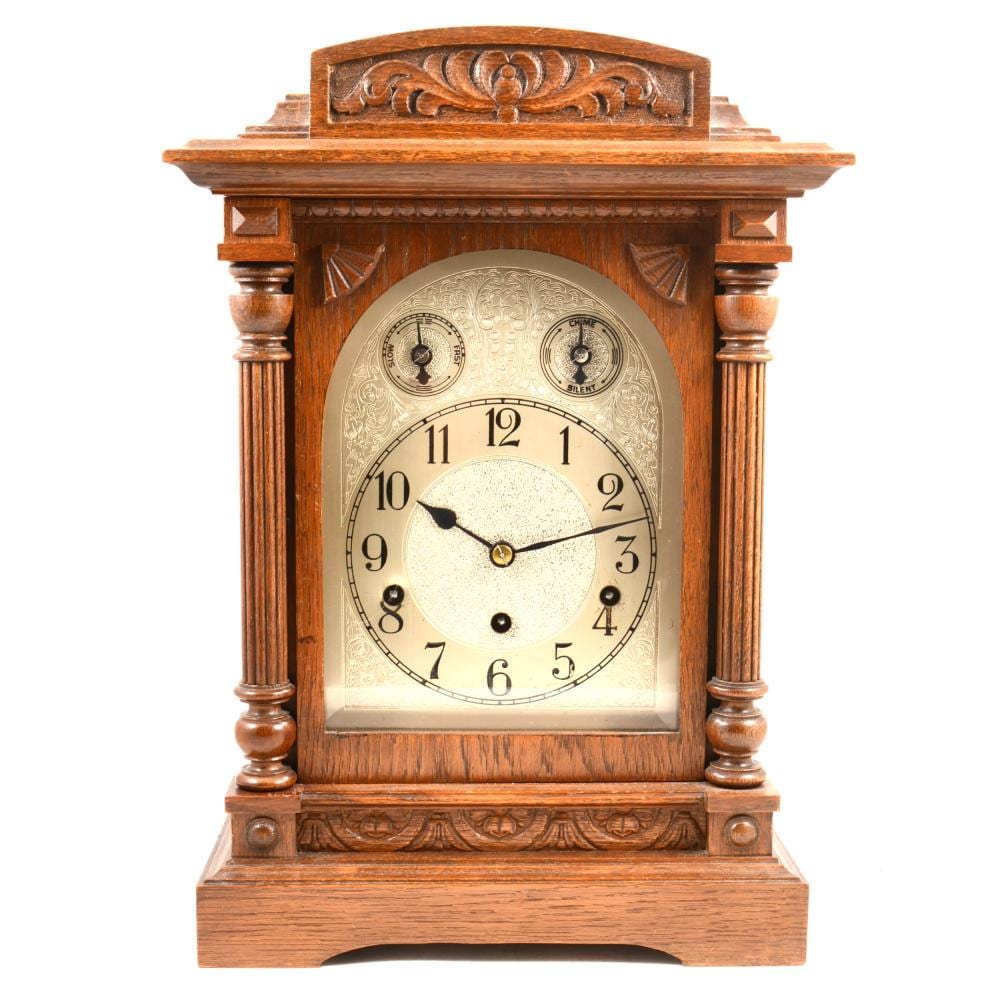
- Bracket/table clocks: Spring-driven, often with brass or wooden cases; English bracket clocks with fusee movements (18th–19th c.) are a staple. Look for carrying handles and repeat levers.
- Mantel/shelf clocks:
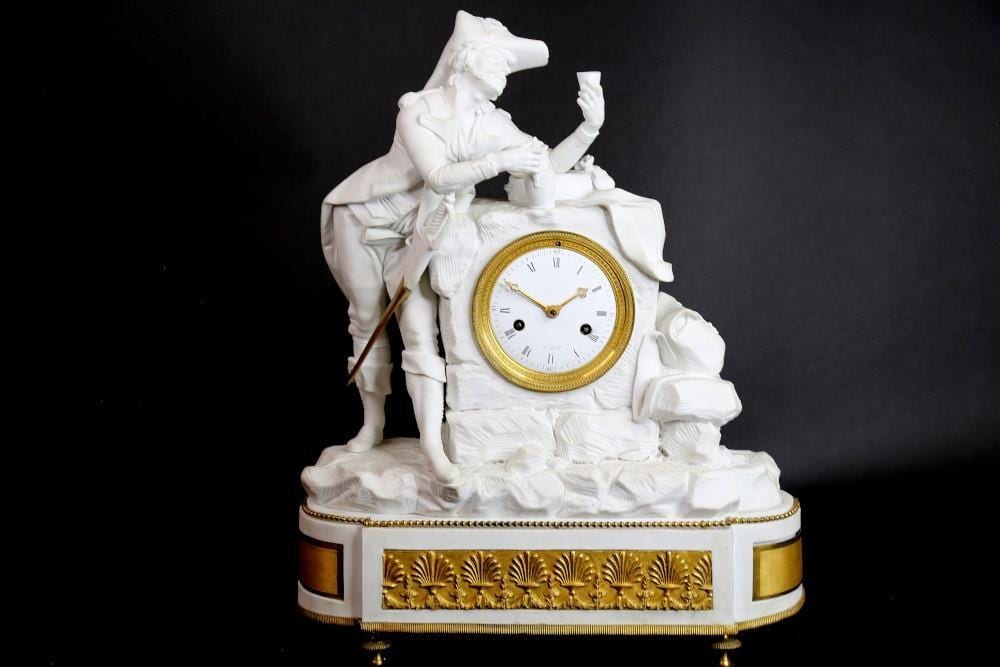
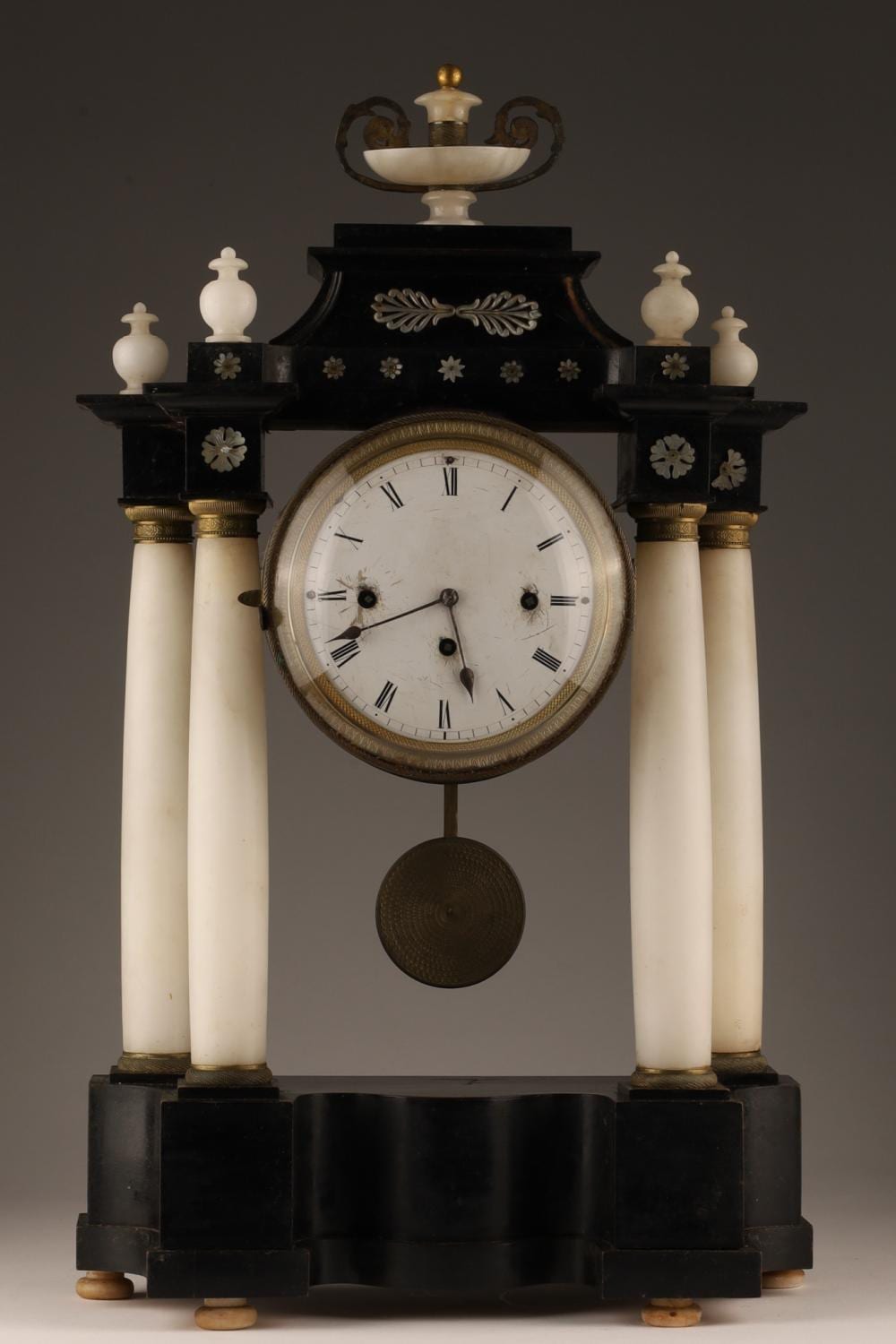
- French mantel/slate clocks (c. 1850–1910): Marble or slate cases, enamel dials, visible Brocot regulator, often strike on a bell or coiled gong.
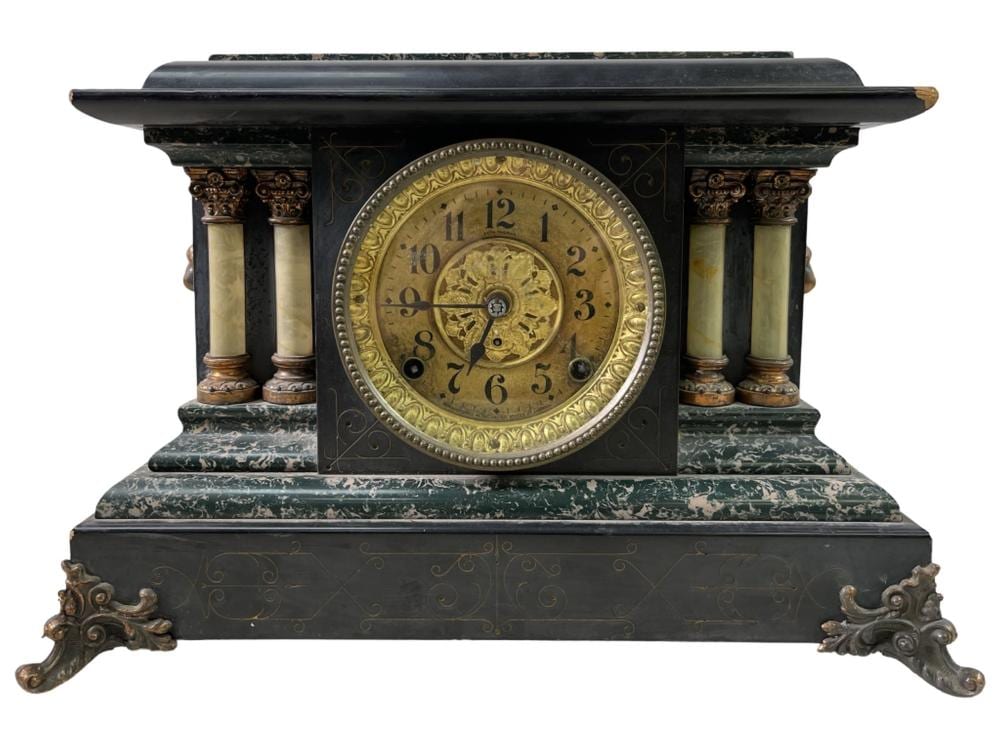
- American shelf types (c. 1820–1900): Pillar & Scroll, Beehive, Ogee (noted for S-shaped molding), Black mantel clocks (sometimes with “Adamantine” celluloid veneer).
- Wall regulators:
- Vienna regulators (Austrian/German c. 1840–1900): Tall, slender walnut/fruitwood cases, deadbeat escapements, long pendulums (often gridiron), typically one- or two-weight.
- American “regulators” for offices/railroads (late 19th c.): Heavier cases, paper dials, seconds bit, usually spring-driven.
- Banjo clocks (American, patented 1802 by Simon Willard): Distinctive round head, narrow “throat,” and rectangular lower “box” with reverse-painted glass; weight-driven, often with brass side arms.
- Carriage clocks (French c. 1830–1910): Small brass/glazed travel clocks with a top handle; platform escapement; some with repeat/alarm complications.
- Cuckoo clocks (Black Forest, 19th–20th c.): Chalet or shield forms; weight-driven with bellows and automata.
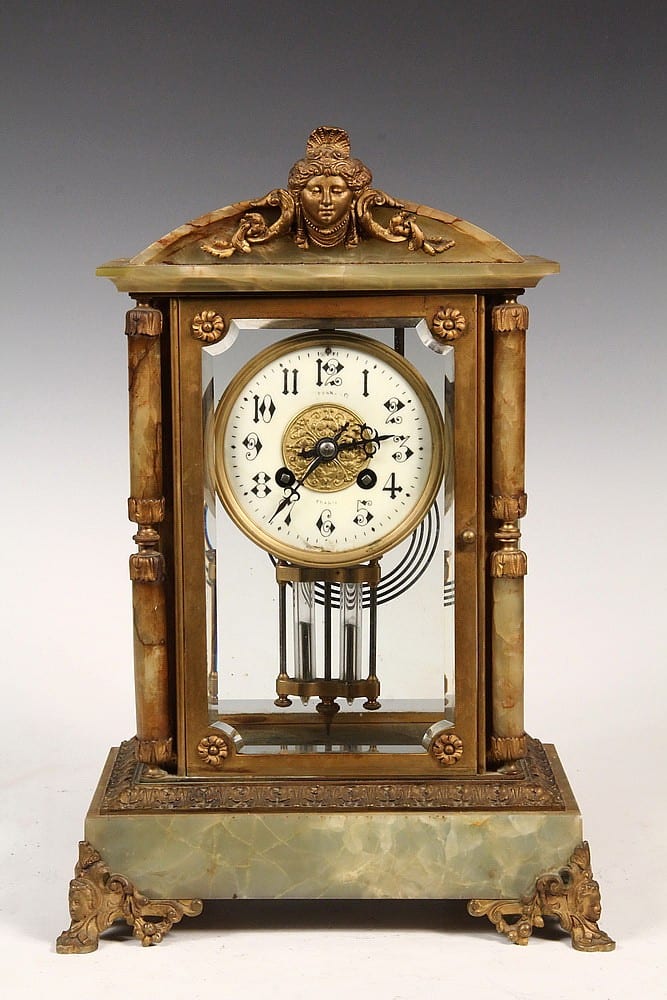
- Crystal regulators (French/American c. 1880–1910): Glass-sided brass cases, mercury or faux-mercury pendulum jars, Brocot visible escapement.
- Lantern clocks (English, 17th–early 18th c., later revivals): Brass posted frame with bell on top; typically weight-driven, early verge escapements.
Materials and ornament matter:
- Veneer (mahogany, rosewood) indicates 19th-century American shelf clocks.
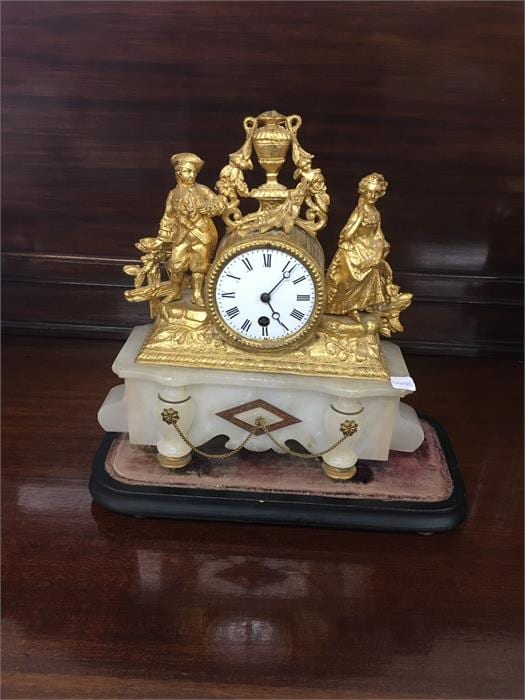
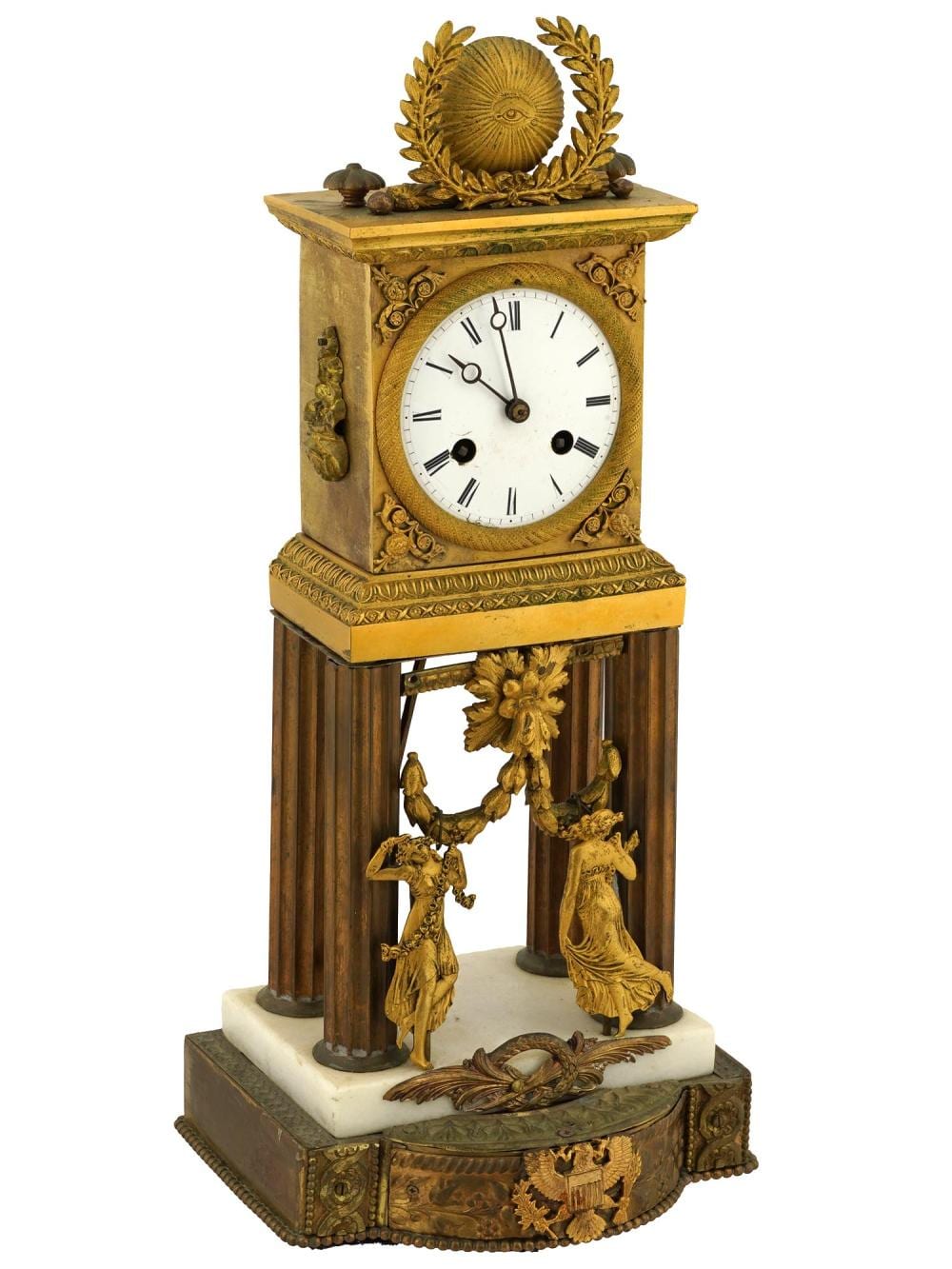
- Ormolu (gilded bronze) and marble point to French mantel clocks.
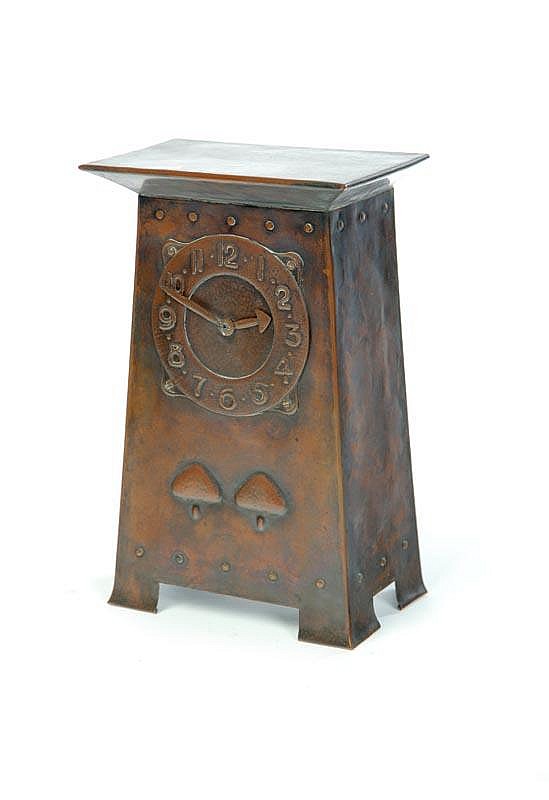
- Simpler lines and natural finishes suggest Arts & Crafts (c. 1890–1915); geometric chrome or stepped cases lean Art Deco (c. 1925–40).
Measure the case, note wood species, veneer patterns, and any reverse-painted tablets. Case style is your first filter.
Open The Back: Movements, Power, And Escapements
A clock’s “engine” offers the strongest evidence. Work slowly and safely:
- Remove pendulums and secure weights before moving.
- Photograph before disassembly.
- Don’t oil or clean yet—residue can help date work.
Power and train layout:
- Weight-driven: Older longcase, Vienna regulators, banjos, and some wall clocks. Weights and cords/chains indicate longer run durations (8-day common; 30-hour on some early American).
- Spring-driven: Common for shelf, bracket, French mantel, carriage. Look for steel mainsprings housed in barrels; fusee chains in English bracket/wall clocks.
Escapements and what they imply:
- Verge (crown wheel): Tall clocks and lantern clocks from 17th–early 18th century; wide pendulum arc; less common later due to accuracy limits.
- Anchor recoil: Became standard in longcase clocks from the 18th century; robust and common in many 19th-century clocks.
- Deadbeat: Precision regulators (Vienna, observatory clocks). If you see a well-finished deadbeat and maintaining power, you’re likely in regulator territory.
- Pin-pallet: Economical 19th–20th century movements; found in mass-market clocks.
- Platform escapement: On carriage clocks and some small mantel clocks; typically lever escapements with a balance wheel.
- Brocot visible escapement: Two jeweled pallets visible through the dial aperture; typical of French mantel/crystal regulators (mid–late 19th century).
Strike and chime systems:
- Countwheel strike: Early and mid-19th, especially French round movements and American shelf clocks; governed by a notched wheel.
- Rack strike: Later 19th; more accurate strike count.
- Bell vs gong: French mantel clocks often use a bell earlier; coiled gongs become common later 19th century. Rod chimes appear late 19th to 20th.
Regulation and pendulums:
- Gridiron pendulum (alternating steel/brass rods): Temperature-compensated, seen on quality regulators.
- Mercury jar pendulum: High-end French crystal regulators; actual mercury jars are hazardous—handle with care.
- Beat scales and crutch windows: Often present on regulators; indicate attention to precision.
Construction quality cues:
- Four-pillar brass plates with pinned pillars suggest earlier or higher-grade work; machine screws and standardized plates suggest later factory production.
- Fusee and heavy plates point to English quality bracket/wall clocks.
Marks, Labels, And Numbers: Reading What The Clock Tells You
Makers left breadcrumbs—find them before concluding identity.
Where to look:
- Dial: Printed or painted retailer/maker names; on French clocks, retailer may be on dial with the maker only marked on the movement.
- Movement backplate/inside plates: Stamps, serials, medals (e.g., “Japy Frères,” “Marti,” “Vincenti” on French; Junghans star; Gustav Becker anchor and GB; Lenzkirch stamps; Seth Thomas logo; Ansonia script).
- Paper labels: Inside American shelf clock doors, often with maker, address, patent dates, and instructions. Intact labels are gold for dating.
- Case: Pencil inscriptions by repairers; numbers on seatboards; chalk shipping marks.
Interpreting marks:
- German makers: Junghans’ 8-point star (dating code sometimes integrated); Gustav Becker’s anchor with city initials (Freiburg in Schlesien); Lenzkirch serial ranges can approximate dates.
- French movements: Round plates with medallion award stamps (e.g., “Médaille d’Or”) help bracket to post-exhibition dates; Brocot adjuster through the dial supports mid–late 19th-century French origin.
- American factories: Seth Thomas, Waterbury, New Haven, E. Ingraham, Ansonia—often both movement stamp and case/dial branding. Paper labels may include patent years (e.g., 1876), serving as “no earlier than” dates.
- English bracket/longcase: Often retailer’s name/town on the dial; movement unmarked. Provenance relies on craftsmanship, dial style, and case details more than marks.
Always corroborate: logos can be added later, and replacement movements are common. Ensure marks make sense with case style and construction.
Dating And Authenticity: Materials, Hardware, And Tells
Small details can shift a clock by decades.
Dials:
- Brass with applied silvered chapter rings: Common on 18th-century English longcase.
- Painted iron: Late 18th–early 19th century; look for crackle/crazing, hand-painted corners (cherubs, floral baskets).
- Enamel (porcelain): French mantel and carriage clocks; hairlines/chips along winding holes are common.
- Paper dials: Late 19th–20th century replacements or original to cheaper factory clocks.
Hands:
- Spade, moon, serpentine, Breguet—period-consistent shapes matter. Heavy, crudely cut replacements lower originality.
Glass and tablets:
- Wavy cylinder glass indicates age; flat modern glass may be a replacement.
- Reverse-painted tablets on American clocks should match period motifs and wear.
Hardware:
- Screws: Hand-cut, off-center slots (earlier) vs uniform machine screws (later).
- Pillar pins vs threaded pillars: Pinned construction skews earlier.
- Nails: Hand-wrought vs machine wire nails; oxidization pattern tells age and disturbance.
Wood and finish:
- Primary/secondary woods: Mahogany/rosewood veneers on pine/poplar secondaries typical of 19th-century American cases.
- Shellac vs later varnish; modern polyurethane is a red flag.
Marriage and modification clues:
- Extra/unused holes in the case or movement plates.
- Misaligned winding arbors to dial holes.
- Seatboard cutouts that don’t match the movement outline.
- New filler blocks, fresh screw holes, or mismatched patina around mounts.
- Dial feet that don’t align with movement posts; spacers not in keeping with period.
Patents and dates:
- American labels often list patents; use the latest patent year as a “not earlier than” date.
- Exhibition medals on French movements (e.g., 1867, 1878, 1889) suggest post-award production.
Condition, Originality, And Value Drivers
Appraisal enthusiasts should weigh both mechanics and cosmetics.
Originality that matters:
- Case, dial, hands, pendulum, movement all matching in period and maker. A later movement in an older case (or vice versa) cuts value.
- Retained paper labels and untouched finishes support authenticity and desirability.
Common issues:
- Over-restoration: Overpolished brass, re-gilded ormolu, heavily stripped/refinished wood.
- Repainted dials: Look for brush marks over numerals, filled winding holes, or covering of rust blooms.
- Movement wear: Oval pivot holes (bushing needed), broken teeth, replaced mainsprings. Proper bushing is acceptable; sloppy soldering is not.
- Replaced glass/tablets, missing finials, non-original hands or pendulum bobs.
- Cuckoo clocks: New bellows papers and plastic chains are functional but decrease originality.
Value drivers:
- Maker and model: Named makers (e.g., Willard banjo, quality English bracket, high-grade Viennas, Lenzkirch regulators, French carriage clocks by noted houses) command premiums.
- Complications: Quarter striking, repeat, alarm, calendar, moonphase, automata.
- Materials and size: Ormolu and marble, large proportions, and elaborate carving often rate higher.
- Provenance and condition: Documented history and well-preserved, honest wear.
Handling and care basics:
- Never move a clock with the pendulum attached; secure weights to prevent case damage.
- Do not turn hands backward on countwheel strike systems; set forward and let it strike, unless the maker explicitly allows backward setting.
- Service intervals of 5–10 years by a qualified horologist; dry running accelerates wear.
- Avoid harsh cleaners on enamel or painted dials; moisture can lift paint.
Practical Identification Checklist
- Photograph the clock from all sides before touching anything; include close-ups of dial, movement, and labels.
- Note form and size: longcase, wall regulator, shelf/mantel, carriage, banjo, cuckoo; record height/width/depth.
- Identify power: weights or springs; count number of trains (time only, time and strike, time/strike/chime).
- Observe escapement: verge, anchor, deadbeat, pin-pallet, platform lever; note visible Brocot adjuster through the dial if present.
- Inspect strike: bell, coiled gong, or rods; countwheel vs rack strike.
- Record marks: movement stamps, serial numbers, logos; dial signatures; case labels or penciled notes.
- Check dial material and style: brass/silvered, painted iron, enamel, paper; examine numeral style and hands type.
- Examine case materials: wood species, veneer, marble/slate, ormolu; look for period-appropriate joinery and finish.
- Look for marriage tells: extra holes, misaligned winding arbors, non-matching patina, seatboard/mount alterations.
- Assess originality: pendulum, hands, finials, glass/tablets; compare wear consistency across parts.
- Date clues: patent years on labels; exhibition medals on movement; hardware technology (screws, pins).
- Evaluate condition: movement wear, bushing quality, broken/chipped teeth, dial restoration, case repairs.
- Document pendulum length, bob design, suspension type (silk, spring, Brocot).
- Note complications: calendar, moonphase, alarm, repeat, automata; test safely if possible.
- Summarize findings and form a preliminary ID with date range and origin; flag uncertainties for specialist confirmation.
FAQ
Q: Where is the best place to find the maker’s name? A: Start with the movement backplate. Many makers stamped the plates, even when the dial shows a retailer’s name. American shelf clocks often include paper labels inside the case. French clocks frequently have retailer names on the dial and maker/medal stamps on the movement.
Q: How can I tell if a clock is a “marriage” of parts? A: Look for extra or unused holes in the case and movement, mismatched patina around mounts, winding arbors that don’t line up with dial holes, or movement seatboards modified to fit. Inconsistent national styles—e.g., a French movement in a distinctly American ogee case—are a warning.
Q: Is it safe to turn the hands backward? A: Generally, no—especially on countwheel strike clocks. Turn forward and allow it to strike. Some rack strike and modern movements tolerate backward setting, but unless you are certain, avoid it.
Q: How often should antique clocks be serviced? A: Every 5–10 years under normal use. Clocks running dry suffer accelerated pivot and bushing wear. Have mainsprings cleaned and lubricated, and avoid over-oiling.
Q: Does refinishing a clock case reduce value? A: Often, yes. Original surfaces, even with honest wear, are preferred. Thoughtful conservation is better than aggressive refinishing or re-gilding. Exceptions exist for severely compromised finishes, but document any work.
With careful observation and methodical notes, you can identify most antique clocks to type, region, and era—and avoid common pitfalls that complicate appraisals. Over time, you’ll develop a visual memory for proportions, plates, and parts that makes identification feel almost instantaneous.