Unlocking the Past Discover the Hidden Value of Antique Sewing Machines: appraisal and value basics
Unlocking the Past Discover the Hidden Value of Antique Sewing Machines research should start with identification, condition, provenance, and item-specific market evidence. Use this guide to compare the signals that matter before paying for a formal appraisal or deciding whether to sell.
Antique sewing machine value checklist
Antique sewing machines sit at the intersection of design, mechanical ingenuity, and social history. For appraisers and enthusiasts, they offer a rich field where small details—badge variations, shuttle types, cabinet veneers—can swing value by hundreds or even thousands of dollars. This guide distills what matters most when identifying, evaluating, and caring for these machines so you can recognize hidden gems, avoid common traps, and communicate value with confidence.
How To Identify What You Have
Start with the maker and model. Identification sets the foundation for dating, determining desirability, and establishing comps.
- Maker’s marks and badges: Look for a nameplate or badge on the machine arm or pillar. Singer is most common; others include Willcox & Gibbs, Wheeler & Wilson, Howe, White, New Home, Pfaff, Jones (UK), Frister & Rossmann (Germany), Necchi (Italy), Elna (Switzerland), and Husqvarna (Sweden).
- Serial numbers: Often stamped on the bed (Singer), or on a small plate. Serial ranges can date a Singer precisely to a year and sometimes a factory. European makers sometimes used model-specific or regional serial systems.
- Model features:
- Bed shape: Early “fiddlebase” (curved waist) beds are generally earlier than rectangular beds.
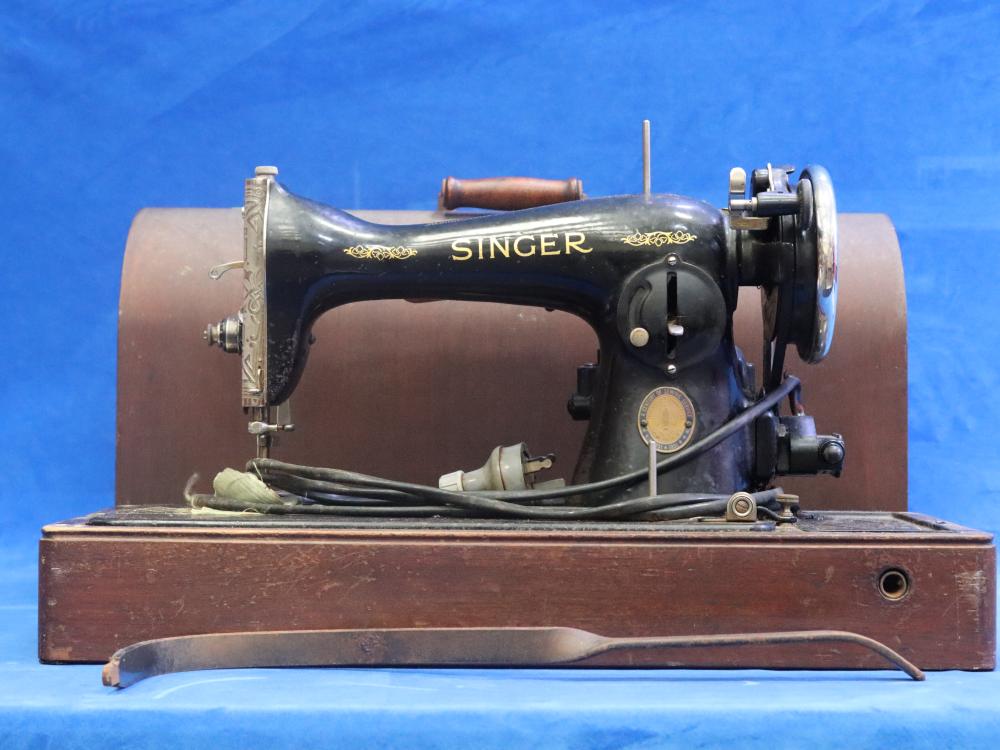
- Drive system: Hand-crank, treadle, or electric motor. Gear-driven “potted” motors (Singer 201-2, 15-91) are a clue to higher-quality mid-century machines.
- Stitch mechanism:
- Transverse shuttle (side-to-side boat shuttle) suggests late 19th to early 20th century (e.g., Singer 27/127).
- Vibrating shuttle (front-to-back boat shuttle) appears on many pre-1920s domestics.
- Rotary hook and oscillating hook became standard in higher-performance machines (Singer 201 rotary; 15 oscillating).
- Chain-stitch (single thread) indicates specialty machines like Willcox & Gibbs.
- Free-arm vs flatbed: Free-arm domestics are rarer pre-1950; the Singer 222K (Featherweight free-arm) is very collectible.
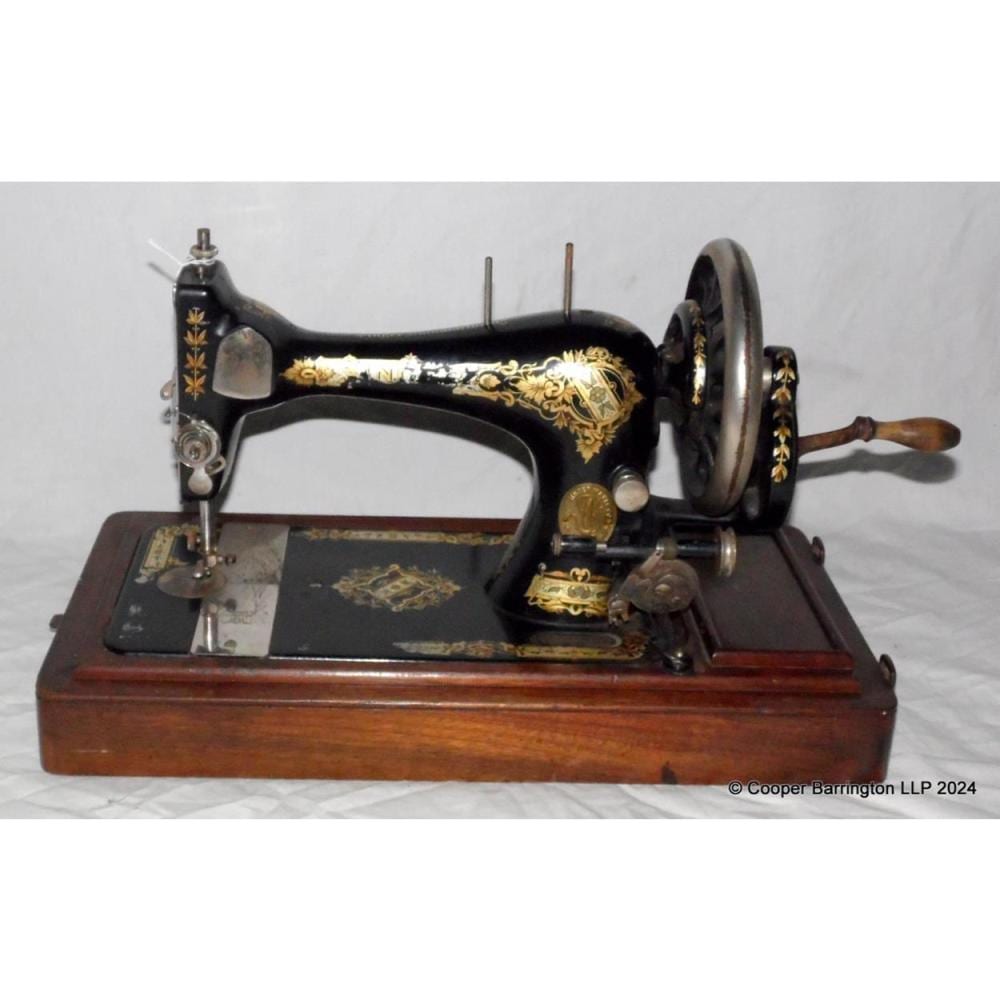
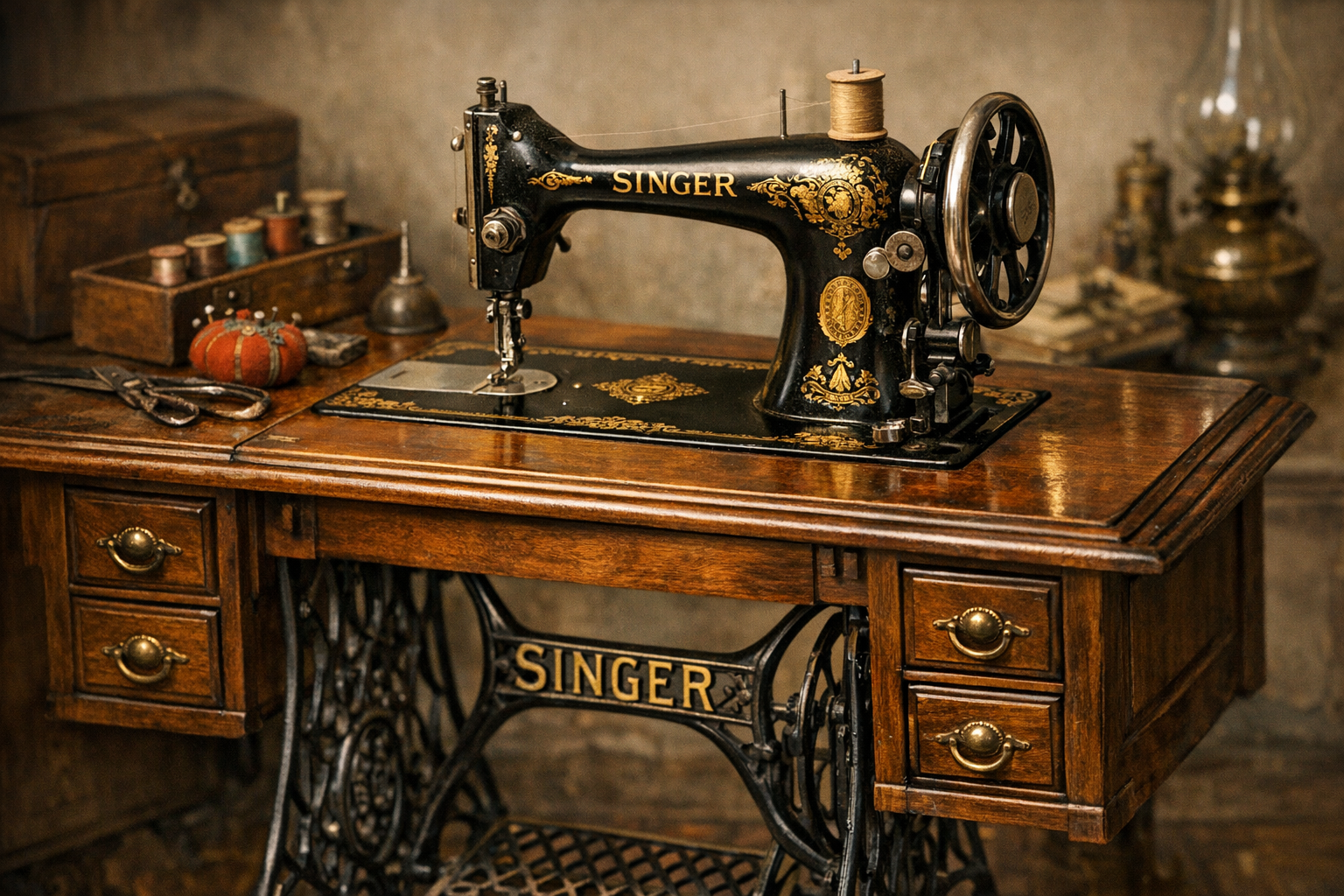
- Decals and finishes: Black japanned finish with ornate gold decals dominated circa 1880–1930. Named decal sets—Singer “Sphinx,” “Lotus,” “Red Eye”—help identify model/version. Wear patterns and style specifics can narrow the date.
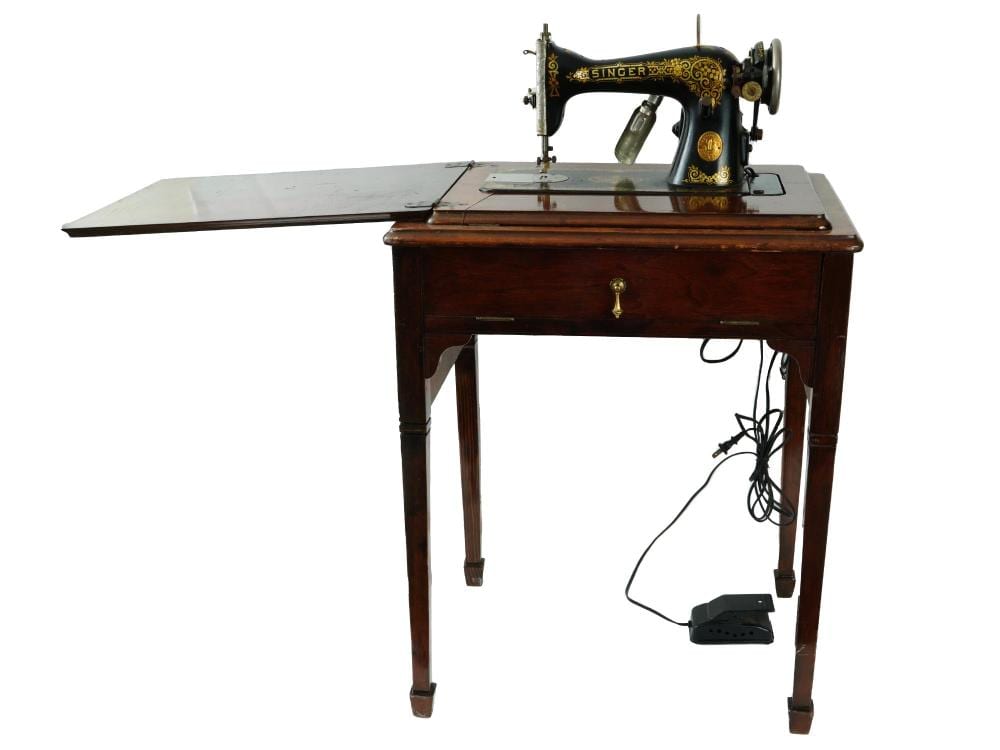
- Power and controls: Cloth-insulated cords and bakelite foot controls indicate earlier electric conversions or originals. Knee-lever controllers sometimes appear in cabinets.
- Domestic vs industrial: Heavy cast-iron industrial heads lack decorative decals and were mounted in factories. Some early industrials with ornate bases are highly collectible, but many later heads are valuable primarily to makers who use them.
Tip: “Antique” typically implies 100+ years old; many sought-after machines (e.g., Featherweight 221, 1933–1960s; Singer 201) are technically “vintage,” yet have strong collector and user demand.
What Drives Value: The Appraiser’s Framework
Value hinges on four pillars: desirability, rarity, condition/originality, and completeness—with regional logistics and buyer intent as modifiers.
- Desirability:
- Active user communities support certain models: Singer Featherweight 221/222 for quilters; Singer 201-2 and 15-91 for stitch quality; Pfaff 130 and Necchi Supernova for zigzag capability; Elna “Grasshopper” for design.
- Aesthetics matter: Intact japanning, bright decals, ornate faceplates, and tiger oak cabinets boost appeal.
- Rarity:
- Early patent-era machines (1850s–1870s) by Howe, Wheeler & Wilson, Grover & Baker, and Willcox & Gibbs can command strong prices when complete.
- Variant badges (e.g., Singer Centennial 1851–1951) add mild interest; true limited-production models or rare free-arm versions (222K) add significant premiums.
- Condition and originality:
- Original finish with honest wear trumps amateur repaint in collector markets. Repaints can appeal to crafters but usually reduce antique value.
- Mechanical health: smooth handwheel rotation, proper stitch formation, and no excessive endplay indicate a better machine.
- Decal retention and unpitted nickel/chrome plating matter. Missing slide plates, bobbin covers, or needle plates hurt value.
- Completeness:
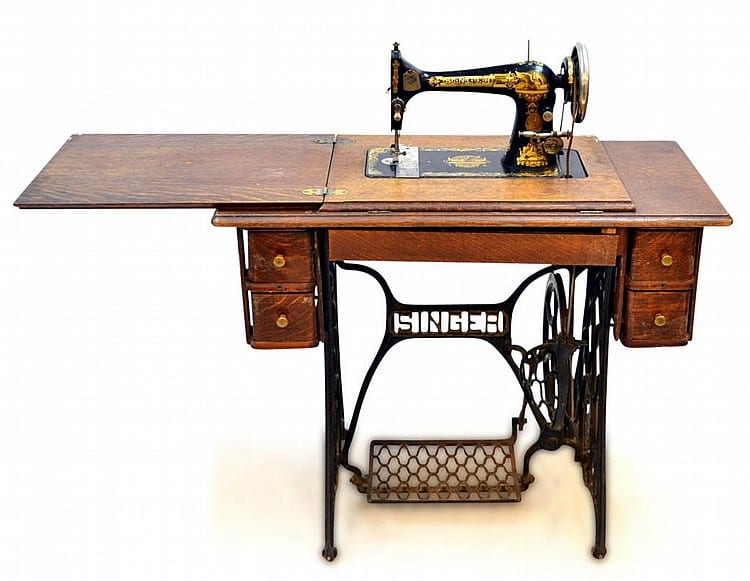
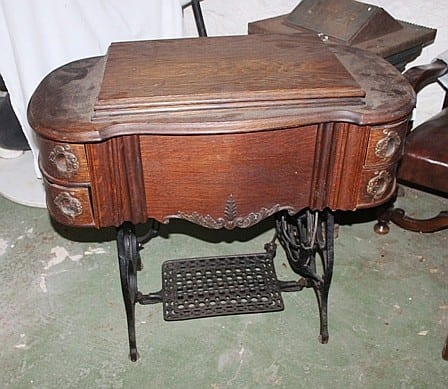
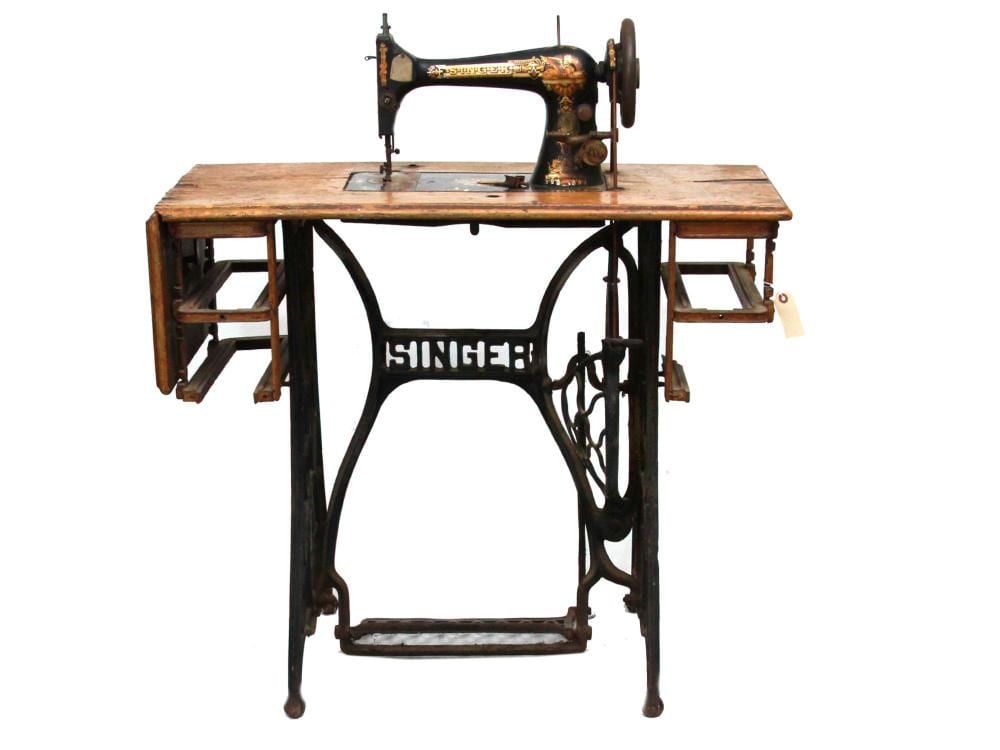
- Cases and cabinets: A Featherweight with its case, tray, and foot pedal is worth more than a bare head. Treadles with complete drawers, original pulls, and intact logos are stronger.
- Attachments: Buttonholers, rufflers, hemmers, walking feet, and original manuals add value—especially if boxed and labeled for the model.
- Market and logistics:
- Heavy treadles are hard to ship; value skews to local markets. Light portables like the 221/301 sell nationally because shipping is manageable.
- Regional supply affects prices: Singer 222K (made in Scotland) is more common in the UK than in the US, influencing relative values.
- Buyer intent:
- Collectors prize originality and rare variants.
- Sewists prize performance, reliability, and serviceable electrics.
- Decor buyers pay for looks and form factor; function is secondary.
How popular models compare (assuming good cosmetic and working condition; wide variance by region and sales venue):
- Singer Featherweight 221: strong, steady demand; special badges/colors or exceptional condition sell higher.
- Singer 222K free-arm: typically above the standard Featherweight, depending on condition, voltage, and completeness.
- Singer 301 (the “big sister” Featherweight): priced on condition and accessories.
- Singer 201-2 (gear-drive): the more sought-after version; 201K belt-drive typically sells for less.
- Singer 15-91 (gear-drive): a dependable user machine, priced on condition.
- Singer 66 “Red Eye”/99 with strong decals: priced on decal condition; in treadle cabinets, often priced similarly locally.
- Early American patent-era (Howe, Wheeler & Wilson, Grover & Baker): sought by collectors when complete, original, and presentable.
- Willcox & Gibbs domestic chain-stitch: priced on condition and completeness; early ornate or industrial examples can be higher.
- European mid-century performers: Pfaff 130, Necchi Supernova, Bernina Record 530/730, Elna Grasshopper: priced on model, condition, and accessories.
- Japanese postwar “Singer 15 clones” (badged Atlas, Morse, etc.): usually modest; uncommon colors/mint sets bring more.
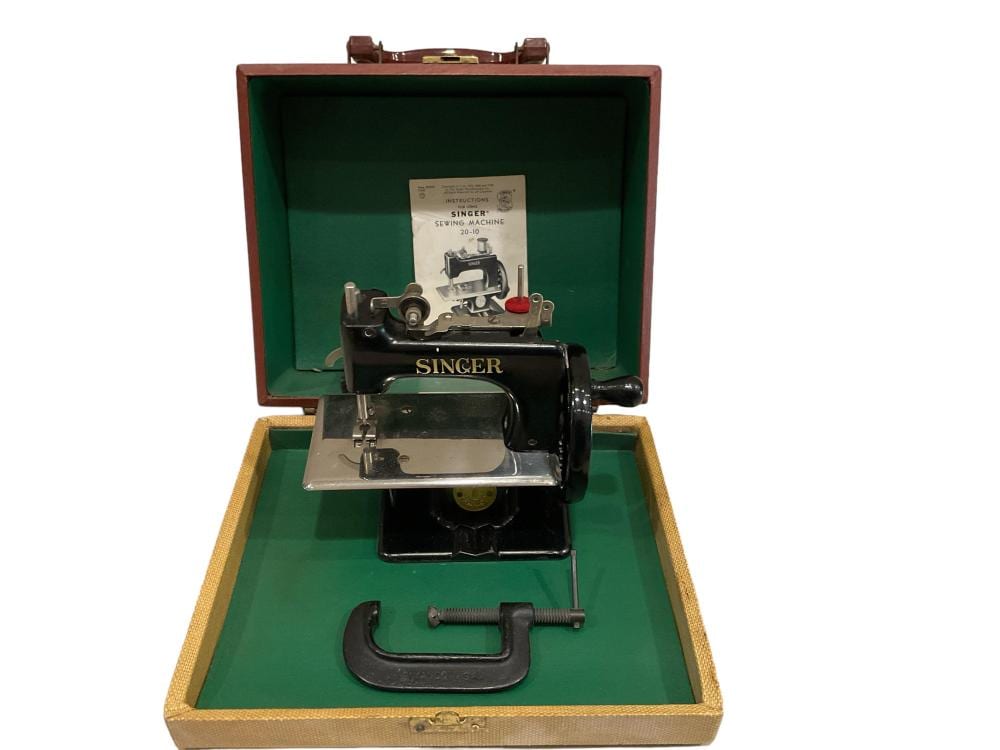
- Child’s/miniature machines (e.g., Singer 20): priced on condition, higher for early or boxed examples.
These ranges reflect typical arms-length transactions as of recent seasons and are not guarantees. Confirm with current comps.
Notable Makers And Models To Watch
- Singer (USA/UK):
- Featherweight 221/222K: Lightweight aluminum portables with cult followings for precision straight stitch and portability. The 222K adds a free-arm and is much rarer. Look for original case, oil can, attachments, and an undamaged bed decal ring.
- 201-2 and 15-91: Gear-driven workhorses known for smoothness. Original “potted” motors and sound wiring are value points; brittle cloth wiring reduces value.
- 66 “Red Eye,” 127/128, 27/28: Decor-rich, often in treadles. Fiddlebase and early shuttle types appeal to collectors; complete cabinets in tiger oak add desirability.
- 301/301A: Cast-aluminum, slant-needle straight stitch; sought by users. Long- vs short-bed variants; original cases and bobbin cases matter.
- Centennial badging (1951): Minor premium if condition is excellent.
- Willcox & Gibbs (USA/UK):
- Chain-stitch, distinctive tension ring. Early ornate examples and complete hand-cranks can be valuable; industrials appeal to niche users and collectors.
- Wheeler & Wilson, Howe, Grover & Baker:
- Pre-Singer dominance innovators. Their early models are scarce and meaningful historically. Condition and completeness are critical—needle systems and shuttles can be hard to source.
- White and New Home (USA):
- Attractive cabinets and good domestic machines. Values generally below comparable Singers unless an early or particularly ornate variant.
- European standouts:
- Pfaff 130: Zigzag-capable, strong user demand; add value for original table or case.
- Necchi (BU, Supernova): High-quality Italian engineering; complete accessory boxes enhance value.
- Elna No. 1 “Grasshopper”: Iconic green portable with fold-out knee lever; collectible design piece.
- Bernina Record (530/730): Later than “antique,” but prized by sewists and increasingly collected; strong prices when serviced and complete.
- British and German domestics:
- Jones, Frister & Rossmann, Stoewer, Vesta: Often beautifully made; rarity outside their home regions can help values, but parts availability and recognition vary.
Provenance multiplier: A documented retail purchase, family history, or tailor’s shop provenance with photos can add a persuasive premium, especially for early or exceptional pieces.
Preservation, Cleaning, And Ethical Restoration
Approach every machine as a historical artifact first and a project second. Over-restoration is the fastest way to erase value.
- Assessment before action:
- Photograph as found, including serial, decals, and accessories.
- Check for missing parts (slide plates, shuttle, bobbin case, presser foot, tension assembly). Note electrical condition if present.
- Cleaning the finish:
- Dust first; then mild soap and water on a damp cloth for grime on japanned surfaces—avoid soaking.
- Use sewing machine oil to lift old grease and to gently clean metal parts; wipe dry.
- Avoid harsh solvents and abrasives around decals; do not polish over gold leaf. Very gentle metal polish on nickel/chrome only, kept away from painted areas.
- A microcrystalline wax can protect intact japanning; apply sparingly and buff lightly.
- Mechanical service:
- Replace consumables: belt, needle, and motor brushes (if applicable).
- Re-oil per the manufacturer’s oil ports. Do not grease where oil is specified.
- Check timing and feed alignment only if stitch quality is poor and you’re experienced; otherwise, note for a professional service.
- Electrical safety:
- Inspect cloth-insulated cords for brittleness or cracks. Replace with modern wire while preserving original plugs and strain reliefs if safe and feasible.
- Foot controllers use carbon disks; clean contacts carefully. If heat or smell occurs, discontinue use and service/replace.
- Cabinets and cases:
- Wipe wood with a minimal-moisture method; consider a gentle wax rather than stripping. Retain original decals and hardware.
- Mold/mildew in cases can be treated with careful airing and adsorbents; avoid saturating linings.
- Repainting and customization:
- Avoid repainting collectible machines. A sympathetic touch-up of small chips is preferable to a full refinish.
- If a machine is too far gone cosmetically, a professional restoration can create a beautiful user piece, but disclose refinishing when selling; collector value is typically lower.
Ethics tip: Resist parting out a complete, historically coherent machine for profit unless it is unsalvageable. Parts harvesting should be a last resort.
Market Trends And Smart Buying/Selling
- Demand pulses:
- Interest rose with home crafting surges and periodic nostalgia cycles. Featherweights and high-quality mid-century users remain robust; treadles fluctuate with decor trends and local availability.
- Condition premiums:
- First-rate examples are achieving wider price spreads from average ones. Extraordinary originality is rewarded.
- Shipping realities:
- Light portables unlock national markets. Treadles and big cabinets sell best locally; consider pricing to offset the buyer’s transport effort.
- Comps and timing:
- Compare completed sale prices over asking prices. Seasonality affects demand; pre-holiday and winter crafting months can lift values for portable users.
- Negotiation and presentation:
- Provide serial, model details, service notes, and clear close-ups of decals and wear. List included attachments with part numbers when possible.
- For buyers, inspect in person for smooth rotation, even feed, uncracked bases, intact bobbin systems, and original finish; assume a basic service cost post-purchase.
Quick Checklist For Appraising An Antique Sewing Machine
- Identify maker, model, and serial number; estimate production year.
- Note drive type (hand-crank, treadle, electric) and stitch mechanism (shuttle/rotary).
- Evaluate finish: japanning gloss, decal completeness, and metal plating condition.
- Confirm completeness: bobbin case/shuttle, slide plates, presser feet, attachments, case/cabinet.
- Test mechanics: smooth handwheel, needle bar movement, feed dogs, and basic stitch formation.
- Assess electrical safety: cord integrity, motor function, foot controller behavior (if applicable).
- Document provenance and accessories with photos.
- Research local and national comps; adjust for shipping feasibility and regional supply.
- Decide on preservation vs restoration; avoid aggressive refinishing.
- Assign a value range with condition notes and any risk factors.
FAQ
Q: How can I date a Singer accurately? A: Use the serial number stamped on the bed or a small plate to determine the production year. Singer serial charts correlate letter/number sequences to specific years and sometimes factories.
Q: Are treadle machines worth less than electric ones? A: Not inherently. Common treadles can be modestly valued due to shipping challenges, but ornate, early, or rare models—and complete, high-condition examples—can outpace many electric machines. Local market strength is key.
Q: Do repaints increase value? A: Usually not for collectors. Original finish with honest wear is preferred. High-quality repaints may appeal to users/decor buyers but typically bring less than comparable original examples.
Q: What makes the Singer 222K so valuable? A: It’s a free-arm Featherweight with lower production numbers, often in 220–240V, and beloved by quilters and collectors. Completeness and condition drive premiums.
Q: Are parts and needles still available for antique machines? A: Common systems (e.g., Singer class 15 needles, standard bobbins) are readily sourced. Early or unusual shuttle systems can be scarce; verify availability before buying a project machine.
By blending careful identification with an appraiser’s eye for condition, originality, and market reality, you can confidently unlock the stories—and the value—hidden in antique sewing machines.