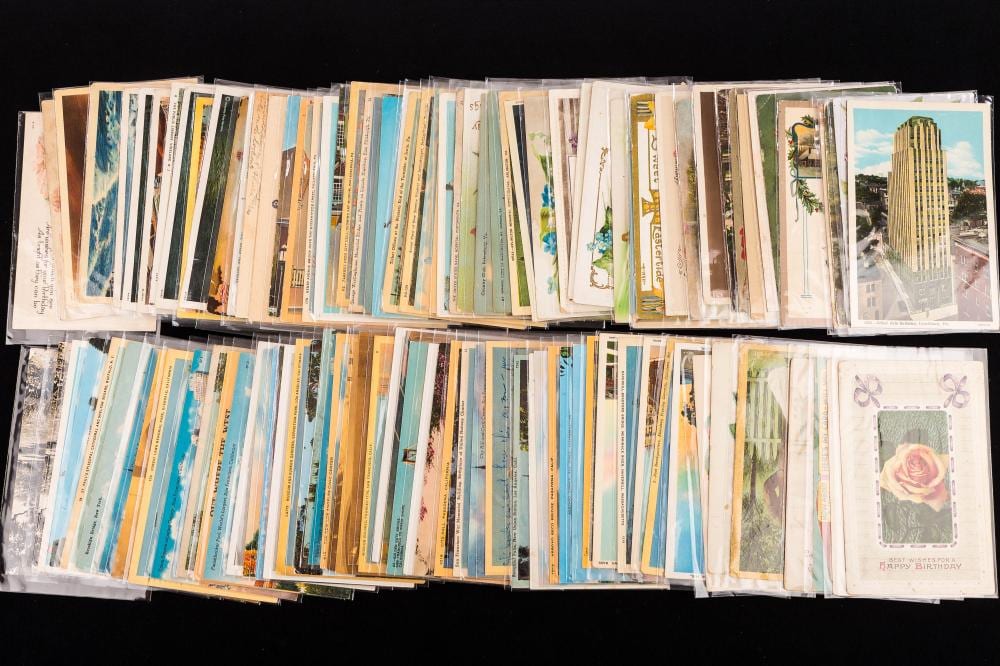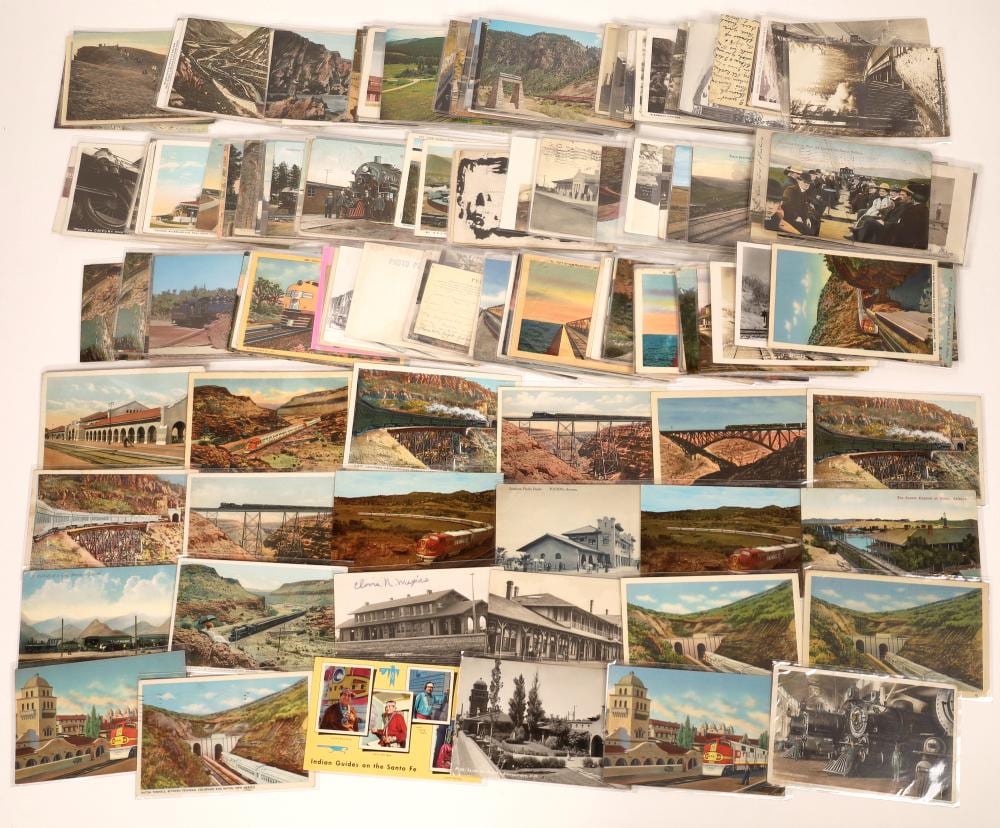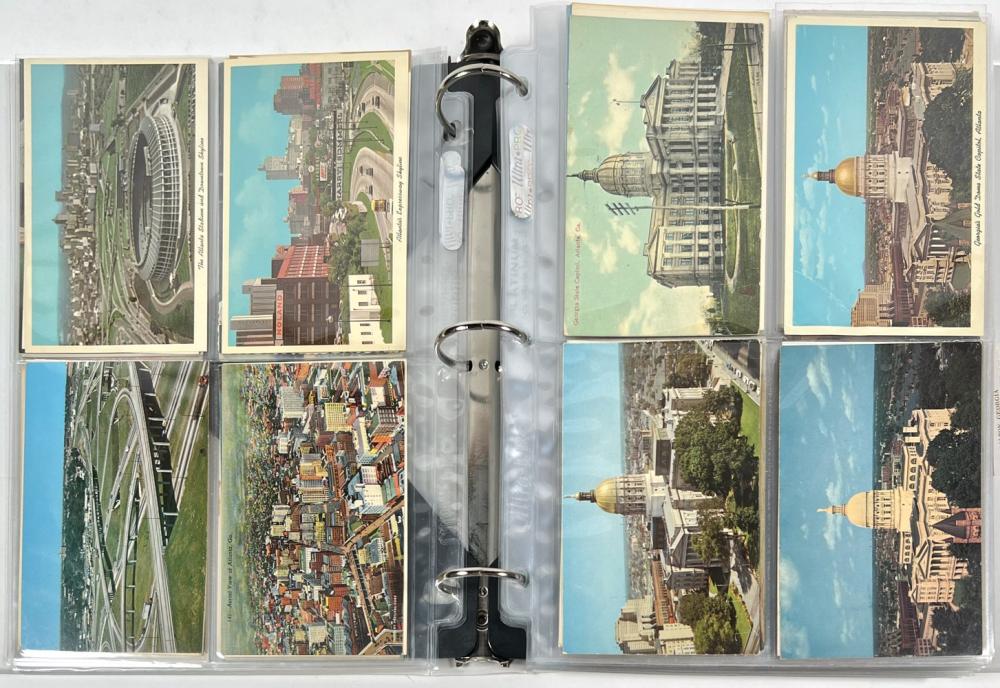
Unlocking the Past Discover the Hidden Value of Antique Postcards: appraisal and value basics
Unlocking the Past Discover the Hidden Value of Antique Postcards research should start with identification, condition, provenance, and item-specific market evidence. Use this guide to compare the signals that matter before paying for a formal appraisal or deciding whether to sell.
Antique postcard value checklist
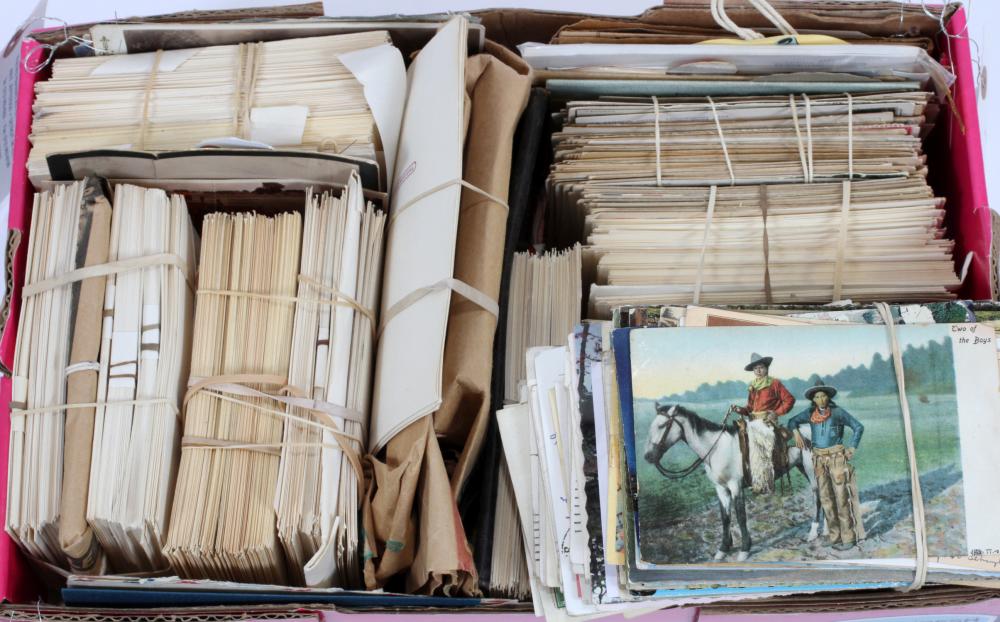
Antique postcards compress social history, graphic design, and postal lore into a pocket-sized artwork. For collectors and appraisers, they offer an unusually rich mix of visual appeal, researchable data points, and an active global market. This guide walks you through what matters most: identifying the card type, dating it accurately, grading condition, recognizing high-demand subjects and makers, and translating all of that into confident valuations.
Why Antique Postcards Matter
At first glance, postcards look commonplace—printed by the millions, often mailed, and cheaply produced. Yet specific cards can command triple- to four-figure prices because they tie together three drivers of value:
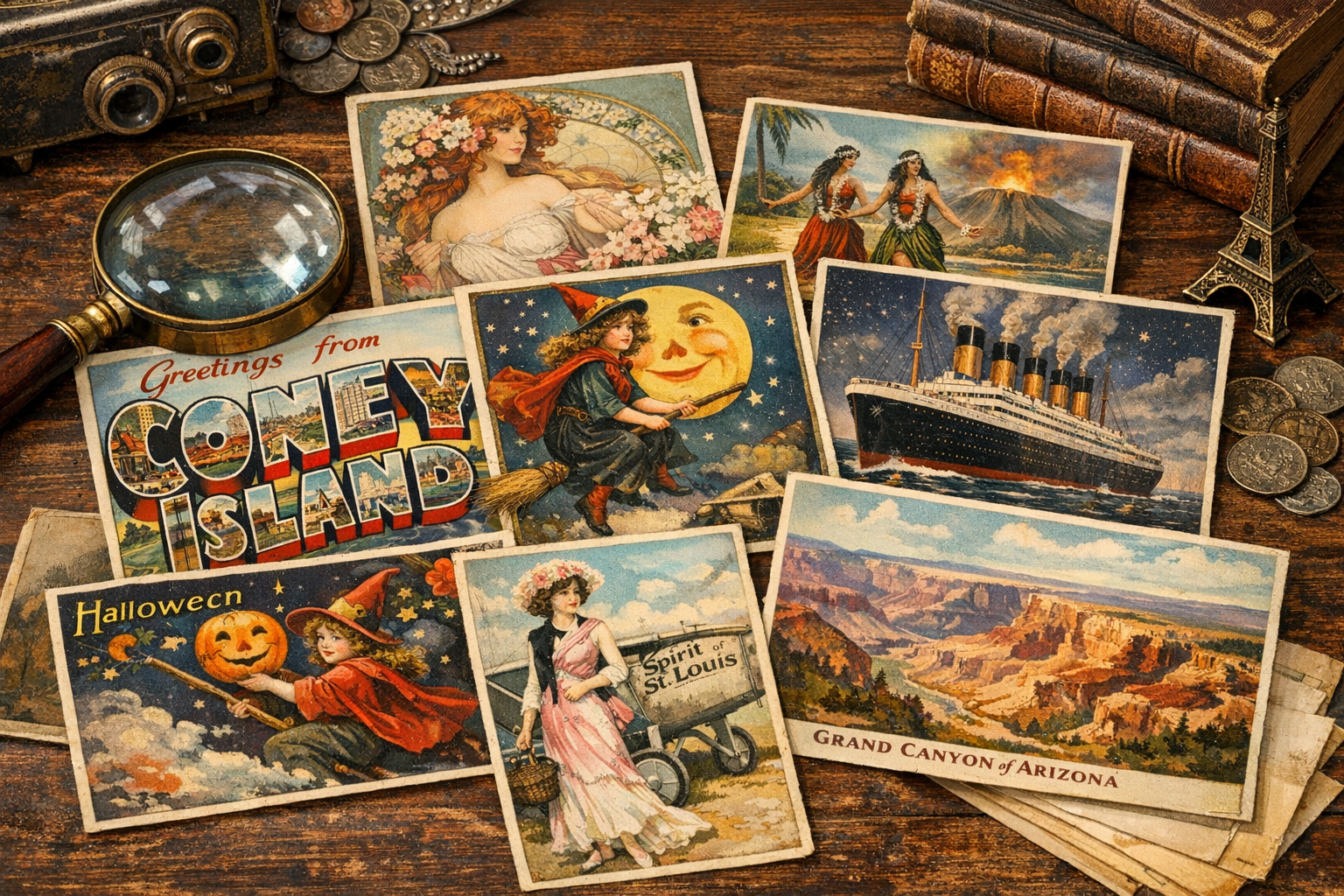
- Cultural resonance: Holidays (especially Halloween), early aviation, regional views of lost landmarks, social history (labor, immigration, suffrage), sports, disasters, and advertising document moments people are willing to pay to preserve.
- Artistic merit: Artwork by known postcard illustrators (Ellen Clapsaddle, Frances Brundage, Samuel Schmucker, John Winsch) and prestige publishers (Raphael Tuck & Sons, Detroit Publishing, Curt Teich) elevates both desirability and price.
- Postal and photographic significance: Real Photo Postcards (RPPCs) are one-of-a-kind or small-batch photographs. Scarce postmarks (RPOs, Doane cancels, ghost towns), messages tied to events, and unusual routes add postal-history value.
Because postcards are highly segmentable—by subject, artist, town, railroad, ship, stadium, or holiday—demand remains resilient even when broader antiques markets soften. Specialists and “topical” collectors compete fiercely within their niches.
Eras and Types That Command Interest
Understanding types is half the appraisal battle. Key categories and eras:
- Pioneer and Private Mailing Card (U.S., 1893–1907): Small sets from expositions (e.g., 1893 Columbian), “Private Mailing Card” backs (1898–1901), and “Undivided Back” era (1901–1907) where messages could not share the address side. Undivided backs often have a tiny message on the image side; scarcity can be high.
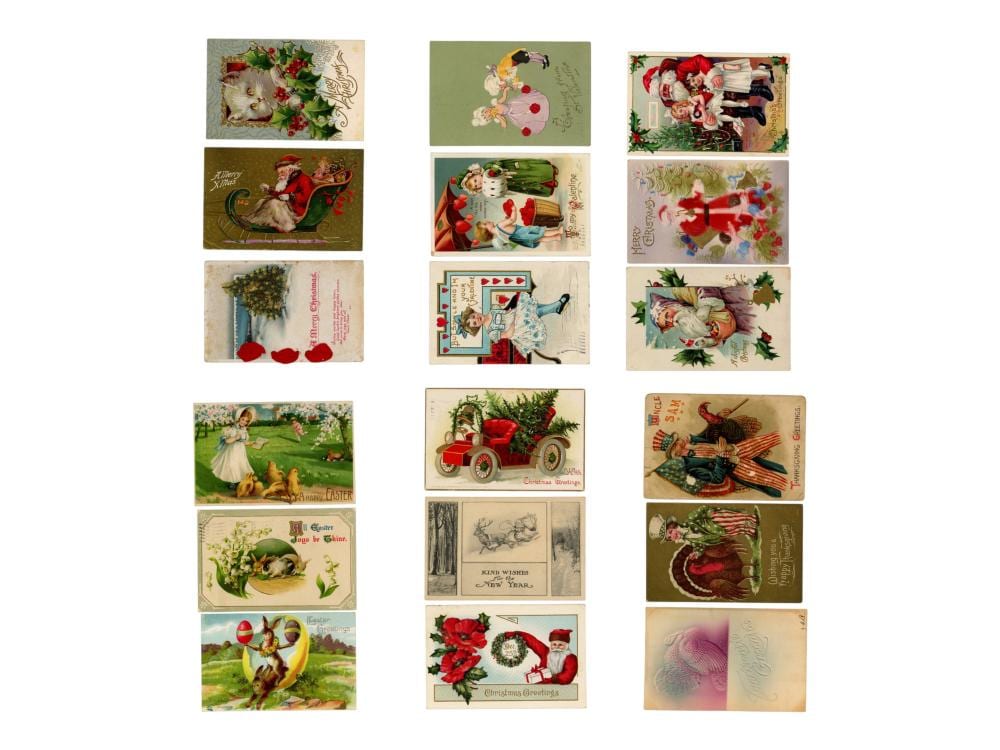
- Divided Back (1907–c. 1915): After 1907, messages were allowed on the left side of the back. This “golden age” includes chromolithographed artist cards, early street scenes, and classic holiday art. Many top-dollar holiday cards, especially Halloween and Santa Claus themes, are here.
- White Border (c. 1915–1930): Economies in ink and paper created white borders. Plenty of local views and Main Street scenes. Still strong interest when subject matter is compelling.
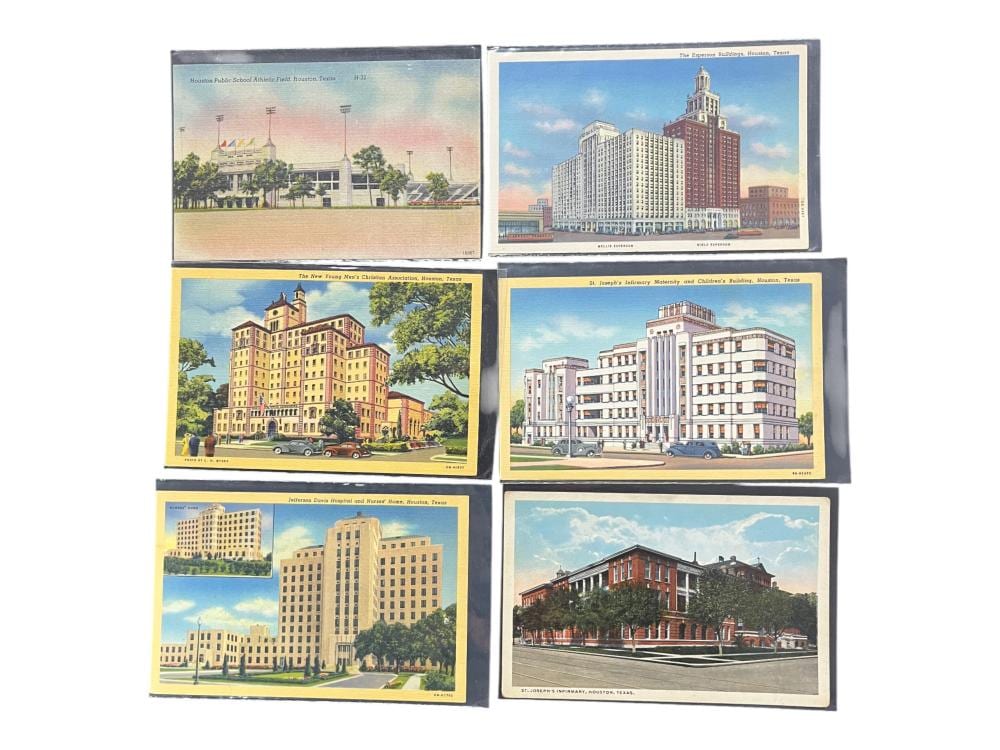
- Linen (c. 1930–1950s): Vibrant color on textured “linen” paper; often by Curt Teich (Photochrom) and others. Highly collectible regional views (Route 66 motels, Art Deco bus stations, roadside Americana).
- Chrome (c. 1940s–1970s): Photomechanical color prints with a glossy finish. Although later, early chromes of vanished mid-century architecture, neon signage, and modernist landmarks can sell well.
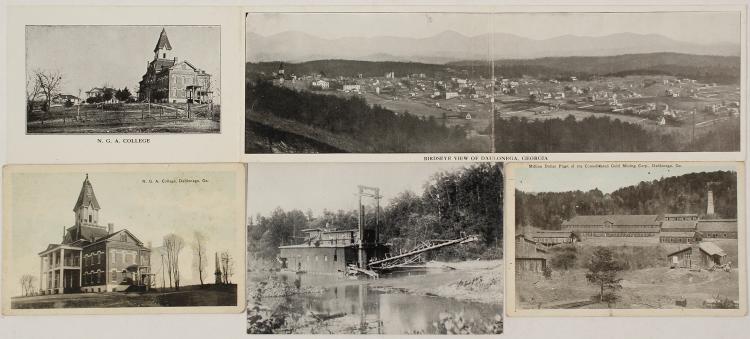
- Real Photo Postcards (RPPCs, c. 1900–1950s): Developed on photographic paper with postcard backs. Often unique images: small-town parades, occupational portraits, disaster scenes, mining camps, ships, trains, early automobiles, aviation, baseball teams. High ceiling for value when subject/location is scarce and desirable.
Novelty and specialty formats that can bring premiums:
- Hold-to-light (HTL), mechanical, fold-outs, leathers, wood, silk or embroidered, and add-ons (glitter, celluloid).
- Artist-signed sets from Winsch, Schmucker (noted for silhouette ladies and Art Nouveau elements), Brundage, Clapsaddle (classic Halloween and children), and Tuck “Oilette” or “Postcardettes.”
- Disaster and event cards: San Francisco Earthquake (1906), Halifax Explosion (1917), early floods and fires, shipwrecks. RPPCs tied closely to events are especially potent.
Regional considerations:
- Small towns, ghost towns, early industrial plants, now-demolished courthouses, interurban lines, depots, and street railway scenes.
- Ethnographic and social-history themes. Note: handle sensitive subjects (e.g., Black Americana) ethically; demand exists, but provenance and context matter.
Dating Your Postcards: Clues That Pay
Accurate dating supports valuation and helps you verify originality. Use converging clues:
- Back format and text:
- “Undivided Back” (message on image side) in U.S.: roughly 1901–1907.
- “Divided Back”: U.S. from March 1, 1907 onward.
- “Private Mailing Card”: 1898–1901 (U.S.).
- “Post Card” wording standardized after 1907.
- Postmark, stamp, and postal rates:
- Postmarks provide a hard “no-later-than” date. Rates changed periodically; cross-checking the stamp and rate can refine dating.
- Railway Post Office (RPO) and Doane cancellations help narrow date ranges and add value for certain locales.
- Publisher and series codes:
- Raphael Tuck & Sons series numbers; “Oilette” indicates a quality chromolitho style.
- Curt Teich linen cards carry alphanumeric production numbers that can be date-keyed; even without a table, earlier Teich numbers align with 1930s–40s subject matter and linen paper.
- Detroit Publishing and Valentine (UK/US) have recognizable imprints.
- Printing method and paper:
- Chromolithography dominates pre-WWI art cards.
- Collotype and halftone screens appear across eras; linen texture signals 1930s–50s; chrome gloss suggests post-1940s color.
- RPPC stamp boxes and paper marks:
- AZO with four triangles pointing up: c. 1904–1918.
- AZO with two triangles up, two down: c. 1918–1930.
- CYKO (c. 1904–1920s), KRUXO, VELOX, EKC (c. 1930–1950) are useful tells.
- “Kodak Paper” watermarks often indicate post-1950 photographs made as postcards.
No single clue is definitive—triangulate. If an image shows a specific storefront (established 1912) and the back is undivided, you have a mismatch: investigate a reprint or misidentification.
Grading and Condition: What Collectors Really Mean
Condition affects value more than any factor except rarity and demand. Appraisers and dealers often use a shorthand scale; define your grades clearly and consistently:
- Mint/Near Mint: No wear, crisp corners, original luster. Rare for mailed cards.
- Excellent: Minor corner touches or faint surface rubs; very clean.
- Very Good: Small corner creases, light album impressions, minor edge wear; clean image.
- Good: Noticeable creases, edge chipping, or light soiling; intact but clearly handled.
- Fair/Poor: Heavy creasing, tears, stains, or missing pieces.
Key defects and how they influence price:
- Corner and edge wear: Most common; one small corner bump might reduce price 5–15% on a scarce card, more on common material.
- Creases: Major diagonal creases are serious; value can drop 30–70% unless subject is exceptional.
- Surface abrasions and album marks: Lifted gloss or paper loss from old mounting can be severe on chromes; linen cards hide rubs better.
- Stains and foxing: Light, stable toning is tolerable; active mold is a red flag.
- Writing and postmarks: For topicals and postal history, a clear, period-correct cancel and an interesting message can add value. For purely decorative art cards, unused examples sometimes sell higher—but many collectors prefer used, authentic examples from the period.
Handling, conservation, and storage:
- Use clean, dry hands (or nitrile gloves for glossy chromes). Avoid cotton gloves that snag.
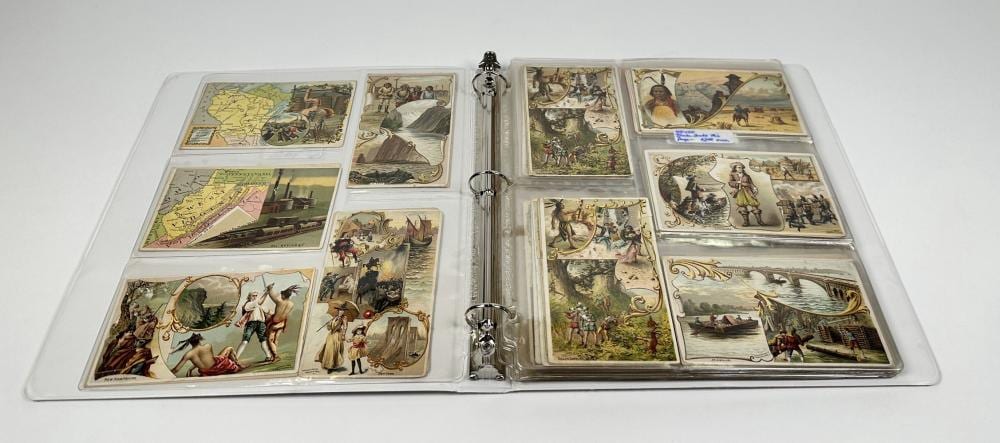
- House cards in inert, acid-free sleeves and boxes (no PVC). Polyester, polypropylene, or polyethylene sleeves are standard.
- Store upright, not overstuffed; maintain stable conditions (~40–50% RH; 65–72°F). Avoid light, heat, and attic/basement extremes.
- Don’t flatten heavy creases or try to “clean” printed surfaces with liquids. Dry surface dust can be lifted with a soft brush; stop if media lifts.
- Never remove stamps or trims; you destroy both philatelic and postcard value.
Authentication notes:
- Genuine RPPCs show true photographic grain under magnification and often a slight silvering in dark areas; halftone dots indicate a printed reproduction, not an RPPC.
- Beware modern reprints of famous images. Paper, gloss, and back typography are your friends—modern card stock feels different and often shows barcodes or modern zip codes.
Practical Appraisal Checklist
Use this field-ready sequence when you pick up a card or a collection:
- Identify the type: RPPC, chromolitho art, white border, linen, chrome, novelty.
- Date it: Back format, publisher imprint/series, stamp box, postmark, image clues.
- Grade condition: Corners, creases, stains, album marks, surface rubs; note writing/cancel.
- Pin the subject and location: Town, landmark, event, transportation, holiday, occupational, sports.
- Attribute creators: Publisher (Tuck, Detroit Publishing, Curt Teich), artist (Clapsaddle, Brundage, Schmucker, Winsch).
- Assess scarcity: Small-town views, short-run RPPCs, discontinued rail lines, vanished buildings, and niche topics tend to be scarcer.
- Gauge demand: Cross-check against popular topicals—Halloween, Santa, black cats, early aviation/auto, baseball, mining, disasters, Route 66 roadside, Art Deco.
- Consider postal-history add-ons: RPO, Doane, machine slogan cancels; unusual origins/destinations; wartime censors.
- Establish comparables: Recent sales for the same publisher/artist/subject, factoring condition and exact image; avoid generalizing from different views of the same town.
- Set price bands from your comparables: common cards are the least expensive; better town views/subjects sell for more; artist-signed holiday sets more again per card; strong RPPCs or rare topicals bring the highest prices.
- Decide disposition: Keep for a themed set, offer singly, or group by town/subject. For selling, crisp scans (600 dpi), clear titles with subject/location/era, and accurate grading are essential.
FAQ
Q: Are used postcards worth less than unused ones? A: Not necessarily. For postal history and many real photo or topical cards, a clear, period cancel and an interesting message add authenticity and value. Unused examples may bring a premium for purely decorative art cards, but used is often preferred for town views and RPPCs.
Q: What exactly is an RPPC, and how do I spot one? A: An RPPC is a Real Photo Postcard—an actual photographic print on postcard-weight paper. Under magnification, you’ll see continuous tone or photographic grain, not printed halftone dots. Stamp box marks (AZO, CYKO, EKC) and slight silvering in dark areas are additional clues.
Q: Can I clean or flatten old postcards to improve value? A: Avoid wet cleaning and aggressive flattening; both can cause irreversible damage. Light surface dust can be gently brushed away. Store in proper sleeves with modest pressure to relax minor waviness over time. When in doubt, leave it as-is and note condition in your appraisal.
Q: Which subjects consistently bring higher prices? A: Halloween and early Santa Claus art cards; strong small-town main streets; vanished landmarks; trains, streetcars, early autos and aviation; baseball and early stadiums; mining, logging, and occupational portraits; disasters and event-driven RPPCs; certain artist-signed series.
Q: How do I insure a valuable postcard collection? A: Document with 600 dpi scans, maintain an inventory with brief descriptions (type, subject, publisher, date estimate, condition), and keep purchase receipts and notable provenance. For collections exceeding your homeowner policy’s limits, consider a scheduled rider with itemized values.
Antique postcards reward careful eyes and methodical note-taking. Combine type identification, accurate dating, honest grading, and subject-savvy research to separate the ordinary from the exceptional. With practice, you’ll recognize the telltale details—publisher imprints, stamp boxes, and design cues—that turn a dollar box find into a standout investment in history.