Unlock the Past a Guide to Antique Glass Door Knob Identification and Their Hidden Histories: appraisal and value basics
Unlock the Past a Guide to Antique Glass Door Knob Identification and Their Hidden Histories research should start with identification, condition, provenance, and recent comparable sales. Use this guide to compare the signals that matter before paying for a formal appraisal or deciding whether to sell.
Antique glass door knob identification checklist
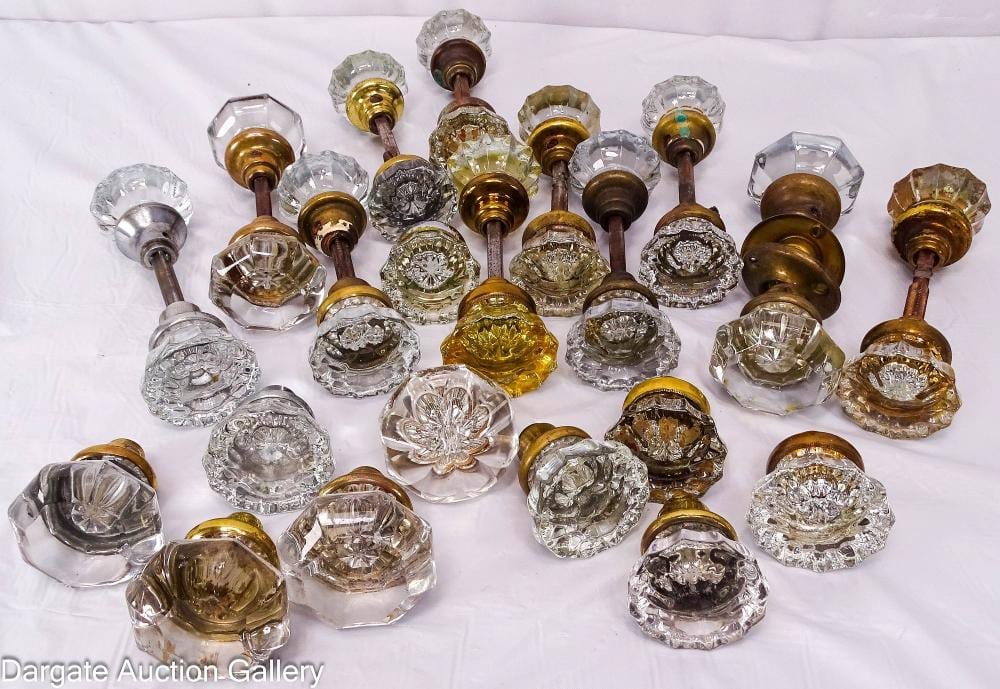
Antique glass door knobs are small, touchable time capsules. They refract light, hold fingerprints of use, and quietly signal shifts in manufacturing, design, and domestic life from the 19th to mid-20th centuries. For appraisers and enthusiasts, correct identification depends on reading multiple clues at once: the glass itself, its colorants, how it was shaped, the metal hardware it’s married to, and the architectural context it came from. This guide walks you through the markers that matter, so you can date, describe, and value glass knobs with confidence.
Timeline and Style Evolution
- 1820s–1850s: Early pressed glass and transitional forms
- Pressed glass technology (lever presses) enabled consistent knob production in the U.S. by the 1820s–30s. Early examples are often small, slightly irregular, with seed bubbles and soft mold lines. Hardware usually features cast brass ferrules and iron spindles. Ornamental backplates lean neo-classical or early Gothic Revival.
- 1860s–1890s: Victorian “crystal” and pattern-rich brass
- Mass production expands after the Civil War. Clear, high-luster “crystal” knobs (often leaded glass) with intricate starbursts and 8-, 10-, or 12-point facets become fashionable. Heavy cast-bronze or brass backplates (Eastlake geometric, Aesthetic, Rococo Revival) pair with these knobs. Glass is typically colorless or pale tints.
- 1900s–1910s: Refined faceting and solid brass hardware
- Knobs grow slightly larger, with crisper faceting and more uniform quality. Rosettes and plates simplify compared to high-Victorian floridity. Color remains mostly clear; decorative cutwork sometimes appears on higher-end pieces.
- 1920s–1930s: Art Deco and Depression-era color
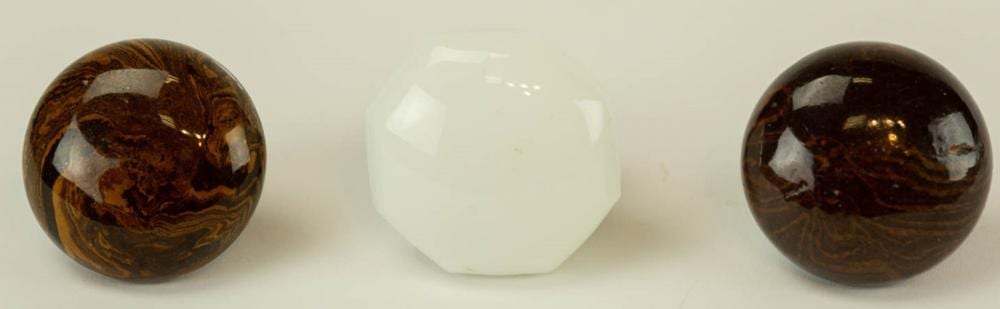
- Molded octagonal and hexagonal glass knobs with nickel-plated or chrome hardware proliferate. This era introduces a spectrum of colors: emerald, amber, cobalt, pale amethyst, pink/rose, milk glass white, and black (often deep amethyst). Center “through-bolt” screws become common and visible on the knob face. Geometric plates and small round rosettes reflect Art Deco tastes.
- 1940s–early 1950s: Simplification and the fade-out
- Wartime material controls and changing tastes reduce variety. Glass remains in service but loses market share to metal and later to plastics. By the mid-century, new glass knobs are uncommon outside specialty orders.
When you encounter a knob, ask: Is its style Victorian with ornate brass? Deco with chrome and color? Or transitional, straddling the lines? Style alignment with known architectural trends is a reliable first pass at era.
Anatomy and Hardware Clues
Understanding the component parts clarifies both age and originality.
- Knob head
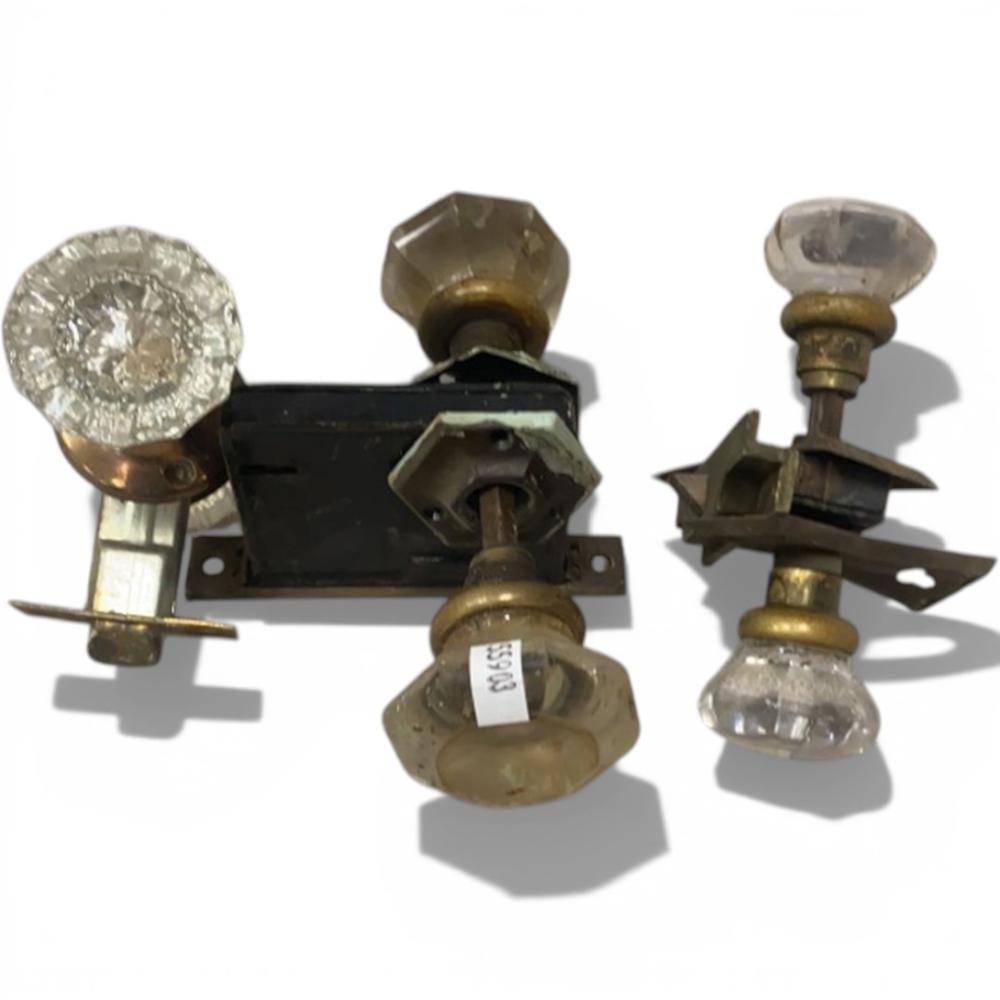
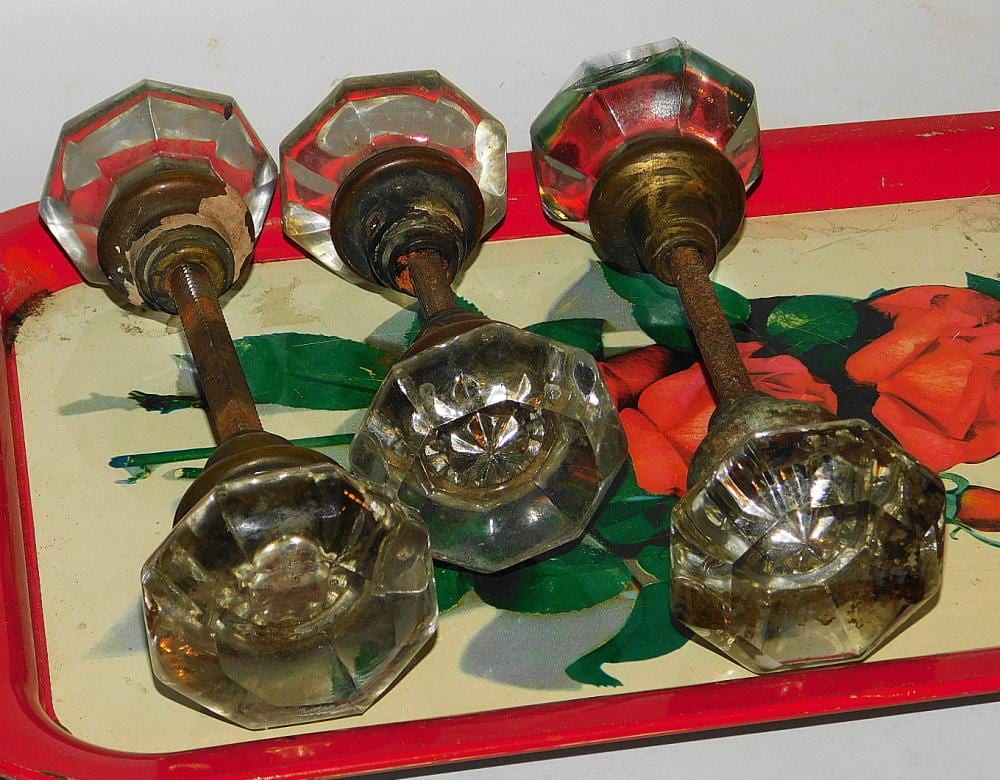
- The glass portion. Look for mold seams (pressed), crispness of facets (cut vs pressed), and wear patterns at high points.
- Ferrule or shank (metal collar at the base)
- Typically brass on older examples; can be nickel-plated or chrome in the 1920s–30s. Brass is non-magnetic; plated steel will attract a magnet. The fit between glass and ferrule should be tight; sloppy or slanted ferrules can indicate later assembly or reproduction.
- Hub and attachment method
- Set-screw type: A small side set screw secures the knob to a 1/4-inch square spindle. Common from late 19th century onward.
- Through-bolt type: A machine screw passes through the face of the knob into the spindle or the opposite knob. The screw head or small metal “boss” is visible at the center; very common on 1920s–30s colored knobs.
- Threaded spindles also exist, but most U.S. residential hardware standardized on 1/4-inch square spindles by the late 19th century.
- Spindle
- A steel square bar that connects two knobs through the door. Earlier spindles can be slightly irregular, with hand-filed ends. Later ones are more uniform. Heavy wear at the set-screw flats implies long service.
- Rosettes and backplates
- Large, ornate cast-brass backplates (Victorian/Eastlake) suggest 1870s–1890s. Small, plain rosettes or geometric plates often date to 1910s–1930s. Brass with original patina differs from bright modern lacquer; Philips-head screws on plates often indicate later replacements (Phillips became common in the 1930s–40s).
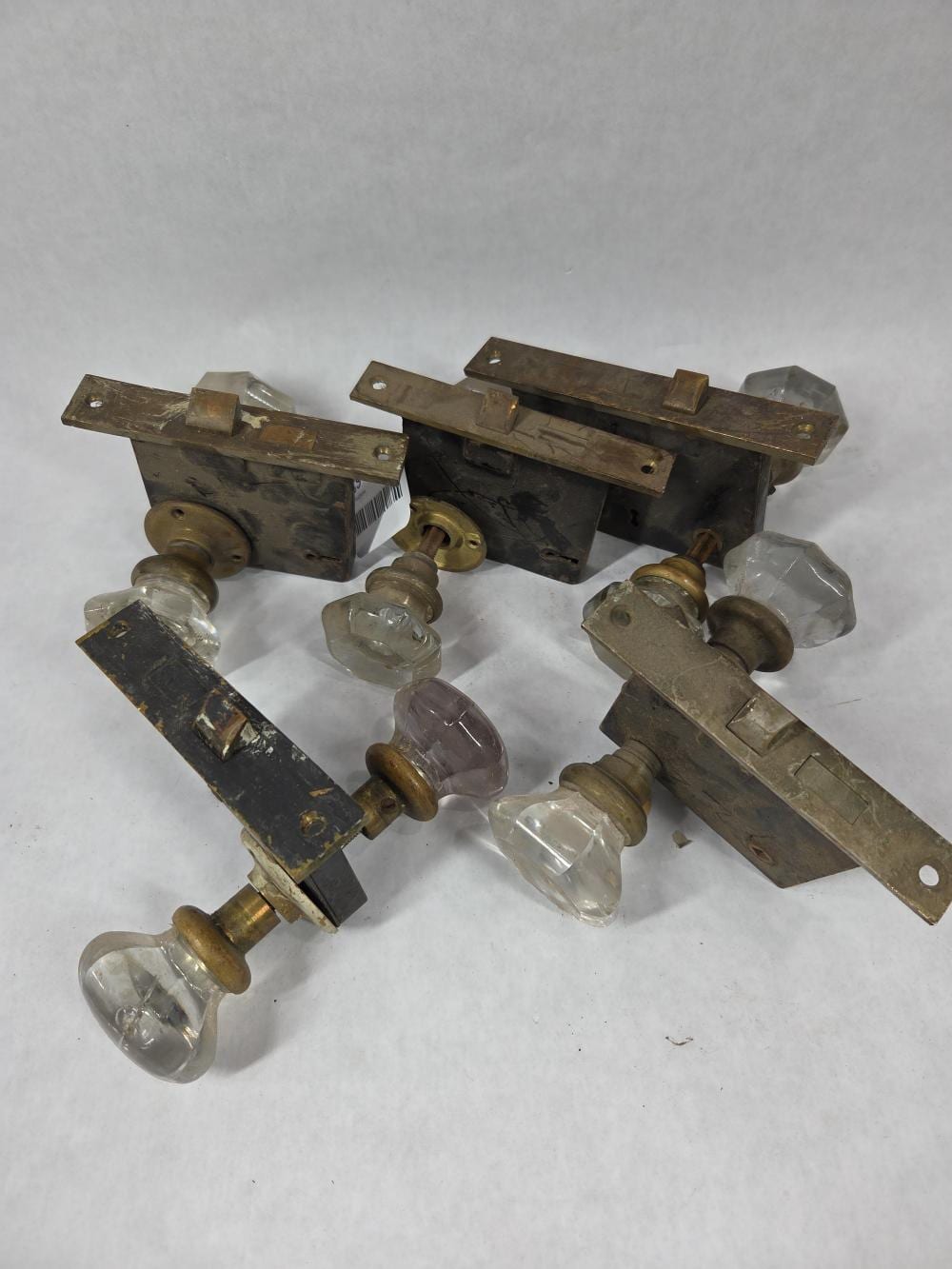
- Mortise lock and faceplate
- Faceplates sometimes carry manufacturer names or patent dates. These date the lock—not always the knob—but can bracket the set’s period. Look for marks like Corbin, Yale & Towne, Sargent, Lockwood, Russell & Erwin, and P. & F. Corbin. Patents in the 1870s–1910s are routine; a faceplate stamped with multiple patent dates can be a goldmine for establishing a not-earlier-than date.
Tip: Confirm that finish, wear, and screw type across the components tell the same story. A period knob attached to modern zinc rosettes or metric screws suggests a mixed set.
Materials, Colors, and Manufacturing
Glass tells a story even before the hardware does.
- Pressed vs. cut glass
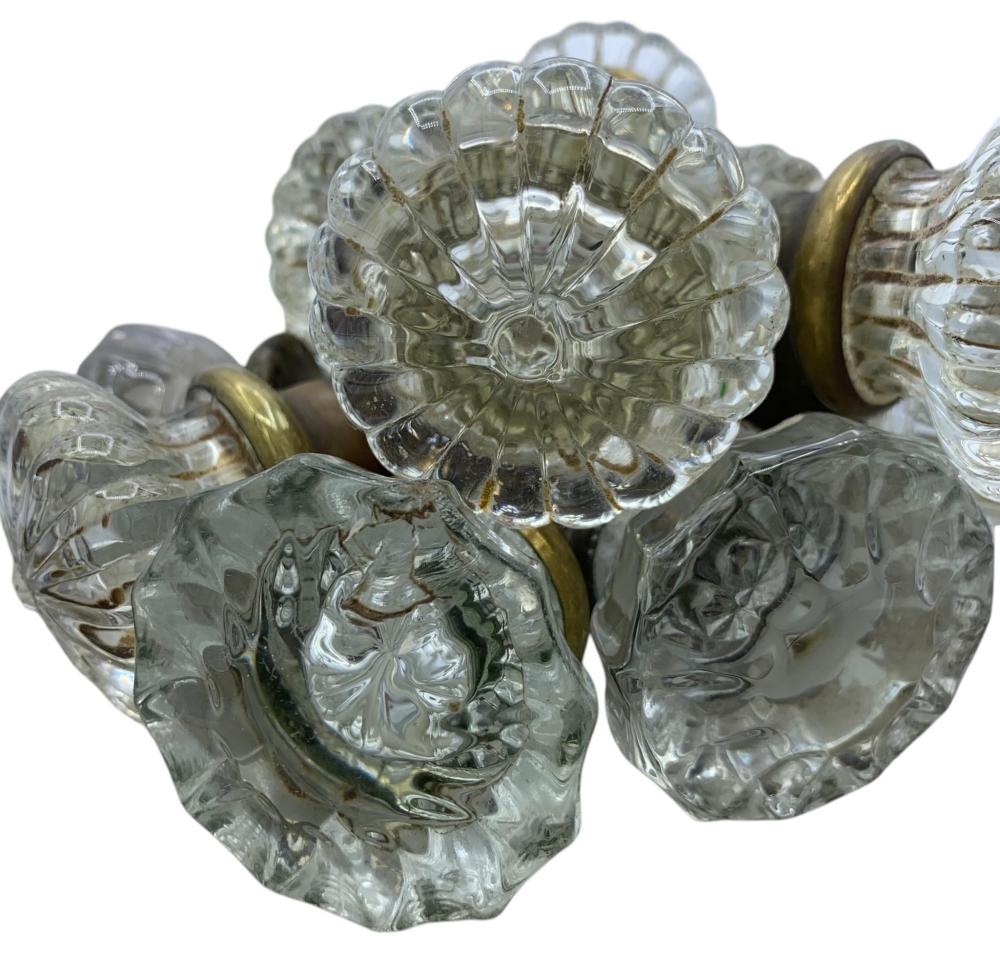
- Pressed: Poured into molds and pressed with a plunger. Expect faint parting lines, slight rounding at facet edges, and occasional seed bubbles. Most glass knobs—especially colorful Deco-era ones—are pressed.
- Cut: Wheel-cut facets have razor-crisp edges with fine striations and minute “flea-bite” chips along facet lines from wear. High-end Victorian “crystal” knobs may be pressed-then-cut, combining both traits. Cut knobs are heavier for size and sparkle more due to sharper angles.
- Lead content (the “crystal” effect)
- Leaded glass refracts light strongly, creating prism-like sparkle. Gently flicked, it may ring more brightly than soda-lime glass. Use a light touch; avoid impact that could chip facets.
- Colorants and decolorizers as dating tools
- Manganese (pre–c. 1915): Used to decolorize glass. Long UV exposure turns it amethyst (“sun purple”). A subtle lilac tint can be period-correct; unnaturally deep grape-purple often indicates artificial irradiation, which can diminish value.
- Selenium/arsenic (c. 1915 onward): These can develop warm straw to peach tones with UV exposure. Less dramatic than manganese purple.
- Uranium/vaseline glass (c. 1880s–1930s): Glows neon green under UV light. Some knobs, especially from the turn of the century, were made with uranium glass. The glow can support a date bracket but is not definitive alone.
- Cobalt, emerald, amber, black-amethyst, pink, and milk glass (opaque white) are hallmarks of 1920s–30s production. “Black” knobs are often very dark amethyst; hold to strong light to see the purple body.
- Surface wear and age
- Period wear shows as soft abrasions on high points, tiny edge nicks at facets, and a satiny feel on frequently handled faces. The underside base rim (where glass meets ferrule) may show grime/oxidation lines.
- Reflective inserts and “foil”
- Many glass knobs show a starburst or reflective look from the molded underside or a metal cap in the hub. These are not mercury; true mercury glass knobs are rare. Don’t confuse natural internal reflections with applied silvering.
Safety note: Antique glass and some finishes may contain lead or other heavy metals. Handle chips carefully and avoid dry sanding. UV light is a helpful test tool; use brief exposures and avoid looking directly into high-intensity beams.
Dating, Value, and Spotting Reproductions
Dating integrates all the evidence you can observe.
- Cross-check the following:
- Style: Ornate Eastlake brass + clear crystal facets = likely 1870s–1890s. Colored octagon + chrome rosette + visible through-bolt = 1920s–30s.
- Hardware: Slotted screws and thick cast brass lean older; Phillips screws, thin stamped escutcheons, or zinc/pot-metal parts may be later.
- Glass chemistry: Natural amethysting from manganese suggests pre-1915 origins; uranium glow points to late 19th to early 20th century; Deco colorways concentrate in 1920s–30s.
- Attachment: Side set screw hubs are common throughout; visible center screws are especially typical of Deco-era sets.
- Maker marks: Locks and faceplates provide the most reliable marks and patent dates; knob ferrules are rarely marked.
- Condition and originality drive value:
- Matched pairs with original spindles, rosettes, and compatible locks command premiums.
- Chips on faces or large facet flakes reduce value more than minor edge nibbling. Fogging or internal cracks (devitrification/stress) are serious detractors.
- Uniform patina across hardware suggests age; freshly polished brass on only one piece can signal assembly from parts.
- Common reproduction flags:
- Overly perfect, glassy-slick surfaces without wear; ultra-clear modern soda-lime glass with minimal refractive “fire.”
- Modern plated zinc ferrules, often magnetic; metric set screws; Phillips throughout.
- Proportions slightly off: undersized ferrules or exaggerated facets. Newly lacquered “antique brass” finish with uniform yellow tone and no depth.
- Appraisal notes:
- Victorian cut-crystal with ornate original plates rates higher than plain pressed examples.
- Rare colors (true cobalt, intense uranium, black-amethyst with excellent clarity) lift value.
- Provenance or architectural context (e.g., removed from a known historic property) adds interest and can justify a premium.
Pro tip: Evaluate knobs in situ when possible. The door, hinges, strike plates, and mortise can add crucial context and dating evidence.
Field Checklist
Use this fast, practical checklist when you encounter glass door knobs:
- Measure and photograph
- Diameter of knob head; profile depth; ferrule width.
- Rosette or backplate size and pattern.
- Inspect glass
- Pressed seams vs. cut edges; presence of seed bubbles.
- Wear pattern on high points; chips or cracks.
- Color: clear, amethyst, cobalt, emerald, amber, milk, black-amethyst.
- UV tests: uranium glow; faint manganese purple vs. intense artificial purple.
- Check hardware
- Ferrule material: brass (non-magnetic), plated steel (magnetic), or zinc.
- Attachment: side set screw or visible center through-bolt.
- Spindle: 1/4-inch square; check for wear flats. Note set screw thread style.
- Screws: slotted vs. Phillips; consistent with era?
- Assess style coherence
- Victorian crystal with ornate cast-brass plates?
- Deco octagon with chrome or nickel rosette and center screw?
- Look for marks and dates
- Examine the mortise lock faceplate and body for maker stamps and patent dates.
- Evaluate condition and completeness
- Matched pair? Original rosettes and spindle? Functioning lock?
- Note any repairs, mismatched finishes, or replaced screws.
- Record provenance
- Location found, building era, any documented history.
FAQ
Q: Do all purple-tinted knobs date before 1915? A: Not always. A subtle lilac from manganese exposure can indicate pre-1915 glass, but very deep purple often results from modern artificial irradiation. Consider hardware, style, and context before concluding.
Q: How can I tell cut crystal from pressed glass? A: Cut facets are sharply defined with crisp arrises and fine wheel striations; they tend to “sparkle” more and pick up tiny flea-bites along the cuts. Pressed glass shows faint mold seams and slightly rounded edges. Many Victorian “crystal” knobs are pressed-then-cut, showing both traits.
Q: Are uranium glass door knobs safe? A: Uranium content in antique glass is very low. The pieces are generally considered safe for normal handling. They do glow under UV light. Avoid grinding or inhaling dust from damaged pieces.
Q: What’s the most reliable single dating clue? A: There isn’t one. Combine style, attachment method, metal composition, screw types, and any maker marks on the lock faceplate. Converging clues provide much more reliable dating than any single feature.
Q: Do visible center screws always mean the 1920s–30s? A: They’re strongly associated with that period, especially on colored, molded knobs with nickel/chrome hardware. However, through-bolt configurations exist outside those decades, so corroborate with other evidence.
By training your eye on glass characteristics and your hand on the hardware, you can place most glass door knobs within a few decades, distinguish original sets from assemblies, and articulate the story each piece carries—from early pressed pioneers to sparkling Victorian crystal to the bold colors of the Deco age. That narrative is what turns a simple latch into a piece of architectural history worth preserving and appraising.