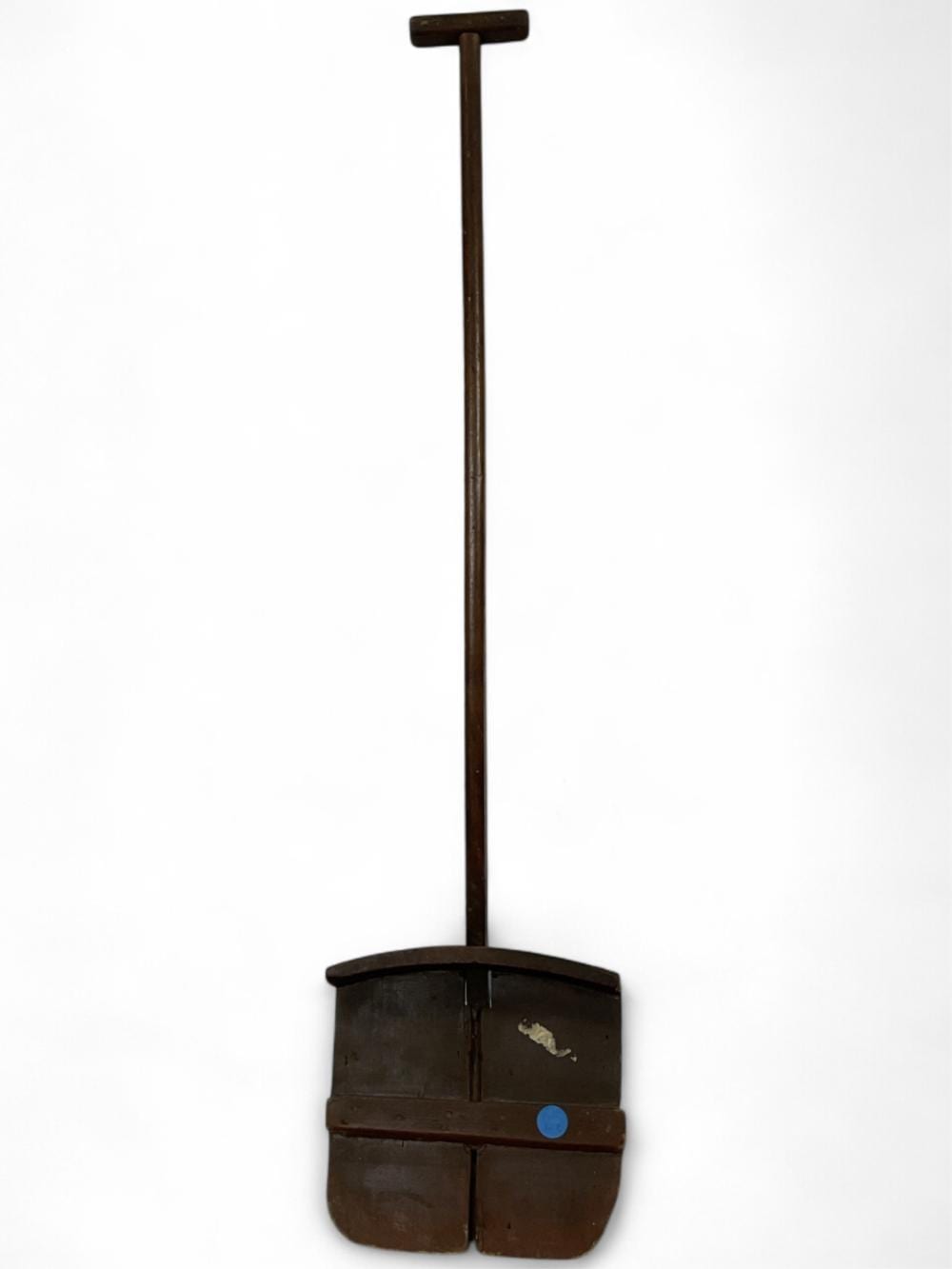
What is an antique shovel worth?
Most old shovels sell for modest sums. The nine recorded auction sales in US dollars on this page ran from $20 to $600, with a median of $50; the $600 sale was a red oak farmer’s grain shovel, probably Shaker. Common 20th-century round-point garden shovels with no special features sit around $20–$60. Prices rise with age and hand work, such as a pre-1850 hand-forged blade or a riveted strap socket, with a clear maker’s stamp, and with a specialized pattern: grain or coal scoops, cemetery spades, military entrenching shovels. An original handle and untouched patina matter. A replaced handle, heavy rust pitting and overcleaning lower value.
Which old shovels collectors look for
From farmhouse walls to museum displays, antique shovels occupy a surprisingly rich corner of tool collecting. Their shapes tell regional stories, their maker’s marks trace industrial history, and their scars reflect decades of hard use. Whether you’re handling a hand-forged farm implement, a coal scoop from a 1910 breaker, or a military entrenching tool, the same core principles will help you determine authenticity, desirability, and value.
What makes an old shovel valuable
- Age and method of manufacture
- Hand-forged, pre-industrial shovels (pre-1850) with wrought iron blades and forge-welded sockets are scarcer and command strong prices.
- Early rolled steel with strap-socket rivets (mid-19th century) also appeals to collectors.
- Maker’s marks and branding
- Clear stamps, cartouches, or labels from respected makers (e.g., Ames Shovel & Tool; Spear & Jackson; William Hunt & Sons/Brades; Bulldog) increase value.
- Patent dates and dealer labels provide precise dating and provenance.
- Form and function
- Specialized trade patterns (peat spades, grain or coal scoops, cemetery spades, military entrenching shovels) are more collectible than common garden diggers.
- Regional forms (Irish loy spades, English square spades, American round-point shovels) interest pattern collectors.
- Condition and originality
- Original handle and grip, intact socket, minimal pitting, a straight blade, and untouched surface patina are key. Heavy restoration lowers value.
- Rarity with demand
- Rare forms matter—but only if collectors want them. Military-marked tools and unusual trade patterns see consistent demand.
- Provenance and story
- Factory hangtags, store labels, named ownership stamps, or documented use in a notable site or conflict add a premium.
Shovel types and how to date them
Start by matching the form, then read the construction details.
- Blade patterns
- Round-point: General digging; common in North America, especially 20th century.
- Square-point/transfer: Moving loose material; used by masons and for cleanup.
- Coal/grain scoops: Broad, shallow blades; steel or aluminum; often D-handled.
- Hearth/ash shovels: Smaller, thin blades; domestic use; sometimes decorative.
- Peat/lóy spades: Long, narrow blades; region-specific.
- Entrenching shovels: Military patterns; compact, sometimes folding.
- Handles and grips
- Straight (long) vs. D- or T-handle. Early T-handles and wood D-grips are desirable; later plastic D-grips are mid- to late-20th century.
- Species: Ash and hickory dominate. Walnut, beech, or exotic woods in grips can signify earlier or special-order pieces.
- Sockets and attachment
- Strap-socket: Two metal straps riveted to the blade, wrapping the handle; common mid-19th century. Rivet type and spacing help date.
- Solid socket: Rolled steel tube forming a socket. Look for a lap-weld seam on earlier examples; seamless or welded seams later.
- Ferrules and collars: Brass/nickel-plated collars around the handle base can indicate quality and era.
- Manufacturing clues by era (generalized)
- Pre-1850: Wrought iron blade with forge-welded steel edge; hammer marks; lap-welded socket seam; handmade rivets if present; no step treads.
- 1850–1900: Rolled steel blades; strap-sockets with machine rivets; embossed maker’s marks; some early step treads appear late in this period.
- 1900–1940: Pressed steel blades; standardized sockets; step treads common; clear stamped logos; D-handles often with wood grips.
- 1940–1970: Alloy improvements; aluminum scoops proliferate; folding military e-tools (WWII onward); plastic grips appear mid-century.
- Maker’s marks and numbers
- Look on the blade face, socket, or the top surface (step tread). Stamps may include name, location, trademark, model numbers, and patent dates.
- Faint marks reveal under angled light. Rubbings with thin paper and soft pencil can help, but avoid abrasives that erase stamps.
- Hardware and fasteners
- Square nuts/bolts and hand-peened rivets suggest early manufacture.
- Phillips screws and metric fasteners indicate later production or replacement.
Document dimensions and weight. Note overall length, blade length, blade width, and grip width. Measurements help match cataloged patterns and spot reproductions (e.g., folding entrenching tools that are too heavy/light or off-spec in blade angle). If the stamps and measurements still don’t point to a maker or an era, you can upload photos of the blade, socket and stamps for a free check.
Condition grades and red flags
Use consistent grading language when appraising for sale, trade, or insurance.
- Mint/NOS (new old stock): Unused with original label or hangtag; crisp edges; original finish; extremely scarce.
- Excellent: Light use; strong maker’s mark; minimal wear; original handle and hardware intact.
- Very Good: Honest wear; moderate finish loss; minor edge nicks; small stable cracks in handle possible; no structural issues.
- Good: Noticeable wear; some pitting; repairs to handle or socket; edge reshaped by sharpening; still displays well.
- Fair/Poor: Heavy corrosion; deep pitting; blade bends/cracks; missing or replaced handle; functional instability.
Red flags that reduce value:
- Aggressive sanding, wire-brushing, or grinding that removes patina, stamps, or original surface.
- Replaced handles with incorrect profile or modern finishes (polyurethane, bright paint) on tools that were never painted.
- Welded blades or sockets (unless historically documented repairs); irregular beads suggest recent work.
- Overpaint on steel blades that originally had a blued/japanned or burnished finish.
- Tread plates welded on later to mimic earlier “stepped” blades.
Originality checklist:
- Handle grain and color match era and socket wear pattern.
- D-grip wood matches handle species and shows consistent oxidation.
- Fasteners appear untouched; slot orientation and peening consistent.
- Maker’s label remnants align with known brand colors and typography.
Antique shovel values by type
Prices fluctuate by region and trend, but the following ballpark ranges help calibrate expectations. Values assume sound, clean examples unless noted.
- Common 20th-century garden shovels (round-point, no special features)
- $20–$60. Add value if branded by a respected maker, with clear stamp and strong condition ($60–$120).
- Early, hand-forged farm shovels (pre-1850 with lap-welded socket)
- $150–$400; exceptional, complete examples with provenance can reach $600+.
- Strap-socket 19th-century steel shovels with riveted straps
- $80–$250 depending on maker’s mark, condition, and region.
- Specialized trade patterns
- Coal/grain aluminum scoops (wood D-handle): $40–$150; branded, near-mint examples with labels: $150–$300.
- Peat/lóy spades or unusual regional patterns: $150–$400; rare forms higher.
- Cemetery spades (narrow, deep blades, quality makers): $150–$350.
- Military entrenching shovels
- WWI fixed-handle shovels with unit or inspector marks: $100–$250.
- WWII folding e-tools (correct markings, original carrier absent): $80–$180; with correct original carrier and unit marks: $180–$350.
- Be aware: reproductions are common; incorrect fonts, fresh parkerizing, or metric screws are warning signs.
- Advertising and store-branded examples
- Hardware store labels, stenciling, or embossed advertising: $75–$250; pristine labels can push higher.
- Children’s toy/tin-litho shovels
- $40–$150; graphics condition is everything.
Factors that move prices up or down:
- Up: Original labels/hangtags; rare maker; clear marks; matched pair sets; untouched patina; documented provenance.
- Down: Replaced handle; heavy rust pitting; bent or cracked blades; grinder marks; overcleaning; missing D-grip or ferrule.
Where the market happens:
- Tool-collector meets, farm and barn sales, regional antiques shows, and general auctions. Seasonality matters—garden-focused items often do better in spring.
How to clean and store an antique shovel
The goal is preservation, not refurbishment.
- Cleaning
- Dry methods first: soft nylon or natural bristle brush to remove dirt.
- For rust bloom, use light oil (mineral oil) and 0000 steel wool very gently, stopping before bright metal. Avoid power tools.
- Preserve patina and stamp clarity. Do not sand or buff maker’s marks.
- Stabilization
- Wax steel with microcrystalline wax or a thin oil to inhibit oxidation.
- Handle cracks: stabilize with reversible adhesive (hide glue or PVA) and clamps; avoid opaque fillers.
- Loose D-grip pins: tighten carefully; if replacing pins, match original diameter and head style.
- Replacement parts
- If a handle must be replaced, match wood species, length, shoulder profile, and ferrule style to period examples. Disclose the replacement on sale.
- Finishes
- Do not repaint steel unless the piece was originally painted (some scoops and toys). For originally japanned/blued blades, leave as-is.
- Storage and display
- Store in a dry, stable environment (relative humidity around 45–55%). Keep off concrete floors; avoid damp barns without airflow.
- Hang by the handle or support along the length to prevent warping.
- Avoid direct sun that can bleach wood and curl labels.
- Documentation
- Keep a tag or notebook with measurements, marks, provenance, and your conservation steps. This adds credibility at sale.
Checklist before you price a shovel
- Photograph both sides, socket, and grip; take close-ups of stamps and hardware.
- Measure overall length, blade length/width, and grip width; note weight if possible.
- Identify blade type (round, square, scoop, entrenching, regional).
- Inspect socket style (strap vs. solid), rivets, seams, and ferrules.
- Look for maker’s marks, patent dates, inspector or unit stamps, labels.
- Assess originality of handle and D/T grip; check for replacements or refinishes.
- Grade condition: patina, pitting, bends, cracks, repairs, overcleaning.
- Note any provenance (owner name, dealer label, family history).
- Research comparable sales for the same pattern, maker, and condition.
- Decide on minimal, reversible conservation and estimated value range.
FAQ
Q: What’s the difference between a shovel and a spade in collecting terms? A: In North America, “shovel” often means a scooped, round-point digging tool, while “spade” is flatter and squarer for cutting and edging. In the UK, “spade” commonly refers to what Americans call a shovel. Collectors use the terms based on blade shape and intended use rather than strict language rules.
Q: Should I clean an antique shovel before selling? A: Keep cleaning minimal and reversible. Remove loose dirt and stabilize active rust, but avoid taking surfaces to bright metal or obliterating stamps. Original patina and labels are valuable.
Q: How do I spot a reproduction military entrenching shovel? A: Warning signs include incorrect stamp fonts or placements, metric fasteners, fresh finishes with no wear in friction points, off-spec blade angles, and wood that smells freshly cut. Compare measurements to known specs and look for consistent aging across metal and wood.
Q: Does a replaced handle ruin the value? A: It reduces value but doesn’t ruin it. A period-correct replacement that fits the socket properly and matches the original profile keeps more value than a modern hardware-store handle. Always disclose replacements.
Q: What’s the best way to ship an antique shovel? A: Remove the handle if designed to separate, pad the socket and blade edges, and protect the D-grip with bubble wrap and a cardboard brace. Use a strong box with internal supports to prevent the tool from shifting.


