
Uncovering the Worth a Comprehensive Guide to Determining Your Antique Silver Spoons Value: appraisal and value basics
Uncovering the Worth a Comprehensive Guide to Determining Your Antique Silver Spoons Value research should start with identification, condition, provenance, and recent comparable sales. Use this guide to compare the signals that matter before paying for a formal appraisal or deciding whether to sell.
Antique silver spoons can carry serious value—from melt price to meaningful collector premiums. This guide shows you how to identify marks, assess condition, and price from real comps.
What Drives Value: Metal, Maker, Market
Most antique spoon values come from a mix of three things:
- Metal floor: solid silver has scrap value; plate does not.
- Identifiers: maker, pattern, date/region, and rarity can add big premiums.
- Condition + completeness: crisp hallmarks, no repairs, and matched sets sell best.
Quick rule: if it’s worn and unidentifiable, price close to scrap (sterling). If marks are crisp, the form is early/rare, or the maker is desirable, use comps.
Quick decision tree: scrap vs collector value
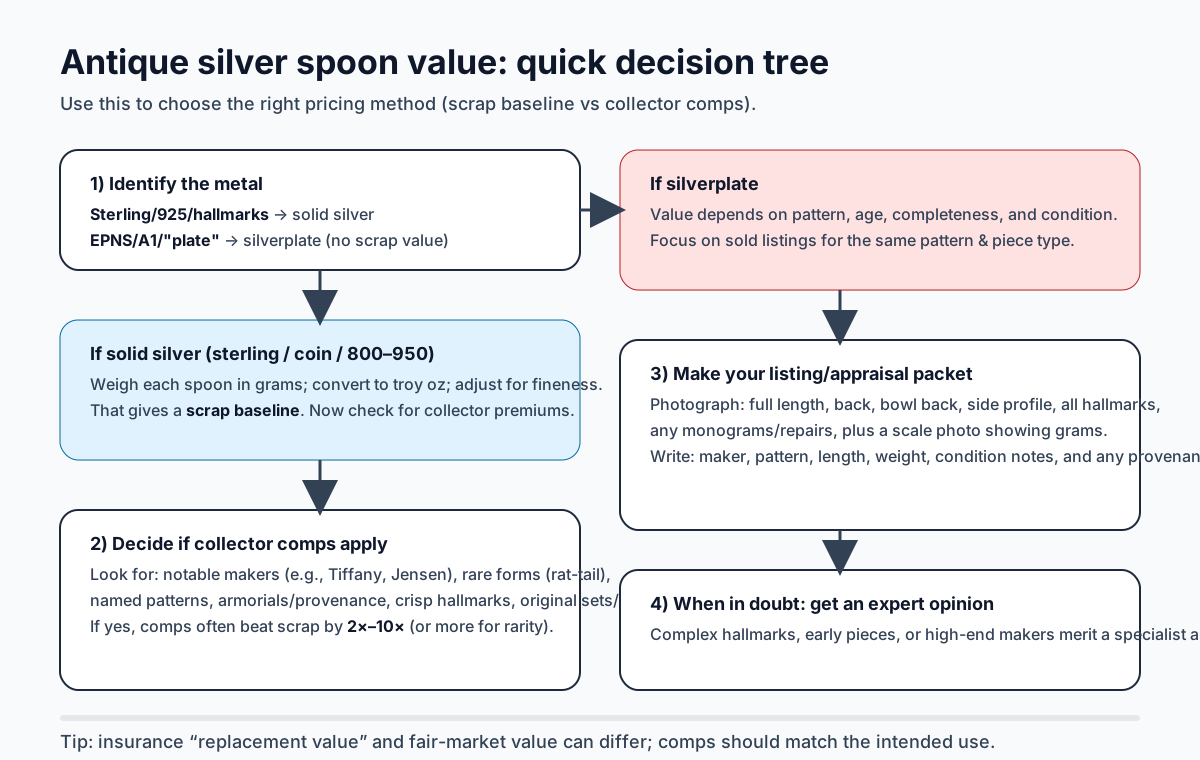
If you only do one thing from this guide: use the flowchart below to decide whether you should price from metal value (scrap baseline) or from collector comps (pattern/maker/rarity). Many good spoons trade at multiples of scrap, but only when the identifiers line up.
Visual inspection gallery (reference images)
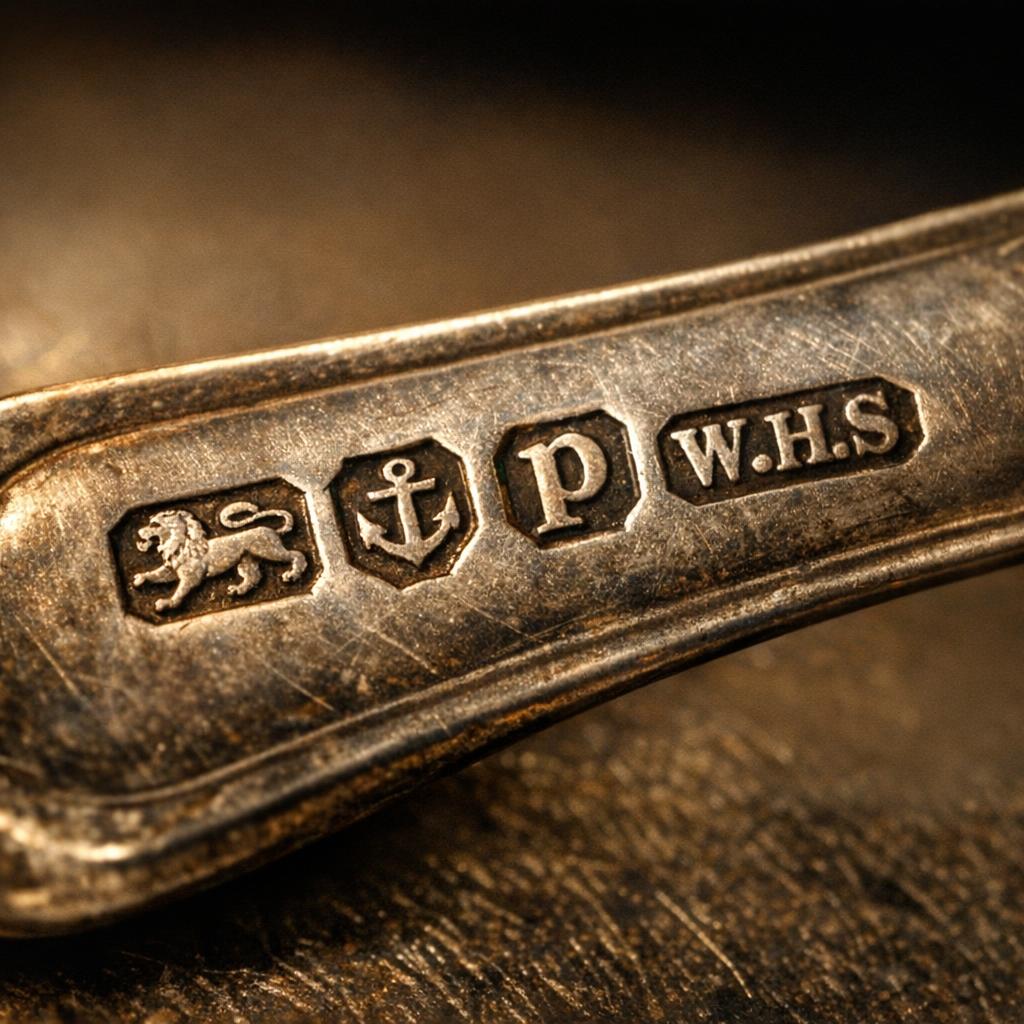
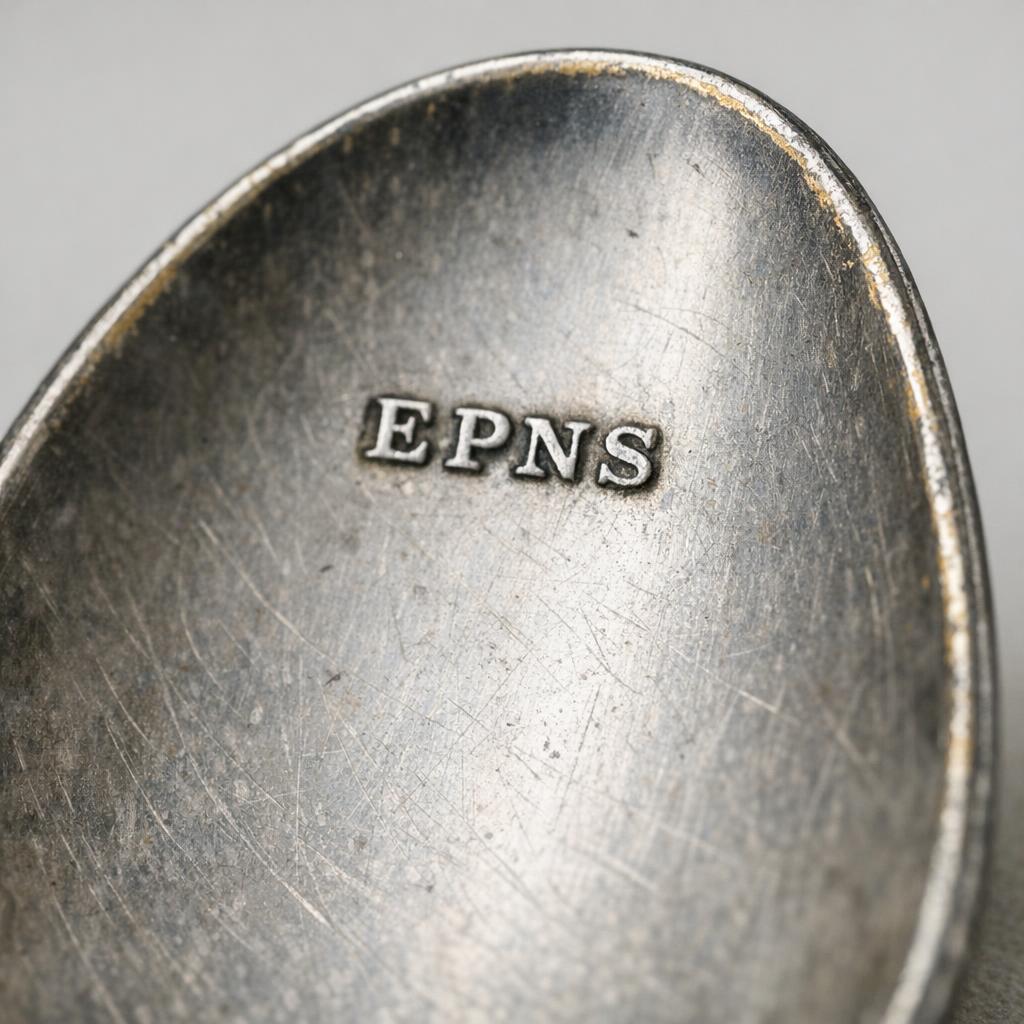
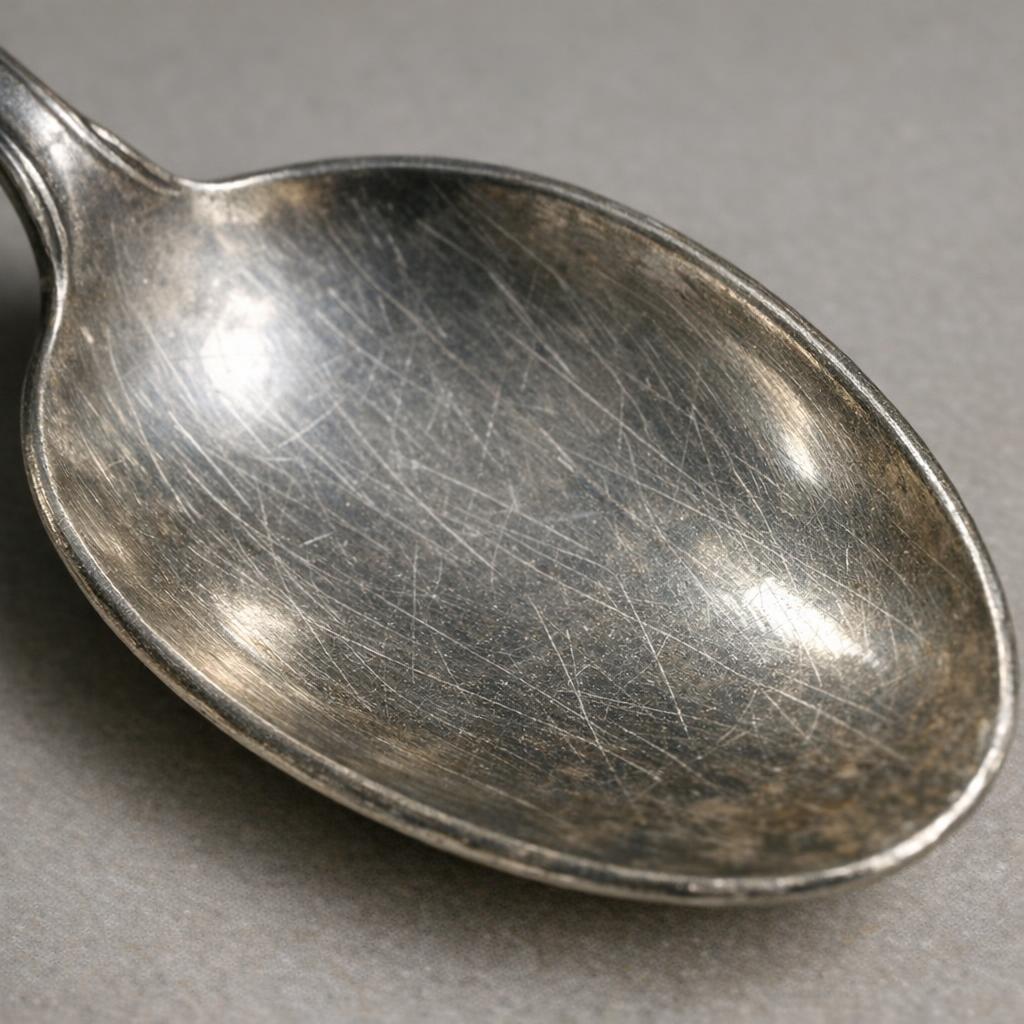
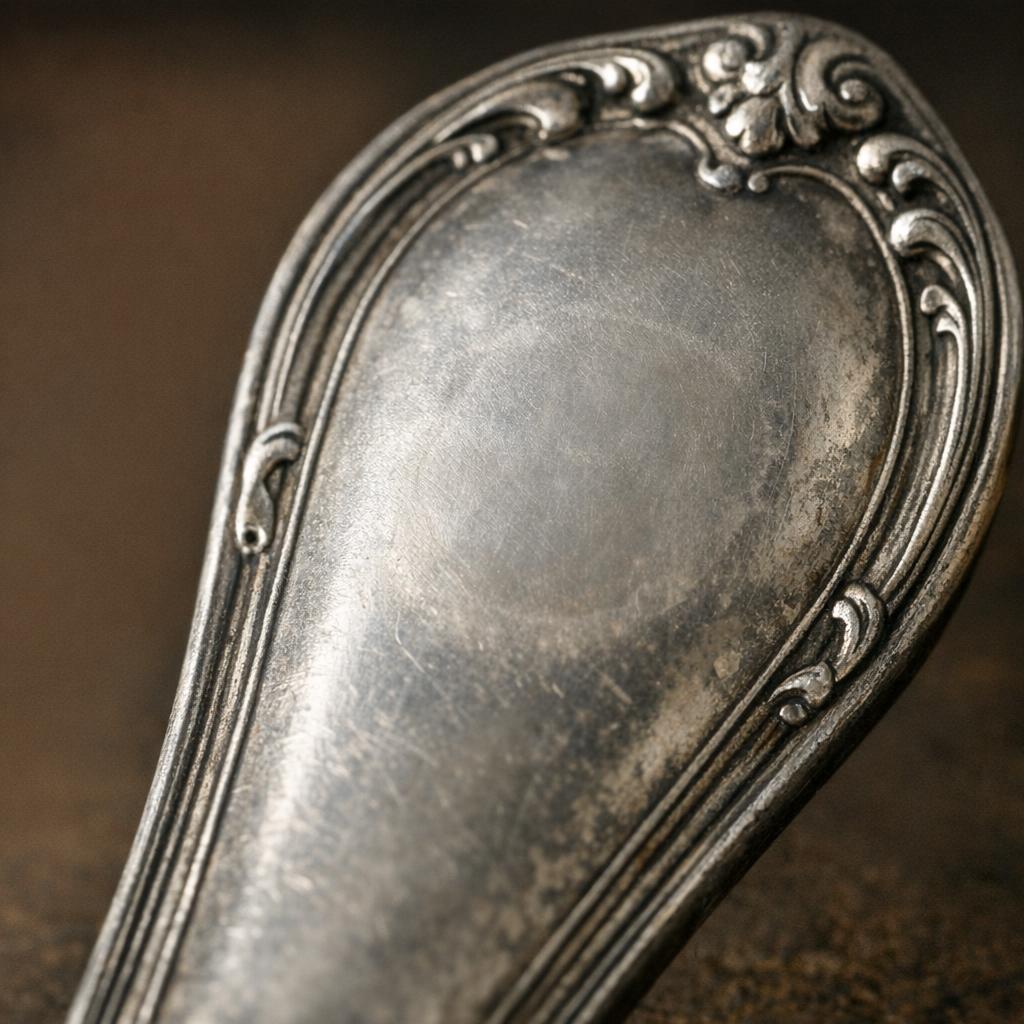
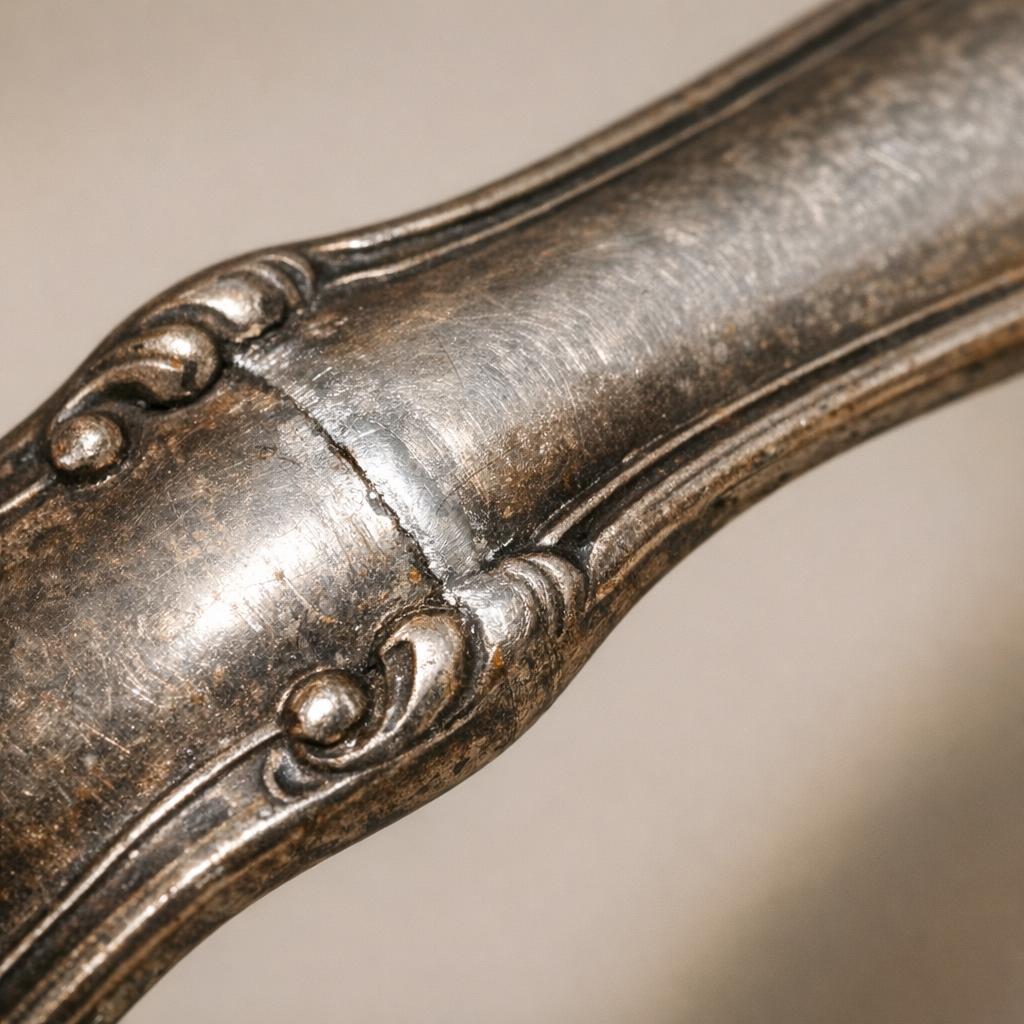
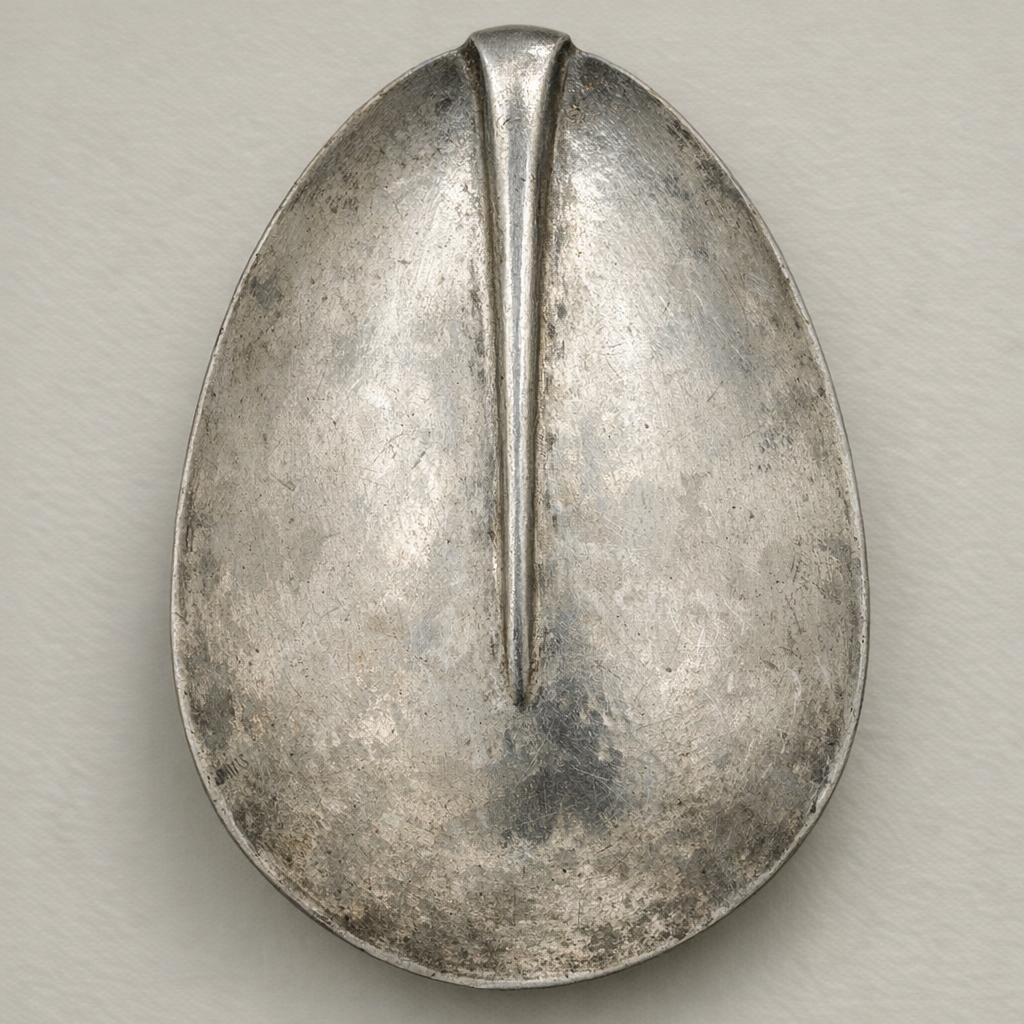
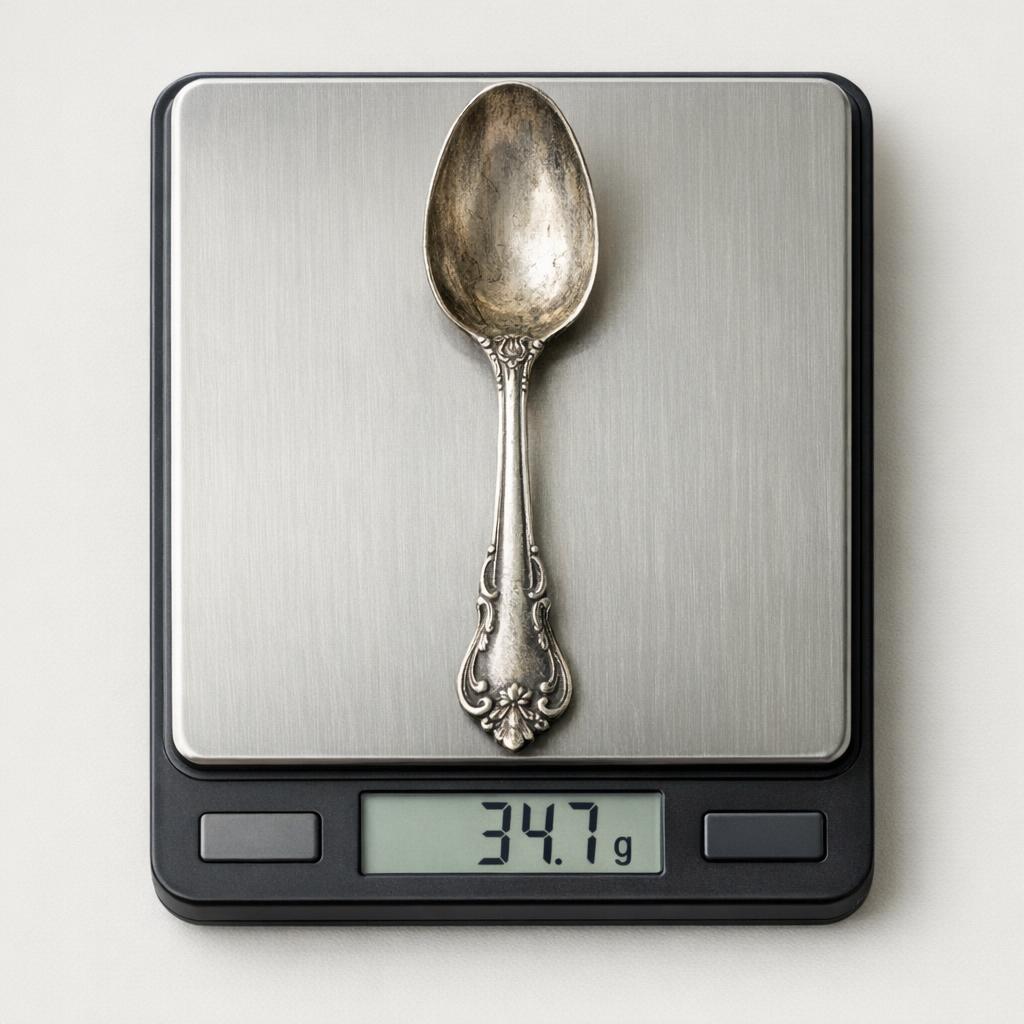
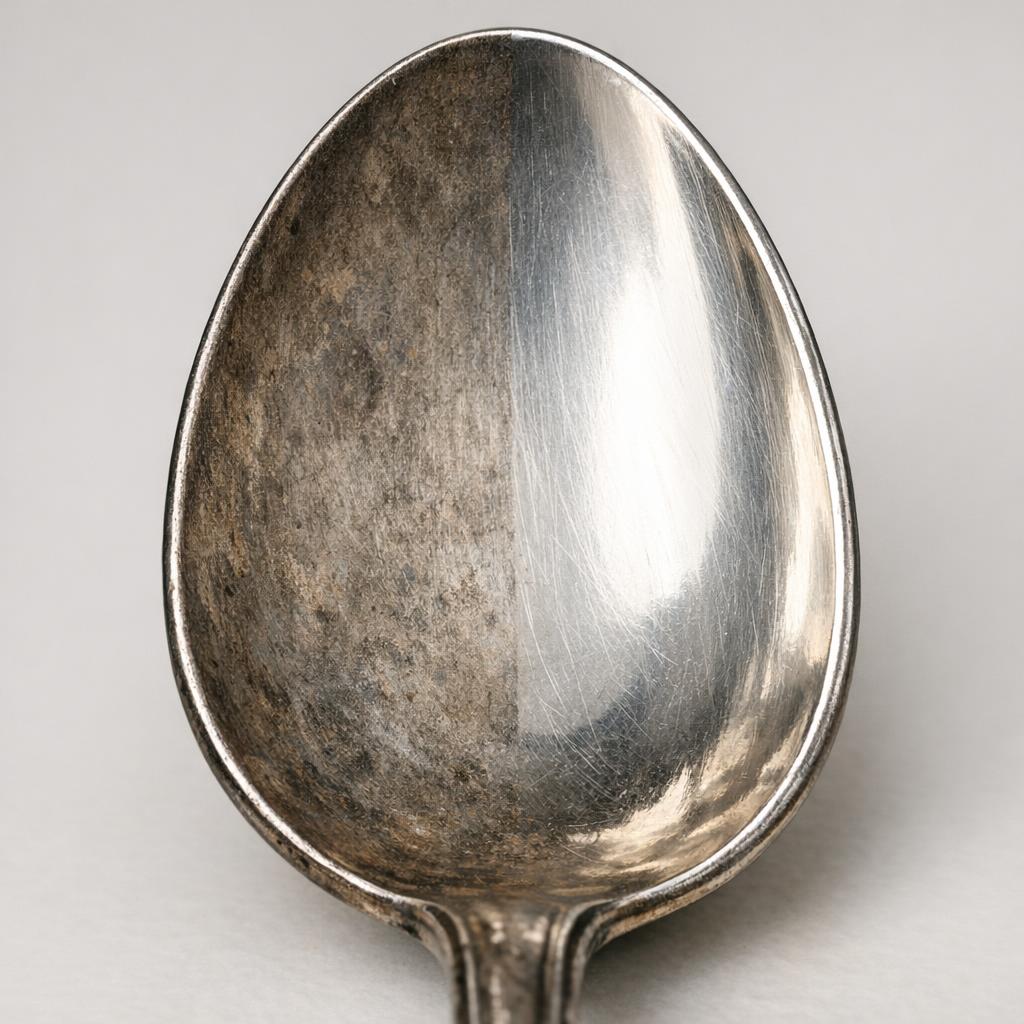
Use these reference photos as a checklist for what to look for and what to photograph. Images below are generated examples (not photos of your specific spoon) meant to show common features clearly.
Identify What You Have: Silver Type, Spoon Form, and Style
Start by confirming the metal. Then identify the spoon type (size) and any pattern cues.
- Sterling / 925: “STERLING,” “925,” or hallmark sets in the UK/Europe.
- Coin silver: often marked with a maker name and sometimes “COIN” (US, c. 1790–1860).
- Continental silver: fineness numerals like 800/835/900/950 plus national symbols.
- Silverplate: “EPNS,” “A1,” “Triple Plate,” etc. (no melt floor).
Hallmark cheat sheet (fast decode)
Marks differ by country and era, but these are common shortcuts:
| What you see | Usually means | Why it matters |
|---|---|---|
| “STERLING” or “925” | Solid sterling silver (92.5%) | Scrap baseline applies; maker/pattern may add premium |
| Lion passant (UK) | UK sterling standard mark | With assay office + date letter you can date precisely |
| “COIN” (US) | Coin silver (often ~900 fine) | Earlier US pieces can be scarce; maker-name marks matter |
| “800/830/835/900/950” | Continental silver fineness | Sets the metal floor; design may carry premiums |
| “EPNS”, “A1”, “Triple Plate” | Silverplate | Pattern/condition demand only (no scrap) |
Common sizes: teaspoon (~5–6 in), dessert (~6.5–7.5 in), tablespoon (~8–9 in), demitasse (~4–4.5 in). Specialty spoons (caddy, serving, berry) can be worth more when form is uncommon.
Age cues: early forms (rat-tail, trefid/dog-nose), hand-hammered surfaces, and crisp old-style maker punches can justify deeper research.
Decoding Hallmarks and Maker’s Marks
Hallmarks confirm metal standard and often pinpoint where/when a spoon was assayed—critical for dating and value.
- UK/Ireland: standard mark (sterling), assay office (city), date letter, and maker initials.
- US: “STERLING/925” plus maker marks (Tiffany, Gorham, etc.); earlier coin silver is often name-marked.
- Continental: fineness numbers (800/835/900/950) plus national control marks (varies by country).
Photo tip: take a straight-on mark shot and a raking-light shot; many punches are shallow and read better in shadow.
Assessing Condition and Authenticity
Condition is where two “similar” spoons separate in value. Check for:
- Wear: softened edges on the bowl and handle details.
- Bends: subtle twists show up in reflections under side light.
- Repairs: solder seams, color shifts, and tool marks.
- Monograms: original engraving can be fine; polished-out monograms often hurt value.
- Hallmark clarity: crisp, complete marks are easier to sell and price.
If marks look inconsistent (wrong combinations, overly sharp “new” punches on a worn spoon), get a second opinion before you price it.
Pricing It Right: Methods, Math, and Markets
Pick the kind of value you need:
- Fair market value: typical sold price between private parties.
- Insurance replacement: higher dealer-style replacement pricing.
- Liquidation/scrap: fast-sale pricing or melt value.
Scrap baseline (sterling):
- Weigh in grams.
- Convert to troy oz: grams ÷ 31.1035.
- Adjust purity: × 0.925 (sterling) or × 0.900 (coin silver).
- Multiply by spot price and a realistic payout rate (often ~90–95% of pure silver).
Collector premium rough guide: common sterling pieces often trade at ~1–2× scrap; desirable patterns/makers in great condition can reach ~3–6× scrap; early/rare forms can exceed that.
Comps checklist: match the exact maker/pattern, length, monogram status, and condition; focus on sold results, not asking prices.
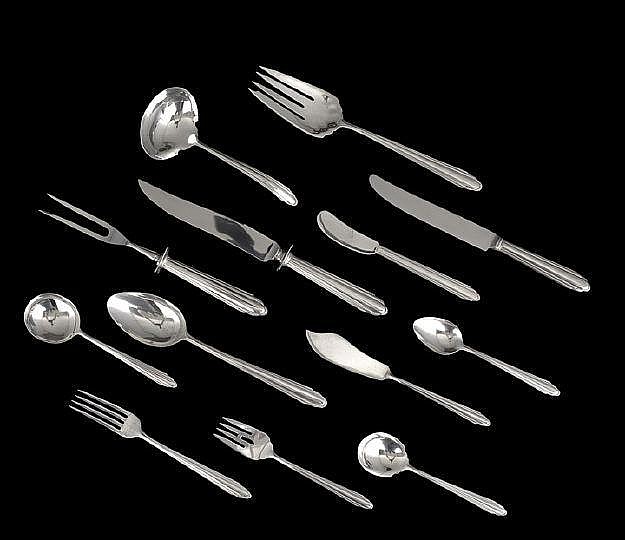
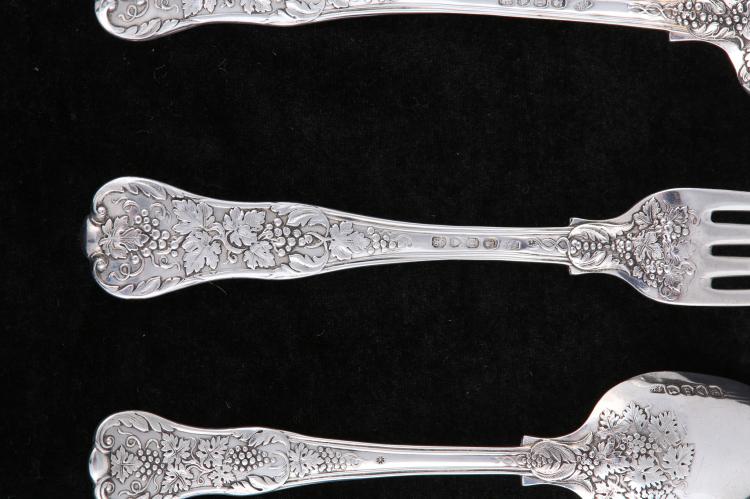
Real-world auction comps (recent sales)
Below are three example comps pulled from Appraisily’s internal auction database to show how widely results can range based on maker/pattern, completeness, and presentation. Use comps as anchors—then adjust for your spoon’s exact pattern, monogram status, condition, and whether you’re selling singles or a matched set.
Comps highlighted in the table:
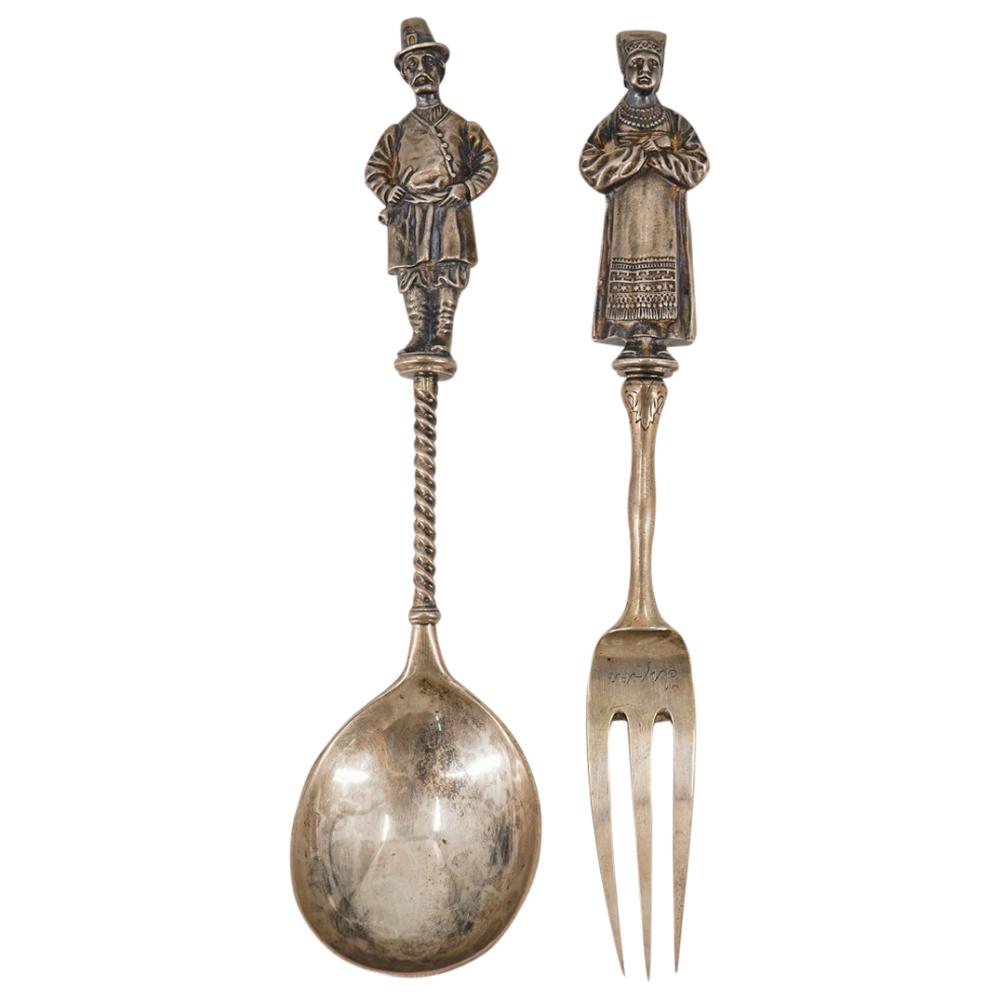
When to Consult a Professional
- You suspect a high-end maker, an early form, or complex hallmarks.
- You have armorial/provenance, or a matched set/service in a case.
- You need a written value for insurance, donation, or estate paperwork.
A small fee can prevent misidentification and undervaluation.
Care, Storage, and Selling Tips
- Clean gently: soft cloth + non-abrasive polish; avoid aggressive rubbing on details.
- Don’t over-polish: collectors often prefer even patina to a mirror-bright surface.
- Store dry: anti-tarnish cloth + silica gel; avoid PVC plastics.
- Photograph for sale: full length, bowl back, all marks, defects/repairs, and a weight photo.
- Sell smart: singles sell, but complete matched sets often bring higher prices.
Practical Checklist: How to Value Your Silver Spoons
- Confirm metal (sterling/coin/continental vs plate).
- Measure length and identify the spoon type.
- Weigh in grams (solid silver only).
- Photograph hallmarks and maker/pattern details.
- Note condition: bends, scratches, repairs, monograms/erasures.
- Set a scrap baseline (if solid silver).
- Pull comps that match maker/pattern/size/condition.
- Choose the right value type: FMV vs insurance vs liquidation.
What similar items actually sold for
To help ground this guide in real market activity, here are recent example auction comps from Appraisily’s internal database. These matched sales are market context only, not an object estimate or identification, and they do not guarantee a price for your specific silver spoons.
Shown USD range: USD 20-USD 2,500. Median of these 9 USD examples: USD 150.
| Comparable | What sold | Auction house | Date | Lot | Source-reported amount |
|---|---|---|---|---|---|
 |
STERLING & COIN SILVER: Twelve pieces of assorted flatware, one weighted: four iced tea spoons, marked sterling, 1.83 ozt; sugar ton...Source blocked; provenance matched | Winter Associates, Inc. | 2015-01-12 | 54 | USD 100 (buyer’s-premium treatment unknown) |
 |
Group of Sterling Silver Flatware to include large ladle, spoons, forks, iced tea spoons, etcetera 46.8 t.oz. plus three weighted handlesSource blocked; provenance matched | Nadeau's Auction Gallery | 2025-02-01 | 82 | USD 1,200 (buyer’s-premium treatment unknown) |
 |
Set of Six Scottish Victorian Sterling Silver Tea Spoons,Source blocked; provenance matched | Aalders Auctions | 2026-03-18 | 1286 | AUD 260 (buyer’s-premium treatment unknown) |
 |
Antique 1918 Set of Six Solid Sterling Silver Apostle Tea Spoons in Original Fitted BoxSource blocked; provenance matched | Global Antiques | 2018-09-22 | 76 | USD 60 (buyer’s-premium treatment unknown) |
 |
GORHAM STERLING SILVER BUTTERCUP TEA SPOONSSource blocked; provenance matched | Manor Auctions | 2018-07-14 | 83040 | USD 150 (buyer’s-premium treatment unknown) |
 |
Lot of Sterling Silver, Coin Silver, and Silver Plate Flatware including SpoonsSource blocked; provenance matched | Apple Tree Auction Center | 2023-06-02 | 3490 | USD 250 (buyer’s-premium treatment unknown) |
 |
A mixed group of English sterling silver condiment spoons and assorted other spoons including a tea caddy spoon and a pair of demitasse spoons, 19th/early 20th century, various dates and makersSource blocked; provenance matched | Gibson's | 2025-11-18 | 856 | AUD 320 (buyer’s-premium treatment unknown) |
 |
Set of six Russian silver tea spoons with twistedSource blocked; provenance matched | Mallams | 2015-06-11 | 836 | GBP 160 (buyer’s-premium treatment unknown) |
 |
31 Piece Frank Whiting Floral LILY Antique Sterling Silver Flatware Setting for Six Including Dinner Forks, Table Spoons, Butter Knives, Cake Knives, & Salad ForksSource blocked; provenance matched | Fidelity Estate Services | 2020-10-10 | 213 | USD 550 (buyer’s-premium treatment unknown) |
 |
Ten (10) Wallace Sterling Silver Iced Tea, Mint Julep, Sipping Straw Heart Shaped Spoons with Ball End. Each Measures 9 Inches Long. Very Good Condition for Eleven Pieces Ball missing on One. Weight 3.98 Troy Ounces. Shipping $32.00 (estimate $50 -Source blocked; provenance matched | Kodner Galleries | 2015-01-14 | 290 | USD 75 (buyer’s-premium treatment unknown) |
 |
Japanese Sterling Silver SpoonsSource blocked; provenance matched | Davis Brothers Auction | 2024-10-31 | 1154 | USD 20 (buyer’s-premium treatment unknown) |
 |
70 Piece Gorham Sterling Silver Flatware Set in Chantilly Pattern, to include six dinner forks, six salad / fish forks, six tablespoons, eight soup spoons, 12 tea spoons, six demi spoons, three place spoons, one slott...Source blocked; provenance matched | Nadeau's Auction Gallery | 2025-10-04 | 10 | USD 2,500 (buyer’s-premium treatment unknown) |
How these auction records were verified
Each row retains its exact source URL, lot identity, retrieval time, access result, and immutable record hash. Live source access was blocked; the exact record matched Appraisily's immutable pipeline provenance. Inspect the public comparable provenance record.
Disclosure: prices are shown as reported by auction houses and are provided for appraisal context. Learn more in our editorial policy.
Free first look
Not sure whether this silverware piece needs an appraisal?
Photograph the whole item, maker or identifying marks, dimensions, materials, condition, repairs, and any provenance or documentation. The photo-based Screener can help identify the likely category and visible evidence gaps before you pay for documentation.
Upload photos for a free first lookFree. No card needed. The photo upload usually takes about two minutes.
The free first read is a separate photo-based Screener, not this educational article. Results usually appear within a few minutes; complex items can take longer. From photographs of your silverware piece, it returns a preliminary category or identity read, visible evidence gaps, rough comparable market signals, and whether a human appraisal looks worthwhile; it is not a signed value conclusion. Material or construction can remain uncertain without direct examination, dimensions, provenance, or complete condition details. A written appraisal is useful when your silverware piece needs documented specialist support for insurance, tax, an estate, authentication, litigation, or a consequential sale, but you may not need one.
FAQ
Are silverplate spoons valuable? Usually modest, since there’s no scrap floor. Pattern, age, and near-mint condition can still make plate collectible.
Should I remove monograms before selling? Usually no—erasures often thin the silver and leave visible “ghosts.” Period monograms can add character.
How can I date a British spoon with hallmarks? Use the standard mark + assay office symbol + date letter (and its shield shape) to match the correct year cycle.
Search variations collectors ask
Readers often Google these questions while valuing antique silver spoons:
- how to read hallmarks on antique silver spoons
- sterling vs silverplate spoon value
- what does EPNS mean on silver spoons
- how to date a British sterling spoon by date letter
- how much is a set of sterling spoons worth by weight
- are monogrammed silver spoons worth less
- coin silver spoon value by maker mark
- Georg Jensen silver spoon value guide
- scrap value calculator for sterling spoon grams to troy ounces
Each question is addressed in the valuation steps above (metal type → hallmarks → condition → comps).