Uncovering the Hidden Treasures the True Value of Antique Bedroom Sets: appraisal and value basics
Uncovering the Hidden Treasures the True Value of Antique Bedroom Sets research should start with identification, condition, provenance, and recent comparable sales. Use this guide to compare the signals that matter before paying for a formal appraisal or deciding whether to sell.
Antique bedroom sets value checklist
Antique bedroom sets—suites that can include a bed, dresser, chest of drawers, armoire or wardrobe, vanity, and nightstands—offer an unusually rich blend of craftsmanship, history, and daily utility. For appraisers and collectors, they pose rewarding puzzles: determining what’s original versus matched, how age and construction reveal authenticity, where value concentrates within a suite, and when conservation helps (or harms) marketability. This guide distills the practical signals, methods, and market realities behind valuing antique bedroom suites.
What Makes a Bedroom Set ‘Antique’?
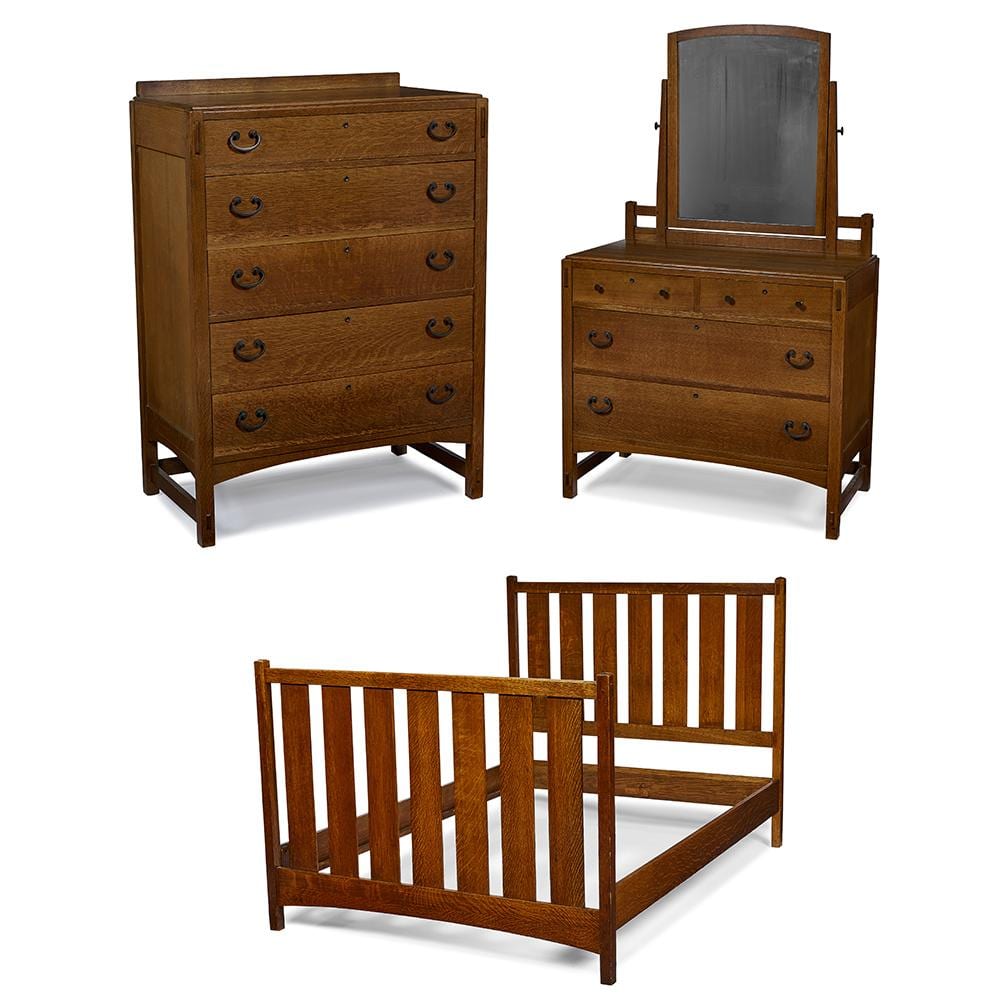
- Age threshold: In most markets, “antique” denotes 100 years or older. Early 20th-century Art Nouveau and Art Deco bedroom suites now commonly cross the threshold. Pieces from the 1910s–1920s are often antique; later suites are generally “vintage.”
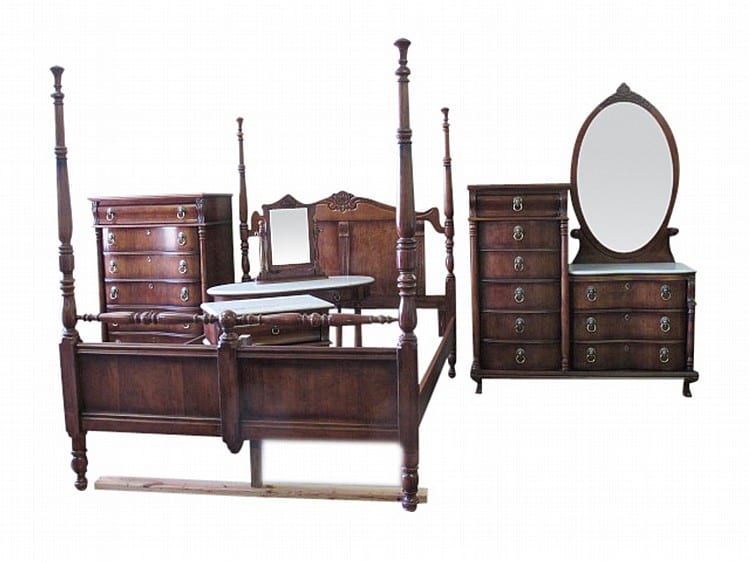
- Composition: A “set” (also called a suite) implies pieces conceived together, typically matching in design, wood, finish, hardware, and scale. Core components include:
- Bed (full or double, sometimes three-quarter; queen/king are rarely original)
- Dresser with mirror or dressing chest
- Chest of drawers or tallboy/highboy
- Armoire/wardrobe (European suites)
- Washstand (earlier suites) or nightstands (later suites)
- Vanity or dressing table (Edwardian onward)
- Styles you’ll meet:
- Georgian/Regency (18th–early 19th c.): restrained ornament, mahogany, fine veneers, bracket feet, hand-cut dovetails.
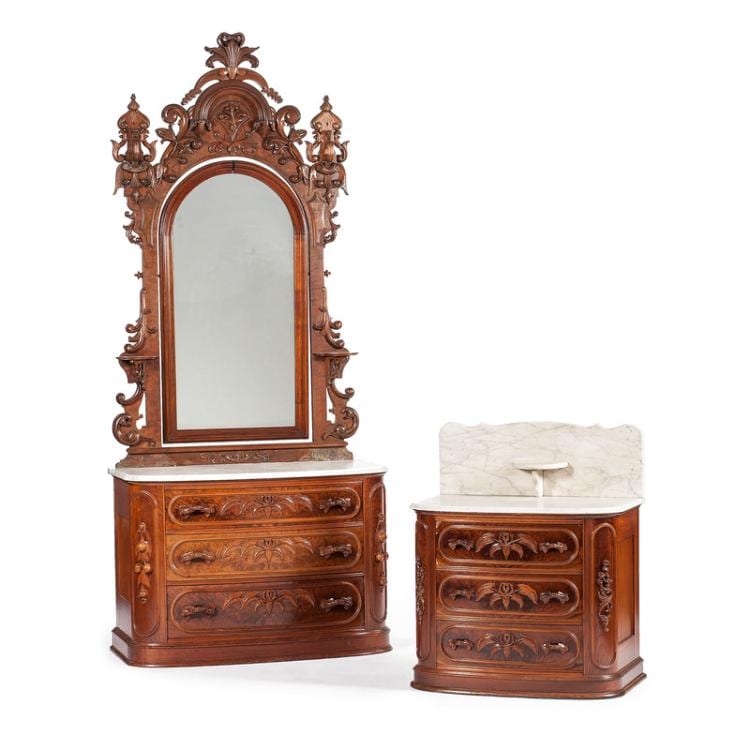
- Victorian and Eastlake (mid–late 19th c.): “golden oak,” walnut, exuberant carving, ebonized accents, incised lines.
- Arts & Crafts/Mission (c. 1890–1915): rectilinear forms, exposed joinery, quarter-sawn oak, minimal applied ornament.
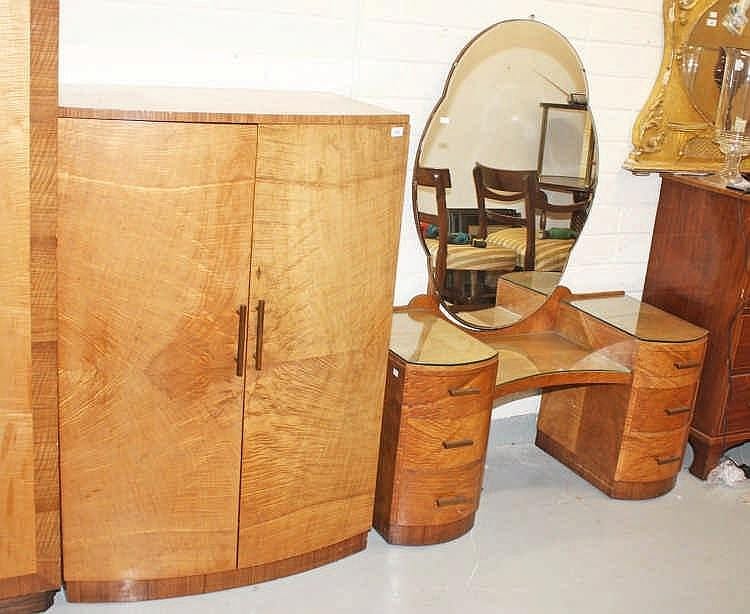
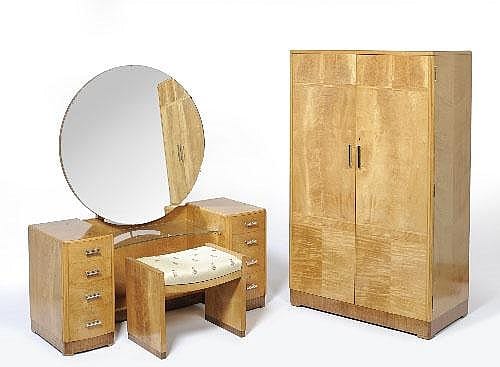
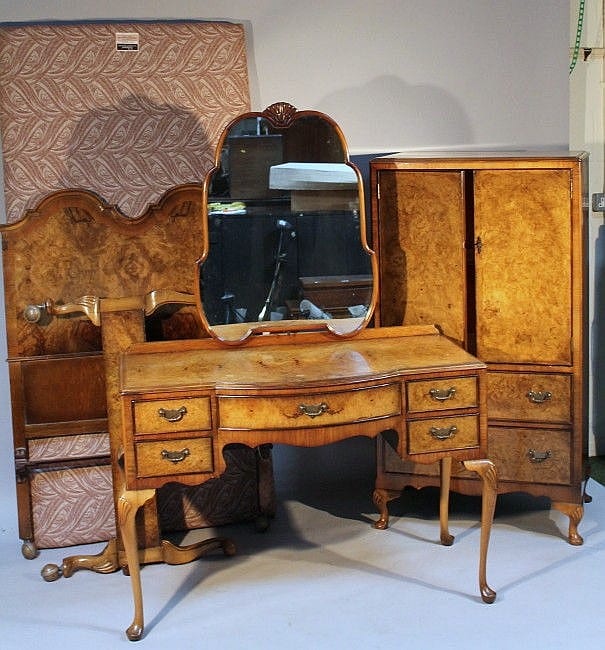
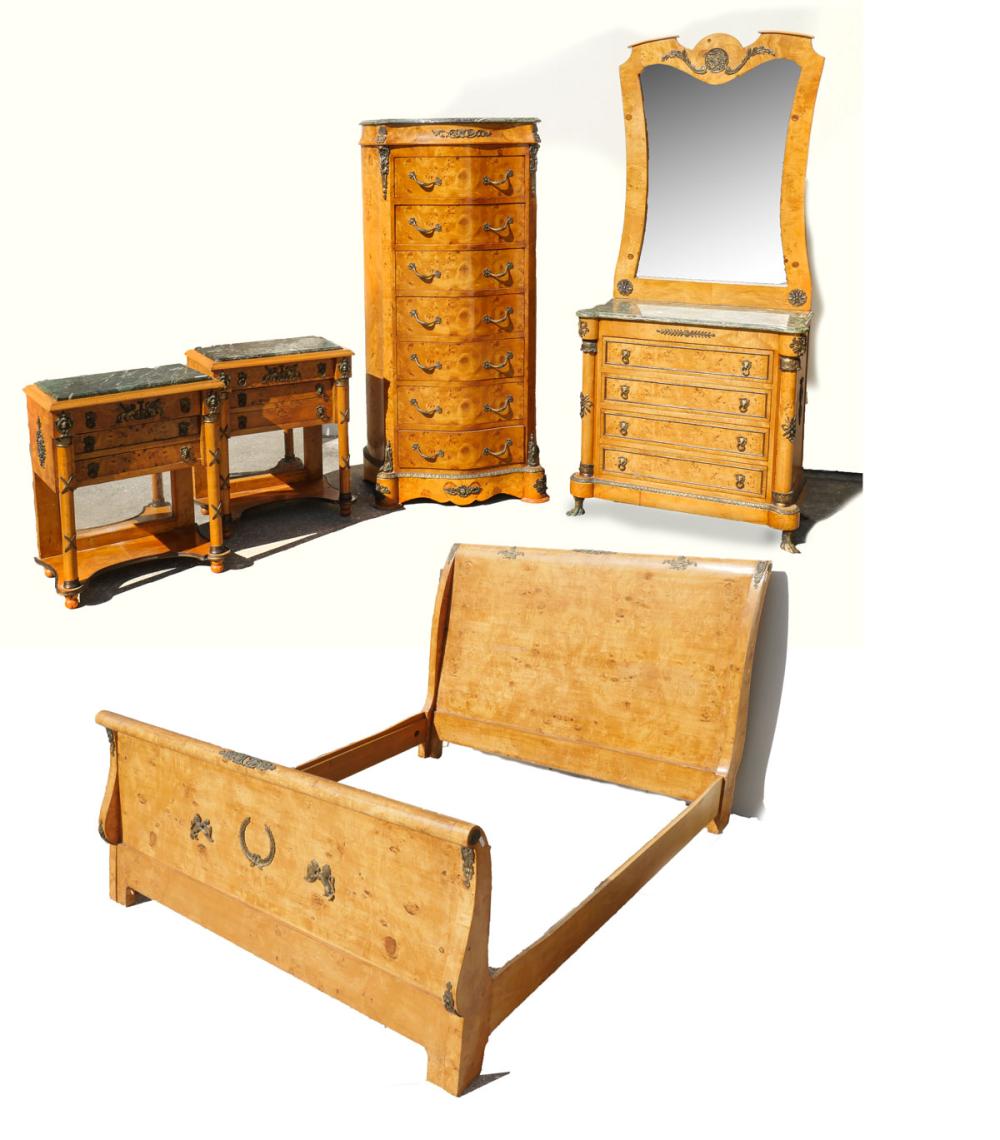
- Art Nouveau/Art Deco (c. 1890–1940): curving organic lines (Nouveau) or streamlined geometry (Deco), figured walnut, exotic veneers, mirrored surfaces, chrome or gilt bronze mounts.
- Geography matters:
- British suites often include wardrobes; American suites favor dressers and chests.
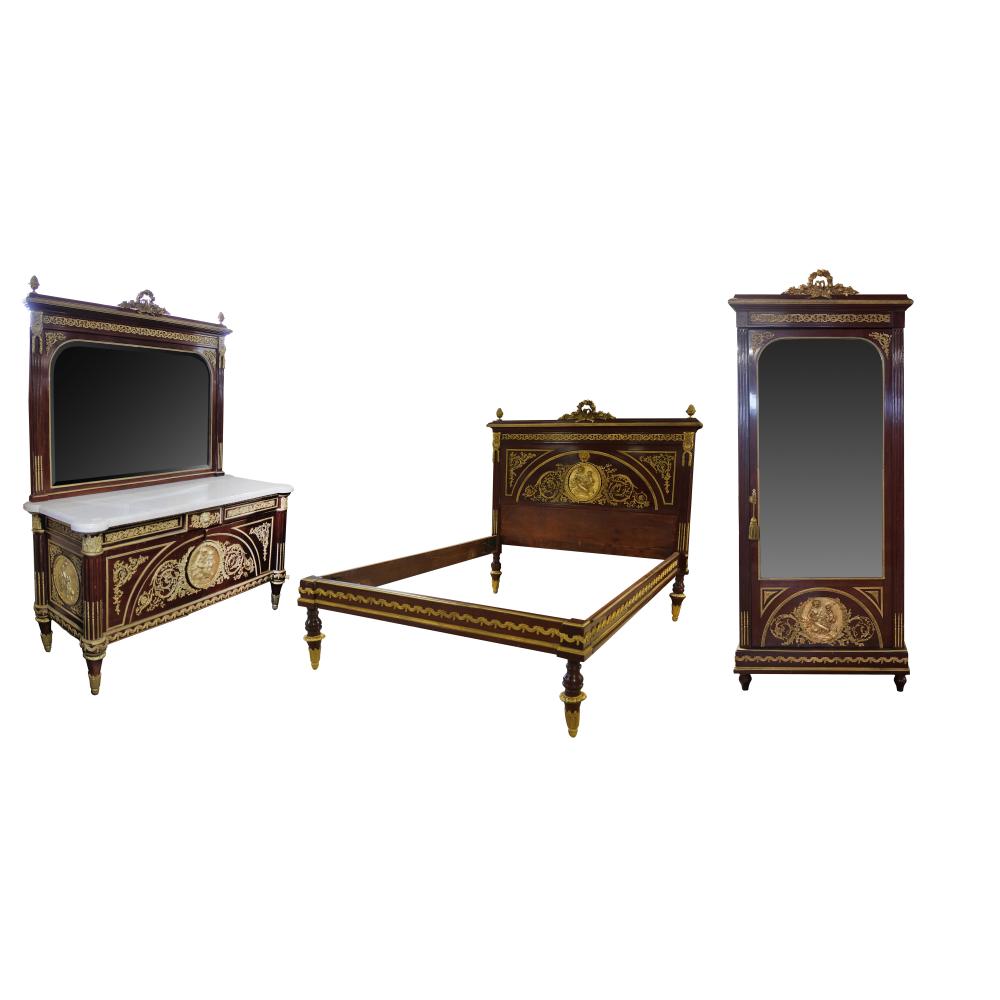
- French suites (Louis XV/XVI revival) may feature marquetry, ormolu, and marble tops.
- American Grand Rapids makers (e.g., Berkey & Gay) and New York ateliers (e.g., R. J. Horner, Herter Brothers at the high end) produced notable late 19th-century work.
Construction, Materials, and Telltale Details
Authenticity and quality reside in the details. Appraisers read construction like a fingerprint.
- Woods and veneers:
- Primary woods: Cuban/West Indian mahogany (earlier, dense, fine ribbon figure), American black walnut, quarter-sawn oak (“tiger flake”), maple, cherry. French fruitwoods and walnut common on continental pieces.
- Veneers: Bookmatched walnut or mahogany, burr (burl) walnut, satinwood banding; quality suites often use thick, well-laid veneer over stable secondary woods.
- Secondary woods: Oak, pine, or poplar inside drawers and backs can help attribute region and period. Consistent secondary wood across pieces supports a true suite.
- Joinery and tool marks:
- Dovetails: Hand-cut dovetails (irregular spacing) pre-1860s; machine-cut (regular, fine) later. Look for drawer sides with thin, crisp pins in finer work.
- Saw marks: Straight, vertical striations suggest pit-sawn boards (pre–circa 1840); circular arc marks point to later circular-sawn stock.
- Dust boards: Quality case pieces have dust panels between drawers; cheaper pieces omit them.
- Hardware and fittings:
- Pulls and escutcheons: Heavy cast brass (often non-magnetic) suggests quality; thin stamped brass indicates cost-saving. Bluing or oxidation consistent with age is a good sign. Replaced hardware is common; extra holes inside drawer fronts are clues.
- Locks: Bramah (UK), Sargent (US), or other stamped locks can aid dating and attribution. Working keys add value but aren’t essential.
- Casters: Early are wood or porcelain; later 19th-century brass-and-ceramic or all-brass; plastic or nylon indicates later modifications.
- Finishes and glass:
- Shellac/French polish on earlier suites; later pieces might have lacquer. Uniform, mirror-like polyurethane is a red flag for modern refinishing.
- Mercury or silvered-glass mirrors: Very old mercury glass can exhibit slight waviness and sparkly “seed.” Modern replacements are flatter and clearer; a replaced mirror isn’t fatal but should be noted.
- Bed frames and sizing:
- Original beds are typically smaller (full/double or three-quarter). Professional lengthening/widening for queen/king is possible, but it alters originality and often reduces value to purists—though it can improve utility for retail buyers.
- Labels and stamps:
- Paper labels, burned-in brands, chalk shop marks, pencil assembly numbers, and shipping tags can all support identification. Look under drawer tops, backboards, and inside casework.
Rarity, Provenance, and Cohesion: What Drives Value
Beyond age and construction, four drivers dominate the value of antique bedroom sets: originality, rarity, condition, and market fit.
- Originality of the set:
- True suites designed and sold together carry a premium over “married” sets assembled from similar pieces. Cohesive veneer patterns, matching hardware, uniform secondary woods, and consistent design details are the best indicators.
- “Near suites” (one or two period-appropriate replacements) are acceptable, but be transparent in cataloging and appraisal notes.
- Rarity and maker attribution:
- High-style or limited-production suites by recognized workshops hold strong value. For British and American pieces, names like Gillows, Waring & Gillow, Herter Brothers, R. J. Horner, and certain Grand Rapids firms can significantly elevate prices. On the continent, quality Parisian ébénistes and reputable provincial makers are sought after.
- Unusual configurations (pair of nightstands with both armoire and highboy) or exceptional veneer/marquetry can create a rarity premium.
- Condition and conservation:
- Stable, honest wear with good patina typically outranks glossy, over-restored surfaces. Tight joints, functioning drawers, intact dust boards, and minimal veneer loss are pluses.
- Substantial alterations—cut-down feet, replaced tops, over-aggressive sanding that thins veneer—diminish value. Refinished pieces can be attractive for decorators but often trade below original-patina examples of the same model.
- Scale and livability:
- Urban buyers favor pieces that fit modern spaces; exceptionally large wardrobes may be discounted because of access challenges.
- Beds adapted to queen/king can increase retail salability but may depress value for formal appraisal categories emphasizing originality.
- Provenance and documentation:
- Family records, letters, dated photos, billheads, and exhibition tags add confidence and can lift value. Catalog these materials thoroughly; they matter most when the maker is notable or the suite is exceptional.
Market Realities and Valuation Approaches
Appraising antique bedroom sets means fitting an object to a specific market and purpose of value.
- Define the assignment:
- Fair Market Value (FMV): Price between willing buyer and seller in the relevant secondary market (often auction or dealer-to-private).
- Retail Replacement Value (RRV): What it would cost to replace with a comparable item from a qualified dealer within a reasonable time—usually higher than FMV.
- Orderly Liquidation/Marketable Cash Value: Lower, quick-sale contexts (estate, downsizing).
- Choose the right comparables:
- Auction comps are best for FMV; dealer listings and show prices inform RRV. Adjust for condition, maker attribution, number of pieces, regional taste, and recency of sale.
- Compare like to like: A five-piece Arts & Crafts oak suite with original pulls is not directly comparable to a veneered Deco suite with chrome mounts.
- Segment the set for analysis:
- Value can concentrate in one or two pieces. A monumental armoire or a dresser with exceptional marquetry may carry the majority of a suite’s worth. Assess each piece individually, then consider the “suite premium” for cohesion.
- Trend awareness:
- “Brown furniture” headwinds still affect middle-grade Victorian suites, particularly large, heavily carved examples in dark finishes.
- Arts & Crafts/Mission and quality Art Deco suites have seen steadier demand, especially when sizes suit modern rooms.
- Smaller-scale and beautifully veneered pieces with clean lines outperform oversized, heavily ornamented ones.
- Practical pricing notes:
- A complete, documented suite by a named maker with original finish tends to achieve the strongest results.
- Mixed-condition sets may realize more when sold as individual pieces, especially if space limits or shipping costs deter buyers from taking the whole.
Care, Conservation, and Ethical Considerations
- Environment:
- Target 40–60% relative humidity and stable temperatures. Use felt or cork coasters under lamps; avoid direct sunlight that can bleach veneers and finishes.
- Cleaning and finishes:
- Dust with a soft cloth. Clean gently with a barely damp microfiber followed by drying; avoid silicone polishes. Periodic paste wax (conservator-grade) over shellac or French polish adds protection and luster.
- Do not strip original finish unless absolutely necessary. Reversible conservation (hide glue for veneer, stick shellac for small losses) is preferred.
- Structural issues:
- Tighten loose joints with hide glue; avoid modern construction adhesives. Stabilize lifting veneer with heat and hide glue; clamp carefully with cauls.
- Replace missing hardware with period-correct parts where possible; document any replacements.
- Restricted materials:
- Be alert to ivory key escutcheons, tortoiseshell, or Dalbergia (rosewood) species in later Deco veneers; trade and export may be regulated. Keep documentation of materials and dates.
- Bed conversions:
- Professional bed-extension systems can be reversible. Keep original rails and hardware for future owners and to preserve value.
Quick Appraisal Checklist
- Verify age: Check joinery (hand vs machine dovetails), saw marks, secondary woods, and finish type.
- Confirm suite cohesion: Match veneers, hardware, finish, secondary woods, and scale across all pieces.
- Inspect condition: Look for veneer lifting, splits, warping, over-sanding, and replaced tops or backs.
- Check hardware: Assess weight and casting quality, look for extra holes indicating replacements, confirm locks and casters are period-appropriate.
- Assess originality of bed: Note size, any extension work, and whether rails and hardware are original and retained.
- Look for labels/stamps: Inspect drawer sides, case backs, underside of tops, mirror frames, and inside wardrobes.
- Evaluate function: Drawers should run smoothly, doors align true, mirrors secure, keys present (if available).
- Document everything: Measurements, detailed photos (inside/out), wood ID, construction details, and any provenance.
- Research comps: Find recent, closely comparable sales; adjust for condition, maker, and configuration.
- Decide the valuation basis: FMV vs RRV vs liquidation—align to the user’s need (insurance, estate, sale).
FAQ
Q: Does refinishing an antique bedroom set reduce its value? A: Often, yes—particularly for FMV in the collector market. Original, well-preserved finishes with honest patina usually command more than stripped and re-lacquered surfaces. Tasteful, reversible conservation that stabilizes the original finish is preferred. For insurance replacement or decorator retail, a high-quality refinish can improve salability but should be disclosed.
Q: How can I tell if my suite is veneer or solid wood? A: Examine edges and undersides. Veneer shows a thin surface layer over a different substrate; look for veneer seams and banding. Bookmatched patterns are a veneer hallmark. Drawer sides and interiors are typically solid secondary woods. Veneer is not inferior—high-grade veneers on stable cores are a feature of quality.
Q: Can an antique bed be converted to queen or king size? A: Technically yes, using extension rails or adapter systems. For purist collectors, conversion reduces originality and can lower value. For end users, it may enhance usability and retail appeal. Always retain original rails and document any alterations for future appraisal.
Q: What signs point to a “married” set rather than an original suite? A: Mismatched secondary woods, slightly different hardware profiles or escutcheon shapes, inconsistent veneer species or figure, finish color that doesn’t align under strong light, differing backboard construction, and non-sequential assembly marks. One or two sympathetic substitutions can be acceptable if disclosed.
Q: Which styles of antique bedroom sets are most in demand today? A: Market preferences shift, but generally, well-proportioned Arts & Crafts/Mission suites and refined Art Deco examples in figured walnut or exotic veneers are strong. Smaller-scale Georgian/Regency pieces with restrained ornament also perform well. Oversized, heavily carved late Victorian sets tend to lag unless exceptionally fine or well-provenanced.
By focusing on construction, cohesion, and condition—and by aligning value conclusions with the right market and purpose—collectors and appraisers can uncover the true worth of antique bedroom sets, distinguishing the merely old from the genuinely exceptional.