Charles Schulz original drawing checklist
Collectors often use “original drawing by Charles Schulz” to mean very different things: a published Peanuts comic strip board, a quick signed Snoopy sketch, or a limited-edition print with a pencil signature. Each has a distinct market and requires different appraisal criteria. This guide explains how to identify, authenticate, value, and care for Schulz originals with the level of specificity an appraiser or serious collector needs.
What Counts as an “Original Drawing” by Charles Schulz
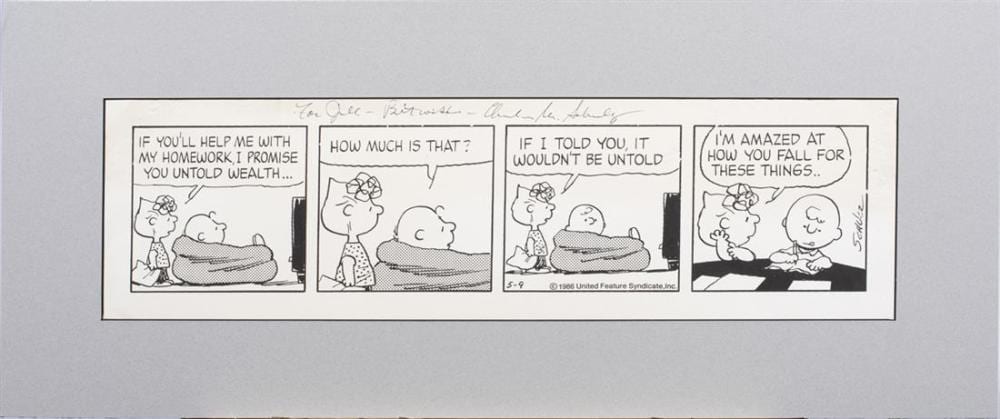
- Published daily strip (black-and-white): Schulz personally penciled, inked, and lettered every Peanuts strip during his lifetime. Daily originals are single boards containing a complete strip (typically three to four panels), finished in India ink over pencil on bristol board.
- Published Sunday strip (full-page): Also drawn and lettered by Schulz, but intended for color in newspapers. Original Sunday boards are significantly larger and often include a top “throwaway” or title panel that some newspapers omitted when printing.
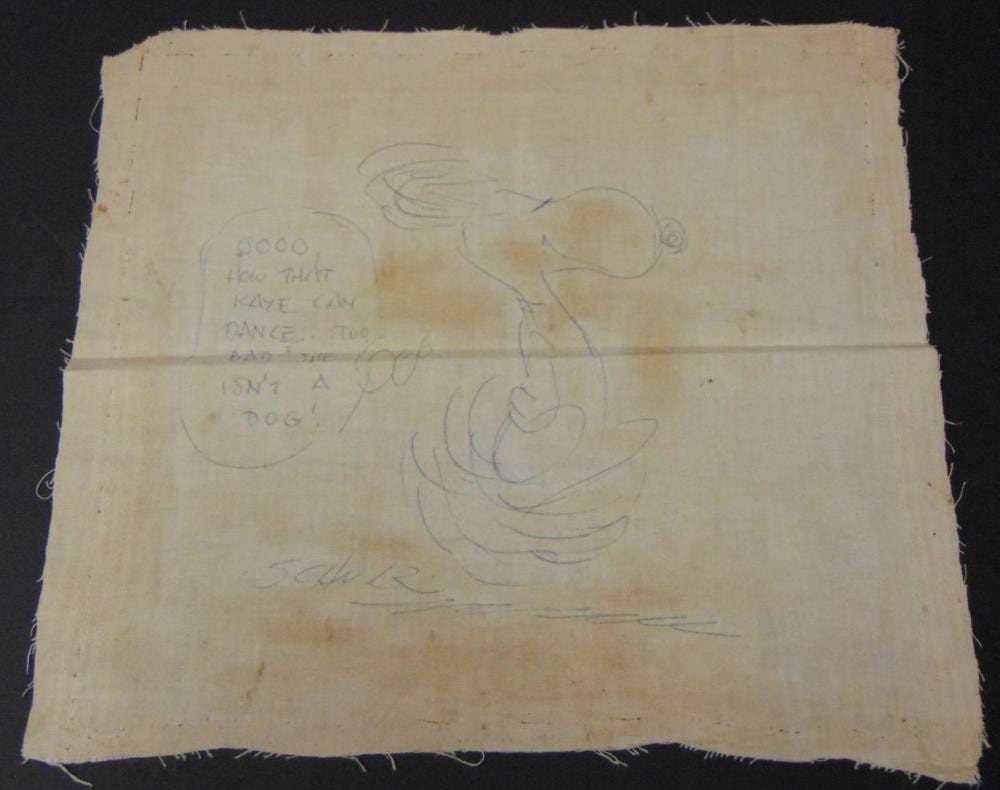
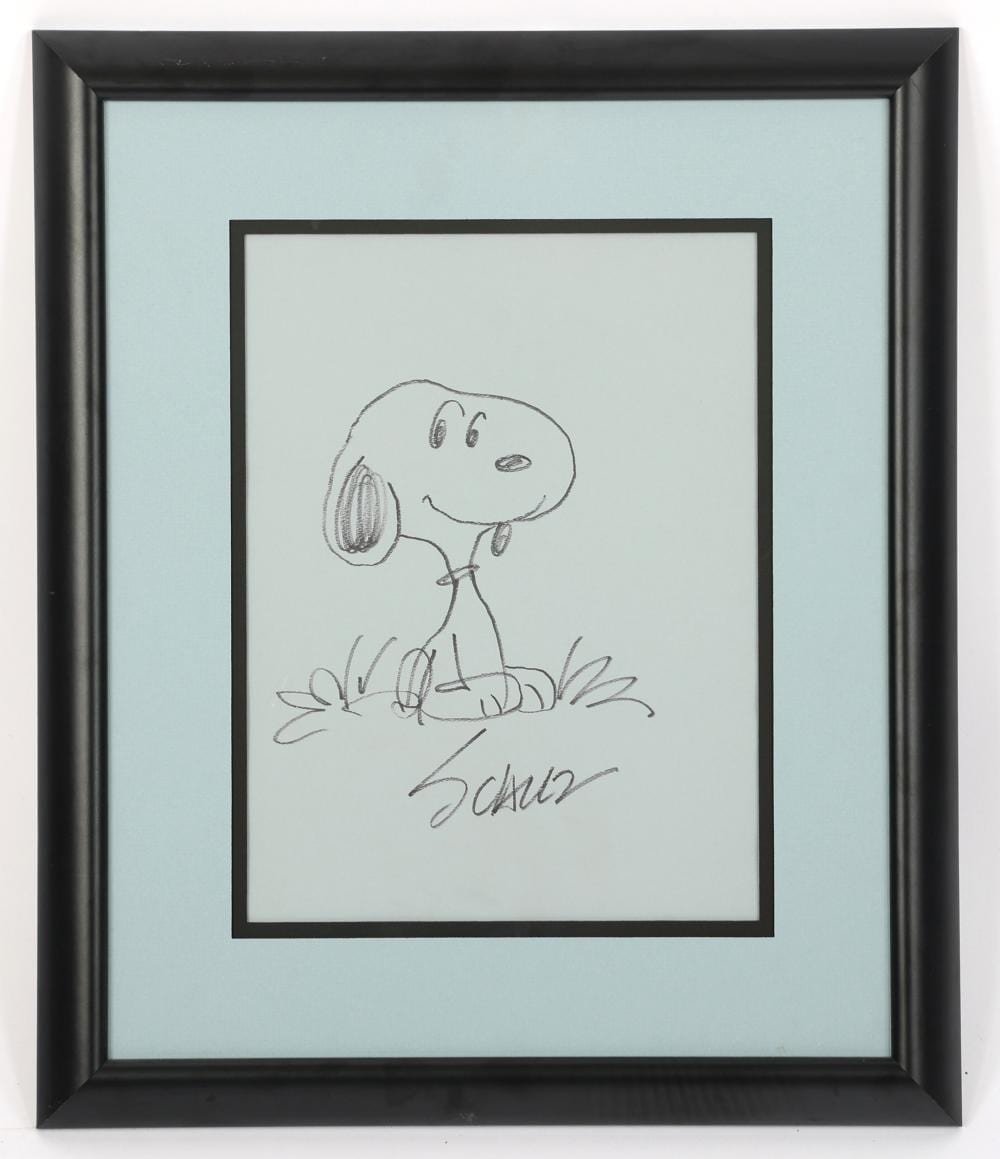
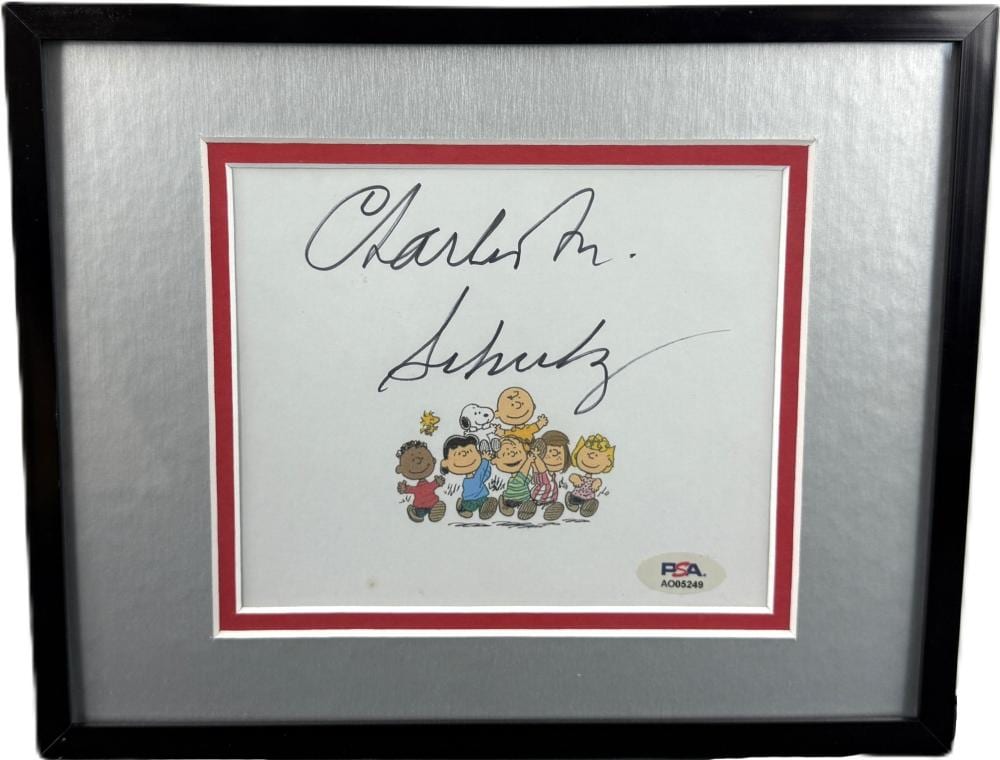
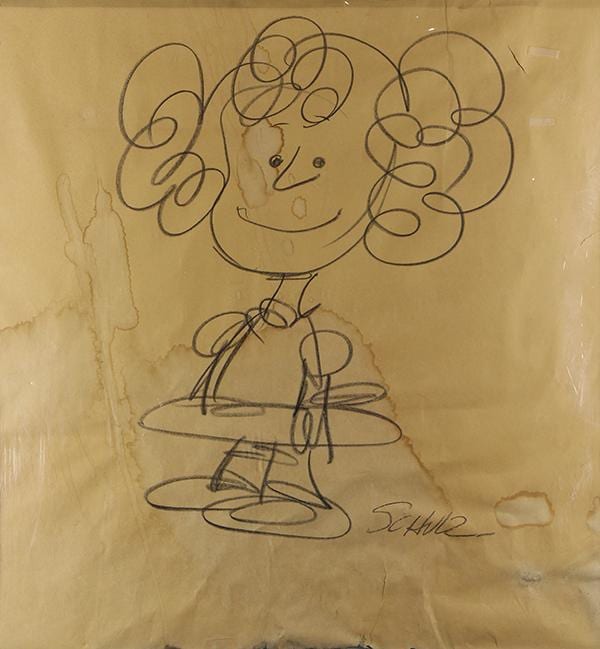
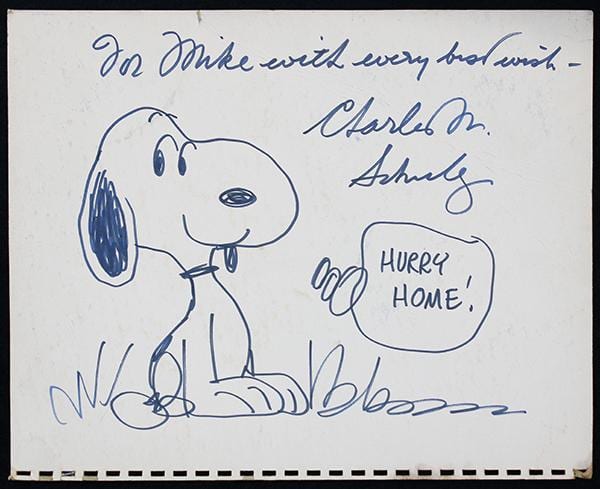
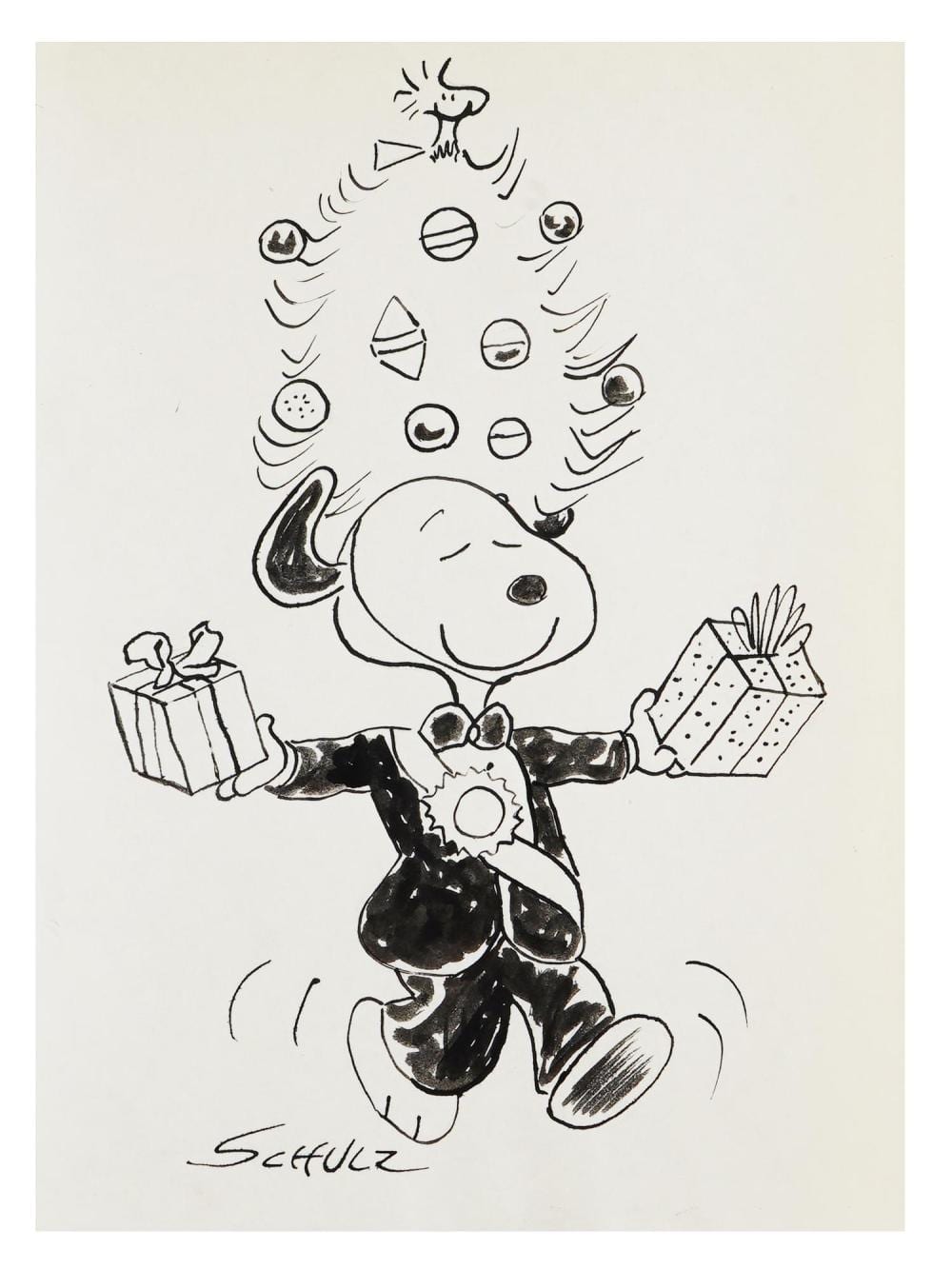
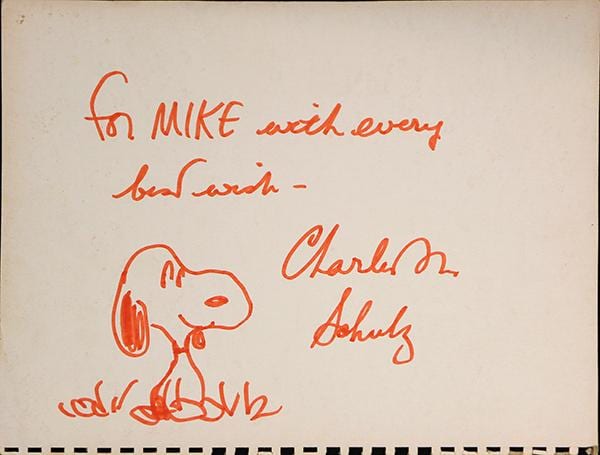
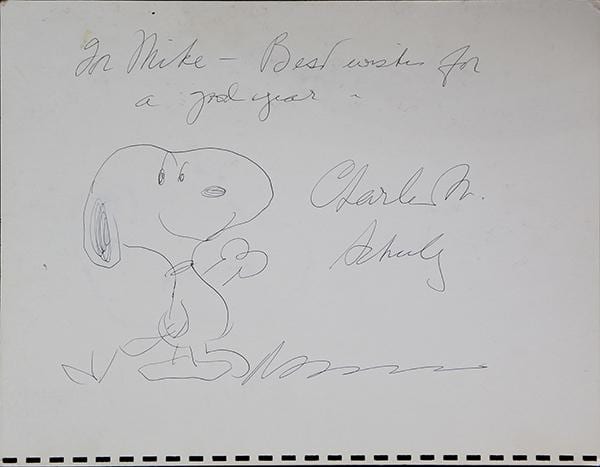
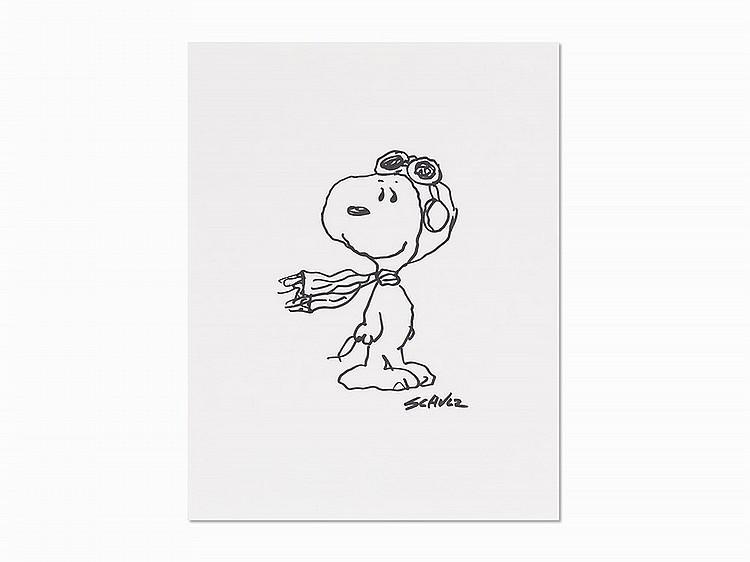
- Presentation drawings and sketches: Quick renderings of Snoopy, Charlie Brown, and other characters, usually dedicated to a person. These appear on notepaper, cards, book pages, or small bristol sheets. They are authentic Schulz drawings but are not published strip art.
- Production ephemera: Color guides (done by the syndicate/color staff), photostats, and mechanical paste-ups. These are part of the production process but are not original Schulz drawings unless augmented by his hand.
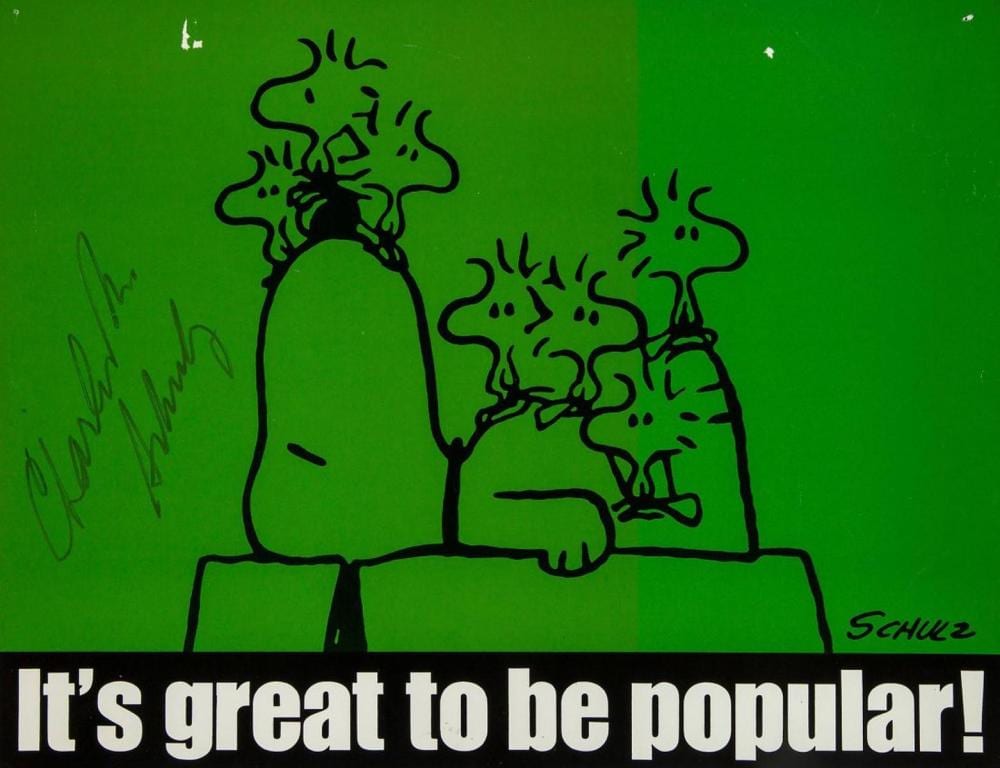
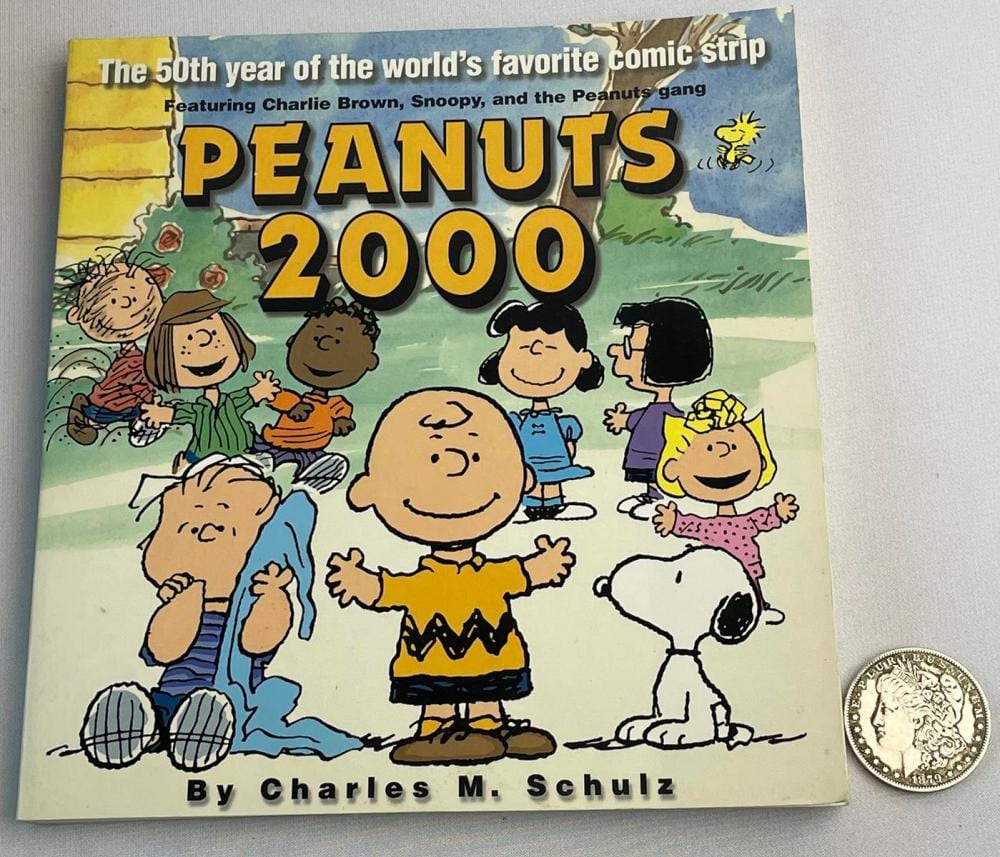
- Prints and portfolios: Lithographs or serigraphs bearing Schulz’s pencil signature. While collectible, these are reproductions and not original art, no matter the edition size.
Understanding which category your piece falls into is the foundation of appraisal.
Physical Characteristics and Telltale Markers
Schulz’s published originals exhibit recurring, verifiable traits. These markers help separate true originals from reproductions and later decorative pieces.
Board and media
- Substrate: Smooth bristol board (often Strathmore or comparable), off-white to cream today from age. Thickness is stiffer than paper.
- Media: Non-photo blue or graphite pencil underdrawing; India ink for finished lines and lettering. White-out for corrections is common. Paste-ups may appear for small fixes or, on Sundays, logo elements.
- Dimensions (approximate ranges vary by era):
- Daily strip boards: roughly 5.5–7 inches tall and 24–29 inches wide.
- Sunday boards: roughly 15–18 inches tall and 20–28 inches wide, including a title/throwaway tier.
- Edges/margins: Generous margins with editorial notations, registration/crop marks, and production notes; trimming is a red flag unless documented.
Lettering, signatures, and dates
- Hand lettering: Schulz lettered his strips; balloon text and captions show natural ink flow and variable line weight. Consistent yet subtly irregular—never uniform like type or photocopy.
- Signature: “Schulz” signature generally appears within the art area (often in the last panel of dailies or lower right on Sundays). Compare the rhythm and confident stroke to verified examples; look for pressure changes and pen lifts.
- Copyright line: Variants of the United Feature Syndicate credit appear, often hand-lettered within the panel by Schulz on published strips.
- Dating: The strip date is typically drawn within a panel. Margins may also carry a date or editorial stamps.
Verso and production marks
- Back-of-board: You may find United Feature Syndicate stamps, inventory numbers, pencil annotations, newspaper date stamps, or adhesive residue from past mounting. These are useful provenance clues.
- Paste-ups and corrections: Lifted areas, patch corrections, and white-out halos are normal on originals and signal genuine, hand-executed production.
Sketches and dedication drawings
- Surfaces: Inside book pages, note cards, or small sheets. Materials are typically felt-tip pen or ink pen. Dedicated “To [Name]—Schulz” with a simple Snoopy, Charlie Brown, or Woodstock is common.
- Simplicity: Fewer lines, quickly executed. These are authentic but valued differently from full strips.
Common misconceptions
- Blue pencil is not a sign of forgery; it is a production tool.
- A pencil-signed print is not original art. Stippled halftone patterns or uniform dot screens within linework indicate a reproduction.
- Clean, uniform ink lines without correction marks can be suspicious if the finish looks mechanically perfect.
Market Values and Demand Drivers
Prices for Schulz’s original art vary widely based on subject, era, and format. Use these ranges as directional, not absolute; the best examples can exceed them substantially.
Directional ranges (as of recent market behavior)
- Daily strips (published originals): broadly mid five to high five figures; exceptional subjects or early 1950s examples can reach low to mid six figures.
- Sunday strips (published originals): generally low six figures to several hundred thousand; historically important or icon-laden Sundays can exceed that.
- Presentation sketches and dedicated drawings: low four to low five figures depending on size, character(s), and appeal. Simple book sketches are typically lower; large, carefully rendered drawings command more.
- Signed limited-edition prints: three to mid four figures, driven by edition size, image popularity, and condition.
Subject matter premiums
- Iconic gags and characters: Snoopy as the Flying Ace, Lucy and the football, Great Pumpkin, baseball strips, “Happiness is…” themes, early appearances of Woodstock, and holiday strips command the strongest demand.
- Key dates and firsts: The earliest 1950s material and “first appearance” strips are trophy-level rarities.
- Ensemble casts: Strips featuring multiple major characters often outperform single-character gags.
- Visual dynamism: Panels with movement, inventive layouts, or unusually rich staging draw broader interest.
Era and scarcity
- Early 1950s: Scarcer, historically pivotal, high desirability.
- 1960s “golden” period: Peak cultural resonance; flying ace, baseball, and school themes from this era are particularly strong.
- 1970s–1980s: Still very desirable; pricing varies more by subject.
- 1990s: Generally more attainable, though the right subjects remain competitive.
Condition’s effect on value
- Light, even toning and minor, stable paste-ups are widely accepted and often period-typical.
- Problems with impact: severe staining, water exposure, trimmed margins, heavy mat burn, brittle tape, or extensive restoration can depress value, sometimes significantly.
Provenance premiums
- Direct-from-syndicate pieces with original letters, gifts from Schulz to known recipients, or well-documented institutional deaccessions reduce risk and can lift value.
- Auction-catalogued examples with comparative results offer stronger comp support in formal appraisals.
Liquidity and venues
- Prominent comic-art auctions are primary venues for top-tier strips. Specialists and reputable dealers handle private placements. Less iconic material appears in broader fine-art and collectibles sales.
Authentication, Provenance, and Red Flags
Essential authentication steps
- Verify publication: Locate the exact strip in published anthologies or newspaper archives by matching the date, dialogue, and art. A one-to-one match is powerful evidence.
- Inspect the art surface: Look for pencil underdrawing, varied ink line weights, white-out corrections, and the tactile feel of bristol board. Loupe examination should reveal ink sit-down, not uniform print dots.
- Compare signatures: Cross-compare shape, slant, spacing, and pen-pressure of “Schulz” against verified exemplars across decades.
- Check the back: Seek syndicate stamps, notes, or date stamps. Photograph front and back for your records.
- Assemble provenance: Letters from United Feature Syndicate, gallery/auction paperwork, collector invoices, or correspondence strengthen authenticity and market confidence.
Red flags to treat cautiously
- Perfectly clean, glossy surfaces with no pencil, no corrections, and uniform blacks that look printed.
- Signatures that float suspiciously without integration into the art or that display tremor/inconsistency unlike Schulz’s characteristic hand.
- Cuts or margins trimmed to the panel border, especially without documentation; it removes production notes and reduces confidence.
- “Original” color dailies: Published dailies were black-and-white; colored versions are often later hand-colored reproductions or prints, unless clearly identified as unique presentation pieces.
Ownership and rights note
- Owning an original does not convey copyright. Reproduction and commercial use remain controlled by the rights holders. This is standard in comic art and should be explained to buyers.
Conservation and Display Best Practices
- Framing: Use 100% cotton rag or lignin-free, buffered matting. Keep margins visible; avoid window cuts that crop production notes.
- Glazing: Opt for UV-filtering acrylic or glass. Acrylic reduces weight and shatter risk but can build static; discuss with your framer.
- Mounting: Hinge with Japanese tissue and reversible, conservation-grade wheat starch paste. Never dry-mount. Do not apply tape directly to the art.
- Environment: Stable 65–72°F (18–22°C), 40–55% RH, no direct sunlight. Avoid basements and attics.
- Light exposure: Limit to museum norms; when not on display, store in a dark, archival box or flat file.
- Storage: Use archival polyester or polypropylene sleeves with interleaving; store flat, fully supported.
- Condition triage: If paste-ups are lifting or white-out is powdering, consult a paper conservator. Avoid DIY cleaning—erasers and solvents can cause irreversible damage.
- Documentation: Keep high-resolution images of front/back, measurements, and a condition report. Retain all provenance documents with the art.
Quick Appraisal Checklist
- Identify the type: Daily strip, Sunday strip, presentation sketch, or print.
- Confirm publication: Match date, panels, and dialogue to a published source for strips.
- Examine materials: Bristol board, pencil underdrawing, varied ink, white-out, paste-ups.
- Verify signature: Compare “Schulz” to known examples; assess pen flow and pressure.
- Inspect verso: Look for syndicate stamps, dates, or editorial notations.
- Assess condition: Note toning, stains, trimming, mat burn, tape, or restorations.
- Evaluate content: Key characters, iconic gags, era, and visual appeal.
- Gather provenance: Letters, receipts, labels, auction records.
- Determine venue: Consider appropriate auction/dealer channel for the caliber.
- Record data: Measurements, photos, condition notes, and an estimated value range.
FAQ
Q: How can I quickly tell an original Schulz strip from a printed reproduction? A: Originals show pencil underdrawing, irregular but confident ink lines, white-out corrections, and tactile ink on bristol board. Under magnification, you should not see uniform halftone dots in the linework. Reproductions often have dot patterns and perfectly uniform blacks.
Q: Are dedications (“To Jane—Schulz”) a problem for value? A: Not for presentation sketches; they are expected and can help with provenance. On published strip boards, large front-of-board dedications are unusual; if present, ensure they’re period-consistent and by Schulz. Dedications rarely improve value but don’t necessarily hurt it if discrete.
Q: My daily is in color—does that increase value? A: Dailies were created and published in black and white. Hand-coloring added later generally does not enhance value and can reduce it. Authentic Sunday color was executed in print via color guides, not on the original inked board.
Q: The margins are trimmed. Is it still marketable? A: Yes, but trimming lowers value and complicates authentication because production notes are lost. Provide strong provenance and documentation to mitigate buyer concerns.
Q: Do later 1990s strips sell for less? A: Generally, yes. Early 1950s–1960s material with iconic subjects commands stronger prices. Nevertheless, high-appeal 1990s themes and character-rich strips remain desirable and can perform well.
With careful identification, documentation, and conservation, an original drawing by Charles Schulz—whether a published strip or a heartfelt presentation sketch—can be appraised with confidence and preserved for the next generation of collectors.