Old Ping Putter Values: appraisal and value basics
Old Ping Putter Values research should start with identification, condition, provenance, and recent comparable sales. Use this guide to compare the signals that matter before paying for a formal appraisal or deciding whether to sell.
Introduction to Vintage PING Putters
This comprehensive guide will help you understand what makes old PING putters valuable, how to identify collectible models, and current market values for these iconic golf clubs. Whether you’ve discovered an old PING putter in your garage or you’re actively building a collection, this information will help you determine its potential worth.
Key PING Putter Value Indicators
Material: Beryllium copper models command significant premiums
PING Putter Historical Timeline
- 1959
Beginning of PING
Karsten Solheim creates the first PING putter, the 1A, working out of his garage in Redwood City, California.
- 1966
PING Anser Introduction
The revolutionary PING Anser putter is introduced, featuring the now-iconic heel-toe weighted design that would influence putter design for decades.
- 1967-1969
Redwood City Era
Putters produced in Redwood City, California. These are among the most valuable PING putters today due to their rarity.
- 1969-1973
Early Scottsdale Era
Production moves to Scottsdale, Arizona. Early Scottsdale putters with the ZIP code marking are highly collectible.
- 1973-1986
Later Scottsdale Era
Production continues in Scottsdale without ZIP code. These models are collectible but generally less valuable than earlier versions.
- 1980s
Beryllium Copper Models
Introduction of beryllium copper putters, which would become highly sought after by collectors.
What Makes Old PING Putters Valuable?
Manufacturing Location and Era
The production location is perhaps the most critical value factor for vintage PING putters:
Materials and Special Editions
Beryllium Copper Models: PING putters made from beryllium copper (BeCu) command premium prices. These clubs offer a softer feel and develop a distinctive patina over time. Beryllium copper PING putters can sell for several hundred to over a thousand dollars depending on model and condition.
Manganese Bronze: The material Karsten Solheim chose for his earliest models - Manganese Bronze - helped define the PING putter. These early bronze putters often command higher prices due to their historical significance.
Model Type
Different PING putter models vary significantly in collectibility and value:
- Anser Series: The most iconic PING putters, especially early versions, are highly sought after
- 1-A: The original PING putter model has significant historical value
- Zing: Popular models with moderate collector value
- My Day: Distinctive design with dedicated collector following
- Pal: Early blade-style putters with good collector interest
How to Identify Valuable PING Putters
Serial Numbers and Markings
PING putter serial numbers can typically be found in one of several locations:
- On the face of the putter
- On the hosel (where the shaft enters the clubhead)
- On the heel of the putter
According to PING’s official information, “putter serial numbers [are located] on the face, hosel or heel.” These serial numbers can help determine the production date and authenticity of your putter.
Address and Location Stamps
The location stamp is the most critical identifier for determining a PING putter’s age and potential value:
- Redwood City, California: The earliest and most valuable putters (1967-1969)
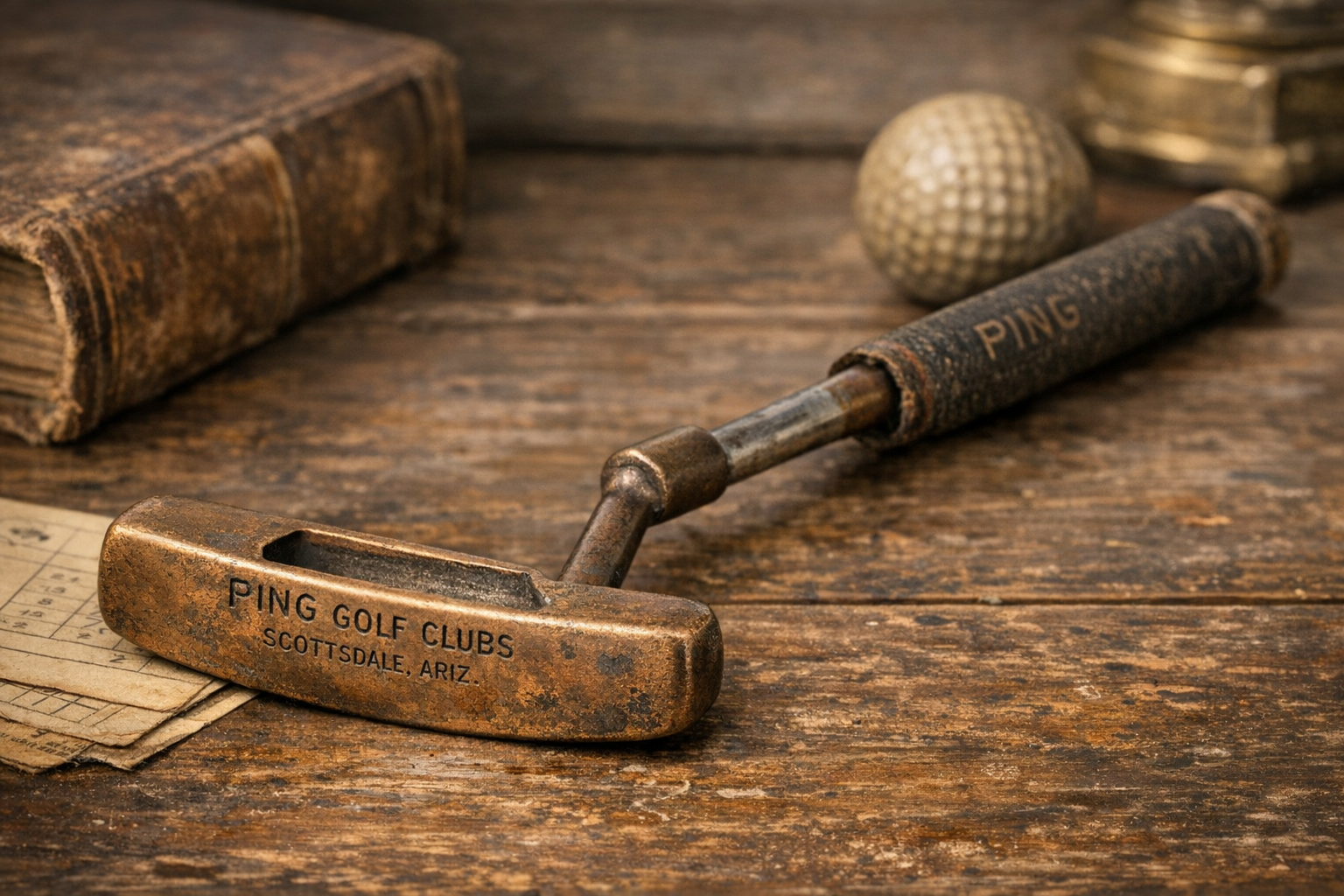
- Scottsdale, AZ 85282: Early Scottsdale era putters with ZIP code (1969-1973)
- Scottsdale, Arizona: Later Scottsdale putters without ZIP code (1973-1986)
- Phoenix, Arizona: More recent production with lower collector value
Color Dots and Their Meaning
PING putters often feature colored dots that indicate the lie angle:
- Green Dot: 2° upright lie angle
- Orange Dot: 2° flat lie angle
- Other colors represent different lie angles according to PING’s color-coding system
While the colored dots primarily indicate fitting specifications rather than directly affecting value, original and correct color coding can be important to collectors seeking authentic examples.
How to Recognize an Original PING Putter
When people talk about an "original PING," they usually mean one of the putters Karsten Solheim made in the company's early years, often an early Anser, rather than one of the many later putters that reuse the same model names. The name on the head is the weakest clue. The stamps, the metal and the parts tell you more.
Read every stamp, not just the model name
- Maker's name. Older heads often carry Karsten's name, such as Karsten Mfg. Corp., alongside PING and the model. Current putters are marked PING alone.
- City and wording. Copy the city stamp exactly as it appears, including abbreviations, punctuation and whether a ZIP code is present. Small wording differences are what collectors use to separate early runs from later ones.
- Patent wording. Note whether the head says "patent pending" or gives a patent number. Collectors generally treat patent-pending Ansers as earlier than numbered ones.
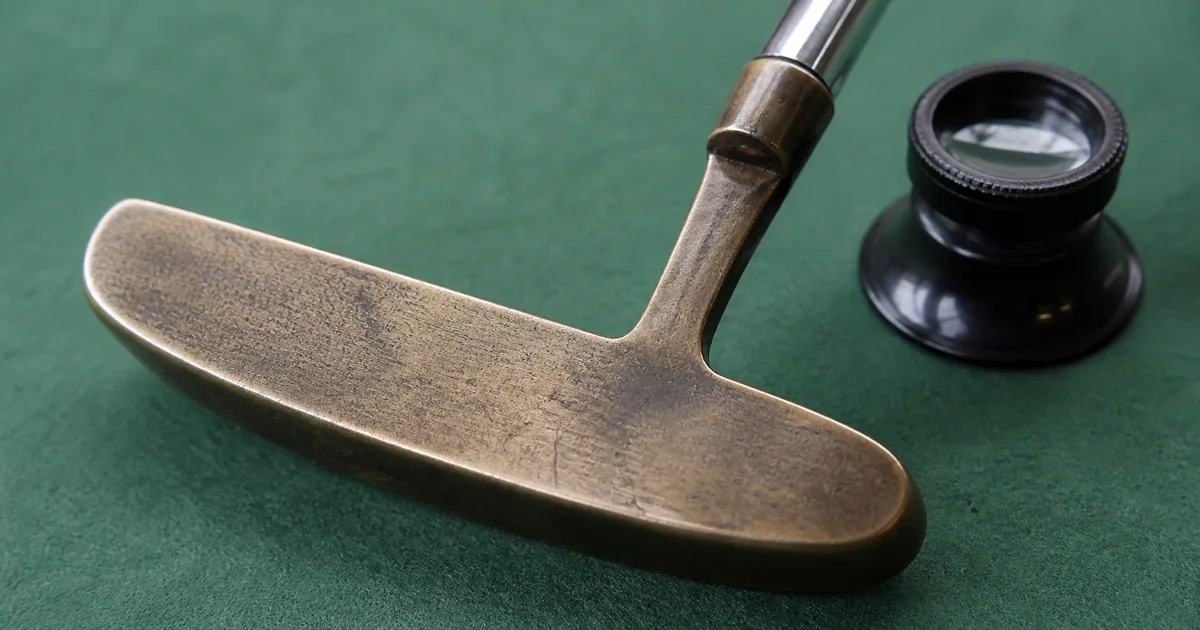
- Metal color. Manganese bronze is brassy and darkens to brown, beryllium copper has a pinkish copper tone, and stainless steel stays silver.
Later putters with old names
PING has kept names such as Anser and Pal in its lineup for decades, often with numbered or updated versions, and has used "Scottsdale" as a model name on recent putters. A putter with "Scottsdale" printed as a model name, a modern face insert or a current-style grip is a recent club, not an early Scottsdale-stamped head. The Anser shape was also copied widely by other makers, so an Anser-style putter without the PING and Karsten stamps is not a PING.
PING putters are a late chapter of golf collecting. For wooden-shafted clubs and the makers before them, our antique golf club identification guide covers shaft, head and maker-stamp clues. For PING, compare only sold putters with the same model, stamp wording, metal and original parts in the sold results on this page.
PING Putter Condition Assessment
Check applicable items to assess your putter's condition
- Original grip in good condition
- No repairs or reshafting
- Clear, readable manufacturer's stamps
- No significant face wear or damage
- Original finish largely intact
- Shaft is straight without dents
- No significant nicks or dents on head
- Has original headcover (if applicable)
Current Market Values for Vintage PING Putters
Vintage PING Putter Value Guide
Current market values as of 2023
Recent Auction Examples
Where to Sell Vintage PING Putters
Online Marketplaces
eBay: The largest audience of potential buyers, but higher fees and more competition. Great for rare models like Redwood City putters or beryllium copper editions, which benefit from eBay’s global reach.
Specialty Golf Retailers: Sites like 2nd Swing Golf, Next Round Golf, and Morton Golf Sales offer trade-in programs and direct purchase options for vintage PING putters. While you might not get top dollar, these provide convenient and reliable sales channels.
Golf Forums and Collector Communities
GolfWRX Forums: This popular golf forum has an active buy/sell section where knowledgeable collectors frequently look for vintage PING putters. The audience understands fair value, and there’s typically less competition than on eBay.
The Sand Trap and MyGolfSpy Forum: These golf communities have dedicated sections for equipment sales where you can find buyers who appreciate vintage PING putters.
Golf Specialty Auctions
For particularly valuable putters (Redwood City models or rare beryllium copper versions), consider specialty golf auctions. These attract serious collectors willing to pay premium prices for exceptional examples.
Tips for Collecting Vintage PING Putters
Research and Education
Before making significant purchases, invest time in learning about PING putter history. Understanding the subtle differences between models, manufacturing eras, and identifying features will help you spot valuable putters that others might overlook.
Key resources include:
- PING’s official archives and history
- Golf collector forums and communities
- Reference books on vintage golf equipment
Condition Considerations
When collecting vintage PING putters, condition significantly impacts value. Look for putters with:
- Original grips (especially Pingman grips)
- Clear, legible stamping and serial numbers
- Minimal face wear and no significant damage
- Original finish and patina
- No repairs, reshafting, or modifications
Where to Find Vintage PING Putters
Beyond the obvious online marketplaces, consider these sources for finding vintage PING putters:
- Estate Sales and Auctions: Often golf equipment is undervalued at general estate sales
- Thrift Stores and Garage Sales: Occasional finds at remarkable prices
- Golf Pro Shop Trade-Ins: Some clubs still take older models on trade
- Golf Course Lost-and-Found: After the holding period, unclaimed clubs may be sold
External Resources for PING Putter Values
GolfWRX Forums - PING Putter Discussion
Active community of golf enthusiasts and collectors discussing PING putter values, identification, and the market for rare models.
eBay PING Vintage Putter Collection
Browse current listings and recently sold PING putters to gauge current market values and available inventory.
PING Club Repair and Serial Number Information
Official PING resource for club identification, including information about serial number locations and club authentication.
The Sand Trap - Vintage PING Putter Discussions
Golf community with detailed threads about vintage PING putter values and collector insights.
Reddit r/PingGolf Community
Active Reddit community focused on PING equipment, including vintage putter identification and valuation discussions.
2nd Swing Golf - PING Putter Inventory
Specialized golf retailer with extensive inventory of new and used PING putters, offering market price references.
Conclusion: Investing in Vintage PING Putters
For collectors, understanding the nuances of manufacturing eras, authentic identification, and condition assessment is essential to building a valuable collection. The most prized examples - early Redwood City models, beryllium copper editions, and early Scottsdale putters with ZIP codes - continue to appreciate in value as they become increasingly scarce.
Whether you’re a serious collector seeking rare PING putters or a casual golfer who has discovered an old putter in the garage, the vintage PING putter market offers something for everyone. By using the identification guides and value information in this article, you’ll be better equipped to determine the potential value of any vintage PING putter you encounter.
Remember that condition, authenticity, and proper identification are key to maximizing value. When in doubt about a particularly valuable model, consider professional appraisal services or contacting PING directly for authentication assistance.
What similar PING putters actually sold for
We did not find a verified, page-specific auction-comps set for this Ping putter that met the current exact-match and source-provenance standard.
That absence is evidence, not a zero-value conclusion. Asking prices, broad category ranges, and sales for materially different objects are not substitutes for matched realized sales. Use the identification and condition guidance in this article, then narrow a future search with exact marks, model or variant, dimensions, materials, condition, completeness, and provenance.
Common Questions About Vintage PING Putter Values
Where is the serial number on a PING putter?
What are old PING putters made of?
How much is a Scottsdale PING putter worth?
What does a green dot mean on a PING putter?
How can I tell how old my PING putter is?
- "Redwood City, Cal." indicates 1967-1969 production
- "Scottsdale, AZ 85282" indicates 1969-1973 production
- "Scottsdale, Arizona" without ZIP code indicates 1973-1986 production
- "Phoenix, Arizona" indicates more recent production
Are PING Anser putters valuable?
How do I sell my vintage PING putter?
Is a PING putter marked Anser or Scottsdale always old?
What does Karsten stamped on a PING putter mean?
Get this PING putter appraised
Upload photos of the full putter, sole, face, address stamp, serial number, lie dot, shaft band, grip, head material, patina, alterations, wear, and any ownership notes.
- Signed report with photos and market evidence
- Delivered within 24 hours of receiving your photos
- Fixed, upfront pricing
No obligation. Secure upload.
Find a local antique or art appraiser
Same report as above
Get my putter report — $59
One putter · Signed PDF · Photo-based review
Get my putter report — $59 View signed report sample