Introduction to Old Coin Appraisals
Have you discovered a collection of old coins in your attic? Perhaps you’ve inherited some mysterious-looking currency from a relative, or you’re a collector looking to understand the true value of your numismatic treasures. Whatever your situation, professional old coin appraisals are essential for determining the worth of your coins accurately.
Old coins can be far more valuable than their face value suggests. Some rare specimens can be worth thousands or even millions of dollars, depending on their age, condition, rarity, and historical significance. However, determining the true value of old coins requires specialized knowledge and expertise that only professional numismatists possess.
In this comprehensive guide, we’ll explore everything you need to know about old coin appraisals – from understanding what affects a coin’s value to finding reputable appraisal services and preparing your collection for evaluation. Whether you’re looking to sell your coins or simply want to know what treasures you possess, this article will provide valuable insights into the fascinating world of numismatic appraisals.
What Makes Old Coins Valuable?
When it comes to determining the value of old coins, several factors come into play. Professional appraisers consider these elements when evaluating your numismatic items:
Rarity and Mintage
The scarcity of a coin significantly impacts its value. Coins with low mintage numbers (the quantity produced by the mint) are generally more valuable. For example, the 1909-S VDB Lincoln Cent had a mintage of only 484,000, making it one of the most valuable Lincoln pennies today.
Condition (Grade)
The physical state of your coin is perhaps the most crucial factor in determining its value. Professional grading uses a scale from 1 to 70, with 70 being a perfect, uncirculated specimen. According to the Professional Coin Grading Service (PCGS), the difference between a grade of MS-65 and MS-67 can sometimes multiply a coin’s value tenfold.
Historical Significance
Coins associated with significant historical events or periods often command premium prices. For instance, coins from the American Colonial period or those minted during the Civil War era typically attract higher valuations due to their historical context.
Age
While age alone doesn’t guarantee value, older coins tend to be rarer simply because fewer have survived over time. Ancient Greek, Roman, and medieval coins can be valuable not just for their numismatic worth but as archaeological artifacts.
Metal Content
The intrinsic value of the metal in a coin (often gold or silver) provides a baseline value. For example, pre-1965 U.S. dimes, quarters, and half dollars contain 90% silver, giving them a minimum value based on the current silver market price.
Factors That Affect Old Coin Values
- Rarity: Supply vs. collector demand
- Condition: Wear, damage, and preservation
- Historical Significance: Connection to important events
- Errors: Mint mistakes often increase value
- Provenance: Previous notable ownership history
Types of Coin Appraisal Services
When seeking an appraisal for your old coins, you have several options to consider:
Local Coin Dealers
Local coin shops offer the advantage of face-to-face interactions and immediate appraisals. According to collector forums, reputable dealers typically charge between $50-$150 per hour for professional appraisals. While convenient, remember that dealers may offer lower values if they’re also interested in purchasing your coins.
Professional Grading Services
Organizations like PCGS and NGC (Numismatic Guaranty Company) provide authentication and grading services. These companies encapsulate your coins in tamper-evident holders with assigned grade values, which can significantly increase their marketability and value certainty. Basic grading services typically start at $20-$30 per coin, with prices increasing for higher-value specimens or expedited services.
Online Appraisal Services
Appraisily's free photo check tells you what the item is from one photo and, when it can, a rough value band. No card needed. For more detailed appraisals, a signed appraisal from Appraisily costs $59 per item: an appraiser reviews your photos against comparable sales and signs a PDF report with the documented value.
Auction Houses
A signed appraisal from Appraisily costs $59 per item: an appraiser reviews your photos against comparable sales and signs a PDF report with the documented value.
Coin Shows and Conventions
Numismatic conventions often feature appraisal tables where experts will evaluate your coins, sometimes for free or for a nominal fee. These events are excellent opportunities to get multiple opinions in one location.
Average Coin Appraisal Service Costs
Typical fees for different appraisal options (2023 rates)
Preparing Your Coins for Appraisal
Before submitting your coins for professional appraisal, follow these essential steps to ensure you receive an accurate valuation while preserving your coins’ condition:
Proper Handling Techniques
Always handle coins by their edges, never touching the obverse (front) or reverse (back) surfaces. The oils and acids from your fingers can cause damage over time. Consider using cotton gloves specifically designed for coin handling. According to conservation experts at PGS Gold & Coin, improper handling is one of the leading causes of preventable damage to valuable coins.
Organization and Documentation
Create an inventory list of your coins, noting:
- Denomination
- Country of origin
- Year
- Mint mark
- Any noticeable special features or errors
- How and when you acquired each coin
This documentation helps appraisers work more efficiently and provides valuable provenance information that can sometimes increase a coin’s value.
Avoid Cleaning Your Coins
This critical advice bears repeating: Never clean your coins before an appraisal (or ever, in most cases). Many collectors have inadvertently reduced the value of their coins by attempting to clean them. Professional numismatists prefer coins with their original patina intact, as cleaning can damage the surface and significantly reduce value.
Proper Storage Prior to Appraisal
Store your coins in appropriate holders that won’t damage them. Options include:
- Mylar flips (preferably non-PVC)
- Hard plastic capsules
- Cardboard holders with mylar windows
- Album pages designed for coin collecting
Avoid materials containing polyvinyl chloride (PVC), which can damage coins over time.
Obtaining Multiple Opinions
For valuable collections or particularly rare specimens, consider getting appraisals from multiple sources. Different experts may have specialized knowledge about specific types of coins, leading to more accurate valuations.
Pre-Appraisal Coin Preparation Checklist
Complete these steps before submitting your coins for professional evaluation
- Create detailed inventory of your collection
- Handle coins only by their edges
- Store in acid-free, non-PVC holders
- Take clear photos of both sides of valuable coins
- Research basic information about your coins
- Organize coins by country, type, or denomination
- Document any known provenance or history
- DON'T clean your coins
The Professional Appraisal Process
When you submit your coins for professional appraisal, the process typically follows these steps:
Initial Assessment
The appraiser first performs a preliminary examination to identify the coins and determine if they warrant a detailed evaluation. This quick review helps sort out common coins from potentially valuable specimens.
Authentication
Before grading or valuing a coin, the expert must verify its authenticity. Counterfeit coins are unfortunately common in the numismatic world. Appraisers use various techniques to authenticate coins:
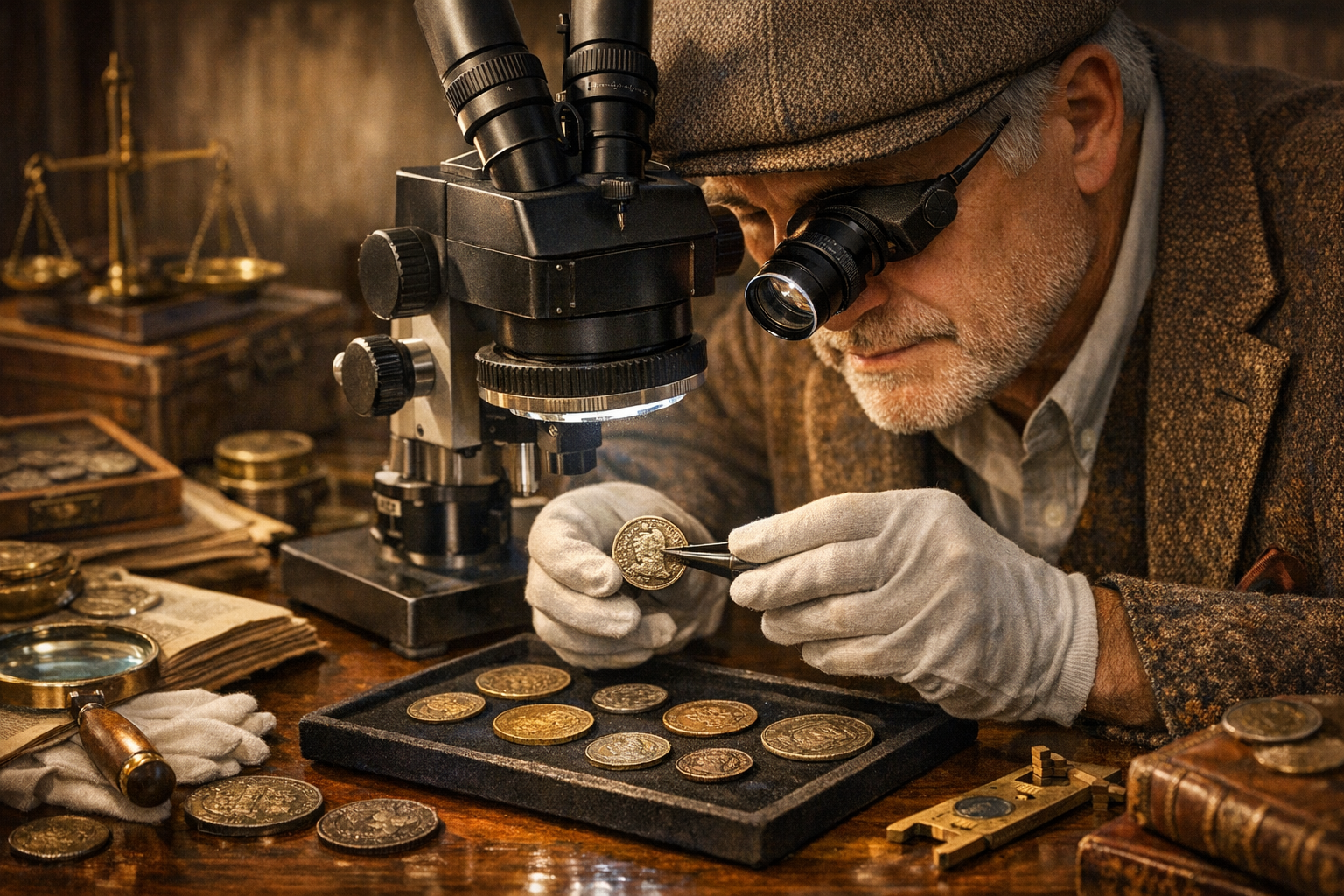
- Visual inspection under magnification
- Weight and size measurements
- Metal composition testing
- Comparison with reference specimens
- Advanced techniques like X-ray fluorescence for valuable coins
Grading
Once authenticated, coins are graded on a scale from 1 to 70, with 70 being perfect condition. The most widely accepted grading standards in the U.S. are those established by the American Numismatic Association (ANA), PCGS, and NGC.
Grading factors include:
- Wear on high points
- Remaining luster
- Surface marks or scratches
- Strike quality
- Eye appeal
Valuation
After determining authenticity and grade, the appraiser assigns a monetary value based on:
- Current market conditions
- Recent comparable sales
- Published price guides
- Auction records
- Specialized knowledge of the market for specific coins
Documentation
A professional appraisal concludes with documentation that typically includes:
- Detailed description of each coin
- Authentication determination
- Grade assignment
- Estimated market value
- Appraiser’s credentials
- Date of appraisal
For insurance purposes, appraisals should be updated every few years as coin values can fluctuate significantly based on market conditions.
Evolution of Coin Grading Standards
- Pre-1948
Descriptive Grading
Before standardized scales, coins were described with terms like “Fine” or “Uncirculated” with inconsistent application between dealers. - 1948
ANA Numerical Scale
The American Numismatic Association introduced a numerical scale from 1-70, providing more consistent grading terminology. - 1986
PCGS Founded
Professional Coin Grading Service established the first third-party grading service with tamper-evident holders, revolutionizing the market. - 1987
NGC Established
Numismatic Guaranty Corporation founded as a competing third-party grading service, furthering standardization. - Present
Modern Grading
Digital imaging, artificial intelligence, and advanced authentication techniques complement expert human grading for maximum accuracy.
Finding Reputable Coin Appraisers
With numerous appraisal services available, it’s important to identify reputable experts who will provide honest, accurate evaluations of your old coins:
Credentials to Look For
When selecting a coin appraiser, verify their professional credentials:
- ANA Membership: The American Numismatic Association offers education and certification programs. Members agree to abide by a code of ethics.
- PNG Affiliation: The Professional Numismatists Guild requires members to adhere to strict ethical standards and possess extensive knowledge.
- Years of Experience: Look for appraisers with substantial experience in the specific types of coins you own (ancient, American, European, etc.).
- Specialization: Some appraisers specialize in particular eras or regions, making them especially valuable for certain collections.
Red Flags to Avoid
Be wary of services that:
- Offer appraisals tied to purchase offers (conflict of interest)
- Provide values significantly higher than other appraisers (possibly to secure insurance business)
- Cannot or will not provide references
- Pressure you to sell immediately
- Use high-pressure sales tactics
Researching Reputation
Before selecting an appraiser:
- Check online reviews and testimonials
- Ask for references from past clients
- Consult local coin clubs for recommendations
- Verify membership in professional organizations
- Inquire about their appraisal methodology
Questions to Ask Potential Appraisers
Before committing to an appraisal service, ask these important questions:
- What are your qualifications and specializations?
- How long have you been appraising coins?
- What is your fee structure? Is it based on time, number of coins, or percentage of value?
- Will you provide a written appraisal document?
- Do you offer different types of appraisals (retail replacement, fair market, liquidation)?
- Do you have any conflicts of interest (such as wanting to purchase my coins)?
Top Professional Grading Services
The two most respected third-party grading services in the United States are:
PCGS (Professional Coin Grading Service): Founded in 1986, PCGS has graded over 40 million coins and is renowned for its consistent standards and secure holders.
NGC (Numismatic Guaranty Corporation): Established in 1987, NGC has graded more than 45 million coins and offers specialized services for ancient and world coins.
Both organizations provide authenticity verification, condition grading, and protective encapsulation, significantly enhancing the marketability and value certainty of your coins.
After the Appraisal: Next Steps
After obtaining a professional evaluation of your old coins, you’ll need to decide what to do with them and their newfound valuation:
Insurance Considerations
For valuable collections, proper insurance is essential:
- Standard homeowner’s policies typically offer limited coverage for collectibles
- Consider specialized collectibles insurance from companies like Collectibles Insurance Services or American Collectors Insurance
- Keep appraisal documentation in a safe, separate location from your collection
- Update appraisals every 3-5 years as values fluctuate
Selling Options
If you decide to sell your coins, several options exist:
Coin Dealers: Offer convenience and immediate payment, but typically pay 50-70% of retail value. According to Coinfully, dealers must account for their overhead and profit margin.
Auction Houses: Can achieve higher prices for rare and valuable coins. Major houses like Heritage Auctions and Stack’s Bowers specialize in numismatics and reach worldwide collector audiences.
Direct to Collectors: Selling through collector forums or organizations can yield better prices but requires more effort and knowledge of fair pricing.
Online Marketplaces: Platforms like eBay provide wide exposure but come with fees and shipping/insurance considerations.
Consignment: Some dealers will sell your coins on consignment, taking a percentage of the final sale price (typically 10-30%).
Proper Storage and Preservation
If you decide to keep your coins:
- Invest in proper long-term storage solutions
- Consider professional holders for valuable specimens
- Store in a climate-controlled environment
- Keep away from chemicals, moisture, and extreme temperatures
- Consider safe deposit boxes for extremely valuable items
Building Your Collection
Use your new knowledge to build a more focused collection:
- Develop a collecting strategy based on themes, eras, or countries
- Set a budget for acquisitions
- Network with other collectors through clubs and online forums
- Continue educating yourself about numismatics
| Category | Price | Notes |
|---|---|---|
| Local Coin Dealer (Hourly) | $50-$150 | Face-to-face interaction, immediate results |
| Professional Grading Service (Per Coin) | $20-$100+ | Includes authentication, grading, and protective holder |
| Online Appraisal Service | $10-$50 per coin | Convenient, but requires good photos |
| Written Appraisal for Insurance | $75-$200 | Detailed documentation of collection value |
Common Questions About Old Coin Appraisals
What is the best way to get old coins appraised?
The best approach to getting old coins appraised depends on your collection’s size and potential value:
For valuable or rare specimens, seek professional third-party grading from PCGS or NGC, which provides authentication, grading, and encapsulation.
For initial assessments, reputable local coin dealers can provide quick evaluations. Many offer free verbal appraisals, especially if you’re a regular customer.
For convenience, Appraisily's free photo check tells you what the item is from one photo and, when it can, a rough value band.
For comprehensive collections, consider hiring a certified numismatist who specializes in your particular coins (ancient, American, European, etc.).
Remember to get multiple opinions for valuable pieces, and always check credentials before selecting an appraiser.
How do you know if a coin appraiser is legitimate?
To verify a coin appraiser’s legitimacy:
Check for professional memberships in organizations like the American Numismatic Association (ANA) or the Professional Numismatists Guild (PNG), which require adherence to ethical standards.
Look for relevant certifications or educational credentials in numismatics.
Research online reviews and ratings from previous clients.
Ask for references from past customers and follow up with them.
Be wary of appraisers who immediately offer to buy your coins, as this represents a potential conflict of interest.
Verify their physical business presence and how long they’ve been established.
Trust your instincts – if something seems suspicious or the values quoted are dramatically different from other appraisers, seek additional opinions.
How much does it typically cost to get coins appraised?
Coin appraisal costs vary based on the service type and provider:
Verbal Appraisals: Many coin dealers offer free verbal assessments, especially if considering purchase.
Professional Grading Services: PCGS and NGC typically charge $20-$100+ per coin, depending on the coin’s value and desired turnaround time.
Written Appraisals: Formal written appraisals for insurance or estate purposes typically cost $50-$150 per hour, with most collections requiring 1-3 hours.
Online Appraisal Services: Digital appraisal services charge approximately $10-$50 per coin.
Auction Houses: Major auction houses often provide free appraisals for high-value coins if you’re considering selling through them.
For valuable collections, the cost of professional appraisal is generally a worthwhile investment for accurate valuation and authentication.
Should I clean my old coins before getting them appraised?
No, you should never clean your old coins before getting them appraised or at any other time. This is one of the most important rules in numismatics. Cleaning coins can:
- Significantly reduce their value, often by 50% or more
- Remove the natural patina that collectors prize
- Create microscopic scratches that professionals can easily detect
- Permanently damage the coin’s surface
Professional numismatists prefer coins with their original surfaces intact, even if they appear tarnished or dirty. What might look like dirt to an untrained eye could actually be toning that increases a coin’s value and confirms its authenticity.
If you have concerns about the condition of your coins, let the professional appraiser make recommendations. They can advise on proper conservation methods if necessary.
How often should I get my coin collection reappraised?
The frequency of reappraisals for your coin collection depends on several factors:
For insurance purposes: Every 3-5 years is generally recommended, as the numismatic market can fluctuate significantly.
After market fluctuations: Consider reappraisal after significant changes in precious metal prices or notable market events.
When adding valuable pieces: Each time you add substantial new items to your collection.
Before planned sales: Get updated valuations before selling to ensure fair pricing.
After inheritance or acquisition: When acquiring a collection, a complete appraisal establishes baseline values.
Regular reappraisals not only help ensure proper insurance coverage but also give you insights into how your collection’s value is trending over time. Some collectors schedule annual reviews of their most valuable pieces and less frequent assessments of their entire collection.
Can I get accurate coin appraisals online?
Online coin appraisals can be useful but have limitations:
Accuracy limitations: Without physical examination, online appraisals can’t detect certain authenticity issues or precisely evaluate condition.
Photo quality matters: The quality of your photos significantly impacts the accuracy of online appraisals - poor images lead to less reliable valuations.
Preliminary assessments: Online appraisals are best used as initial evaluations before seeking in-person professional services for valuable coins.
Reputable services: Appraisily's free photo check tells you what the item is from one photo and, when it can, a rough value band. No card needed.
Forum appraisals: Collector forums can provide ballpark estimates but vary widely in accuracy.
For coins of significant value or rarity, an in-person appraisal by a certified numismatist remains the gold standard. Online appraisals work best for common coins or getting initial value ranges before investing in professional services.
What information should I have ready when getting coins appraised?
When preparing for a coin appraisal, have the following information ready:
Coin details: Denomination, country of origin, year, and mint mark for each coin
Provenance information: The origin and ownership history of your coins, including inheritance details, purchase records, or previous appraisals
Collection history: How long you’ve owned the coins and how they’ve been stored
Any documentation: Certificates of authenticity, purchase receipts, or previous grading information
Special features: Any known errors, varieties, or unique characteristics
Your objectives: Whether you’re seeking appraisal for insurance, sale, estate planning, or personal knowledge
Photographs: Clear, high-resolution images of both sides of significant coins (especially for online appraisals)
Having this information organized in advance makes the appraisal process more efficient and can sometimes help establish higher values if provenance adds significance to your coins.
Valuable Resources for Coin Appraisals
PCGS Coin Grading & Authentication
Professional Coin Grading Service offers coin authentication, grading, and encapsulation services with an extensive price guide database for collectors and investors.
NGC Coin Grading
Numismatic Guaranty Company provides professional coin certification services, price guides, and resources for coin collectors seeking accurate valuations.
American Numismatic Association
The leading nonprofit numismatic organization in the United States, offering educational resources, publications, and a code of ethics for coin professionals.
CoinAppraiser Value Guide
Comprehensive resource for United States coin values with detailed information on rare coins, authentication tips, and selling guidance.
Coin Value Checker
Online reference guide providing detailed valuations for pennies, nickels, dimes, quarters and other U.S. coins based on date, condition, and mint marks.
Coinfully Free Appraisals
Offers free coin collection appraisals with options for at-home evaluations for qualifying collections from certified numismatic experts.
GreatCollections Coin Appraisal Form
Submit information about your coins to receive free estimates from specialists at one of America’s leading coin auction houses.
Conclusion: The Value of Professional Coin Appraisals
Professional old coin appraisals are an essential service for anyone with numismatic items, whether you’re a serious collector, an inheritor of family treasures, or simply curious about that jar of old coins in your closet. The expertise that professional numismatists bring to the evaluation process helps ensure that you understand the true value of your coins, their historical significance, and their place in the collector’s market.
Beyond just assigning monetary values, professional appraisals offer authentication, grading standards, and documentation that can significantly impact your coins’ marketability and insurance coverage. The peace of mind that comes from knowing exactly what you have is invaluable, whether you ultimately decide to sell your coins, pass them on to future generations, or continue building your collection.
Remember that the numismatic market is dynamic, with values fluctuating based on collector interest, precious metal prices, and the discovery of new specimens. Regular reappraisals of valuable collections are recommended to ensure your understanding of their worth remains current.
By following the guidance in this article—from preparing your coins properly to selecting reputable appraisers and understanding the evaluation process—you’ll be well-equipped to navigate the fascinating world of numismatics with confidence. Whether your coins are worth their face value or a small fortune, professional appraisals reveal the stories and significance behind these miniature works of art and history.
What similar items actually sold for
To help ground this guide in real market activity, here are recent example auction comps from Appraisily’s internal database. These matched sales are market context only, not an object estimate or identification, and they do not guarantee a price for your specific silver dollar.
Shown USD range: USD 8-USD 18,000. Median of these 5 USD examples: USD 65.
| Comparable | What sold | Auction house | Date | Lot | Source-reported amount |
|---|---|---|---|---|---|
 |
1891-CC Morgan Silver Dollar. SUPER FLASHY!!!! Old Polish | Big Dog Auctions | 2020-08-08 | 116 | USD 200 |
 |
Old Mexican Silver Dollar Minted from Silver. 1966 | Richard L. Edwards Auctioneer | 2019-03-04 | 16C | USD 8 |
 |
Morgan Silver Dollar | Mike Nichols Auctions | 2024-10-27 | 502 | USD 45 |
 |
1889-CC Morgan Silver Dollar. MS-60 (NGC). | Stack's Bowers Galleries | 2026-03-10 | 3072 | USD 18,000 |
 |
1965 CANADA SILVER DOLLAR | R Howard Collectibles | 2024-10-30 | 6 | USD 65 |
How these auction records were verified
Each row is tied to its lot identity, retrieval time, access result, and immutable record hash. Live source access was blocked; the exact record matched Appraisily's immutable pipeline provenance. Inspect the public comparable provenance record.
Free photo check
Not sure if your rare coin is worth appraising? Let us take a look.
Upload a photo, tell us what you know, and get a free photo check. If a full appraisal makes sense, we will say so.
Free. No card needed. Takes about two minutes.
Get these old coins appraised
Upload photos of both sides, edges, dates, mint marks, holders, certificates, cleaning, scratches, bends, holes, and any collection history.
- Signed report with photos and market evidence
- Delivered within 24 hours of receiving your photos
- Fixed, upfront pricing
No obligation. Secure upload.
Find a local antique or art appraiser
Ready for pricing guidance?
Start a secure online appraisal
Upload images and details. Delivered within 24 hours of receiving your photos.
Upload photos for a free first look View signed report sample