Antique Duck Decoy Identification: appraisal and value basics
Antique Duck Decoy Identification research should start with identification, condition, provenance, and item-specific market evidence. Use this guide to compare the signals that matter before paying for a formal appraisal or deciding whether to sell.
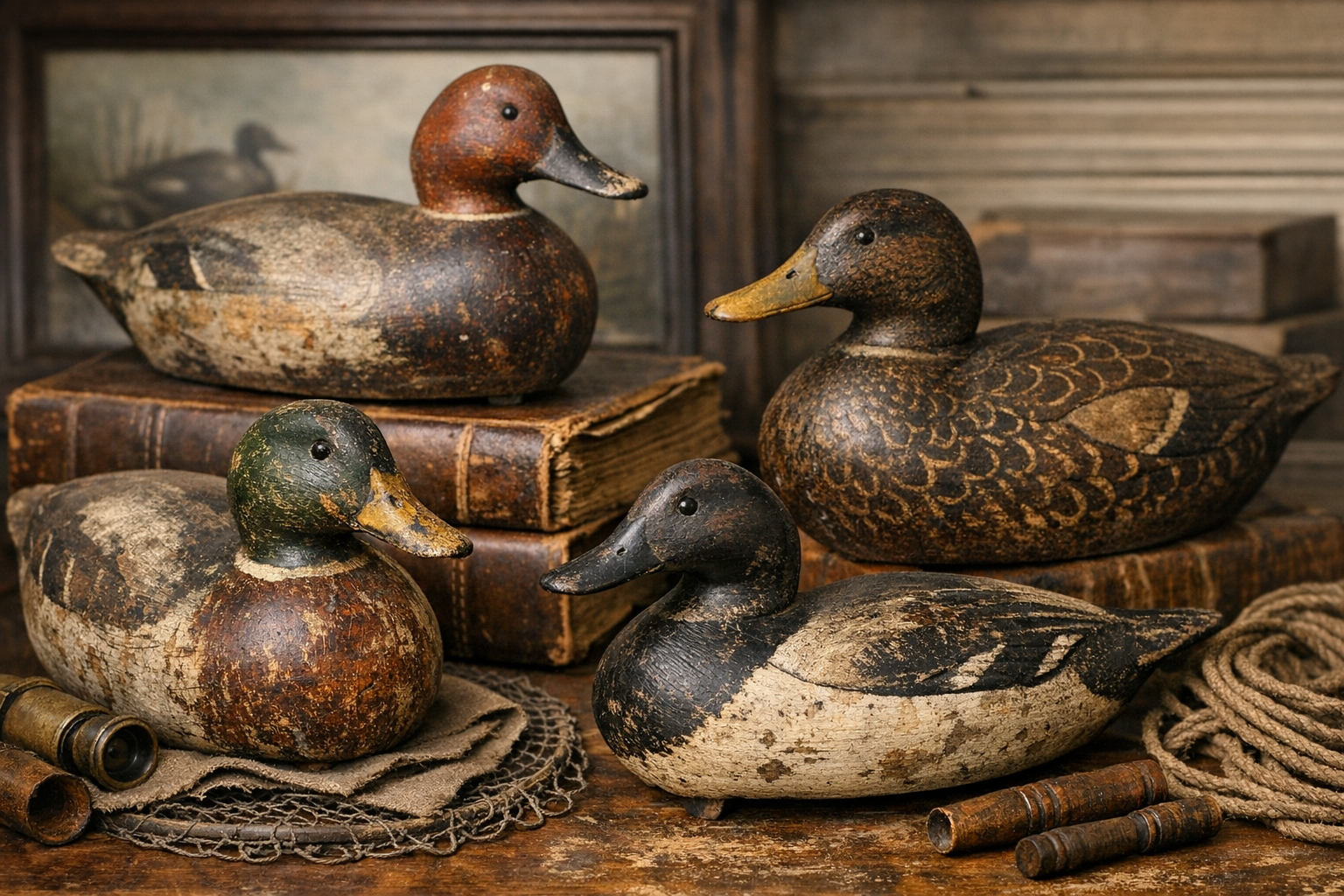
Duck decoys are far more than functional hunting tools—they’re a cherished form of American folk art with a rich history and avid collector base. The most prized antique decoys can fetch tens of thousands or even hundreds of thousands of dollars at auction. For collectors, understanding how to identify quality, age, and origin is essential for building a meaningful collection or assessing the value of inherited pieces.
In this comprehensive guide, we’ll explore the fascinating world of antique duck decoys, from identifying renowned carvers and regional styles to distinguishing genuine old-time hunting decoys from modern reproductions. Whether you’re an established collector or just beginning your journey, this guide will help you navigate the waters of the antique duck decoy market.
What Makes Antique Duck Decoys Valuable?
When assessing a decoy’s value, collectors and appraisers typically consider the following factors:
Maker or Carver
The most significant factor affecting a decoy’s value is its maker. Decoys carved by renowned artists like Elmer Crowell, the Ward Brothers, or Mason Factory command the highest prices. Even without a maker’s mark, experts can often identify carvers by their distinctive styles.
Condition and Original Paint
Decoys in original condition with original paint are significantly more valuable than restored pieces. While some wear is expected and even desirable as evidence of documented use, excessive damage can diminish value.
Rarity and Species
Some duck species are rarer in decoy form than others. Canvasbacks, pintails, and wood ducks typically fetch higher prices than more common mallard decoys. Rare configurations or poses also command premium prices.
Provenance and History
A decoy with documented history—especially if it has notable ownership, historical significance, or has been featured in museums or publications—can be worth substantially more than identical decoys without such provenance.
Artistic Merit
Beyond functionality, many collectors prize decoys for their artistic qualities. Exceptional examples with lifelike carving, detailed paint patterns, and impressive craftsmanship command the highest prices.
Famous Duck Decoy Carvers and Their Styles
A. Elmer Crowell (1862-1952)
Considered the preeminent American decoy carver, Crowell’s masterpieces from Cape Cod, Massachusetts, are among the most sought-after by collectors. His decoys are known for their exceptional anatomical accuracy, lifelike expressions, and meticulous paint patterns.
Identifying Characteristics:
- Finely carved bill and head details
- Graceful neck and body proportions
- Distinctive carved wing patterns
- Often signed with “A.E. Crowell” or “Crowell” on the underside
- Exceptional paint detailing, particularly in the feather patterns
The Ward Brothers (Lemuel and Stephen)
Working from Crisfield, Maryland, the Ward Brothers created some of the most artistically accomplished decoys of the Chesapeake Bay region from the 1920s through the 1970s.
Identifying Characteristics:
- Bold, expressive carving style with strong silhouettes
- Distinctive head positions, often alert or turned
- Rich, detailed paint patterns
- Often marked with “L.T. Ward & Bro.” or similar stamps
- Soulful, animated expressions
Mason Decoy Factory
The Mason Factory of Detroit, Michigan, was the largest commercial producer of wooden decoys from 1896 to 1924. Their decoys came in several quality grades (Premier, Challenge, and Standard).
Identifying Characteristics for Mason Decoys:
- Premier Grade: Hollow-carved, flat-bottomed, with highly detailed paint
- Challenge Grade: Solid, round-bottomed with detailed paint
- Standard Grade: Simpler paint patterns, more utilitarian design
- Often have a distinctive flat-bottom with a recessed weight
Other Notable Carvers:
- Charles Perdew: Illinois River carver known for exceptional painting technique
- Ira Hudson: Chesapeake Bay carver recognized for animated poses
- George Boyd: Renowned Maine decoy maker with distinctive style
- Shang Wheeler: Connecticut carver known for anatomical precision
- Harry V. Shourds: New Jersey carver with distinctive Delaware River style
Notable Duck Decoy Values by Maker
Recent auction prices for antique duck decoys by renowned carvers
Regional Styles and Identification
New England Style
Characteristics:
- Typically compact and solid to handle rough coastal waters
- Often feature clean, simple lines
- Cape Cod decoys tend to be more detailed and artistic
- Maine decoys are particularly substantial and durable
Chesapeake Bay Style
Characteristics:
- Generally feature round bottoms for use in choppy waters
- Often have graceful, flowing lines
- Many have distinctive head positions
- Strong regional variations within the Chesapeake area
Illinois River Style
Characteristics:
- Known for exceptional painting techniques
- Often feature delicate, refined carving
- Many have slightly upturned tails
- Typically have flat bottoms with a subtle arch
Delaware River Style
Characteristics:
- Distinctive “humpback” silhouette
- Often feature raised carved wings
- Typically have upswept tails
- Many include detailed bill carving
Long Island Style
Characteristics:
- Sleek, streamlined profiles
- Many feature inlet heads (heads carved separately and attached)
- Often relatively large in size
- Typically designed for saltwater hunting
Great Lakes Style
Characteristics:
- Often feature robust, sturdy construction
- Many have simplified, utilitarian designs
- Frequently include lead weights on the bottom
- Wisconsin decoys often feature a distinctive low-head position
As noted by RJG Antiques, “Decoys tend to reflect the type of water where ducks are found. Maine decoys are usually solid and substantial. Massachusetts decoys are most delicate.” These regional variations developed from practical considerations but evolved into distinctive artistic traditions.
How to Identify Antique Duck Decoys: A Hands-On Check
Most decoys can be sorted into old working decoy, factory decoy or later decorative piece before anyone names a carver. Handle the decoy in good light and work through it in this order.
- Turn it over. Look for a weight (poured lead, strip lead or a lead pad), a line tie (a staple, screw eye or leather strap near the breast) and any brand or stamp. Working decoys show wear around the line tie and on the bottom. A sawn-flat bottom with no weight, no line-tie hole and no wear suggests a decorative piece made for a shelf.
- Read the brands correctly. A burned or stamped name on the bottom is often a hunter's or club's rig brand, not the carver's mark. Record it exactly; it can still help place a decoy, but it does not identify the maker.
- Check the body. Hollow decoys are usually made in two pieces, top and bottom, with a seam around the side. Drawknife, spokeshave or rasp marks point to hand work; lathe-turned or identical bodies point to a factory. Factories such as Mason, Wildfowler and Herter's each have documented forms to compare against.
- Check the head. Most heads are carved separately and attached with a dowel or nails through the neck. Note the eyes: glass, tack, painted or carved. A head at an odd angle or fresh filler at the neck seam suggests a replacement.
- Check the paint. Original paint wears through at high points such as the head, breast and tail edge, and shows fine crazing. Paint that runs into old cracks or shot marks went on after the damage. Many collectors use an ultraviolet lamp, under which newer paint and repairs often look different.
Then match what you found to the regional styles above and compare with documented sales of the same maker or region and species. For more on paint and form clues, see this guide to antique duck decoy identification by paint and form.
Evolution of Duck Decoy Collecting
- Pre-1900
Utilitarian Origins
Native Americans crafted the earliest known decoys from reeds and feathers. Early settlers adopted and adapted these designs, creating decoys purely for hunting purposes.
- 1900-1920
Transition Period
Mass-produced factory decoys (like Mason) began to replace hand-carved decoys for hunting purposes. Collectors started to recognize the folk art value of hand-carved pieces.
- 1920s-1950s
Early Collecting Era
With the advent of plastic decoys for hunting, wooden decoys became increasingly collectible for their aesthetic and historical value rather than utilitarian purposes.
- 1960s-1980s
Collecting Boom
Formal decoy collecting organizations emerged. Major auction houses began specializing in decoy sales, and prices for premium examples began to rise significantly.
- 1986
Million-Dollar Milestone
- Present Day
Mature Market
The market has matured with established value hierarchies based on maker, condition, rarity, and provenance. Museum-quality pieces continue to set auction records.
Assessing Condition and Originality
Condition Assessment
The condition of a decoy significantly impacts its value. Here’s what to look for when examining potential acquisitions:
Decoy Condition Checklist
Use this checklist to assess the condition of antique duck decoys
- Original paint (most important factor)
- Minimal paint wear consistent with age and use
- No significant cracks or repairs
- Head and neck intact without replacements
- Original weight system present
- Natural weathering and patina consistent with age
- No unauthorized restoration work
- No excessive damage from shot or water exposure
Documenting Antique Duck Decoys
Distinguishing documented period decoys from replicas requires attention to several key factors:
1. Materials and Construction
- Documented antique decoys are typically made from cedar, pine, or cork
- Look for hand-carved features versus machine-produced uniformity
- Examine joinery methods – older decoys often show hand-cut joinery
2. Age-Appropriate Wear and Patina
- Genuine old decoys show natural wear patterns from actual use
- Look for checking (fine cracks) in the wood consistent with age
- Original paint should show natural crazing and wear patterns
3. Maker’s Marks and Signatures
- Many carvers branded, stamped, or incised their decoys
- Some marked their work with a specific symbol or style
- Working decoys were sometimes marked by hunting clubs or owners
4. Weight Systems
- Examine the ballast system – antique decoys often used lead weights
- Some regions used specific types of keels or weight configurations
- Factory decoys like Mason’s often had distinctive weight patterns
As the Refuge Forums discussions note, “To be really collectible a decoy a bird must be in original paint. Tough to find a bird that is 100 or more years old.” This originality is what serious collectors seek.
Identifying and Appraising Your Duck Decoy
Step 1: Document Your Decoy
Begin by thoroughly documenting your decoy:
- Take clear, well-lit photographs from multiple angles
- Measure dimensions (length, height, width)
- Note any visible maker’s marks, signatures, or stamps
- Document any provenance information (history of ownership)
Step 2: Identify the Species
Different duck species have distinct values in the decoy market:
- Canvasbacks, redheads, and pintails tend to be more valuable
- Rare bird species like wood ducks or harlequin ducks command premiums
- Identify distinctive features that indicate the intended species
Step 3: Research the Maker
According to RJG Antiques, “Most quality decoys can be identified by maker. Certain makers are held in higher esteem than others, and they tend to be judged the best makers in a given region.”
Look for:
- Distinctive carving styles that match known carvers
- Regional characteristics that suggest geographic origin
- Factory-made indicators like the Mason Factory’s distinctive features
- Compare to reference books, auction catalogs, or museum collections
Step 4: Get Professional Assessment
For valuable decoys, professional appraisal is recommended:
- Consult specialized decoy appraisers or auction houses
- Attend decoy shows where experts can provide opinions
- Consider joining collector organizations like the North American Decoy Collectors Association
Step 5: Understand Market Values
Current market values fluctuate based on:
- Recent comparable auction results
- Condition relative to other examples by the same maker
- Rarity of the specific form, species, or configuration
- Documented provenance or exhibition history
| Maker | What collectors look for |
|---|---|
| A. Elmer Crowell | His best decoys are among the most expensive ever sold; condition and original paint decide where an example falls |
| Ward Brothers | Rare and mint condition pieces command premium prices |
| Mason Factory (Premier Grade) | Highest quality commercial decoys |
| Charles Perdew | Illinois River masterpieces |
| Ira Hudson | Chesapeake Bay distinctive style |
| Lesser-known regional carvers | Value depends on quality, condition, and regional importance |
Building a Duck Decoy Collection
Collecting Strategies
1. Focus on a Specific Region Specializing in decoys from a particular region allows you to develop expertise in a manageable area:
- Chesapeake Bay decoys
- New England coastal decoys
- Illinois River decoys
- Great Lakes region decoys
2. Collect by Species Some collectors focus on assembling diverse representations of a single species:
- Canvasback collections
- Mallard variations
- Rare species like wood ducks or eiders
3. Collect by Maker Following the work of a single carver or factory offers depth of understanding:
- Ward Brothers collection
- Mason Factory grades comparison
- Complete set of a regional carver’s work
4. Collect by Time Period Focusing on decoys from a specific era:
- Pre-1900 working decoys
- Early 20th century transition pieces
- Mid-century decorative decoys
According to the North American Decoy Collectors Association, “Collecting Decoys: Getting Started” guide, new collectors should consider several practical factors:
“Duck decoy stands are great, but can also do a lot of damage if they are misused. There are several kinds: wood or molded plastic with four prongs, and others. Proper storage and display are essential for preserving your collection’s condition and value.”
Preservation and Display Tips
Proper Storage:
- Store decoys in a climate-controlled environment
- Avoid direct sunlight which can fade original paint
- Use acid-free materials for any wrapping or storage
- Consider custom stands that don’t damage the decoy
Display Considerations:
- Rotate displayed decoys periodically to avoid light damage
- Use museum-quality UV-filtering glass for valuable pieces
- Display related documentation alongside important decoys
- Group decoys thematically to tell a collecting story
Documentation:
- Maintain detailed records of each acquisition
- Preserve any provenance information
- Photograph decoys from multiple angles
- Consider creating a personal catalog of your collection
Essential Duck Decoy Collecting Resources
Invaluable's Duck Decoy Price Guide
Comprehensive guide covering duck decoy history, determining factors for value, and recent auction prices.
North American Decoy Collectors Association
Excellent starting guide for new collectors with practical advice on collecting, displaying, and preserving decoys.
RJG Antiques Decoy Guide
Detailed guide to decoy regions and makers, helpful for understanding regional variations and maker identification.
RJG Antiques Decoy Value Points
Specific information about factors that affect decoy values, with insights into maker identification.
Collectors Weekly Duck Decoy Articles
Collection of stories and resources about vintage and antique duck decoys from serious collectors.
Ducks Unlimited Decoy Collecting Tips
Practical advice for finding affordable hand-carved decoys and building a collection on a budget.
Facebook Duck Decoy Identification Group
Active community of collectors who help identify and value duck decoys (not for sales).
Where to Buy and Sell Antique Duck Decoys
For Buyers
Specialized Auctions:
- Guyette & Deeter (leading decoy auction house)
- Copley Fine Art Auctions
- James D. Julia Auctioneers
- Christie’s and Sotheby’s (for high-end pieces)
Decoy Shows and Events:
- Midwest Decoy Collectors Association Annual Show
- East Coast Decoy Collectors Association Events
- Regional shows throughout waterfowl country
Dealers and Galleries:
- Specialized decoy dealers with established reputations
- Sporting art and Americana galleries
- Antique shops in areas with strong waterfowling histories
Online Marketplaces:
- Heritage Auctions online platform
- Specialized collector websites
- General auction sites (with caution regarding originality)
For Sellers
Auction Consignment:
- Specialized decoy auctions offer the best exposure for valuable pieces
- Provide comprehensive provenance and condition information
- Consider timing—major decoy auctions typically have seasonal schedules
Direct Sales:
- Dealer consignments may offer quicker sales but potentially lower prices
- Private sales to established collectors
- Consider collector clubs for networking opportunities
Valuation Services:
- Get professional appraisals for insurance or sale purposes
- Auction house specialists often provide free auction estimates
- Consider multiple opinions for important pieces
Marketing Your Decoy:
- Document provenance thoroughly
- Provide clear, professional photographs
- Be transparent about condition issues
- Research comparable recent sales
When selling a valuable decoy, documentation of originality and provenance significantly impacts potential value. As one collector noted in the Refuge Forums, “A decoys history is also important. An old decoy without a carver’s stamp or signature is typically less valuable than one with it.”
Conclusion: The Enduring Appeal of Antique Duck Decoys
Antique duck decoys continue to captivate collectors for many reasons. They represent a perfect intersection of American folk art, hunting traditions, and craftsmanship. Each decoy tells a story—of the carver who created it, the waters it hunted, and the evolution of an art form.
For collectors, the journey of discovery is ongoing. Whether you’re drawn to the refined artistry of Elmer Crowell’s masterpieces, the expressive Chesapeake Bay styles of the Ward Brothers, or the honest utility of anonymous hunter-carved working decoys, there’s a rich world to explore.
The market for fine antique decoys remains strong, with exceptional examples continuing to set auction records. Yet the field still offers entry points for beginning collectors who focus on regional pieces, lesser-known carvers, or specific collecting strategies.
As you build your knowledge and perhaps your collection, remember that the greatest value lies not just in potential financial appreciation but in preserving and understanding this distinctive American art form. Each decoy represents a tangible connection to our sporting heritage and the craftspeople who created functional art that has transcended its original purpose to become cherished collectibles.
Whether you’re identifying a family heirloom or building a serious collection, the world of antique duck decoys offers endless fascination and rewards for those willing to dive deeply into its history and artistry.
What similar items actually sold for
Real auction sales of items like your duck decoy. Open a sale to see the original listing.
Shown USD range: USD 10-USD 18,000. Median of these 98 USD examples: USD 155.
| Comparable | What sold | Auction house | Date | Lot | Source-reported amount |
|---|---|---|---|---|---|
 |
A. Elmer Crowell black duck decoy | Merrill's Auctioneers & Appraisers | 2018-09-28 | 8 | USD 950 |
 |
Raymond Lead Co Antique Duck Decoy | Keystone Auctions LLC | 2026-03-29 | 346 | USD 80 |
 |
ELMER CROWELL CARVED DUCK DECOY | Burchard Galleries Inc | 2019-03-24 | 1012 | USD 500 |
 |
Hooded Merganser Vintage Wood Duck Decoy | Showtime Auction Services | 2019-05-11 | 730 | USD 1,200 |
 |
Ducks Unlimited 1993-94 Black Duck Decoy | Atlee Raber Auctioneer | 2026-06-22 | 237 | USD 60 |
 |
GEORGE BARTO OF IL. MALLARD DUCK DECOY | Americana Auctions | 2023-03-26 | 366 | USD 700 |
 |
Signed Inscribed Dated Carved Duck Decoy | The Benefit Shop Foundation Inc. | 2021-01-21 | 35 | USD 175 |
 |
1930S CANVASBACK WOOD DUCK DECOY BY VICTOR | Ahlers & Ogletree Inc. | 2024-04-03 | 195 | USD 125 |
 |
Ben Schmidt Black Duck Decoy | Auctioneers, Inc. | 2024-12-29 | 289 | USD 450 |
 |
Miniature Blue Wing Teal Hen Duck Decoy, Anthony Elmer Crowell (1862-1952), East Harwich, Massachusetts, on a carved mound base, with f | Skinner | 2013-10-27 | 554 | USD 1,000 |
 |
Antique Tin Duck Decoy | Paul Arsenault Auctioneers | 2025-04-13 | 122 | USD 80 |
 |
AMERICAN FOLK ART CARVED DUCK DECOY. | Amelia Jeffers | 2025-06-30 | 319 | USD 50 |
 |
ANTIQUE WORKING DUCK DECOY | Charleston Estate Auctions | 2025-05-11 | 167 | USD 18 |
 |
Bob Lee Carved Duck Decoy | Martin Auction Company | 2019-01-14 | 264 | USD 25 |
 |
Martha's Vineyard Wood Duck Decoy, C A Gilkes | J. James Auctioneers and Appraisers | 2021-02-06 | 256 | USD 250 |
 |
Wood Carved Duck Decoy Hugh Parks NB | Kavanagh Auctions | 2023-02-25 | 135 | CAD 400 |
 |
Signed "SS Huntsman" "84" Big Sky Carvers Hand-carved DUCK DECOY | Western Sportsman | 2026-04-23 | 9 | USD 200 |
 |
Augustus (Gus) Aaron Wilson, Black Duck decoy | Toomey & Co. Auctioneers | 2026-03-26 | 112 | USD 550 |
 |
Attr. Joseph Lincoln Drake Wood Duck Decoy | Revere Auctions | 2025-05-20 | 172 | USD 150 |
 |
Ducks Unlimited Randy Tull Mallard Hand Carved Duck Decoy | Kraft Auction Service | 2026-05-09 | 2533 | USD 140 |
 |
Vintage 1983 R. Manchester Canvasback Hen Wooden Duck Decoy | Lock Stock & Barrel Auctions | 2026-05-01 | 1330 | USD 30 |
 |
Antique Hand Carved Wooden Duck Decoy, Tuveson Mfg, MN | Hughes Auctions | 2026-07-05 | 259 | USD 20 |
 |
Danbury Mint George Kruth Wood Duck Decoy | Matthew Bullock Auctioneers | 2023-04-08 | 124 | USD 80 |
 |
Antique painted Decoy duck, approx 35cm L | Vickers & Hoad | 2026-04-14 | 1023 | AUD 160 |
 |
STANLEY EVANS (HAVRE DE GRACE) CARVED AND PAINTED WOODEN DUCK DECOY. circa 1900-20. - L: 16 1/2 in. | Sloans & Kenyon | 2025-10-09 | 313 | USD 110 |
 |
JIM PALMER RESIN CARVED STIFFTAIL DUCK DECOY | Bradford's | 2021-02-21 | 1621 | USD 55 |
 |
EARLY HOLLOW CARVED WOOD DUCK DECOY | Gray's Auctioneers | 2026-05-20 | 14 | USD 160 |
 |
A. Elmer Crowell, painted black duck decoy | Pook & Pook Inc. | 2023-05-05 | 360 | USD 2,400 |
 |
Carved and Painted Duck Decoy | Cottone Auctions | 2018-11-17 | 304 | USD 425 |
 |
Signed Wood Duck Drake Duck Decoy | Lettieri Auction & Appraisal | 2021-11-13 | 612 | USD 10 |
 |
RUSSELL VAN HOUZEN CARVED WOOD DUCK DECOY | Auctions Neapolitan | 2024-08-17 | 394 | USD 200 |
 |
MINIATURE CARVED & PAINTED MOTTLED DUCK DECOY | John McInnis Auctioneers | 2026-01-01 | 214 | USD 250 |
 |
Early Elmer Crowell Black Duck Decoy | Farrin's country Auctions | 2020-10-18 | 33 | USD 290 |
 |
James Lapham Miniature Decoy: Male Wood Duck | Briggs Auction, Inc. | 2018-11-16 | 460C | USD 80 |
 |
19C Antique Carved Wood Duck Decoy Folk Art Statue | Hill Auction Gallery | 2022-07-27 | 283 | USD 100 |
 |
Unmarked Painted Duck Decoy with Carved Eyes | Everard Auctions and Appraisals | 2024-10-29 | 144 | USD 175 |
 |
Vintage 1940's Victor Duck Wood Decoy w/ Glass Eyes | One Source Auctions | 2026-05-11 | 50 | USD 35 |
 |
Bob Lee Hand Carved & Painted Duck Decoy | Berner's Auction Gallery | 2018-05-31 | 4550 | USD 25 |
 |
BYRON BRUFFEE, SR. WOOD DUCK DRAKE DECOY Middleboro, Massachusetts, 1942-2013 Length 16". | Sandwich Auction House | 2026-03-25 | 1741 | USD 700 |
 |
Duck Decoy Drake Broadbill by Gene Hendrickson Antique Hand Carved and Hand Painted Circa 1930's Du | Greenwich Auction | 2022-09-08 | 455 | USD 90 |
 |
A.E. CROWELL CARVED SIGNED BLACK DUCK DECOY | Austin Auction Gallery | 2020-02-15 | 418 | USD 1,700 |
 |
Charles Perdew Duck Decoy | Leonard Auction | 2018-09-16 | 338 | USD 450 |
 |
Don Zeug Ruddy Duck Oxyurinae Carved Wood Duck Decoy Oxyuridae | Ace Of Estates | 2024-04-07 | 199148 | USD 120 |
 |
Vintage American Wood Duck Decoy w/ Glass Eyes | Artemis Gallery | 2021-06-24 | 128 | USD 200 |
 |
Decoy, Duck, Carved & Painted, Wood, 20th Century | Louis J. Dianni, LLC | 2013-02-16 | 563 | USD 375 |
 |
Lee Dudley (1860-1942) Duck Decoy | Cordier Auctions & Appraisals | 2013-11-24 | 326 | USD 2,400 |
 |
Randy Tull Hand Carved Canvasback Drake Duck Decoy | Lion and Unicorn | 2026-05-20 | 232 | USD 60 |
 |
Mallard Duck Decoy by Robert Elliston (1814-1915) | STAIR | 2020-01-24 | 18 | USD 500 |
 |
Vintage duck decoy with weight signed P. Korman | King Galleries | 2025-10-11 | 595 | USD 50 |
 |
Preening Pintail LE Composition Duck Bird Decoy | MiddleManBrokers | 2024-12-04 | 64 | USD 50 |
 |
Tule Grass Duck Decoy - Lake Lahontan Style by Mike Williams [147073] | Holabird Western Americana | 2022-04-21 | 1154 | USD 250 |
 |
William Schultz, Fine Black Duck Carved Decoy | Brunk Auctions | 2023-02-04 | 1090 | USD 4,000 |
 |
Curtis Chauvin (American/Raceland, LA, 1927-2006), "Black-Bellied Whistling-Duck Decoy", 2006 | New Orleans Auction Galleries | 2026-02-27 | 69 | USD 500 |
 |
K. William Kautz 1999 carved and polychromed folk art merganser duck decoy with fish, signed. | Ripley Auctions | 2019-05-04 | 140 | USD 90 |
 |
Oversize preening black duck carved in the style of an early Elmer Crowell decoy, Daniel Bruffee, Plymouth, Massachusetts. | Guyette & Deeter | 2015-07-29 | 541D | USD 1,350 |
 |
Canvas Back Duck Decoy | Seminole Estate Auction & Liq. LLC | 2019-10-13 | 51 | USD 150 |
 |
Charles Van Note Duck Decoy | Broken Arch Auction Gallery | 2025-01-13 | 1095 | USD 200 |
 |
Roy Conklin Brown Duck Decoy | Neue Auctions | 2024-06-29 | 231 | USD 175 |
 |
TOM HUNTER GREEN-WINGED TEAL DUCK DECOY | Heart Felt Antiques & Auction Service | 2020-02-23 | 160 | USD 60 |
 |
Bluebill Duck Decoy Incised FF by Frank Finney | Smith Auction Company | 2020-05-31 | 232 | USD 42 |
 |
Signed Vintage Hand Carved Duck Decoy | Orion Antiques | 2025-11-25 | 390 | USD 50 |
 |
Paul Arness Wood Carved Duck Decoy | EJ'S Auction & Appraisal | 2019-10-19 | 1002 | USD 110 |
 |
CARVED DUCK DECOY BY EARL YOUNG, NOVA SCOTIA | Thomaston Place Auction Galleries | 2020-11-12 | 4059 | USD 475 |
 |
Wooden Bluebill Duck Decoy, 13" | Asselmeier May Auctions | 2026-06-07 | 22 | USD 30 |
 |
Antique Wooden Decoy Duck | Monarch Auction and Estate Services | 2026-07-19 | 94 | USD 20 |
 |
Hutch Decoy Carving Ltd Wooden Decoy Duck | Sarasota Estate Auction | 2024-11-03 | 2017 | USD 175 |
 |
Hand Carved Wooden Canvasback Duck Decoy '96 | North American Auction Company | 2026-05-16 | 537 | USD 100 |
 |
EARLY COBB ISLAND CARVED AND PAINTED BLACK DUCK DECOY | Jeffrey S. Evans & Associates | 2025-06-28 | 2243 | USD 3,500 |
 |
Antique North Carolina Carved Painted Duck Decoy | Mebane Antique Auction | 2026-04-25 | 21 | USD 140 |
 |
Vintage carved black wood duck Decoy | Heritage Antiques & Auction | 2025-05-10 | 256 | USD 65 |
 |
JOHN BOYLE BLACK DUCK DECOY Cork and wood body. Glass eyes. Original paint with gunning wear. Some cracks to back. Branded "G.C.C."... | Eldred's | 2017-08-02 | 165 | USD 225 |
 |
HAND CRAFTED DUCK DECOY | Converse Auctions | 2018-09-07 | 213 | USD 80 |
 |
CAMERON MCINTYRE DUCK DECOY. | William Smith Auctions | 2024-07-31 | 381 | USD 2,900 |
 |
John Gewerth Ducks Unlimited Wood Duck Decoy | Davis Brothers Auction | 2024-11-03 | 326 | USD 65 |
 |
Mallard Drake Decoy | Copley Fine Art Auctions | 2008-07-24 | 341 | USD 3,738 |
 |
J. Linder Mallard Decoy | Copake Auction Inc. | 2022-01-01 | 405 | USD 70 |
 |
Mallard Drake Decoy, Mason Factory | Charlton Hall | 2023-11-10 | 620 | USD 687 |
 |
A. ELMER CROWELL, MINIATURE MALLARD DECOY. | Quinn's Auction Galleries | 2021-01-30 | 153 | USD 1,300 |
 |
Miniature Mallard Drake Decoy by Stan Sparre | Decoys Unlimited, Inc | 2016-07-22 | 543 | USD 28 |
 |
A LATE 20C. MALLARD HEN DECOY SIGNED WILLIAM SCHULTZ | Dirk Soulis Auctions | 2021-08-21 | 57 | USD 550 |
 |
J. BARTO VINTAGE HAND CARVED MALLARD DUCK DECOY | Antiques & Modern Auction Gallery | 2017-07-01 | 186 | USD 40 |
 |
Mallard Hen Duck Decoy by John H. Baker | Embassy Auctions International | 2025-03-27 | 159 | USD 20 |
 |
Mallard Painted Decoy by Clarence Miller | Caza Sikes | 2020-09-16 | 141 | USD 50 |
 |
CHARLES PERDEW (HENRY, ILLINOIS, 1874-1963). CARVED AND PAINTED MALLARD DECOY. | Bourgeault-Horan Antiquarians | 2011-08-06 | 858 | USD 767 |
 |
Davis Carved Wooden Duck Decoy signed ‘by Davis’ stamped ‘448’ on bottom, colorfully painted Mallard | Roan Inc. Auctioneers & Appraisers | 2020-05-09 | 327 | USD 100 |
 |
Elmer Crowell Miniature Mallard Hen Duck Decoy | Rafael Osona Auctions | 2023-08-05 | 364 | USD 800 |
 |
Ward Brothers, Canvasback Decoy | Leland Little Auctions | 2017-09-16 | 410 | USD 2,000 |
 |
CANVASBACK DECOY BY FRITZ GEIGER. | Garth's Auctioneers & Appraisers | 2023-01-07 | 89 | USD 300 |
 |
OVERSIZE FRANK STRAY CANVASBACK (?) DECOY. | Poulin Antiques & Auctions | 2026-02-27 | 2666 | USD 500 |
 |
Canvasback drake decoy, signed & dated Charles Bryan Middle River MD 2003 | Patrick S. O'Neill Inc | 2020-09-19 | 659 | USD 100 |
 |
Madison Mitchell Bluebill Decoy | Alderfer Auction | 2020-03-12 | 2155 | USD 150 |
 |
Tony Bendig's Folk-Art Type Redhead Decoy Carving | Oakwood Auctions | 2023-05-21 | 911 | USD 50 |
 |
Robert P Greene East Hampton NY Redhead Sleeping Sleeper Resting Duck Decoy | Figlio Designs LLC | 2018-06-27 | 884 | USD 20 |
 |
Mason hen goldeneye decoy | South Bay Auctions Inc | 2023-05-24 | 51 | USD 300 |
 |
Keyes Chadwick Goldeneye Decoy | New England Auctions | 2021-04-11 | 674 | USD 80 |
 |
GUS WILSON CARVED MERGANSER DECOY | Casco Bay Auctions | 2023-07-02 | 705 | USD 2,000 |
 |
Carved and Painted Merganser Decoy, Nova Scotia | Devin Moisan Auctioneers, Inc. | 2026-03-14 | 888 | USD 325 |
 |
MASON MERGANSER DUCK DECOY | D. L. Straight Auctioneers | 2025-03-15 | 241 | USD 18,000 |
 |
Vintage Carved & Painted Merganser Duck Decoy | Wooten & Wooten Auctioneers | 2023-11-11 | 319 | USD 150 |
 |
Folk Art Duck Decoy By K. William Kautz, Red Breasted Merganser | Public Sale Auction House | 2026-02-21 | 529 | USD 375 |
How these auction records were verified
These sales are market context, not an object estimate.
Each row retains its exact source URL, lot identity, retrieval time, access result, and immutable record hash. Live source access was blocked; the exact record matched Appraisily's immutable pipeline provenance. Inspect the public comparable provenance record.
Common Questions About Antique Duck Decoys
How do I know if my duck decoy is valuable?
- Maker identification - decoys by renowned carvers like Elmer Crowell, the Ward Brothers, or from the Mason Factory typically command the highest prices
- Original condition - decoys with original paint and minimal repairs are most valuable
- Rarity - unusual species or rare examples from noted carvers increase value
- Age - generally, pre-1950s decoys are more desirable to collectors
- Provenance - documented history adds significant value
As noted by Ducks Unlimited, "A decoy’s history is also important. An old decoy without a carver’s stamp or signature is typically less valuable than one with it. Some gunners or duck clubs marked decoys as part of their rigs, and those marks can make one decoy more valuable than another of similar quality."
For a definitive assessment, consider consulting a specialized decoy appraiser or auction house.How do I identify a Mason duck decoy?
- Premier Grade: Mason’s finest decoys, generally hollow-carved and flat-bottomed with highly detailed paint patterns
- Challenge Grade: Their second-best line, typically solid and round-bottomed with detailed paint patterns
- Standard Grade: More utilitarian models with simpler paint patterns
Mason decoys often feature:
- Distinctive flat bottoms with recessed areas for weights
- Glass eyes (in Premier and Challenge grades)
- Factory production consistency in form
- Typical species include mallards, canvasbacks, bluebills, and redheads
What are the names of the most famous duck decoy carvers?
- A. Elmer Crowell (Cape Cod, MA) - considered the master decoy carver, whose best works are among the most expensive decoys ever sold
- Ward Brothers (Lemuel and Stephen, Crisfield, MD) - celebrated Chesapeake Bay carvers known for artistic style
- Charles Perdew (Illinois River) - master of detailed painting technique
- Ira Hudson (Chesapeake Bay) - known for animated poses and expressions
- Harry V. Shourds (New Jersey) - master of the Delaware River style
- Nathan Cobb Jr. (Virginia) - famed for Chincoteague style decoys
- Lee Dudley (Virginia) - renowned Chesapeake Bay carver
- George Boyd (Seabrook, NH) - distinctive New England style
- Charles Schoenheider Sr. (Illinois River) - refined carving and painting
- Robert Elliston (Illinois) - pioneering Illinois River carver
- John Blair Sr. (Philadelphia) - Delaware River style master
- Charles Bergman (New York) - distinctive Long Island style
How old are paper mache duck decoys?
- First commercially manufactured before World War II using paper pulp formed in molds
- Production continued until the early 1960s
- Major manufacturers included:
- Peterson Decoy Company
- Hays Decoy Factory
- Pratt Manufacturing
These decoys were lightweight alternatives to wooden decoys, featuring:
- Molded paper pulp bodies
- Often fitted with wooden or composition heads
- Factory-applied paint schemes
- Metal weights or keels for stability
Where can I sell antique duck decoys?
For Valuable and Rare Decoys:
- Specialized decoy auction houses (Guyette & Deeter, Copley Fine Art Auctions)
- Major auction houses for exceptional pieces (Christie’s, Sotheby’s)
- Established decoy dealers who may purchase outright or sell on consignment
For Mid-Range Decoys:
- Regional auction houses with sporting art or Americana specialties
- Antique dealers specializing in folk art or sporting collectibles
- Direct sales to collectors through decoy shows or collector organizations
For Entry-Level Decoys:
- Online marketplaces (eBay, specialized collector sites)
- Local antique shops or sporting collectibles stores
- Decoy shows with dealer tables
How can I tell if a duck decoy is antique or a reproduction?
Materials and Construction:
- Documented old decoys typically show hand-tool marks rather than machine uniformity
- Genuine antiques often use old-growth timber that’s denser than modern wood
- Check bottom construction - traditional methods varied by region
Aging Characteristics:
- Natural wood checking (fine cracks) that develop over decades
- Documented wear patterns consistent with actual hunting use
- Paint crazing and wear that developed gradually, not artificially distressed
Paint Analysis:
- Pre-1940s decoys often used lead-based paints with distinctive aging
- Original paint has a different layering pattern than modern reproductions
- Examine under magnification for artificial aging techniques
Hardware and Weights:
- Documented antiques often have hand-forged hardware or weights
- Old lead has distinctive patination different from modern reproductions
- Examine attachment methods for period-appropriate techniques
Does a name burned into the bottom of a decoy mean the carver made it?
What are glass eyes and tack eyes on a duck decoy?
Free first look
Not sure whether this antique duck decoy needs an appraisal?
Photograph the whole object, maker or back mark, series or edition details, dimensions, condition, repairs, and any box, certificate, or provenance. The photo-based Screener can help identify the likely category and visible evidence gaps before you pay for documentation.
Upload photos for a free first lookFree. No card needed. The photo upload usually takes about two minutes.
Get this duck decoy appraised
Upload photos of the decoy, underside, head, bill, eyes, paint surface, weights, repairs, dimensions, provenance, and any carver marks or labels.
- Signed report with photos and market context
- Delivered within 24 hours of receiving your photos
- Fixed, upfront pricing
No obligation. Secure upload.
Find a local antique or art appraiser
Ready for pricing guidance?
Start a secure online appraisal
Upload images and details. Delivered within 24 hours of receiving your photos.
Upload photos for a free first look View signed report sample