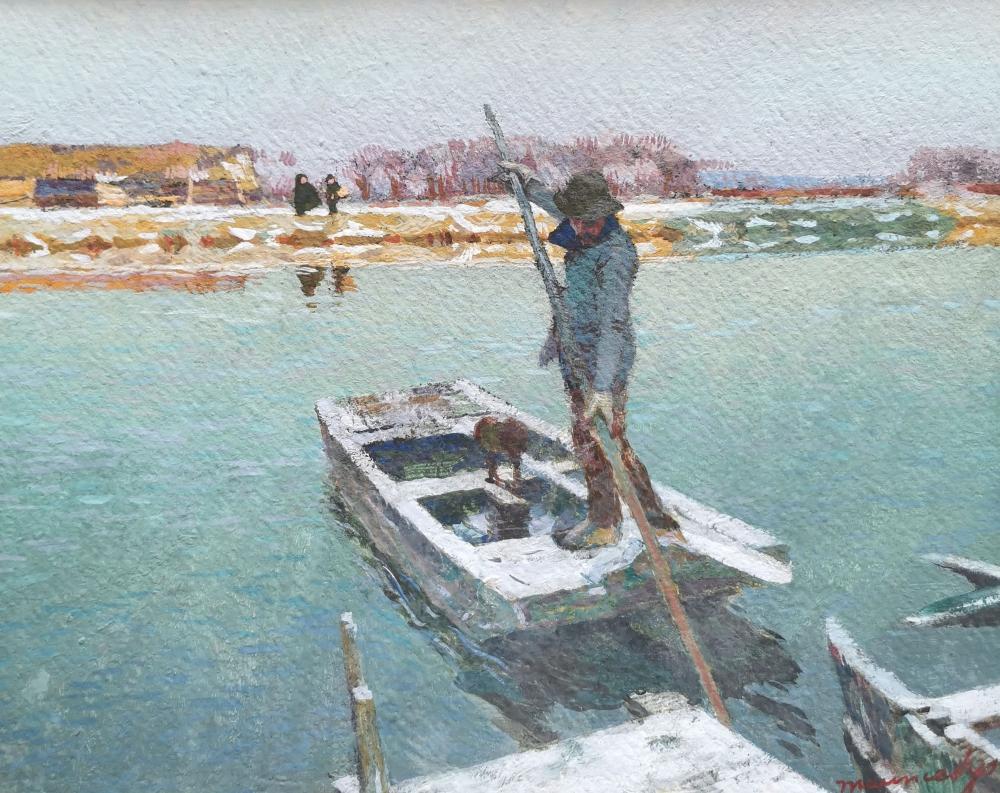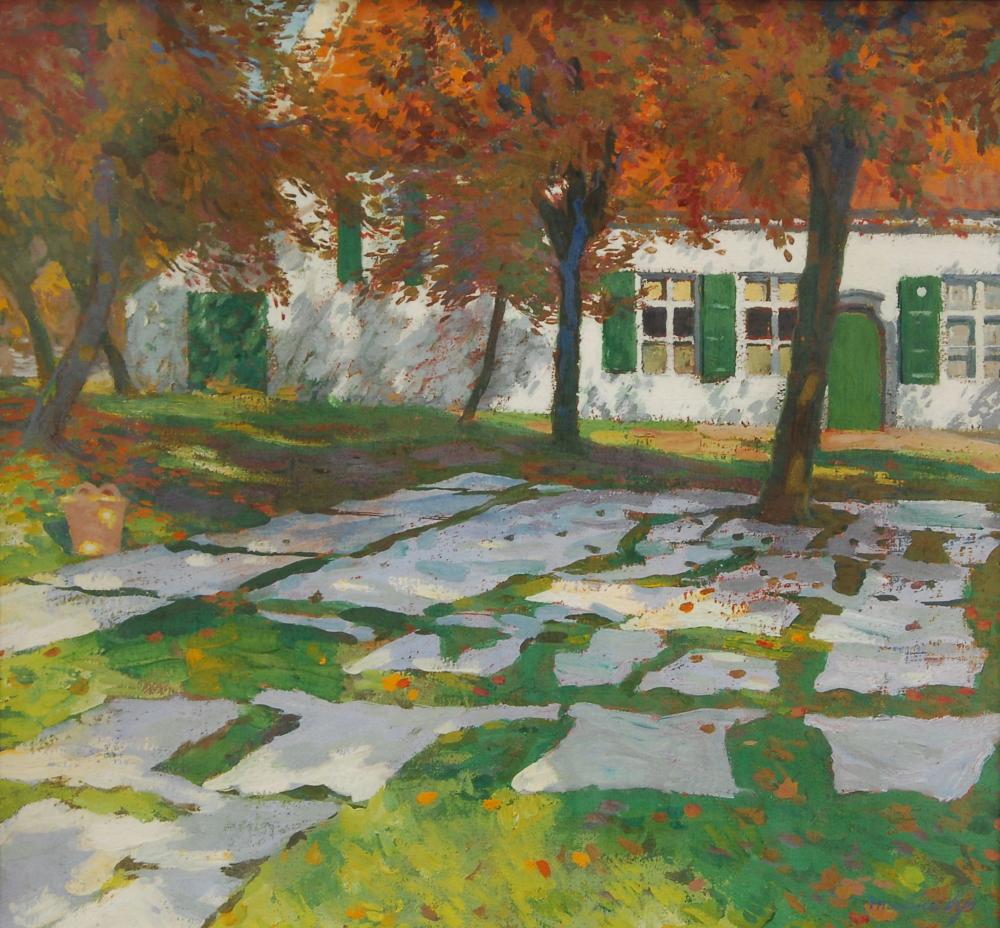
Maurice Sys 1880 1972 Original Painting: appraisal and value basics
Maurice Sys 1880 1972 Original Painting research should start with identification, condition, provenance, and recent comparable sales. Use this guide to compare the signals that matter before paying for a formal appraisal or deciding whether to sell.
Maurice Sys painting research checklist
Maurice Sys (1880–1972) was a Belgian painter whose work appeals to collectors of Northern European landscapes, river scenes, and harbor views. His paintings surface regularly at regional auctions and in estate collections, often without much documentation. This guide explains what to look for when evaluating a possible Maurice Sys original: subject matter, signatures, materials, condition, provenance, and market value.
Artist overview: subjects, style, and what collectors prize
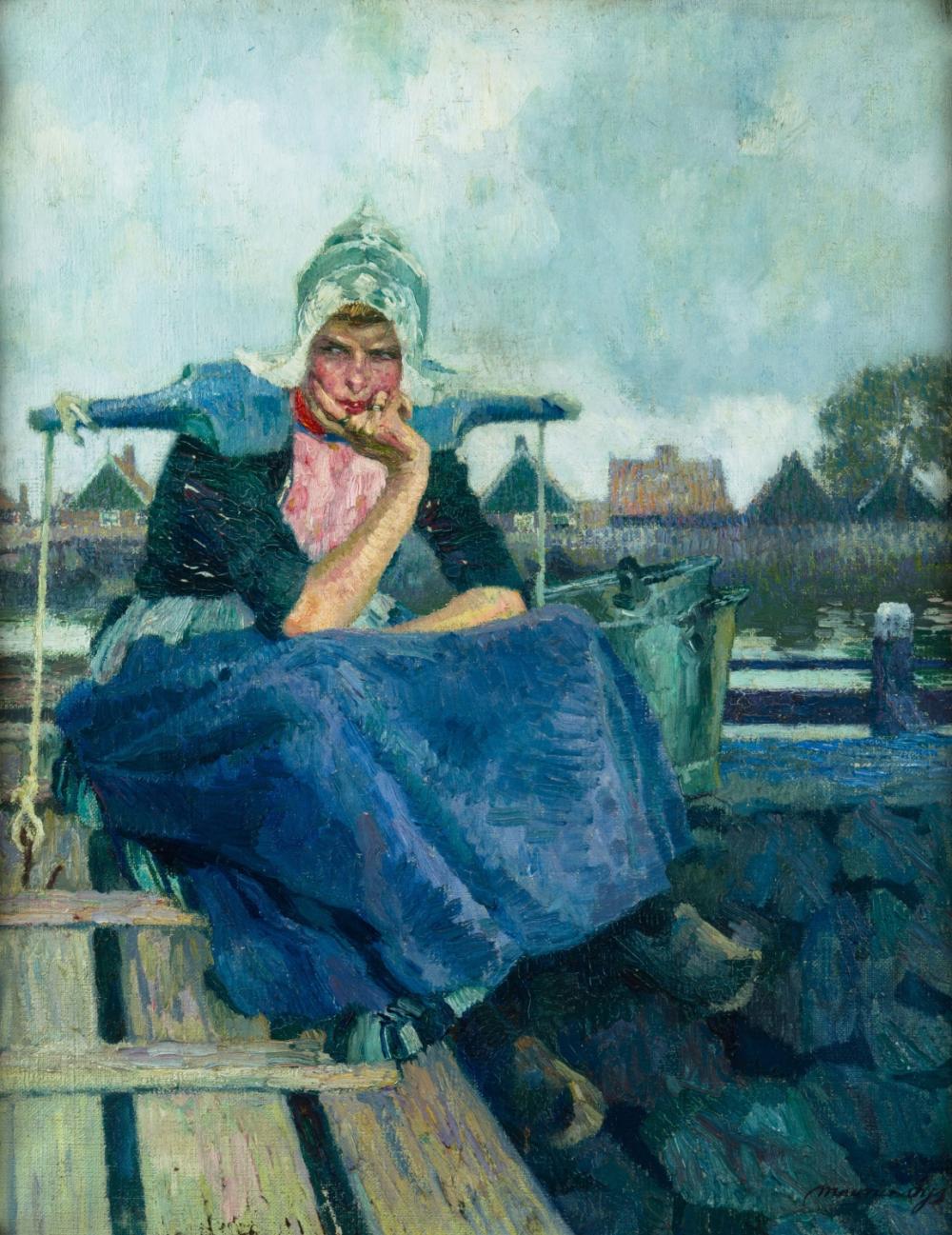
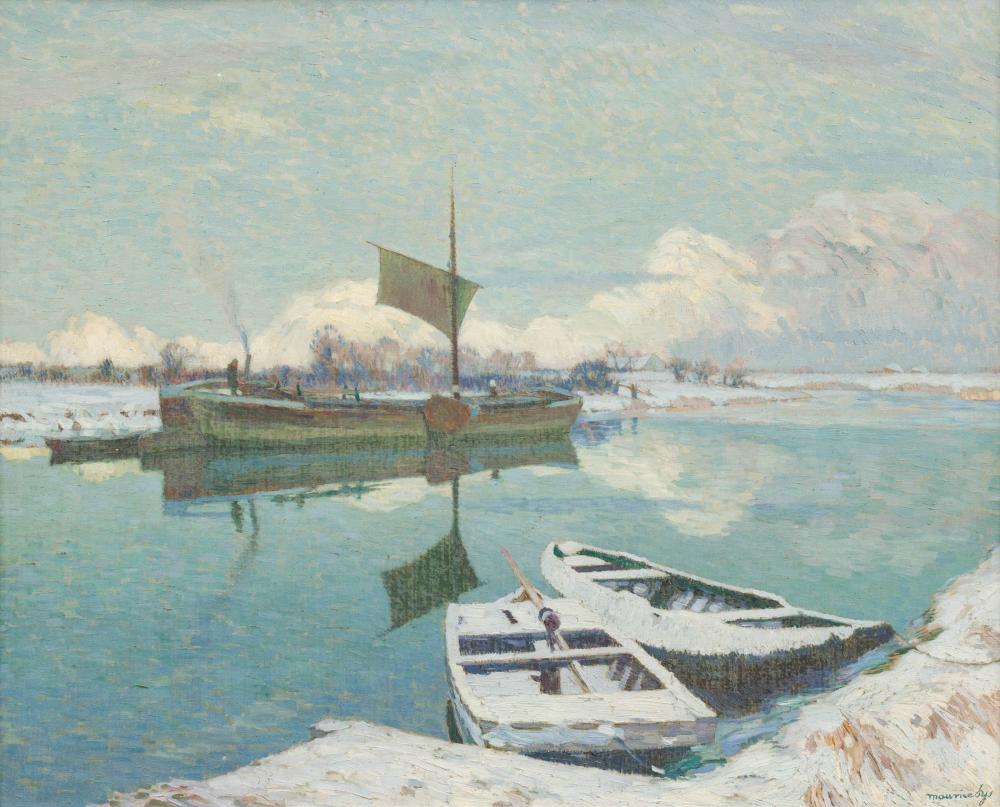
Maurice Sys worked primarily in oil, active through the first two-thirds of the 20th century. He is associated with Belgian realist and post‑impressionist traditions centered around Flanders, with a consistent interest in light over water and working landscapes.
Typical subjects you may encounter:
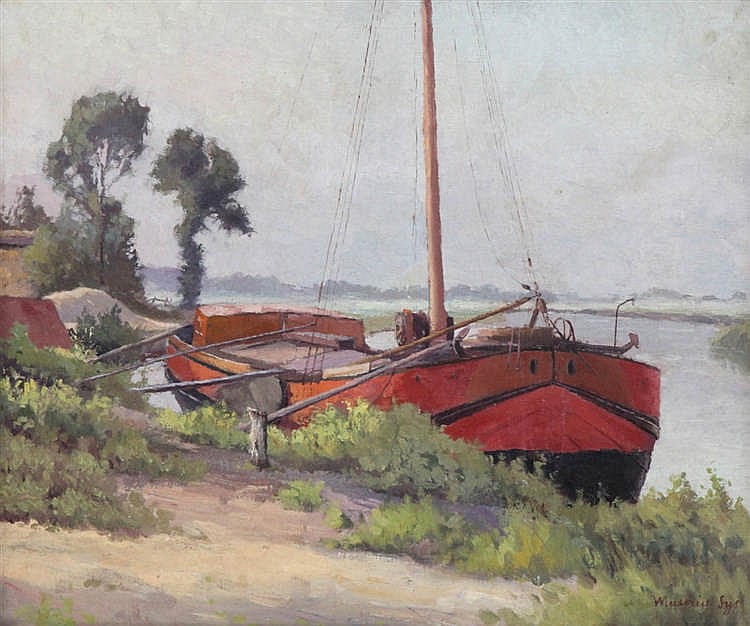
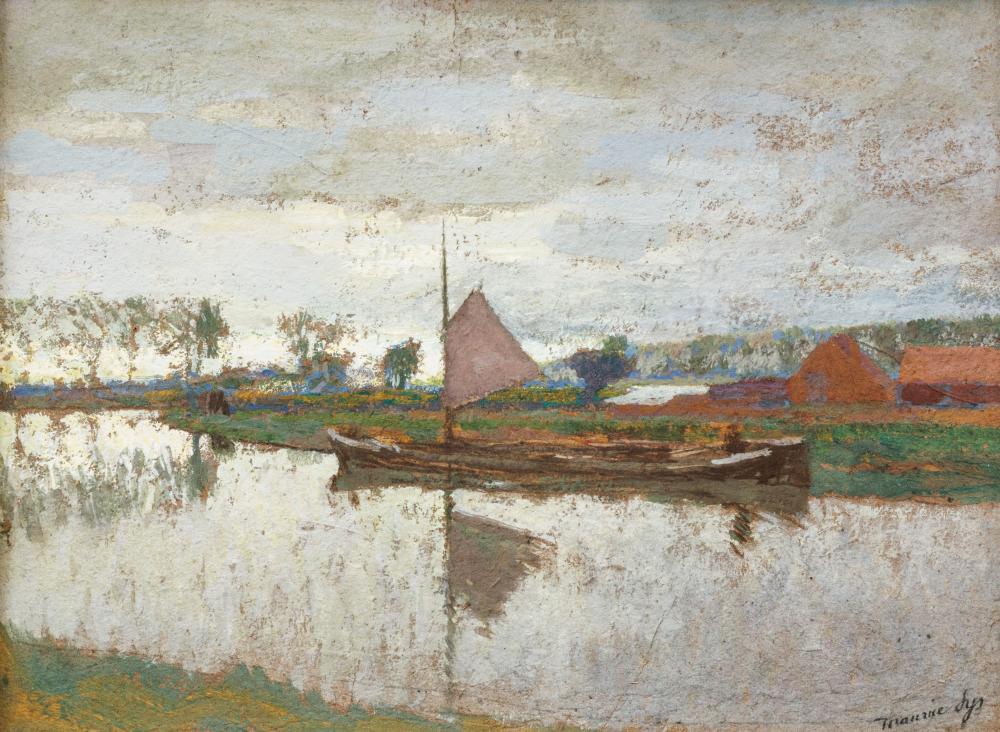
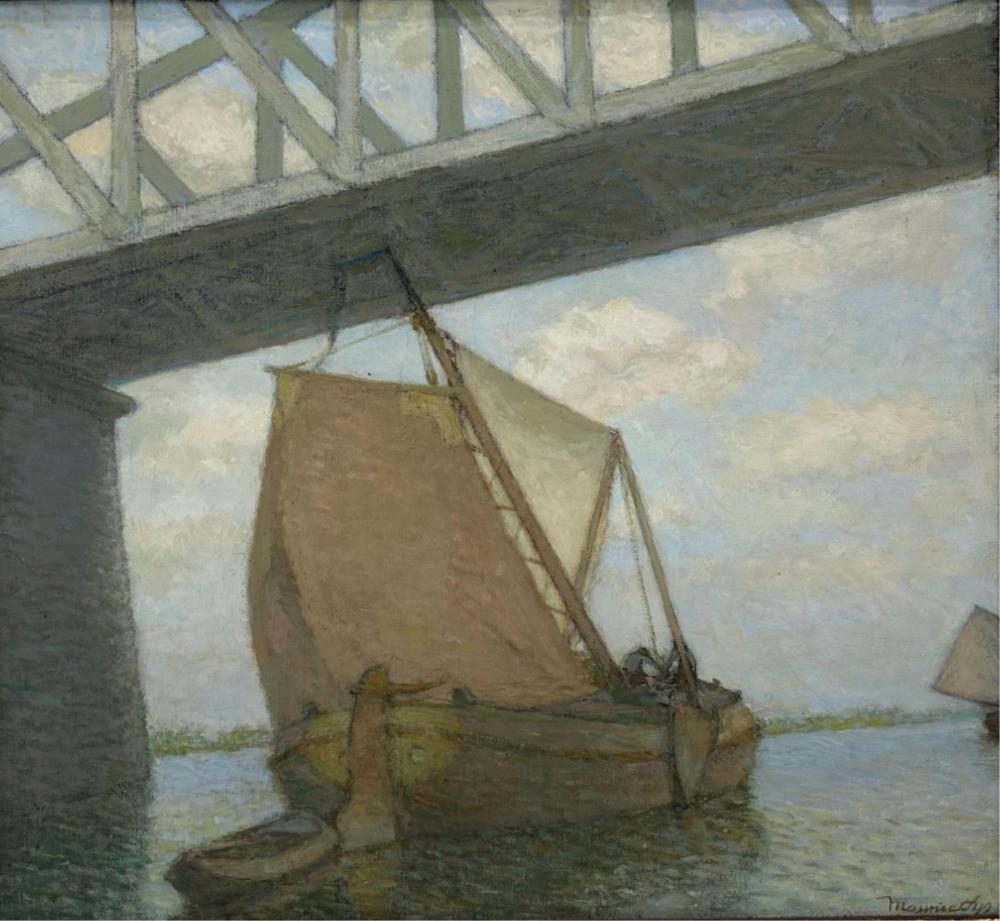
- River and canal scenes: moored barges, towpaths, locks, and low bridges, often on the Leie (Lys) or Scheldt systems.
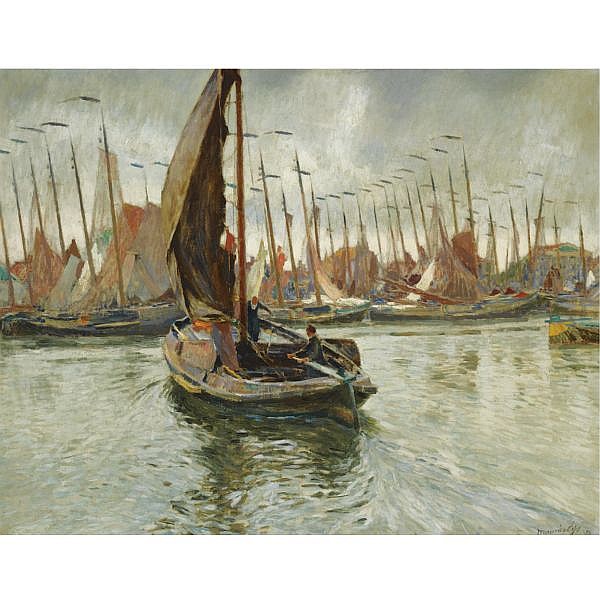
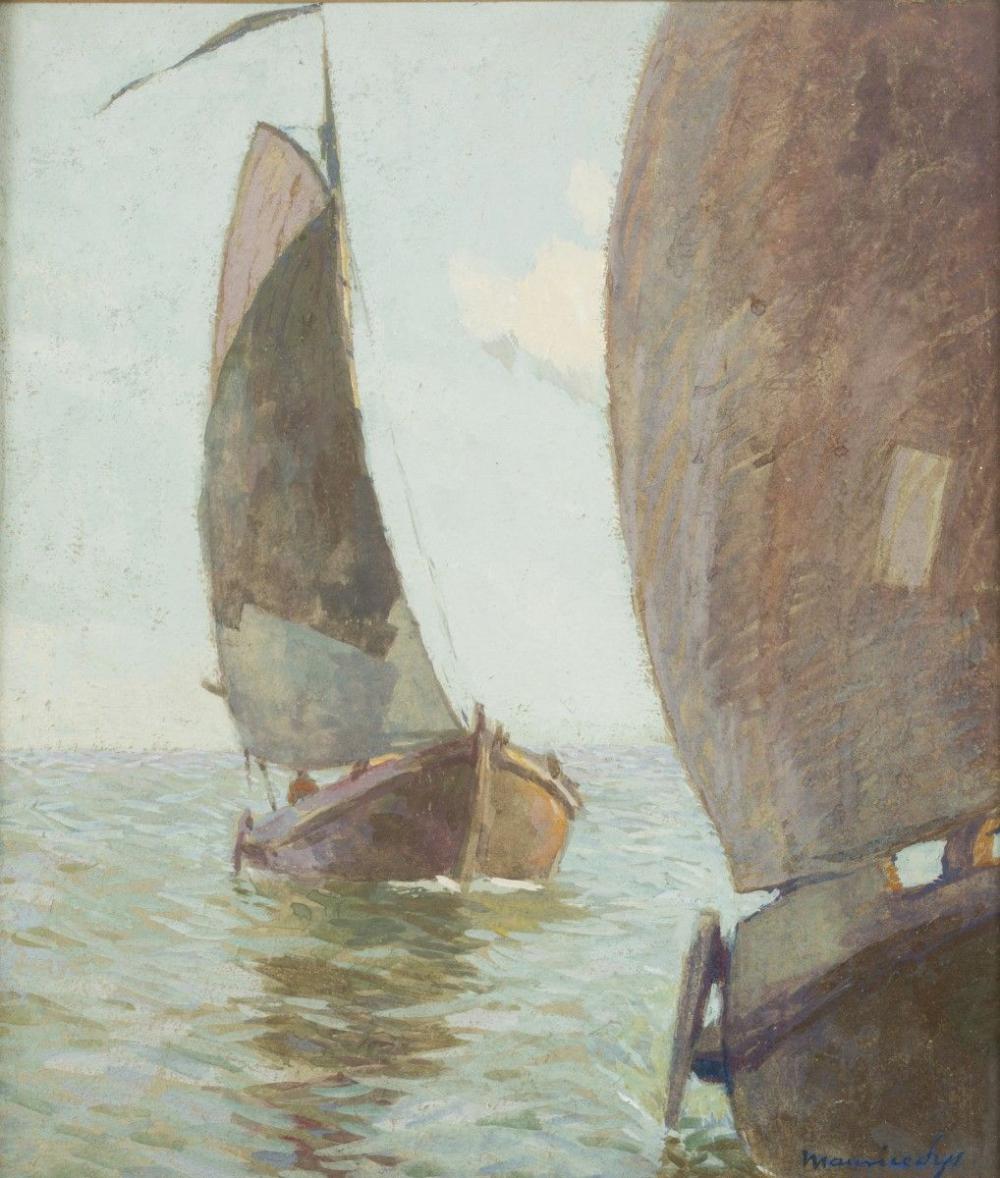
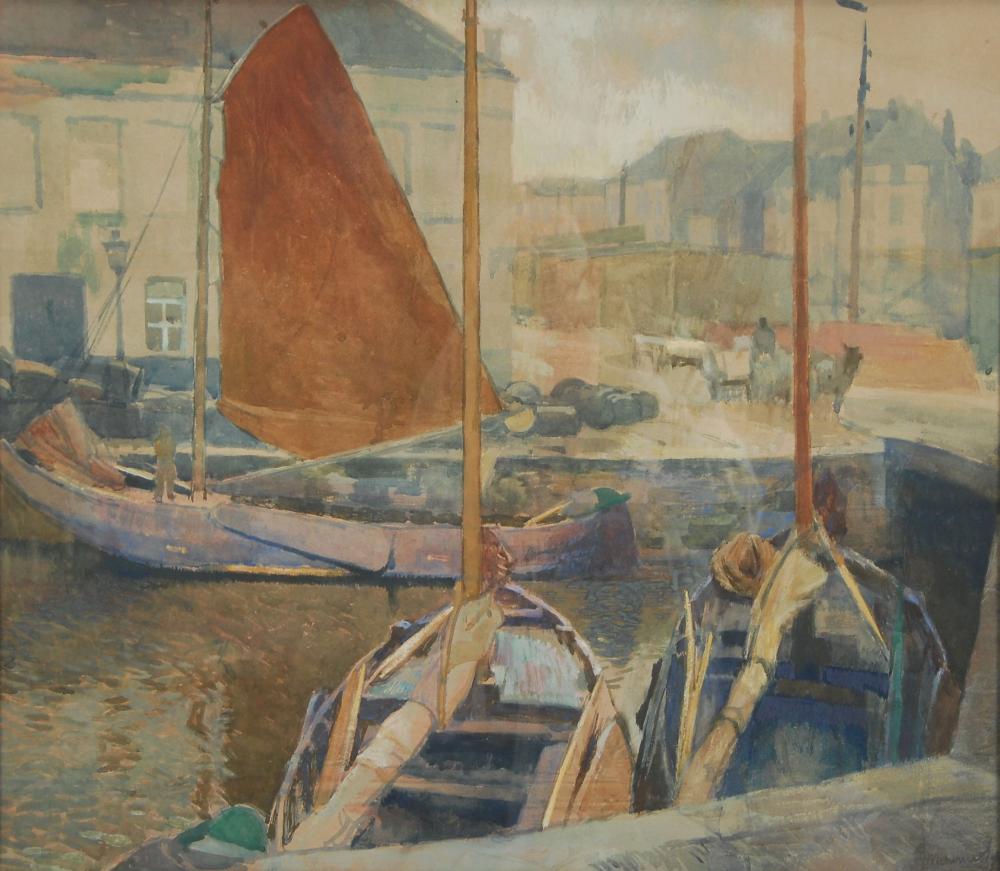
- Harbor and quayside views: fishing boats, warehouses, cranes, and industrial silhouettes softened by weather and atmosphere.
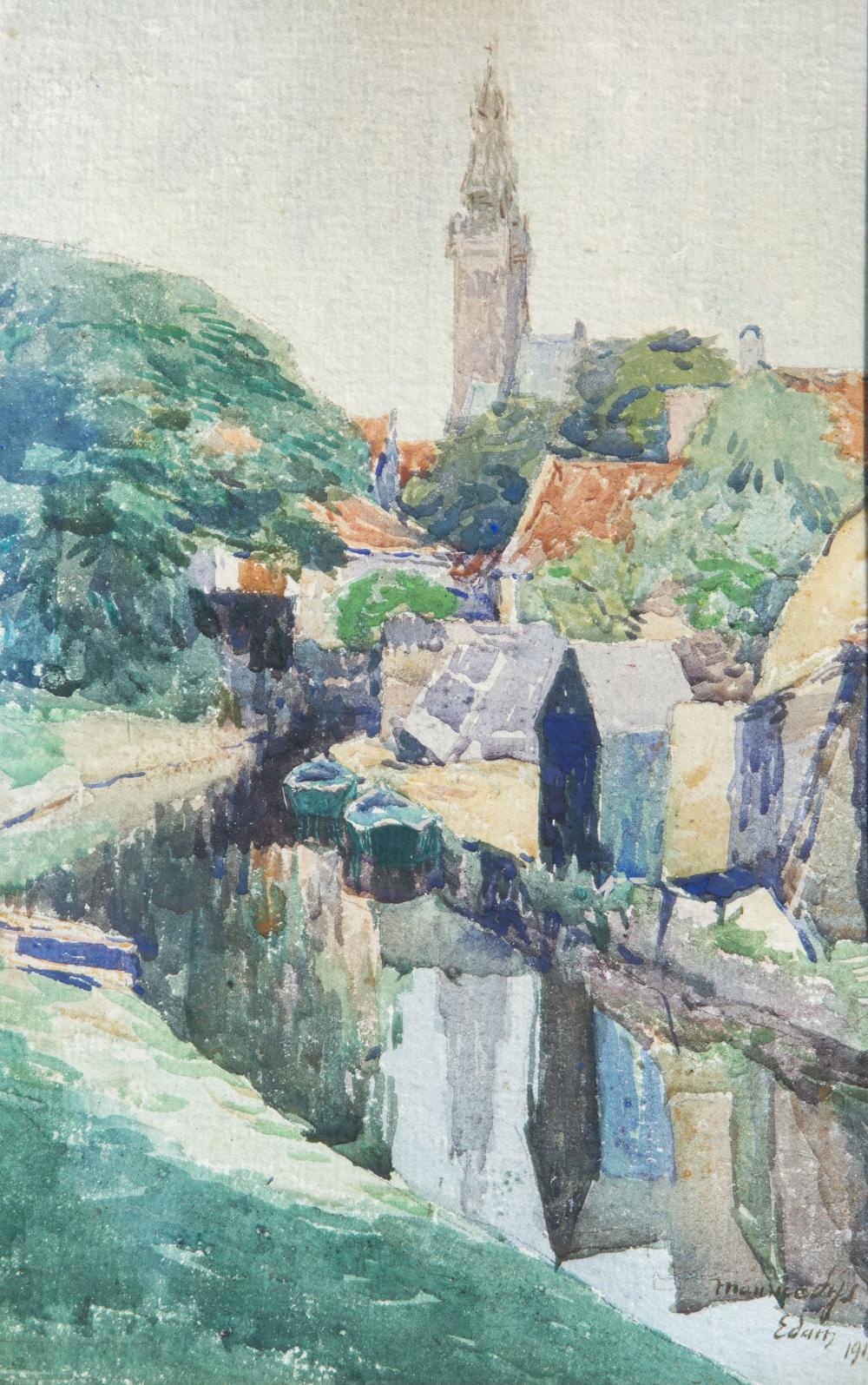
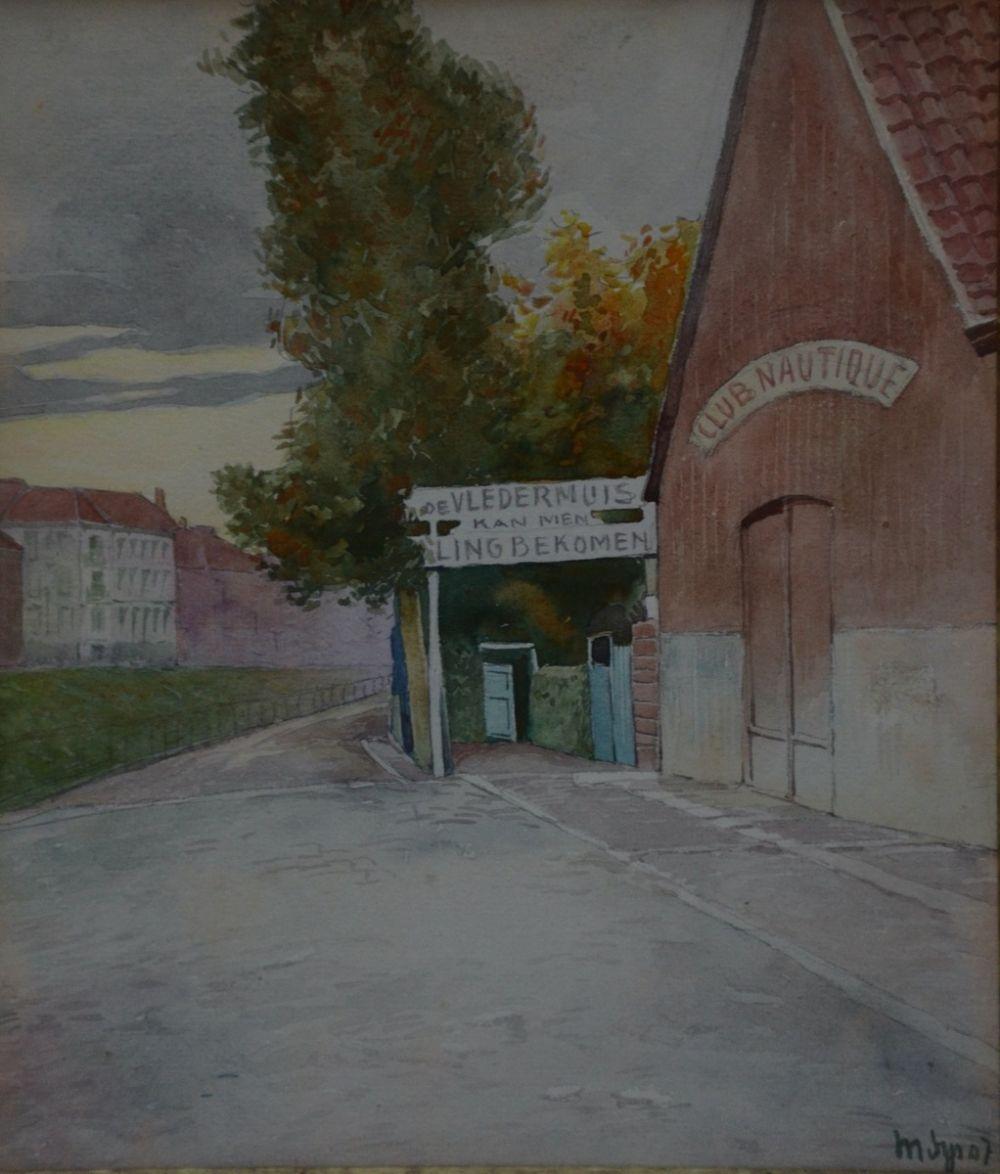
- Flemish village streets: brick houses, church spires, cobbles, and winter snow.
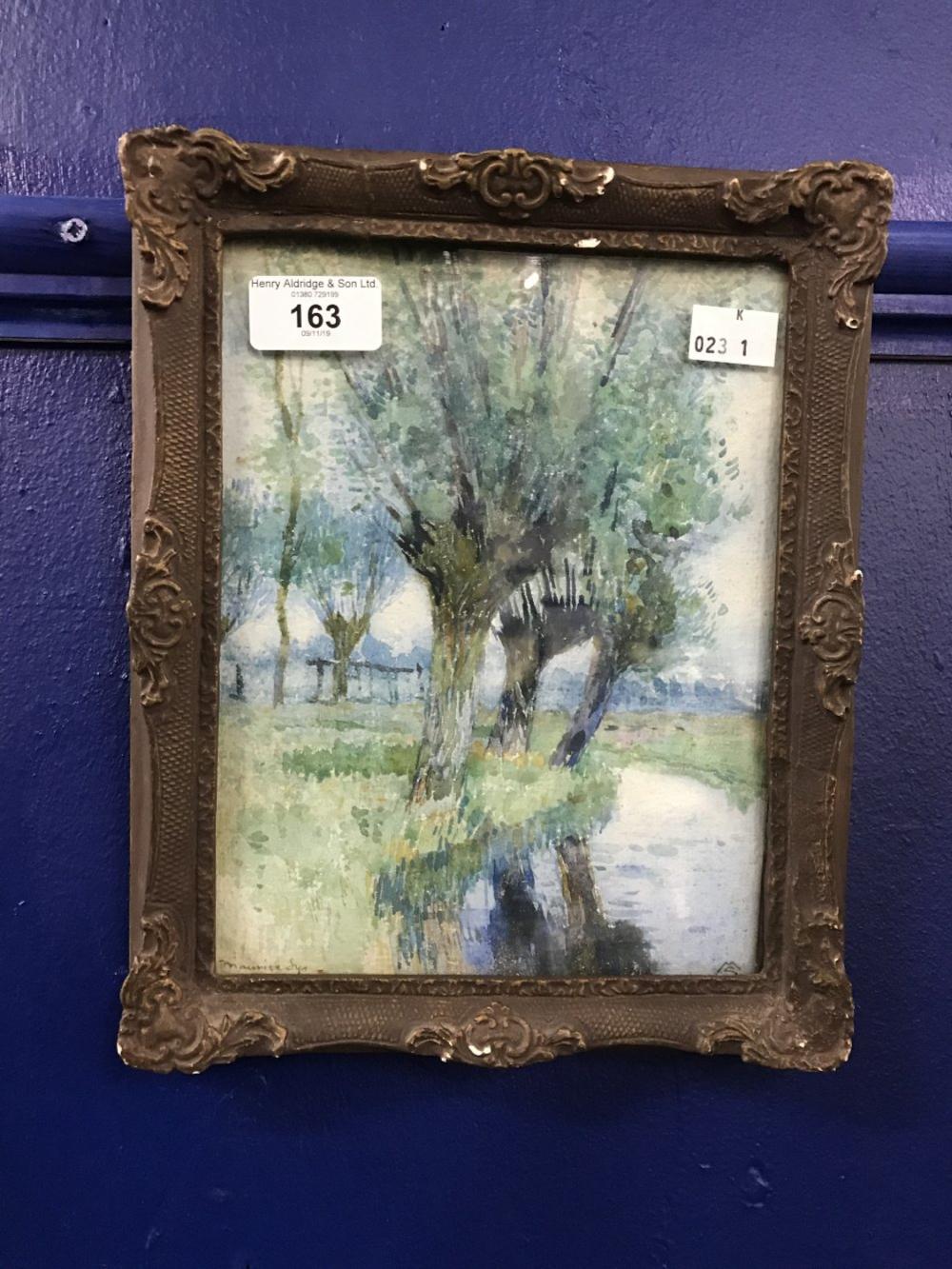
- Open landscapes: low horizons, big skies, marshes, or flat pasture punctuated by poplars.
- Still lifes and occasional interiors are less common but do appear.
Stylistic hallmarks:
- Palette: restrained, silvery light with cool greys and blue‑greens for water and sky; warm ochres, brick reds, and umbers for buildings and boats; occasional high‑key passages where sunlight hits water or snow.
- Brushwork: economical, descriptive strokes with controlled impasto in highlights; rippled or scumbled paint to evoke weathered wood and water movement.
- Composition: stable horizontal bands (sky, water, shore) with vertical accents (masts, chimneys, poplars). Figures, if present, are small staffage elements rather than portraits.
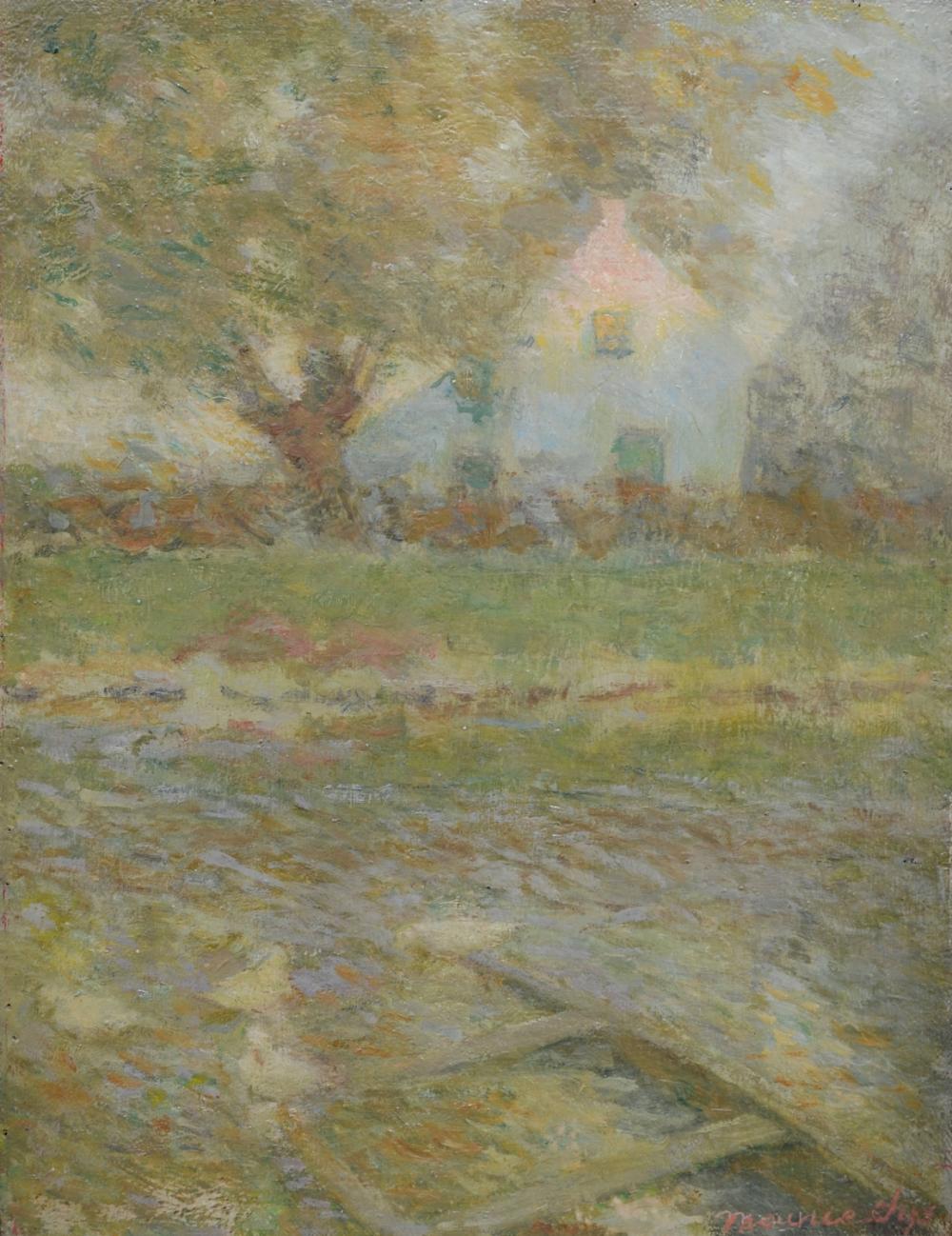
- Atmosphere: mist, light haze, or low winter sun that compresses values—more tonal than high‑contrast.
Collectors gravitate to works that capture luminous reflections and strong compositional geometry—barges cutting diagonals, reflections doubling vertical structures, and skies that feel both expansive and weighty.
Signatures, inscriptions, and labels
Signature placement and form:
- Look for “Maurice Sys” or “M. Sys,” typically lower right, occasionally lower left.
- The hand tends to be straightforward rather than flamboyant—readable script or small block letters. The “S” of “Sys” may be slightly open and repeated evenly; the “y” is usually a plain upright rather than a dramatic descender.
- Signature is usually applied in a dark tone already present on the palette (deep brown, black, or a warm umber) and integrated rather than floating. Avoid signatures in felt-tip or bright modern acrylic.
Other marks to note:
- Reverse-side inscriptions: title, location (e.g., a canal or town name), and sometimes a date. Use any place names to cross‑check subject plausibility.
- Framer or gallery labels: Belgian or Northern European labels (Ghent, Antwerp, Brussels, Lille, Rotterdam) are consistent with his market. Older paper labels show oxidation, foxing, and period typography. Beware freshly printed “antique‑style” labels.
- Inventory numbers: chalk or pencil codes on stretcher bars can indicate dealer handling. Photograph and preserve these.
If you find a pencil signature on paper beneath glass, consider whether it’s a print rather than an oil. Some reproductions carry a printed signature in the image (“signed in the plate”) and occasionally an added hand‑signature on the margin. Originals on canvas or panel will have paint texture; reproductions will not.
Materials and technique: what you should see
Support:
- Canvas: medium to fine plain weave is common. Pre‑1950 canvases are typically nailed to the stretcher; staples emerge later.
- Panel: wood panel and later hardboard (Masonite) appear in mid‑century works. Hardboard edges and factory impressed patterns are clues to a post‑1930 date.
- Stretcher: older stretchers show tool marks, oxidized wood, and square or mortise joints; newer replacements look machine‑cut and pale.
Ground and paint:
- Ground (priming) tends to be off‑white or warm buff. Exposed ground at the edges may peek through at hairline losses.
- Oils: layered with visible brush direction; areas of thicker impasto in highlights on water, clouds, and boat edges. Under magnification you should see brush ridges and pigment particles, not a uniform dot pattern.
- Drawing: faint graphite or charcoal underdrawing may be visible at edges—straight guidelines for horizons or mast angles.
Aging and varnish:
- Natural resin varnishes on older works often yellow. UV light can show a greenish fluorescence. Modern synthetic varnishes are cooler in tone.
- Craquelure is generally tight and follows the paint layer; wide, alligator-like patterns or block lift may indicate heat exposure or past water damage.
Red flags:
- Ink-jet or offset dot patterns on the “paint surface” indicate a reproduction.
- Rubber-stamped signatures, stenciling, or signatures floating atop thick, uniform varnish.
- Overly bright whites that read as acrylic on a supposed pre‑1950 work.
Dating a Maurice Sys painting: practical clues by period
While precise dating requires expertise, you can triangulate with a few material and stylistic markers.
1910s–1920s:
- Supports: canvas and wood panel dominate.
- Palette: more earth tones and restrained highlights; industrial subjects appear but often at a distance.
- Varnish: aged natural resins, mild ambering.
- Nails rather than staples; hand‑cut stretcher keys.
1930s–1940s:
- Increased presence of harbor and river traffic scenes with sturdier paint handling.
- Greater use of cool greys and moody atmosphere; occasional snow scenes with violet shadows.
- Hardboard begins to appear late 1930s; canvas still common.
- Wartime materials scarcity may correlate with smaller formats.
1950s–1960s:
- Hardboard more frequent; canvas still present, sometimes with staple tacking.
- Cleaner compositions with bolder highlights and slightly higher chroma in boat hulls and sky breaks.
- Some works may have a modern synthetic varnish from later conservation.
As always, corroborate visual impressions with any dated inscriptions, period labels, and frame construction.
Authenticity workflow: from first look to expert opinion
A disciplined process helps you avoid both false positives and false negatives.
- First-pass visual triage
- Confirm it is a painting: look for impasto, brush marks, and built-up paint at edges.
- Assess subject fit: river/harbor/village motifs consistent with Sys’s oeuvre.
- Note signature form and placement; photograph signature and reverse.
- Materials and aging check
- Examine edges under magnification for cracked varnish and oxidized ground—consistent with age.
- Under raking light, confirm natural craquelure patterns aligned with brushwork.
- If available, UV light: look for scattered restorations; a uniformly bright, milky fluorescence over a “new” painting can signal a modern coating over a reproduction.
- Provenance and labels
- Document any gallery/framer labels and inscriptions. Cross-check geographic sense: a Ghent framer label on a Flemish canal scene makes sense; a contemporary US craft-store frame does not prove anything but may indicate later reframing.
- Comparative analysis
- Compare composition, palette, and signature with known examples from reputable sales catalogues or institutional holdings. Focus on structure more than a signature’s exact flourish.
- Expert input
- For high-value candidates, obtain a written opinion from a qualified appraiser or a specialist in Belgian painting. Scientific testing (pigment analysis identifying titanium white in a supposedly pre‑1920 work, for instance) can be decisive.
- Documentation
- Assemble a condition report, detailed photos (front, reverse, signature, edges), and a provenance timeline. This package is essential for valuation and sale.
Condition and conservation: what matters to value
Common condition issues:
- Varnish yellowing and surface grime: dimmed highlights, overall warm cast.
- Craquelure and micro-loss: typical and acceptable if stable.
- Overcleaning: chalky skies, thinned darks, or visible weave from aggressive solvent cleaning.
- Lifting/cupping: serious structural concern that needs conservation.
- Panel warp or hardboard edge swelling: store and display in stable humidity.
- Inpainting: small, well-matched retouches are fine; extensive overpaint across passages of water or sky will dampen value.
Conservation guidance:
- Avoid DIY cleaning; surface dirt can be removed only after testing varnish solubility.
- Revarnishing: a reversible, non-yellowing synthetic resin applied by a conservator can restore depth.
- Lining or strip‑lining: acceptable for torn or embrittled canvases, disclosed in any sale.
Impact on value:
- Light, reversible issues (dirty varnish) are low impact.
- Losses, structural instability, and heavy overpaint reduce desirability.
- Collectors pay premiums for fresh, balanced surfaces where atmosphere and reflections read clearly without muddiness.
Market overview and valuation factors
The market for Maurice Sys is active but selective. Prices vary significantly based on subject, size, quality, condition, and sale venue.
Key value drivers:
- Subject: quintessential river or harbor scenes with boats and clear reflections perform best. Industrial quays with strong silhouettes are desirable; generic landscapes are softer.
- Size: medium to large canvases draw more interest; very small panels can underperform unless they are jewel‑like.
- Period and quality: works with confident composition, appealing atmosphere, and resolved light command a premium over schematic or darker pieces.
- Signature and documentation: a clear period signature and credible provenance increase confidence and liquidity.
- Condition: clean, undistorted surfaces with honest aging outperform heavily restored works.
Indicative ranges (cautious guidance for insured, retail, and auction contexts):
- Small oils or watercolors with typical subjects: a few hundred to low four figures.
- Medium signed oils with strong composition and good condition: low‑to‑mid four figures.
- Exceptional, large, classic harbor/river scenes in fine condition: mid‑to‑high four figures, occasionally higher in the right venue.
Always calibrate with recent, comparable sales and adjust for condition and location. A professional appraisal will consider your specific piece, current demand, and replacement vs. market value.
Practical checklist: evaluating a Maurice Sys painting
- Subject fit: river/harbor/village motif consistent with Sys’s known interests.
- Signature: “Maurice Sys” or “M. Sys,” integrated, painted in period medium; no modern markers.
- Surface: genuine brushwork and impasto; no print dot pattern; appropriate craquelure.
- Support: period canvas or panel; nails vs. staples help with dating; believable stretcher or panel aging.
- Reverse: look for titles, dates, gallery/framer labels; photograph all markings.
- Condition: note varnish, losses, inpainting, warp; obtain a condition report if selling or insuring.
- Provenance: assemble any bills of sale, family history, or exhibition notes.
- Comparables: collect 3–5 recent sales of similar size/subject/quality to gauge value.
- Expert review: consider an appraiser or specialist for high-value or uncertain works.
FAQ
Q: How can I tell if I have an original painting versus a reproduction? A: Examine the surface under magnification and raking light. Originals show brush ridges, impasto, and irregularities; reproductions show uniform dot patterns or a flat surface. Check edges for paint wrap and the reverse for stretcher marks, labels, and aging.
Q: Did Maurice Sys work in media other than oil? A: Oil on canvas and panel is most common. Works on paper exist but are less frequently encountered. Treat framed works on paper with extra caution—they are more easily confused with prints or reproductions.
Q: Where should I expect the signature, and is an unsigned work collectible? A: Most signed examples are lower right, sometimes lower left. Unsigned works exist; value then hinges on strong attribution evidence—provenance, compelling stylistic match, and possibly expert opinion.
Q: Is cleaning a yellowed varnish worthwhile? A: Yes, when performed by a trained conservator after testing. Removing discolored varnish can restore luminosity, often improving both aesthetic appeal and value. Avoid household cleaners or DIY methods.
Q: How much does condition affect value? A: Substantially. Light, reversible issues (surface grime, aged varnish) have modest impact, while structural problems (tears, heavy overpaint, warp) can halve value or more. Transparent, professional conservation stabilizes value; undisclosed, extensive restoration undermines it.
By approaching a Maurice Sys painting systematically—confirming authentic materials and technique, verifying signature and provenance, assessing condition, and anchoring your view with current comparables—you can judge originality and market position with confidence.