Have one like this? Check yours freeOr have an appraiser value it
Lot description
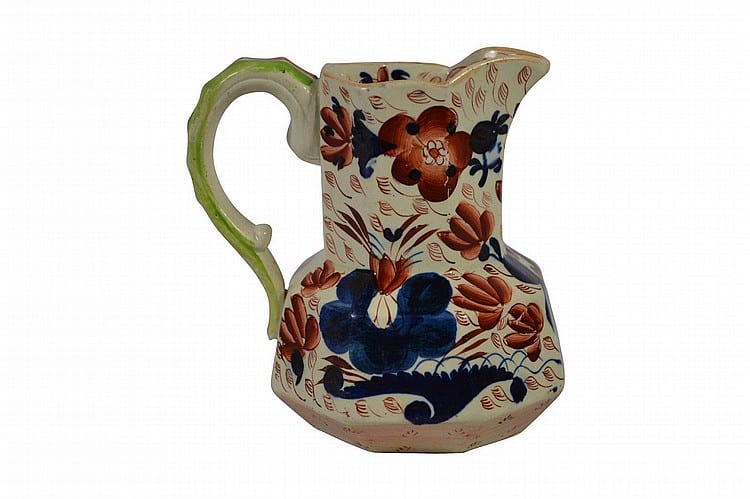
Pitcher, Hydra Jug, Imari, Mason Ironstone, 1815 Form: Pitcher Components: Hard paste Decoration: Hand painted in the Imari pallet with flowers. Handle in the form of a serpent. Colors: Blue, red, green, orange Markings: Impressed 'Ironstone China' Date: Circa 1815 Provenance: The estate of Arthur J. Connolly Size: 5.5" H x 5.25" L x 4.25" D Weight: 1lb Condition: Good. Some paint loss. Repair made to handle and hairline crack near spout. History: In 1806 Miles Mason entered into a partnership with his eldest son William at the larger Minerva Works. Further expansion took place in 1811 when they took on Sampson Bagnall's factory which was also at Lane End. Over a number of years many experiments must have taken place with earthenware and prototype ironstone bodies. It is highly likely that Miles Mason was the driving force behind these developments, but it was his youngest son Charles James Mason who registered the famous patent 'for the improvement in manufacture of English porcelain'. The patent was taken out in 1813, the same year that Miles was to retire from the business. Mason's Patent Ironstone China was extremely durable and could be produced at very competitive prices. The changing dining habits of the early nineteenth century revolutionized the ceramic industry. A greater variety of items were required and ironstone was eminently suited to the manufacture of large items, especially dinner services. The manufacture of porcelain was costly; the less expensive ironstone body could be afforded by a greater percentage of the population. It was much more resilient to daily household use and relatively inexpensive to replace.. Meta: Masons ironstone, Pottery, Wares, Ceramic, Tableware