Have one like this? Check yours freeOr have an appraiser value it
Lot description
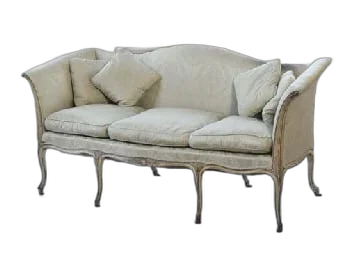
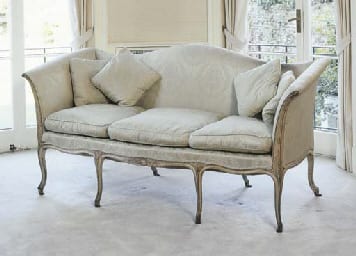
The serpentine padded back, scrolled arms and squab-cushions covered in green floral silk-damask, the channelled waved seat-rail centred by a stylised acanthus spray, the arms carved with upspringing acanthus, on acanthus-headed channelled cabriole legs with brass caps and castors, the reverse with a similarly channelled and decorated serpentine seat-rail 37 in. (94 cm.) high; 73 in. (185.5 cm.) wide; 301/2 in. (77.5 cm.) deep PROVENANCE With Jeremy, by whom sold to John Fowler, the decorator. Bought from Norman Adams, 5 May 1964. LITERATURE Connoisseur, January 1964, Norman Adams advertisement. C. Claxton Stevens and S. Whittington, 18th Century English Furniture, The Norman Adams Collection, Woodbridge, rev. ed., 1985, p. 65 NOTES This sofa, with its elegant serpentined, hollowed and reed-banded frame, is designed in the George III French antique manner that corresponds to the type of Louis XV 'cabriolet' chair issued in 1775 as 'Modern... now in use' in T. Malton's Compleat Treatise on Perspective, pl. XXXIII, fig. 131. Confirmation of the fashionable date of this pattern is given by a set of window seats of this form, varying only in decorative detail, made in 1775 by the Cavendish Square upholsterer Thomas Ward for Lord Langdale (d. 1777) of Holme Hall, Yorkshire. The same patterned legs, enriched with Roman acanthus, featured on a set of cabriolet chairs sold in these Rooms, 23 November 1972, lot 109. The acanthus-wrapped arms also featured in a window-stool pattern issued in A. Hepplewhite and Co.'s Cabinet Maker and Upholsterer's Guide, 1788, pl. 18. The Guide's related sofa design, in the 'French' taste, noted that it should be covered 'with a figured damask; the ornaments should be gilt or japanned, of a bright colour'.